Roof leak repair cost in Southern California typically ranges from a few hundred to several thousand dollars depending on the damage, roof type, and materials. This 2026 guide breaks down what drives pricing and how to get an accurate estimate.
Need this done rather than diagnosed? See our roof leak repairs service, or browse all roofing services.
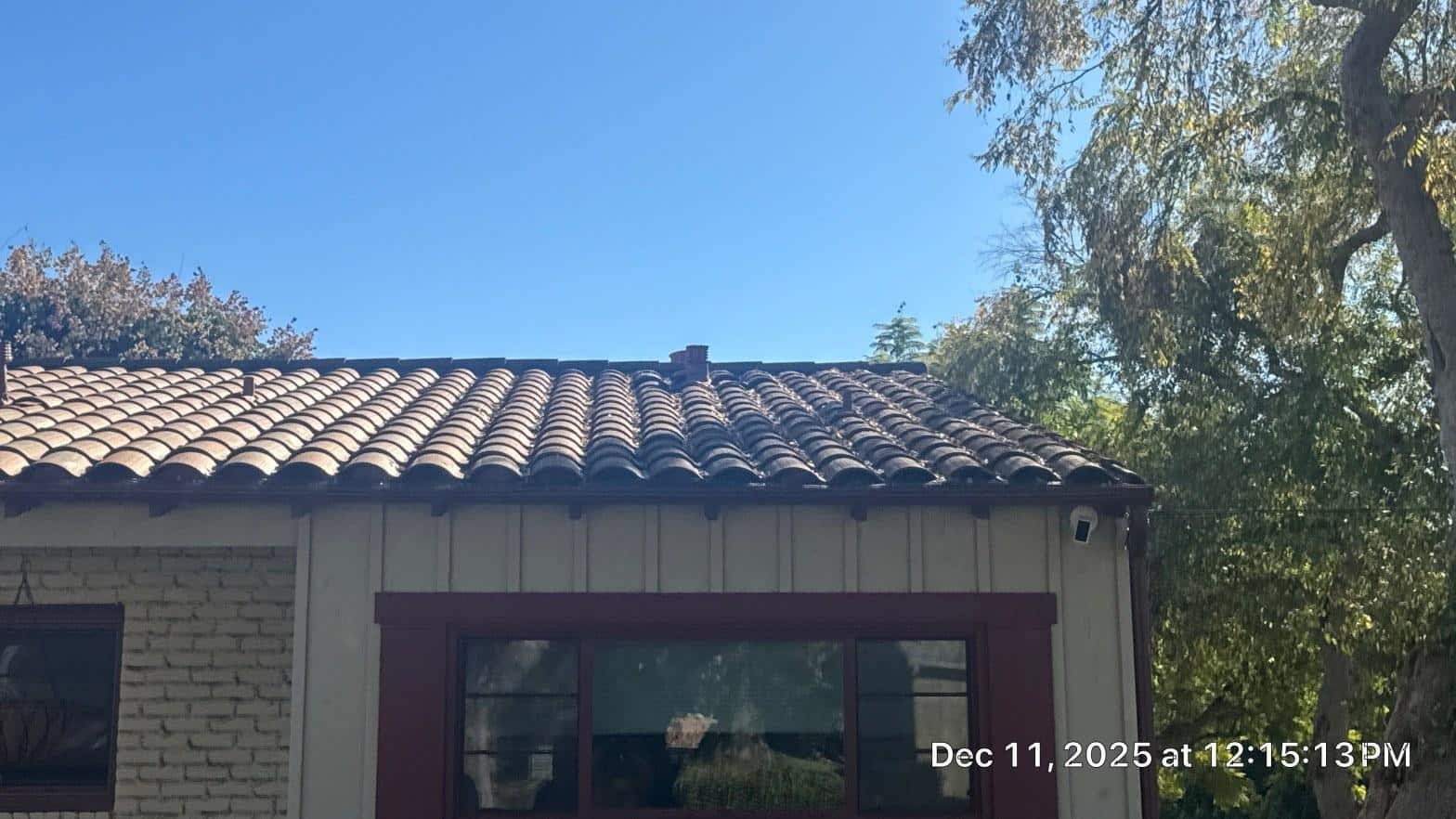
What Does Roof Leak Repair Cost in Southern California in 2026?
Roof leak repair cost in Southern California typically falls between $300 and $3,500 for most residential jobs in the current regional market. Smaller, isolated leaks caught early sit closer to the $300 to $700 range, while damage that has spread to underlayment, decking, or insulation can push past $3,500 or more. The wide spread is not a dodge; it reflects genuine variation in roof type, leak source, and how long the problem has gone unaddressed.
Southern California’s climate creates a specific set of roof stress patterns. The region averages fewer than 15 inches of rainfall per year in most inland areas, but the National Weather Service Los Angeles office consistently documents intense, concentrated rain events between November and March. That stop-and-start cycle, dry heat for months, then sudden heavy rain, accelerates cracking in roofing materials and overwhelms clogged or aging drainage systems. When a leak finally appears indoors, the damage outside is often older than homeowners expect.
This guide walks through every factor that moves the needle on price, a scenario-by-scenario market range table, what is typically left out of a base quote, and how to prepare for an accurate estimate.
What Factors Drive Roof Leak Repair Costs Up or Down?
Six factors account for the majority of price variation in leaking roof repair jobs across the Southern California market. Understanding them helps homeowners compare quotes honestly and avoid surprises.
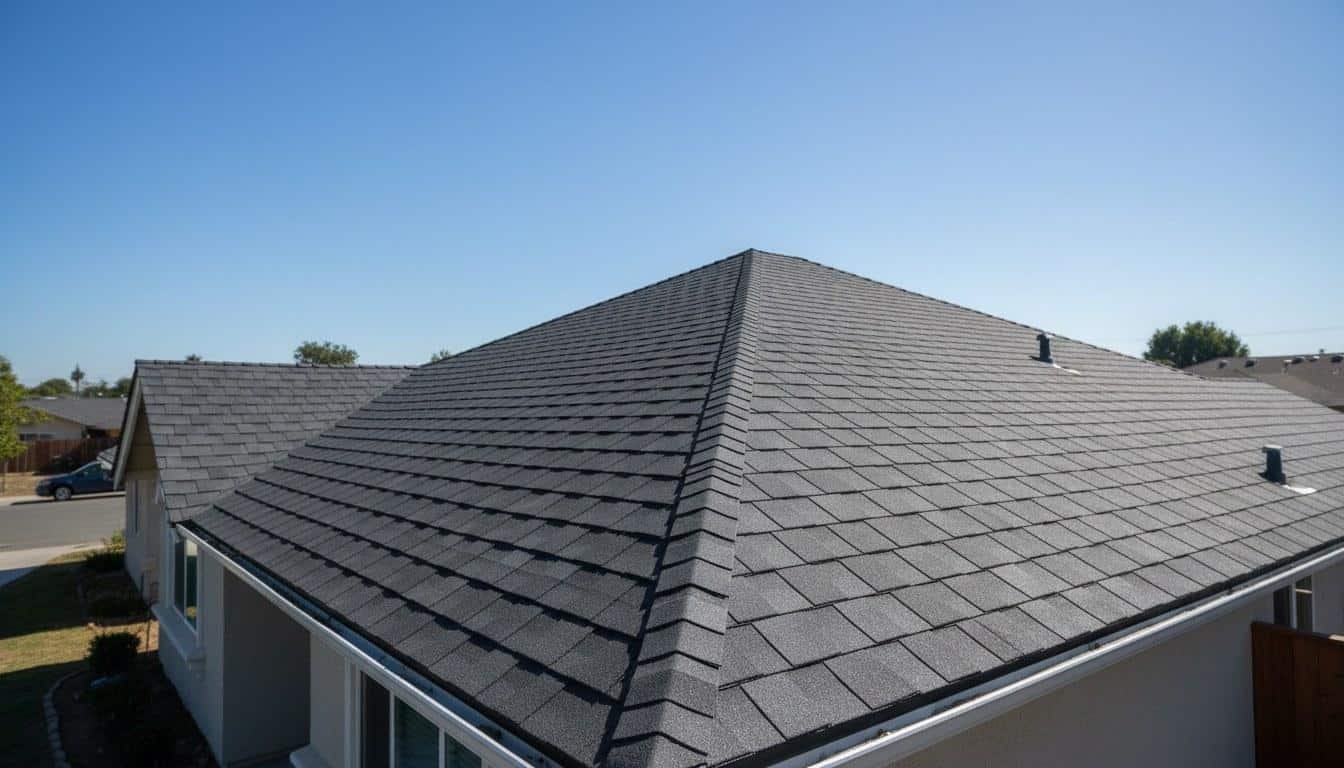
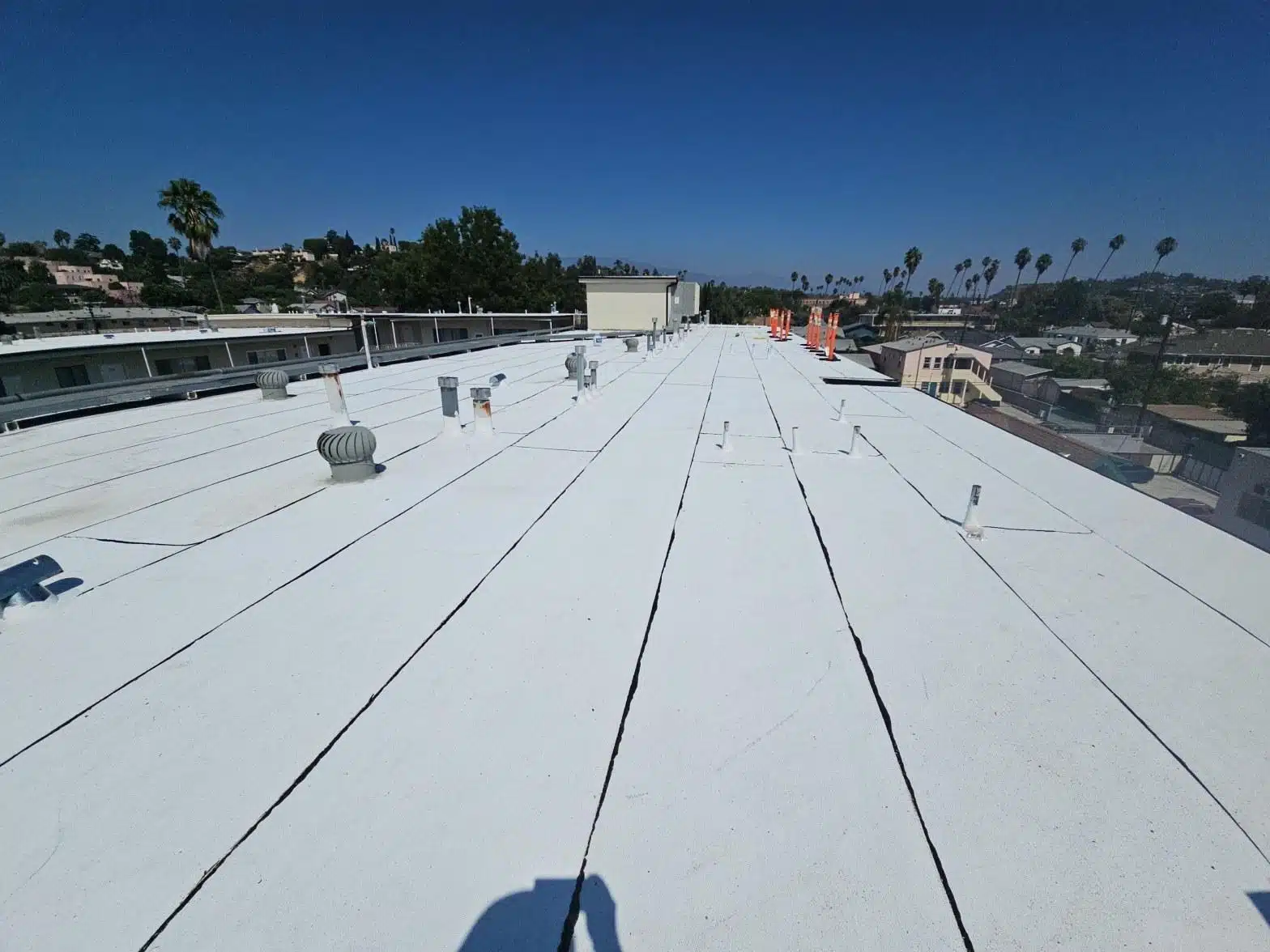
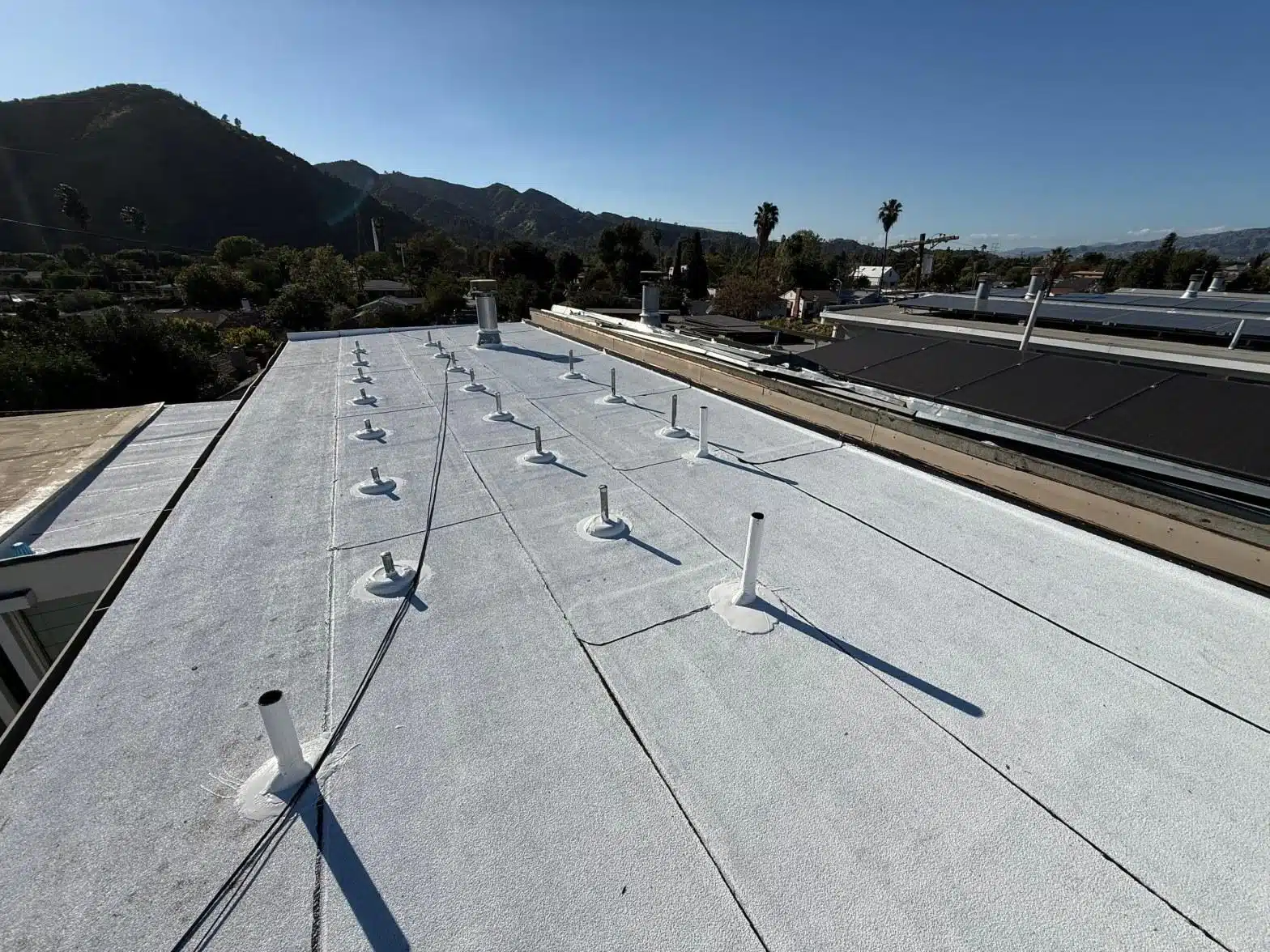
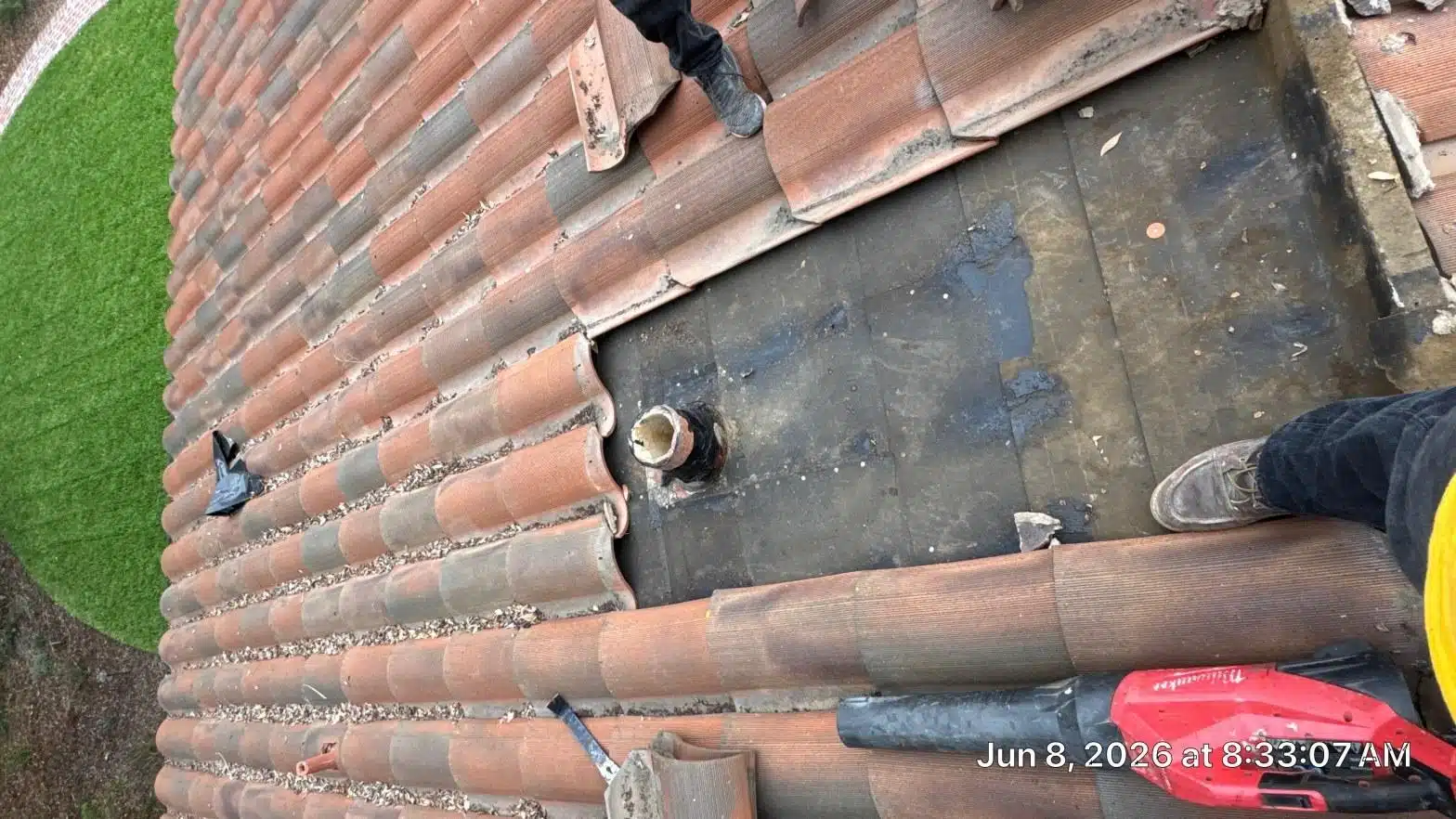
- Roof type and material: Asphalt shingle repairs are generally the least expensive. Tile roofs, common across Los Angeles County and Orange County, require careful removal and reinstallation of individual tiles, which adds labor time. Flat roofs (TPO, modified bitumen, or built-up roofing) need specialized membrane patching and often cost more per square foot than sloped roofs.
- Size of the damaged area: A single failed flashing seal around a vent pipe is a very different job from a 10-by-10-foot section of delaminated flat roof membrane. Contractors typically price by the square (100 square feet) once a repair exceeds a certain threshold.
- Leak source complexity: Some leaks trace directly to a missing shingle or cracked tile. Others originate at a chimney, skylight, or valley flashing and travel several feet before showing up inside. Diagnostic time increases when the entry point is not obvious.
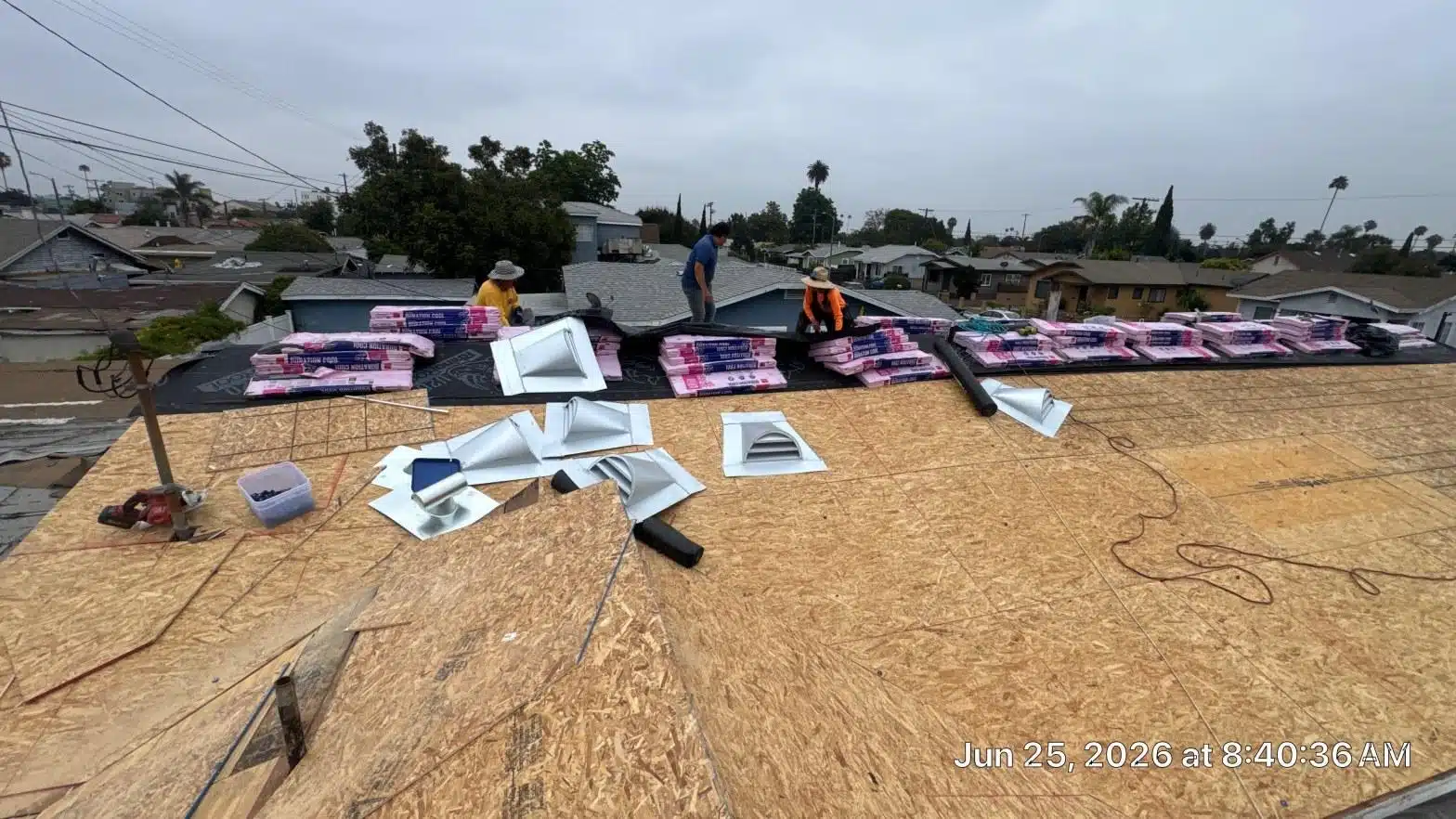
- Decking and structural damage: If water has reached the plywood decking or roof joists, rotted sections must be replaced before new roofing material goes down. This is the single biggest cost escalator, decking replacement can add $500 to $1,500 or more to a job that looked straightforward from the surface.
- Access and pitch: Steep-pitch roofs above a 6:12 slope require additional safety equipment and slower, more careful work. Multi-story homes add scaffold or extended ladder time. Both factors push labor costs higher.
- Urgency and timing: Emergency or same-day repairs during or immediately after a rain event typically carry a premium over scheduled non-emergency work. Repairs booked during the dry season (May through October) are often more competitively priced because contractor schedules are more flexible.
Roof Leak Repair Cost by Scenario: A Market Range Breakdown
The table below reflects typical regional market ranges for common roof leak repair scenarios in Southern California as of 2026. These are market averages, not quotes from any specific contractor. Actual costs depend on site conditions, material availability, and the scope confirmed during an on-site inspection.
| Scenario | Typical Market Range | What’s Usually Included |
|---|---|---|
| Single shingle patch or minor asphalt shingle repair | $300 to $700 | Removal of damaged shingles, replacement with matching material, re-nailing, and sealing. Basic leak test. |
| Flashing repair (chimney, vent, skylight, or valley) | $400 to $1,200 | Removal of failed flashing, installation of new metal flashing, re-sealing, and re-bedding of surrounding tiles or shingles. |
| Tile roof leak repair (concrete or clay tile) | $600 to $2,000 | Careful tile removal, underlayment inspection and patch, new tile installation, and mortar or adhesive re-bedding where needed. |
| Flat roof membrane patch (TPO, modified bitumen, or built-up) | $500 to $2,500 | Membrane cut-and-patch or heat-welded overlay, seam sealing, and drainage inspection. Larger blistered areas trend toward the upper end. |
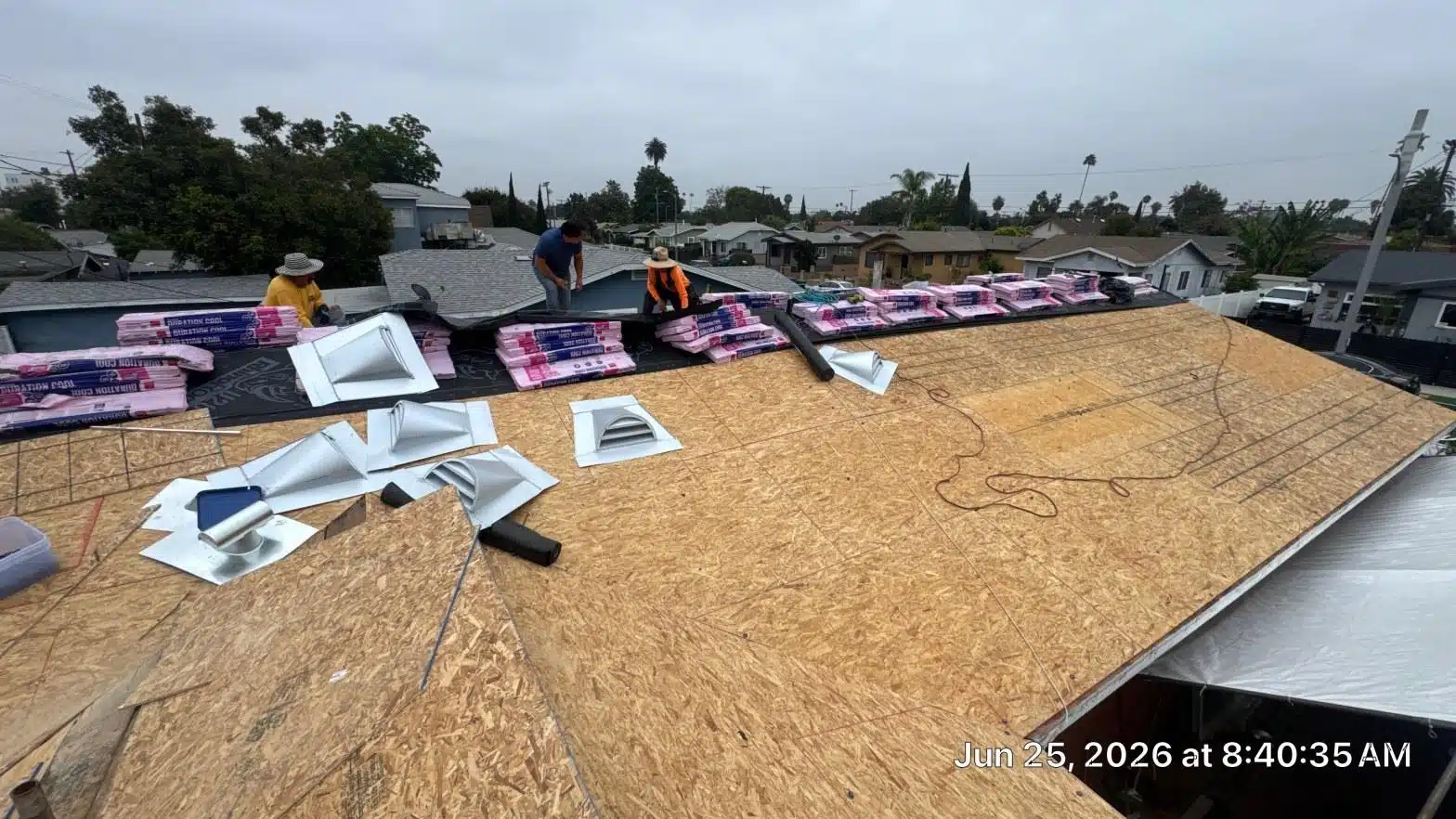
| Widespread damage with decking replacement | $1,800 to $5,000+ | Tear-off of damaged material, replacement of rotted decking, new underlayment, and full re-roofing of the affected section. May require permit depending on scope. |
Projects in the widespread-damage category can exceed these ranges when structural members (rafters or fascia boards) are also compromised. A written itemized estimate is the only reliable way to know where a specific job lands.
What Is NOT Included in a Standard Roof Leak Repair Quote?
Most base quotes cover the roof surface itself; they do not automatically include the downstream damage water causes inside the home. Homeowners are often surprised by add-on costs that appear after the initial scope is confirmed.
- Interior drywall or ceiling repair: Water-stained or collapsed ceilings require a separate drywall contractor or an expanded scope with your roofing contractor. This is almost never in a standard roofing quote.
- Mold remediation: If moisture has been present for more than 24 to 48 hours, mold growth is possible inside wall cavities and attic insulation. The EPA recommends professional mold assessment for any area larger than 10 square feet. Remediation is a separate cost category entirely.
- Insulation replacement: Wet attic insulation loses its R-value and can become a mold substrate. Replacing soaked batts or blown insulation is typically priced separately.
- Permit fees: California’s building codes require permits for repairs that exceed a certain scope (typically full re-roofing of a section rather than a simple patch). Permit fees vary by county and are usually passed through at cost.
- Gutter repair or replacement: Clogged or damaged gutters are a common leak contributor, but gutter work is typically quoted separately from the roof repair itself.
- Solar panel removal and reinstallation: If panels sit over the damaged area, they must be temporarily removed. This requires a licensed electrician or the panel installer and adds cost that is outside a standard roofing quote.
How Do You Know If Your Roof Leak Needs a Patch or a Full Repair?
A patch is appropriate when the damage is isolated to a small area and the surrounding roofing material is still structurally sound. A broader repair or partial re-roof is necessary when the underlayment, decking, or multiple sections of material are compromised.
Our team inspects several hundred roofs across Los Angeles County and surrounding communities each year, and roughly 4 out of 10 jobs that come in as a “simple patch” require at least some underlayment work once the surface material is lifted. That pattern is especially common on tile roofs that are 20 or more years old, where the 15-pound felt underlayment has fully degraded.
Age is a reliable starting signal. Asphalt shingles typically carry a rated lifespan of 20 to 30 years. Concrete and clay tile roofs can last 40 to 50 years, but the underlayment beneath them usually needs replacement every 20 to 25 years regardless of how the tile looks from the ground. If your roof is within 5 years of the end of its rated lifespan, a full inspection, not just a patch quote, is the more cost-effective approach.
Signs that a patch alone is unlikely to solve the problem include:
- Multiple active leak points showing up in different rooms or ceiling areas
- Soft or spongy spots when walking on the roof surface
- Granule loss covering more than 20 to 30 percent of an asphalt shingle field
- Visible daylight through the attic decking
- A second or third repair on the same area within 3 years
- Blistering, bubbling, or standing water on a flat roof membrane
How to Get an Accurate Roof Leak Repair Quote in Southern California
The most accurate quotes come from contractors who physically inspect the roof, not those who estimate from photos or satellite imagery alone. Having the right information ready before the appointment speeds up the process and leads to a more detailed, itemized estimate.
Roofing contractors licensed by the California Contractors State License Board (CSLB) are required to carry general liability and workers’ compensation insurance. Always verify a contractor’s CSLB license number before signing any agreement, the CSLB’s online license check takes under a minute and confirms both license status and insurance standing.
Here is what to have ready before a quote appointment:
- Roof age and material: Check your home’s original building permit or any past roofing invoices. Knowing the approximate age and material type (asphalt, tile, flat membrane) helps the contractor prepare the right tools and materials before arriving.
- Photos of interior damage: Ceiling stains, water trails on walls, or attic moisture all help a contractor triangulate the entry point faster. Take photos in natural light before the appointment.
- History of past repairs: If the area has been patched before, note when and by whom. Repeated repairs in the same spot are a diagnostic signal that changes the repair approach.
- HOA or permit requirements: Some communities in Southern California have HOA material restrictions. Know these in advance so the contractor can specify compliant materials in the quote.
- Insurance claim status: If you plan to file a homeowner’s insurance claim, tell the contractor before work begins. The documentation and photo requirements differ from a straight-pay job, and some contractors have dedicated insurance claim support workflows.
Across our service calls in the region, we see that homeowners who provide interior photos and a repair history get written estimates that are 30 to 40 percent more detailed than those generated from a cold inspection alone, which means fewer change orders and fewer surprises once work begins.
Homeowners who provide interior photos and a repair history get written estimates that are 30 to 40 percent more detailed than those generated from a cold inspection alone.
Request a Custom Roof Leak Repair Quote in Los Angeles
The market ranges in this guide reflect real regional pricing patterns, but your specific project cost depends entirely on what an on-site inspection reveals. Roof leak repair cost in Southern California varies too much by material, age, and damage extent for any online estimate to be reliable without eyes on the roof.
Roof Repair & Construction Inc. provides written, itemized estimates for residential and commercial roof leak repairs across Los Angeles County and the surrounding region. Every estimate is based on a physical inspection, not a satellite photo or a phone call guess.
Call (323) 474-1088 to schedule your inspection. Whether you need an affordable roof repair on a small flashing leak or a full assessment of widespread water damage, the right starting point is an honest look at what is actually happening on your roof.
Explore our full range of Roof Repair services across Southern California.
Frequently Asked Questions
How much does it usually cost to fix a leaking flat roof in Southern California?
Flat roof leak repairs in the Southern California regional market typically range from $500 to $2,500 for membrane patch work, depending on the size of the damaged area and the membrane type (TPO, modified bitumen, or built-up roofing). Larger areas with blistering or seam failures trend toward the upper end of that range. If the underlying insulation board is saturated, replacement adds to the total. A physical inspection is the only way to confirm scope and cost.
Can I repair a roof leak from the inside to stop the water temporarily?
You can slow active water intrusion temporarily using roofing tape, hydraulic cement, or a tarp over the affected area, but these are emergency measures only; they do not address the source of the leak on the exterior. Interior patches trap moisture inside the roof assembly, which accelerates rot and mold growth. A licensed roofing contractor should inspect the exterior source as soon as conditions allow, typically within one to five days of the weather event.
How do I know where my roof is actually leaking from?
The interior stain is rarely directly below the entry point, water travels along rafters and decking before dripping down. The most reliable method is a systematic exterior inspection starting at penetrations (vents, chimneys, skylights, and valleys) since roughly 80 percent of residential roof leaks originate at a flashing failure or penetration seal rather than in the open field of the roofing material. A roofing professional can trace the path during a dry-weather inspection using a hose test if the entry point is not immediately visible.
Does homeowner's insurance cover roof leak repair in California?
California homeowner's insurance policies generally cover sudden, accidental water damage, such as a leak caused by a windstorm or falling debris, but typically exclude damage from gradual deterioration, deferred maintenance, or normal wear and tear. If a storm event is the documented cause, filing a claim is worth pursuing. Document the damage with dated photos before any temporary repairs are made, and contact your insurer before authorizing permanent repair work to confirm their documentation requirements.
How long does a roof leak repair typically take to complete?
Most straightforward roof leak repairs, a flashing replacement, a shingle patch, or a small membrane repair, are completed in two to six hours on the day of the appointment. Jobs that require decking replacement or involve a large flat roof section can take one to two full days. Tile roof repairs take longer than shingle repairs because individual tiles must be carefully removed and reset. Your contractor should provide a time estimate as part of the written quote.