A full roof replacement in California typically ranges from $8,000 to $25,000 or more depending on size, material, and complexity. This 2026 guide breaks down every cost factor so you can plan with confidence.
Need this done rather than diagnosed? See our our roofing services service, or browse all roofing services.
What Does a Full Roof Replacement Cost in California in 2026?
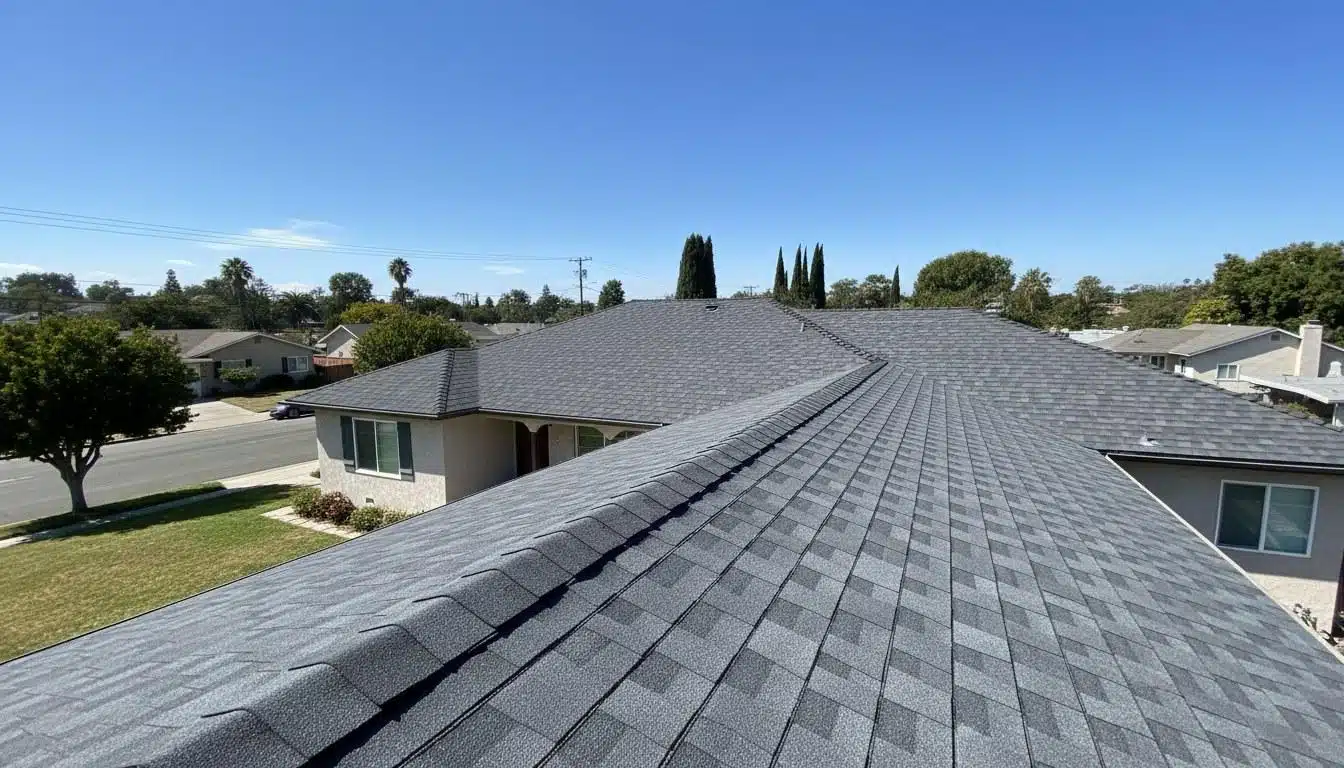
The roof replacement cost California 2026 market shows that most single-family homeowners pay between $8,000 and $25,000 for a complete tear-off and re-roof. Smaller homes with standard asphalt shingles typically land in the $8,000 to $13,000 range, while larger homes or premium materials can push well past $20,000.
These figures reflect the regional market across California as of 2026 and are not quotes from any single contractor. Labor rates, permit costs, and material prices all vary by county, project complexity, and current supply-chain conditions.
To give you a clearer starting point, here is how common project shapes break down in the current California market:
| Scenario | Typical Market Range | What’s Usually Included |
|---|---|---|
| Small home (under 1,500 sq ft), 3-tab asphalt shingles | $8,000 to $12,000 | Single-layer tear-off, underlayment, new shingles, basic flashing, permit |
| Mid-size home (1,500-2,500 sq ft), architectural shingles | $12,000 to $18,000 | Full tear-off, synthetic underlayment, architectural shingles, ridge cap, permit |
| Large home (2,500-3,500 sq ft), architectural shingles | $17,000 to $25,000 | Full tear-off, upgraded underlayment, architectural shingles, valley flashing, permit |
| Mid-size home, concrete or clay tile | $20,000 to $35,000 | Tear-off, heavy-duty underlayment, tile, mortar, flashing, permit |
| Mid-size home, standing-seam metal roof | $22,000 to $40,000 | Tear-off, metal panels, specialized fasteners, flashing, permit |
These ranges move up or down based on the factors described in the next section. Always request a written, itemized estimate before agreeing to any work.
What Factors Affect the Price of a Roof Replacement?
Six core variables drive most of the price difference between a $9,000 job and a $22,000 job on similar-sized homes. Understanding each one helps you evaluate quotes and avoid surprises.
- Roof size and square footage: Roofing is priced per “square” (100 sq ft). A 2,000 sq ft roof may have 20-25 squares once you account for pitch and overlap waste. More squares means more material and more labor hours.
- Roof pitch (steepness): Roofs steeper than a 6:12 pitch require safety equipment, slower work pace, and more labor. Steep-slope jobs can add 20-40% to the base labor cost compared to a walkable low-slope roof.
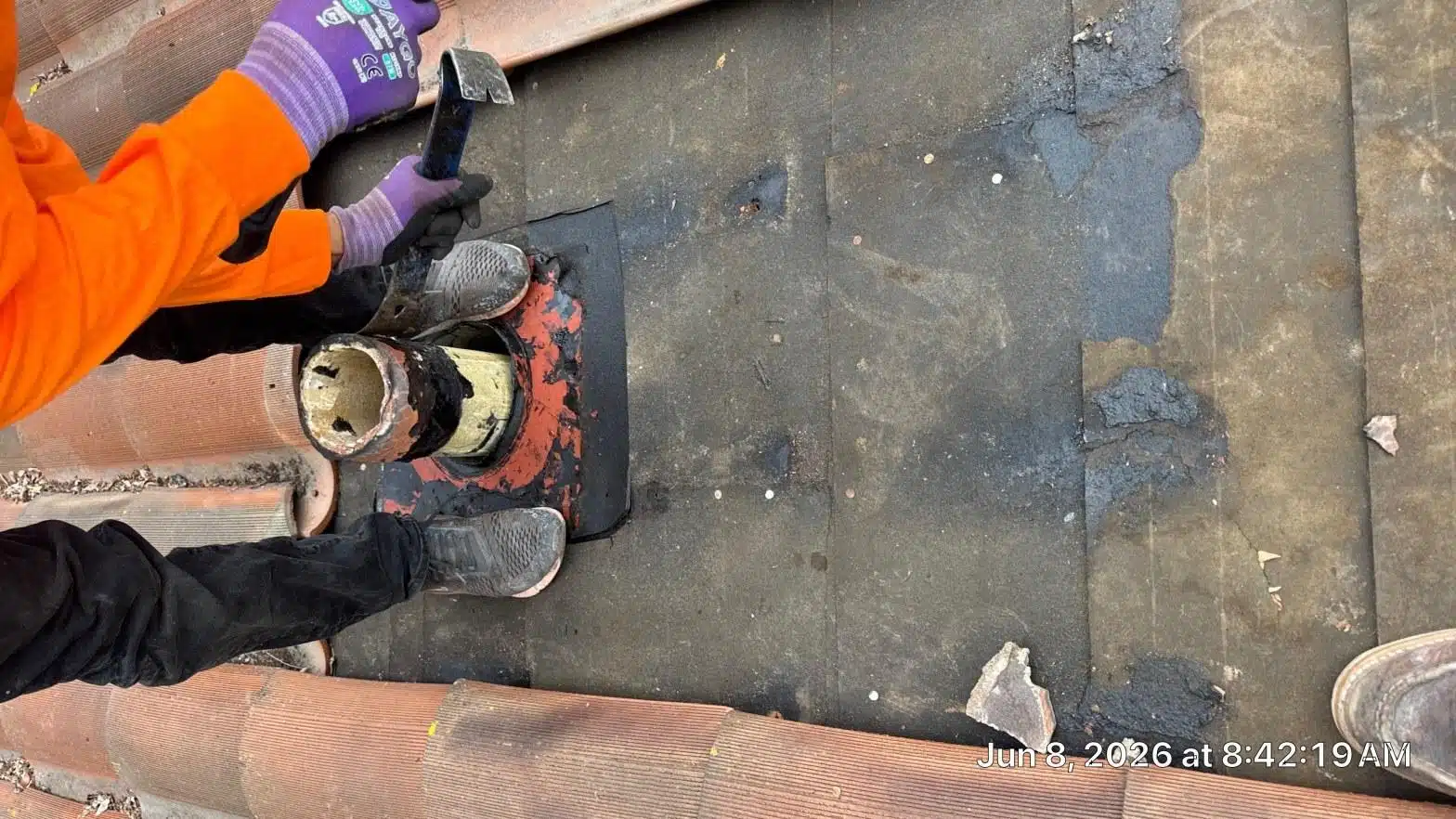
- Number of existing layers: California building codes generally allow no more than two layers of roofing material on a structure. If your roof already has two layers, a full tear-off is required, adding $1,000 to $3,000 or more in disposal and labor costs.
- Material choice: Asphalt shingles remain the most affordable option. Tile, metal, and composite materials cost significantly more per square but often carry longer warranties of 30 to 50 years.
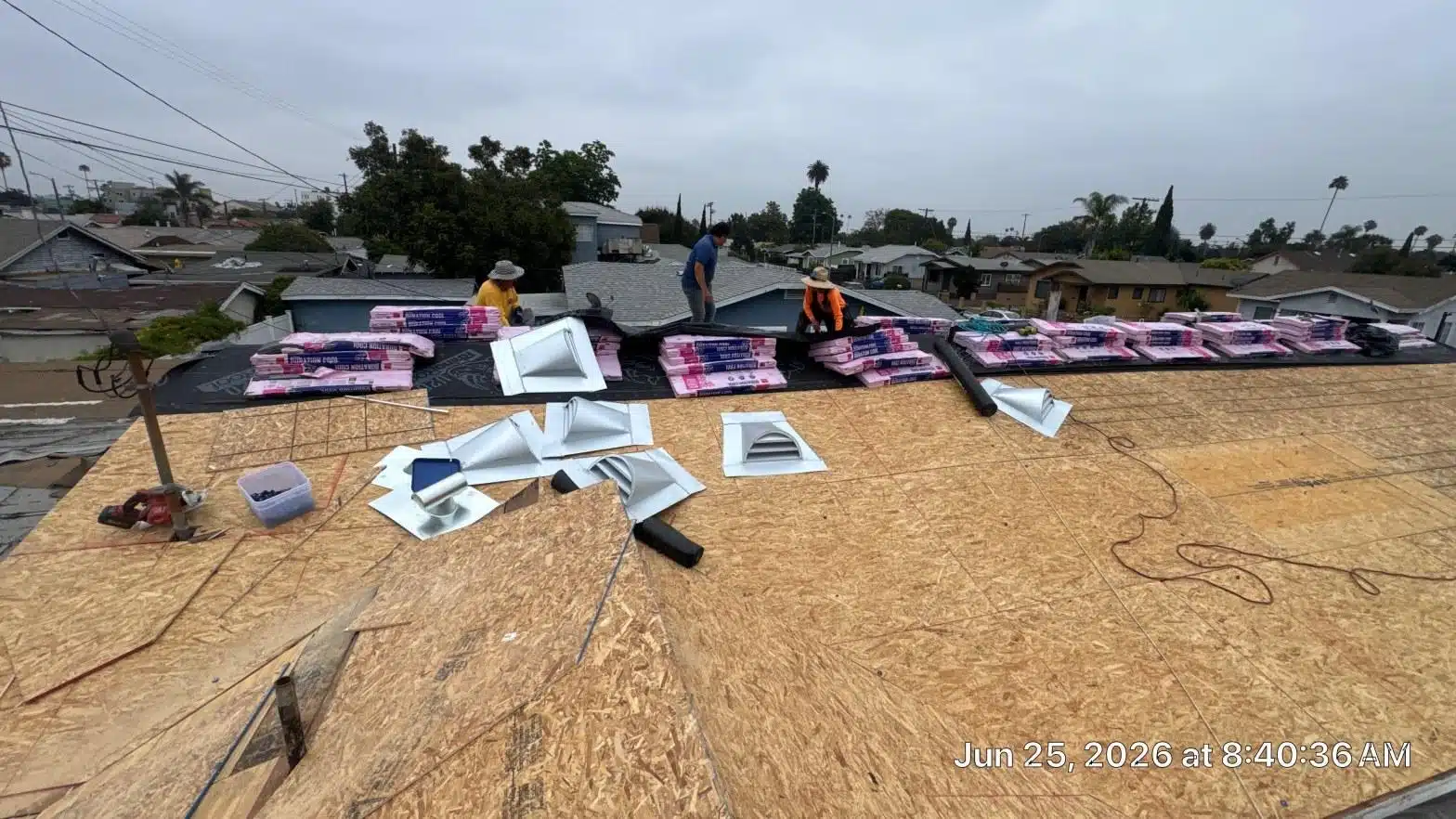
- Decking condition: If the plywood or OSB sheathing underneath is rotted or damaged, it must be replaced before new roofing goes down. Deck repairs typically run $2 to $5 per square foot of affected area.
- Permit and inspection fees: California counties and cities require permits for full roof replacements. Permit fees generally range from $150 to $600 depending on jurisdiction, and some areas require a final inspection before the permit closes.
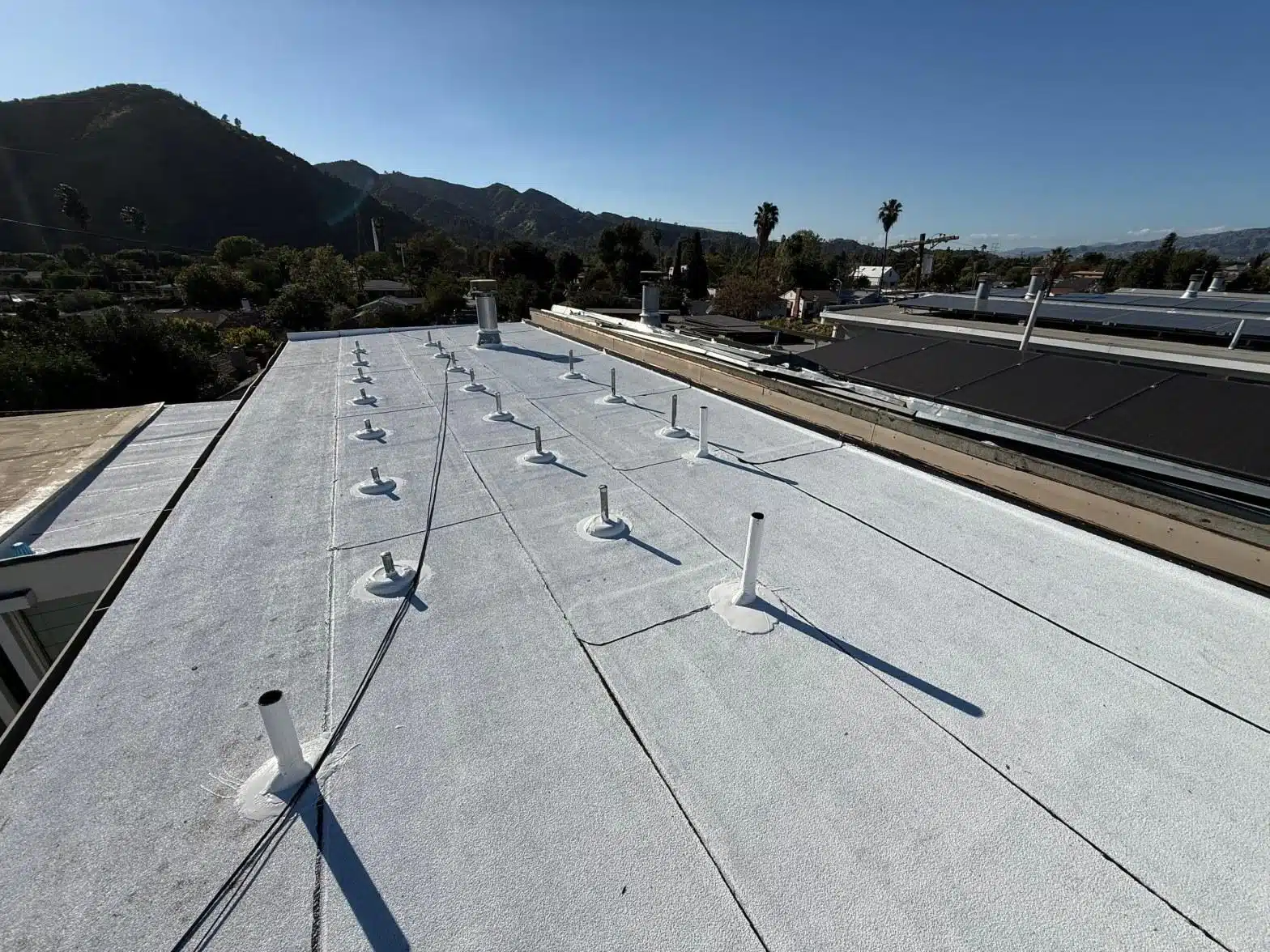
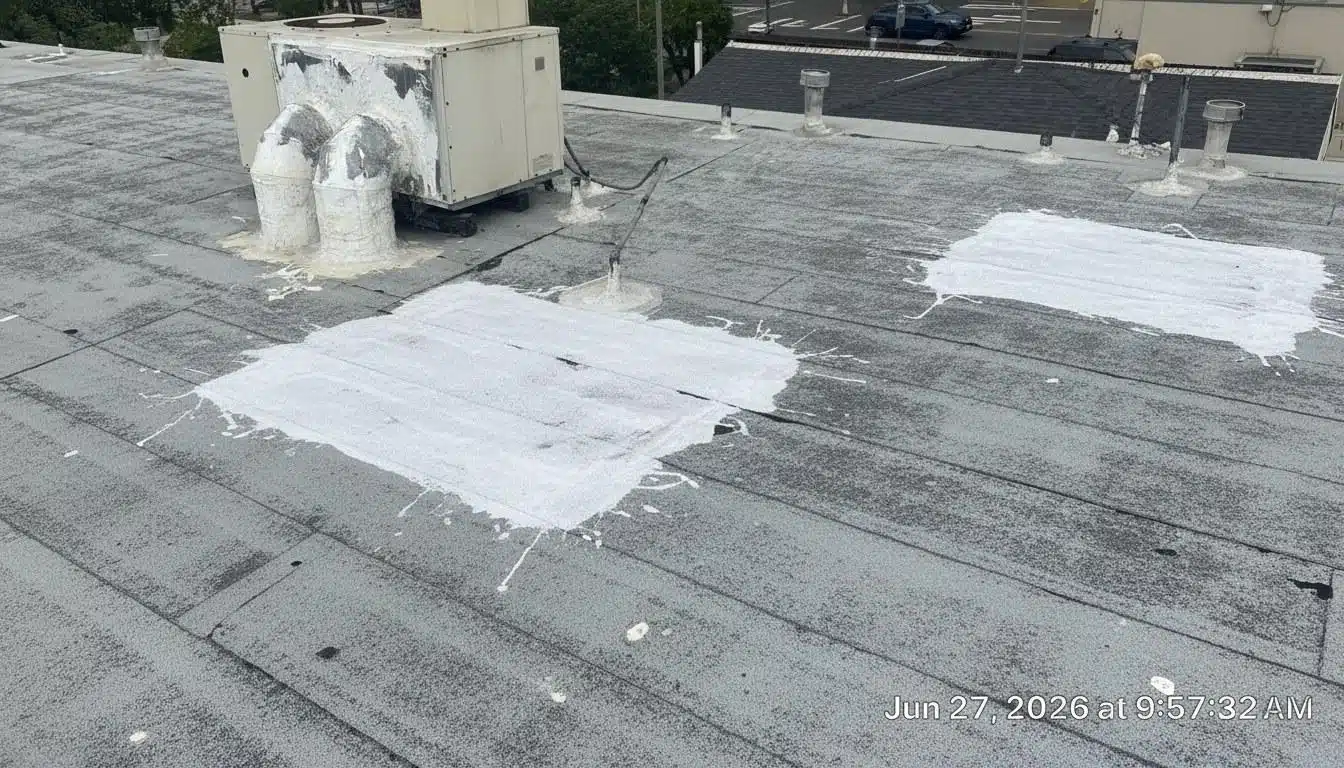
- Accessibility and complexity: Homes with multiple valleys, skylights, dormers, chimneys, or solar panels require more flashing work and labor time, which increases the total cost.
Our crews replace roofing on roughly 3 out of every 5 jobs where the decking has at least some rot damage, a pattern we see most often on homes where the roof was already 20 or more years old at the time of replacement.
How Do Different Roofing Materials Compare on Cost?
Asphalt shingles are the most widely used roofing material in California and the least expensive to install, typically ranging from $4.50 to $7.50 per square foot installed. Tile and metal roofs cost more upfront but can last 40 to 50 years with proper maintenance.
Here is a side-by-side look at the most common materials available to California homeowners:
| Material | Typical Installed Cost (per sq ft) | Expected Lifespan | Key Benefit |
|---|---|---|---|
| 3-tab asphalt shingles | $4.50 to $6.00 | 15-20 years | Lowest upfront cost |
| Architectural (dimensional) asphalt shingles | $5.50 to $7.50 | 25-30 years | Better wind and impact resistance |
| Concrete or clay tile | $10.00 to $18.00 | 40-50 years | Durability in heat, classic California aesthetic |
| Standing-seam metal | $12.00 to $20.00 | 40-70 years | Fire resistance, low maintenance, wildfire-zone suitability |
| Composite / synthetic shingles | $7.00 to $12.00 | 30-50 years | Lightweight, mimics tile or slate appearance |
Homeowners in California’s high fire-hazard severity zones (FHSZ) should pay close attention to a material’s Class A fire rating. California’s Office of the State Fire Marshal maintains the official FHSZ maps and lists approved roofing assemblies. Metal and Class A-rated architectural shingles are popular choices in these areas.
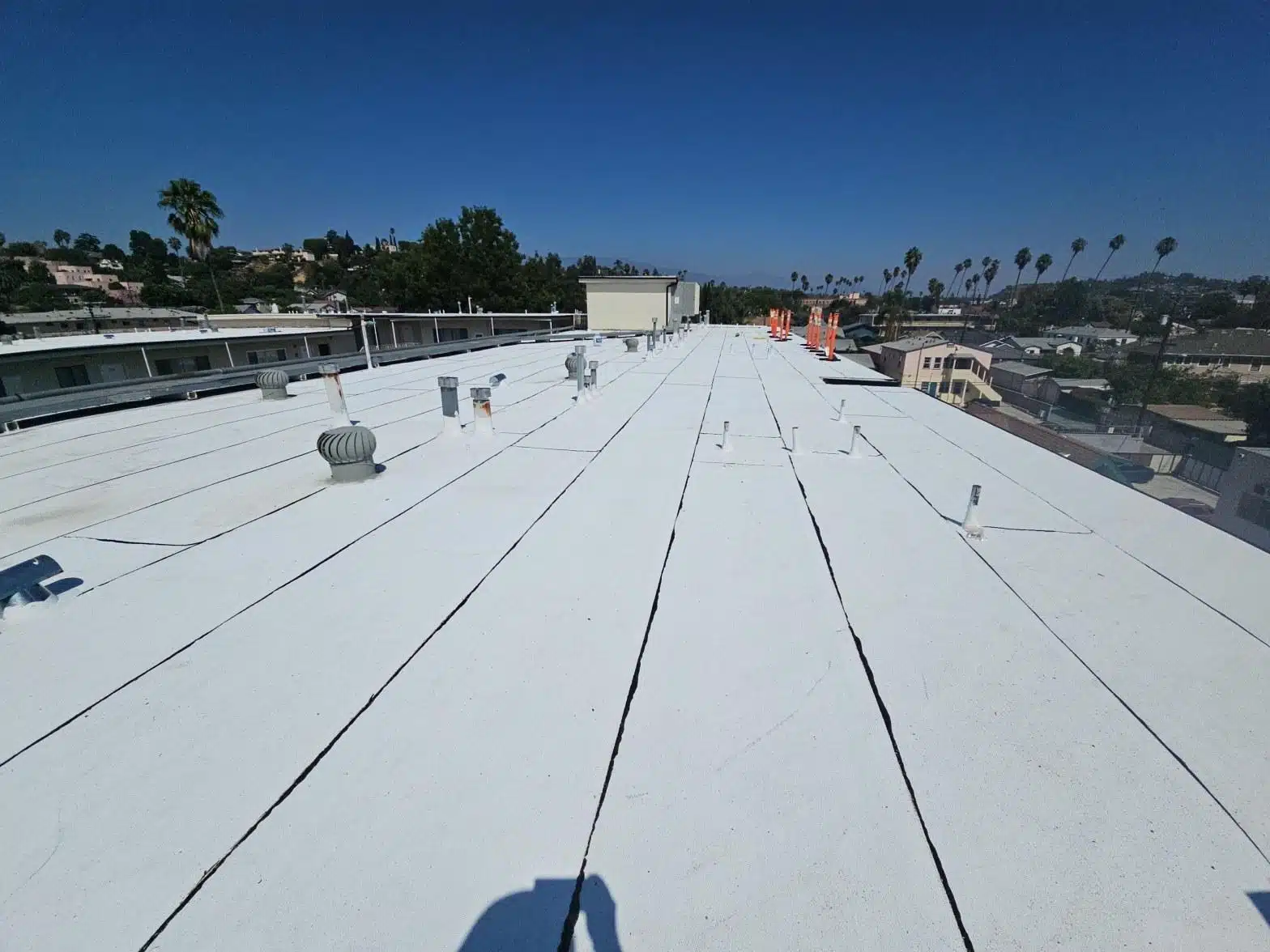
ENERGY STAR-rated cool-roof shingles are another option worth considering. They reflect more solar energy and can reduce attic temperatures, which matters in inland California regions that regularly exceed 100°F in summer. The ENERGY STAR roofing products list is a reliable starting point for comparing certified options.
What Is NOT Included in a Standard Roof Replacement Quote?
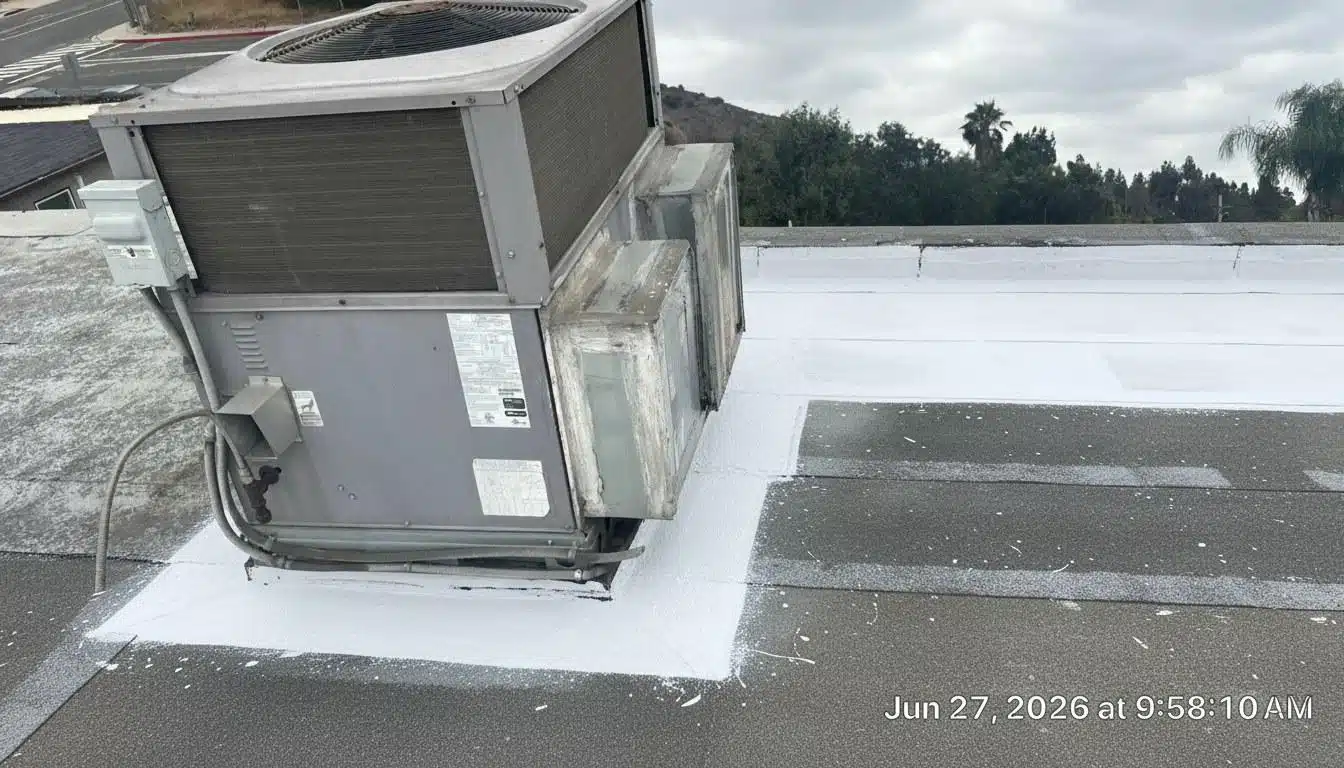
Most standard roof replacement quotes cover materials, labor, basic flashing, and permit filing, but several common items are typically billed separately and can add $500 to $5,000 or more to the final invoice. Knowing these ahead of time prevents sticker shock after the job starts.
- Decking replacement: Rotted or damaged sheathing is almost always an add-on. Contractors cannot know the full extent until the old roofing is removed.
- Skylight resealing or replacement: Existing skylights often need new flashing kits or full replacement during a re-roof. This is rarely included in a base quote.
- Chimney flashing and cricket installation: Wide chimneys may need a cricket (a small diverter) built behind them. This is a separate carpentry and flashing cost.
- Gutters and fascia repair: If gutters or fascia boards are rotted, they are typically quoted separately from the roofing scope.
- Solar panel removal and reinstallation: If your home has solar, panels must be removed before re-roofing and reinstalled after. Solar companies or electricians typically handle this, adding $1,500 to $4,000 to the total project cost.
- Ventilation upgrades: Bringing attic ventilation up to current code (required under California’s Title 24 building energy standards) may require adding ridge vents, soffit vents, or powered attic fans, all separate line items.
- HOA approval fees or architectural review: Some communities charge fees for material or color changes, and delays can push out your project timeline.
Always ask your contractor to walk you through what is and is not covered before signing. A detailed written scope protects both parties.
How Do You Get an Accurate Roof Replacement Quote?
The most accurate quotes come from contractors who physically inspect your roof, measure it themselves, and provide a written, itemized breakdown, not a per-square ballpark given over the phone. Here is what to have ready and what to ask.
Information to Have Ready
- Approximate home square footage and number of stories
- Age of the current roof and the material it is made of
- Number of existing roofing layers (check your permit history if unsure)
- Any known leak locations or areas of visible damage
- Whether you have solar panels, skylights, or a chimney
- Your county or city (permit requirements vary)
Questions to Ask Every Contractor
- Are you licensed by the California Contractors State License Board (CSLB)? Ask for their license number and verify it online.
- Does your quote include permit filing and final inspection?
- What is your process if you find rotted decking once the old roof is removed?
- What manufacturer warranty does the material carry, and do you offer a workmanship warranty?
- Who is responsible for cleanup and debris disposal?
Getting at least 2 to 3 itemized written quotes is the standard recommendation for any project over $10,000. It also gives you leverage to ask questions about line items that differ between bids.
It is also worth checking whether any federal incentives apply. The Inflation Reduction Act federal tax credit (Section 25C) may cover a portion of costs for certain energy-efficient roofing materials installed on primary residences. Consult a tax professional to confirm eligibility for your specific project.
How Does California’s Climate Affect Your Roofing Decisions?
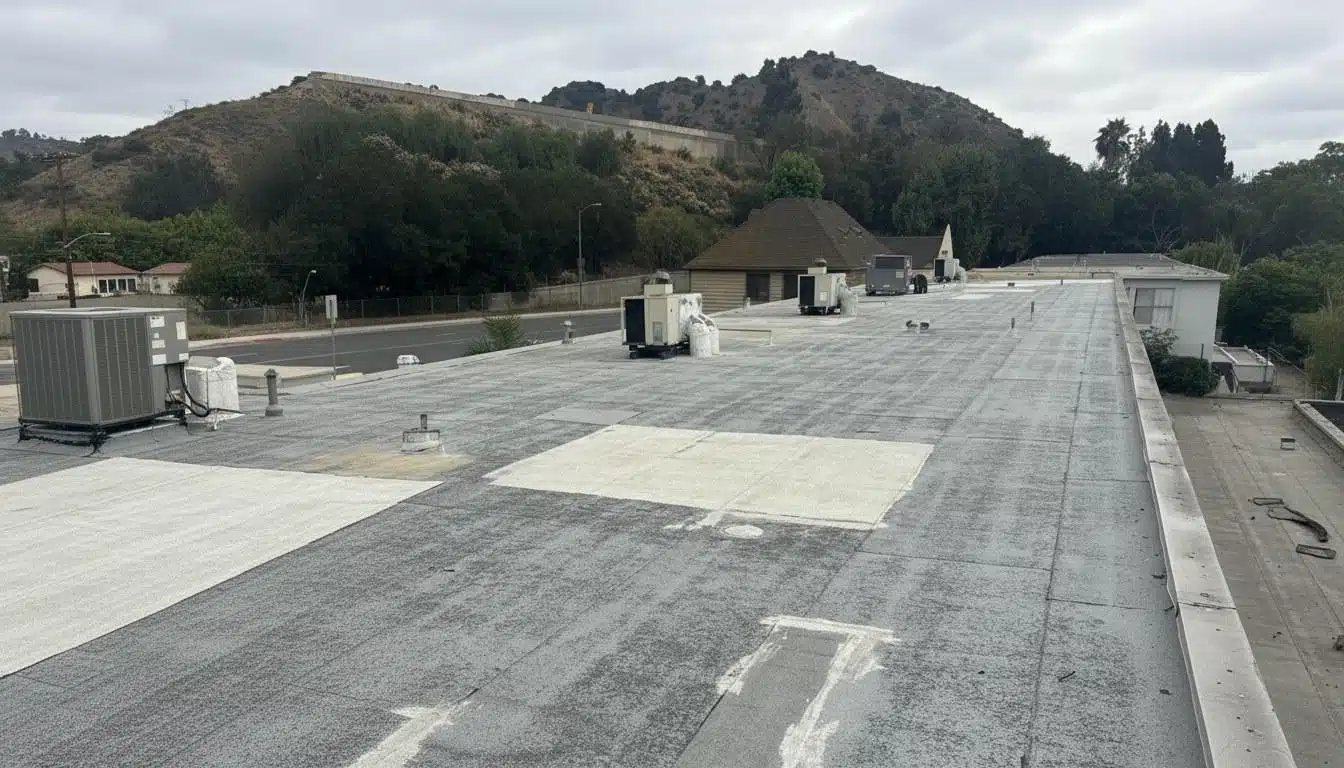
California’s climate varies dramatically from the coast to the inland valleys to the mountains, and that variation should directly influence your material choice, underlayment spec, and ventilation design. A roof built for coastal fog in the Bay Area is not the same roof that performs best in the Inland Empire’s summer heat.
Coastal areas deal with persistent moisture, salt air, and mild temperatures. Algae-resistant shingles and corrosion-resistant flashing metals (like stainless steel or copper) hold up better in these conditions than standard galvanized products.
Inland and desert-adjacent regions in Southern California regularly see summer temperatures above 100°F. In these zones, attic ventilation is critical. Poor ventilation can raise attic temperatures to 150°F or more, accelerating shingle degradation and raising cooling costs. California’s Title 24 building energy standards set minimum ventilation ratios for new and replacement roofing, your contractor must meet these requirements as part of any permitted re-roof.
High-elevation communities in the Sierra Nevada foothills and mountain regions face snow loads, freeze-thaw cycles, and ice dam risk. These areas often require a full ice-and-water shield underlayment at the eaves, which adds cost but is essential for leak prevention.
Wildfire risk is another California-specific factor. Across our service calls in fire-adjacent communities, we see a roughly 40% higher rate of homeowners requesting Class A-rated metal or composite materials compared to five years ago, a shift driven by insurance requirements and defensible-space awareness.
Homeowners in designated fire zones should also check with their insurer before choosing a material. Some carriers in California now require Class A fire-rated roofing as a condition of coverage renewal.
Get a Custom Roof Replacement Quote in Los Angeles
The market ranges in this guide give you a solid foundation for planning, but your actual roof replacement cost depends on the specific details of your home, your chosen material, and current local labor and material rates. There is no substitute for a hands-on inspection and a written, itemized quote.
Roof Repair & Construction Inc. provides full roof replacements, shingle repairs, and re-roofing services across Los Angeles County and the surrounding region. Every project starts with a thorough on-site inspection so you know exactly what you are paying for before any work begins. The company is licensed by the California Contractors State License Board (CSLB), and all replacement work is performed to current California building code and Title 24 standards.
Call (323) 474-1088 to schedule your inspection and get a written quote tailored to your home’s actual scope, not a ballpark based on averages.
Explore our full range of Roof Repair services across Southern California.
Frequently Asked Questions
How much does it cost to replace a roof in California right now?
In the current California market, a full roof replacement typically costs between $8,000 and $25,000 for a standard single-family home using asphalt shingles. Tile or metal roofs on larger homes can run $30,000 to $40,000 or more. The final price depends on your roof's size, pitch, material choice, and whether any decking needs to be replaced. Call Roof Repair & Construction Inc. at (323) 474-1088 for a written quote based on your specific home.
How long does a full roof replacement take to complete?
Most full roof replacements on single-family California homes are completed in one to three days. Larger homes, steep roofs, or jobs requiring significant decking repair can take four to five days. Weather delays and permit inspection scheduling can also extend the timeline. Your contractor should give you a written schedule before work begins.
Does homeowner's insurance cover roof replacement in California?
Homeowner's insurance may cover roof replacement if the damage was caused by a covered peril such as a windstorm, fire, or falling object. Damage from normal wear and aging is typically not covered. California insurers have tightened coverage requirements in recent years, and some now require Class A fire-rated roofing in high-risk zones. Review your policy and contact your insurer before filing a claim.
What is the best roofing material for a home in Southern California?
Architectural asphalt shingles are the most common choice in Southern California because they balance cost, durability, and heat resistance. Concrete and clay tile are also popular for their long lifespan and classic appearance. In wildfire-prone areas, Class A-rated metal or composite materials are increasingly recommended by both contractors and insurers. The right choice depends on your budget, HOA rules, fire zone designation, and how long you plan to stay in the home.
Do I need a permit to replace my roof in California?
Yes, a permit is required for a full roof replacement in virtually every California city and county. Permit fees generally range from $150 to $600 depending on the jurisdiction. A licensed roofing contractor typically handles permit filing as part of the job scope. Skipping the permit can create problems when you sell the home or file an insurance claim, so always confirm permits are included in your written quote.