Hiring the wrong roofing contractor can cost thousands in repairs and void your homeowner's insurance claim. This guide walks you through 7 concrete checks every California homeowner should make before signing anything.
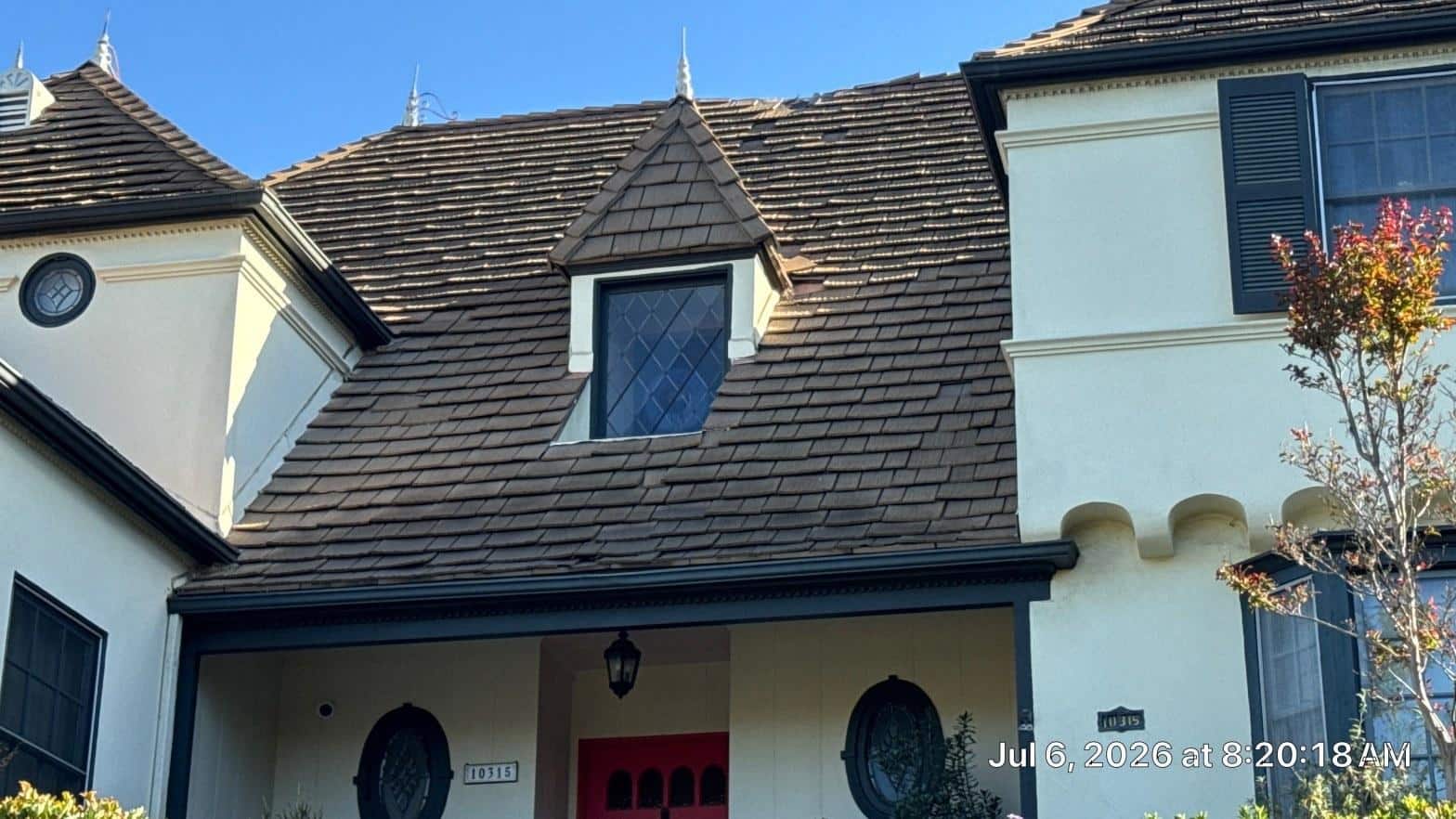
What Should You Know Before Hiring a Roofing Contractor in California?
California has more licensed roofing contractors than almost any other state, but that volume also means more variation in quality, pricing, and professionalism. Knowing how to choose a roofing contractor in California before you call anyone will save you money and protect your home.
California’s climate creates year-round roofing demand. Coastal homes deal with salt air and moisture. Inland valleys face heat that regularly tops 100°F, which accelerates shingle aging. Fire-prone hillside communities need contractors who understand ember-resistant materials and comply with California’s Wildland-Urban Interface building standards. The stakes are high regardless of where you live.
California also requires roofing work over a certain dollar threshold to be performed by a contractor licensed by the California Contractors State License Board (CSLB). That single requirement filters out a large share of fly-by-night operators, but it does not guarantee quality on its own. The seven checks below are what separate a safe hire from a costly mistake.
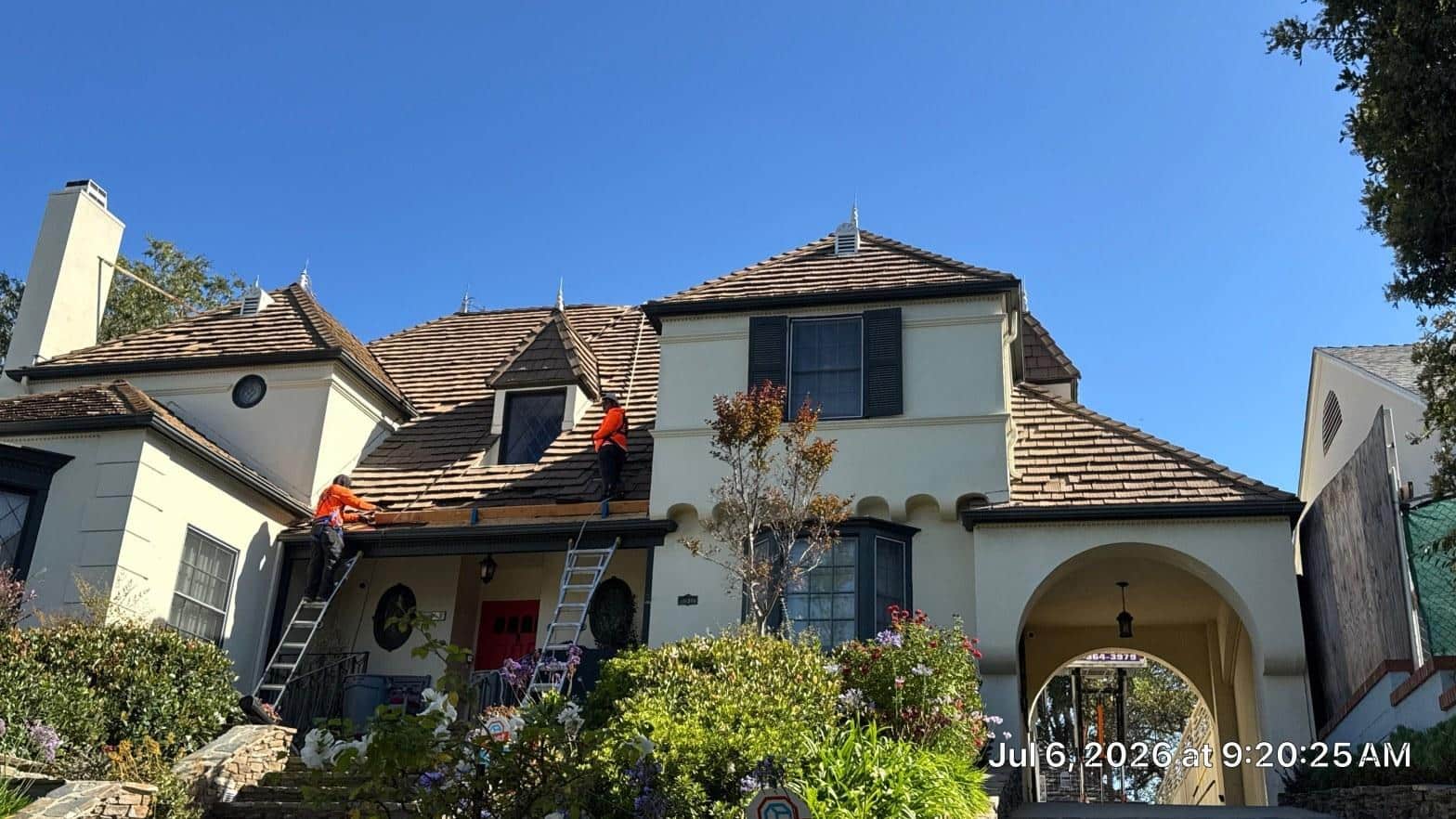
How to Choose a Roofing Contractor in California: The 7 Checks That Matter
These seven steps address the most common ways homeowners get burned when hiring roofing contractors in California. Work through all seven before you sign anything.
1. Verify the CSLB License
Every roofing contractor in California must hold a valid license from the California Contractors State License Board (CSLB). The relevant classification is C-39 Roofing. You can check any license number in seconds at the CSLB license lookup tool at cslb.ca.gov. Confirm the license is active, not expired or suspended, and that the name on the license matches the company name on the bid.
2. Confirm General Liability and Workers’ Compensation Insurance
Ask for a certificate of insurance before any work begins. General liability coverage protects your property if the crew damages it. Workers’ compensation is equally important: if a worker is injured on your roof without it, you could be held liable. California law requires contractors with employees to carry workers’ comp. Do not accept a verbal promise; ask for the actual certificate and call the insurer to confirm it is current.
3. Check Online Reviews and Ask for Local References
Look at Google, Yelp, and the Better Business Bureau for patterns, not just star ratings. A contractor with 4.6 stars across 80 reviews is more trustworthy than one with 5 stars from 4 reviews. Ask the contractor for two or three references from projects completed in the past 12 months, then actually call those homeowners and ask about cleanup, communication, and whether the final bill matched the estimate.
4. Get at Least Three Written Bids
Prices for the same scope of work can vary by 20 to 40 percent between contractors across the California market. Three bids give you a real baseline. If one bid is dramatically lower than the others, ask why. A low bid often means thinner materials, unlicensed subcontractors, or a plan to add charges once work begins.
Prices for the same scope of work can vary by 20 to 40 percent between contractors across the California market.
5. Confirm They Pull Permits
Most California jurisdictions require a permit for a full roof replacement and for structural repairs. A contractor who offers to skip the permit to save you money is putting you at risk. Unpermitted work can void your homeowner’s insurance, create problems when you sell, and leave you responsible for code violations. Permit fees typically run between $150 and $600 depending on the county and project scope.
6. Review the Contract Before You Sign
A legitimate roofing contract should include the scope of work in writing, the materials specified by brand and grade, a start date and estimated completion window, a payment schedule, and a process for handling unforeseen damage. California law limits the deposit a contractor can legally request to 10 percent of the total contract price or $1,000, whichever is less, for home improvement projects. Any contractor demanding 30 to 50 percent upfront is a red flag.
7. Evaluate Communication and Professionalism
How a contractor communicates before you hire them is a preview of how they will communicate during the job. Did they show up on time for the estimate? Did they explain their process clearly? Did they answer your questions without pressure? Roofing projects on a typical California home take two to five days. You want someone who keeps you informed, not someone who goes silent after the deposit clears.
How Do Roofing Bids Work and What Should a Written Estimate Include?
A complete roofing estimate is a written document, not a number scrawled on a business card. It should itemize every cost so you can compare bids line by line.
Our team reviews dozens of competing bids each year alongside our own proposals, and the most common gap we see is that low-ball estimates omit decking repair, underlayment upgrades, and disposal fees. Those three items alone can add $800 to $2,500 to the final invoice if they were not spelled out upfront.
A complete estimate should include:
- Material specifications: Brand, product line, and grade of shingles, tiles, or membrane. For example, a 30-year architectural shingle versus a 3-tab shingle carries a different cost and lifespan.
- Labor breakdown: Tear-off of existing material, disposal, installation, and flashing work listed separately.
- Underlayment type: Synthetic underlayment is more durable than felt in California’s heat and should be specified.
- Decking inspection clause: What happens if damaged decking is found once tear-off begins? The estimate should state the per-sheet price for replacement rather than leaving it open-ended.
- Cleanup and haul-away: Debris removal is a real cost. Confirm it is included.
- Permit fees: Listed as a line item, not buried or omitted.
- Payment schedule: Tied to project milestones, not arbitrary dates.
How Much Does Roof Repair or Replacement Cost in California?
Roofing costs in California are higher than the national average due to labor costs, permit requirements, and material shipping distances to many regions. The scope of work is the single biggest driver of the final number.
In the regional market, typical price ranges for common projects look like this:
| Project Type | Typical Market Range (CA) | Key Cost Drivers |
|---|---|---|
| Minor leak repair (single area) | $300 to $900 | Access difficulty, flashing vs. shingle issue |
| Shingle repair or partial replacement | $500 to $2,500 | Number of squares, matching existing material |
| Full asphalt shingle replacement (average home) | $8,000 to $18,000 | Roof pitch, decking condition, material grade |
| Flat roof repair or re-coating | $1,500 to $6,000 | Membrane type, square footage, drainage issues |
| Metal roof repair | $600 to $3,500 | Panel type, seam condition, flashing work |
| Structural roof repair | $2,000 to $12,000+ | Rafter or sheathing damage extent, permits |
These ranges reflect general market conditions across California as of 2025. Prices shift based on county permit fees, the pitch and complexity of the roof, and current material costs. Affordable roof repair is possible, but the cheapest bid is rarely the best value when it omits key line items. Request a written quote from Roof Repair & Construction Inc. to get a clear, itemized number for your specific project.
Which Type of Roofing Contractor Is Right for Your Project?
Not every roofing contractor handles every type of roof. Matching the contractor’s specialty to your project type is one of the most overlooked steps in the hiring process.
California homes use a wide range of roofing systems, and the skills required differ significantly between them. Here is a quick guide:
| Roof Type | Best Contractor Match | Key Credential to Ask For |
|---|---|---|
| Asphalt shingle (residential) | General C-39 residential roofer | Manufacturer installation certification |
| Flat / low-slope (TPO, EPDM, modified bitumen) | Flat roof specialist or commercial roofer | Membrane manufacturer certification |
| Metal roofing (standing seam, corrugated) | Metal roofing specialist | Experience with thermal expansion details |
| Tile (clay or concrete) | Tile roofing specialist | References for tile work specifically |
| Commercial low-slope | Commercial roofing contractor | OSHA compliance, commercial insurance limits |
| Fire or smoke damage repair | Contractor with insurance claim experience | Familiarity with CAL FIRE and insurer documentation |
Roofing maintenance services in California often require a contractor who understands the specific demands of your roof system, not just general roofing. A flat roof specialist who has never worked with standing-seam metal, for example, can cause more damage than they fix.
What Mistakes Should You Avoid When Hiring a Roofer?
The most expensive roofing mistakes in California are almost always avoidable. They share a common thread: homeowners skipped a step in the vetting process because they were in a hurry or felt pressured.
Across service calls in Southern California, we see the same failure patterns repeatedly. In roughly 4 out of 10 cases where a homeowner calls us to fix another contractor’s work, the original contractor either lacked a current CSLB license or never pulled a permit. Those two omissions alone account for the majority of costly re-dos.
In roughly 4 out of 10 cases where a homeowner calls us to fix another contractor's work, the original contractor either lacked a current CSLB license or never pulled a permit.
- Hiring after a storm without vetting: Storm chasers travel to disaster areas and disappear after collecting a deposit. Always verify the CSLB license even when you feel urgency.
- Accepting a verbal estimate: If it is not in writing with materials specified, it is not a real estimate. Verbal agreements are nearly impossible to enforce.
- Choosing solely on price: The lowest bid for affordable roof repairs often omits underlayment quality, decking inspection, or proper flashing work. Compare scope, not just the bottom line.
- Ignoring the subcontractor question: Ask whether the crew doing the work is employed directly or subcontracted. If subcontracted, confirm those subs are also licensed and insured.
- Skipping the permit step: Unpermitted roofing work can trigger a stop-work order, require tear-out for inspection, and create title problems when you sell. As of 2024, many California counties have increased enforcement of permit requirements for residential roofing.
- Signing a contract with an open-ended scope: Vague language like “repair as needed” gives a contractor room to bill for work you never approved. Every task should be described specifically.
- Paying in cash with no receipt: Cash payments with no paper trail leave you with no recourse if work is incomplete or defective. Always pay by check or card and keep copies of every receipt.
Get Expert Roofing Help Across Southern California
Knowing how to choose a roofing contractor in California is the first step. The second step is calling a contractor who meets every standard on that list. Roof Repair & Construction Inc. is licensed by the California Contractors State License Board (CSLB), fully insured, and experienced across the full range of residential and commercial roofing systems, including shingle repair, flat roof repair, metal roof repair, structural repairs, flashing, gutters, and fire and smoke damage restoration.
Roof Repair & Construction Inc. serves homeowners and property managers across Southern California. Whether you need a quick leak repair or a complete roof replacement, the process starts with a written, itemized estimate so you know exactly what you are paying for and why.
Call (323) 474-1088 to schedule your estimate. Get a clear scope, a written bid, and answers to every question before any work begins.
Explore our full range of Roof Repair services across Southern California.
Frequently Asked Questions
How do I check if a roofing contractor is licensed in California?
Go to the CSLB license lookup tool at cslb.ca.gov and enter the contractor's license number or business name. You will see whether the license is active, what classification it covers, and whether any complaints or disciplinary actions are on record. For roofing work, look for a C-39 classification specifically.
How much should I pay upfront to a roofing contractor in California?
California law limits the deposit for home improvement contracts to 10 percent of the total contract price or $1,000, whichever is less. Any contractor asking for 30 to 50 percent upfront before work begins is violating state law and is a strong warning sign. Legitimate contractors tie payment milestones to completed stages of work.
Do I need a permit for a roof replacement in California?
In most California jurisdictions, a full roof replacement requires a building permit. Permits typically cost between $150 and $600 depending on the county and project scope. Skipping the permit can void your homeowner's insurance coverage for that work and create legal problems when you sell the home.
How long does a roof replacement take in California?
A full roof replacement on a typical California single-family home generally takes two to five days. Larger homes, complex roof shapes, structural repairs, or tile systems can extend that to one to two weeks. Weather delays are uncommon in most of California but can add a day or two during the rainy season, roughly November through March.
What is the difference between a roof repair and a roof replacement?
A roof repair addresses a specific damaged area, such as a leak around a flashing, a section of missing shingles, or a localized flat roof blister. A replacement removes and replaces the entire roofing system. Most roofing contractors recommend replacement when more than 25 to 30 percent of the roof surface is damaged, when the roof is approaching the end of its rated lifespan, or when repeated repairs are no longer cost-effective.