Multi-unit roofs fail faster and cost more to ignore than single-family roofs. This guide walks building owners and property managers through every step of planning, scheduling, and completing a roof repair without disrupting tenants or running into code problems.
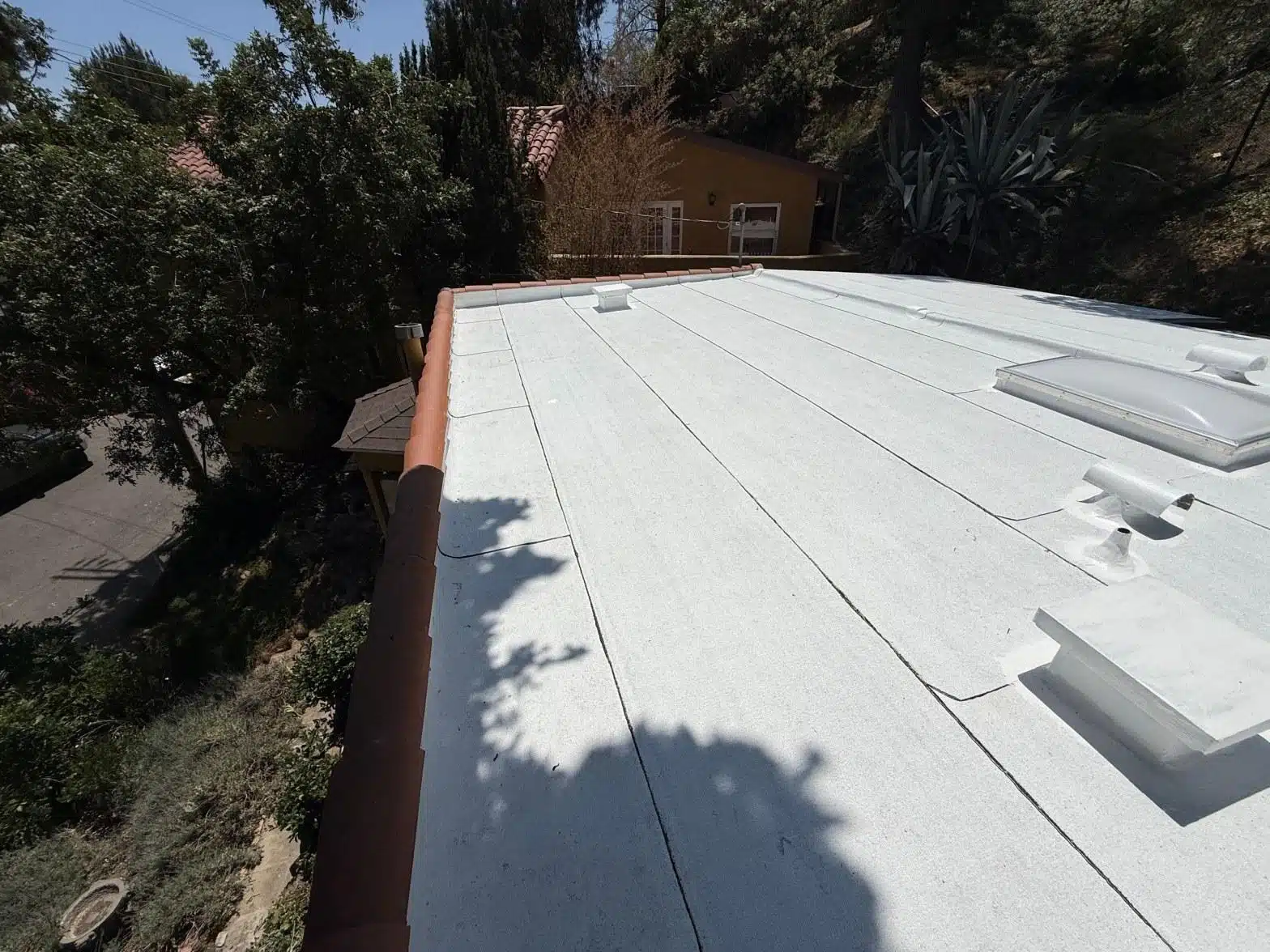
Apartment and multi-unit buildings carry roofing challenges that single-family homes simply do not face: larger surface areas, flat or low-slope membranes, active tenants below, and stricter permit requirements. This apartment roofing contractor guide is written for building owners and property managers who need clear, practical answers on flat roof maintenance, code compliance, tenant notification, and how to qualify the right contractor before signing anything.
Why Are Multi-Unit Roofs Different From Single-Family Roofs?
A multi-unit roof typically covers 2,000 to 30,000 square feet of occupied space, meaning a single leak can affect dozens of tenants at once and trigger habitability complaints under California Civil Code Section 1941. The stakes are higher, the logistics are more complex, and the window for safe repairs is narrower than on a standalone home.
Single-family roofs are usually pitched, shed water quickly, and are inspected by one decision-maker. Apartment roofs are more often flat or low-slope, hold standing water longer, and involve a chain of stakeholders: the owner, a property manager, a HOA board, and the tenants themselves. Each layer adds coordination time.
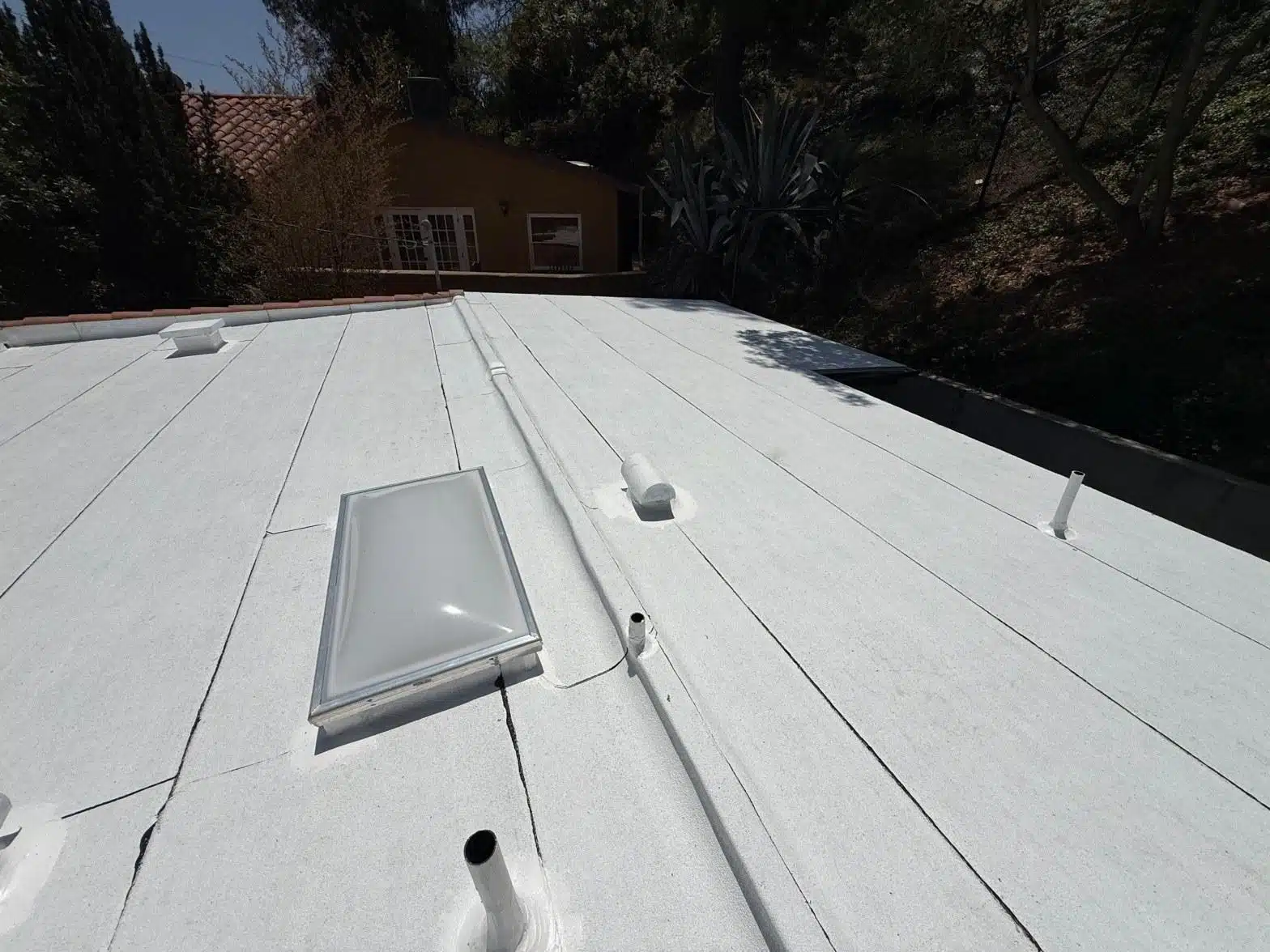
Flat roofs also age differently. A well-maintained TPO or modified bitumen membrane lasts 15 to 25 years, but California’s heat cycles, UV exposure, and occasional heavy rain events accelerate wear. Our crews see membrane blistering appear as early as year 8 on roofs that missed their 3-year inspection window, particularly on south-facing sections that absorb peak summer heat.
A well-maintained TPO or modified bitumen membrane lasts 15 to 25 years, but California's heat cycles and UV exposure accelerate wear significantly.
California landlords also carry a legal duty to maintain roofs in a weathertight condition. Failure to do so can expose building owners to rent withholding, repair-and-deduct claims, or habitability lawsuits under California Civil Code Section 1941. That legal exposure alone makes proactive roof management a financial priority, not just a maintenance task.
What Types of Roofing Systems Are Common on Apartment Buildings?
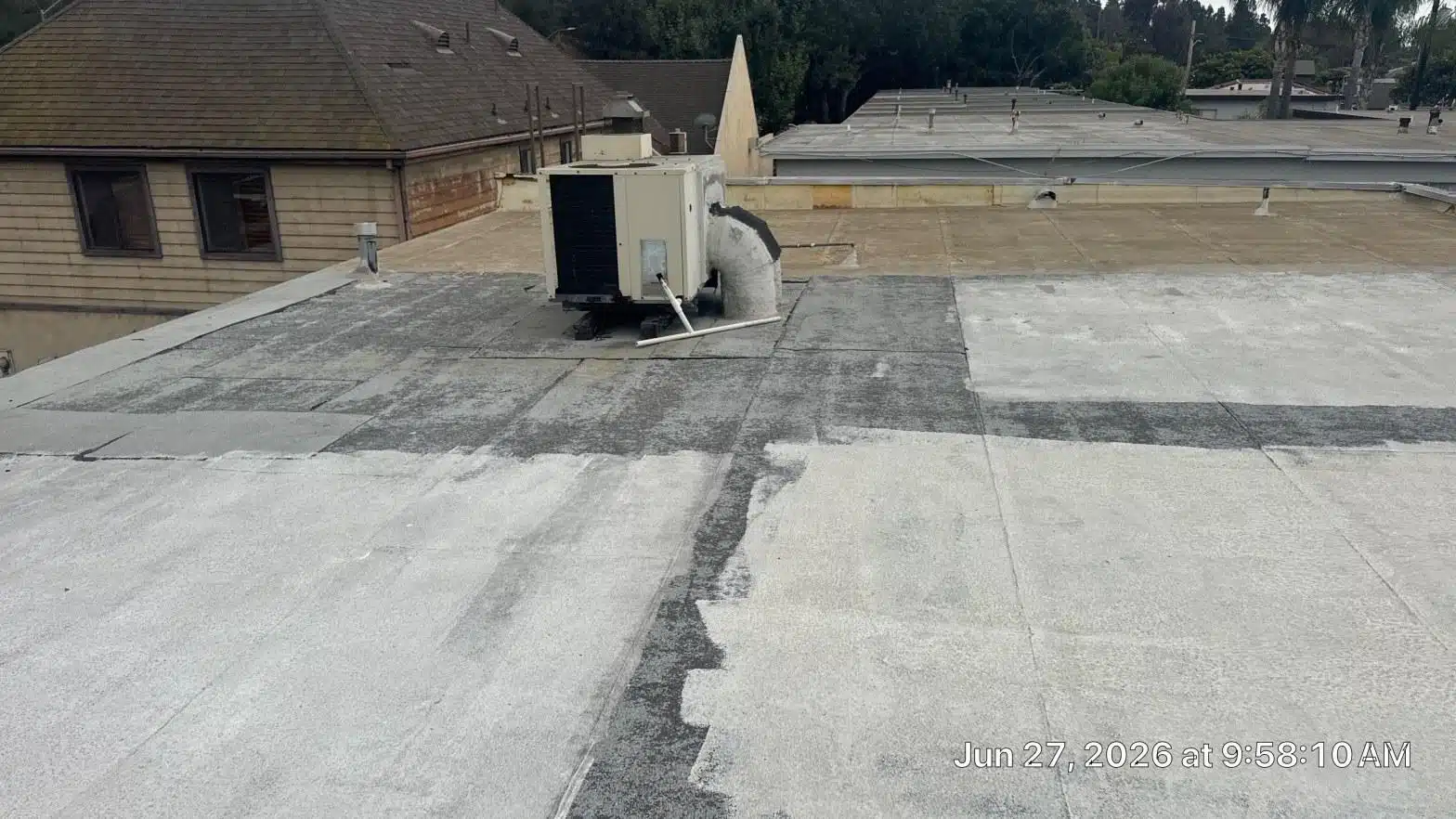
Most apartment buildings in California use one of four flat or low-slope roofing systems: TPO (thermoplastic polyolefin), modified bitumen, built-up roofing (BUR), or EPDM rubber membrane. Each has a different lifespan, repair method, and cost profile.
| Roofing System | Typical Lifespan | Common Repair Needs | Best For |
|---|---|---|---|
| TPO Membrane | 15 to 25 years | Seam splits, punctures, flashing failures | Newer buildings, energy-efficiency goals |
| Modified Bitumen | 15 to 20 years | Surface cracking, blister repair, lap seam re-sealing | Mid-rise buildings, re-roofing projects |
| Built-Up Roofing (BUR) | 20 to 30 years | Gravel loss, flood coat reapplication, flashing replacement | Older multi-unit stock, high-traffic roofs |
| EPDM Rubber | 20 to 25 years | Seam adhesive failure, puncture patching | Buildings in cooler or shaded locations |
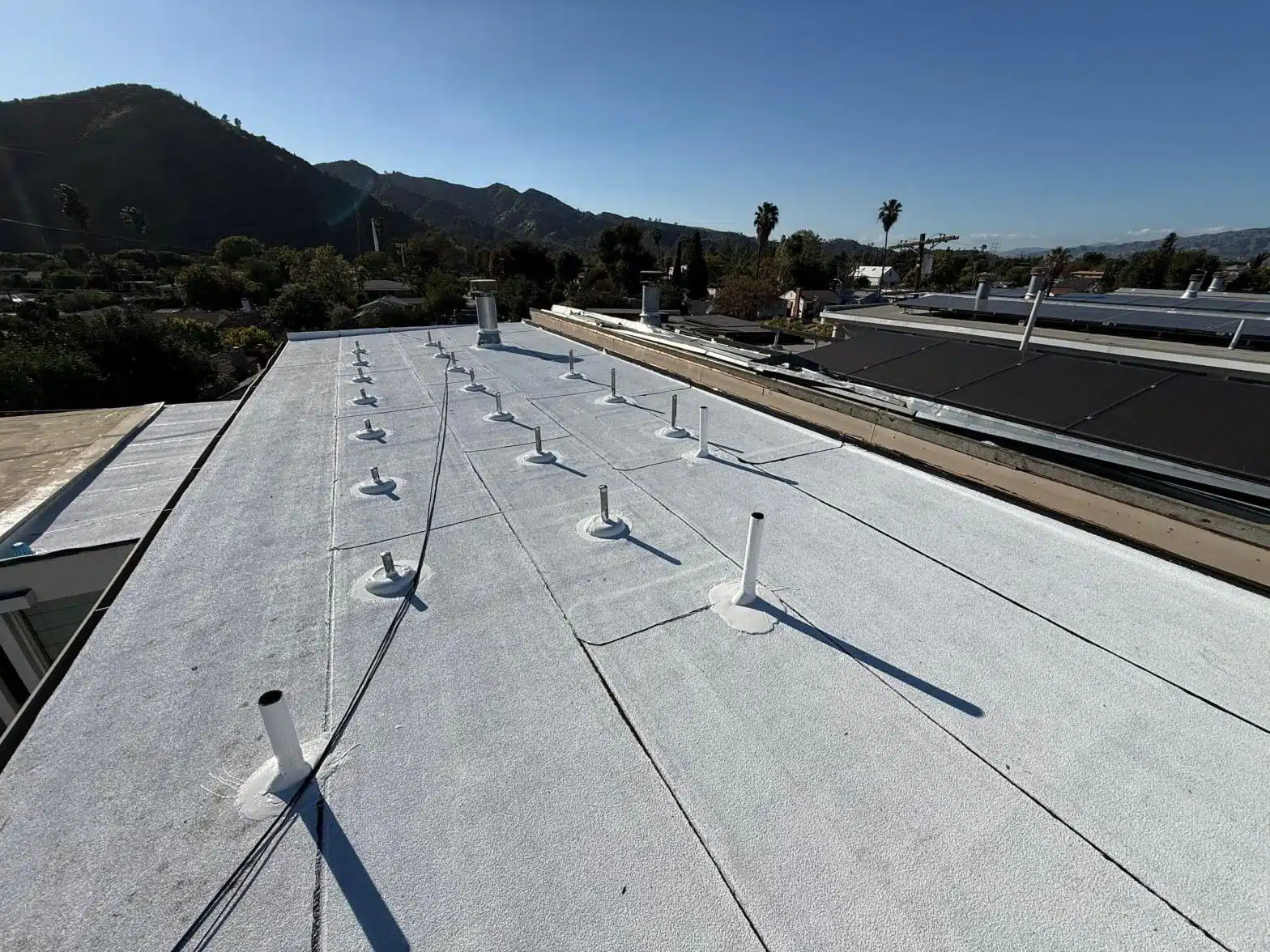
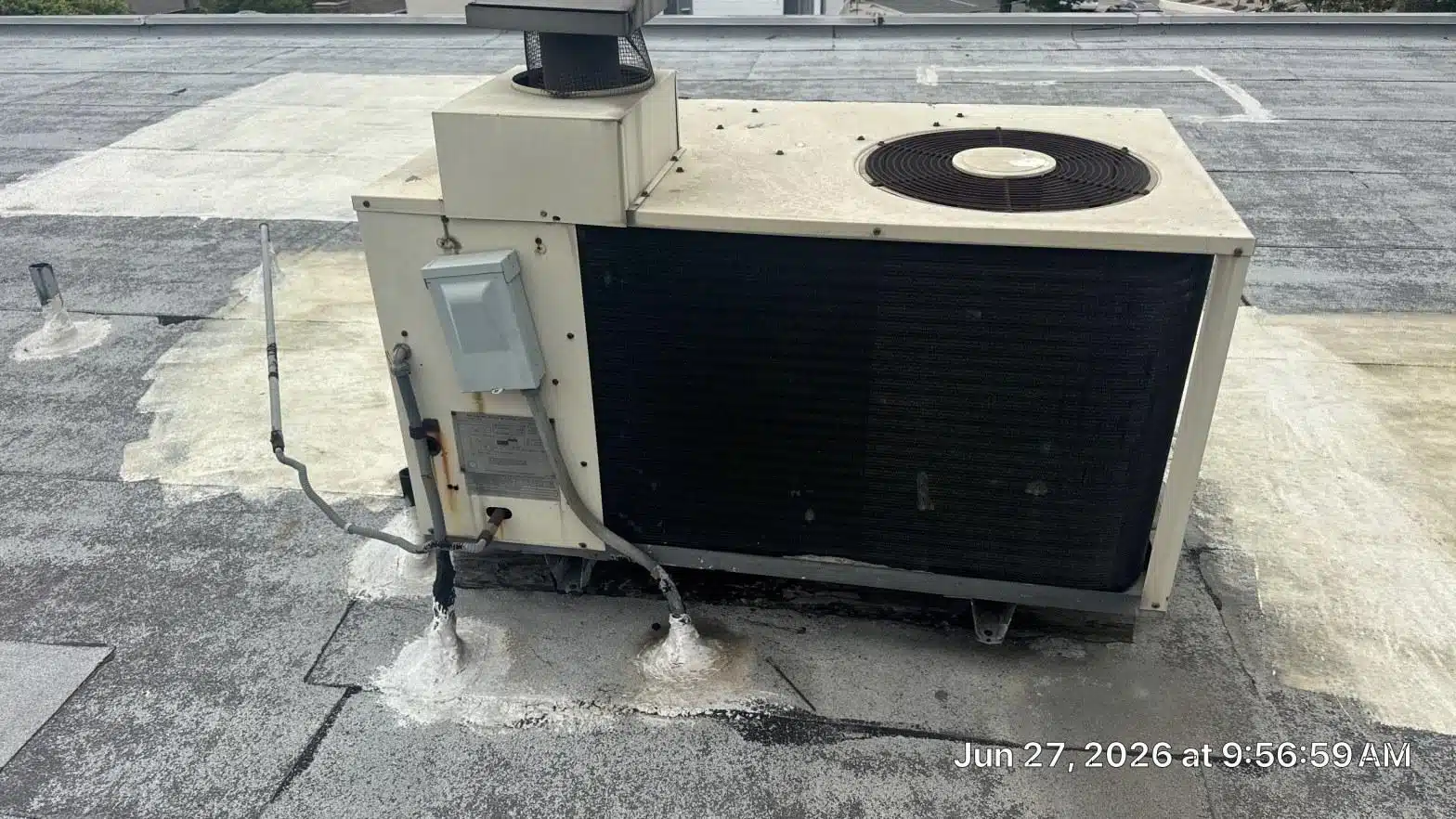
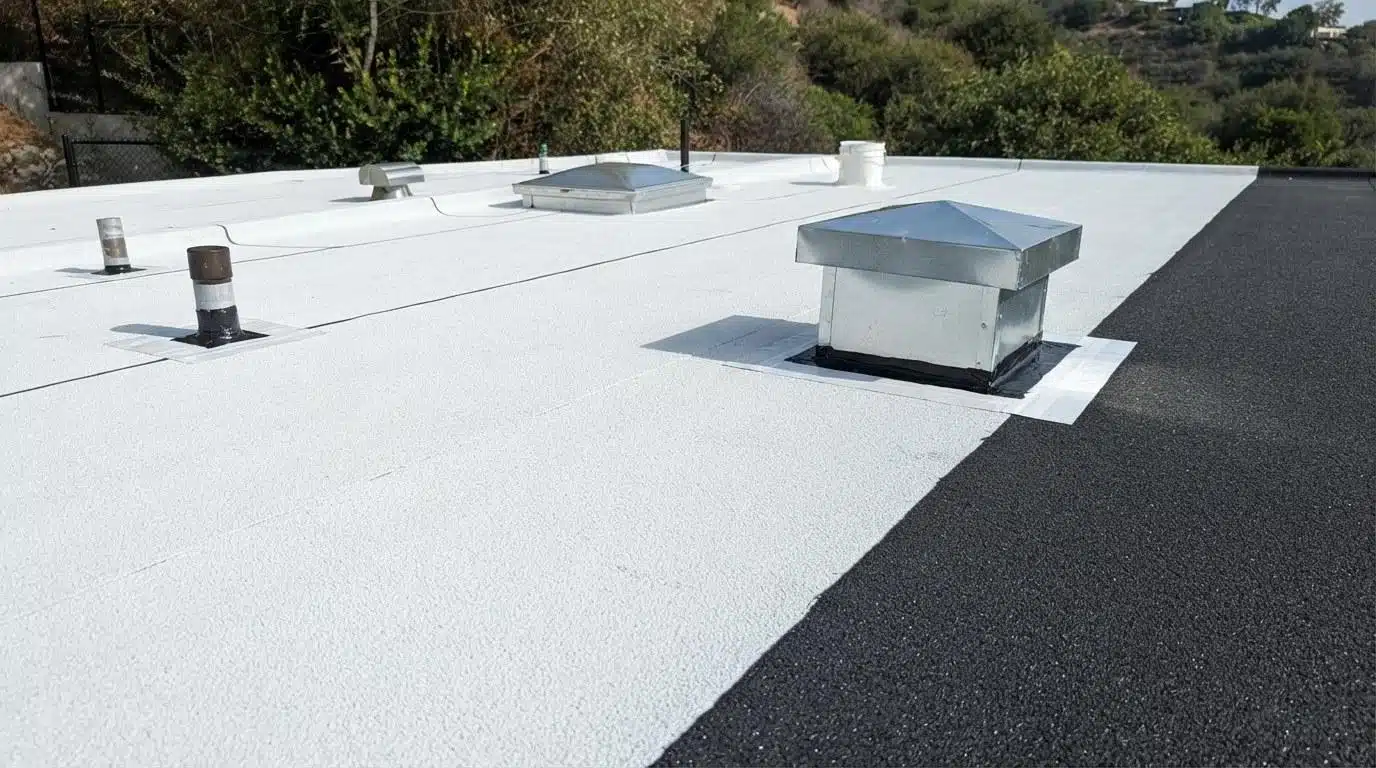
Roof flashing is a critical component on every system. Where the membrane meets a parapet wall, HVAC curb, or drain collar, flashing seals the joint. On apartment buildings, HVAC units are often clustered on the roof, creating dozens of penetration points that each need their own flashing detail. A single failed flashing can channel water into wall cavities across multiple units.
Drainage design matters just as much as the membrane material. California’s California Building Code requires flat roofs to drain within 48 hours of a rain event. Clogged or undersized drains are the leading cause of ponding water, which accelerates membrane degradation and adds structural load to the roof deck.
How Do You Handle Tenant Notification and Access Logistics?
California law requires landlords to give tenants at least 24 hours of advance written notice before entering a unit for non-emergency repairs, and roof work that creates noise, debris, or restricted roof access qualifies. For large projects spanning multiple days, a written notice posted in common areas at least 48 to 72 hours ahead is a better practice.
Access logistics for multi-unit roofs involve more moving parts than most owners anticipate. Key items to coordinate include:
- Roof access points: Stairwell hatches, exterior ladders, and parapet gates must be identified and cleared before the crew arrives. Locked access panels can delay a project by hours.
- HVAC unit shutdowns: Some membrane repairs require temporarily shutting down rooftop HVAC equipment. Tenants in affected units need advance notice so they can plan for the downtime, especially during summer months.
- Debris containment: Tear-off projects generate significant waste. Dumpster placement on the driveway or parking lot must be coordinated with tenants who park there, and local municipalities may require a permit for a dumpster on a public street.
- Noise windows: Most California cities restrict construction noise to daytime hours, typically 7 a.m. to 8 p.m. on weekdays. Check your local ordinance before scheduling early-morning work.
- Balcony and exterior unit protection: If tenants have rooftop decks or balconies adjacent to the work area, those spaces should be cordoned off and furniture covered or moved before work begins.
Written communication is your best protection. A simple one-page notice that describes the scope of work, the expected schedule, the noise impact, and a contact number for questions reduces complaint calls and documents your compliance with notice requirements.
What Does Apartment Roof Repair Cost in California?
In the California market, localized flat roof repairs typically range from $500 to $3,000 per repair area, while full membrane replacement on a mid-size apartment building generally falls between $8 and $18 per square foot installed, depending on the system chosen and the complexity of the roof layout. A 10,000-square-foot re-roofing project can therefore range from roughly $80,000 to $180,000 before permit fees.
Several factors push costs toward the higher end of those ranges:
- Number of penetrations: Each HVAC curb, drain, vent stack, or skylight requires individual flashing work. A roof with 20 or more penetrations adds meaningful labor time compared to a clean, open deck.
- Roof deck condition: If water has reached the wood or concrete deck beneath the membrane, rotted or spalled sections must be repaired before the new membrane goes down. Deck repairs can add $2 to $6 per square foot to the total.
- Building height and access: Work on a 3-story or taller building requires additional safety equipment, and in some cases a crane for material lifts. That equipment cost is passed through in the bid.
- Existing layers: California Building Code generally limits flat roofs to 2 layers of roofing material. If a third layer exists, a full tear-off is required, adding both labor and disposal costs.
- Energy code upgrades: As of California’s 2022 Title 24 update, cool-roof reflectance requirements apply to re-roofing projects on low-slope commercial and residential buildings above a certain size. Upgrading to a compliant membrane may add cost but can qualify the project for rebates through programs like SoCalREN.
Owners should request itemized bids that separate labor, materials, disposal, permit fees, and any allowances for unknown deck damage. A lump-sum bid with no line items makes it nearly impossible to compare proposals or understand where cost overruns come from. For an accurate number on your specific building, contact Roof Repair & Construction Inc. at (323) 474-1088 for a custom quote.
What Code and Permit Requirements Apply to Apartment Roof Work in California?
Any roof repair or replacement on a multi-unit residential building in California that involves more than 100 square feet of work, or any structural repair, requires a building permit from the local jurisdiction. Skipping the permit process exposes building owners to stop-work orders, fines, and complications when refinancing or selling the property.
Key code touchpoints for apartment roofing in California include:
- California Building Code Chapter 15: Governs roofing materials, drainage design, and re-roofing layer limits. It is the primary code reference for any permitted roof project.
- Title 24 cool-roof requirements: California’s Title 24 building energy standards require low-slope roofs on re-roofing projects to meet minimum solar reflectance and thermal emittance values. Compliant membranes reduce cooling loads and can help building owners qualify for ENERGY STAR roof product certification.
- Fire rating requirements: Apartment buildings are typically classified as Group R-2 occupancies. Roofing assemblies must meet the fire-resistance rating required for that occupancy class, which generally means a Class A or Class B rated assembly.
- ADA and accessibility: If the project involves rooftop decks or common-area roof access, any modifications must comply with accessibility requirements under the Americans with Disabilities Act.
- Contractor licensing: All roofing work on multi-unit buildings must be performed by a contractor licensed by the California Contractors State License Board (CSLB) in the C-39 Roofing classification. Verify the license at cslb.ca.gov before signing any contract.
Permit timelines vary by jurisdiction. In Los Angeles County, a roofing permit for a multi-unit building can take 2 to 6 weeks to process over the counter, and longer for projects that trigger plan check review. Factor that lead time into your project schedule, especially if you are working against a lease renewal cycle or a rainy-season deadline.
How Do You Choose the Right Apartment Roofing Contractor?
The right apartment roofing contractor has an active C-39 license, carries general liability insurance of at least $1 million per occurrence, and has documented experience with the specific membrane system on your building. Those three criteria alone will eliminate most unqualified bidders.
This apartment roofing contractor guide recommends evaluating candidates on these additional factors:
- Commercial flat roof experience: Residential shingle contractors often bid multi-unit projects but lack the equipment and technique for membrane welding, tapered insulation installation, or drain reconfiguration. Ask for references from comparable apartment or commercial projects completed in the last 3 years.
- Manufacturer certification: TPO and EPDM manufacturers like Carlisle, Firestone, and GAF certify contractors who have completed factory training. A certified installer can offer a manufacturer-backed warranty on the membrane itself, separate from the contractor’s workmanship warranty.
- Written scope of work: The contract should specify the membrane system, thickness (TPO is commonly 60 mil or 80 mil), insulation R-value, drain details, flashing specifications, and the number of layers being removed. Vague scopes lead to disputes.
- Permit responsibility: Confirm in writing which party pulls the permit. A licensed contractor should pull the permit in their own name. If a contractor asks you to pull the permit as the owner-builder, that is a red flag on a multi-unit project.
- Subcontractor disclosure: Ask whether any portion of the work will be subcontracted. If so, verify that the subcontractor also carries the appropriate license and insurance.
Our team handles apartment and multi-unit roof projects across Southern California, and we consistently find that buildings with documented inspection records every 2 to 3 years spend roughly 40 percent less on emergency repairs over a 10-year period compared to buildings with no maintenance history. A proactive maintenance agreement is almost always cheaper than reactive leak response.
Buildings with documented inspection records every 2 to 3 years spend roughly 40 percent less on emergency repairs over a 10-year period compared to buildings with no maintenance history.
When comparing bids, be cautious of proposals that are significantly lower than the others. In the California roofing market, material costs are relatively fixed, so a dramatically low bid usually reflects thinner membrane, lighter insulation, or reduced labor on details like flashing and drains. Those are exactly the areas where multi-unit roofs fail first.
Get Expert Roof Repair Help for Your Multi-Unit Building
Multi-unit roof repair is not a project to hand off to the lowest bidder or delay until a tenant files a habitability complaint. The combination of occupied units below, California’s strict code requirements, and the sheer scale of commercial flat roofing systems demands a contractor who knows the work and can manage the logistics professionally.
Roof Repair & Construction Inc. specializes in apartment and multi-unit roof repair across Southern California, from localized leak repairs and flashing replacement to full membrane tear-off and re-roofing. The team is licensed by the California Contractors State License Board (CSLB) and carries full liability and workers’ compensation insurance.
Schedule a roof inspection or request a custom quote for your building. Call (323) 474-1088 to speak with a specialist and get a written, itemized proposal for your project.
Explore our full range of Roof Repair services across Southern California.
Frequently Asked Questions
How often should an apartment building roof be inspected?
Apartment roofs should be inspected at least once every 2 to 3 years, and after any significant storm or hail event. Flat and low-slope membranes are especially prone to slow-developing issues like seam separation and drain blockage that are not visible from the ground. Catching these problems early typically costs far less than emergency repairs after water has entered the building.
Do I need a permit to repair the roof on my apartment building in California?
Yes, in most California jurisdictions any roofing repair or replacement covering more than 100 square feet on a multi-unit building requires a building permit. Your contractor should pull the permit in their own name as the licensed C-39 roofing contractor. Working without a permit can result in fines, stop-work orders, and complications when you sell or refinance the property.
How long does a full roof replacement take on a mid-size apartment building?
A full membrane replacement on a 5,000 to 15,000 square foot apartment roof typically takes 5 to 15 business days of active work, not counting the permit approval period. Larger buildings, complex drain or HVAC configurations, or deck repairs that are discovered during tear-off can extend that timeline. Permit processing in California can add 2 to 6 weeks before work begins.
Am I required to notify tenants before roof repair work starts?
California law requires at least 24 hours of written notice before entering a unit for non-emergency repairs. For roof projects that create noise, restrict access, or affect HVAC service, posting a written notice in common areas 48 to 72 hours ahead is a better practice and helps reduce tenant complaints. The notice should describe the scope of work, the expected duration, and a contact number for questions.
What is the difference between a residential and a commercial apartment roofing contractor?
A commercial apartment roofing contractor holds a California C-39 Roofing license and has hands-on experience with flat or low-slope membrane systems such as TPO, modified bitumen, and built-up roofing. Residential roofers typically specialize in pitched shingle or tile roofs and may lack the training, equipment, and manufacturer certifications needed for large flat-roof membrane work. Always verify the license and ask for references from comparable multi-unit projects before hiring.