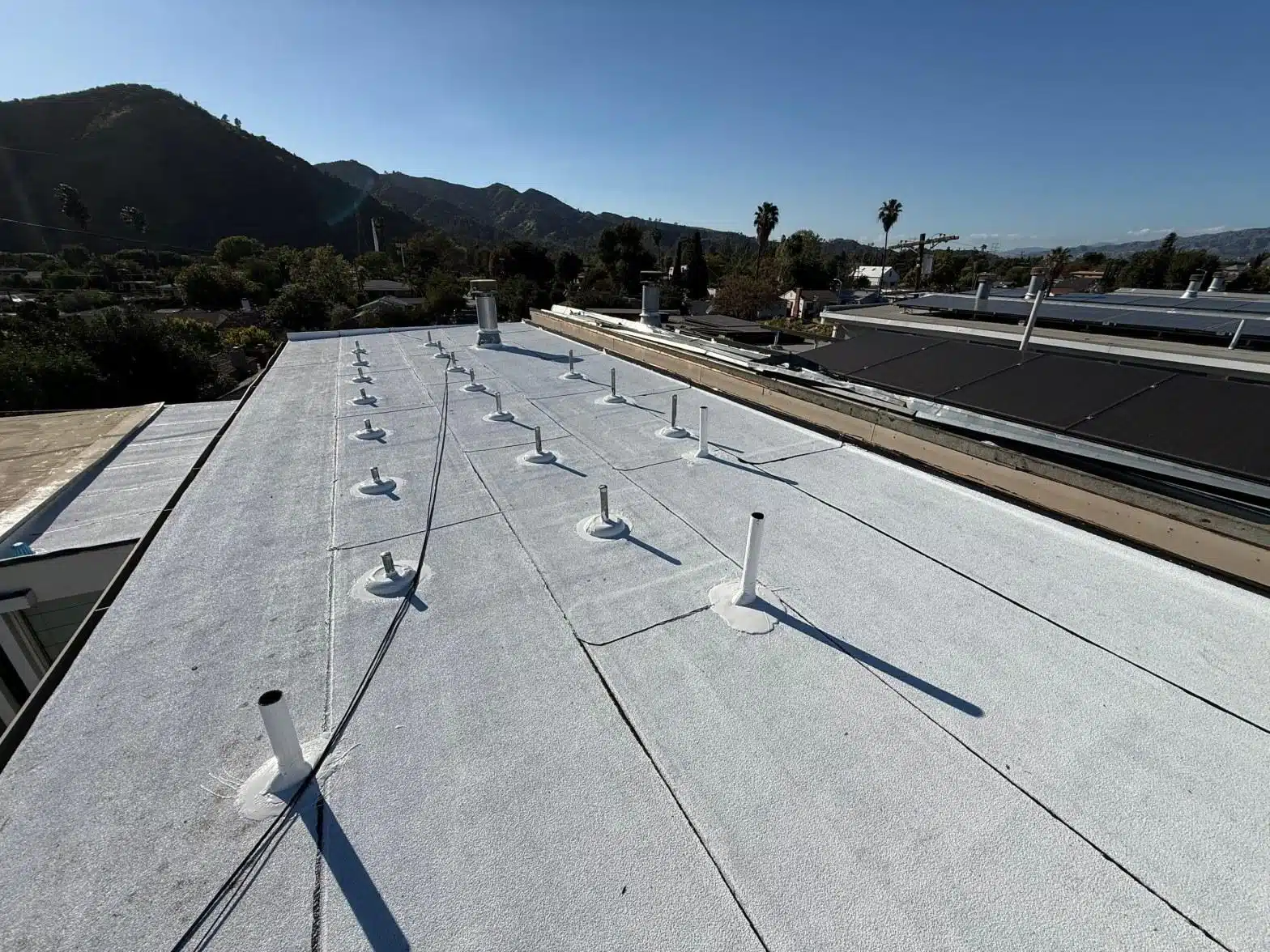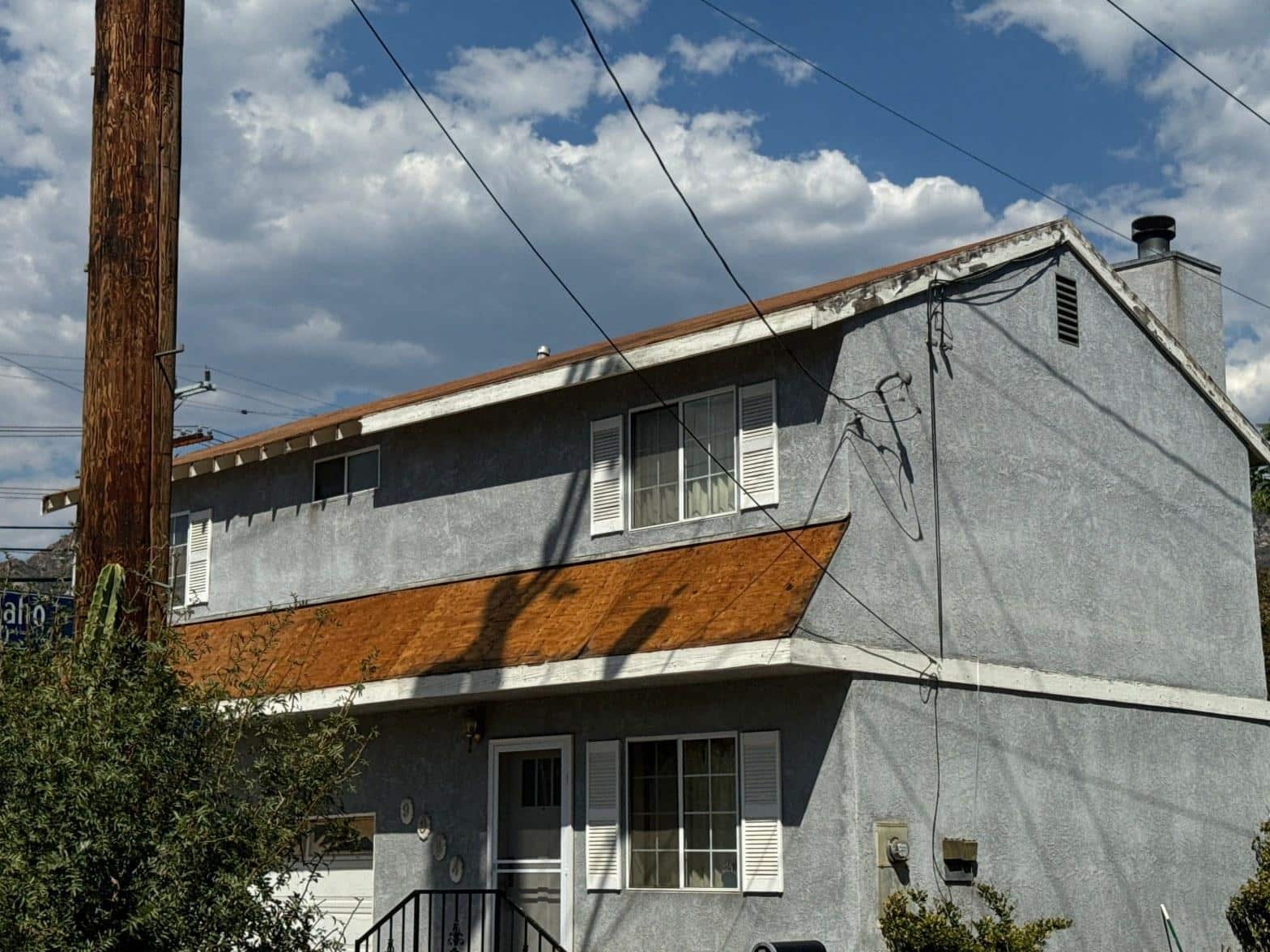
A leaking flat roof on a commercial building can shut down operations, void insurance claims, and cause structural damage in weeks. This guide walks property managers and building owners through repair costs, membrane options, and what a professional inspection actually covers.
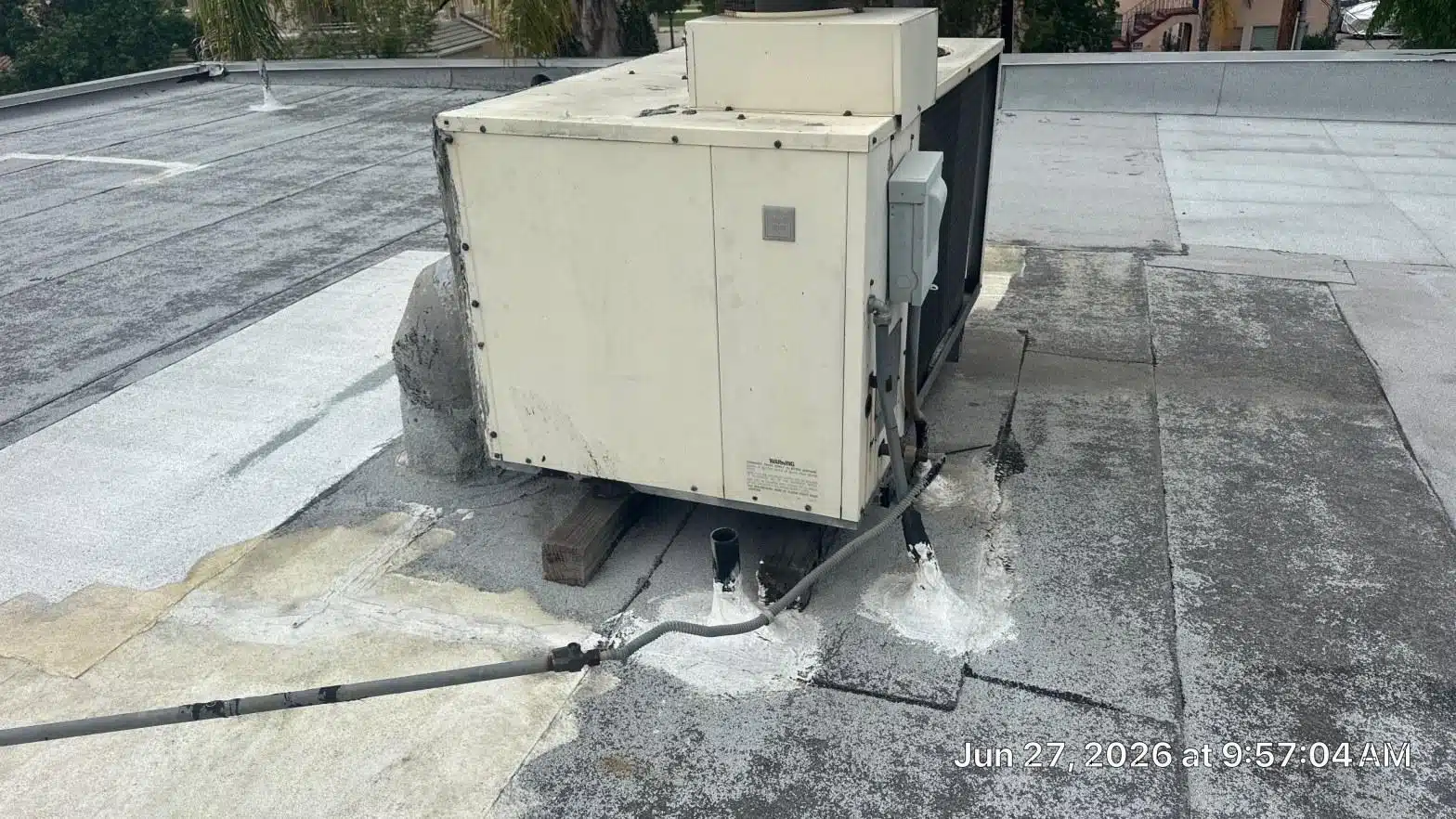
Commercial flat roofs fail differently than residential roofs, and the stakes are higher when they do. A single undetected leak can damage inventory, disrupt tenants, and trigger mold growth within 48 to 72 hours. This commercial flat roof repair guide is built for property managers and building owners who want clear answers on costs, materials, repair methods, and how to vet a contractor before signing anything.
A single undetected leak can damage inventory, disrupt tenants, and trigger mold growth within 48 to 72 hours.
What Makes Commercial Flat Roof Repair Different From Residential?
Commercial flat roofs cover larger surface areas, carry rooftop equipment, and use membrane systems that require specialized tools and training to repair correctly. A residential shingle repair might take a few hours; a commercial membrane repair on a 20,000-square-foot warehouse can take several days and involve infrared moisture scanning, multiple material layers, and coordination around HVAC units and skylights.
The low slope of a flat roof, typically a pitch between 1/4 inch and 1/2 inch per foot, means water does not drain as quickly as it does on a pitched roof. Ponding water, which is water that sits for more than 48 hours after rain, is one of the leading causes of membrane failure on commercial buildings. The U.S. Department of Energy notes that reflective flat roof membranes can also significantly reduce cooling loads, making the material choice a long-term operating cost decision, not just a repair decision.
Liability is another key difference. Commercial buildings must often comply with local building codes, fire ratings, and, in California, California’s Title 24 building energy standards, which set minimum requirements for roof insulation and cool-roof reflectance on non-residential structures. Any repair that disturbs the insulation layer or changes the membrane type may trigger a permit requirement.
What Are the Most Common Flat Roof Materials on Commercial Buildings?
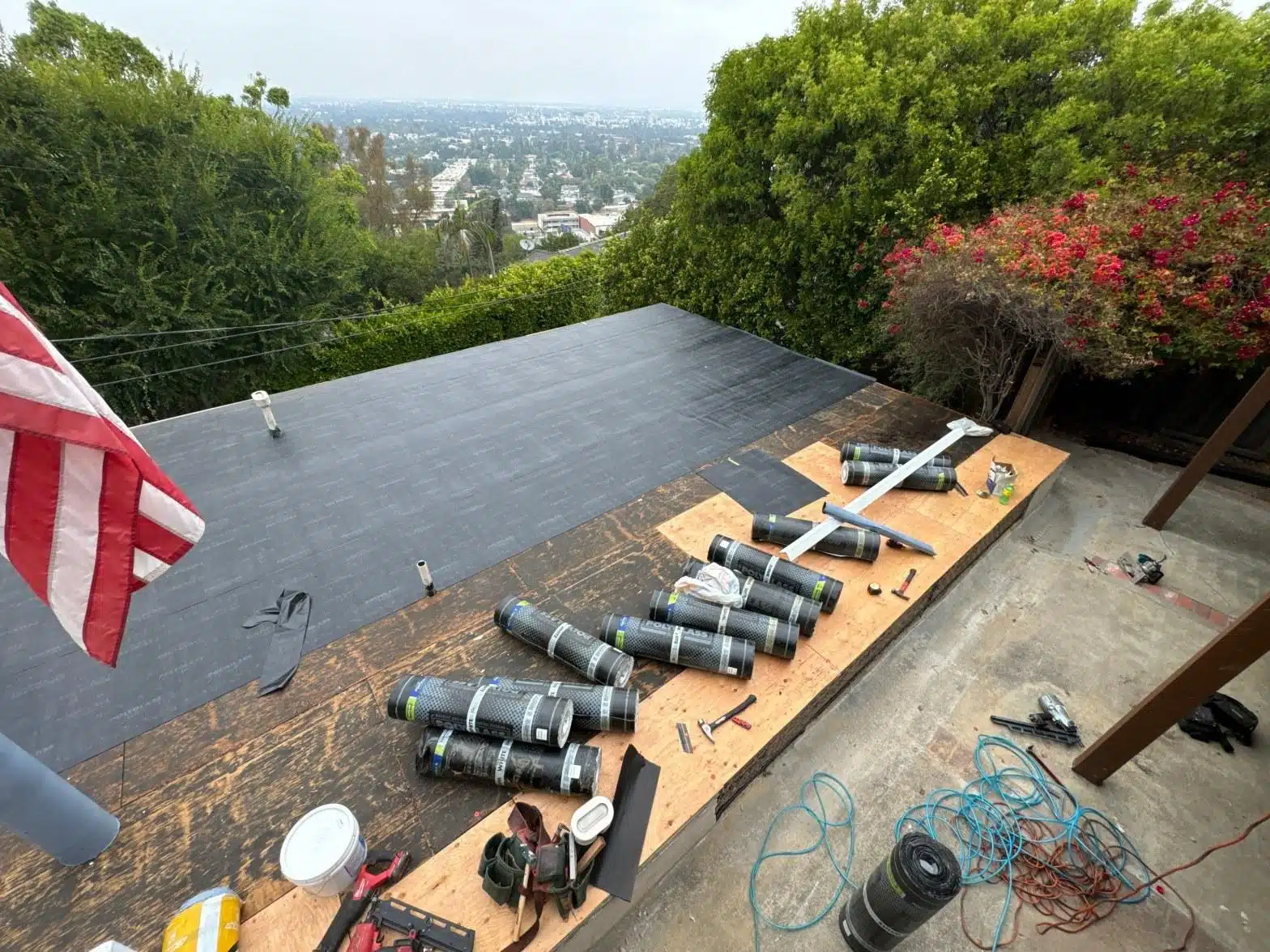
The four most common commercial flat roof systems are TPO, EPDM, modified bitumen, and built-up roofing (BUR), each with different repair methods and expected lifespans. Knowing which system your building has is the first step before any repair work begins, because patching a TPO membrane with an EPDM product will fail within months.
| Membrane Type | Typical Lifespan | Common Failure Points | Repair Method |
|---|---|---|---|
| TPO (Thermoplastic Polyolefin) | 15 to 30 years | Seam separation, punctures, UV degradation | Hot-air welded patches, seam re-welding |
| EPDM (Rubber) | 20 to 30 years | Shrinkage, seam adhesive failure, punctures | Bonded EPDM patches, lap sealant |
| Modified Bitumen | 15 to 25 years | Blistering, granule loss, flashing cracks | Torch-applied or cold-adhesive patches |
| Built-Up Roofing (BUR) | 20 to 30 years | Alligatoring, gravel displacement, flashing failure | Flood coat, fabric reinforcement, flashing replacement |
| PVC (Polyvinyl Chloride) | 20 to 30 years | Seam failure, brittleness in cold weather | Hot-air welded patches, seam re-welding |
Roof coatings, such as silicone or acrylic, are sometimes applied over an existing membrane as a cost-effective way to extend roof life by 10 to 15 years without a full tear-off. These coatings also qualify for ENERGY STAR efficiency ratings when they meet minimum solar reflectance thresholds, which can support California Energy Commission compliance on non-residential roofs.
What Does Commercial Flat Roof Repair Actually Cost?
In the Southern California regional market, commercial flat roof repairs typically range from $400 to $1,500 for small isolated patches, $3,000 to $12,000 for mid-size membrane sections, and $15,000 or more for extensive repairs involving insulation replacement or full flashing overhauls. These are market ranges, not quotes, and the actual cost for your building depends on several specific factors.
- Roof size and access: Larger roofs cost more to repair, and buildings with limited rooftop access or heavy equipment in the way add labor time.
- Extent of moisture damage: If water has saturated the insulation board beneath the membrane, that material must be removed and replaced, which can double or triple a basic repair estimate.
- Membrane type: TPO and PVC repairs require a hot-air welder, which is specialized equipment. EPDM repairs use bonded patches, which are more labor-intensive by hand.
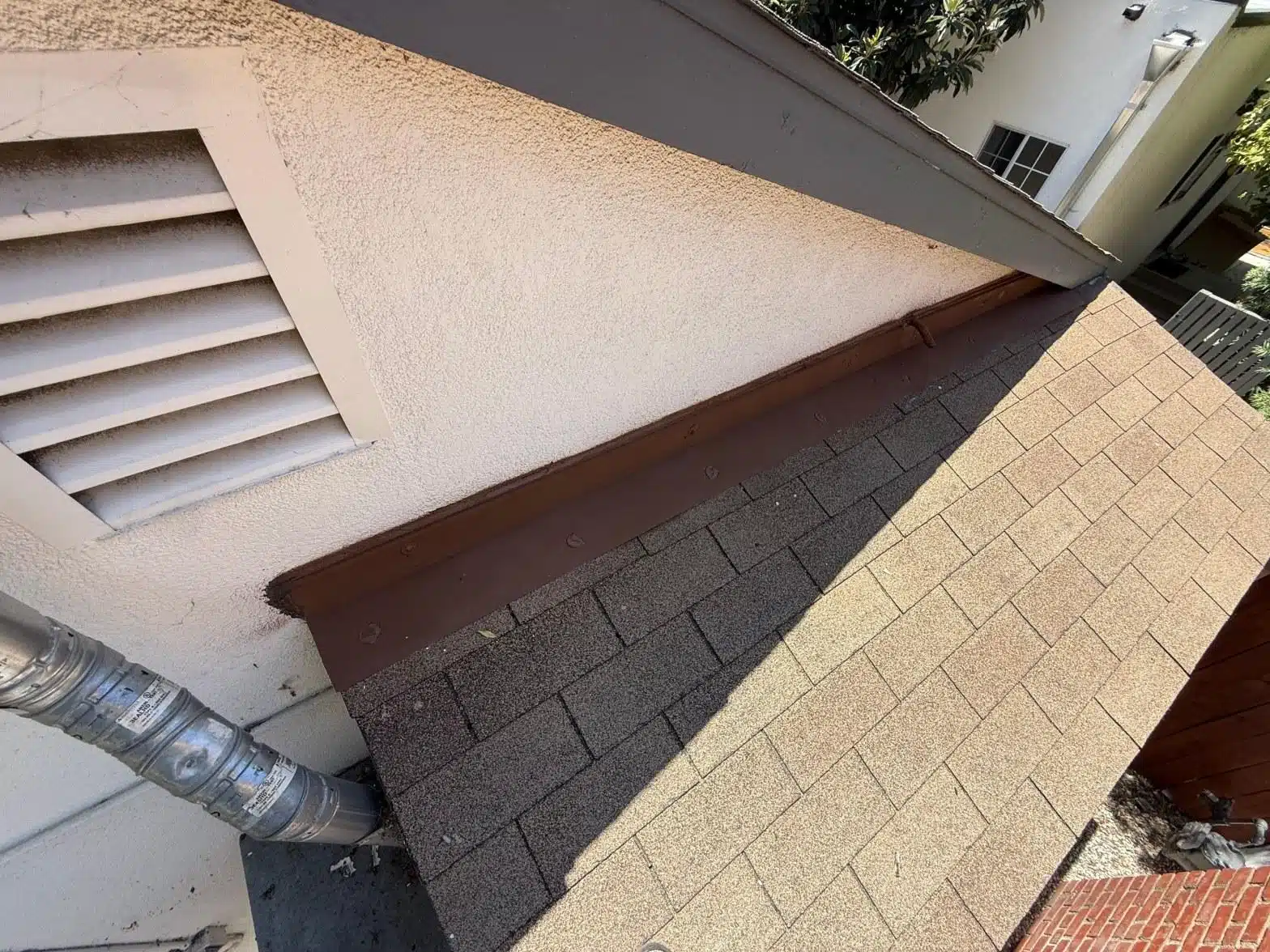
- Flashing condition: Roof-to-wall flashings, curb flashings around HVAC units, and drain flashings are the most common leak sources. Replacing all deteriorated flashing on a large commercial roof can add $2,000 to $8,000 to a project.
- Permit requirements: Repairs that exceed a certain scope under California building codes may require a permit, adding both cost and timeline.
- Urgency: Emergency repairs after a storm or active leak may carry higher mobilization costs than scheduled maintenance work.
Our crews respond to commercial leak calls across Southern California and, in roughly 6 out of 10 cases, find that the visible interior water stain is located 4 to 8 feet away from the actual membrane breach. This is because water travels along insulation boards before finding a path through the ceiling, which is why a professional moisture scan matters before any patch is cut.
For an accurate number on your specific building, request a custom quote from Roof Repair & Construction Inc. at (323) 474-1088. A written, itemized estimate lets you compare bids fairly and understand exactly what scope is included.
How Do You Know When Your Flat Roof Needs Repair?
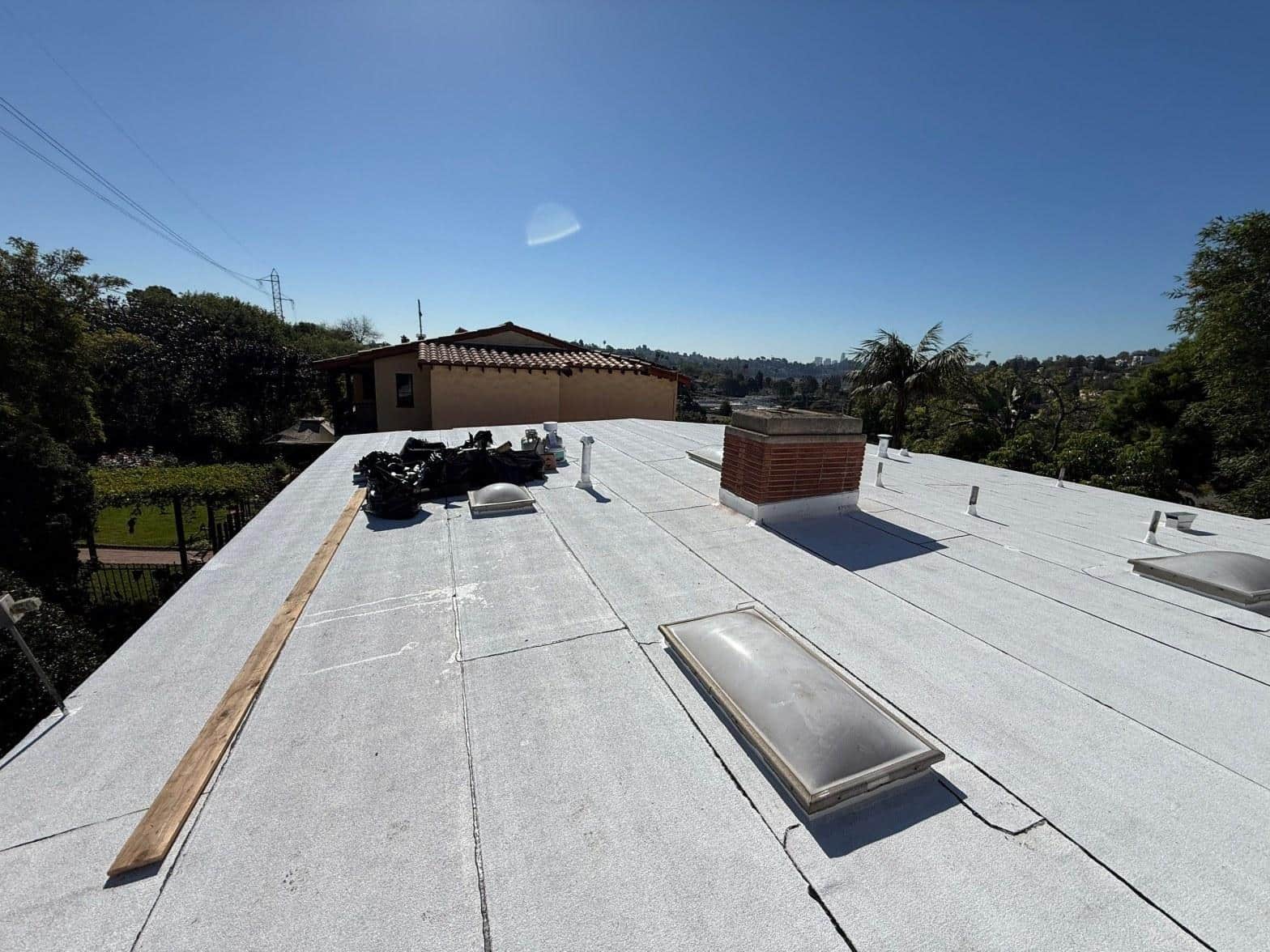
The most reliable warning signs of commercial flat roof damage are interior water stains, visible membrane bubbles or blisters, standing water that remains 48 hours after rain, and deteriorated flashing around penetrations. Many of these signs are visible from a rooftop walk-around, which building owners should schedule at least twice per year, ideally in spring and fall.
- Ponding water: Water sitting on the roof surface longer than 48 hours after rain indicates a drainage problem or low spot, both of which accelerate membrane breakdown.
- Blistering or bubbling: Air or moisture trapped between membrane layers creates raised bubbles. These are structural weak points that will eventually crack and allow water in.
- Alligatoring: A cracked, scaly surface pattern on BUR or modified bitumen roofs means the material has lost its flexibility and is near the end of its useful life.
- Seam separation: On TPO, PVC, and EPDM roofs, open or lifted seams are the single most common entry point for water.
- Flashing cracks or gaps: Metal or membrane flashing around HVAC curbs, pipes, drains, and parapet walls deteriorates faster than the field membrane and should be inspected closely.
- Interior staining or mold: Yellowish ceiling stains, soft drywall, or a musty smell in upper-floor spaces are late-stage signs that water has already penetrated the roof assembly.
- Granule loss on modified bitumen: Heavy granule loss in gutters or drain screens means the UV-protective surface is gone and the membrane is vulnerable.
As of 2026, the EPA recommends addressing any building moisture intrusion within 24 to 48 hours to prevent mold colonization. On a commercial building, mold remediation costs can easily exceed the original roof repair cost, making early detection the most cost-effective strategy available.
What Happens During a Professional Flat Roof Repair?
A professional commercial flat roof repair follows a defined sequence: inspection and moisture mapping, removal of damaged material, substrate preparation, patch or membrane installation, and a final water test. Skipping any of these steps, especially moisture mapping, is the reason many DIY or low-bid repairs fail within one to two rain seasons.
- Inspection and moisture mapping: A qualified contractor walks the entire roof surface, documents visible damage, and often uses infrared thermography or a capacitance meter to locate wet insulation beneath the membrane. Wet insulation that is not removed will continue to degrade the new patch from below.
- Debris removal and surface cleaning: The repair area is cleaned of gravel, dirt, and any loose material. On BUR roofs, this may involve removing several inches of built-up layers.
- Damaged material removal: Deteriorated membrane and saturated insulation boards are cut out. The edges of the cut are tapered or primed to ensure the patch bonds correctly.
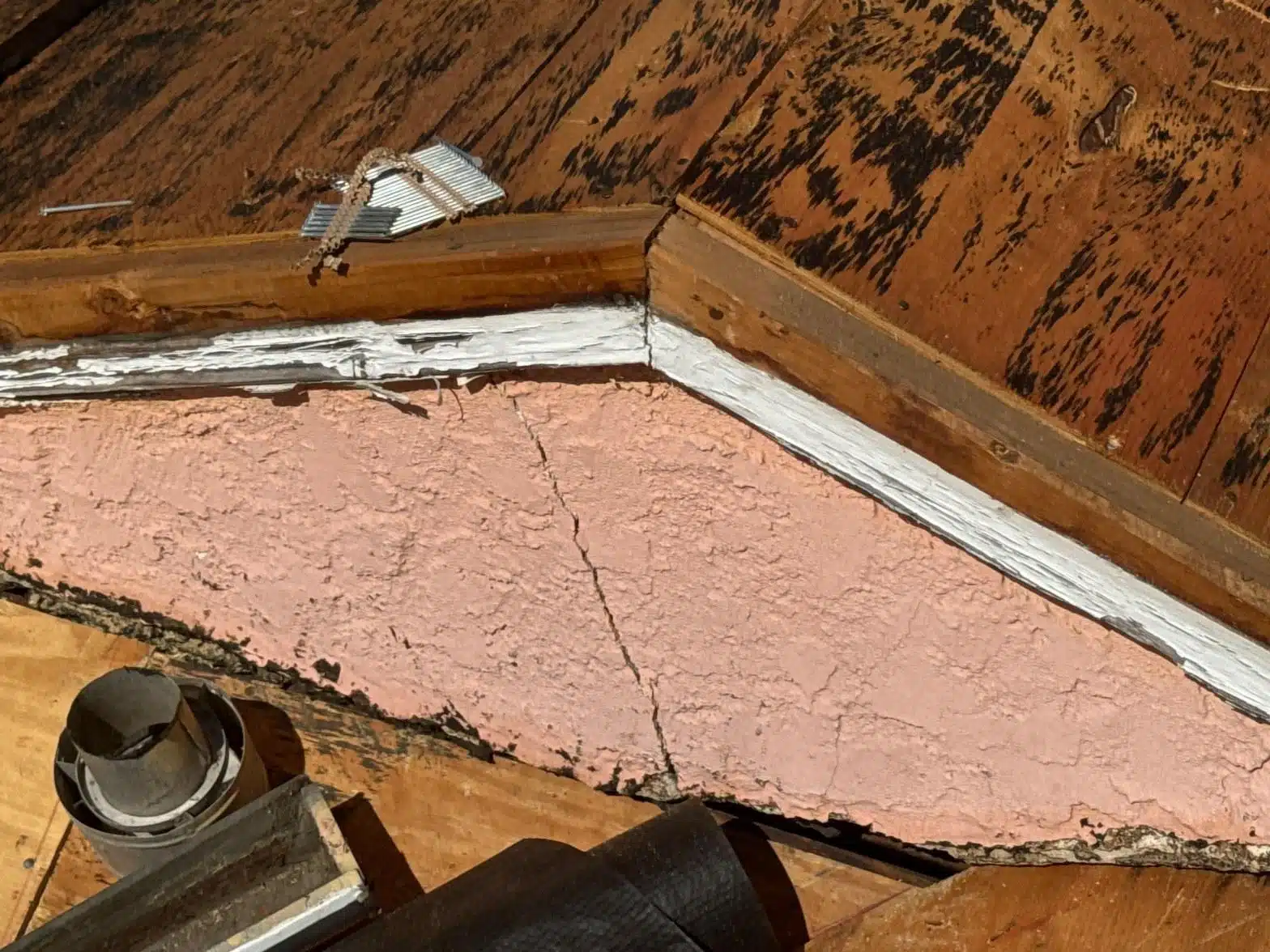
- Substrate inspection: The roof deck beneath the insulation is checked for rot, rust, or structural damage. Deck repairs, if needed, are completed before any new material goes down.
- Patch or membrane installation: A compatible patch is applied using the correct method for the membrane type: hot-air welding for TPO and PVC, bonded adhesive for EPDM, torch or cold-adhesive for modified bitumen.
- Flashing repair or replacement: Any damaged flashing at penetrations, drains, or parapets is repaired or replaced in the same visit to avoid a second leak source.
- Water test: The repaired area is flooded or tested with a hose to confirm no remaining leak paths before the crew leaves the site.
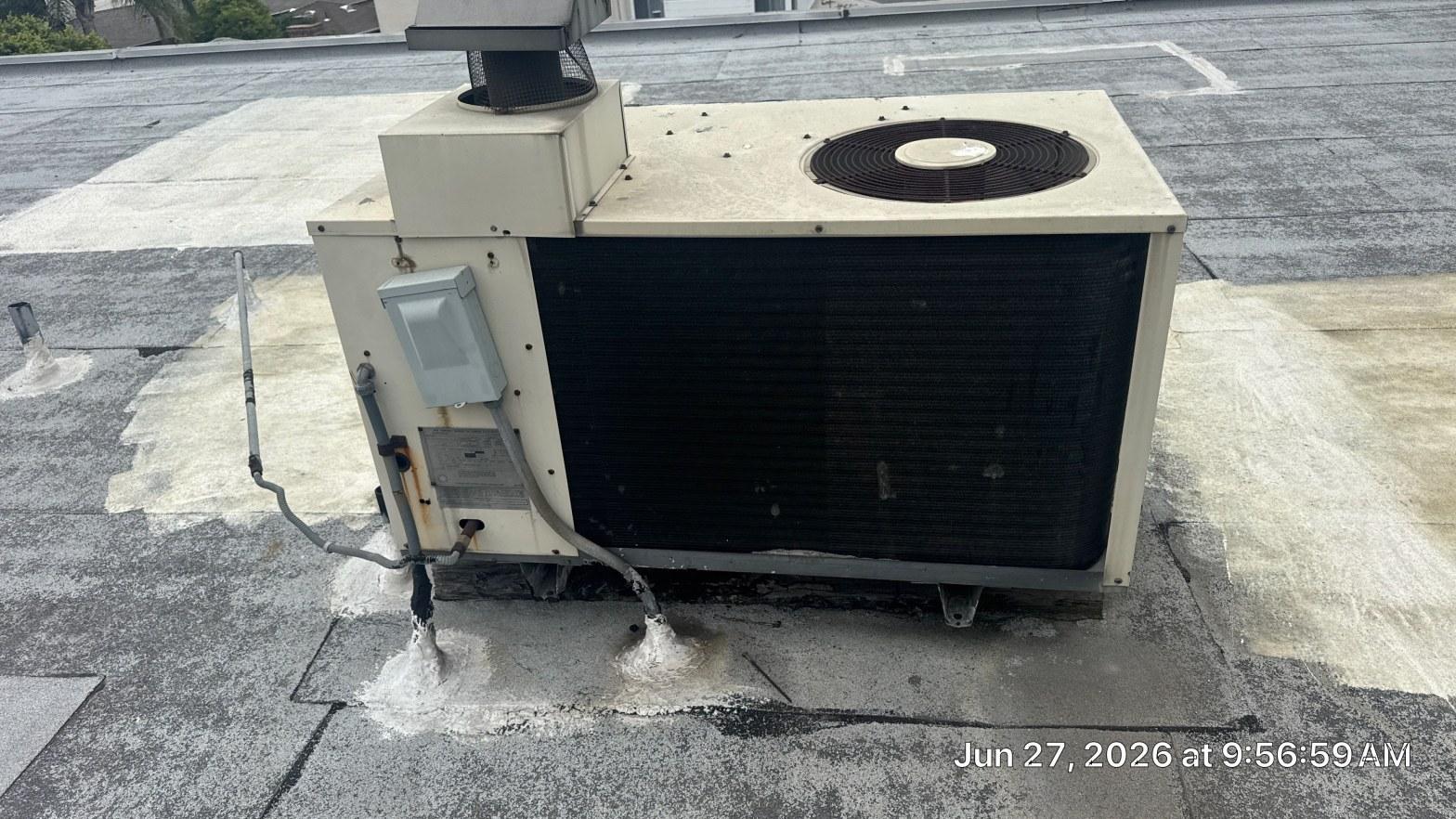
On commercial jobs across Southern California, our team finds that roughly 35% of repair calls involve at least one HVAC curb flashing that has separated from the membrane. These curb flashings take the most thermal stress because rooftop equipment vibrates and expands with heat, pulling the flashing away from the membrane over time.
How Do You Choose the Right Contractor for Commercial Flat Roof Repair?
For commercial flat roof work in California, the minimum baseline is a contractor who is licensed by the California Contractors State License Board (CSLB) under a C-39 Roofing classification and carries both general liability and workers’ compensation insurance. Beyond licensing, the right contractor for your building will have documented experience with your specific membrane type and will provide a written scope of work before any money changes hands.
This commercial flat roof repair guide would be incomplete without a checklist for vetting bids. Use these criteria when comparing contractors:
- CSLB license verification: Confirm the license number is active and in good standing at cslb.ca.gov before signing any contract.
- Membrane-specific experience: Ask how many TPO, EPDM, or BUR repairs the crew has completed in the past 12 months. A contractor who primarily does residential shingle work is not the right fit for a commercial membrane system.
- Written, itemized estimate: Any bid should list the square footage being repaired, the materials being used by name and specification, the labor scope, and any permit costs separately.
- Moisture assessment included: A contractor who skips moisture mapping and goes straight to patching is leaving wet insulation in place, which guarantees a repeat repair within one to three years.
- References from commercial clients: Ask for references from property managers or building owners, not just homeowners. Commercial work has different complexity and coordination requirements.
- Insurance certificates: Request a certificate of insurance naming your property as an additional insured for the duration of the project.
Affordable roof repair does not mean the lowest bid. In the commercial roofing market, bids that come in significantly below the range of other estimates almost always reflect a shorter scope: thinner patches, no insulation replacement, or no flashing work. A repair that fails in 18 months costs more in total than a thorough repair done correctly the first time.
Get a Professional Assessment for Your Commercial Roof
Schedule a professional inspection before the next rain season, not after a leak has already reached your interior. Proactive maintenance on a commercial flat roof typically costs a fraction of emergency repair or partial replacement.
Roof Repair & Construction Inc. handles commercial flat roof repair across Southern California, working with TPO, EPDM, modified bitumen, BUR, and PVC systems on buildings of all sizes. Whether you manage a single-tenant retail strip or a multi-story commercial property, get a written, itemized assessment before any work begins.
Call (323) 474-1088 to schedule your commercial roof inspection. A thorough evaluation now is the most cost-effective roofing decision you can make this year.
Explore our full range of Roof Repair services across Southern California.
Frequently Asked Questions
How long does a commercial flat roof repair usually take?
Most small to mid-size commercial flat roof repairs are completed in one to three days. Larger jobs involving significant insulation replacement, multiple penetration flashings, or extensive membrane sections can take five to seven days. The timeline also depends on weather, since membrane adhesives and welding require dry conditions above 40 degrees Fahrenheit.
How do I know if my commercial flat roof needs repair or full replacement?
If more than 25 to 30 percent of the roof surface has moisture-saturated insulation or membrane damage, most roofing professionals recommend replacement over repair because patching a heavily compromised system rarely holds long-term. A roof that is approaching or past its expected lifespan, typically 20 to 30 years depending on the membrane type, is also a stronger candidate for replacement. A professional moisture scan gives you the data to make that decision with confidence rather than guessing.
Can I repair a commercial flat roof myself?
Small temporary patches with roofing tape or compatible sealant can slow an active leak, but they are not a permanent repair. Commercial membrane systems require specific tools, compatible materials, and proper surface preparation to bond correctly. Improper patches can trap moisture, void existing warranty coverage, and fail within one rain season. For any repair beyond a temporary stop-gap, a licensed commercial roofing contractor is the right call.
Does California require a permit for commercial flat roof repairs?
Minor repairs, such as small patches or flashing replacement, generally do not require a permit in most California jurisdictions. However, repairs that involve replacing more than a certain percentage of the roof membrane or insulation, or that change the roof assembly in a way that affects California's Title 24 building energy standards compliance, may trigger a permit requirement. Your contractor should advise you on permit obligations before work begins, and you can verify requirements with your local building department.
What is the best way to prevent commercial flat roof leaks?
The most effective prevention strategy is a twice-yearly professional inspection, ideally in spring and fall, combined with clearing roof drains and gutters before rainy season. Catching seam separations, blistering, and flashing gaps when they are small keeps repair costs low and prevents water from reaching the insulation and deck. Roofing maintenance services in California are widely available and far less expensive than emergency repairs after a major leak event.