Pulling the wrong permit, or skipping one entirely, can cost California homeowners thousands in fines and force them to tear out completed work. This guide explains exactly when a roofing permit is required, what the process looks like, and how to stay compliant from start to finish.
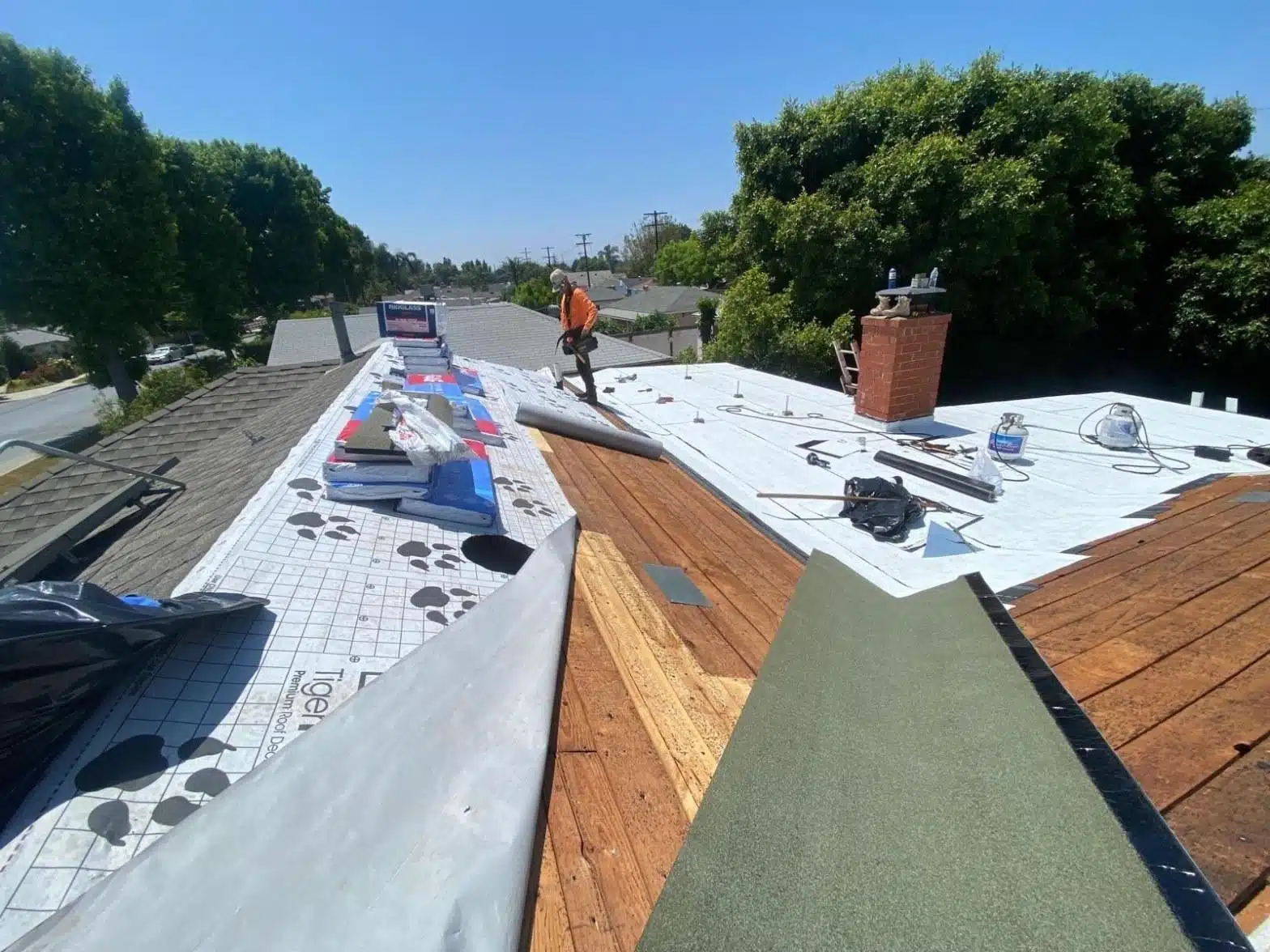
Most structural roof repairs and full roof replacements in California require a building permit before any work begins. Cosmetic repairs, like patching a few shingles or sealing a small flashing gap, often fall below the threshold, but anything that touches the roof deck, rafters, or more than 10 percent of the total roof surface typically triggers the permit requirement. This roofing permit california guide walks through the full process: when permits apply, what inspections cost, what happens if you skip one, and how to pick a contractor who handles compliance the right way.
When Does a Roofing Project in California Require a Permit?
California’s permit rules are set at the state level through the California Building Code (CBC), and then administered locally by each city or county building department. The general rule is that any work altering the structural components of a roof, or replacing more than 10 percent of the roofing material, requires a permit. Local jurisdictions can add their own requirements on top of the state baseline, so the threshold in one county may be stricter than in another.
Projects that almost always require a permit include:
- Full roof replacement: Tearing off existing material and installing a new roofing system, regardless of material type.
- Structural roof repairs: Any work on rafters, trusses, ridge boards, or the roof deck (sheathing).
- Re-roofing over existing layers: Adding a second layer of shingles or other material on top of existing roofing.
- Skylight installation or enlargement: Cutting into the roof deck always triggers structural review.
- Solar panel attachment: Roof penetrations and added load require structural and electrical permits.
- Flat roof replacement or major repair: Replacing a membrane system on a commercial or residential flat roof typically exceeds the minor-repair threshold.
Projects that often do NOT require a permit include:
- Patching fewer than 10 percent of existing shingles without touching the deck.
- Sealing or recaulking existing flashing that is still structurally sound.
- Replacing a single damaged tile or shingle for like-for-like material.
- Routine gutter cleaning or minor gutter bracket replacement.
When in doubt, call your local building department before any work starts. A five-minute phone call costs nothing; an unpermitted roof can cost thousands to correct.
What Does the California Roofing Permit Process Actually Look Like?
The permit process in California follows a predictable sequence: application, plan check, permit issuance, inspections during construction, and final sign-off. For most residential roofing projects, the full cycle runs 1 to 3 weeks from application to final inspection, though complex structural repairs or jurisdictions with high permit volumes can stretch that to 6 weeks or more.
- Application: The homeowner or licensed contractor submits a permit application to the local building department. Most California cities now accept online submissions. The application includes a site address, scope of work description, and sometimes a simple roof plan or materials list.
- Plan check: For simple re-roofing jobs, plan check is often over-the-counter and takes 1 to 3 business days. Structural repairs involving rafter or truss work may require a full structural plan review, which can take 2 to 4 weeks.
- Permit issuance: Once approved, the permit card must be posted on-site and visible to inspectors. Work cannot legally begin until this step is complete.
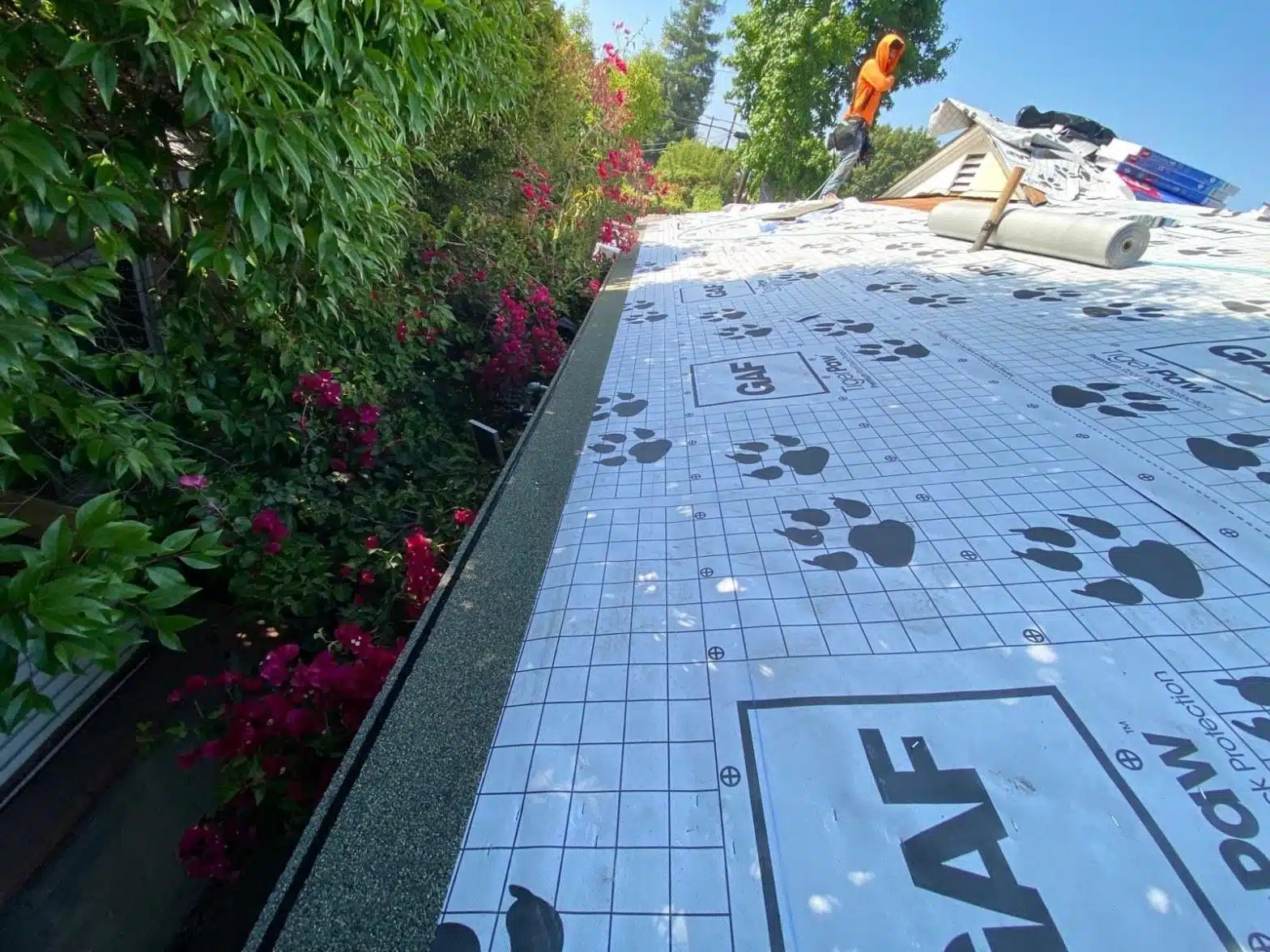
- Inspections: The building department schedules one or more inspections. A sheathing inspection happens before new roofing material covers the deck. A final inspection confirms the completed roof meets code.
- Final sign-off: The inspector signs off, and the permit is closed. This record becomes part of the property’s permit history, which matters at resale.
Our team has pulled permits across dozens of jurisdictions in Los Angeles County and the surrounding region. We see plan-check turnaround vary by as much as 3 weeks between neighboring cities, which is why we factor permitting lead time into every project schedule from day one.
California’s Department of Housing and Community Development publishes the state’s building standards, and local amendments are posted on each city’s building and safety department website. Checking both sources before submitting an application prevents surprises during plan check.
How Much Does a Roofing Permit Cost in California?
Roofing permit fees in California typically range from $150 to $1,200 for residential projects, depending on the jurisdiction, the valuation of the work, and whether structural plan review is required. Commercial roofing permits generally run higher, from $300 to $2,500 or more for large flat-roof systems. The biggest cost drivers are project valuation (most cities calculate fees as a percentage of estimated construction cost), local fee schedules, and plan-check complexity.
Roofing permit fees in California typically range from $150 to $1,200 for residential projects, depending on the jurisdiction, the valuation of the work, and whether structural plan review is required.
| Project Type | Typical Permit Fee Range (CA) | Plan Check Required? | Inspection Count (Typical) |
|---|---|---|---|
| Simple re-roof (shingles or tile, no structural work) | $150 to $400 | Often over-the-counter | 1 to 2 |
| Re-roof with deck replacement | $250 to $600 | Usually yes | 2 to 3 |
| Structural rafter or truss repair | $400 to $900 | Yes, with engineer’s stamp in many cases | 2 to 4 |
| Flat roof replacement (commercial) | $300 to $2,500+ | Yes | 2 to 3 |
| Skylight addition | $200 to $700 | Yes | 2 to 3 |
These ranges reflect market conditions across California as of 2025 and will vary by city. Some jurisdictions charge a flat fee for simple re-roofing; others calculate fees based on project valuation at rates between 0.5 and 2 percent of the estimated construction cost. Always request the fee schedule from your local building department before budgeting.
The permit fee is a small fraction of total project cost, and skipping it to save a few hundred dollars creates risks that can cost many times more. For a custom quote on your specific project, call Roof Repair & Construction Inc. at (323) 474-1088.
What Happens If You Skip a Roofing Permit in California?
Unpermitted roofing work in California can result in stop-work orders, fines of $500 to $5,000 or more per violation, and a requirement to expose and re-inspect completed work at the homeowner’s expense. In the most serious cases, a building official can require full removal and replacement of non-compliant roofing.
The consequences extend well beyond fines:
- Insurance claims denied: Homeowners insurance policies often exclude damage related to unpermitted work. If a roof installed without a permit later leaks and causes interior damage, the insurer may deny the claim.
- Resale complications: California requires sellers to disclose known unpermitted work. Buyers’ lenders and inspectors routinely flag unpermitted roofs, which can delay or kill a sale.
- Double permit fees: Many California jurisdictions charge double or triple the standard permit fee for work that was started without a permit and then retroactively permitted.
- Structural liability: If an unpermitted roof fails and causes injury or property damage, the homeowner bears full legal exposure because no inspector ever approved the work.
Fire and smoke damage repairs are a category where permit compliance is especially critical. After a wildfire event, the California Department of Insurance and local building departments coordinate closely on damaged-structure repairs. Work done without permits in a post-fire context can void insurance settlements and create title problems that last for years.
Repair vs. Replacement: Which Projects Need a Permit?
The repair-versus-replacement distinction is the most common source of permit confusion for California homeowners. A repair that touches only the surface material and stays under 10 percent of the total roof area is usually exempt. Anything that goes deeper, or covers a larger area, almost always requires a permit.
California’s building code defines a “reroofing” project as the installation of new roofing material over or in place of existing roofing. As of the California Energy Commission’s 2022 Title 24 building energy standards update, reroofing projects on low-slope roofs above conditioned space also trigger cool-roof reflectivity requirements. This means a permit is not just about structural safety, it also enforces energy compliance.
Here is a quick decision reference:
| Scope of Work | Permit Required? | Notes |
|---|---|---|
| Patch 1 to 3 shingles, no deck damage | Usually no | Confirm with local building dept. |
| Replace more than 10% of shingles | Yes | Triggers reroofing classification |
| Replace entire roof, same material | Yes | Full permit and inspection required |
| Replace flat roof membrane | Yes | Cool-roof standards may also apply |
| Repair flashing only, no deck work | Usually no | Verify scope with local dept. |
| Repair rafters or roof deck | Yes | Structural review required |
| Add or enlarge a skylight | Yes | Structural and possibly electrical permit |
| Emergency tarping after storm damage | Usually no | Temporary protection only; permanent repair needs permit |
Across our service calls throughout Southern California, we find that roughly 4 in 10 homeowners who call about a “small repair” actually have damage that crosses the 10-percent threshold once the roof is properly inspected. What looks like a few missing shingles from the ground often reveals compromised decking underneath.
How Do You Choose a Contractor Who Handles Permits Correctly?
The single most important credential to verify is a valid California Contractors State License Board (CSLB) license. Only a licensed contractor can legally pull a building permit on a homeowner’s behalf in California, and only a licensed contractor carries the insurance and bonding that protects you if something goes wrong. You can verify any contractor’s license status at the CSLB license lookup tool in under two minutes.
Beyond licensing, look for these signs that a contractor handles permits correctly:
- They ask for your address before quoting: A contractor who knows permit requirements will look up your local building department’s rules before pricing the job.
- They include permit fees in the written estimate: Permit costs should be itemized, not buried or omitted.
- They schedule inspections proactively: A compliant contractor builds inspection windows into the project timeline rather than treating them as an afterthought.
- They do not suggest skipping the permit to save money: Any contractor who recommends unpermitted work is exposing you to liability and is likely operating outside the law.
- They carry workers’ compensation and general liability insurance: Ask for certificates before work begins. An uninsured crew working on your roof without a permit is a worst-case combination.
Roof Repair & Construction Inc. holds CSLB license 1144009 and handles the full permit process for every project that requires one, from application through final inspection sign-off. Homeowners across Southern California trust the team to navigate local building department requirements so the project moves forward without delays or compliance surprises.
Get Help With Your Roofing Permit and Repair
Navigating California’s roofing permit requirements does not have to be complicated when you work with a contractor who handles it every day. Whether you need a structural roof repair, a full shingle replacement, a flat roof system, or emergency damage repair after a storm or fire, the right first step is getting a professional assessment that accounts for both the repair scope and the permit requirements in your jurisdiction.
Schedule your inspection and get a written, itemized quote that includes permit costs before any work begins. Call Roof Repair & Construction Inc. at (323) 474-1088 to book your assessment. The team serves homeowners and commercial property owners across Southern California and handles every phase of the permit and repair process, from first inspection to final sign-off.
Explore our full range of Roof Repair services across Southern California.
Frequently Asked Questions
Do I need a permit to replace my roof in California?
Yes, a full roof replacement in California almost always requires a building permit. The permit must be issued before work begins, and the completed roof must pass a final inspection. Your contractor should pull the permit on your behalf as part of the project.
How long does it take to get a roofing permit in California?
For a simple re-roofing job, permit approval often takes 1 to 3 business days through an over-the-counter plan check. Projects involving structural repairs to rafters or the roof deck can take 2 to 6 weeks if a full plan review and engineer's stamp are required. Permitting lead time should be factored into your project schedule from the start.
Can a homeowner pull their own roofing permit in California?
Yes, a homeowner can pull a permit for their own primary residence in California under the owner-builder exemption. However, if you hire a licensed contractor, they are legally required to pull the permit themselves. Using the owner-builder exemption while also hiring a contractor is a compliance violation and can expose you to significant liability.
What happens if my roof was replaced without a permit in California?
Unpermitted roofing work can result in fines, stop-work orders, and a requirement to expose completed work for retroactive inspection, often at double the original permit fee. It can also complicate home sales and lead to insurance claim denials. The safest path is to contact your local building department to discuss retroactive permitting before you sell or file any claims.
Does California's Title 24 affect my roofing project?
Yes, California's Title 24 building energy standards apply to reroofing projects on low-slope roofs above conditioned space, requiring cool-roof reflectivity levels that meet state minimums. As of the 2022 update, these requirements are enforced at the permit and inspection stage. A licensed roofing contractor familiar with California Energy Commission standards will select compliant materials and document them for the inspector.