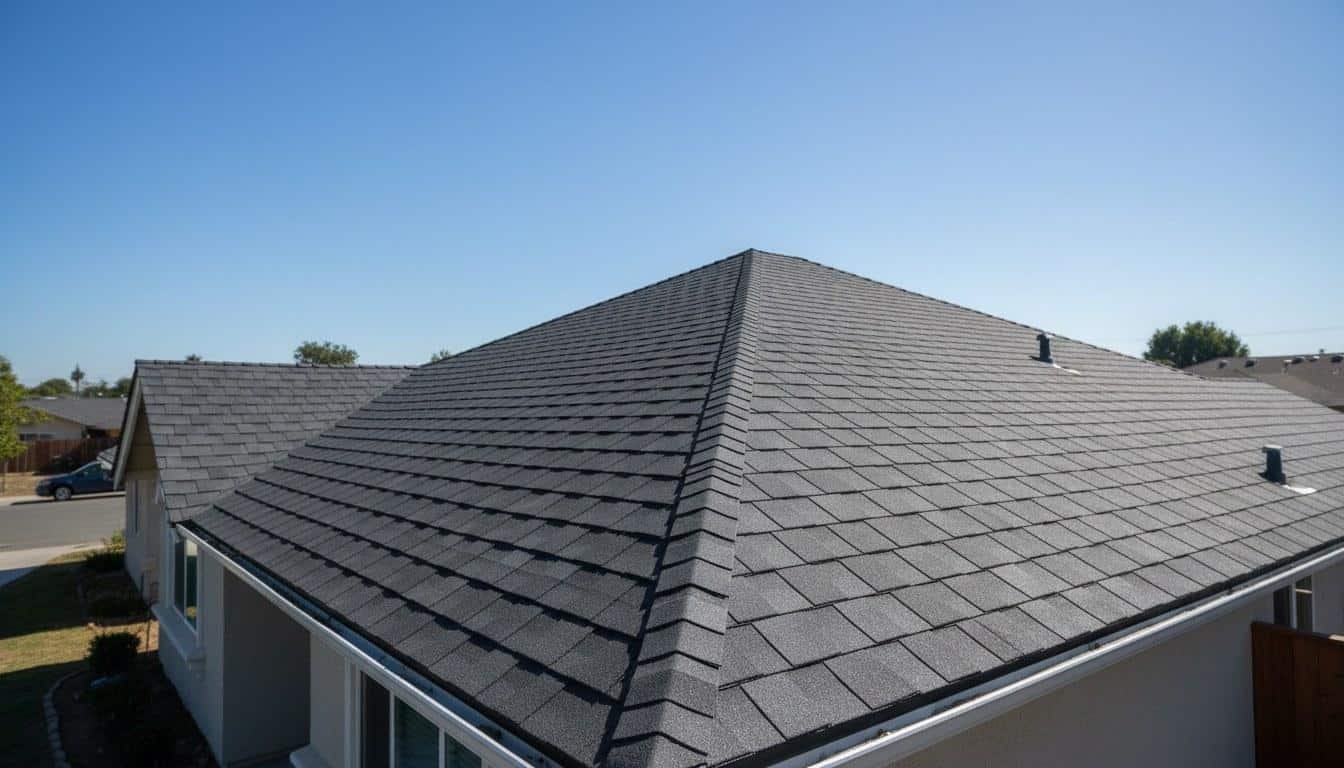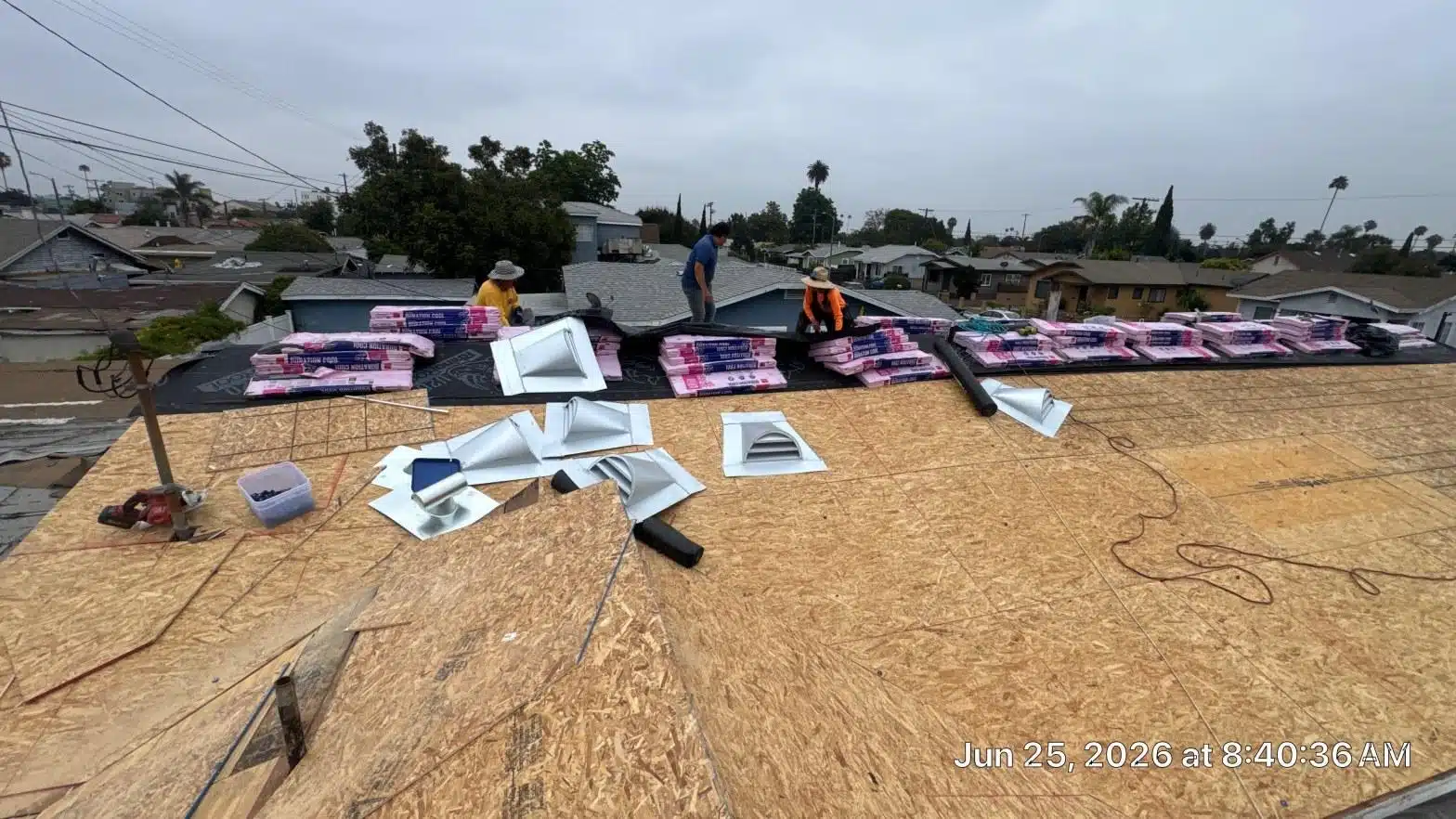
An affordable roof restoration service can add years to your roof's life for far less than a full replacement. This guide breaks down what's included, typical costs, and how to choose a qualified contractor in California.
Need this done rather than diagnosed? See our our roofing services service, or browse all roofing services.
What Is a Roof Restoration Service and How Is It Different from a Replacement?
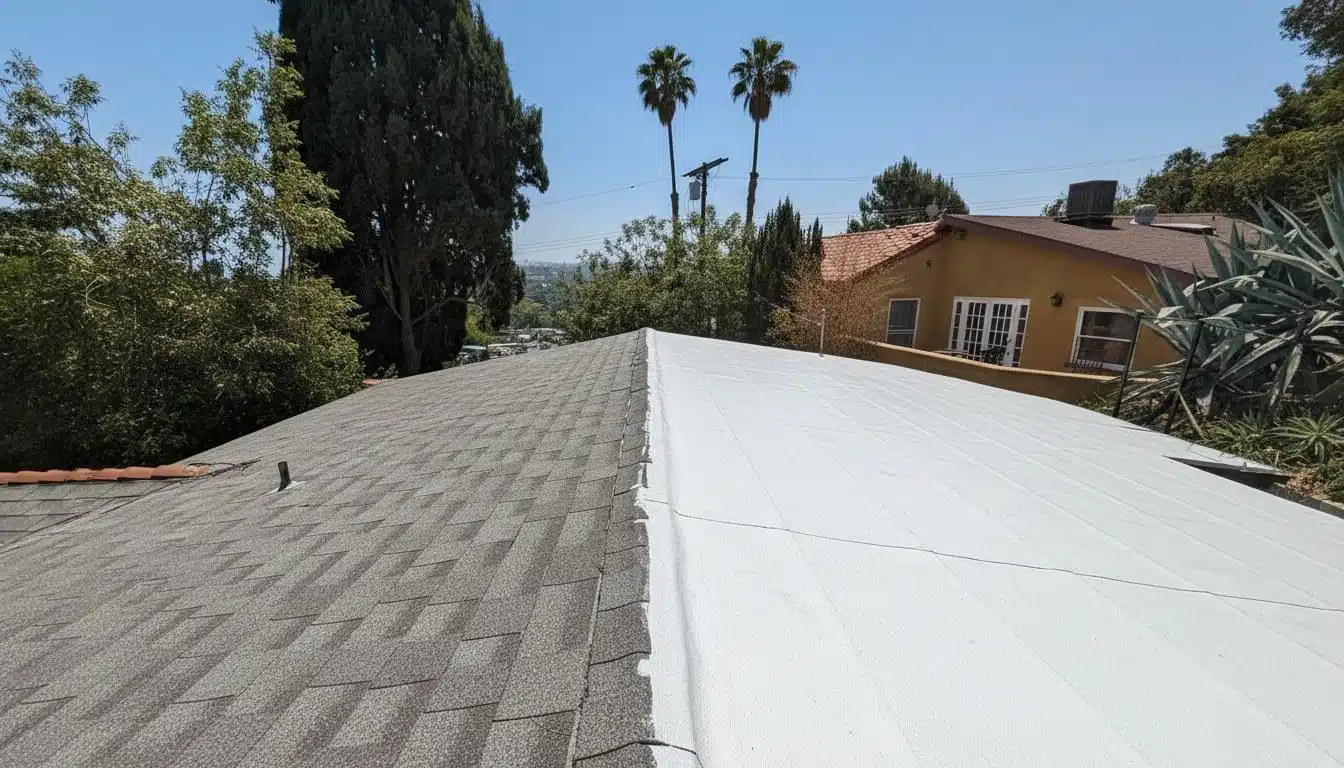
Roof restoration means repairing, cleaning, and recoating your existing roof so it performs like new without tearing it off. A full replacement removes all existing materials and starts from scratch, which typically costs two to four times more. Restoration is the right call when the roof structure is still sound but the surface, flashing, or sealants have worn down.
Most roofs in California face intense UV exposure, seasonal rain, and temperature swings that degrade surface coatings and sealants long before the underlying deck fails. A restoration targets those surface-level problems directly. According to the U.S. Department of Energy, reflective roof coatings applied during restoration can also reduce cooling loads, which matters in California’s warm climate.
Restoration is not a patch job. A quality restoration is a multi-step process that addresses every weak point on the roof, from the field surface to the edges, penetrations, and flashing details. When done correctly, it can add 10 to 15 years of service life.
What Does an Affordable Roof Restoration Service Actually Include?
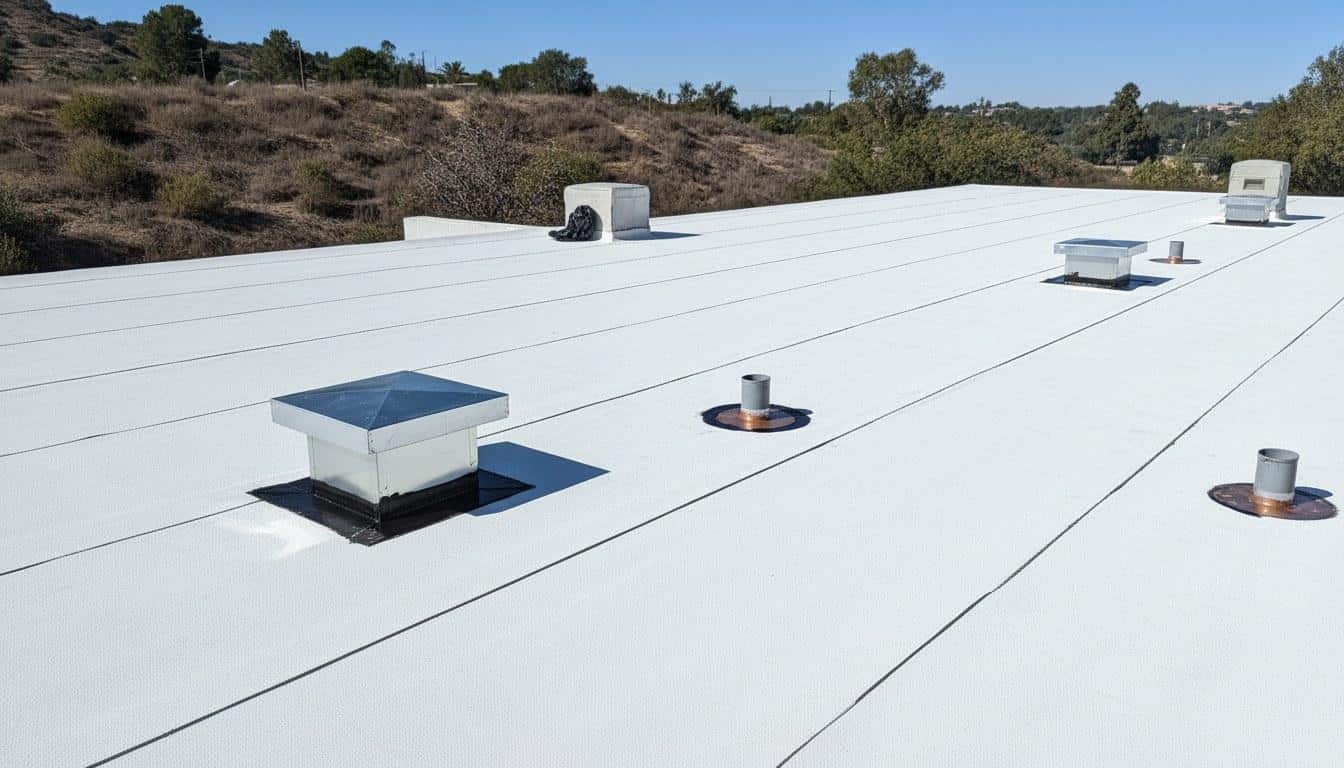
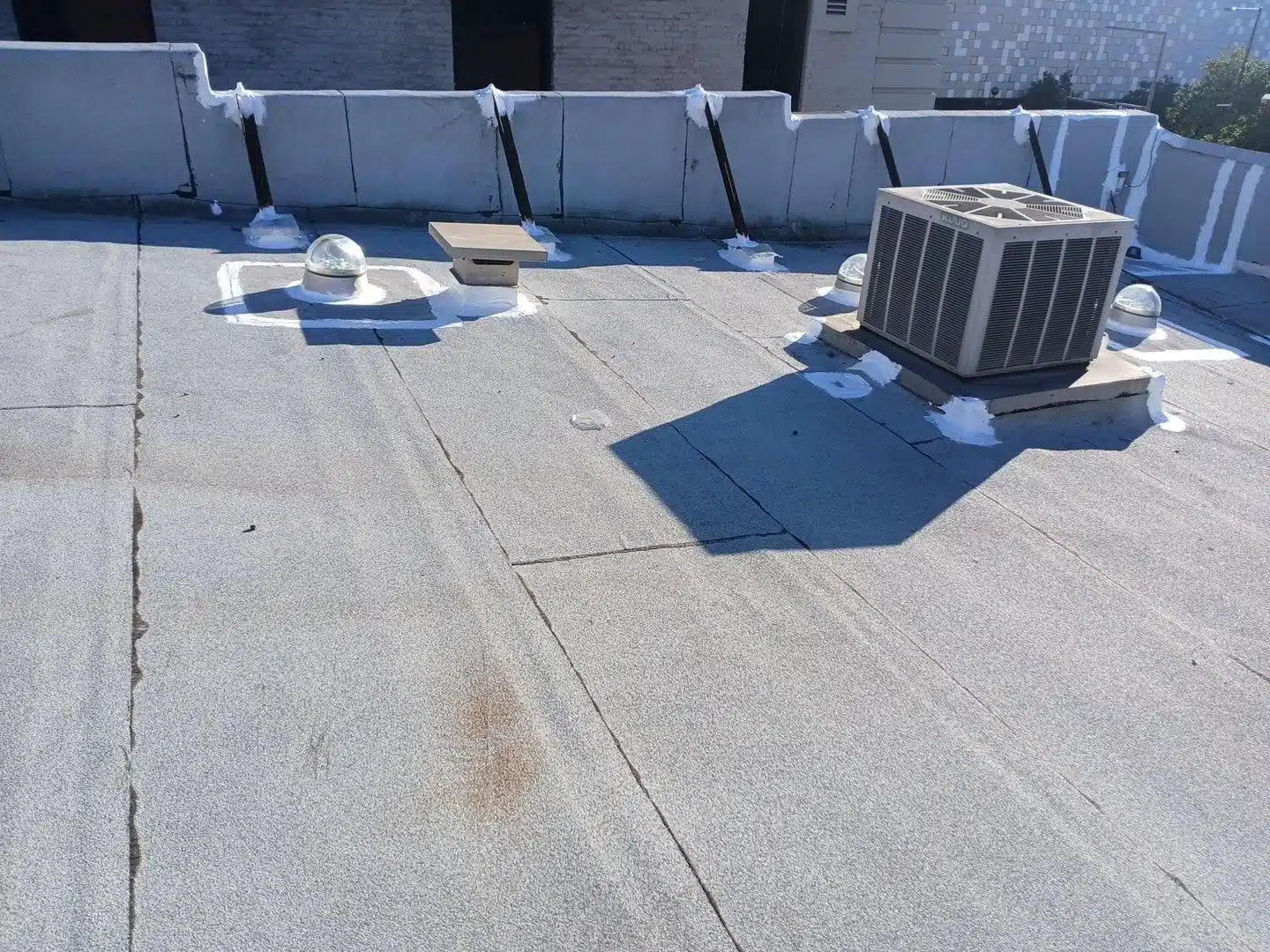
A complete affordable roof restoration service includes a detailed inspection, thorough cleaning, flashing repair or replacement, crack and seam sealing, and a protective coating application. Skipping any one of these steps leaves the roof vulnerable and shortens the results.
Here is what a professional restoration covers from start to finish:
- Full roof inspection: A technician walks the entire roof, checking for soft spots, cracked shingles or tiles, lifted seams, and deteriorated flashing around chimneys, vents, skylights, and valleys.
- Pressure washing or soft washing: Algae, moss, lichen, and debris are removed before any coating is applied. Skipping this step causes coatings to fail prematurely.
- Flashing repair or replacement: Metal flashing at every transition point is inspected, re-sealed, or replaced. This is one of the most common failure points on aging roofs.
- Crack and seam sealing: Caulk and roofing sealant are applied to open joints, around penetrations, and along ridges where water can enter.
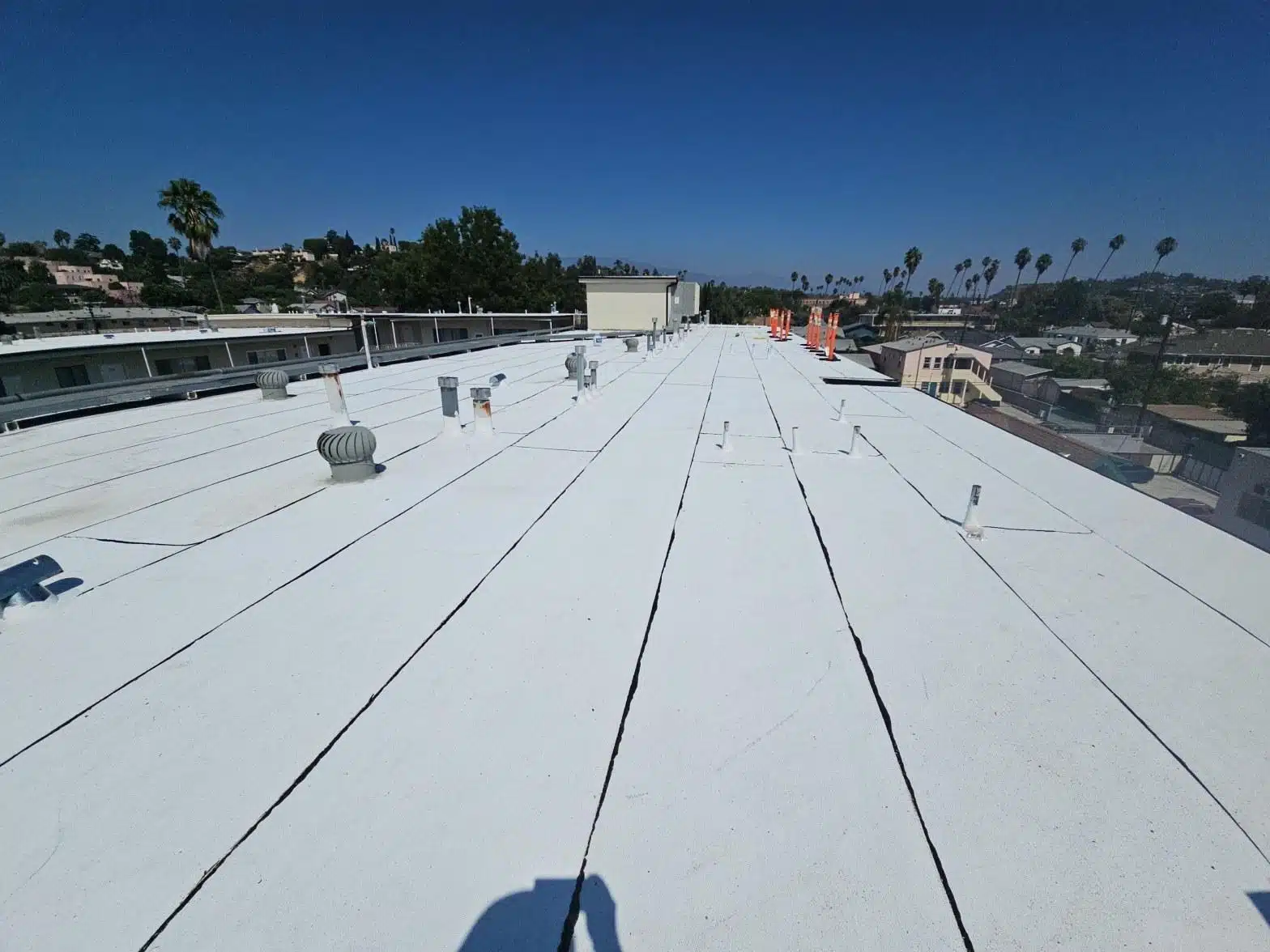
- Protective coating: An elastomeric, acrylic, silicone, or reflective coating is rolled or sprayed over the prepared surface. The coating type depends on the existing roofing material.
- Final inspection and documentation: A reputable contractor documents the completed work with photos and provides a written summary of what was done.
Some restoration scopes also include minor deck repairs if a small section of decking has softened, gutter cleaning, and fascia touch-ups. These add-ons affect the total price, so ask for an itemized quote.
What Does Roof Flashing Have to Do with Restoration?
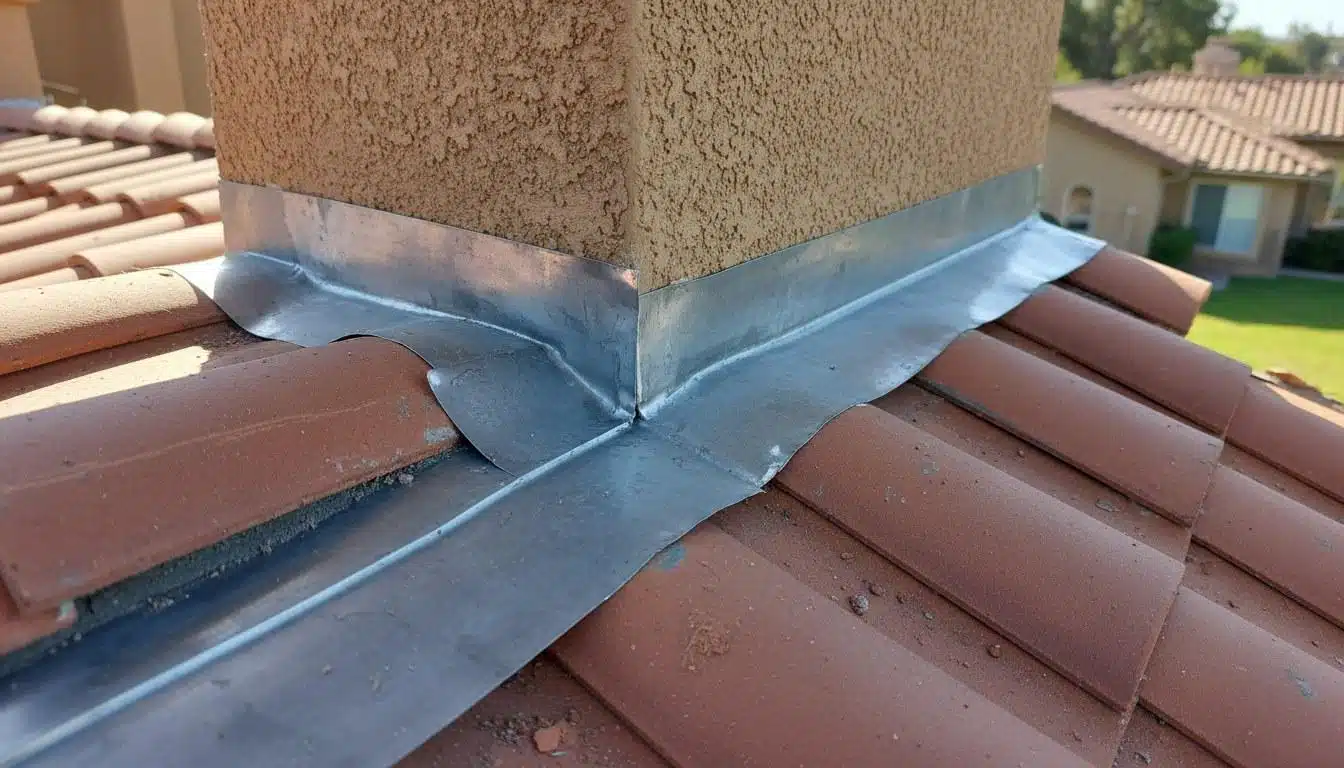
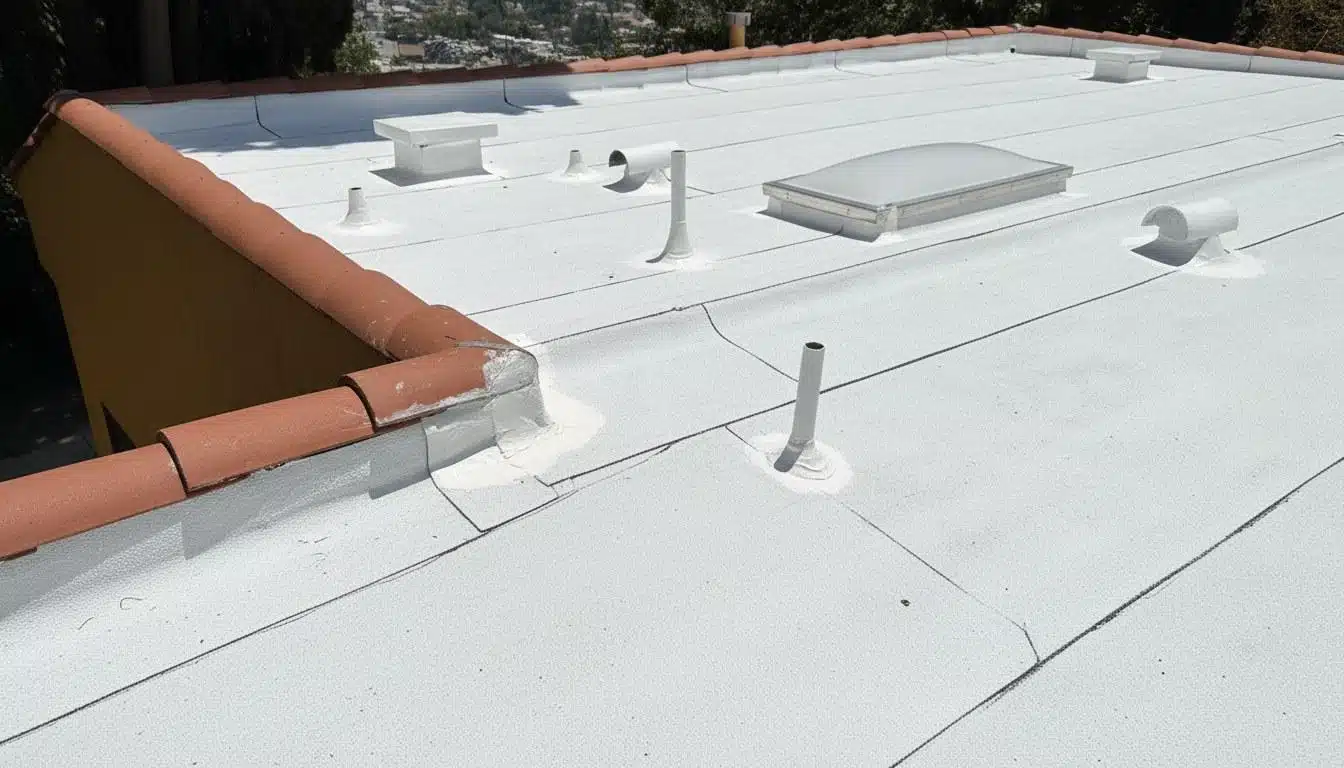
Roof flashing is the thin metal (usually galvanized steel, aluminum, or copper) installed at every joint, edge, and penetration on a roof to stop water from getting underneath the surface material. Without sound flashing, even a freshly coated roof will leak.
Flashing is installed in several locations across a roof:
- Step flashing: Small L-shaped pieces woven into shingle courses along a wall or dormer.
- Valley flashing: A continuous strip running down the V-shaped channel where two roof planes meet.
- Chimney flashing: A combination of base flashing and counter-flashing that seals all four sides of a chimney.
- Drip edge flashing: A metal strip along the eaves and rakes that directs water into the gutters.
- Vent pipe flashing: A rubber or metal boot around every plumbing vent stack that passes through the roof.
- Skylight flashing: A factory or site-built frame that seals the skylight curb to the roof surface.
Flashing fails for several reasons: the sealant dries out and cracks, metal corrodes, fasteners back out, or the flashing was installed incorrectly in the first place. A restoration that ignores flashing is incomplete. Our crew replaces or re-seals flashing on roughly 8 out of every 10 restoration jobs we perform, because deteriorated flashing is almost always part of why the homeowner called in the first place.
Learning how to apply roof flashing correctly involves cleaning the substrate, applying roofing cement or butyl tape, overlapping each piece by at least 3 inches, and fastening with corrosion-resistant screws. For chimneys, the counter-flashing is embedded into the mortar joint. These steps require the right tools and materials to meet International Residential Code (IRC) standards that California has adopted. Improper flashing installation is one of the leading causes of warranty-voiding water intrusion.
What Does Roof Restoration Cost in California?
In the California market, roof restoration projects typically range from $1,500 to $6,500 for an average single-family home, compared to $12,000 to $25,000 or more for a full replacement on the same home. The spread is wide because scope, roof size, material type, and condition all push the number in different directions.
The table below shows how the main factors affect where your project lands in that range:
| Cost Factor | Lower End of Range | Higher End of Range |
|---|---|---|
| Roof size | Under 1,500 sq ft | 2,500 sq ft or more |
| Roof pitch | Low-slope or flat | Steep pitch (7:12 or greater) |
| Roofing material | Flat TPO or modified bitumen | Concrete tile or slate |
| Flashing condition | Minor re-sealing only | Full flashing replacement at chimney, valleys, skylights |
| Coating type | Acrylic elastomeric | Silicone or polyurethane (longer lifespan) |
| Deck repairs needed | None | 1-3 sheets of decking replaced |
| Accessibility | Single-story, open yard | Multi-story, tight access, or hillside lot |
Coating materials alone typically run $0.15 to $0.75 per square foot for materials, with labor adding $1.00 to $3.00 per square foot depending on complexity. Flashing replacement at a chimney, for example, can add $300 to $800 to a project on its own.
As of 2024, California’s Title 24 building energy standards encourage cool-roof coatings on low-slope residential roofs, and certain ENERGY STAR-rated reflective coatings may qualify for rebates through utility programs. Ask your contractor whether the coating they plan to use carries an ENERGY STAR rating, since that can affect rebate eligibility.
Always request a custom quote before budgeting. Two roofs of the same square footage can differ by $2,000 or more based on flashing complexity and coating selection alone.
How Do You Know If Your Roof Qualifies for Restoration?
A roof generally qualifies for restoration when it is structurally sound, has no more than one layer of existing material, and shows surface-level wear rather than widespread deck damage. If more than 25 percent of the surface area is compromised at the deck level, replacement is usually the more cost-effective path.
Signs your roof is a good candidate for restoration:
- Age between 10 and 20 years with no prior restoration
- Granule loss on asphalt shingles but no widespread cracking
- Isolated leaks traced to failed flashing or sealant rather than deck rot
- Visible surface oxidation or fading on metal or tile roofs
- Soft spots limited to one or two small areas
- No active mold or rot spreading across the decking
Signs you likely need a full replacement instead:
- Multiple layers of existing roofing (two or more layers of shingles)
- Widespread deck rot or sagging across more than one section
- Interior water stains in multiple rooms indicating systemic failure
- Shingles curling, cupping, or missing across 40 percent or more of the field
- Roof age beyond 25 to 30 years with no prior maintenance
We see roughly 3 out of 5 homeowners who call expecting to need a full replacement actually qualify for restoration after a proper inspection. The key is getting an honest assessment before committing to either scope.
Roughly 3 out of 5 homeowners who call expecting to need a full replacement actually qualify for restoration after a proper inspection.
For homeowners in specific communities across Southern California, our detailed service pages for areas like Southern California and Southern California go deeper on local conditions and service options in those areas.
How Do You Choose the Right Roof Restoration Contractor?
Choose a contractor who is licensed by the California Contractors State License Board (CSLB), carries general liability and workers’ compensation insurance, and provides a written, itemized scope of work before any money changes hands. These three requirements protect you if anything goes wrong.
Here is what to check before signing a contract:
- CSLB license verification: Look up the contractor’s license number at cslb.ca.gov. A valid C-39 (Roofing) license is required for roofing work in California.
- Insurance certificates: Ask for a current certificate of insurance naming you as an additional insured. Do not accept a verbal assurance.
- Itemized written estimate: The quote should list every task, material, and coating product by name. Vague line items like “roof work” are a red flag.
- Coating product data sheets: Ask for the manufacturer’s data sheet on the coating being applied. Confirm it is rated for your roof type and carries an ENERGY STAR certification if you want rebate eligibility.
- Warranty terms in writing: Understand both the workmanship warranty (typically 2 to 5 years) and the manufacturer’s coating warranty (often 10 to 20 years for premium products).
- References and photos: Ask for photos of completed restoration projects on the same roof type as yours. A contractor who does this work regularly will have plenty.
Be cautious of contractors who show up unsolicited after a storm, demand large upfront deposits (more than 10 percent is a warning sign under California law for contracts over $1,000), or pressure you to sign the same day. Legitimate contractors give you time to review the quote.
Price is not the only measure of value. A coating applied incorrectly or to a poorly prepared surface will fail within 2 to 3 years, costing you more than a higher-quality job would have cost the first time.
Ready to Get Started? Schedule Your Roof Restoration
A thorough roof inspection is the right first step. It tells you whether restoration or replacement fits your situation and gives you a concrete scope to compare across quotes.
Roof Repair & Construction Inc. serves homeowners across Southern California with complete roof restoration services, including flashing repair, surface preparation, and premium coating application. Every job starts with an honest inspection and a written, itemized estimate.
Call (323) 474-1088 to schedule your inspection or request a custom quote. Whether your roof needs a simple re-seal or a full affordable roof restoration service from decking to coating, the team at Roof Repair & Construction Inc. will walk you through every option before any work begins.
Explore our full range of Roof Repair services across Southern California.
Frequently Asked Questions
How do I know if my roof needs restoration or a full replacement?
If your roof's deck is still structurally sound and the damage is limited to the surface, flashing, or sealants, restoration is usually the right call. A full replacement makes more sense when the decking is rotted across a large area, there are two or more existing layers of roofing, or the roof is older than 25 to 30 years with no prior maintenance. A licensed inspector can tell you which path fits your situation after a physical walkthrough.
How long does a roof restoration last?
A properly done roof restoration typically extends the roof's service life by 10 to 15 years. The longevity depends on the coating type, surface preparation quality, and how well the flashing was addressed. Premium silicone coatings often carry manufacturer warranties of 10 to 20 years, while standard acrylic coatings are typically warranted for 5 to 10 years.
How do you apply roof flashing correctly?
Roof flashing is applied by first cleaning the substrate, then bedding the flashing in roofing cement or butyl tape, overlapping each piece by at least 3 inches in the direction water flows, and fastening with corrosion-resistant screws or nails. Counter-flashing at chimneys is embedded into the mortar joint and sealed with a flexible caulk. Every penetration, valley, and edge needs its own properly sized and overlapping piece of flashing to prevent water intrusion.
How much does an affordable roof restoration service cost near me in California?
In the California market, roof restoration typically ranges from $1,500 to $6,500 for an average single-family home, depending on roof size, pitch, material type, flashing condition, and the coating product selected. That compares to $12,000 to $25,000 or more for a full replacement on the same home. The best way to get an accurate number is to request a written, itemized quote from a licensed C-39 roofing contractor.
What is roof flashing and why does it matter for a restoration?
Roof flashing is thin metal, usually galvanized steel, aluminum, or copper, installed at every joint, edge, and penetration on a roof to stop water from getting underneath the surface material. It is placed at chimneys, valleys, skylights, vent pipes, and roof edges. During a restoration, deteriorated or improperly installed flashing must be repaired or replaced first, because even a fresh coating will not stop leaks that originate at a failed flashing joint.