A leaking commercial roof can shut down operations and cost tens of thousands in water damage within days. This guide covers everything you need to know to hire the right contractor and protect your building.
What Should You Know Before Hiring a Commercial Roof Repair Company?
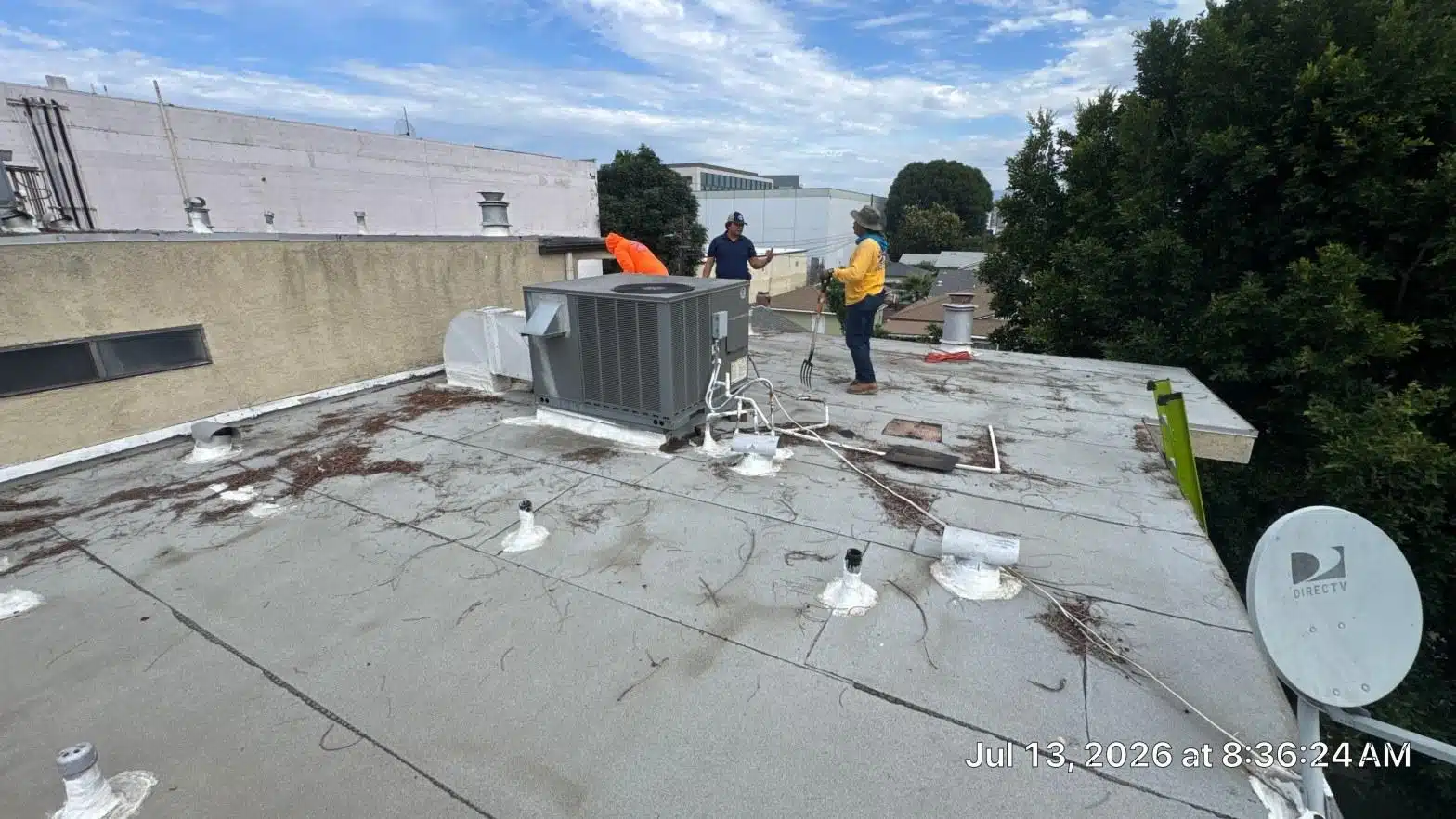
Finding the best commercial roof repair company starts with understanding that commercial roofing is a specialized trade, not an extension of residential work. The materials, load requirements, drainage systems, and code compliance involved are fundamentally different from a house roof. A contractor who excels at shingle replacement on homes may lack the equipment and training to properly repair a built-up membrane or a standing-seam metal roof on a warehouse.
Commercial roofs in California must also comply with California’s Title 24 building energy standards, which govern insulation values, reflectivity, and cool-roof requirements on low-slope commercial systems. Repairs that disturb existing insulation or membrane layers may trigger a Title 24 compliance review, so your contractor needs to know these rules before work begins.
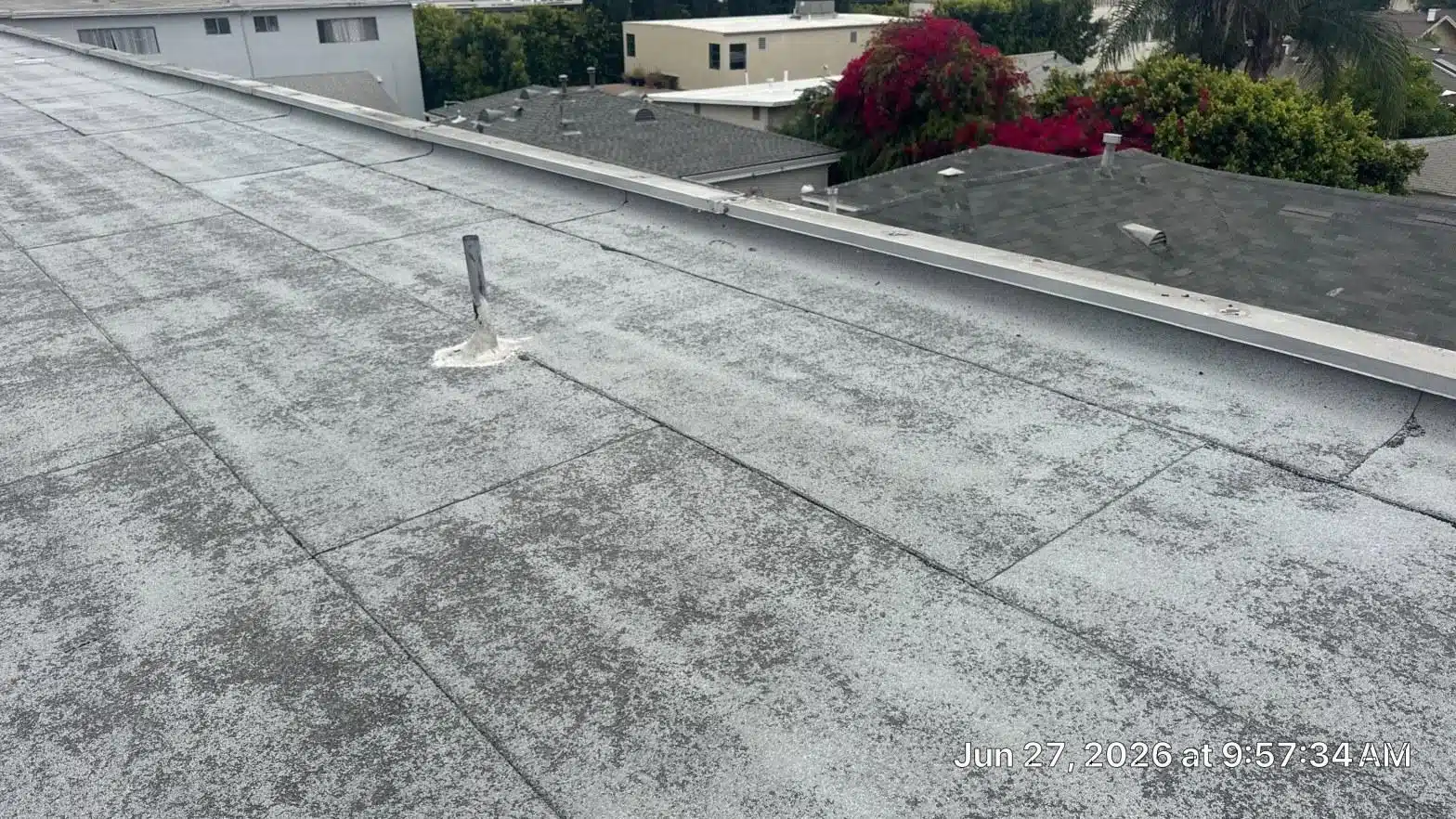
Most commercial roof failures do not happen overnight. Ponding water, failing seams, cracked flashings, and deteriorating coatings usually develop over months. Catching problems during routine roof maintenance services can reduce repair costs by 30 to 50 percent compared to emergency intervention after a leak has already damaged interior materials and equipment.
What Types of Commercial Roof Repairs Are There, and Which Do You Need?
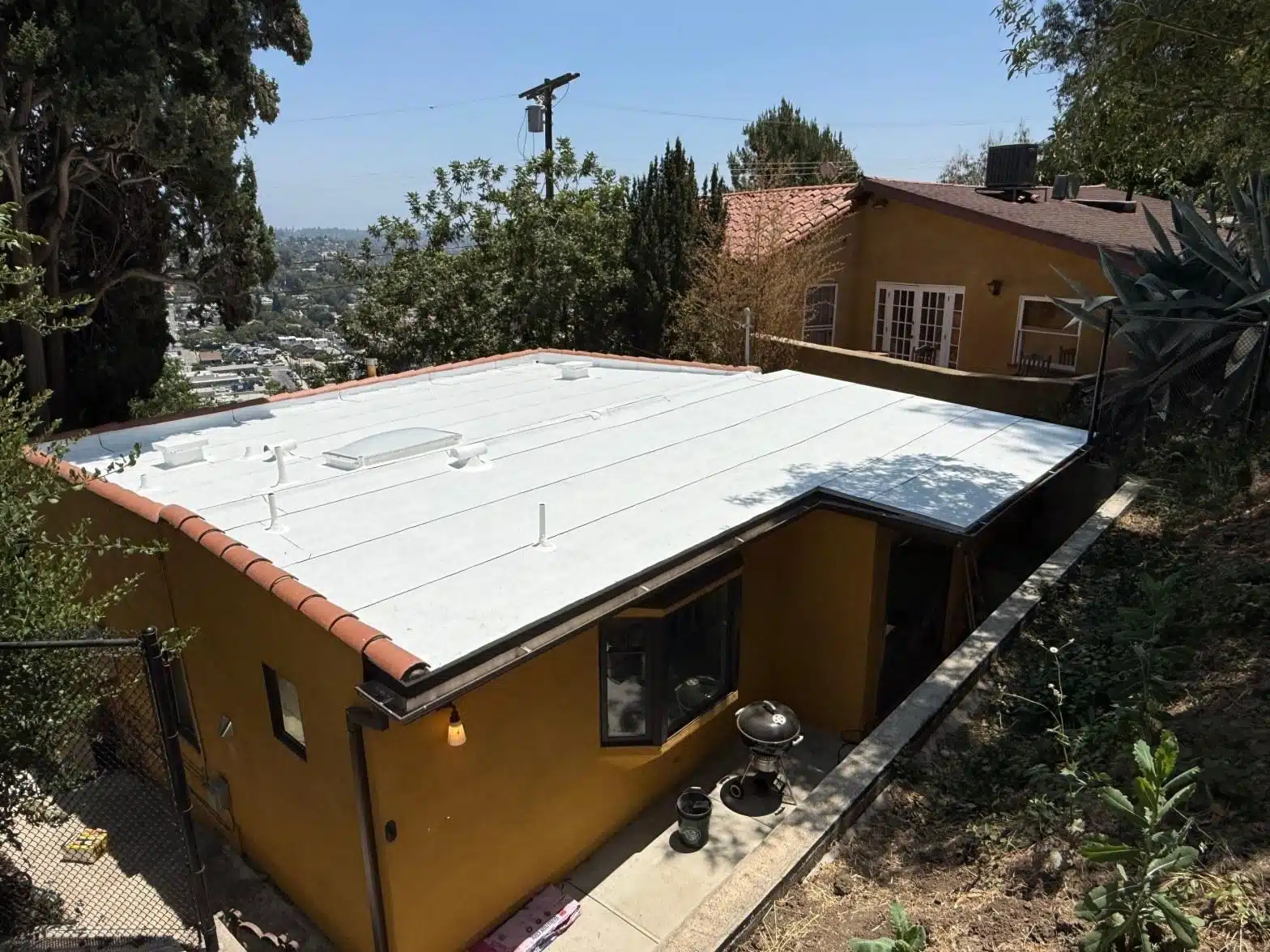
Commercial roof repair falls into five broad categories, and the right fix depends entirely on your roof system, the extent of damage, and how old the existing membrane is. Misidentifying the repair type is one of the fastest ways to waste money on a patch that fails within a season.
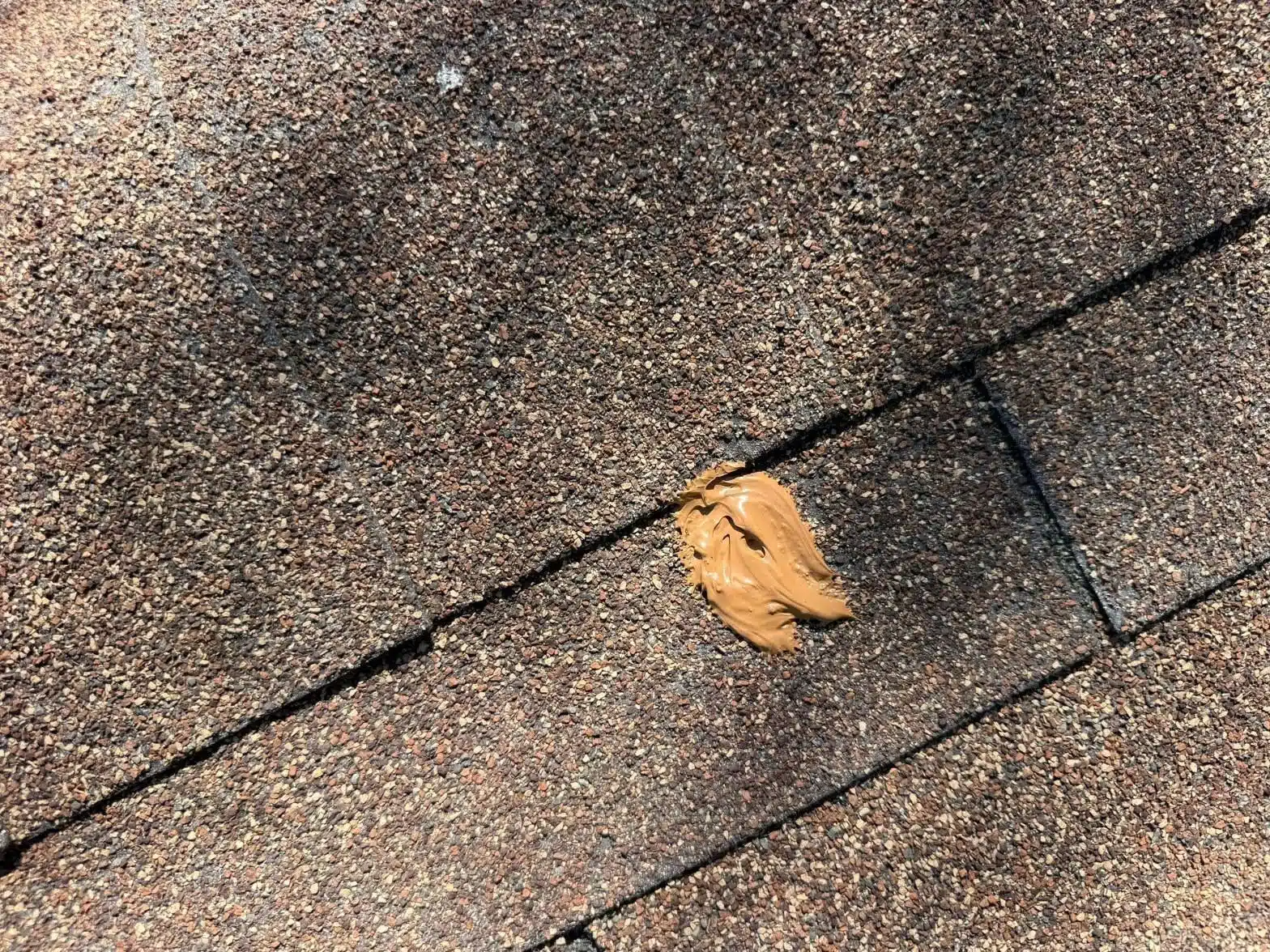
- Leak and membrane repair: Sealing punctures, cracks, or open seams in TPO, EPDM, PVC, or modified bitumen membranes. This is the most common leaking roof repair request on flat commercial roofs.
- Flashing repair and replacement: Metal or rubberized flashings around HVAC curbs, skylights, drains, and parapet walls are the most frequent source of water intrusion. They typically need attention every 10 to 15 years.
- Drainage and gutter repair: Clogged or damaged internal drains and scuppers cause ponding water, which adds structural load and accelerates membrane deterioration.
- Structural roof repair: Damaged decking, sagging sections, or rot in wood substrates require structural work before any surface repair will hold.
- Fire and smoke damage repair: After a fire event, membranes, insulation, and decking may need full replacement in affected zones before the building can be reoccupied.
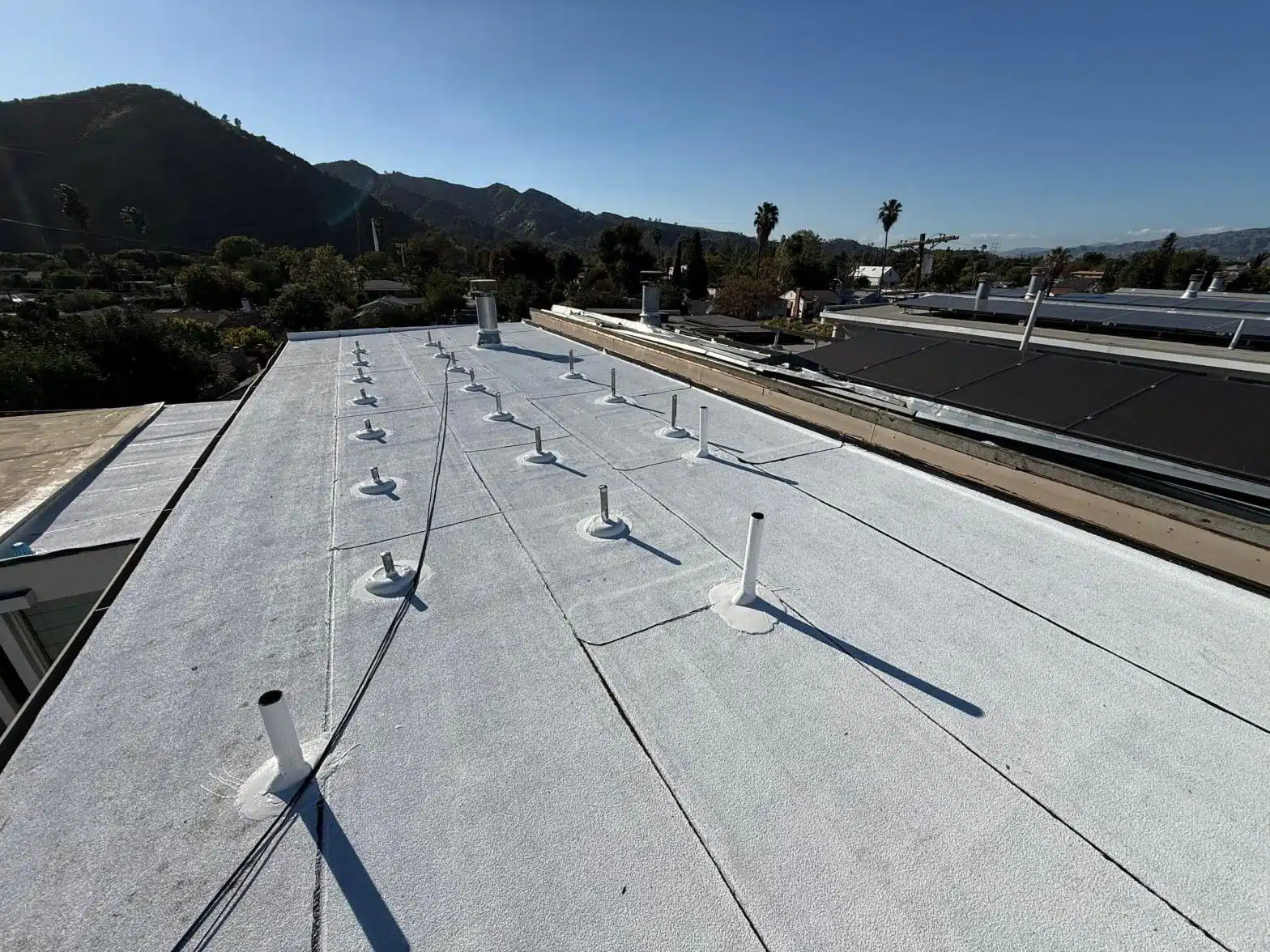
- Coating and restoration: Applying a reflective elastomeric coating over an aging but structurally sound membrane can extend roof life by 10 years or more and improve ENERGY STAR cool-roof performance.
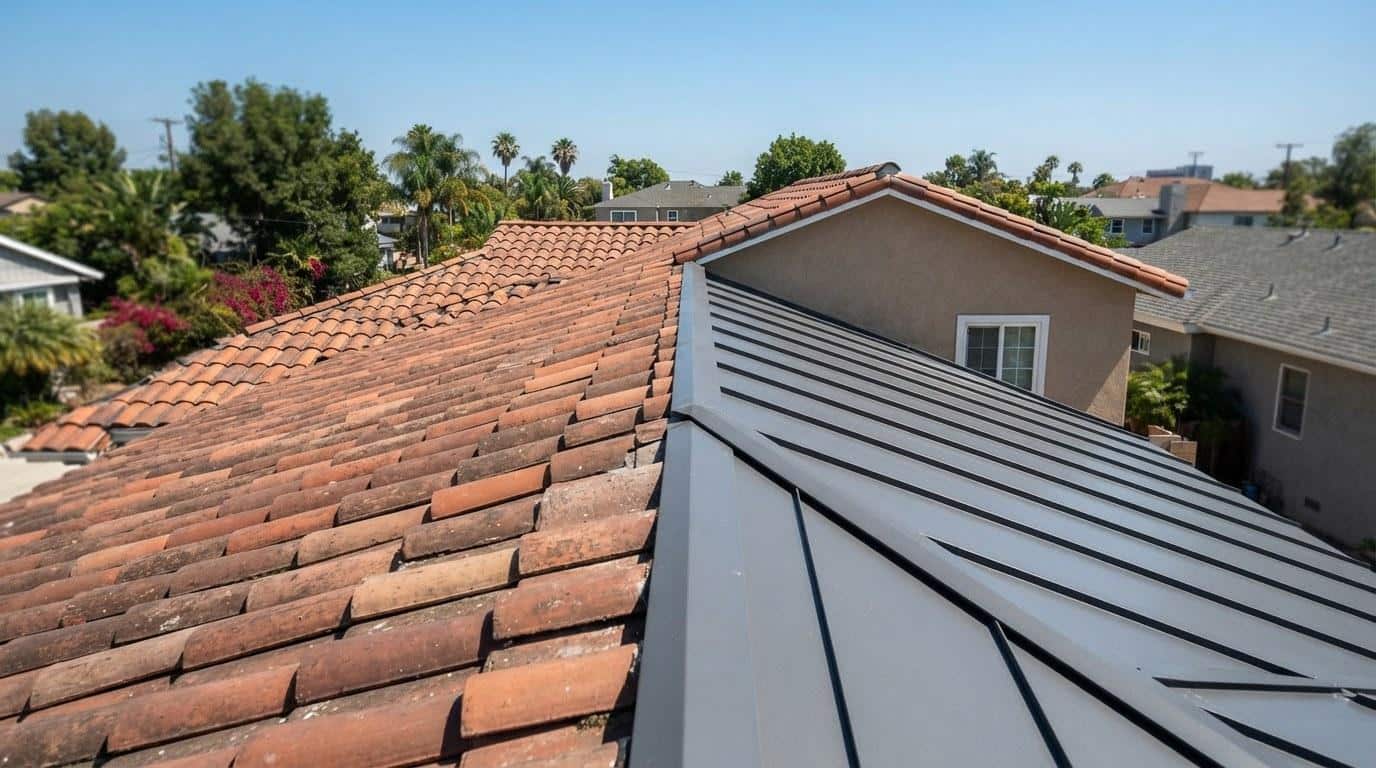
- Metal roof repair: Rust treatment, fastener replacement, and panel re-seaming on standing-seam or corrugated metal systems require metal-specific tools and sealants.
| Repair Type | Best For | Typical Lifespan of Repair | When to Repair vs. Replace |
|---|---|---|---|
| Membrane patch | Isolated punctures or small seam failures | 5 to 10 years with proper prep | Repair if less than 25% of membrane is affected |
| Flashing replacement | Curb, parapet, and penetration leaks | 10 to 20 years | Almost always worth repairing before replacing the whole roof |
| Drainage repair | Ponding water, slow-draining scuppers | Varies by cause | Repair immediately; ponding accelerates all other failures |
| Structural decking repair | Soft spots, rot, or fire damage | 20 or more years if properly done | Required before any surface repair will hold |
| Coating and restoration | Aging but intact membranes | 10 to 15 years | Best when roof has fewer than 2 active leak points |
| Metal roof re-seaming | Thermal expansion gaps, rust, loose fasteners | 15 to 25 years | Repair if panels are structurally sound; replace if rust is through the metal |
How Much Does Commercial Roof Repair Cost in California?
Commercial roof repair in the California market typically ranges from $500 to $3,000 for minor patching or flashing work, and from $8,000 to $40,000 or more for large-area membrane repairs, structural work, or multi-zone restoration projects. Full commercial roof replacement in this region generally runs from $10 to $25 per square foot depending on the system type, building complexity, and access conditions.
Several factors push costs toward the higher end of those ranges:
- Roof size and access: Multi-story buildings require lifts or cranes, adding $500 to $2,500 or more to mobilization costs alone.
- Roof system type: TPO and EPDM membrane repairs are generally less expensive than built-up roofing (BUR) or metal panel work.
- Extent of hidden damage: Water intrusion often damages insulation and decking beneath the membrane. Contractors cannot fully price structural repairs until the membrane is opened.
- Code compliance requirements: As of 2024, California’s Title 24 update requires cool-roof compliance on most commercial re-roofing projects, which may require upgraded insulation or reflective membranes.
- Permit fees: Los Angeles County commercial roofing permits typically add $300 to $1,500 depending on project scope. Always confirm your contractor pulls permits.
- Emergency timing: Repairs scheduled during or immediately after a storm event often carry premium pricing due to high demand across roofing contractors in California.
Our crews respond to roughly three times more leaking roof repair calls in January and February than in any other two-month period, with most of those jobs involving flashing failures or membrane seams that had been soft for months before the first heavy rain exposed them.
Always request a custom quote from a licensed contractor before budgeting. Call (323) 474-1088 to get a written estimate for your specific building and roof system.
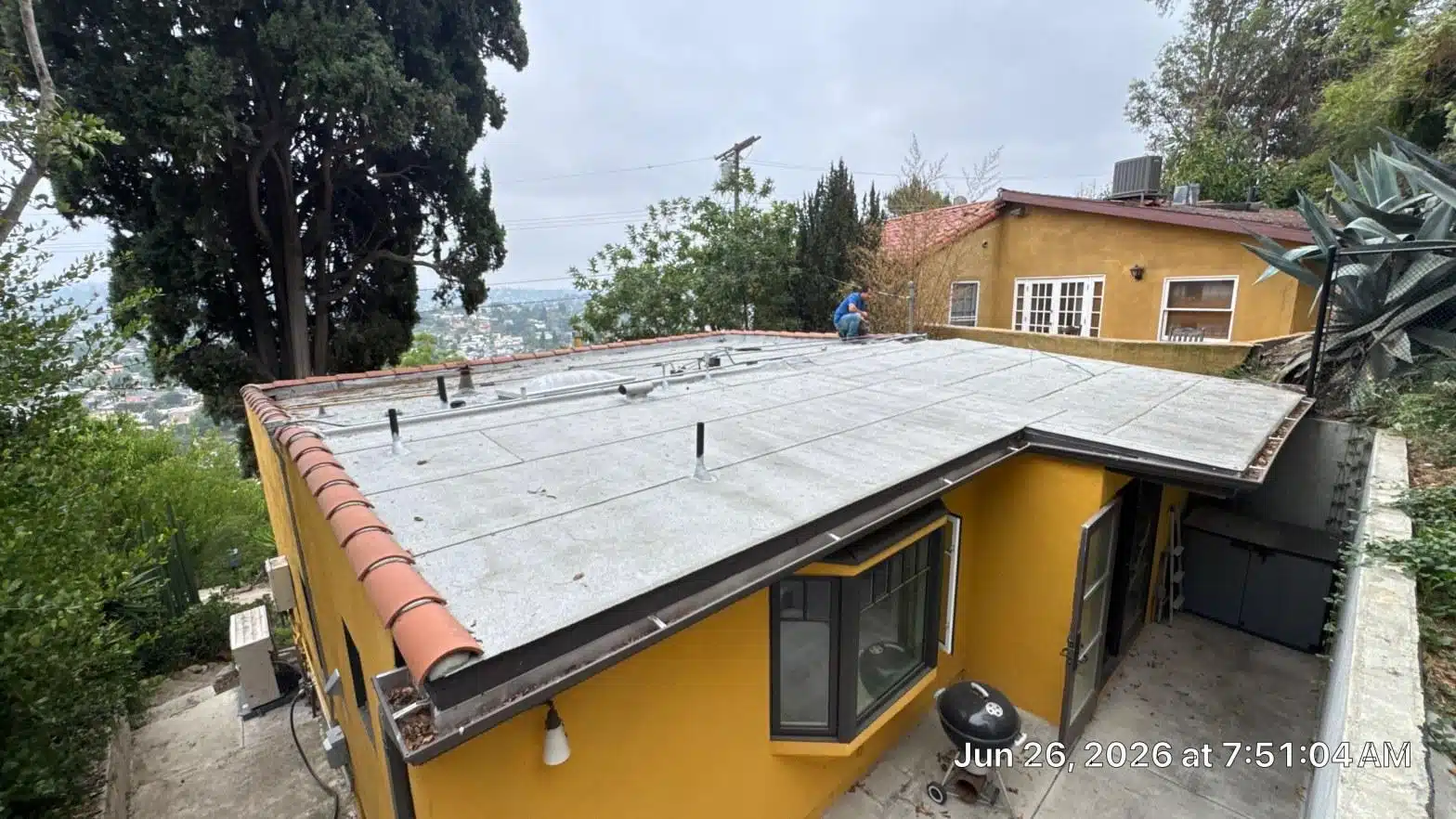
What Factors Matter Most When Choosing the Best Commercial Roof Repair Company?
Licensing, insurance, roof-type experience, and written documentation are the four factors that separate a reliable commercial roofing contractor from one that creates more problems than it solves. Every other consideration, including price, is secondary to these four.
Valid CSLB Licensing
California law requires commercial roofing contractors to hold a valid license issued by the California Contractors State License Board (CSLB). The correct classification for roofing work is a C-39 Roofing Contractor license. You can verify any contractor’s license number, status, and disciplinary history for free on the CSLB website. Never hire a contractor who cannot provide a valid C-39 license number.
Adequate Insurance Coverage
At minimum, a commercial roofing contractor should carry general liability insurance with limits of at least $1 million per occurrence and active workers’ compensation coverage for all employees. Ask for certificates of insurance naming your business as an additional insured. If a worker is injured on your roof and the contractor lacks workers’ compensation, your property insurance may be liable.
Documented Experience With Your Roof Type
Ask for three to five references from commercial projects involving the same roof system you have, whether that is TPO, EPDM, metal, built-up, or modified bitumen. A contractor who works primarily on flat EPDM roofs may not have the tools or technique for standing-seam metal repair. References should be from projects completed within the last two years, not five.
Written Scope of Work and Warranty
A reputable roof repair company provides a written scope of work before any contract is signed. This document should specify the materials by brand and specification, the square footage to be addressed, the method of repair, and the warranty terms. Verbal promises about workmanship are unenforceable. As of 2026, leading commercial roofing manufacturers offer membrane warranties ranging from 10 to 30 years, but only when an authorized contractor installs the system.
Permit Pulling
In most California jurisdictions, commercial roof repairs above a certain scope require a permit. A contractor who suggests skipping permits to save money is putting your property at risk. Unpermitted work can void your building’s certificate of occupancy and create liability if the roof fails and causes property damage or injury.
What Mistakes Should You Avoid When Hiring a Roofing Contractor?
The most costly mistakes in commercial roof repair happen before a single nail is driven, usually during the contractor selection and contract phase. Avoiding these errors can save you thousands and prevent repeat failures.
- Choosing the lowest bid without comparing scope: A bid that is 30 percent lower than the others almost always reflects fewer materials, thinner membranes, or skipped steps. Compare line items, not totals.
- Skipping the CSLB license check: Unlicensed contractors operate in California every day. A quick search at cslb.ca.gov takes two minutes and can prevent a catastrophic loss.
- Accepting verbal warranties: If it is not in writing with specific terms and a duration, it does not exist legally.
- Delaying a leaky roof repair: Water that enters through a 2-inch membrane breach can spread laterally under insulation for 20 feet or more before it shows as an interior stain. Every week of delay multiplies the repair area.
- Hiring a residential contractor for a commercial job: Residential roofing techniques, materials, and code knowledge do not transfer directly to commercial flat or low-slope systems.
- Not asking about code compliance: California’s Title 24 standards and local fire codes affect material choices on commercial re-roofing. A contractor who does not raise this topic may be unaware of the requirements.
- Paying more than 10 to 15 percent upfront: Legitimate contractors do not require large deposits before work begins. California law limits contractor deposits on home improvement contracts, and commercial best practice follows the same principle.
- Ignoring roof maintenance services after the repair: A repaired roof without a maintenance plan will fail again. Most commercial roof warranties require documented annual inspections to remain valid.
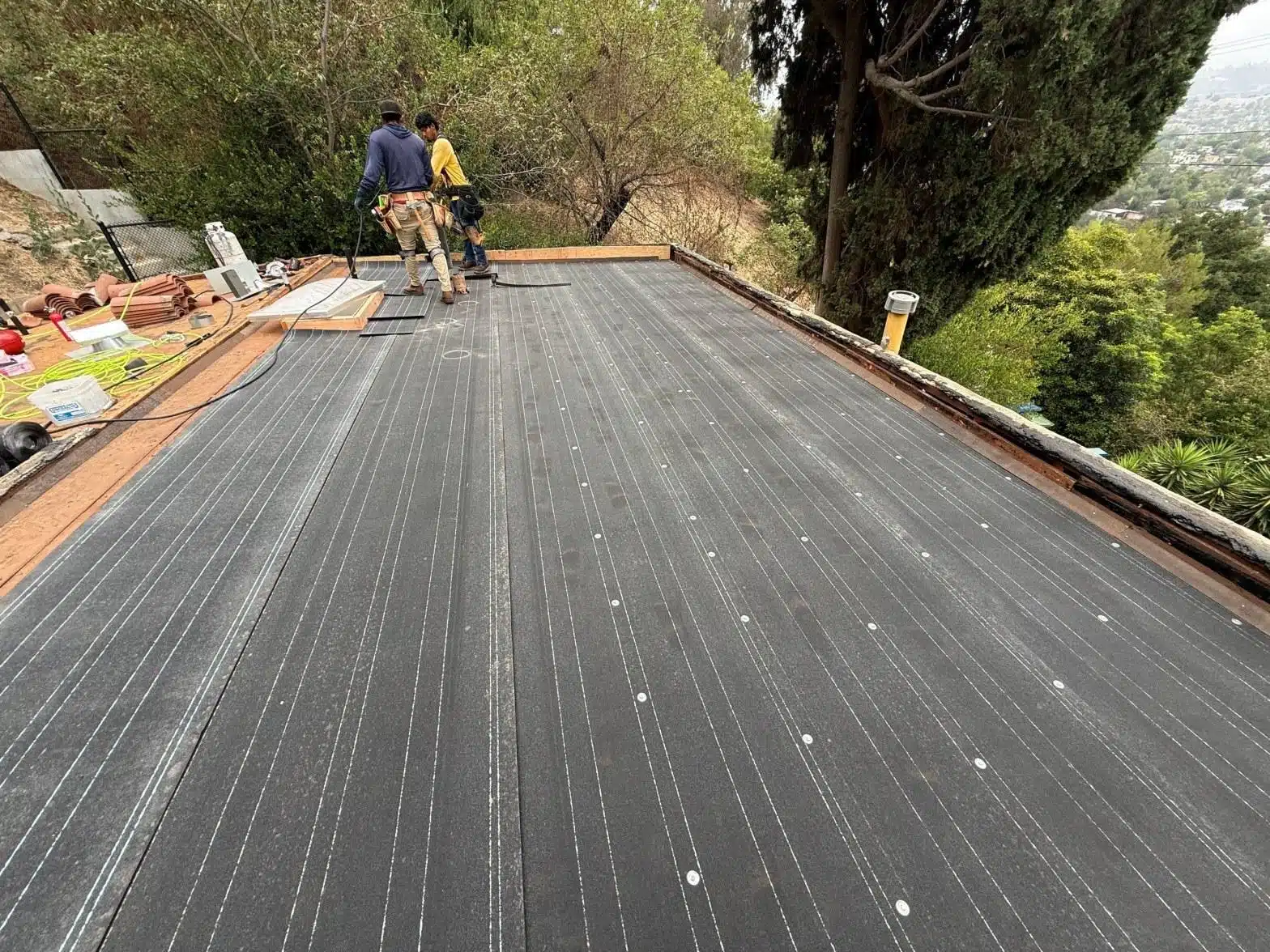
How Do You Evaluate Bids and Compare Contractors?
Get a minimum of three written bids for any commercial roof repair project over $2,000, and evaluate each bid on scope, materials, timeline, and warranty terms, not price alone. A structured comparison prevents you from making an apples-to-oranges decision.
When you receive each bid, check for these specifics:
- Material specifications: The bid should name the membrane brand, thickness (typically 45 mil to 80 mil for TPO or EPDM), and any adhesive or fastening system. Generic terms like “industry-standard membrane” are a red flag.
- Tear-off vs. overlay: Some contractors propose overlaying new material on top of failing old material to save time. This is acceptable in limited cases but often masks underlying damage. Ask which approach is proposed and why.
- Drainage and flashing scope: Confirm whether flashing replacement and drain inspection are included or are add-on costs. These are the two most common sources of leaks on commercial flat roofs.
- Timeline and crew size: A 10,000-square-foot repair should not take a two-person crew six weeks. Ask how many workers will be on site and what the daily production rate is.
- Permit responsibility: Confirm in writing which party is responsible for pulling permits and scheduling inspections.
- Payment schedule: Payments should be tied to project milestones, not calendar dates. A typical structure is 10 to 15 percent at signing, 40 to 50 percent at material delivery, and the balance at final inspection.
Across our commercial service calls in Southern California, we find that roughly 60 percent of repeat repair failures on flat roofs trace back to the original contractor skipping drain and flashing inspection during the initial repair, focusing only on the visible membrane breach and leaving the underlying drainage problem untouched.
Roughly 60 percent of repeat repair failures on flat roofs trace back to the original contractor skipping drain and flashing inspection during the initial repair.
Once you have evaluated bids, ask each contractor for proof of their CSLB license status and check it yourself. Also confirm that the materials they propose meet ENERGY STAR roofing product standards if your building qualifies for cool-roof incentives or Title 24 compliance credits.
Get Expert Commercial Roof Repair Advice
Protecting your commercial property starts with choosing a contractor who understands your roof system, follows California code, and puts every commitment in writing. Whether you are dealing with a leaky roof repair after a storm, planning preventive roof maintenance services, or evaluating a full replacement, the right contractor makes the difference between a repair that lasts 20 years and one that fails in the next rainy season.
Roof Repair & Construction Inc. handles the full range of commercial roof repair work across Southern California, from emergency membrane patching and structural repairs to flashing replacement, metal roof re-seaming, and fire damage restoration. The team is licensed by the California Contractors State License Board (CSLB) and carries full general liability and workers’ compensation coverage.
Schedule your inspection or request a written bid today. Call (323) 474-1088 to speak with a commercial roofing specialist and get a detailed, no-obligation scope of work for your building.
Explore our full range of Roof Repair services across Southern California.
Frequently Asked Questions
How do I know if my commercial roof needs repair or full replacement?
If fewer than 25 percent of the membrane surface is damaged and the underlying insulation and decking are structurally sound, repair is almost always the better value. If the roof is more than 20 years old, has multiple active leak points, or has saturated insulation across large areas, replacement is likely more cost-effective over a 10-year horizon. A licensed contractor should perform a core sample test and infrared scan to determine how much insulation has absorbed moisture before you decide.
How long does a commercial roof repair typically take?
Most isolated membrane patches and flashing repairs on flat commercial roofs are completed in one to three days. Larger repairs covering several thousand square feet, or jobs that require structural decking work, can take one to three weeks depending on crew size and material lead times. Weather delays are common in California between November and March, so build buffer time into your project schedule.
What license should a commercial roofing contractor have in California?
Commercial roofing contractors in California should hold a C-39 Roofing Contractor license issued by the California Contractors State License Board (CSLB). You can verify any license number for free at cslb.ca.gov. Hiring an unlicensed contractor voids most manufacturer warranties and can expose your business to liability if a worker is injured on site.
Does commercial roof repair qualify for any California rebates or tax credits?
Cool-roof coatings and reflective membranes that meet ENERGY STAR standards may qualify for utility rebates through programs like SoCalREN in Southern California. Certain energy-efficiency improvements to commercial buildings may also qualify for the Inflation Reduction Act federal tax credit under the 179D commercial buildings deduction. Ask your contractor which materials qualify and consult a tax professional for the deduction specifics.
Why does my commercial roof keep leaking in the same spot after it was already repaired?
Repeat leaks in the same area almost always mean the original repair addressed the symptom but not the source. Water travels laterally under membranes and insulation before it drips through a ceiling, so the visible wet spot is often 10 to 20 feet away from the actual breach. A proper repair includes tracing the water path back to its entry point, inspecting nearby flashings and drains, and verifying that no hidden insulation saturation is wicking moisture toward the original repair zone.