A leaking roof at a rental property is not just a maintenance headache in California; it is a legal habitability issue that can give tenants the right to withhold rent or break their lease. This guide covers what the law requires, how fast you must act, and how to protect yourself with the right documentation.
What Does California Law Say About Roof Repairs at Rental Properties?
California Civil Code Section 1941 requires landlords to keep rental units in a habitable condition, and a roof that leaks or fails to keep out weather is a direct violation of that standard. The law lists “effective waterproofing and weather protection of roof and exterior walls” as one of the core habitability requirements every landlord must maintain.
This means a leaking roof is not a matter of preference or convenience. It is a legal obligation. If water is entering the unit through the roof, the landlord is on the clock from the moment they receive notice.
California Civil Code Section 1941.1 spells out the specific conditions that make a rental uninhabitable. A roof that allows water intrusion can also lead to mold growth, which creates additional liability under California’s landlord-tenant guidelines. Mold is treated as a separate habitability concern and can compound a landlord’s legal exposure quickly.
The law applies to all residential rental properties across California, including single-family homes, duplexes, apartments, and condominiums rented to tenants. There is no exemption for older buildings or properties where the landlord is in the middle of planning a renovation.
How Quickly Do California Landlords Have to Fix a Leaking Roof?
California law does not set a single fixed number of days for all repairs, but courts and legal guidance consistently treat 30 days as the outer limit for non-emergency habitability repairs, and active roof leaks are generally considered urgent enough to require faster action. If a storm is actively driving water into a tenant’s bedroom, waiting three weeks is unlikely to be viewed as reasonable by a court.
The standard used in California is “reasonable time,” which depends on the severity of the problem. Here is how courts and housing agencies generally categorize roof-related repair urgency:
- Immediate or within 24-48 hours: Active water intrusion during rain, ceiling collapse risk, or visible mold spreading rapidly. These conditions threaten health and safety directly.
- Within 7-14 days: Damaged or missing shingles that leave the structure exposed, significant flashing failures, or leaks that have damaged interior walls or flooring.
- Within 30 days: Minor roof maintenance issues, small isolated leaks that are not causing ongoing water entry, or repairs that require a permit and inspection process.
Landlords should not wait for the tenant to send a second notice. The moment written notice is received, the repair clock starts. Responding in writing the same day the notice arrives, even just to confirm receipt and schedule an inspection, creates a paper trail that matters if a dispute ever reaches a court or the local housing authority.
California’s Civil Code Section 1942 gives tenants the right to repair and deduct the cost from rent if the landlord fails to act within a reasonable time after notice. The deduction is capped at one month’s rent per repair event, but a tenant can use this remedy more than once if problems recur.
What Happens If a Landlord Ignores a Roof Leak in California?
Ignoring a reported roof leak can expose a California landlord to rent withholding, repair-and-deduct claims, lease termination by the tenant, civil lawsuits, and local housing code violations that carry fines. The consequences escalate the longer the repair is delayed.
Here is a breakdown of the remedies California tenants have available and what each one means for a landlord:
| Tenant Remedy | Legal Basis | Landlord Risk |
|---|---|---|
| Rent withholding | CA Civil Code 1942; case law | Loss of rental income; potential eviction case dismissed |
| Repair and deduct | CA Civil Code 1942 | Tenant hires own contractor; deducts up to one month’s rent |
| Lease termination | CA Civil Code 1942 | Tenant vacates legally; landlord loses tenancy and may owe relocation costs |
| Civil lawsuit | CA Civil Code 1942.4 | Court may award actual damages, punitive damages, and attorney fees |
| Local housing code complaint | Local ordinances | Fines, orders to repair, and possible rent reduction orders |
California Civil Code Section 1942.4 is especially important. It allows a tenant to sue for actual damages plus a civil penalty of between $100 and $5,000 if the landlord received written notice, failed to repair within a reasonable time, and the unit was cited by a housing inspector. Attorney fees can also be awarded, meaning a small leak can become a very expensive legal problem.
On our jobs at rental properties, we often find that the original repair request was documented by the tenant but the landlord’s only response was a verbal promise. That gap in writing is where liability grows quickly.
Roof Repair Rental Property California Guide: Costs and What Drives Them
Roof repair costs at California rental properties typically range from around $300 for a minor patch or flashing fix to $1,500 or more for structural repairs or larger leak sources, with full roof replacement on a standard single-family rental generally falling between $8,000 and $20,000 depending on size, materials, and scope. These are regional market ranges; actual costs vary based on the specific property.
The factors that move the cost up or down most significantly include:
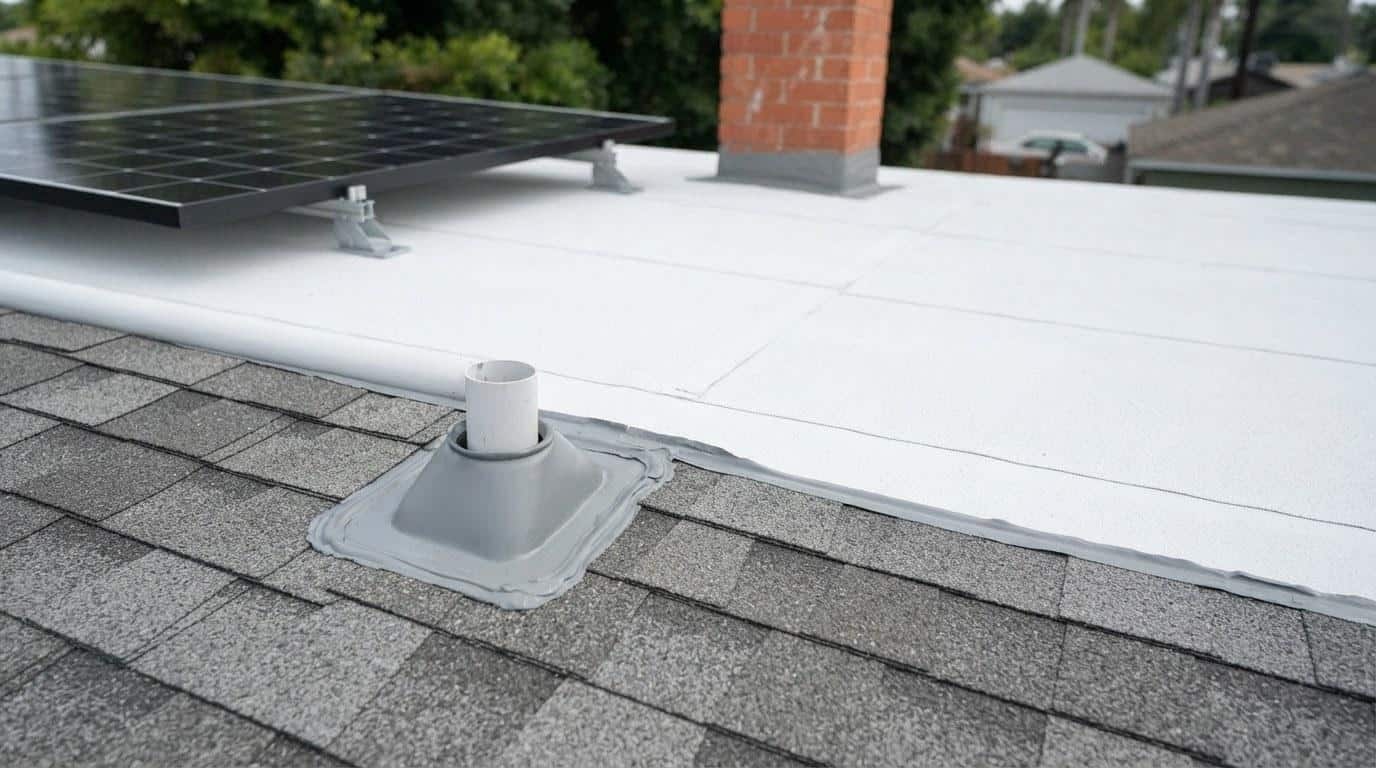
- Roof type and material: Asphalt shingle repairs are generally the least expensive. Flat roof membranes, tile roofs, and metal roofing systems each require specialized materials and techniques that add to labor cost.
- Extent of water damage: A leaking roof that has been dripping for months may have caused rot in the decking, damaged insulation, or compromised rafters. Structural repairs add significant cost beyond the surface fix.
- Access and slope: Steep-pitch roofs require additional safety equipment and take longer to work on safely. Low-slope commercial-style roofs on multi-unit buildings have their own set of access challenges.
- Permit requirements: Some structural repairs in California require a building permit, which adds a fee and an inspection step. Permit costs vary by county but typically range from $150 to $600 for residential roof work.
- Age of the roof: Roofs older than 20 years may require a full replacement rather than a patch, especially if the existing material is at or past its expected service life. Asphalt shingles typically last 20 to 30 years; tile roofs can last 40 to 50 years with proper maintenance.
For landlords managing multiple units, routine roof maintenance services can catch small problems before they become habitability violations. Annual inspections typically cost between $150 and $400 per property in the Southern California market, which is a fraction of the cost of emergency repairs or legal disputes.
Landlords should also be aware that deferred maintenance can affect insurance coverage. Many property insurance policies exclude damage that results from neglect or lack of maintenance, which means a long-ignored leak may not be covered at the time of a major claim. Request a custom quote for your specific property by calling (323) 474-1088.
What Documentation Should Landlords Keep for Roof Repairs?
California landlords should keep a written record of every tenant repair request, every inspection, every contractor estimate, and every completed repair, along with dated photos before and after the work. This documentation is the primary defense if a tenant files a habitability complaint or lawsuit.
A solid documentation system for roof repairs at a rental property includes:
- Written notice log: Save every email, text message, or written letter from tenants reporting a roof issue. Note the date and time you received it.
- Inspection records: Have the roof inspected by a licensed roofing contractor and get a written report. This shows you took the complaint seriously and assessed the scope of the problem.
- Dated photographs: Take photos of the damage from outside and inside the unit before any repair begins. Take another set immediately after repairs are complete.
- Contractor invoices and permits: Keep the full invoice from the roofing contractor, including the scope of work, materials used, and date of completion. If a permit was required, keep the permit and the final inspection sign-off.
- Tenant communication log: Document every communication with the tenant about the repair, including your response to their notice, the scheduled repair date, and confirmation that the work was done.
- Warranty or guarantee documents: If the contractor provides any warranty on the work, keep that document in the property file.
California landlords are also advised to use a property management platform or simple spreadsheet to track repair history by unit. If a tenant later claims the roof was never fixed or was repaired poorly, a complete timeline with receipts and photos is far more persuasive than a verbal recollection.
Under California Civil Code Section 1954, landlords have specific rules about entering a rental unit for repairs, including a 24-hour advance notice requirement in most circumstances. Document that notice as well. A landlord who follows the entry rules and keeps records of doing so is in a much stronger legal position than one who cannot show any paper trail.
How to Choose the Right Roofing Contractor for a Rental Property
For rental property roof repairs in California, landlords should hire a roofing contractor who is licensed by the California Contractors State License Board (CSLB), carries general liability insurance and workers’ compensation coverage, and can provide a written scope of work before starting. These three requirements protect the landlord from liability and ensure the work meets California building code standards.
Here is what to verify before hiring a roofing contractor for a rental property repair:
- CSLB license verification: Check the contractor’s license number at the CSLB license lookup tool. A valid license confirms the contractor has passed California’s trade examination and carries the required bonding.
- Insurance certificates: Ask for a certificate of insurance showing general liability coverage and workers’ compensation. If a worker is injured on your rental property and the contractor has no workers’ comp, you may be exposed to a claim.
- Written estimate with scope of work: A professional roofing contractor will provide a written estimate that describes exactly what work will be done, what materials will be used, and how long the job will take. Verbal estimates are not sufficient for rental property records.
- Permit knowledge: Ask whether the repair requires a permit under local building codes. A contractor who dismisses this question or says permits are never needed for roof work should be viewed with caution.
- References or reviews for rental or commercial work: A contractor experienced with rental properties understands the urgency of habitability repairs and the documentation landlords need. Ask specifically about experience with leaking roof repair on occupied rental units.
Landlords managing properties across Southern California should also be aware that some cities and counties have local rent control ordinances that impose additional repair obligations or timelines beyond state law. Los Angeles, for example, has the Rent Stabilization Ordinance (RSO), which includes habitability provisions that interact with state law. Always check local ordinances in addition to the California Civil Code.
We see the clearest disputes arise when a landlord hires an unlicensed contractor to save money, the repair fails within a season, and there is no written record of what was done or what materials were used. A licensed roofing contractor provides a paper trail that stands up to scrutiny.
Explore our full range of Roof Repair services across Southern California.
Frequently Asked Questions
Am I required as a California landlord to fix a roof leak even if the tenant caused the damage?
California Civil Code Section 1941 places the duty to maintain habitability on the landlord, but if the tenant caused the damage through misuse or negligence, the landlord may be able to charge the cost of repairs back to the tenant. You still need to fix the leak promptly to avoid a habitability violation. Document the cause of the damage with photos and a contractor's written assessment before pursuing reimbursement.
Can my tenant legally stop paying rent because of a leaking roof in California?
Yes, California tenants can withhold rent if the landlord fails to repair a habitability defect like a leaking roof within a reasonable time after receiving written notice. The tenant must give proper notice and the condition must genuinely threaten health or safety. A landlord who responds quickly and documents the repair process is in the strongest position to challenge any improper withholding.
How long do I have to fix a roof leak at my rental property in California?
California law uses a 'reasonable time' standard rather than a fixed deadline. For active leaks that allow water into the unit, courts generally expect action within a few days to two weeks. For less urgent roof maintenance issues, 30 days is typically the outer limit. The more severe the water intrusion, the faster you need to respond.
What is the repair-and-deduct remedy and how does it affect me as a landlord?
Under California Civil Code Section 1942, a tenant who gives written notice and waits a reasonable time without a repair can hire their own contractor and deduct the cost from rent, up to one month's rent per repair event. This means a tenant could hire a roofing contractor of their own choosing, pay for the work, and simply reduce the next rent payment by that amount. Responding quickly to repair requests is the best way to prevent this.
Do I need a permit to repair the roof on my rental property in California?
It depends on the scope of work. Minor repairs like replacing a few shingles or patching flashing generally do not require a permit in most California jurisdictions. Structural repairs, full re-roofing, or work that involves the roof deck or framing typically does require a building permit. Ask your licensed roofing contractor before work begins, and keep a copy of any permit and the final inspection sign-off in your property records.