Serving San Gabriel Valley

Flashing Repairs Across the San Gabriel Valley

Roof flashing in the San Gabriel Valley is one of the most common repair needs Roof Repair & Construction Inc. encounters across this broad stretch of Los Angeles County — from the dense, postwar neighborhoods of Alhambra and Rosemead near the western edge of the valley to the foothill communities of Glendora, Monrovia, and Duarte where the San Gabriel Mountains begin to rise. Much of the valley's housing stock dates from the 1940s through the 1970s, and on homes of that era the original galvanized or aluminum flashing at chimneys, roof valleys, skylights, and parapet walls has often corroded, lifted, or separated from the roofing material over decades of sun and seasonal rain. Flat and low-slope roofs are common on additions and older commercial-style residential buildings throughout cities like El Monte, Baldwin Park, and West Covina, where flashing at the roof-to-wall transition is a frequent source of interior water intrusion. Whether the property sits on a flat valley-floor lot near the Whittier Narrows Natural Area or on a sloped parcel closer to the foothills above Arcadia or Azusa, proper flashing is what keeps water out of the building envelope when everything else is working correctly.


Where San Gabriel Valley Roofs Leak at the Flashing — San Gabriel Valley — Roof Repair & Construction Inc.

The short answer

Roof Repair & Construction Inc. handles roof flashing repairs and replacements across the San Gabriel Valley, from Alhambra and Monterey Park to Glendora and Whittier. The valley's mix of postwar tract homes and older bungalows makes chimney, valley, and step flashing failures common. Call (323) 474-1088.

Flashing Options for San Gabriel Valley Roof Types — San Gabriel Valley — Roof Repair & Construction Inc.
Common Failure Points

Where San Gabriel Valley Roofs Leak at the Flashing

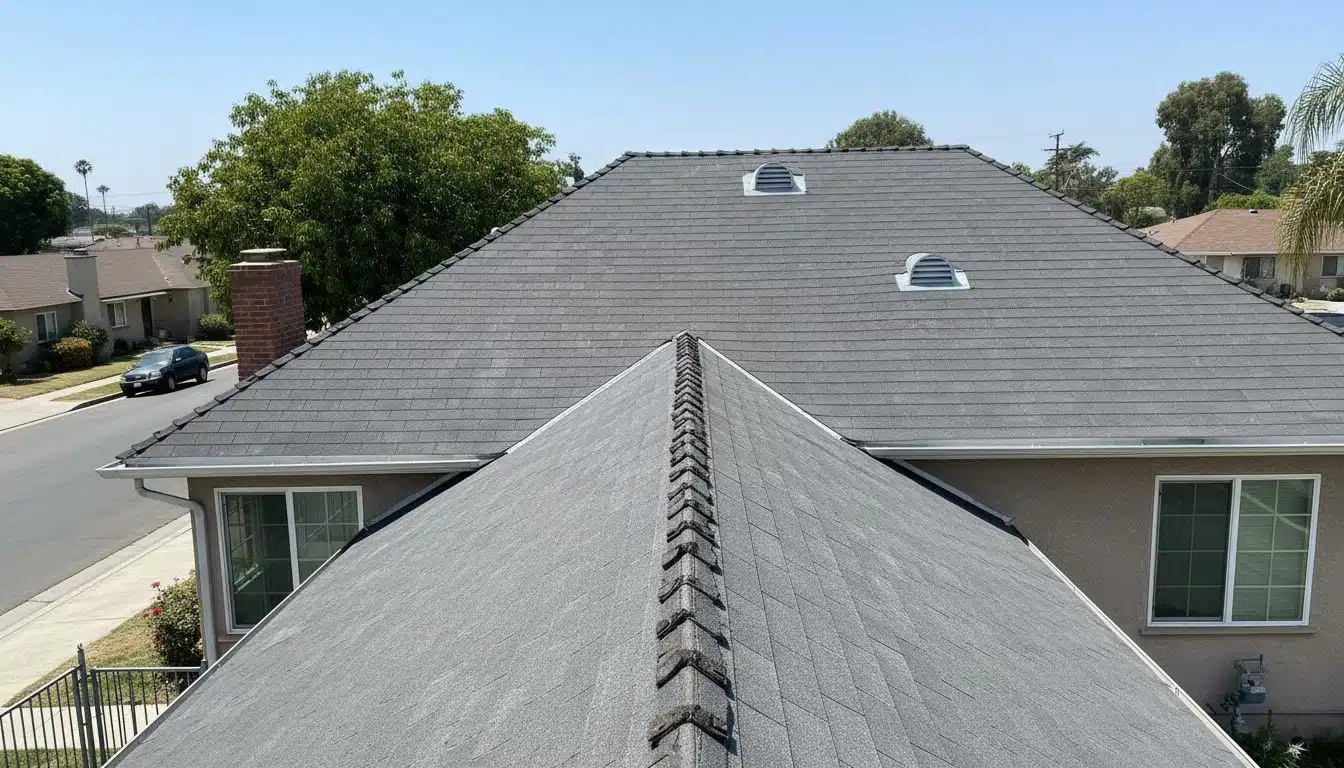
On the valley's prevalent 1950s and 1960s tract homes — the kind found block after block in Temple City, La Puente, and Covina — chimney step flashing and counter-flashing are the most frequent failure points, followed closely by roof valley flashing where two pitches meet. Decades of thermal cycling between hot, dry summers and wet winters work the metal loose from the roofing material, and once the seal breaks, water tracks along the deck before it ever appears on a ceiling. Identifying the actual entry point, rather than just the interior stain, is the first step before any repair begins. Call (323) 474-1088 to schedule an assessment.

  • Chimney step flashing and counter-flashing separation
  • Open or corroded roof valley flashing
  • Skylight curb flashing on older installations
  • Parapet wall base flashing on flat-roof additions
  • Vent pipe boot flashing cracking or lifting
  • Drip edge failure at eaves and rakes
Instant Estimate · No Phone Call

What Will Your Roof Cost?

Answer a few quick questions and get a ballpark price for your San Gabriel Valley roof in about a minute — right here, no obligation.

Calculate My Roof Cost ›

Flashing Materials

Flashing Options for San Gabriel Valley Roof Types

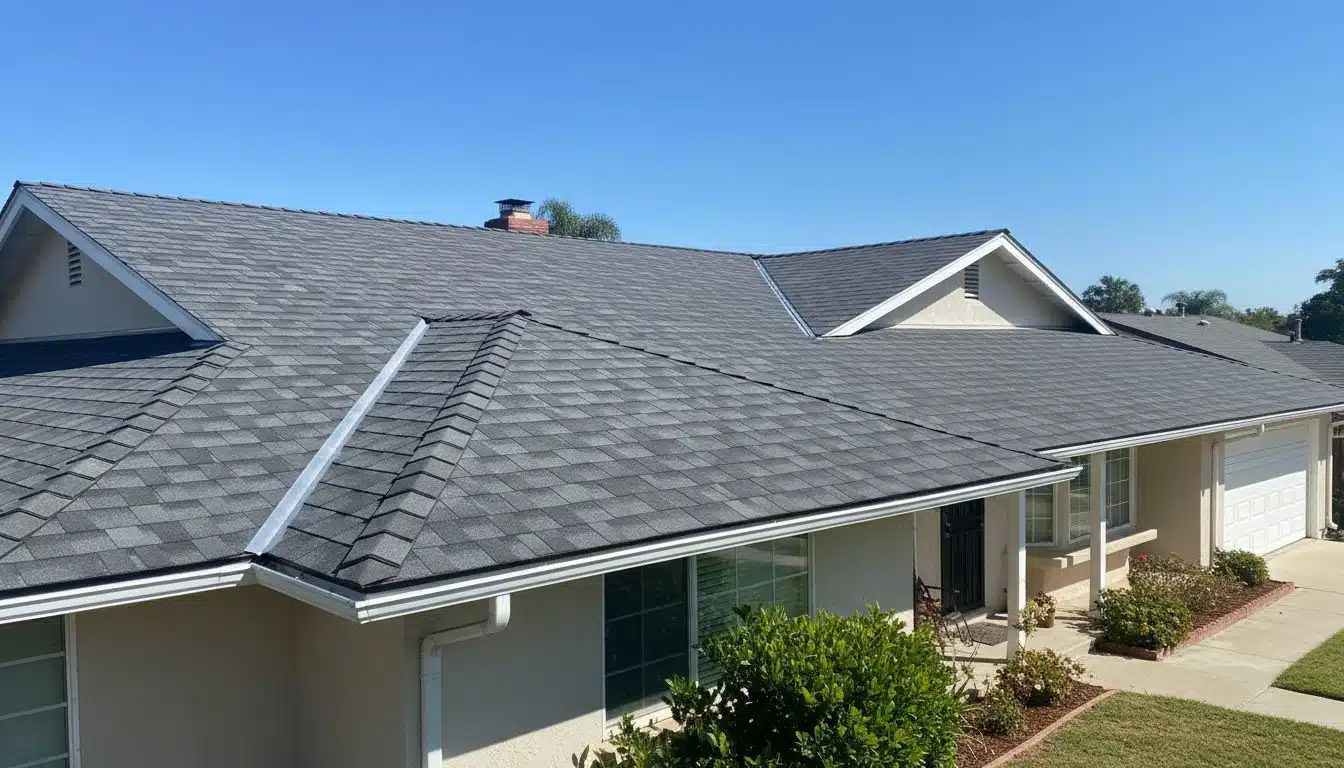
The right flashing material depends on the roof system it has to integrate with. For composition shingle roofs — the dominant roof type across cities like Whittier, Diamond Bar, and Walnut — galvanized steel or aluminum step and valley flashing is standard practice, and where the original material has corroded through, full replacement rather than patching is generally the more durable path. On flat and low-slope roofs common to additions throughout El Monte and Baldwin Park, modified bitumen or TPO membrane flashing at the wall termination is integrated directly into the field membrane rather than applied as a separate metal piece. Call (323) 474-1088 to discuss which approach fits your specific roof.

Flashing
Galvanized steel step and counter-flashing for shingle roofs
Aluminum valley flashing on pitched composition roofs
Modified bitumen membrane flashing for torch-down flat roofs
TPO membrane termination and wall flashing
Lead or rubberized flashing at vent penetrations
Drip edge metal at eaves integrated with underlayment
Flat and Low-Slope Roofs

Parapet and Wall Flashing on Valley Flat Roofs

Across the San Gabriel Valley's older commercial corridors and residential additions — particularly in cities like Montebello, Rosemead, and San Gabriel itself — flat roofs with parapet walls are a recurring project type. The flashing at the base of a parapet wall, where the horizontal membrane meets the vertical surface, is one of the most stress-prone details on any flat roof, and it is often the first place a torch-down or TPO system fails after years of thermal movement. When Roof Repair & Construction Inc. works on these roofs, the wall flashing detail is addressed as part of the membrane system, not as an afterthought. Call (323) 474-1088 to talk through your flat-roof flashing situation.

Parapet and Wall Flashing on
Parapet base flashing integrated with torch-down membrane
TPO wall termination bar and sealant at parapets
Roof coating applied over repaired flashing transitions
Scupper and drain flashing on flat-roof additions
Roof-to-wall flashing on low-slope garage conversions
Cool roof coatings paired with flashing repairs for Title 24
Why Choose Us

Why Homeowners Choose
Roof Repair & Construction Inc.

From tile and shingle to flat and low-slope roofs, we handle every roof type in San Gabriel Valley — one licensed team for replacement, repair, coating, cool roofs, and tear-offs.

Flashing repairs across 25+ San Gabriel Valley cities
Postwar and mid-century homes — chimney and valley flashing
Flat-roof parapet and wall flashing on valley additions
Full tear-off and re-flash when decking replacement is needed
Cool roof and Title 24 work paired with flashing upgrades
Foothill Communities

Flashing on Sloped Lots Near the San Gabriel Mountains

Communities like Monrovia, Duarte, Glendora, and Azusa sit at the base of the San Gabriel Mountains, where lots begin to pitch and rooflines become more complex — multiple valleys, dormers, and chimney placements that multiply the number of flashing details on a single home. On these foothill properties, water running off the mountain-facing slopes can move faster and in greater volume during a storm, making sound valley and chimney flashing more consequential than on a flat valley-floor lot. Roof Repair & Construction Inc. works on both the pitched shingle roofs typical of these hillside neighborhoods and any flat-roof sections on the same property. Call (323) 474-1088 for a flashing assessment on your foothill home.

Flashing on Sloped Lots
Multi-valley flashing on complex foothill rooflines
Chimney flashing on mountain-facing roof slopes
Step flashing at dormers and roof-to-wall intersections
Valley flashing replacement on steep-pitch shingle roofs
Drip edge and eave flashing on high-runoff slopes
Combined pitched and flat-roof flashing on the same property
Getting Started

How a Flashing Repair Begins in San Gabriel Valley

A flashing repair starts with identifying where the water is actually entering — not just where it appears inside. For a home in Alhambra or Monterey Park, that often means tracing a ceiling stain back to a chimney or valley detail that has been slowly failing for a season or more. Roof Repair & Construction Inc. inspects the flashing detail, the surrounding roofing material, and the deck condition before recommending repair or full replacement, because the right scope depends on what the inspection actually finds. Call (323) 474-1088 to get started.

Ready to get started in San Gabriel Valley?

Call for a free, no-pressure estimate.

Service Area

San Gabriel Valley Service Area

Roof Repair & Construction Inc. provides Roof Flashing throughout San Gabriel Valley. Service areas include Alhambra, Arcadia, Azusa, Baldwin Park, Covina, Diamond Bar, Duarte, El Monte, Glendora, Industry, Irwindale and La Puente. We also serve nearby Los Angeles, Pasadena, Burbank, Glendale, Long Beach and Anaheim. The map below outlines the San Gabriel Valley area we cover.
Questions

Frequently Asked Questions

How much does roof flashing cost in the San Gabriel Valley?
Flashing repair costs vary depending on the scope — a single chimney re-flash on a 1960s home in Covina is a different project than replacing all the valley flashing on a complex foothill roofline in Monrovia or addressing parapet wall flashing on a flat-roof addition in El Monte. The condition of the underlying deck and the roof system type also affect the total. Call (323) 474-1088 for a specific assessment and estimate for your property.
What does a roof flashing repair in the San Gabriel Valley typically include?
Most flashing repairs involve removing the existing failed metal or membrane flashing, inspecting the deck and surrounding roofing material for water damage, and installing new flashing integrated properly with the shingles, torch-down membrane, or TPO system. On older homes in cities like Rosemead or Baldwin Park, corroded galvanized flashing is often replaced entirely rather than patched. Call (323) 474-1088 to discuss what your specific repair would include.
How long does a flashing repair take on a San Gabriel Valley home?
A straightforward chimney or valley flashing repair on a single-family home — the kind common in Temple City or West Covina — is typically completed in a day or less. More involved work, such as replacing all the flashing details on a multi-valley foothill roof in Glendora or addressing parapet flashing on a flat-roof addition, may take longer depending on scope and deck condition. Call (323) 474-1088 to get a realistic timeline for your project.
Can flashing be repaired without replacing the entire roof in the San Gabriel Valley?
Yes — in many cases flashing can be repaired or replaced independently of the field roofing material, provided the shingles or membrane around the flashing detail are still in serviceable condition. On a 1970s home in La Puente or Walnut where the shingles have life remaining but the chimney flashing has failed, a targeted re-flash is a reasonable repair. If the surrounding material is also deteriorated, a combined repair or full replacement may be the more practical path. Call (323) 474-1088 to find out what makes sense for your roof.
What flashing approach is used where a pitched shingle roof meets a flat addition in the San Gabriel Valley?
The roof-to-wall or roof-to-parapet transition between a pitched shingle section and a flat addition is one of the more detail-intensive flashing situations, and it is common on older homes throughout cities like Montebello, San Gabriel, and Arcadia. The approach depends on the flat-roof system — a torch-down or TPO membrane is typically carried up the vertical wall and terminated with counter-flashing or a termination bar, while the shingle side uses step flashing integrated into the courses. Call (323) 474-1088 to discuss the specific transition on your property.
How do I know if the flashing on my San Gabriel Valley home has failed?
Common signs include water stains on ceilings or walls near a chimney, skylight, or interior wall — particularly after rain — as well as visible rust streaks on the roof surface, lifted or buckled metal at a valley or roof edge, and daylight visible at a chimney-to-roof joint. On the postwar homes throughout Alhambra, Monterey Park, and Duarte, original galvanized flashing that has never been replaced is a strong candidate for inspection regardless of visible symptoms. Call (323) 474-1088 to have the flashing on your home assessed.
Does flashing work on a San Gabriel Valley home typically require a permit?
Permit requirements for flashing repairs vary by city — each of the valley's municipalities, from Whittier and Diamond Bar to Azusa and La Verne, has its own building department and threshold for when a permit is required. A targeted flashing repair often falls below the permit threshold, while a full re-roof that includes new flashing throughout generally does require a permit. The local building department for the city where the property is located is the authority on what applies. Call (323) 474-1088 and we can discuss the scope of your project in that context.
My San Gabriel Valley home has a chimney that hasn't been re-flashed in decades — what should I expect?
On a home built in the 1950s or 1960s in cities like Covina, Glendora, or Temple City, original chimney flashing is often galvanized steel that has corroded or separated at the counter-flashing joint over time. When the old flashing comes off, it is common to find deteriorated roofing material or soft decking in the immediate area that needs to be addressed before new flashing is installed. The inspection will determine the actual condition before any work is scoped. Call (323) 474-1088 to schedule a chimney flashing assessment.