Serving West Covina

Flashing That Keeps West Covina Roofs Dry

Roof flashing in West Covina is one of the most common reasons homeowners in South Hills, Sunset Hills, and Woodside Village call us — a small gap at a chimney base or a valley seam is often all it takes for a rainstorm to find its way into the attic. West Covina is a predominantly owner-occupied city, with roughly 62% of its approximately 32,285 households owner-occupied, and the housing stock reflects decades of suburban build-out: many homes date to the 1950s through 1970s, when galvanized step flashing and basic valley metal were standard. Those materials have a finite lifespan, and by now many are corroded, lifted, or simply worn through. The city's terrain adds another variable — properties in West Covina Hills and East Hills sit on sloped lots where roof pitch changes and dormers create more flashing transitions than a flat-lot ranch. Roof Repair & Construction Inc. works across all three West Covina zip codes — 91790, 91791, and 91792 — addressing the full range of flashing conditions that come with this city's age and topography.

Where West Covina Roofs Leak at the Flashing — West Covina — Roof Repair & Construction Inc.

The short answer

Roof Repair & Construction Inc. handles roof flashing in West Covina for single-family homes across neighborhoods like South Hills, Sunset Hills, and Woodside Village. With roughly 62% of West Covina's 32,285 households owner-occupied and a median age near 40, most clients are established homeowners protecting a long-term investment. Call (323) 474-1088.

Flashing Options for West Covina's Roof Types — West Covina — Roof Repair & Construction Inc.
Common Failure Points

Where West Covina Roofs Leak at the Flashing

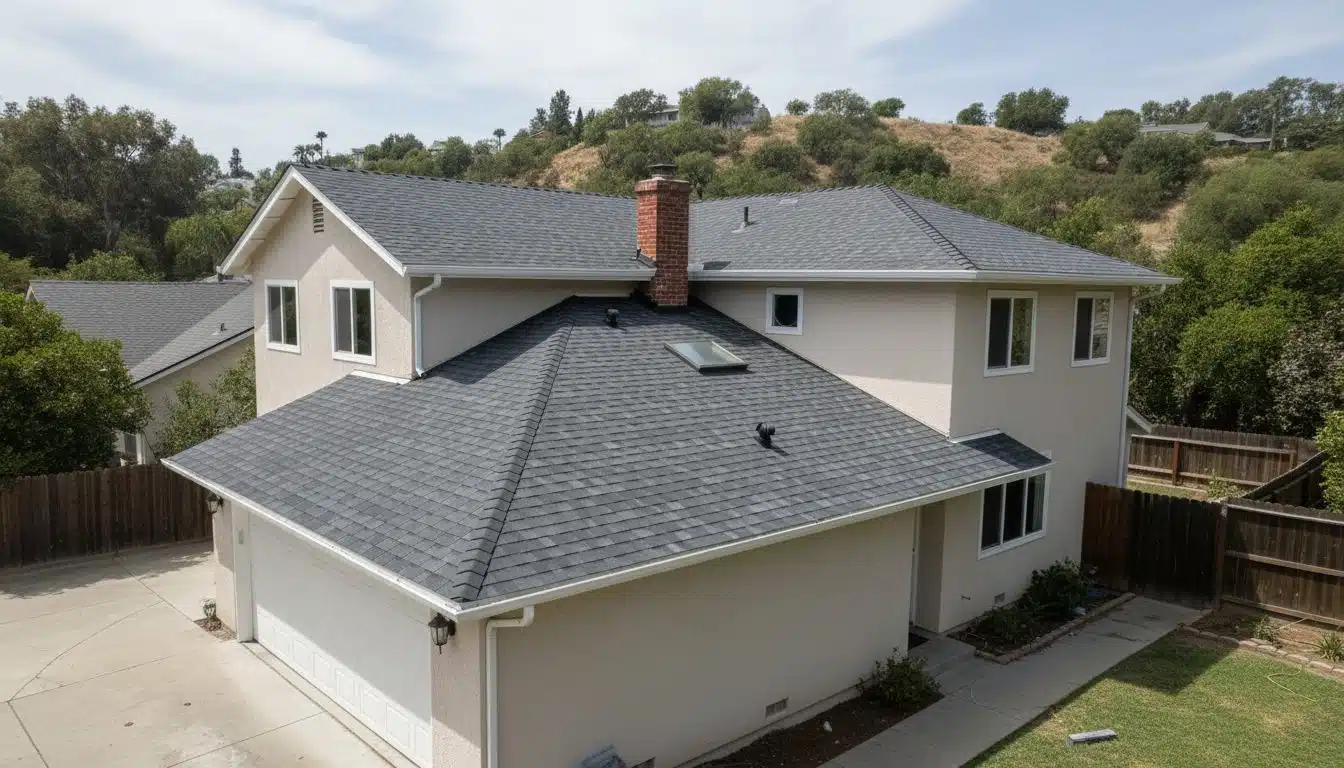
On the mid-century ranch homes common near Cortez Park and the Merced Avenue District, the most frequent flashing failures are at chimney bases, roof-to-wall transitions on room additions, and open valleys where two roof planes meet. Homes in Sunset Square and Hollencrest that received re-roofs in the 1980s or 1990s often have aging step flashing that was lapped rather than properly woven, and those laps eventually separate. Catching these spots early — before water reaches the decking — is what keeps a flashing repair from becoming a full tear-off.

  • Chimney base and counter-flashing separation
  • Step flashing along dormers and sidewalls
  • Open and closed valley metal corrosion
  • Skylight curb flashing on older installations
  • Roof-to-wall flashing on room additions
  • Pipe boot and vent flashing cracks
Instant Estimate · No Phone Call

What Will Your Roof Cost?

Answer a few quick questions and get a ballpark price for your West Covina roof in about a minute — right here, no obligation.

Calculate My Roof Cost ›

Flashing Materials

Flashing Options for West Covina's Roof Types

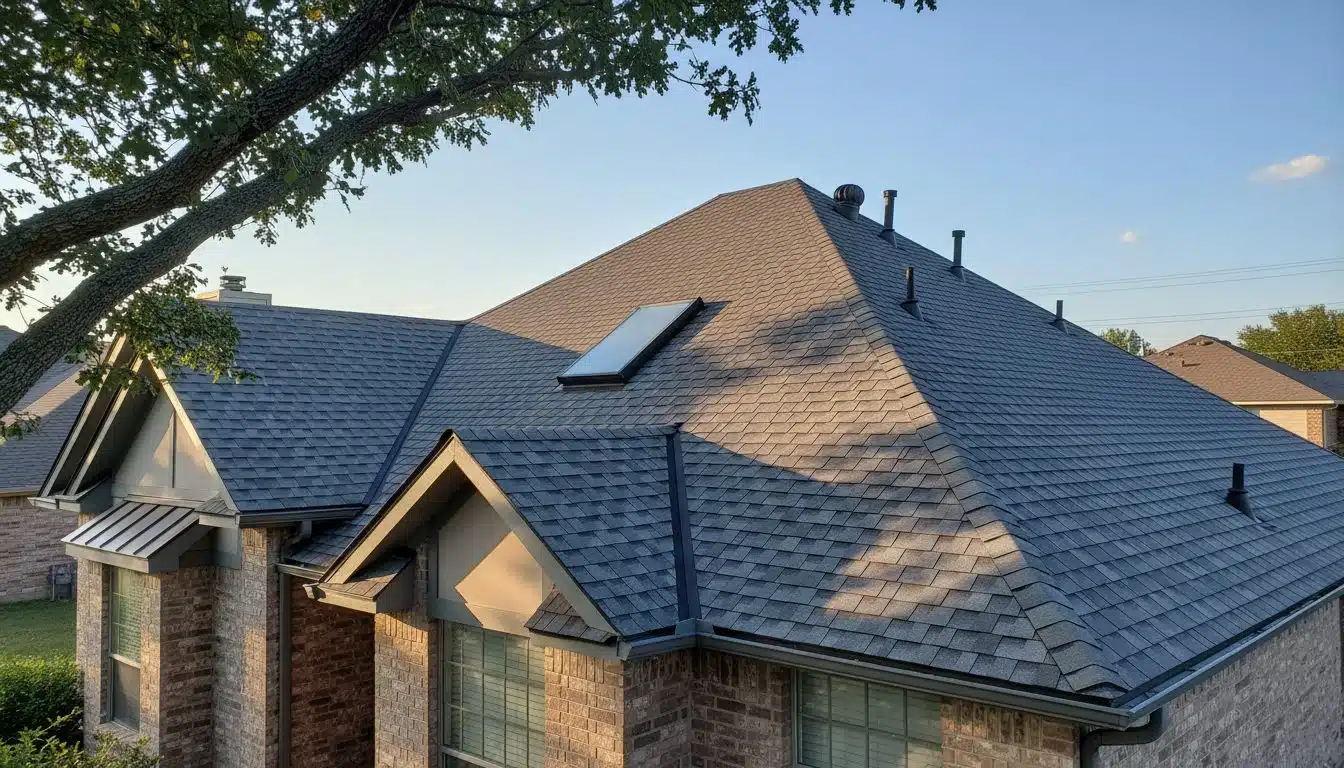
Most West Covina homes carry composition shingle roofs, and the standard flashing material for those is galvanized steel or aluminum step and valley metal, integrated with the shingle courses during installation. Where a home has a low-slope section — common on flat-roofed additions and carports in the Woodside Village and East Hills areas — we use compatible flashing details that tie into torch-down or TPO membrane systems rather than relying on exposed caulk alone. The goal in every case is a mechanical connection between the flashing and the roofing material, not a sealant-dependent patch.

Flashing
Galvanized steel step and counter-flashing for shingle roofs
Aluminum valley metal for composition shingle systems
Membrane-integrated flashing for torch-down and TPO flat sections
Lead or lead-free pipe boot replacements
Drip edge and eave flashing on full re-roofs
Matching metal profiles to existing roof plane geometry
West Covina Permits

Flashing Permits Through the City of West Covina

West Covina is an incorporated city with its own building and planning department, so roofing permits and inspections run through the city — not LA County's LADBS. Whether a flashing repair triggers a permit depends on the scope of work; the City of West Covina building department is the authority on what a specific project requires. Roof Repair & Construction Inc. treats the local jurisdiction as the final word on permit requirements and coordinates accordingly so the work is documented correctly.

Flashing Permits Through the City
Permits issued by the City of West Covina building department
Inspections scheduled through the city, not LA County
Permit scope determined by the city on a project-by-project basis
Re-roof permits typically required for full replacements
Repair-only work assessed for permit need by the city
All work performed under Lic. #1144009
Why Choose Us

Why Homeowners Choose
Roof Repair & Construction Inc.

From tile and shingle to flat and low-slope roofs, we handle every roof type in West Covina — one licensed team for replacement, repair, coating, cool roofs, and tear-offs.

Flashing repairs for West Covina's 1950s–1970s housing stock
Hillside-lot experience for West Covina Hills and East Hills homes
Step, valley, chimney, and skylight flashing covered
Permits through the City of West Covina building department
Licensed and insured — Lic. #1144009
Hillside and Sloped Lots

Flashing West Covina Hills and East Hills Homes

Properties on the elevated terrain near West Covina Hills and East Hills tend to have more complex rooflines than the flat-lot homes closer to Galster Wilderness Park or Walmerado Park — multiple roof planes, steeper pitches, and more valley intersections all mean more flashing transitions to maintain. On these lots, a thorough flashing assessment covers every plane change and every penetration, not just the obvious chimney. Call (323) 474-1088 to schedule an assessment for a hillside property.

Flashing West Covina Hills and
Multi-plane rooflines with numerous valley intersections
Steeper pitches that accelerate flashing wear at transitions
Chimney and skylight flashing on elevated, wind-exposed roofs
Dormer step flashing on hillside two-story homes
Roof-to-wall details where additions step down the slope
Full-perimeter drip edge inspection on sloped lots
Scope and Process

What a Flashing Repair Involves in West Covina

A flashing repair typically starts with identifying the exact source of the leak — water entry points and the visible damage inside are often in different locations, so tracing the path matters. Once the failure point is confirmed, the surrounding shingles or membrane material is carefully removed, the compromised flashing is replaced with new metal or compatible membrane flashing, and the roofing material is relapped or re-adhered over it. For West Covina homeowners ready to move forward, calling (323) 474-1088 is the first step.

Ready to get started in West Covina?

Call for a free, no-pressure estimate.

Service Area

West Covina Service Area

Roof Repair & Construction Inc. provides Roof Flashing throughout West Covina. Service areas include South Hills, Sunset Hills, Woodside Village, Merced Avenue District, Hollencrest, East Hills, West Covina Hills, Cortez Park and Sunset Square. We also serve nearby Covina, Baldwin Park, El Monte, Rowland Heights, Walnut and San Dimas. The map below outlines the West Covina area we cover.
Questions

Frequently Asked Questions

How much does roof flashing cost in West Covina?
Flashing repair costs in West Covina vary based on the number of failure points, the type of flashing involved (chimney, valley, step, skylight), and whether surrounding shingles or membrane material need to be removed and relapped. A single pipe boot replacement is a much smaller scope than re-flashing an entire chimney with new counter-flashing and step metal. For an accurate figure specific to your home in South Hills, Hollencrest, or anywhere else in West Covina, call (323) 474-1088.
Can flashing be repaired without replacing the whole roof in West Covina?
Yes — in most cases, isolated flashing failures can be addressed without a full tear-off, provided the surrounding shingles or membrane are still in serviceable condition. On many West Covina homes from the 1960s and 1970s, the shingles may have useful life remaining even when the original galvanized flashing has corroded through. If the decking or the broader roofing system is also compromised, we'll note that during the assessment. Call (323) 474-1088 to find out what your specific situation calls for.
How long does a flashing repair typically take on a West Covina home?
Most single-point flashing repairs — a chimney base, a valley section, or a pipe boot — are completed in a day or less. More involved work, such as re-flashing all the step flashing along a long sidewall or addressing multiple failure points on a complex West Covina Hills roofline, may take longer depending on access and scope. The City of West Covina's permit and inspection timeline can also affect scheduling if a permit is required. Call (323) 474-1088 for a realistic timeline based on your project.
What is the difference between step flashing and counter-flashing on a West Covina chimney?
Step flashing refers to the individual L-shaped metal pieces woven between each shingle course along the sides of a chimney, while counter-flashing is the cap metal embedded into the chimney mortar joints that overlaps the step flashing from above. Both need to be intact for the chimney-to-roof transition to stay watertight — a common failure on older West Covina homes is counter-flashing that has pulled out of deteriorated mortar joints. Call (323) 474-1088 to have both layers assessed on your home.
Does a flashing repair in West Covina require a permit from the city?
The City of West Covina's building department determines whether a specific scope of flashing work requires a permit — it is not a one-size-fits-all answer. Minor repairs may not trigger a permit requirement, while work that involves removing and replacing significant sections of roofing material alongside the flashing often does. Because West Covina runs its own permitting process independent of LA County, the city is the authoritative source on what applies to your property. Call (323) 474-1088 and we can help clarify what the project is likely to involve.
How do I know if the flashing on my West Covina home has failed?
The most common signs are water stains on interior ceilings or walls near a chimney, skylight, or exterior wall — especially after rain. On the roof itself, lifted or missing metal, visible rust streaks, and cracked caulk at transitions are indicators that flashing has failed or is close to failing. Homes in Woodside Village and the Merced Avenue District, where many roofs date to the 1960s, are particularly worth inspecting if the original flashing has never been replaced. Call (323) 474-1088 to schedule an assessment.
What happens to the surrounding shingles when flashing is replaced on a West Covina home?
Replacing step or valley flashing requires carefully removing the shingle courses that overlap the flashing, installing the new metal, and then relapping the shingles back over it. On composition shingle roofs — the most common type in West Covina — this is straightforward when the shingles are still flexible and intact. Older or brittle shingles can crack during removal, which may mean replacing a small number of shingle tabs in the work area. We'll note the condition of the surrounding material during the assessment. Call (323) 474-1088.
Does the flat or low-slope section on my West Covina home need different flashing than the pitched portion?
Yes — flat and low-slope sections, which appear on additions and carports across neighborhoods like East Hills and Sunset Square, use flashing details integrated into the membrane system (torch-down or TPO) rather than the metal step-and-lap approach used on pitched shingle roofs. Where a flat section meets a pitched shingle roof, the transition flashing is particularly important because it bridges two different waterproofing systems. Getting that detail right prevents one of the most persistent leak sources on West Covina homes with mixed roof types. Call (323) 474-1088 to discuss your specific configuration.