Discover the critical signs you need emergency roof repair, what causes sudden roof failures in California, and when to call a licensed roofing contractor immediately.
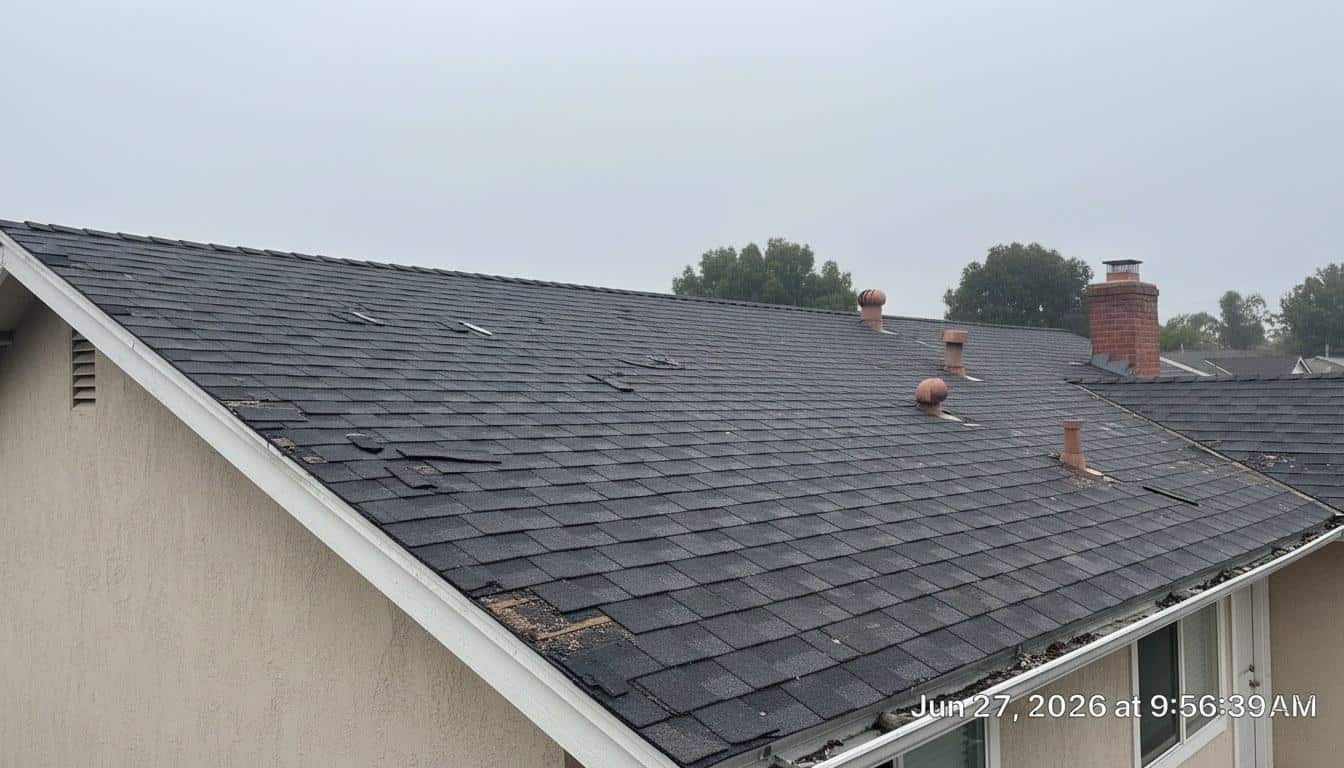
Why Do California Roofs Fail So Suddenly?
California roofs face a uniquely punishing combination of weather events that can turn a minor weakness into a full emergency in a matter of hours. Unlike regions with consistent seasonal patterns, California homeowners deal with prolonged drought that dries and cracks roofing materials, followed by sudden atmospheric river storms that dump several inches of rain in a single day.
According to NOAA, California experiences some of the most volatile precipitation swings in the continental U.S. A roof that has baked under 100°F summer heat for five months is far more likely to fail when the first heavy rain hits in November or December.
A roof that has baked under 100°F summer heat for five months is far more likely to fail when the first heavy rain hits in November or December.
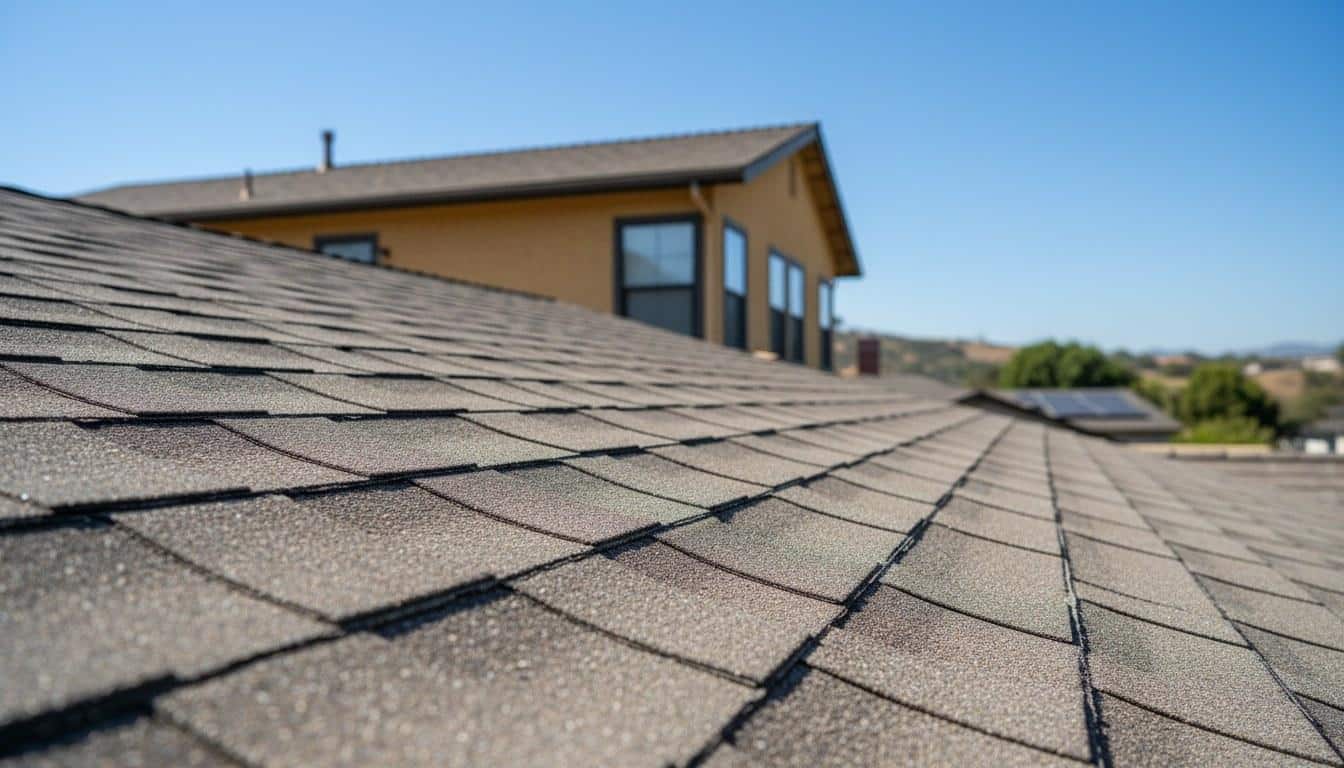
Beyond rain, high Santa Ana winds, regularly gusting above 60 mph in Southern California, can strip shingles, lift flashing, and expose underlayment in minutes. Wildfire smoke and ash also accelerate shingle granule loss, shortening a roof’s effective lifespan by several years. Homes built before 1990 are especially at risk because many carry roofing materials that have already exceeded their rated service life of 20 to 25 years.
Our crews respond to roughly 3 times more emergency calls in the December-through-February window than any other three-month period, almost always on roofs where pre-existing wear had gone unaddressed before the rainy season began.
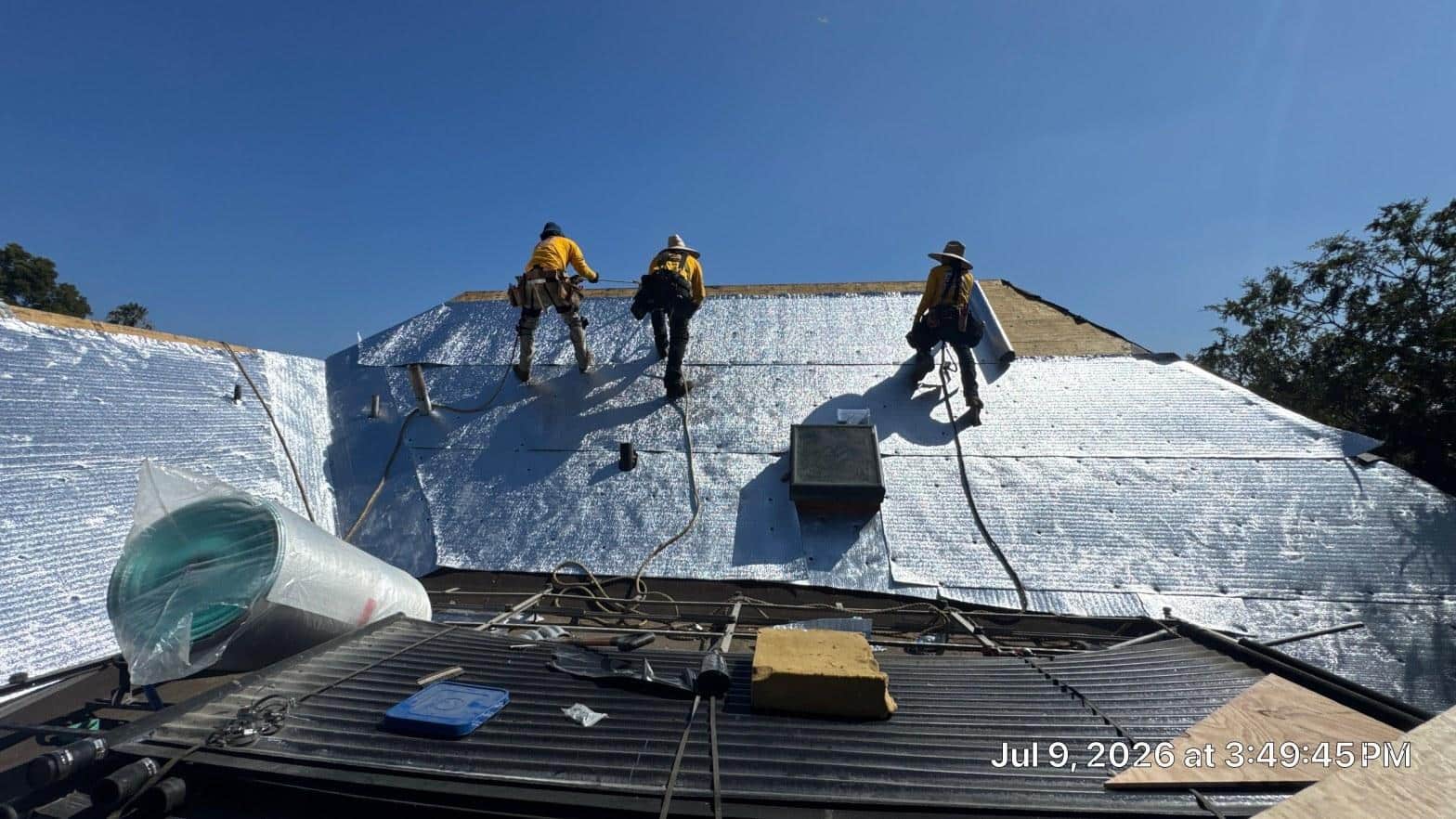
What Are the Signs You Need Emergency Roof Repair?
The signs you need emergency roof repair are usually visible, audible, or detectable through water intrusion inside the home, and most require professional attention within 24 to 48 hours. Delaying action beyond that window dramatically increases the risk of structural damage, insulation saturation, and mold growth, all of which multiply repair costs.
Watch for these specific warning signs:
- Active interior leaking: Water dripping from the ceiling, wet drywall, or water stains spreading during or after rain are the most urgent indicators. This means the roof membrane has been breached.
- Missing or displaced shingles: Large bare patches on the roof surface after a windstorm leave the underlayment and decking exposed to the next rainfall. Even one missing shingle over a seam can allow gallons of water to enter.
- Sagging roof sections: A visibly bowed or drooping area on the roof deck signals that water has already saturated the sheathing or that structural rafters are compromised. This is a safety emergency.
- Daylight visible through the attic: If you can see light coming through the roof boards from inside the attic, water and pests can enter through the same gaps.
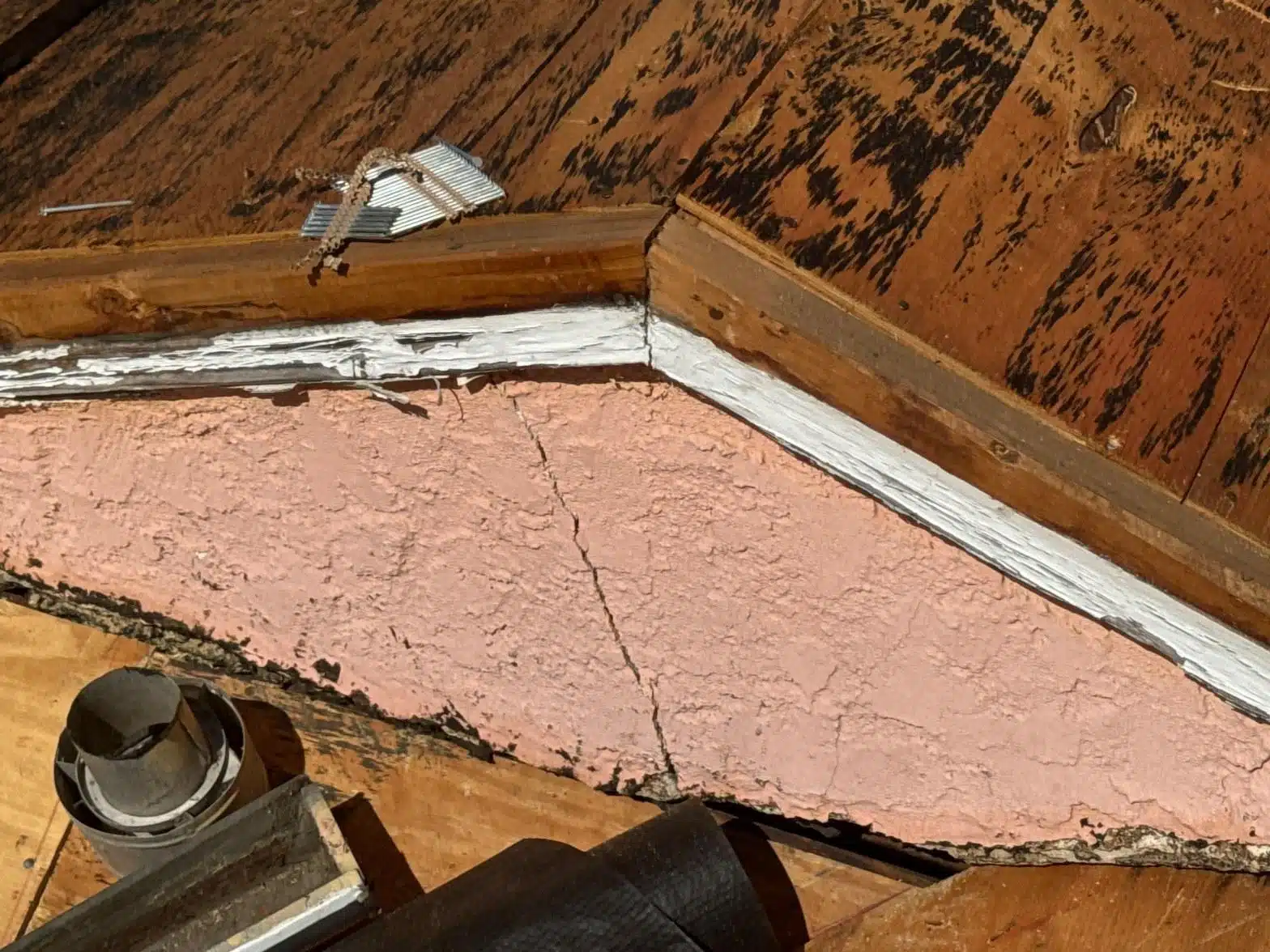
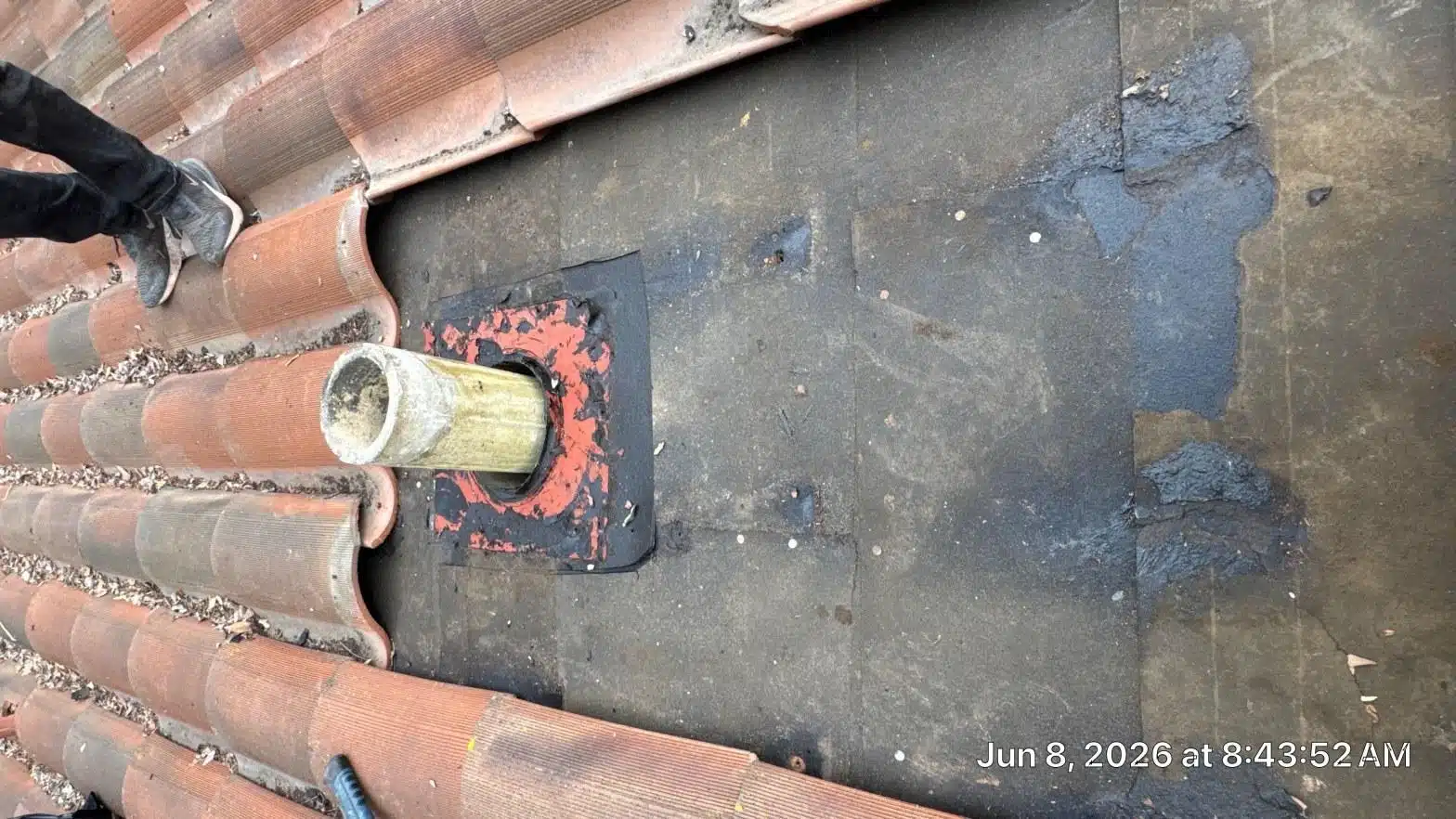
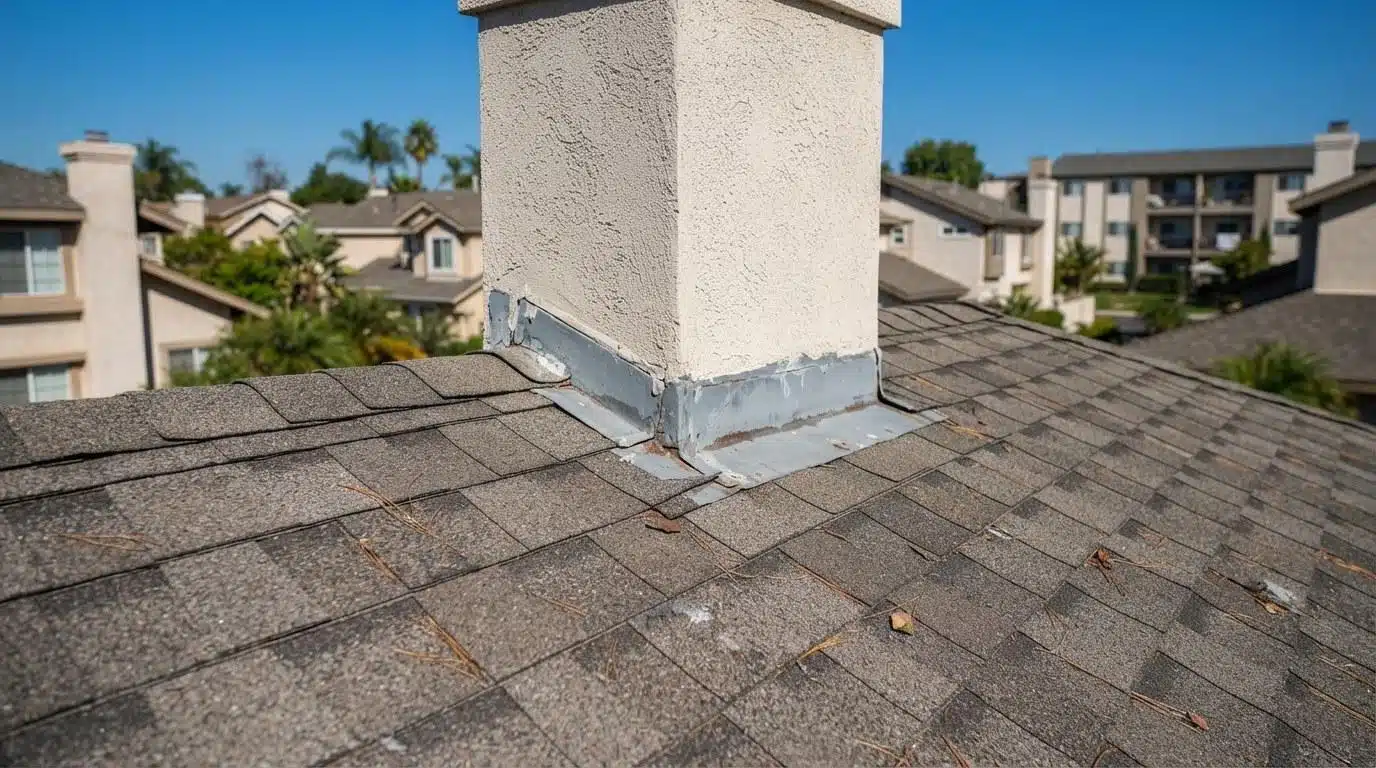
- Damaged or lifted flashing: Metal flashing around chimneys, skylights, vents, and valleys is the most common entry point for water. Bent, cracked, or separated flashing after a storm needs immediate resealing.
- Large debris impact damage: A fallen tree branch, dislodged satellite dish, or wind-driven object can puncture or crack roofing materials, creating an opening that worsens with every rain event.
- Granule accumulation in gutters: Finding a heavy layer of asphalt granules in your gutters after a storm means shingles have lost their protective coating and may be close to failure across a wide area.
- Bubbling or blistering on flat or low-slope roofs: On commercial-style flat roofs common in Southern California, bubbles or blisters in the membrane indicate trapped moisture and imminent rupture.
Symptom, Likely Cause, and DIY or Pro? (Quick Reference Table)
Use this table to quickly match what you are seeing to its most likely cause and the right response. Most emergency roof conditions require a licensed professional, but a few steps can be taken safely by homeowners to limit damage while help is on the way.
| Symptom | Likely Cause | DIY or Pro? |
|---|---|---|
| Water dripping from ceiling during rain | Breached roof membrane, failed flashing, or cracked shingle field | Pro immediately, place buckets and call now |
| Missing shingles after high winds | Wind uplift exceeding shingle fastener rating (common above 50 mph) | Pro, temporary tarp placement is DIY-safe from ground only |
| Sagging or bowed roof section | Saturated decking or failed rafter, structural issue | Pro only, do not walk on or near this area |
| Daylight visible through attic boards | Cracked or separated decking, missing shingles above | Pro, inspect from inside attic only, do not go on roof |
| Lifted or separated flashing | Wind, thermal expansion, or aged sealant failure | Pro, temporary roofing tape is a short-term DIY option |
| Tree branch impact or puncture | Physical impact damage to shingles and possibly decking | Pro immediately, cover with tarp if safe from ground |
| Heavy granules in gutters after storm | Advanced shingle wear, granule layer stripped by impact or age | Pro for inspection, not an immediate emergency but urgent within a week |
| Bubbling on flat roof membrane | Trapped moisture expanding under heat, membrane failure imminent | Pro, do not puncture blisters yourself |
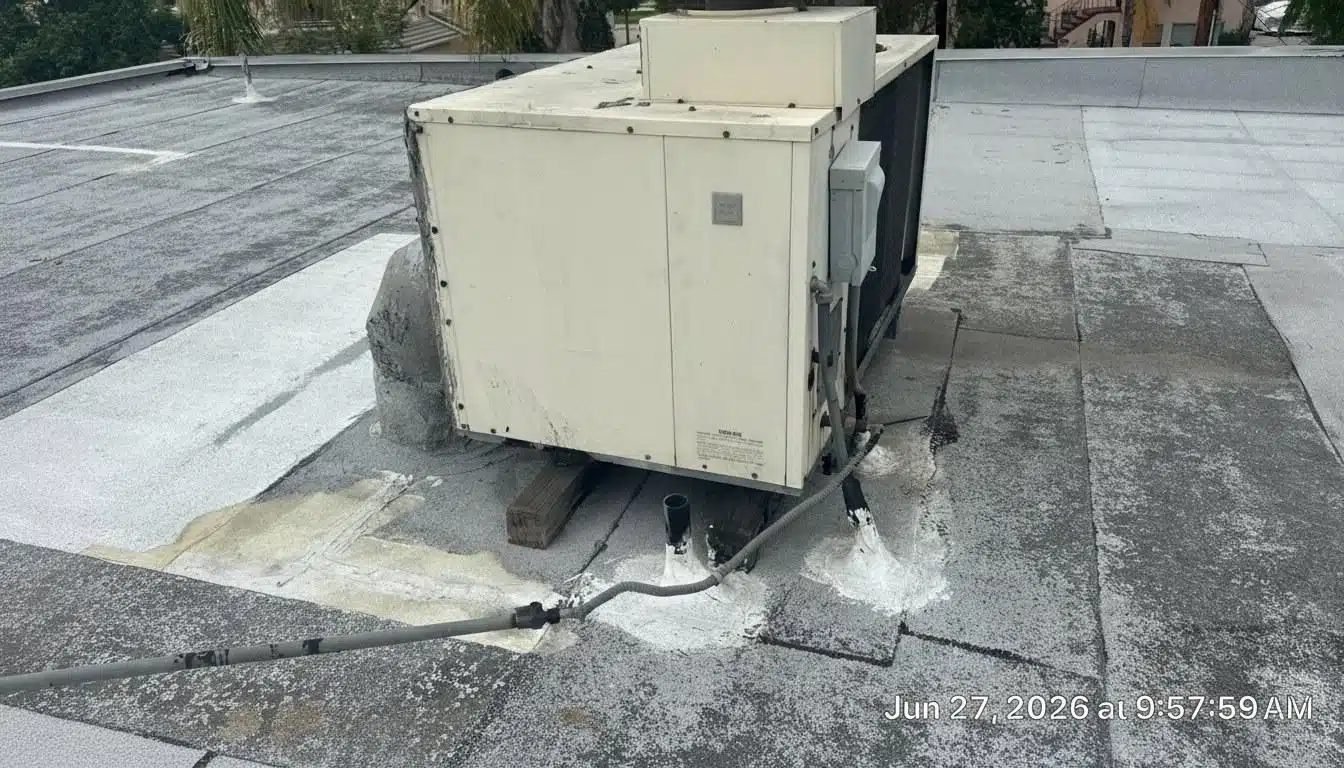
What Can You Safely Check Yourself Before Help Arrives?
There are a handful of safe, ground-level checks homeowners can perform to document damage and limit further water intrusion while waiting for emergency roofing services. Do not attempt to walk on a wet, damaged, or steep roof, falls from residential rooftops are among the leading causes of serious home-improvement injuries.
- Check the attic from inside: Use a flashlight to look for wet insulation, water drips, or light coming through the decking. Take photos with your phone; these will be useful for both the contractor and your insurance adjuster.
- Place buckets or towels under active drips: Contain interior water damage by catching drips and moving furniture or electronics away from wet areas. This limits secondary damage while you wait for the repair crew.
- Clear gutters and downspouts if accessible from ground level: Blocked gutters during heavy rain can cause water to back up under the roof edge. If you can safely reach them from a low ladder, clear visible debris.
- Cover broken skylights or vents from inside: If a skylight has cracked or a vent cover has blown off, temporarily covering the interior opening with plastic sheeting and tape can reduce water entry.
- Document everything with photos and video: Walk around the exterior of your home at ground level and photograph all visible damage, missing shingles, displaced flashing, debris on the roof. Timestamped photos strengthen insurance claims significantly.
- Contact your homeowner’s insurance carrier: Report the damage promptly. Most California homeowner policies require timely reporting of storm damage. Your insurer may also have a preferred emergency roofing contractor list, though you are not required to use it.
If a large tree limb has fallen on the roof, do not attempt to remove it yourself. The debris may be providing temporary structural support to a damaged section, and removing it improperly can worsen the opening or cause a collapse.
When Should You Call an Emergency Roofing Contractor?
Call an emergency roofing contractor immediately if water is actively entering your home, if any section of the roof is visibly sagging, or if a physical impact has created a hole or puncture in the roof surface. These conditions will not resolve on their own and worsen with every hour of exposure.
California’s Contractors State License Board (CSLB) requires roofing contractors to hold a valid C-39 license. Always verify a contractor’s license number on the CSLB website before allowing any work to begin, especially during post-storm periods when unlicensed operators often canvas affected neighborhoods.
You should also call a pro, not just schedule a routine inspection, in these situations:
- Your roof is more than 20 years old and has never been inspected after a major storm event.
- You notice a musty or moldy smell in rooms directly below the roofline, which can indicate water has been infiltrating for days or weeks.
- Ceiling drywall is staining, bubbling, or beginning to sag: a sign of significant water volume above.
- You are preparing to file an insurance claim and need a licensed professional to provide a written damage assessment.
- Post-wildfire ash and debris have accumulated on the roof, as this accelerates shingle degradation and can block drainage channels.
In our experience responding to storm-damaged roofs across Southern California, we find that roughly 60% of emergency calls involve flashing failures at chimneys or skylights, points where the roof meets a vertical surface, because these joints are the first to fail when sealant ages past 10 years.
Roughly 60% of emergency calls involve flashing failures at chimneys or skylights, points where the roof meets a vertical surface, because these joints are the first to fail when sealant ages past 10 years.
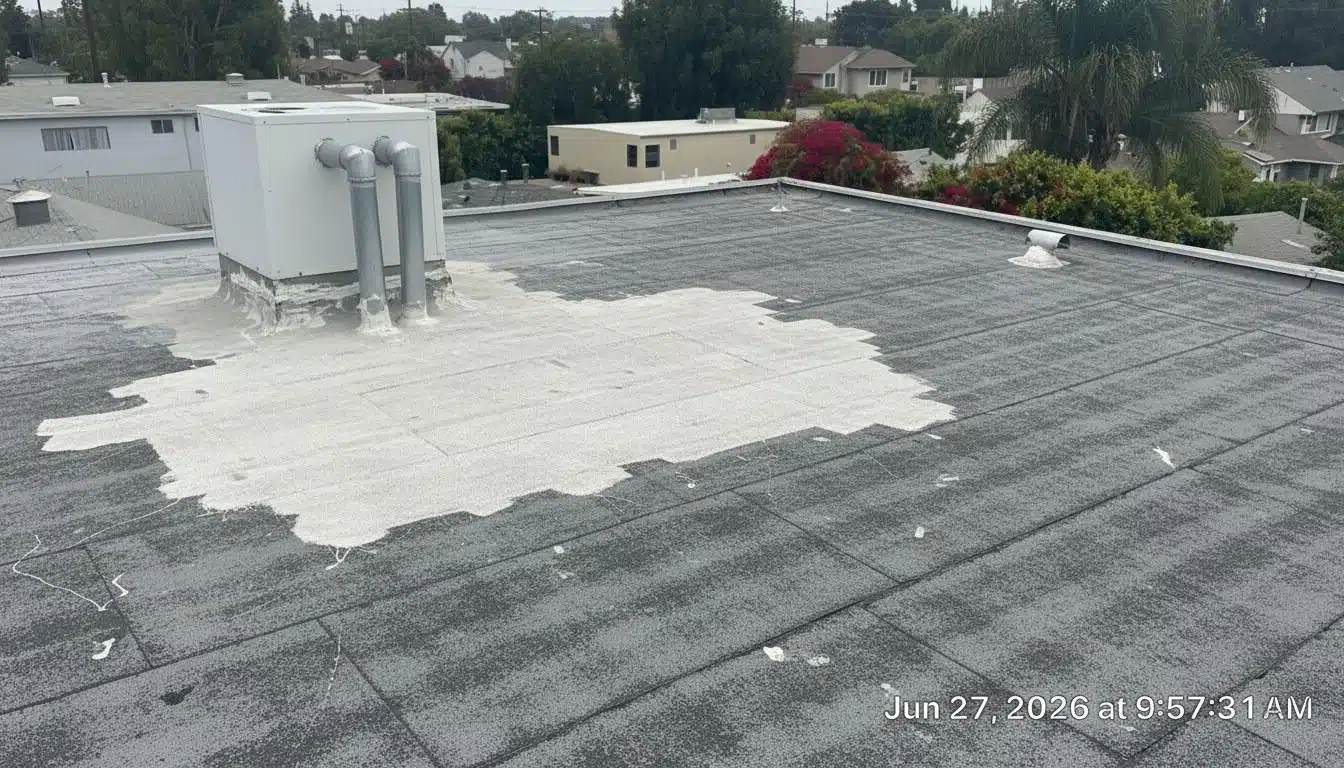
How Much Does Emergency Roof Repair Typically Cost in California?
Emergency roof repair in California typically ranges from $400 to $2,500 for targeted repairs such as flashing replacement, shingle patching, or temporary tarping, while more extensive damage involving decking or structural elements can run from $3,000 to $10,000 or more. These are regional market ranges, your actual cost depends on the scope of damage, roof pitch, material type, and how quickly the work is needed.
Key factors that move the price within these ranges include:
- Roof pitch and accessibility: Steeply pitched roofs require additional safety equipment and take longer to work on safely, adding to labor costs.
- Material type: Tile roofs common in Southern California cost more to repair than asphalt shingle roofs because individual tiles must be carefully matched and the underlayment beneath them inspected.
- Extent of decking damage: If water has penetrated to the plywood or OSB sheathing, that material must be replaced before new surface materials are installed, adding both material and labor costs.
- After-hours or weekend response: Emergency calls outside normal business hours typically carry a premium of 20% to 50% over standard rates in this market.
- Permit requirements: Under California’s Title 24 building energy standards, certain re-roofing projects above a defined square footage threshold require permits and inspections, which add cost but protect the homeowner legally.
If your damage was caused by a named storm or a wind event, your homeowner’s insurance policy may cover most or all of the repair cost after your deductible. Document all damage thoroughly before any temporary repairs begin, since insurers use pre-repair documentation to establish the scope of their coverage.
For an accurate estimate on your specific situation, request a custom quote from a licensed roofing contractor rather than relying on a general range. Costs vary significantly by property and scope.
Get Emergency Roof Help Now
If you are seeing any of the warning signs described in this guide, do not wait for the next rainstorm to confirm the damage is real. Every hour of delay after a roof breach increases the risk of water reaching insulation, drywall, and structural framing, turning a repair into a full replacement.
Roof Repair & Construction Inc. provides emergency roofing services for homeowners across Southern California. Whether you are dealing with storm damage, a fallen branch, failed flashing, or an active leak, the team is ready to assess and stabilize your roof fast. The company is Licensed by the California Contractors State License Board (CSLB) and works with all major insurance carriers to streamline your claim process.
Call (323) 474-1088 now to speak with a roofing specialist or to schedule an emergency inspection. Do not let a manageable repair become a structural crisis, get a professional on-site before the next rain event hits.
Explore our full range of Roof Repair services across Southern California.
Frequently Asked Questions
How do I know if my roof damage is an emergency or can wait?
If water is actively entering your home, if the roof is visibly sagging, or if a physical impact has created a hole or opening, that is an emergency requiring same-day attention. Granule loss in gutters or minor flashing wear can typically wait a few days but should still be addressed within a week to prevent a small problem from becoming a major one.
Can I put a tarp on my roof myself to stop the leak?
You can place a tarp over a damaged area from ground level if it is safe to do so, but never climb onto a wet, steep, or structurally compromised roof. A properly secured tarp is a temporary measure only; it should be followed up with a professional inspection and repair within 24 to 48 hours to ensure the underlying damage is fully addressed.
Will my homeowner's insurance cover emergency roof repair in California?
Most standard California homeowner's insurance policies cover sudden storm damage, wind damage, and impact damage from falling objects, subject to your deductible. They generally do not cover damage caused by gradual wear or lack of maintenance. Document all damage with timestamped photos before any temporary repairs begin, and report the claim to your insurer promptly.
How fast can an emergency roofing contractor get to my home in California?
Response times vary by contractor and demand, but most emergency roofing services aim to be on-site within 2 to 6 hours for active leaks. During peak storm season, typically November through February in Southern California, demand surges and response times can extend to 12 to 24 hours. Calling as early as possible in the day improves your chances of same-day service.
How do I verify a roofing contractor is licensed in California before letting them work on my roof?
You can verify any California roofing contractor's license instantly on the California Contractors State License Board (CSLB) website at cslb.ca.gov. Roofing contractors must hold a C-39 license. Always confirm the license is active and in good standing before signing any contract, especially after a storm when unlicensed operators often canvas affected neighborhoods.