Choosing between a metal roof and a shingle roof is one of the biggest decisions a Southern California homeowner can make. This guide breaks down cost, durability, heat resistance, and long-term value so you can choose with confidence.
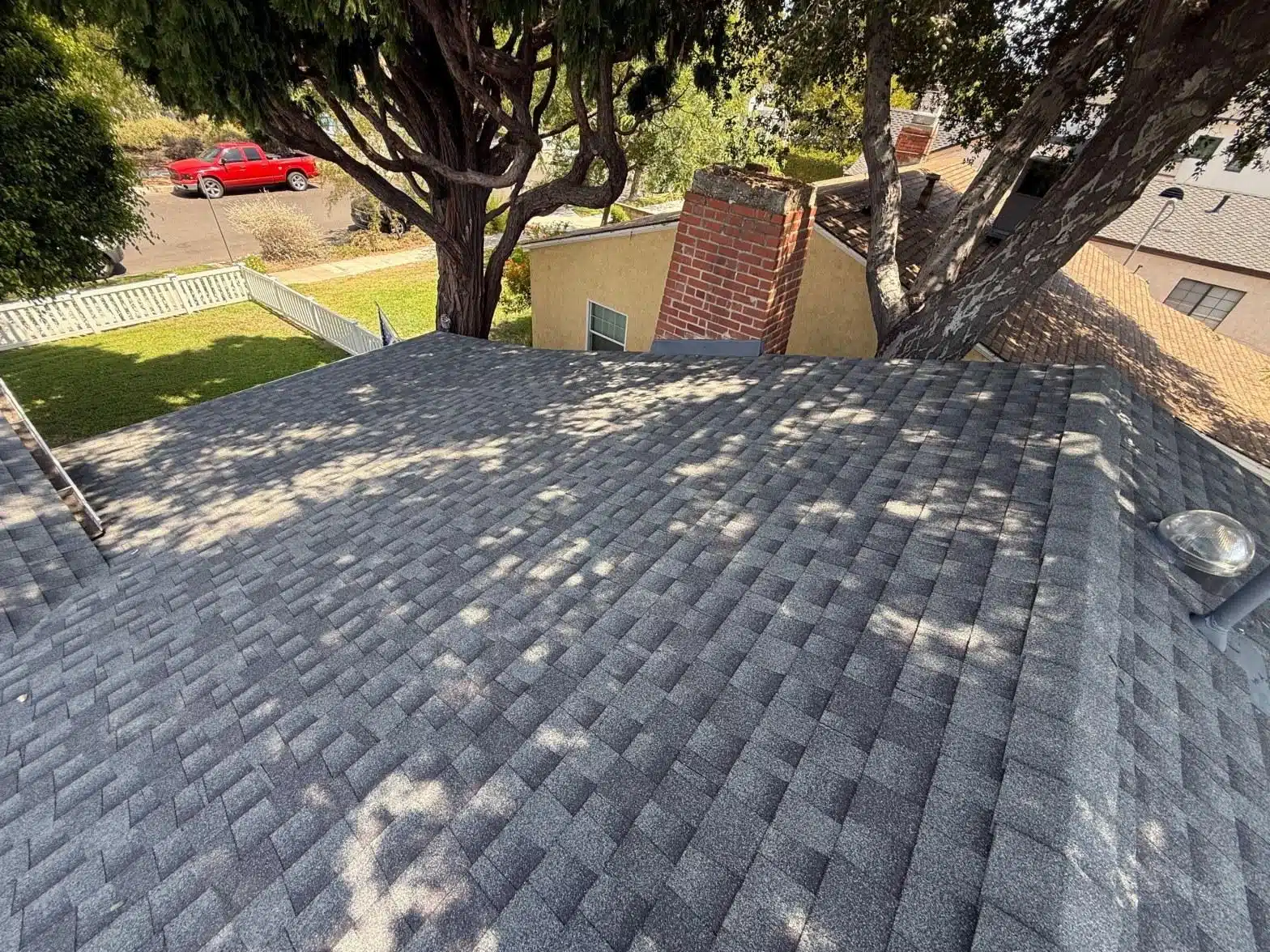
When weighing metal roof vs shingle roof for Southern California homes, metal roofs win on durability and heat performance while asphalt shingles win on upfront cost. The right choice depends on your budget, how long you plan to own the home, and how much you care about energy savings over time. This guide gives you the specific numbers and real-world factors you need to decide.
Metal Roof vs. Shingle Roof in Southern California: What Is the Core Difference?
A metal roof is made from steel, aluminum, or copper panels or shingles, while an asphalt shingle roof is made from fiberglass or organic mats coated in asphalt and mineral granules. These two materials perform very differently in the heat, dryness, and occasional heavy rain that define Southern California weather.
Asphalt shingles are the most common roofing material across the country. They are affordable, widely available, and easy to install. Metal roofing has grown steadily in popularity across California over the past decade, especially as homeowners look for longer-lasting, more energy-efficient options.
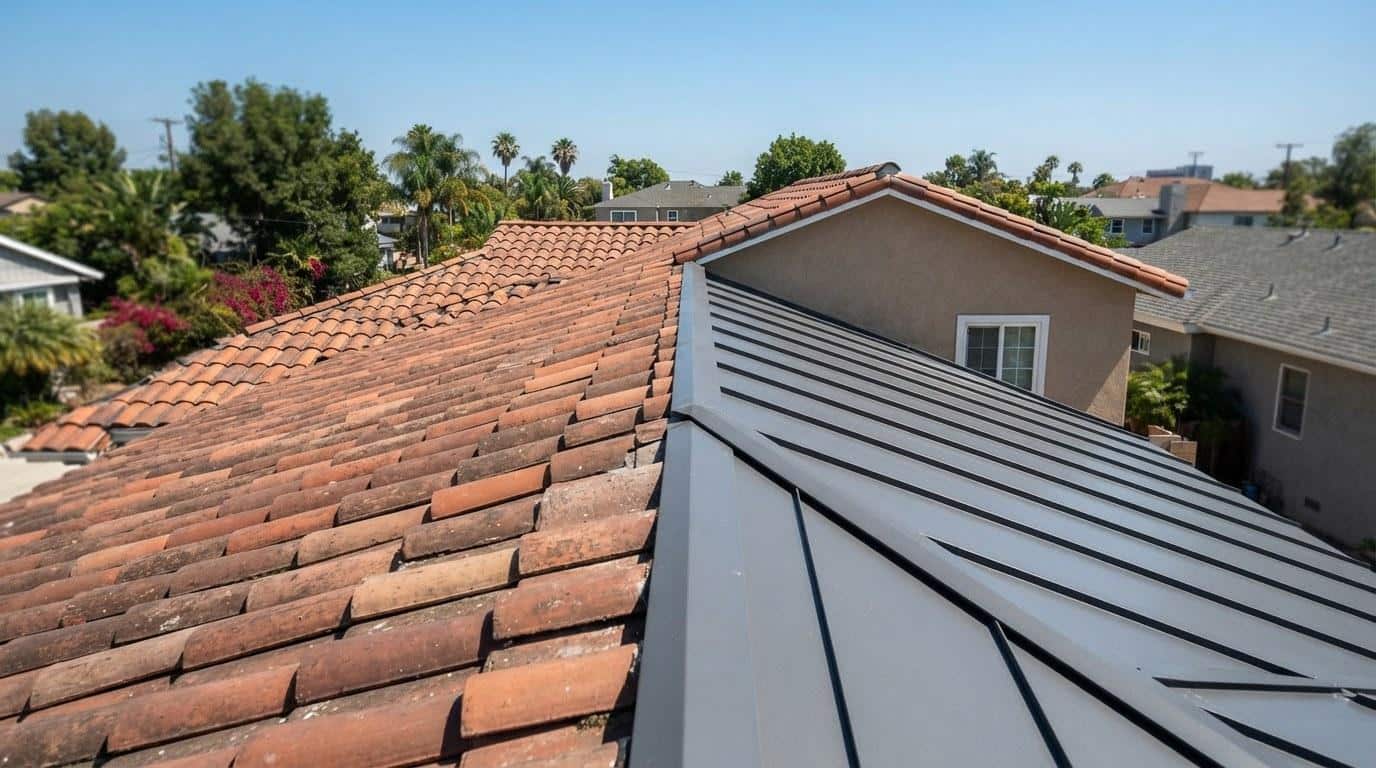
Both materials come in many styles. Metal roofs can mimic the look of tile, shake, or standing-seam panels. Asphalt shingles range from basic three-tab designs to architectural shingles with a layered, dimensional look. The visual gap between the two has narrowed considerably since California’s 2024 Title 24 building energy standards pushed manufacturers toward more reflective, cool-roof products in both categories.
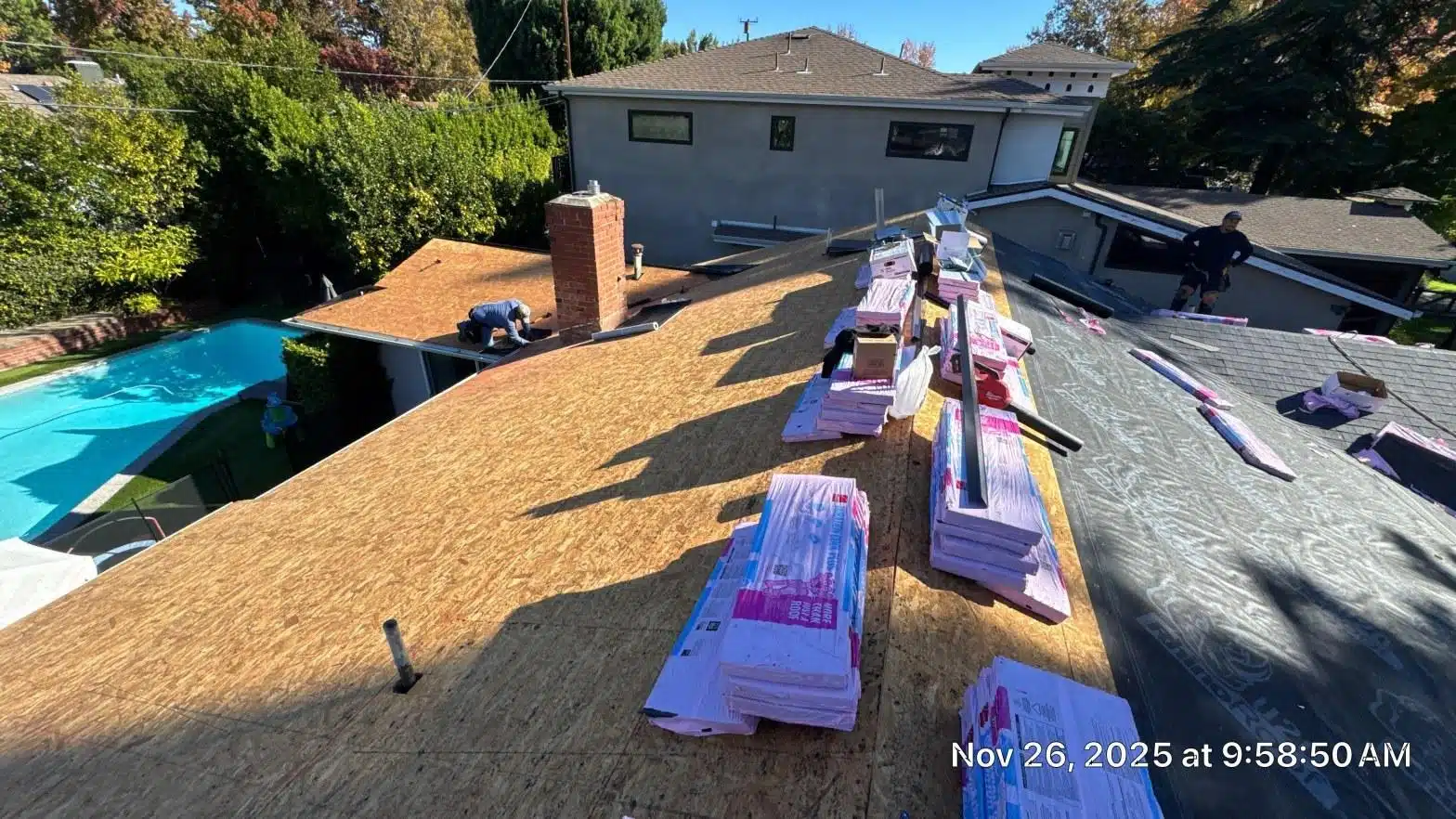
How Do Metal and Shingle Roofs Handle Southern California’s Climate?
Metal roofs reflect more solar heat than standard asphalt shingles, which is a meaningful advantage in a region where summer temperatures regularly exceed 95 degrees Fahrenheit across inland communities. A cool metal roof with a reflective coating can reduce roof surface temperatures by 50 to 60 degrees Fahrenheit compared to a dark asphalt shingle surface, according to data from the U.S. Department of Energy.
A cool metal roof with a reflective coating can reduce roof surface temperatures by 50 to 60 degrees Fahrenheit compared to a dark asphalt shingle surface.
Asphalt shingles absorb heat and transfer it into the attic space below. In a Southern California summer, that extra heat load forces air conditioning systems to work harder. Cool-rated asphalt shingles exist and carry ENERGY STAR efficiency ratings, but even the best-performing shingles typically reflect less solar energy than a comparable metal panel.
Wildfire risk is another climate factor that separates the two materials. Metal carries a Class A fire rating on its own. Most asphalt shingles also achieve Class A when tested with the appropriate underlayment, but the granule surface can degrade over time, reducing that protection. In fire-prone areas across Los Angeles County and surrounding regions, the inherent non-combustibility of metal is a genuine advantage.
Southern California also experiences Santa Ana winds that can gust above 60 miles per hour. Properly installed metal roofing systems are rated to withstand winds of 140 miles per hour or more. Standard three-tab asphalt shingles are typically rated to 60 to 70 miles per hour, while premium architectural shingles can reach 110 to 130 miles per hour.
Properly installed metal roofing systems are rated to withstand winds of 140 miles per hour or more.
| Climate Factor | Metal Roof | Asphalt Shingle Roof |
|---|---|---|
| Solar heat reflection | High (reflective coatings standard) | Moderate (cool-rated options available) |
| Fire resistance | Class A (inherent) | Class A (with proper underlayment) |
| Wind resistance | Up to 140+ mph rated | 60 to 130 mph depending on grade |
| UV degradation | Minimal with quality coating | Granule loss accelerates after 10-15 years |
| Rain and leak risk | Very low with proper seams | Low when new; rises with age |
What Does Each Roof Type Cost in the Southern California Market?
In the Southern California market, asphalt shingle roof replacement typically ranges from $8,000 to $18,000 for an average-sized home, while metal roof installation generally runs from $18,000 to $45,000 or more depending on the metal type and panel system chosen. These are market ranges; actual project costs depend on roof size, pitch, existing deck condition, and the specific products selected.
The factors that move the price most are:
- Roof square footage: Roofing is priced per square (100 square feet), so larger homes cost proportionally more regardless of material.
- Pitch and complexity: Steep roofs with multiple valleys, hips, or dormers require more labor time and safety equipment.
- Metal type: Galvanized steel panels are the most affordable metal option. Aluminum costs more but resists corrosion better near the coast. Copper is the premium choice and can run two to three times the cost of steel.
- Shingle grade: Three-tab asphalt shingles are the least expensive. Architectural and impact-resistant shingles cost 20 to 40 percent more per square.
- Tear-off and deck repairs: If the existing decking is damaged, repairs add to both material and labor costs for either roof type.
When comparing total cost over time, the math often favors metal. A shingle roof installed today may need full replacement in 20 years, meaning a homeowner could pay twice before a metal roof installed at the same time needs major work. The U.S. Department of Energy notes that energy-efficient roofing choices can reduce cooling costs meaningfully over the life of the roof.
Homeowners should also ask about the Inflation Reduction Act federal tax credit, which as of 2023 covers up to 30 percent of the cost of qualifying energy-efficient roofing improvements. A cool metal roof that meets the program’s solar reflectance thresholds may qualify. Confirm eligibility with your tax advisor and contractor before budgeting.
For an accurate project estimate, request a custom quote from Roof Repair & Construction Inc. at (323) 474-1088.
How Do Longevity and Maintenance Compare Between the Two?
Metal roofs typically last 40 to 70 years; asphalt shingle roofs generally last 15 to 30 years in Southern California’s intense UV environment. The difference in lifespan is one of the strongest arguments for metal when you plan to stay in a home long-term.
Metal roofs typically last 40 to 70 years; asphalt shingle roofs generally last 15 to 30 years in Southern California's intense UV environment.
Our crews see asphalt shingles on homes across the region show significant granule loss and curling by the 12 to 15 year mark, especially on south-facing slopes that take the most direct sun exposure throughout the year.
Maintenance needs also differ between the two materials:
- Metal roofs: Require inspection every 2 to 3 years. Common issues include loose fasteners, sealant deterioration around penetrations, and paint or coating wear after 20 to 30 years. Repairs are typically straightforward and localized.
- Asphalt shingle roofs: Should be inspected annually. Common issues include cracked or missing shingles, granule loss, lifted edges, and flashing failures. Repair frequency increases noticeably after the 10-year mark.
One important note for Southern California homes: the dry climate reduces moss and algae growth that plagues shingle roofs in wetter regions. That removes one common maintenance burden. However, the intense UV exposure accelerates granule loss on asphalt shingles faster than in cooler climates, shortening the effective lifespan compared to national averages.
Which Roof Type Is Better for Fire Resistance and Insurance?
Metal roofs carry an inherent Class A fire rating, the highest possible, without relying on underlayment or coatings to achieve it. In California, where wildfire risk affects communities across Los Angeles County and neighboring counties, that distinction can affect both safety and insurance premiums.
Many California homeowners in high-fire-hazard severity zones have seen their homeowners insurance premiums increase sharply or their policies non-renewed in recent years. Roofing material is one factor insurers evaluate. A Class A metal roof can support a stronger case for coverage and may qualify for discounts with certain carriers.
Asphalt shingles rated Class A perform well in standard fire tests, but their fire resistance depends on the integrity of the granule surface. As shingles age and granules wear away, that rating can degrade in practice. Metal does not have this limitation.
Roofing contractors in California licensed by the California Contractors State License Board (CSLB) are required to follow state building codes, including fire-resistance requirements that vary by a property’s fire hazard severity zone designation. Always confirm your contractor’s CSLB license number before signing any contract.
How Do You Choose the Right Roof for Your Home?
The best roof for your Southern California home comes down to three questions: How long do you plan to own the home? What is your upfront budget? And how important are energy savings and fire resistance to you?
Use this framework to guide your decision:
- Choose metal if: You plan to stay in the home for 20 or more years, you want the lowest lifetime cost, fire resistance is a priority, or you are in a high-wind or high-fire-risk area.
- Choose architectural asphalt shingles if: Your upfront budget is limited, you are planning to sell within 10 to 15 years, or your HOA or neighborhood aesthetic strongly favors a traditional shingle look.
- Consider a hybrid approach: Some homeowners replace a flat or low-slope section with a metal system while keeping asphalt on steeper visible slopes. This can balance cost and performance for complex rooflines.
Across our service calls in Southern California, we find that homeowners who plan to stay in their homes for more than 15 years almost always recover the higher upfront cost of metal through energy savings and avoided re-roofing within that window.
Also factor in your home’s structural load capacity. Metal roofing systems can weigh as little as 50 to 150 pounds per square, while concrete tile runs 900 pounds per square. Asphalt shingles fall in the middle at roughly 200 to 350 pounds per square. If you are replacing a heavy tile roof, switching to metal may actually reduce structural load rather than add to it.
California’s Title 24 building energy standards require that re-roofing projects in certain climate zones use cool-roof products that meet minimum solar reflectance and thermal emittance values. Both qualifying metal and cool-rated asphalt shingle products exist, but your contractor must verify compliance for your specific project and climate zone before installation begins. Check the California Energy Commission’s building energy efficiency standards page for current requirements.
Ready to Make the Right Call for Your Roof?
Schedule a roof evaluation with Roof Repair & Construction Inc. before committing to either material. A trained eye on your existing deck, attic ventilation, and structural condition will tell you what each option will actually cost and perform like on your specific home. Call (323) 474-1088 to book your inspection and get a written, itemized quote with no obligation.
Roof Repair & Construction Inc. works with homeowners across Southern California on both metal roofing systems and asphalt shingle installations, handling everything from a targeted repair to a full replacement. Get the honest comparison you need before you spend a dollar.
Explore our full range of Roof Repair services across Southern California.
Frequently Asked Questions
How do I know if my metal roof is leaking?
The most common signs of a metal roof leak are water stains on interior ceilings, rust streaks running down exterior walls below the roofline, and visible gaps or lifted sealant around pipe boots and flashing. Leaks on metal roofs most often develop at fastener points, seams, or where the metal meets a penetration rather than through the panel itself. If you notice any of these signs, schedule an inspection before the next rain event to prevent deck damage.
How long does an asphalt shingle roof last in Southern California?
Asphalt shingle roofs in Southern California typically last 15 to 25 years, which is shorter than the 20 to 30 year national average because of the region's intense UV exposure and heat. South-facing slopes tend to degrade faster than north-facing ones. Annual inspections after the 10-year mark help catch granule loss and cracking before they lead to leaks.
Can I put a metal roof over my existing shingles?
In many cases, yes. California building codes generally allow one layer of re-roofing over existing shingles, and metal roofing is lightweight enough that it often qualifies. However, the existing deck must be structurally sound and flat enough for the new panels to sit properly. A professional inspection will confirm whether your current roof is a good candidate for an overlay or whether a full tear-off is needed.
Is a metal roof worth the extra cost in Southern California?
For homeowners planning to stay in their home for 15 or more years, a metal roof is generally worth the higher upfront investment. The combination of a 40 to 70 year lifespan, lower cooling costs from solar heat reflection, and reduced maintenance frequency typically offsets the price premium over time. In fire-risk areas across Los Angeles County, the inherent Class A fire rating adds additional long-term value.
How do I repair a hole or leak in a metal roof?
Small holes and localized leaks on a metal roof are typically repaired using roofing sealant, metal patches, or replacement of the affected panel, depending on the size and location of the damage. Fastener points and seams around penetrations are the most common leak sources and can often be resealed without replacing full panels. For anything larger than a surface crack or a single fastener failure, a licensed roofing contractor should assess the damage to make sure the repair holds long-term.