Choosing between a metal roof and a tile roof is one of the biggest decisions a Southern California homeowner can make. This guide breaks down durability, cost, fire resistance, and maintenance so you can pick the right material with confidence.
Metal Roof vs. Tile Roof: How Do the Two Materials Compare at a Glance?
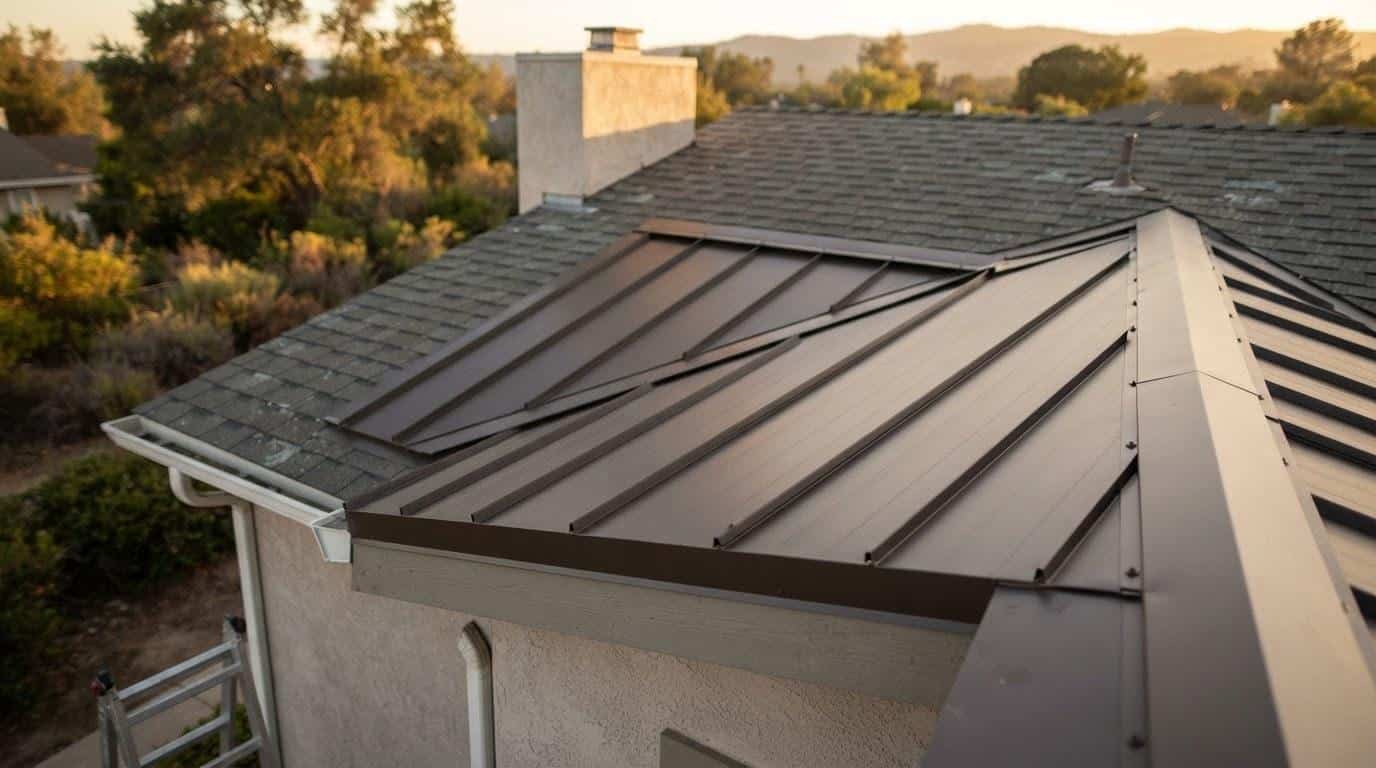
When weighing metal roof vs tile roof options, the core differences come down to weight, lifespan, cost, and how each material handles the heat, wind, and occasional rain that Southern California delivers. Metal wins on longevity and weight savings; tile wins on curb appeal and thermal mass. Both are far more durable than standard asphalt shingles, which is why they are the two most common premium roofing choices across Los Angeles County and the broader Southern California region.
Tile roofs, especially clay and concrete tile, are a signature look across the region. Spanish-style and Mediterranean architecture made tile the default choice for decades. Metal roofing has grown steadily since the early 2000s as standing-seam and stone-coated steel panels became more affordable and widely available.
| Feature | Metal Roof | Tile Roof (Clay or Concrete) |
|---|---|---|
| Typical Lifespan | 40 to 70 years | 30 to 50 years |
| Weight per Square Foot | 1 to 3 lbs | 6 to 12 lbs |
| Fire Rating | Class A | Class A |
| Wind Resistance | Up to 140 mph (standing seam) | Up to 125 mph (properly fastened) |
| Typical Installed Cost (regional market) | $10 to $20 per sq ft | $12 to $25 per sq ft |
| Maintenance Frequency | Low (inspect every 2 to 3 years) | Moderate (inspect annually) |
| Structural Load | Suitable for most existing structures | May require structural reinforcement |
| Recyclability | Fully recyclable at end of life | Partially recyclable |
How Does Each Roof Type Hold Up in Southern California’s Climate?
Southern California’s climate is one of the most roof-friendly in the country, but it still delivers real stress: intense UV exposure for 280 or more sunny days per year, Santa Ana wind events that can exceed 80 mph, and wildfire ember cast that can travel more than a mile. Both metal and tile handle these conditions well, but in different ways.
Metal roofing reflects solar radiation rather than absorbing it. According to the U.S. Department of Energy, cool metal roofs can reduce rooftop temperatures by up to 100 degrees Fahrenheit compared to conventional dark surfaces, cutting summer cooling loads noticeably. This matters in inland Southern California valleys where summer temperatures regularly exceed 100°F.
Metal roofs can reduce rooftop temperatures by up to 100 degrees Fahrenheit compared to conventional dark surfaces, cutting summer cooling loads noticeably.
Tile, especially clay tile, handles heat through thermal mass. It absorbs heat slowly during the day and releases it at night, which helps moderate interior temperatures. This is why tile dominated Southern California construction for most of the 20th century before air conditioning became universal.
For wind, standing-seam metal panels interlock continuously and have no individual pieces to dislodge. Tile roofs depend on proper fastening of each individual tile. Improperly installed or aged tile can crack or lift during Santa Ana wind events. Our crews respond to leaking roof repair calls after roughly 60 percent of major Santa Ana wind events, and cracked or displaced tile accounts for the majority of those calls in older installations.
For wildfire ember resistance, both materials carry a Class A fire rating, the highest available. However, tile roofs with open eave gaps can allow embers to enter the attic space. California’s fire resilience guidelines recommend sealing those gaps with ember-resistant vents regardless of roofing material.
What Does a Metal Roof or Tile Roof Cost in This Market?
In the Southern California regional market, metal roofing typically runs between $10 and $20 per square foot installed, while clay or concrete tile typically runs between $12 and $25 per square foot installed, depending on material grade, roof complexity, and structural requirements. These are market ranges, not quotes from any specific contractor.
Several factors move the final number up or down significantly:
- Roof pitch and complexity: A steep, multi-faceted roof with many valleys and hips costs more to cover than a simple gable roof, for both materials.
- Structural reinforcement: Concrete tile weighs 6 to 12 pounds per square foot. If your existing roof framing was built for lighter material, a structural upgrade may add $2,000 to $8,000 or more to the project before the first tile is installed.
- Material grade: Entry-level corrugated steel panels cost less than standing-seam or stone-coated steel. Hand-molded clay tile costs more than standard concrete tile.
- Tear-off and disposal: Removing an old tile roof is labor-intensive. Disposal of broken concrete tile can add to project costs depending on local dump fees.
- Underlayment and flashing: Both systems require quality underlayment and metal flashing at all penetrations. Skimping here is a common cause of a leaky roof repair call within a few years of installation.
Over a 50-year horizon, metal often costs less in total when you account for its longer lifespan and lower maintenance frequency. A tile roof may need re-underlayment at the 20 to 25 year mark even if the tiles themselves are intact, adding a significant mid-life cost.
A tile roof may need re-underlayment at the 20 to 25 year mark even if the tiles themselves are intact, adding a significant mid-life cost.
As of 2024, the Inflation Reduction Act federal tax credit covers 30 percent of the cost of qualifying energy-efficient roofing improvements, which can include certain cool metal roofing products that meet ENERGY STAR efficiency ratings. Tile does not typically qualify for this credit unless it meets specific solar-reflectance thresholds. Ask your tax advisor and roofing contractor to confirm eligibility before you rely on this credit in your budget.
For a custom quote on your specific roof, contact Roof Repair & Construction Inc. at (323) 474-1088.
Which Roof Type Is Easier to Repair and Maintain?
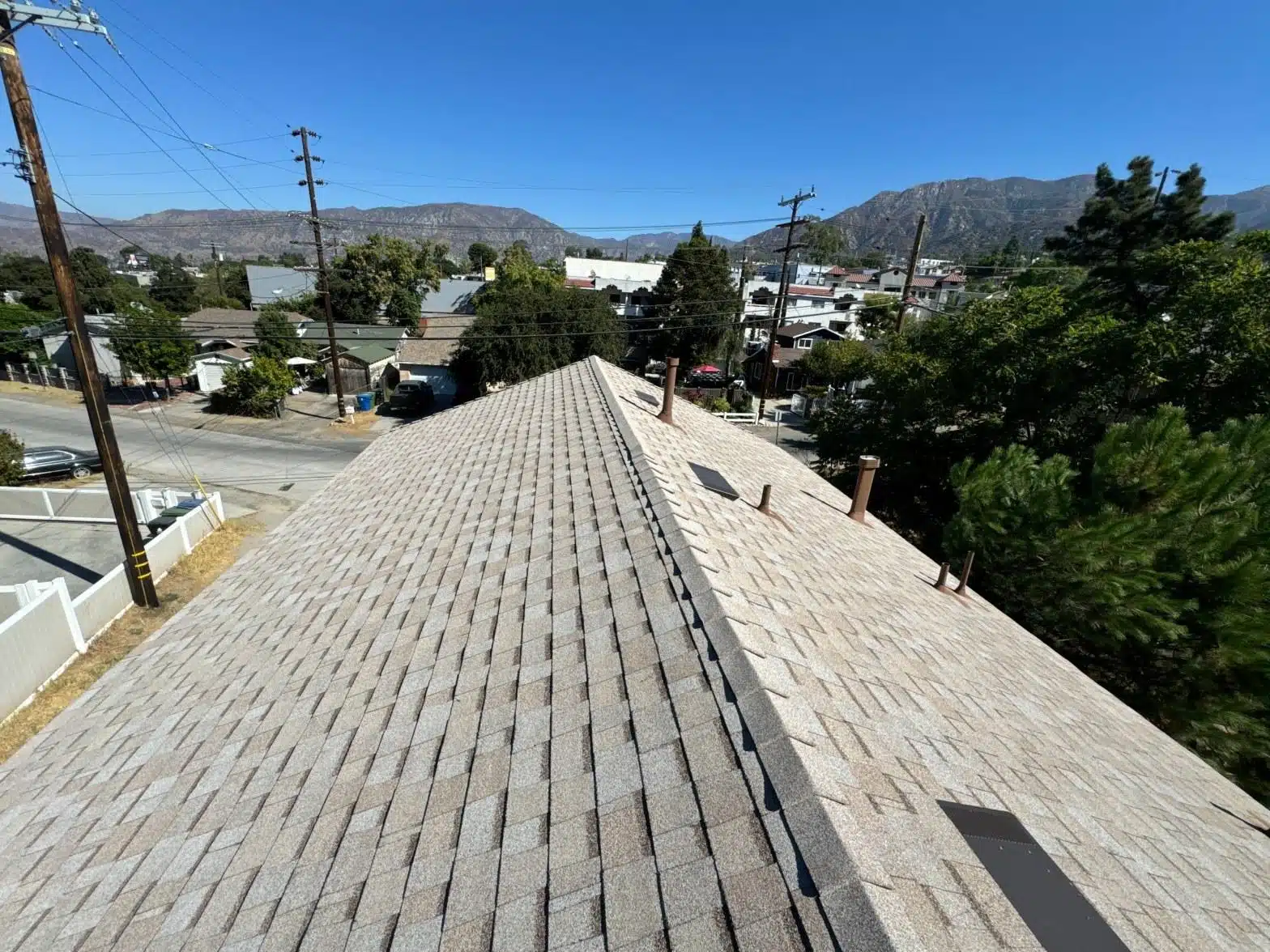
Metal roofs generally require less frequent maintenance than tile roofs. A well-installed metal roof typically needs inspection every 2 to 3 years, while a tile roof benefits from annual inspection to catch cracked, slipped, or broken tiles before they allow water intrusion.
Here is how the ongoing roof maintenance picture looks for each material:
- Metal roof repair: The most common issues are sealant failure at fasteners and flashings, surface scratches that can lead to rust if left untreated, and panel expansion gaps that open over time. These are generally low-cost fixes when caught early.
- Tile roof repair: Individual tiles crack from foot traffic, falling debris, or thermal cycling. A single cracked tile is inexpensive to replace, but finding a matching tile on a roof installed 20 or 30 years ago can be difficult. The bigger cost risk is underlayment failure beneath intact-looking tiles.
- Gutter and drainage: Both roof types need clean gutters to function properly. Tile roofs shed debris more readily and can deposit granules and dust into gutters over time.
- Foot traffic damage: Metal panels can dent if walked on incorrectly. Tile cracks under point loads. Both require a trained roofer to walk the surface safely during inspection or repair.
- Re-coating: Some metal roofs benefit from a reflective coating refresh every 10 to 15 years to maintain energy performance. Tile does not require coating but may need moss or lichen treatment in shaded areas.
Our team handles leaking roof repair calls on both metal and tile systems across Southern California. We see tile underlayment failures most often on roofs installed between 1985 and 2005, when 15-pound felt was the standard underlayment and has since degraded well past its rated life.
How Do Metal and Tile Roofs Perform on Fire Resistance and Building Codes?
Both metal and tile roofs carry a Class A fire rating, the highest classification under ASTM E108 and UL 790 testing standards, making them the two best choices for wildfire-prone communities in Southern California. California’s building codes, updated under Title 24, require Class A roofing in most of the state’s designated Wildland-Urban Interface (WUI) zones.
California’s Title 24 building energy standards also set solar reflectance and thermal emittance requirements for low-slope roofing in new construction. Cool metal roofing products frequently meet or exceed these thresholds. Tile compliance depends on color and glaze; lighter-colored tile generally meets the standard while dark tile may not.
For homeowners in high fire hazard severity zones (HFHZ), the California Department of Forestry and Fire Protection (CAL FIRE) maintains a list of approved roofing assemblies. Both metal and tile assemblies appear on this list, but the specific product and installation method must match the approved assembly. A licensed roofing contractor can verify compliance before work begins.
Roofing contractors working in California must hold a valid license issued by the California Contractors State License Board (CSLB). Homeowners should verify a contractor’s license number on the CSLB website before signing any contract for metal or tile roof work.
Which Roof Is Right for Your Southern California Home?
The best choice between metal roof vs tile roof depends on four factors: your home’s structural capacity, your budget, the architectural style of the home, and how long you plan to own the property. Neither material is universally better; each wins in specific situations.
Choose metal roofing if:
- Your existing roof framing cannot support the added weight of tile without costly reinforcement.
- You want the longest possible lifespan with the lowest maintenance frequency.
- Energy efficiency and potential eligibility for the Inflation Reduction Act federal tax credit are priorities.
- Your home has a modern, industrial, or contemporary architectural style.
- You want a fully recyclable roofing material at end of life.
Choose tile roofing if:
- Your home has Spanish Colonial, Mediterranean, or Mission-style architecture where tile is the traditional and most visually appropriate material.
- Your roof structure is already built to carry tile weight, or you are doing a like-for-like replacement.
- You prefer the thermal mass properties of clay tile for passive temperature regulation.
- Long-term resale value in a neighborhood where tile is the standard matters to you.
- You want a material with a proven multi-decade track record in Southern California’s specific climate.
If you are replacing an existing tile roof with tile, the structural question is already answered. If you are switching from tile to metal, you may actually save money on structural work since metal is so much lighter. If you are switching from a lighter material to tile, get a structural assessment first.
One factor that surprises many homeowners: the underlayment beneath the visible roofing material matters as much as the material itself. A premium tile or metal roof installed over a failing underlayment will leak. Any reputable roof repair company will assess the full assembly, not just the surface layer.
Get Expert Roofing Help Across Southern California
Deciding between metal and tile is worth getting right the first time. The wrong choice for your structure or budget can mean costly repairs or a premature replacement within 15 to 20 years.
Roof Repair & Construction Inc. handles metal roof repair, tile roof repair, structural roof repairs, and full roof replacement across Southern California. Whether you have a cracked tile, a leaking metal seam, or you are planning a full reroof and want an honest comparison for your specific home, the team is ready to help.
Call (323) 474-1088 to schedule an inspection or request a written quote. Roof Repair & Construction Inc. is licensed by the California Contractors State License Board (CSLB) and carries full insurance, so your project is protected from start to finish.
Explore our full range of Roof Repair services across Southern California.
Frequently Asked Questions
How do I know if my metal roof is leaking or if it is just condensation?
A true metal roof leak usually appears as water staining on the ceiling or insulation directly below a fastener, seam, or flashing point. Condensation tends to appear more broadly across a large surface and is more common in early morning. If you see staining in a specific spot that grows after rain, that is almost certainly a leak at a seam or penetration and needs a metal roof repair before it spreads to the decking below.
How long does a tile roof typically last in Southern California?
Clay and concrete tile roofs in Southern California typically last 30 to 50 years when properly maintained. The tiles themselves can last even longer, but the underlayment beneath them usually needs replacement at the 20 to 25 year mark. If your tile roof is more than 20 years old and you are seeing leaks, the underlayment is often the real culprit even if the tiles look intact from the street.
Can I walk on my tile roof to clean gutters or inspect it myself?
Walking on a tile roof without knowing the correct technique will crack tiles. Each tile can only support weight at specific points near the overlap, and stepping on the unsupported center of a tile almost always breaks it. Metal roofs are more forgiving but can still dent under point loads. For both materials, it is safer and cheaper in the long run to have a trained roofer do any inspection or gutter work that requires roof access.
Does a metal roof make more noise when it rains compared to tile?
Modern metal roofing installed over solid decking and a quality underlayment is not significantly louder than tile during rain. The noise difference is much more pronounced on older metal roofing installed over open purlins with no solid decking beneath. If sound is a concern, ask your contractor about the specific assembly being used, since the decking and underlayment layers absorb most of the impact noise.
Which roof type adds more resale value to a Southern California home?
Both metal and tile roofs add meaningful resale value compared to standard asphalt shingles, but the impact depends heavily on the neighborhood and home style. In communities where Spanish or Mediterranean architecture is dominant, a well-maintained clay tile roof often commands a premium because it matches buyer expectations. In newer developments or homes with contemporary architecture, a standing-seam metal roof can be a strong selling point. A qualified local real estate agent can give you the most accurate read for your specific neighborhood.