California wildfires can leave a roof looking intact on the surface while hiding serious structural and smoke damage underneath. This guide walks you through what to check, what to avoid, and when to call a licensed roofing contractor.
Why Do California Wildfires Cause So Many Fire Damage Roof Repair Problems?
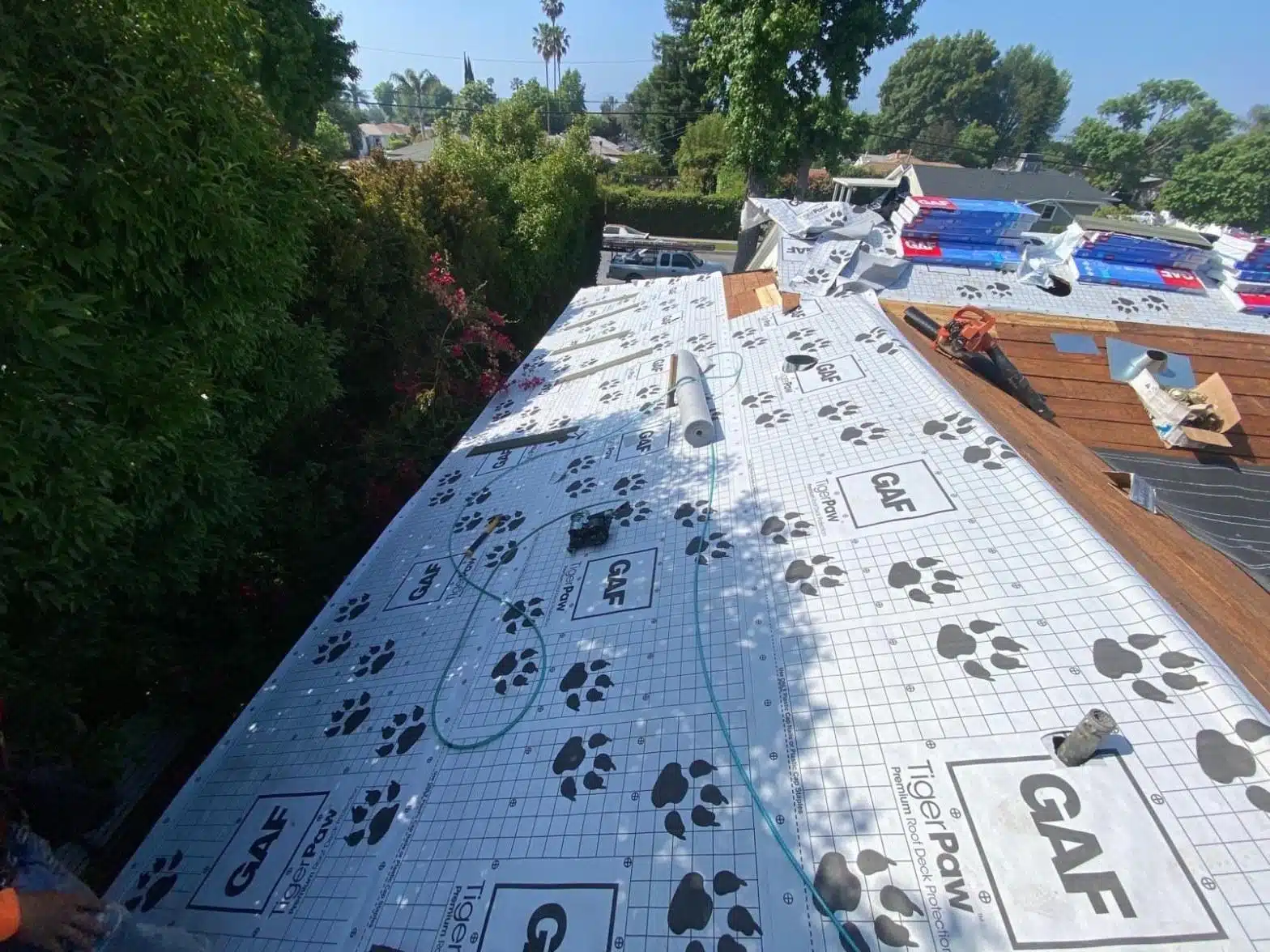
California wildfires create fire damage roof repair problems that go far beyond what homeowners can see from the ground. Radiant heat, flying embers, and toxic smoke can compromise a roof’s structure, waterproofing, and ventilation system all at once.
Southern California’s climate makes this especially dangerous. The region regularly sees noaa.gov/education/resource-collections/weather-atmosphere/wildfires” rel=”noopener” target=”_blank”>Santa Ana wind events that push fire spread rates above 2,000 acres per hour, carrying burning embers more than a mile ahead of the fire front. Those embers land on roofs, in gutters, and inside attic vents before a homeowner even knows fire is nearby.
The Los Angeles County housing stock includes millions of homes built before 2008, when California updated its wildfire-resistant building codes under Chapter 7A of the California Building Code. Older homes often have wood shake roofs, open eave vents, and untreated wood decking that ignite quickly under ember exposure.
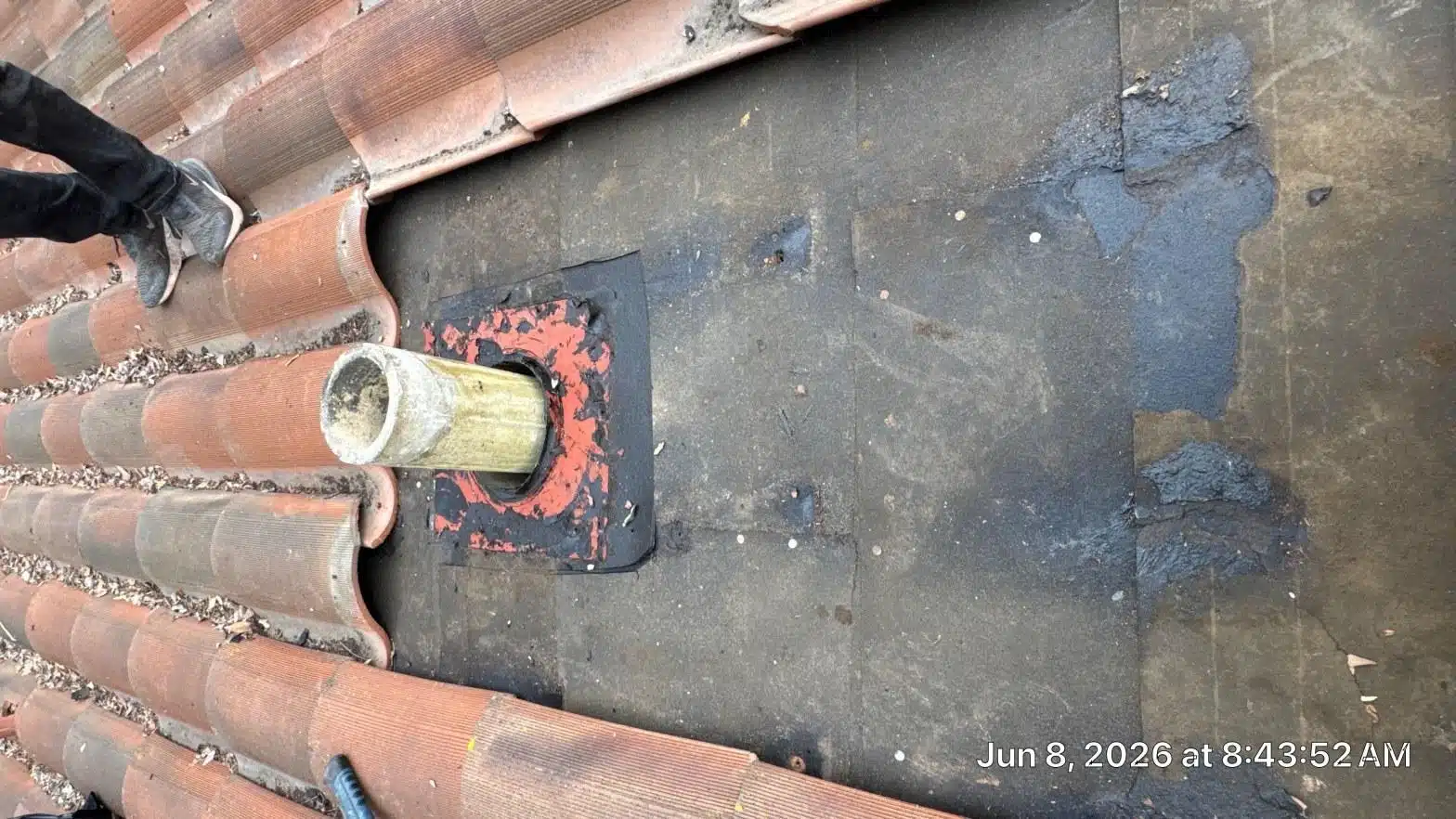
Even concrete tile and asphalt shingle roofs suffer in wildfires. Sustained radiant heat above 300 degrees Fahrenheit can warp roof decking, crack tile underlayment, and melt the adhesive strips on shingles without producing visible flames. The result is a roof that looks intact but is no longer weatherproof or structurally sound.
Sustained radiant heat above 300 degrees Fahrenheit can warp roof decking, crack tile underlayment, and melt shingle adhesives without producing visible flames.
What Are the Warning Signs Your Roof Has Fire or Smoke Damage?
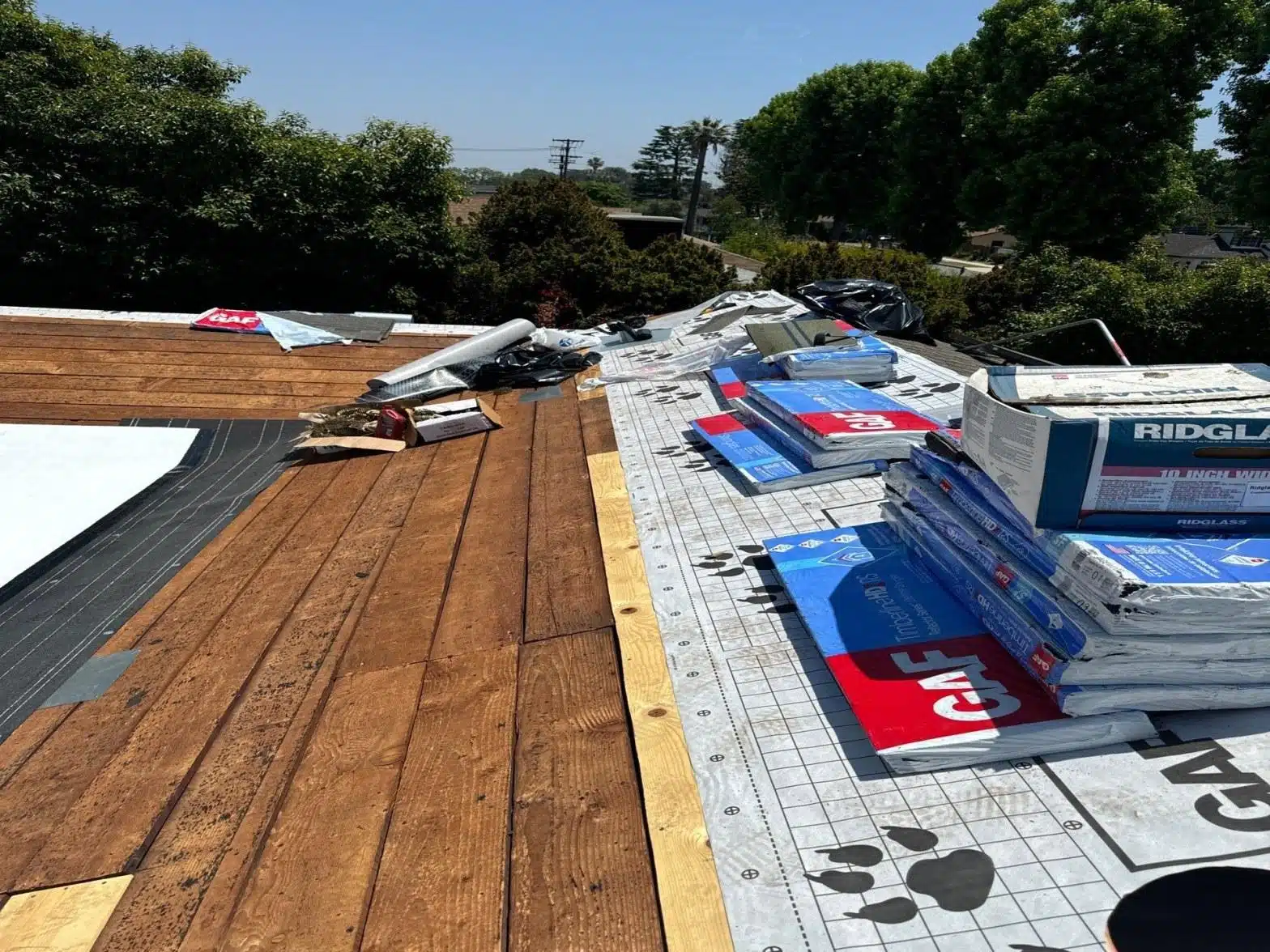
The most dangerous wildfire roof damage is the kind you cannot see from the street. Charring, missing shingles, and sagging are obvious, but heat-warped decking, cracked underlayment, and clogged vents are just as serious and far easier to miss.
Homeowners who survived the 2018 Woolsey Fire and the 2020 Bobcat Fire reported discovering hidden damage weeks after moving back in, when leaks appeared during the first rain. Watch for all of these warning signs:
- Visible char or burn marks: Blackened shingles, tiles, or fascia boards indicate direct ember contact or flame exposure.
- Missing or displaced shingles: Wildfire-driven wind gusts routinely exceed 60 mph in Southern California, stripping shingles from roofs that were not on fire at all.
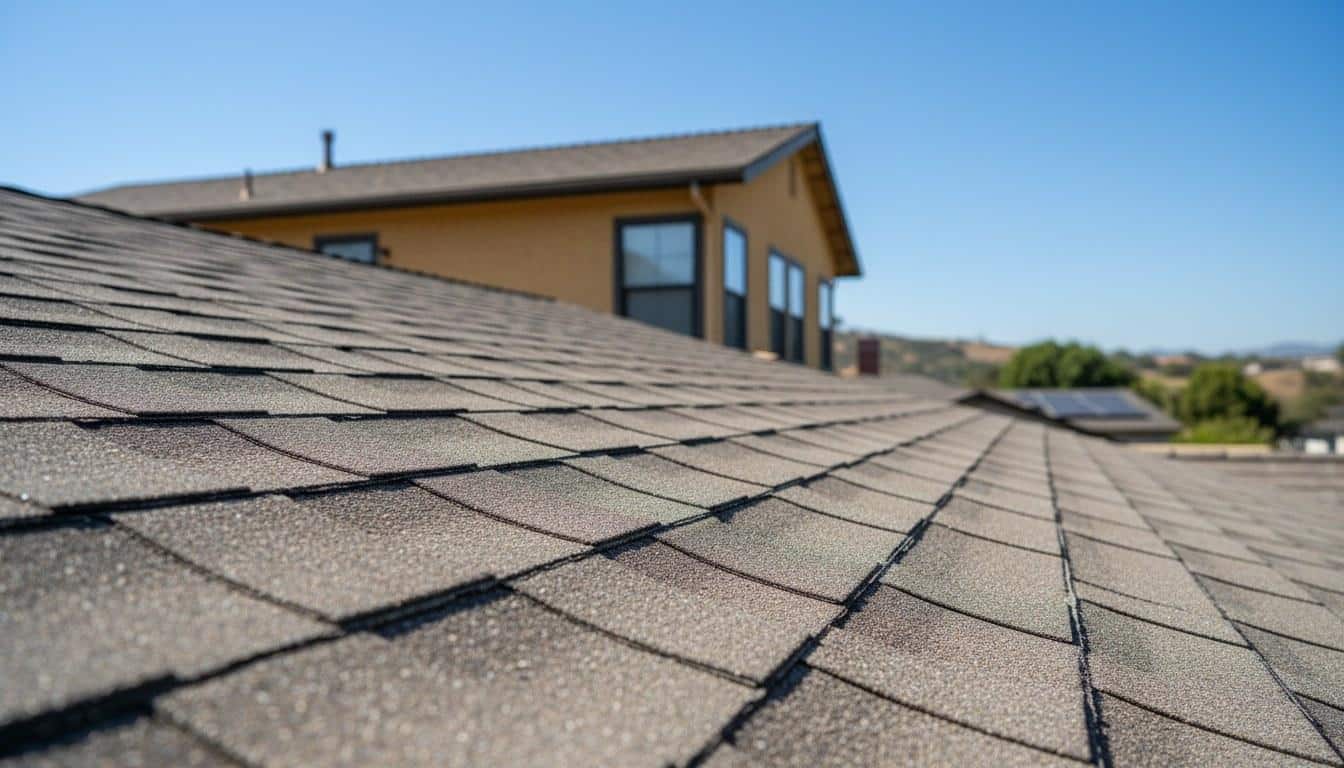
- Granule loss on asphalt shingles: Heat causes shingles to shed their protective granule coating, leaving bare asphalt exposed to UV and rain.
- Warped, buckled, or sagging roof sections: Radiant heat warps the plywood or OSB decking beneath the surface material, creating soft spots that can collapse under foot traffic or rain load.
- Cracked or spalled roof tiles: Concrete and clay tiles absorb intense heat and then crack when they cool rapidly, especially if firefighting water hit them.
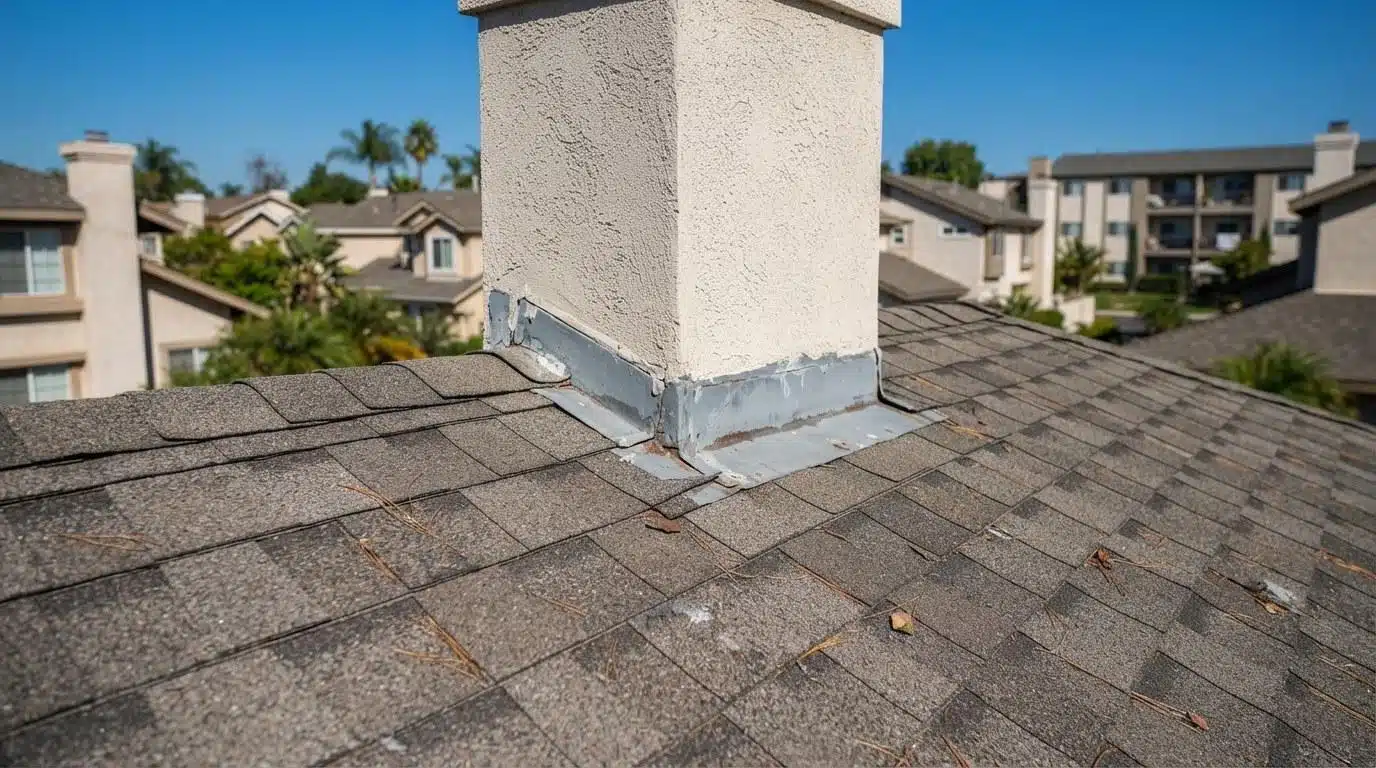
- Damaged or clogged flashing: Metal flashing around chimneys, skylights, and valleys can warp under heat, breaking the watertight seal and allowing water intrusion.
- Smoke odor inside the attic: Smoke that penetrates ridge vents or soffit vents saturates insulation and wood framing, creating ongoing air quality problems and accelerating wood decay.
- Ash and debris in gutters and downspouts: Clogged gutters from wildfire debris cause water to back up under the roof edge during the next rain event.
Symptom, Likely Cause, and DIY or Pro? A Quick-Reference Guide
Use this table to match what you are seeing to the most likely cause and decide whether it is safe to handle yourself or requires a licensed contractor.
| Symptom | Likely Cause | DIY or Pro? |
|---|---|---|
| Charred or blackened shingles | Direct ember contact or radiant heat | Pro: structural assessment needed before any work |
| Missing shingles after wind-driven fire event | Wind uplift during fire weather | Pro: full inspection required to find underlayment damage |
| Granule loss on asphalt shingles | Heat degradation of shingle surface | Pro: granule loss signals shingle replacement, not patching |
| Soft spots or sagging when walking on roof | Warped or delaminated roof decking | Pro: structural repair required; walking risk of fall-through |
| Cracked concrete or clay tiles | Thermal shock from heat then rapid cooling | Pro: individual tile replacement plus underlayment check |
| Smoke smell in attic | Smoke infiltration through vents | Pro: insulation removal and air sealing required |
| Warped or lifted flashing | Metal expansion from radiant heat | Pro: re-flashing around penetrations to prevent leaks |
| Ash-clogged gutters | Wildfire debris accumulation | DIY-safe: flush gutters from the ground with a hose; inspect downspouts |
| Interior ceiling stains after rain | Underlayment breach from heat or ember damage | Pro: source must be located before patching ceiling |
What Can You Safely Check Yourself After a Wildfire?
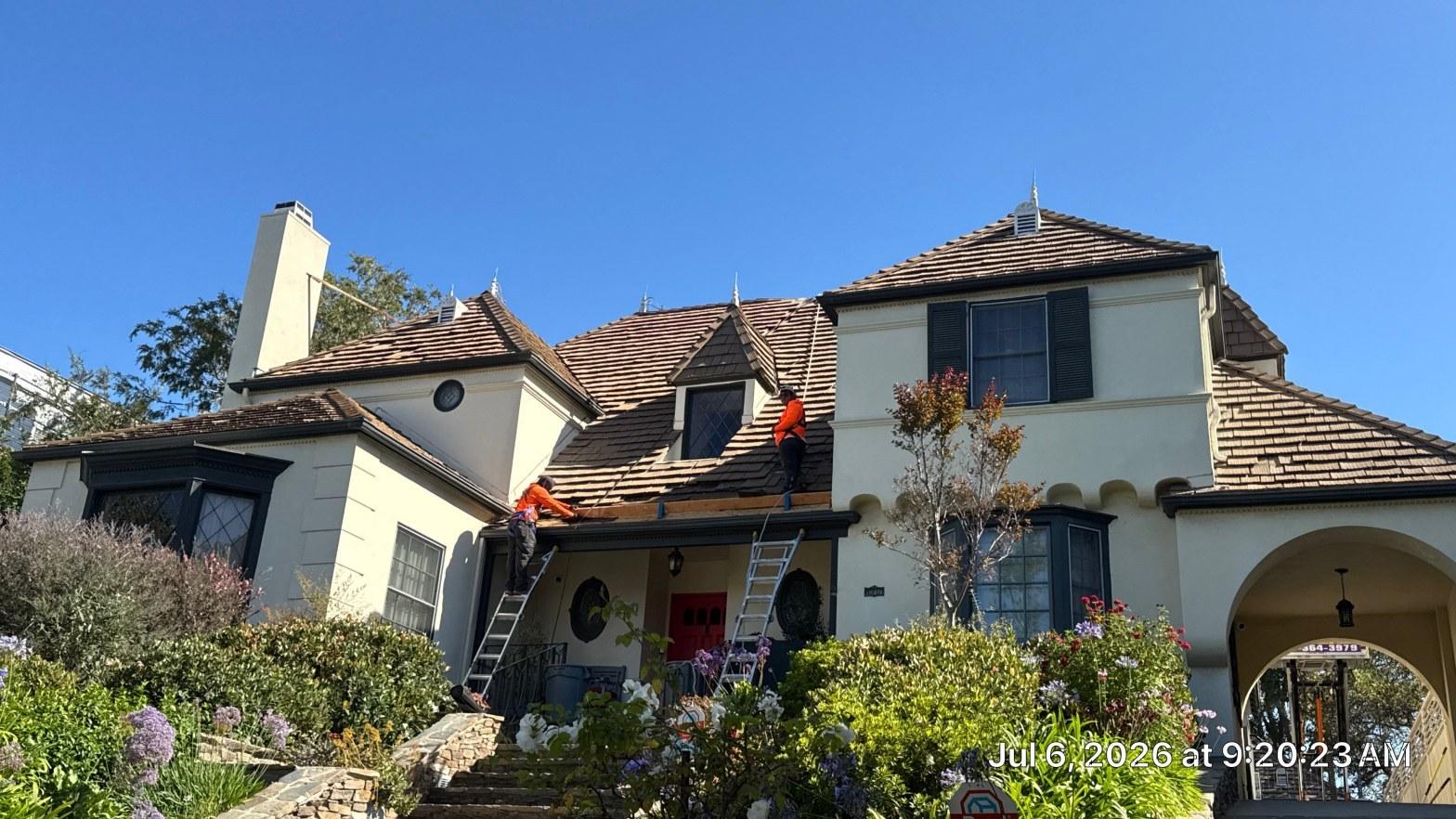
There are a few ground-level checks a homeowner can do safely before a contractor arrives. Do not walk on a fire-exposed roof: heat-damaged decking can fail without warning, and a fall from even a single-story roof causes serious injury.
Our technicians respond to post-wildfire calls across the region and find that roughly 7 out of 10 homes with visible exterior smoke staining also have debris-clogged gutters that were trapping water within 48 hours of the first rain after the fire. Clearing gutters from the ground is one of the few tasks homeowners can do right away to reduce immediate water damage risk.
Here are the safe steps to take before a professional inspection:
- Walk the perimeter at ground level. Look up at the roofline from all four sides. Note any missing shingles, sagging sections, exposed decking, or visible char. Take photos from the ground for your insurance claim.
- Check the gutters and downspouts. Use a garden hose from the ground or a ladder only to gutter height. Flush ash and debris toward the downspout. If water backs up, the downspout is clogged. Clear it before the next rain.
- Inspect the attic from inside. Enter the attic through the interior hatch, not from the roof. Look for daylight coming through the decking, smoke staining on rafters, or wet insulation. If you smell strong smoke, limit your time inside and wear an N95 mask.
- Check your ceiling for staining. Water stains on interior ceilings, especially near exterior walls, skylights, or the chimney, indicate a breach in the roof covering or flashing.
- Document everything for your insurance adjuster. California’s Department of Insurance recommends photographing all visible damage before any temporary repairs are made, so your claim is not reduced.
If your local fire department or building department has issued a red or yellow tag for your property, do not enter until the tag is cleared. Los Angeles County and many surrounding counties post these status tags on the LA County official portal after major fire events.
When Should You Call a Professional Roofer?
Call a licensed roofing contractor as soon as you have safe access to your property after a wildfire, even if the roof looks undamaged from the street. Radiant heat damage, underlayment failure, and smoke infiltration are invisible at ground level and worsen quickly once rain arrives.
California law requires roofing contractors to be Licensed by the California Contractors State License Board (CSLB) under license classification C-39 for roofing work. Always verify a contractor’s CSLB license number before signing any repair agreement, especially after a disaster when unlicensed contractors flood affected areas.
You should call a professional immediately if you observe any of the following:
- Any visible charring, burning, or ember impact marks on the roof surface
- Soft spots, sagging, or any structural movement in the roofline
- Cracked, broken, or displaced tiles or shingles covering more than 10 square feet
- Smoke odor in the attic that persists after ventilating the space for 24 hours
- Interior ceiling stains that appear within 2 weeks of the fire event
- Any flashing that is visibly lifted, warped, or separated from the chimney or skylight curb
- A roof that is more than 15 years old and was exposed to fire weather, even without visible damage
A professional inspection also protects your insurance claim. Most homeowner policies in California require you to mitigate further damage after a loss event. Temporary protective measures like tarping an exposed section are typically covered under your policy’s emergency repair provision, but they must be done by a licensed contractor to qualify in most cases.
Across our post-wildfire service calls in the region, we see that homes with concrete tile roofs are misidentified as undamaged at a rate of about 4 in 10 cases. The tiles themselves survive, but the underlayment beneath them cracks from thermal stress, and the first significant rain after the fire finds its way straight through to the decking.
Homes with concrete tile roofs are misidentified as undamaged at a rate of about 4 in 10 cases after wildfires, because the tiles survive while the underlayment beneath them fails.
How Much Does Fire Damage Roof Repair Cost in California?
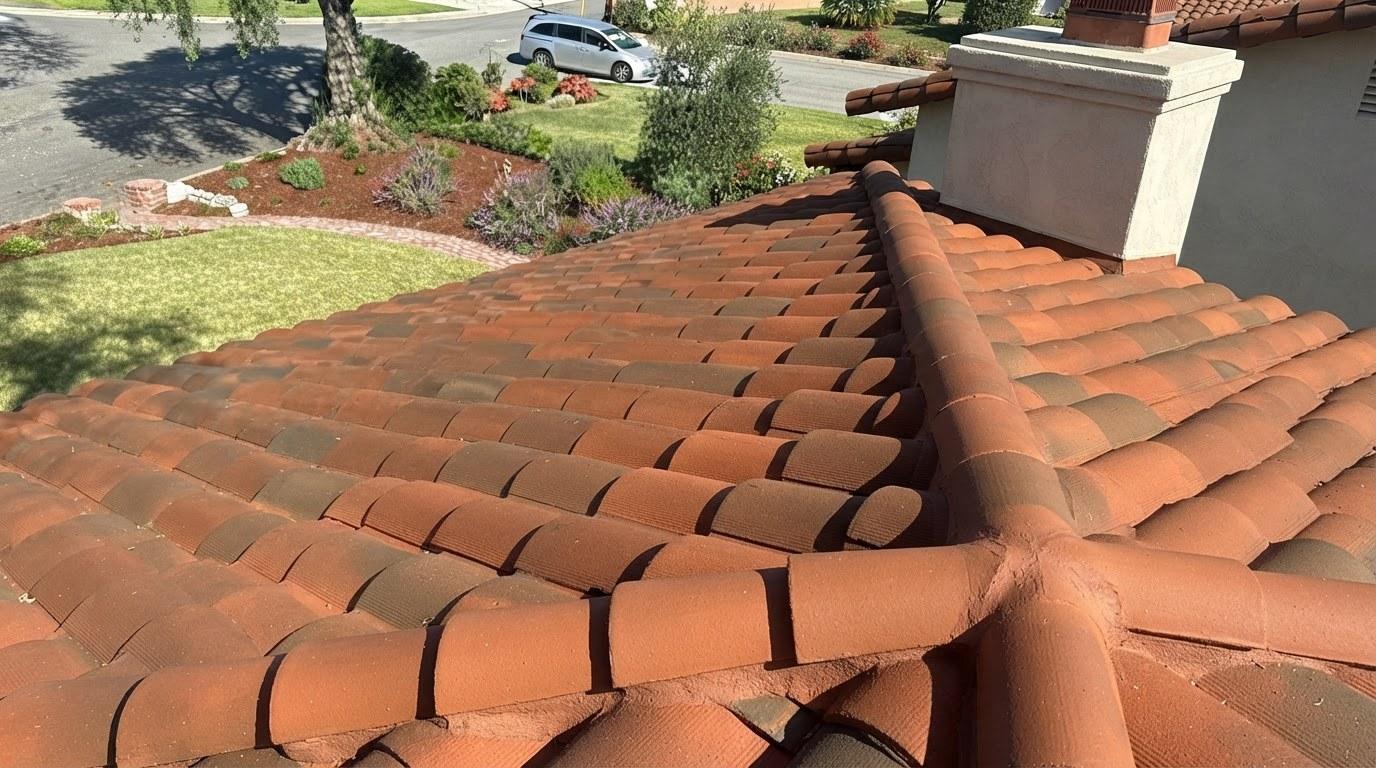
Fire damage roof repair California problems vary widely in scope, so costs range from a few hundred dollars for minor ember-impact patching to well above $20,000 for full roof replacement after structural damage. The factors that move the number most are the roof’s size, the extent of decking damage, the roofing material, and whether the attic insulation must be replaced.
Here is a general breakdown of typical regional market ranges for common post-wildfire repair scopes:
| Repair Scope | Typical Regional Range | Key Cost Drivers |
|---|---|---|
| Spot repair: 1-3 damaged shingles or tiles | $300 to $800 | Material match, roof pitch, access |
| Partial re-roof: one slope or section | $2,500 to $7,000 | Square footage, decking condition, material type |
| Full re-roof: asphalt shingle | $8,000 to $18,000 | Roof size, layers to remove, decking replacement |
| Full re-roof: concrete or clay tile | $14,000 to $35,000 | Tile cost, underlayment type, structural repairs |
| Flashing replacement (chimney, skylights) | $400 to $1,500 per penetration | Metal type, number of penetrations, sealant system |
| Attic smoke remediation and insulation replacement | $1,500 to $6,000 | Attic size, insulation depth, air sealing required |
California homeowners rebuilding after a declared wildfire disaster may qualify for federal assistance through FEMA’s Individual Assistance program, and some repairs may be eligible for the Inflation Reduction Act federal tax credit if they involve qualifying energy-efficient roofing materials. As of 2026, the IRS allows a credit of up to 30 percent of the cost of certain energy-efficient improvements under Section 25C, though specific eligibility depends on the materials chosen and the scope of work.
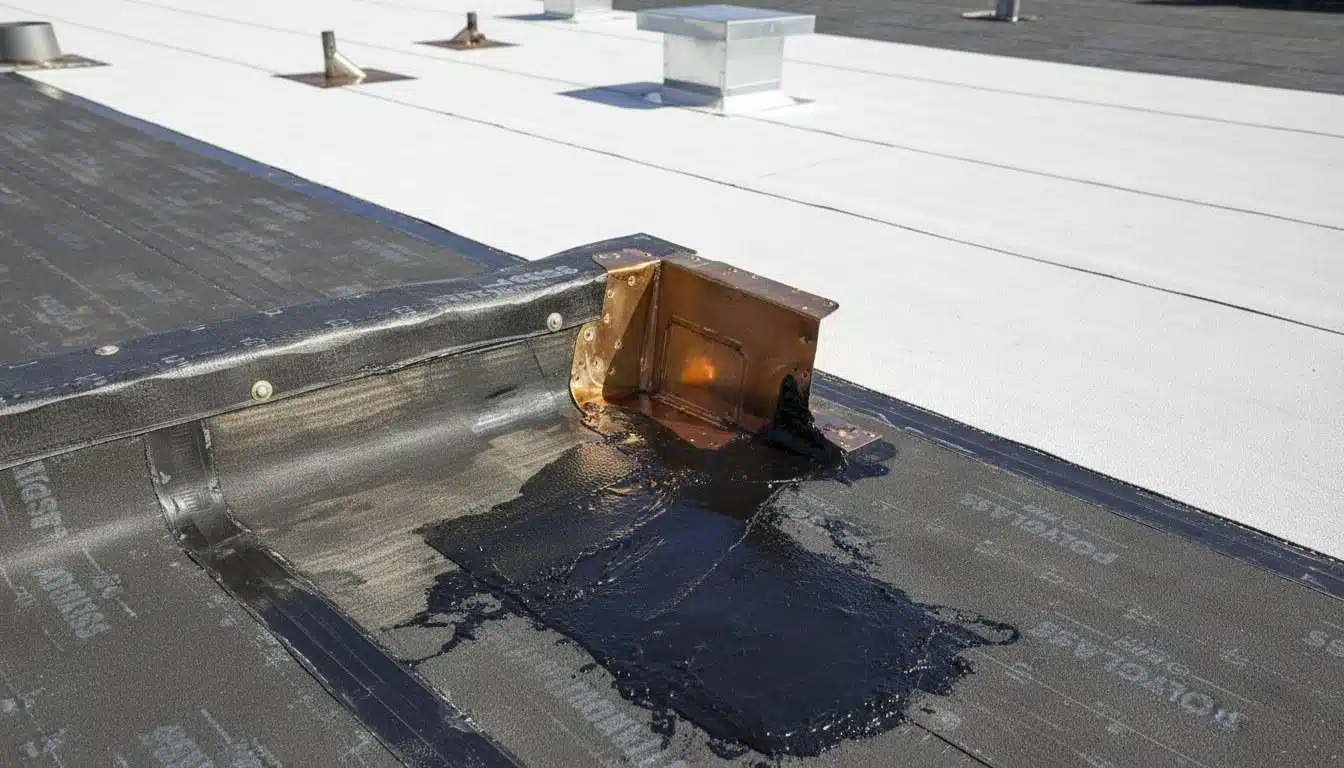
California’s Title 24 building energy standards also apply to re-roofing projects in most jurisdictions. If your repair triggers a permit, your contractor will need to meet the cool-roof reflectance requirements under those standards for low-slope or steep-slope applications. Your contractor should pull the permit and handle code compliance as part of the project scope.
Insurance typically covers fire and smoke damage to the roof under a standard homeowner’s policy, but coverage depends on your deductible, your policy’s actual cash value versus replacement cost provision, and whether the insurer’s adjuster agrees with the scope of damage. Getting an independent licensed contractor estimate before accepting the insurer’s initial offer is a standard and legally protected step in California.
For a custom quote based on your specific roof size, material, and damage scope, contact Roof Repair & Construction Inc. at (323) 474-1088.
Get Expert Help After a Wildfire
Wildfire roof damage moves fast. What looks like minor ember scorching in October can become a full interior water loss by the first November rain. The safest step after any fire exposure is a professional inspection by a contractor Licensed by the California Contractors State License Board (CSLB) who understands the specific fire damage roof repair California problems that affect this region’s housing stock.
Roof Repair & Construction Inc. handles fire and smoke roof damage repair across Southern California, from spot repairs on single damaged tiles to full structural re-roofs on homes with significant burn damage. The team works directly with homeowners and insurance adjusters to document scope, meet California building code requirements, and complete repairs that last.
Schedule your post-wildfire roof inspection today. Call (323) 474-1088 to speak with a roofing specialist and get a written estimate before any work begins.
Explore our full range of Roof Repair services across Southern California.
Frequently Asked Questions
How do I know if my roof has fire damage if there are no visible burn marks?
A roof can have serious fire damage with no visible char. Radiant heat above 300 degrees Fahrenheit warps decking, cracks underlayment, and degrades shingle adhesives without producing flames or scorch marks. If your home was within half a mile of a wildfire perimeter, or if you notice soft spots, granule loss, or a smoke smell in your attic, you should have a licensed roofing contractor inspect the roof even if it looks intact from the street.
Will my homeowner's insurance cover wildfire roof damage in California?
Most standard homeowner's policies in California cover fire and smoke damage to the roof structure under the dwelling coverage portion of the policy. Coverage depends on your deductible, whether your policy pays actual cash value or full replacement cost, and the insurer's adjuster assessment of the damage scope. California law protects your right to get an independent contractor estimate before accepting an insurer's settlement offer, and that step is strongly recommended for any significant damage.
How long does it take to repair a fire-damaged roof in California?
Minor spot repairs on 1 to 5 damaged shingles or tiles typically take one to two days once materials are sourced. Partial re-roofs covering one slope or section generally run 3 to 5 days. Full roof replacements with structural decking repairs can take 1 to 3 weeks depending on the size of the home, permit timelines, and material availability, which can stretch after a regional wildfire event when demand spikes across many households at once.
Is it safe to stay in my home if my roof has smoke damage but no burn-through?
Smoke that has infiltrated the attic through vents can degrade indoor air quality throughout the home, especially if insulation has absorbed smoke particles. Short-term occupancy may be safe with good ventilation, but smoke-saturated insulation should be removed and replaced to prevent ongoing air quality issues and wood decay. A licensed contractor can assess the extent of smoke infiltration and advise on whether temporary air purification or immediate remediation is needed.
Can I put a tarp on my fire-damaged roof myself to prevent leaks?
Tarping a fire-exposed roof yourself carries a real fall risk because heat-damaged decking can fail underfoot without warning. More practically, California homeowner's insurance policies typically require emergency repairs to be performed by a licensed contractor for the cost to be reimbursed under the emergency repair provision. Calling a licensed roofer to install a temporary protective tarp protects both your safety and your insurance claim.