
What This Project Involved
A Spanish-style two-story home in Los Feliz needed its entire roofing system rebuilt from the deck up, without replacing a single original clay barrel tile. The property at 2027 N Catalina Street combines a steeply pitched tile roof over the main structure with a large flat section tucked behind parapet walls, a combination common in Los Angeles neighborhoods developed during the 1920s and 1930s. The homeowner’s goal was straightforward: preserve the character of the original terra-cotta tile while giving the roof a waterproofing system capable of handling decades more of Southern California weather.
Work began on May 24, 2024, and the project reached full completion in March 2026, with follow-up visits in December 2025 and again in early March 2026. The job covered two distinct roof types under one contract: a pitched clay tile re-lay and a torch-applied modified bitumen flat roof rebuild. Each section called for a different set of materials and techniques, and both are documented in the photos below.
How Did We Handle the Existing Clay Barrel Tiles?
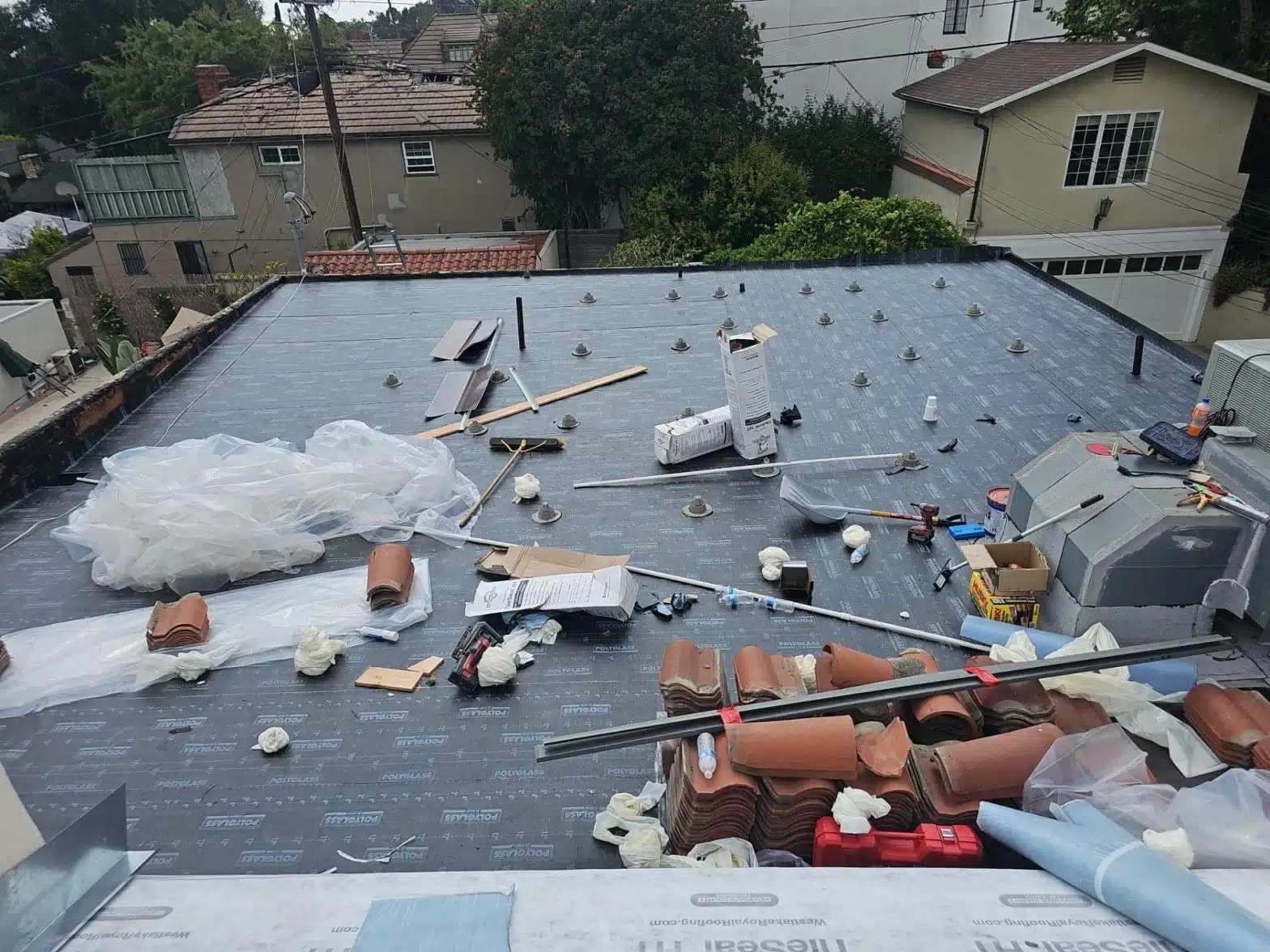
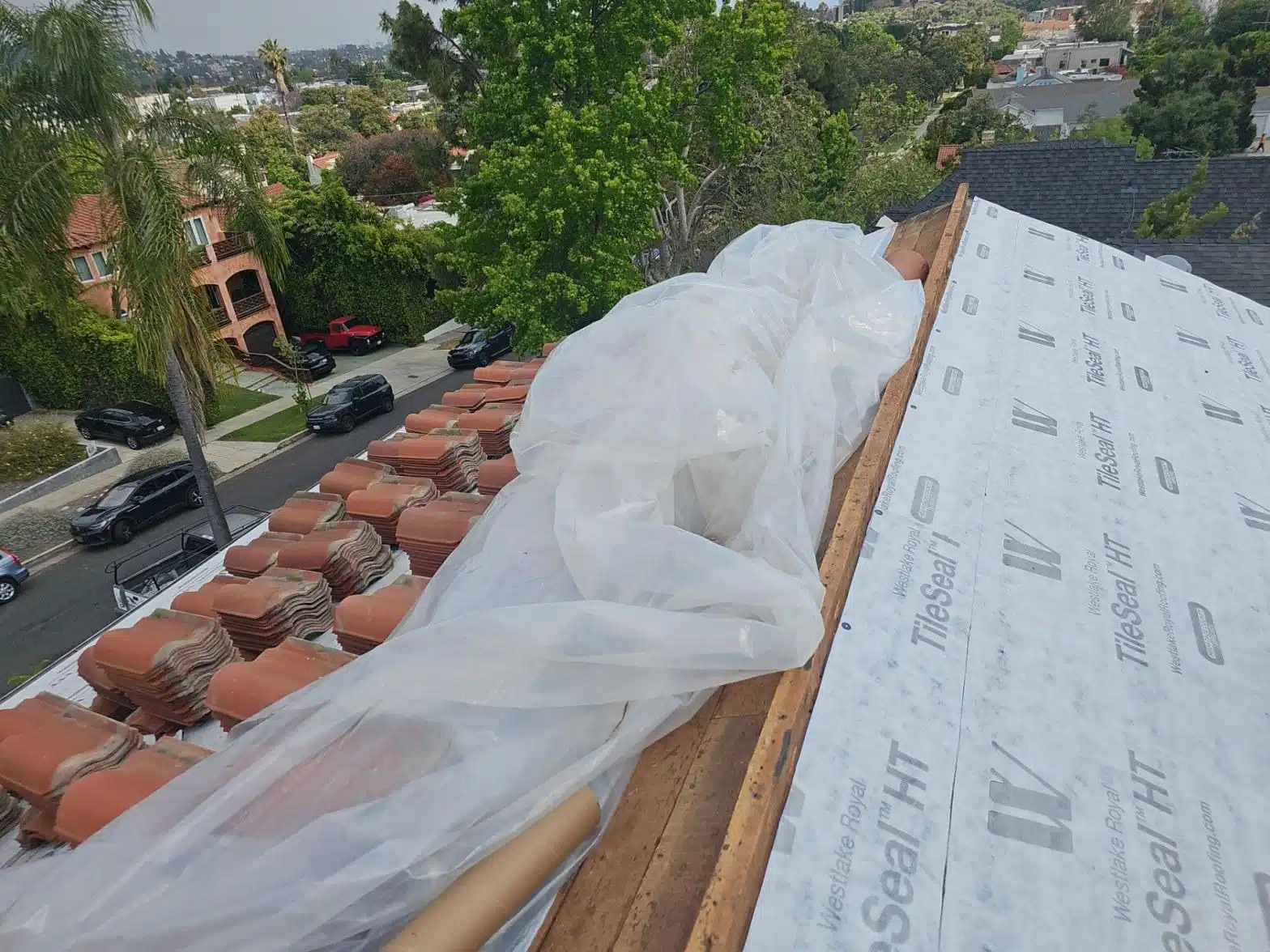
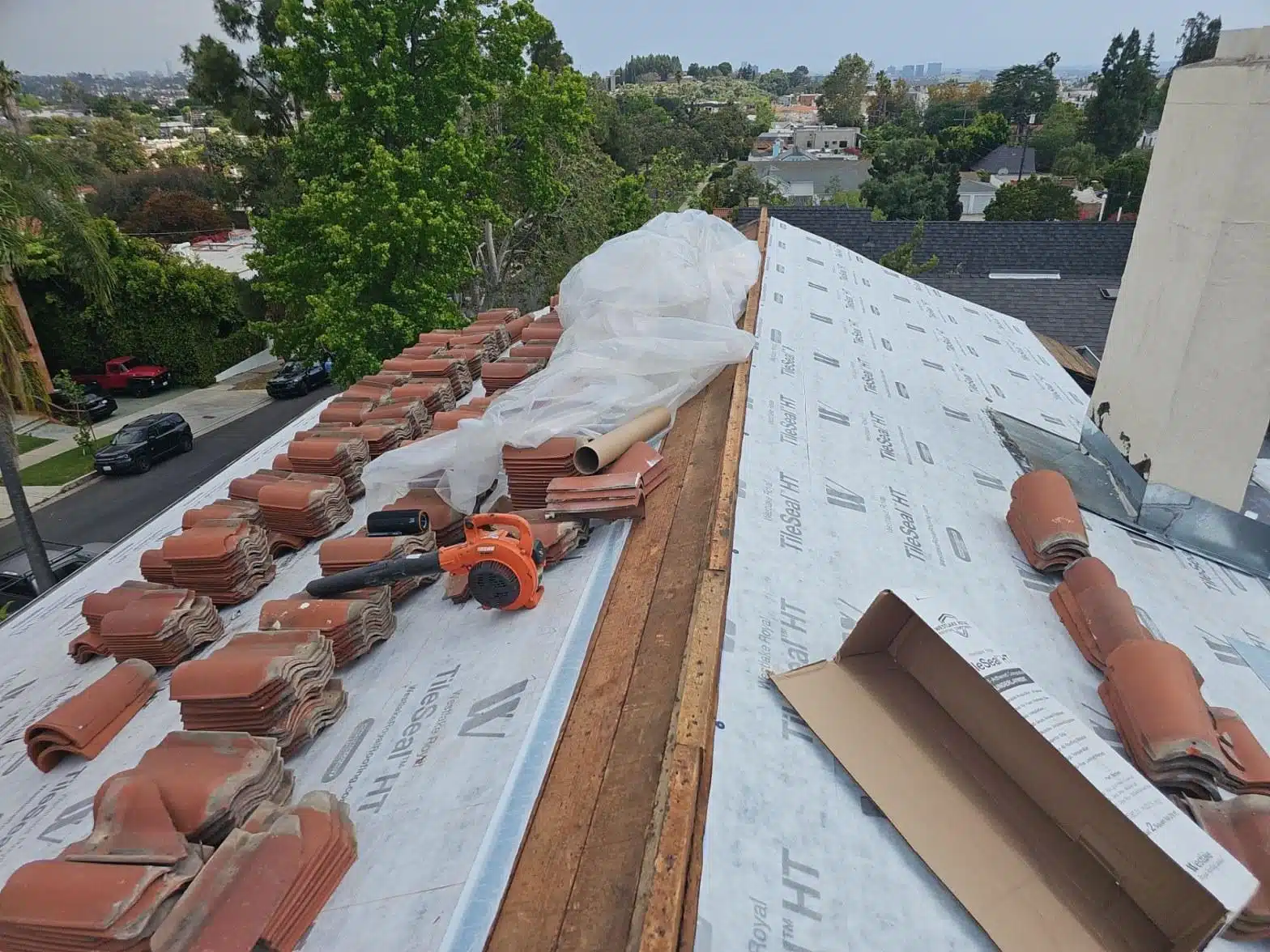
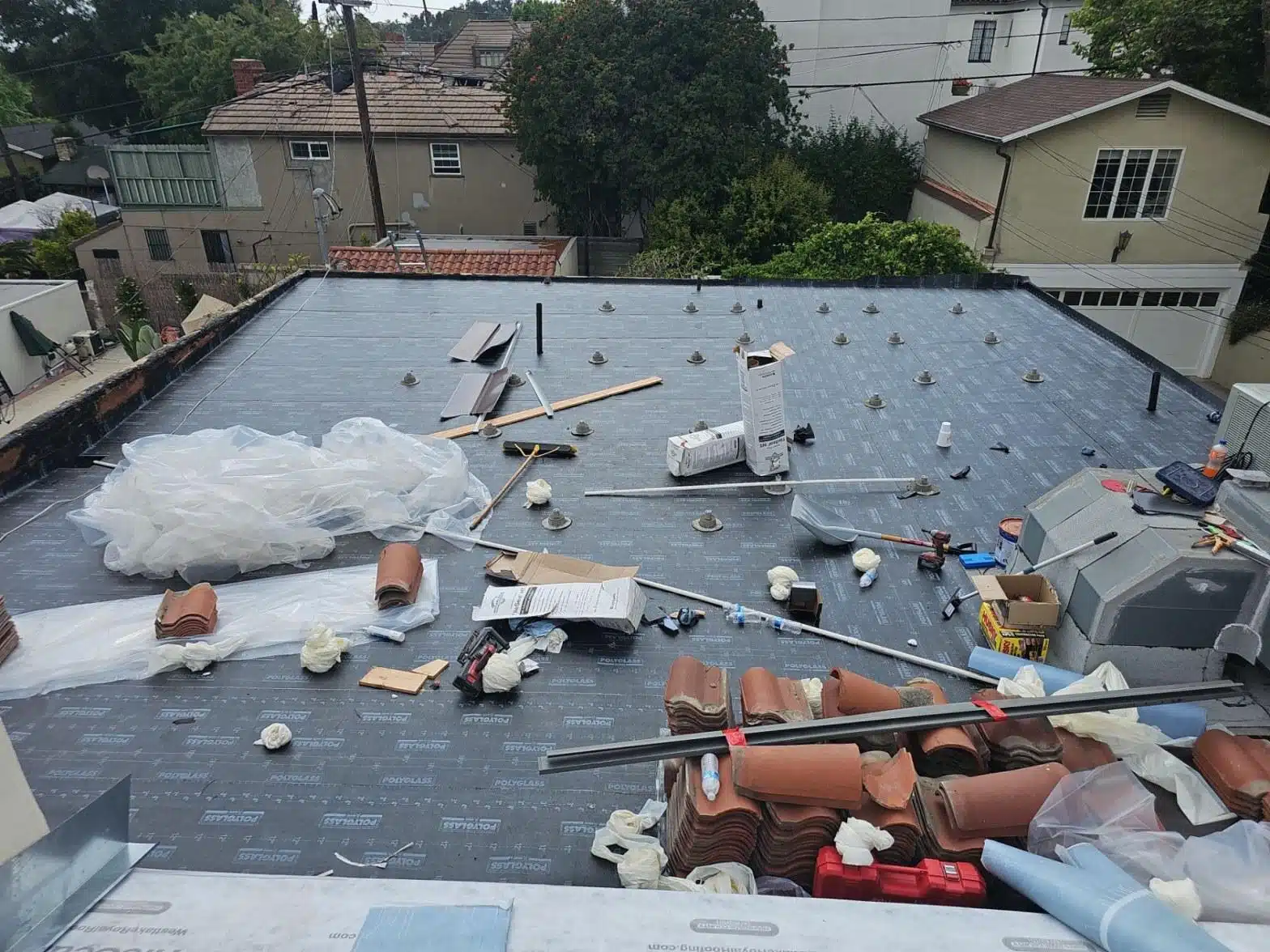
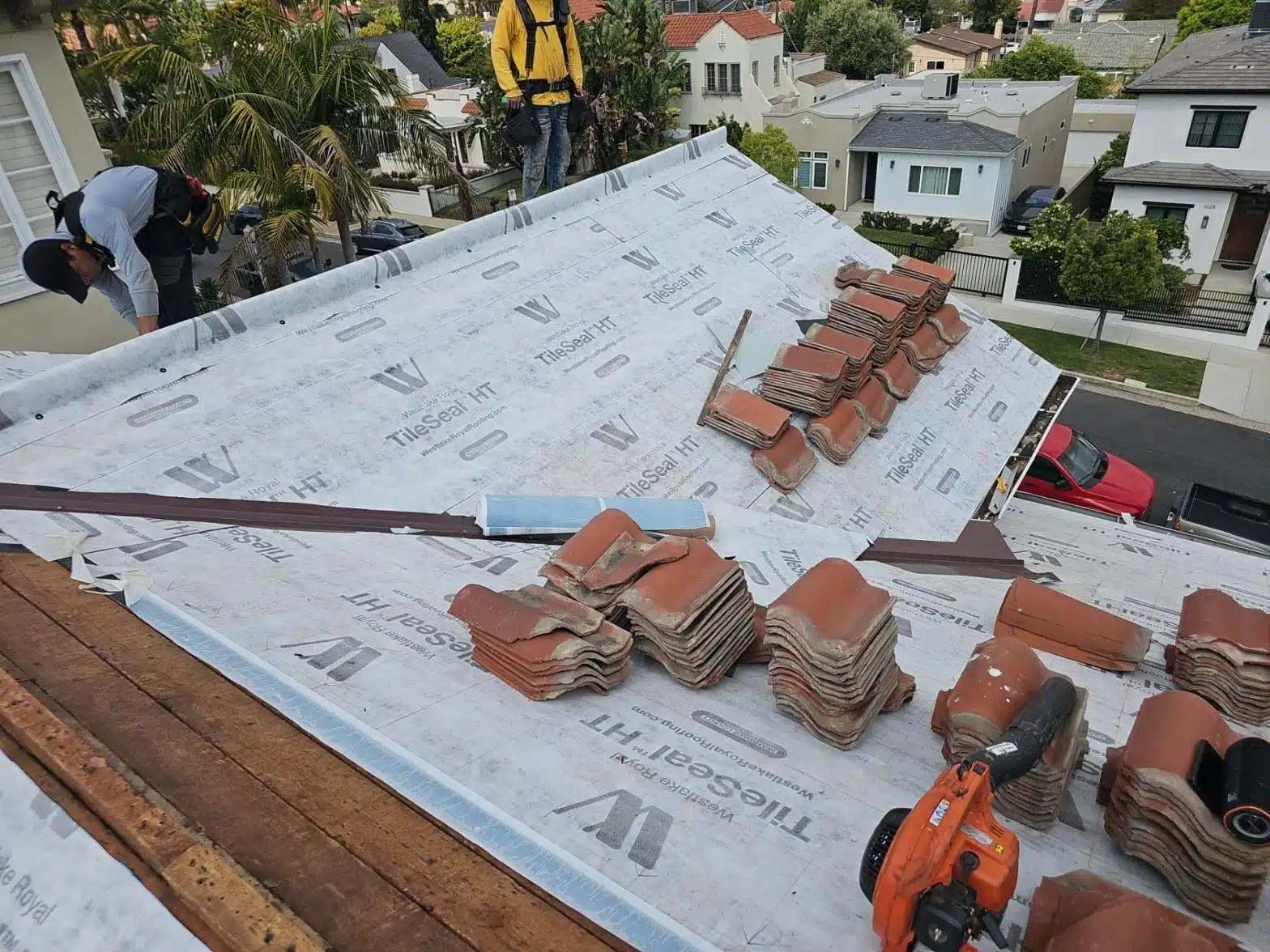
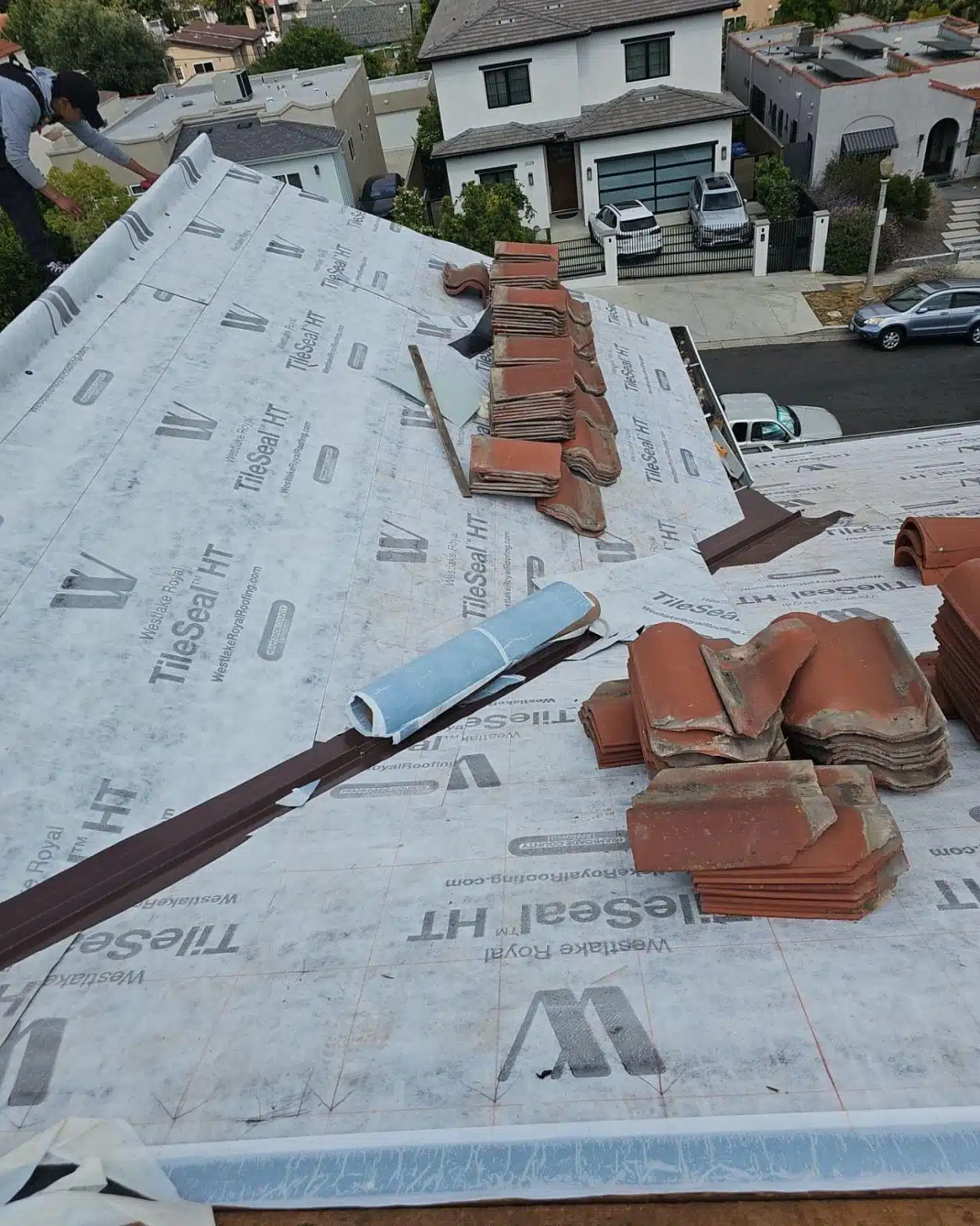
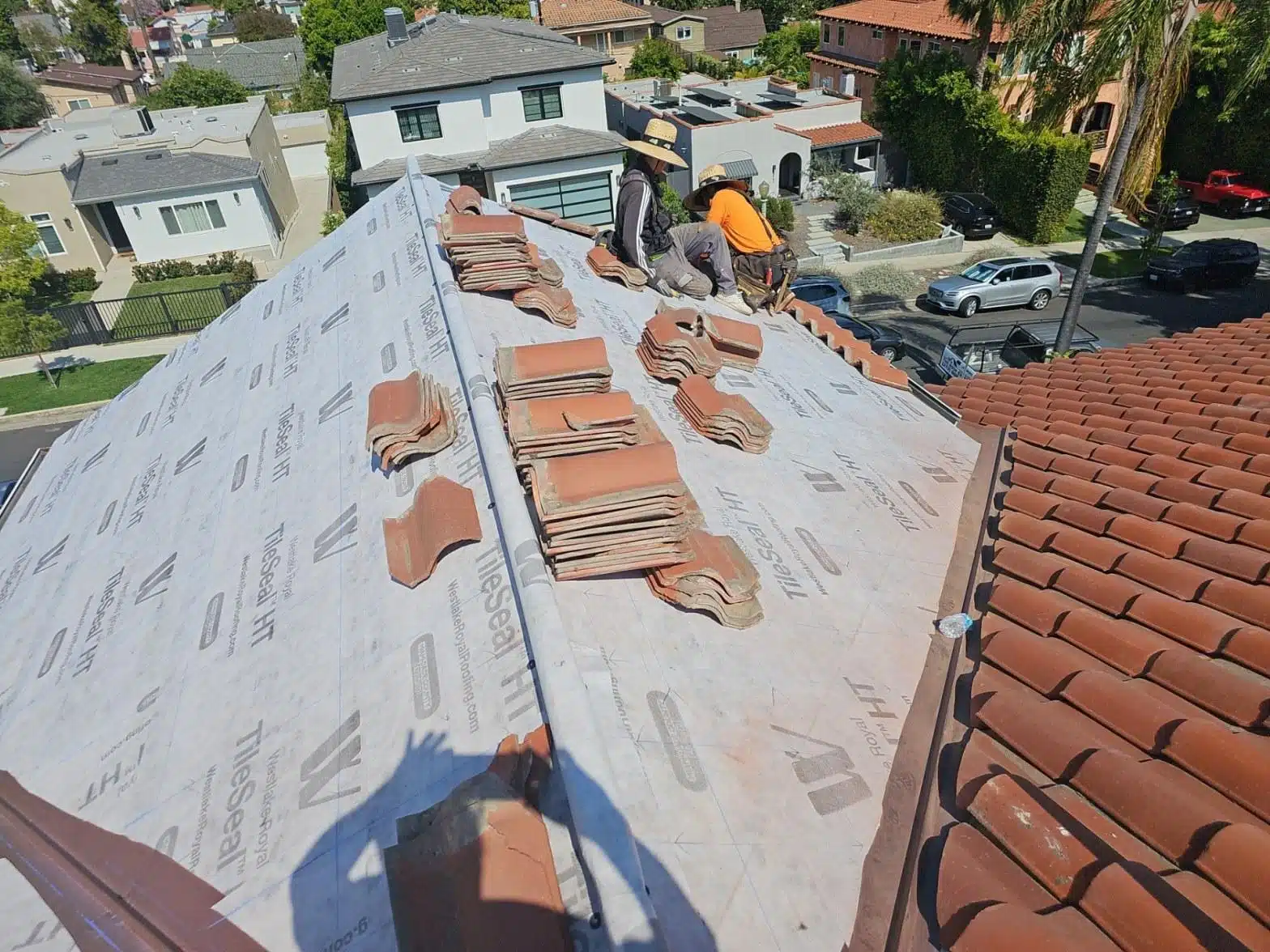
Every original clay barrel tile was carefully lifted by hand, sorted, and stacked in organized rows directly on the roof deck so it could go back down over the new underlayment. Nothing was hauled away and replaced. The photos show hundreds of tiles grouped in tight stacks across the fresh TileSeal HT surface, waiting to be re-laid in the same pattern they came off in. This approach preserves the fired-clay color and profile that defines the Spanish Colonial aesthetic of the neighborhood, and it eliminates the material cost and disposal footprint of sourcing new tile.
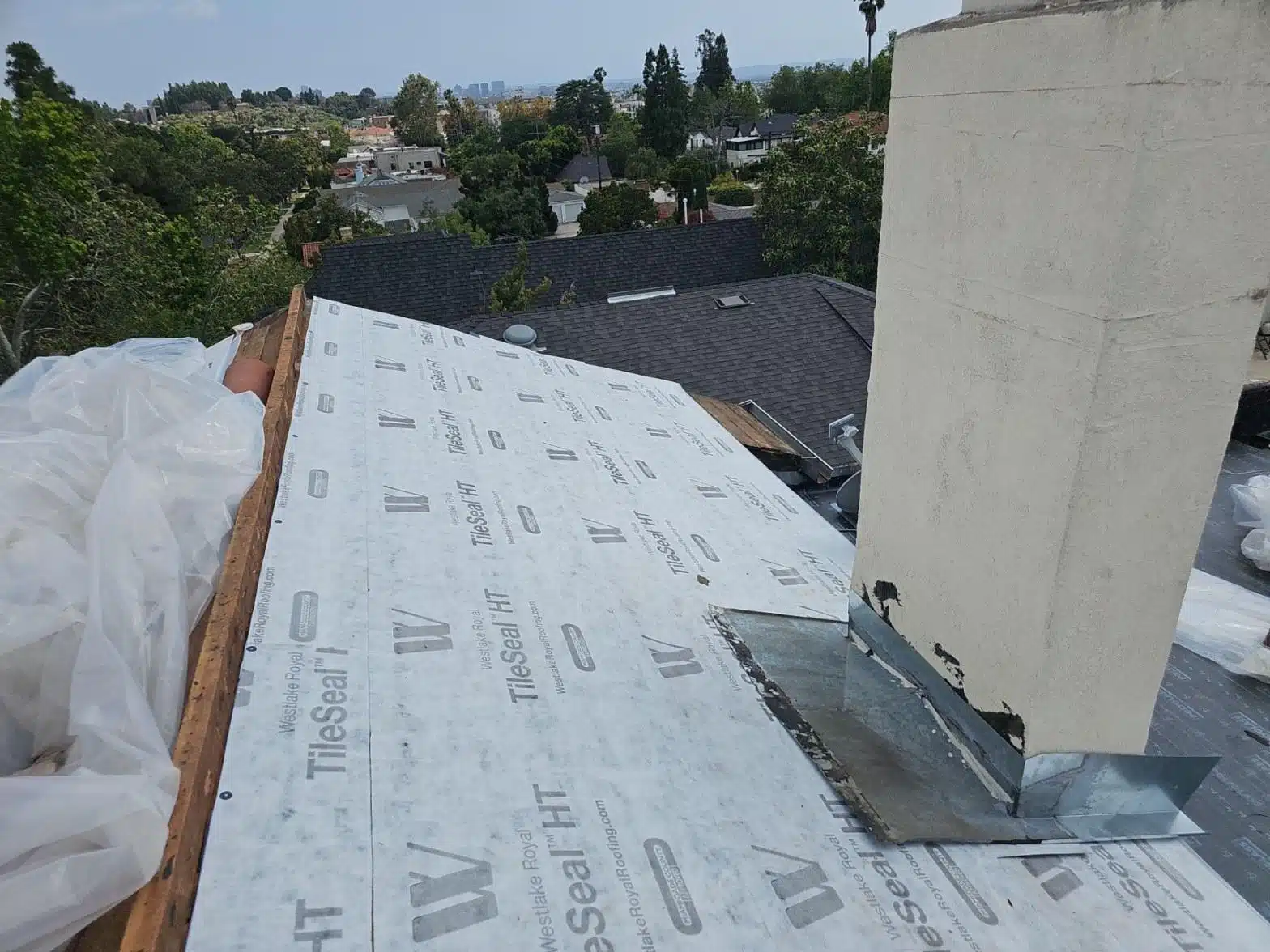
Underlayment under clay tile typically lasts 20 to 30 years before it degrades enough to allow moisture past a cracked or lifted tile. The original layer on this roof had reached the end of that range, which is why the deck had to be stripped bare before anything else could happen. Once the decking was clean, the crew installed TileSeal HT, a self-adhering, high-temperature-rated underlayment manufactured specifically for use under clay and concrete tile. The product’s waterproofing layer bonds directly to the deck, so even if a tile shifts or cracks, the underlayment beneath it holds the line against water intrusion.
New metal valley flashing and perimeter metal were set before tiling began. Valley flashing is the first detail to fail on aging tile roofs, and installing new metal at the same time as a full underlayment replacement closes the most common re-entry point for water. On re-roofs we almost always find the original valley metal reused even when the felt has been updated, which is typically where the leak the homeowner called about actually originates.
What Does the Tile Re-Lay Process Look Like on the Roof?
With the TileSeal HT lapped and sealed across every course and all flashing set, the tiles go back down row by row from the eave up, following the original layout. The staged photo shows the deck half-dressed, with tiles still grouped in stacks near the ridge and the lower courses already locked in. A blue tarp was hung to protect the wood trellis structure directly below the work zone during this phase, keeping falling debris and moisture off the woodwork while the field was open.
Because the Los Angeles basin regularly sees late-spring marine layer and occasional May rain events, staging the tile stacks on the underlayment rather than stripping and re-laying the same day is a practical risk-management step. The self-adhered TileSeal HT provides a weatherproof surface that can hold through an overnight or weekend closure without exposing the deck.
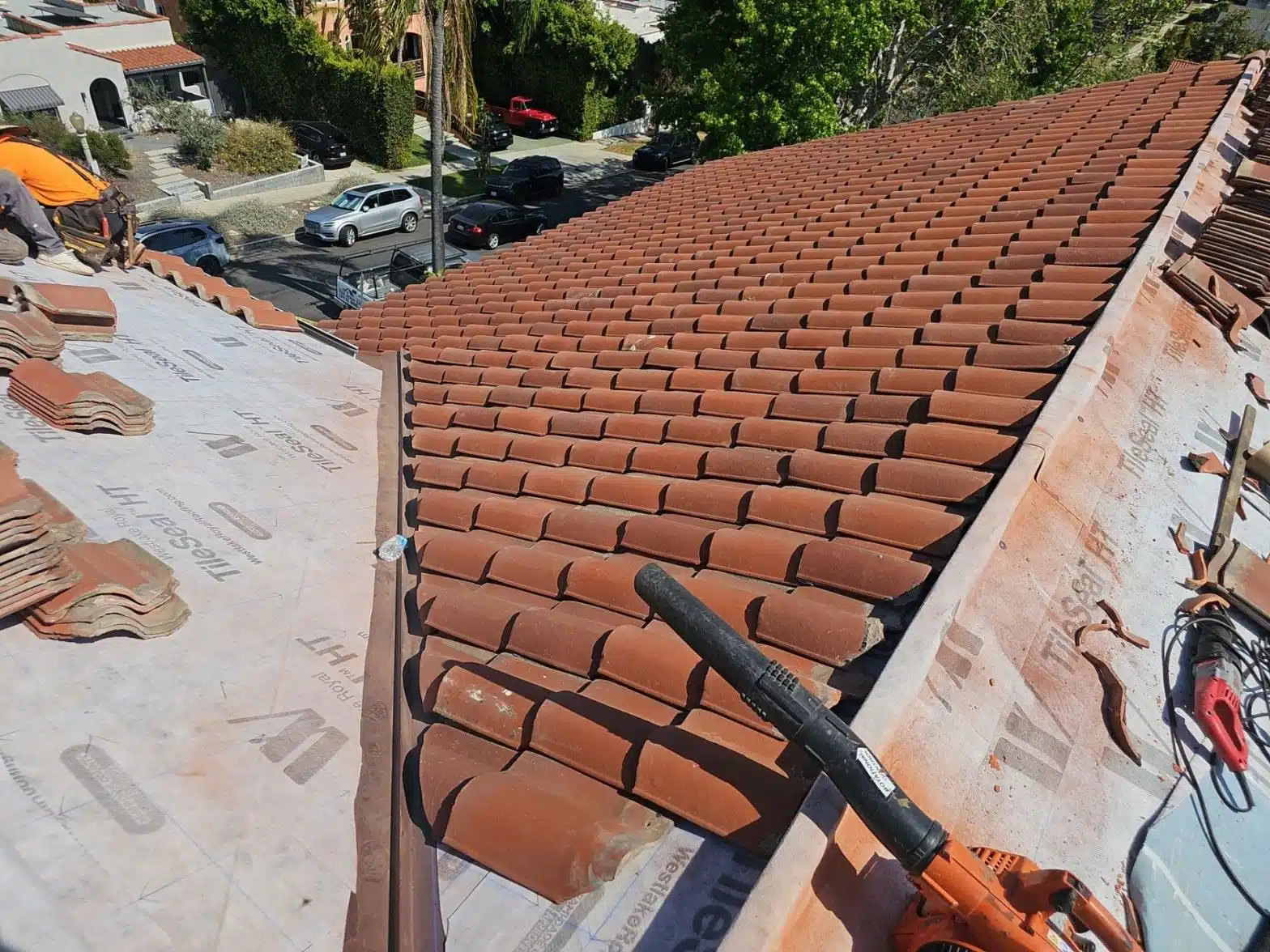
The finished field, visible in the featured photo at the top of this article, shows the original terra-cotta color running clean and consistent from ridge to eave. No mismatched replacement tiles interrupt the pattern. The barrel profile casts the same shadow lines the roof has always had, and the ridge caps seat flat across the new underlayment without the rocking that develops when aged felt compresses unevenly beneath them.
How Was the Flat Roof Section Rebuilt?
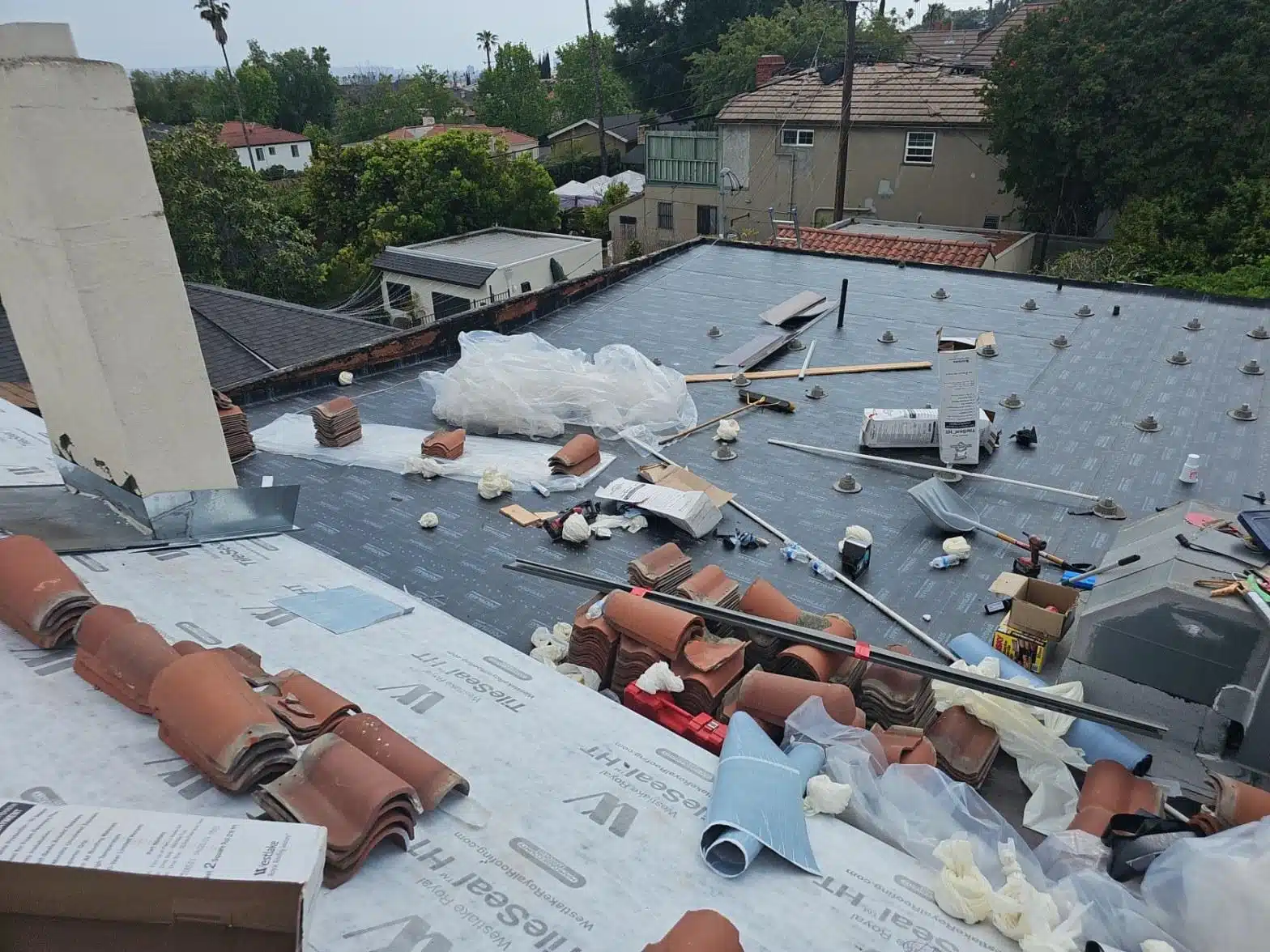
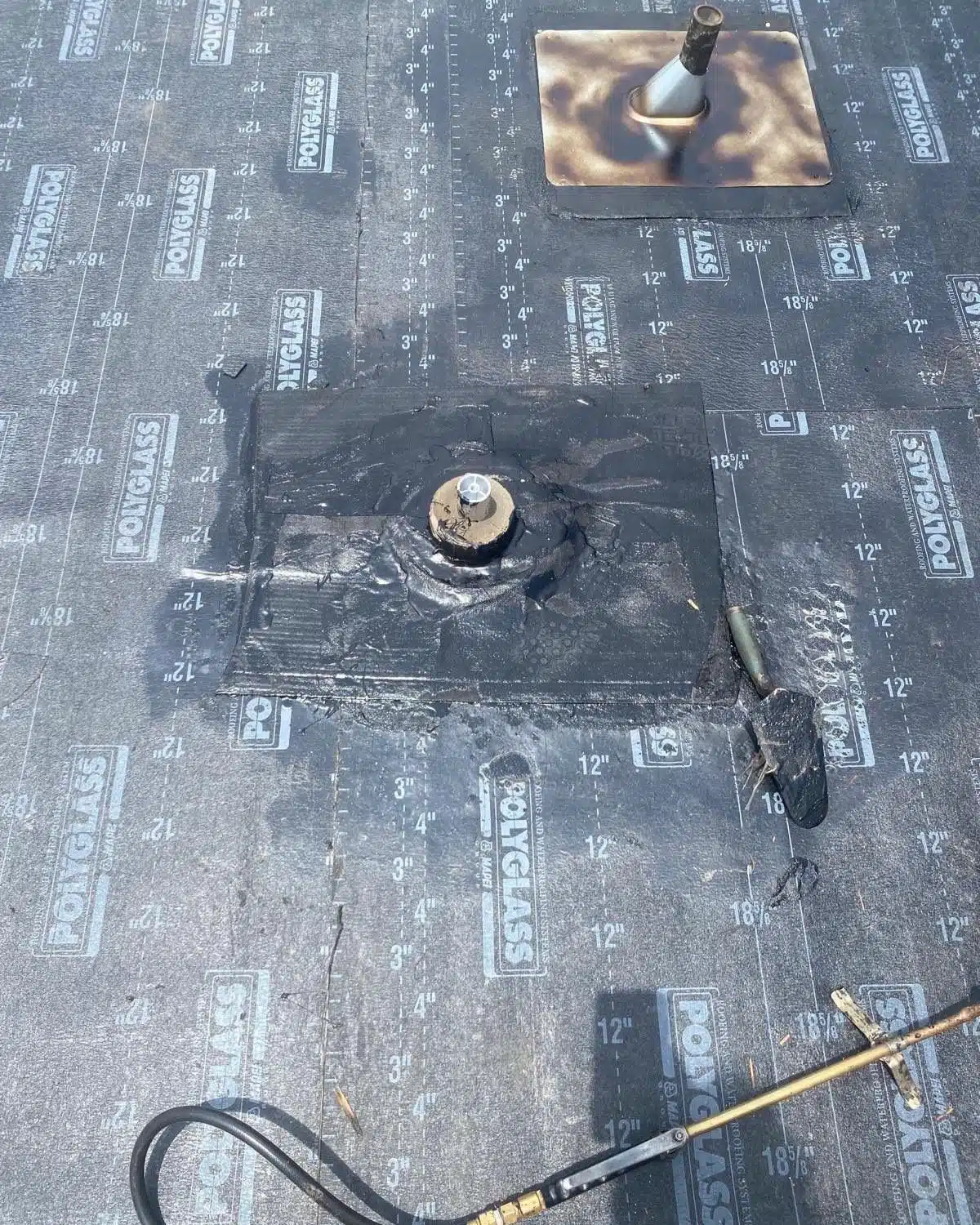
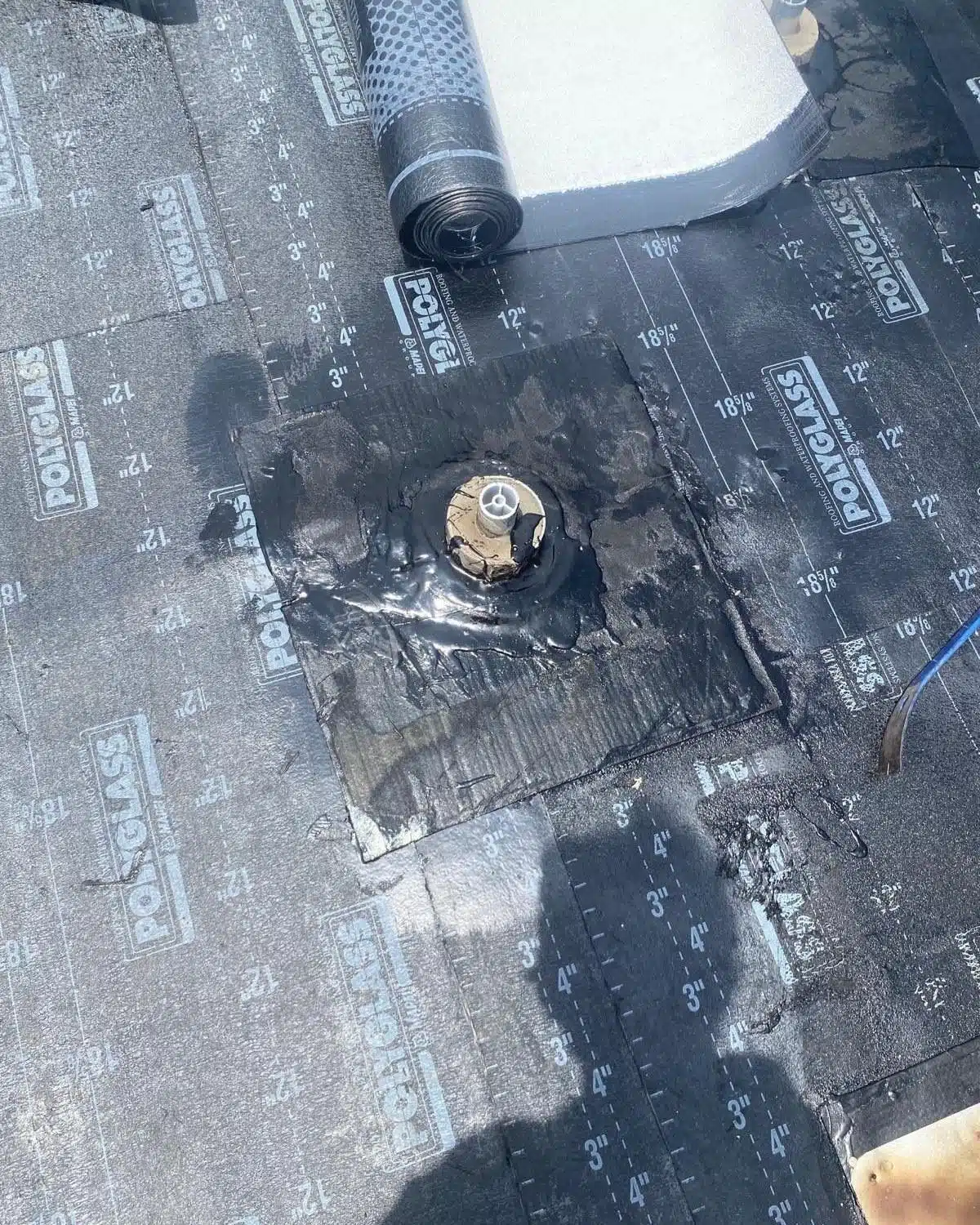
The flat section behind the parapet walls received a torch-applied Polyglass modified bitumen membrane, installed in overlapping courses with every seam and penetration heat-fused to the layer below. Modified bitumen membranes applied with a torch create a monolithic waterproofing layer that cannot delaminate at the seams the way adhesive-set or mechanically fastened systems can. The California Contractors State License Board (CSLB) requires roofing contractors to hold an active C-39 license for this category of work, and Roof Repair & Construction Inc. carries that credential.
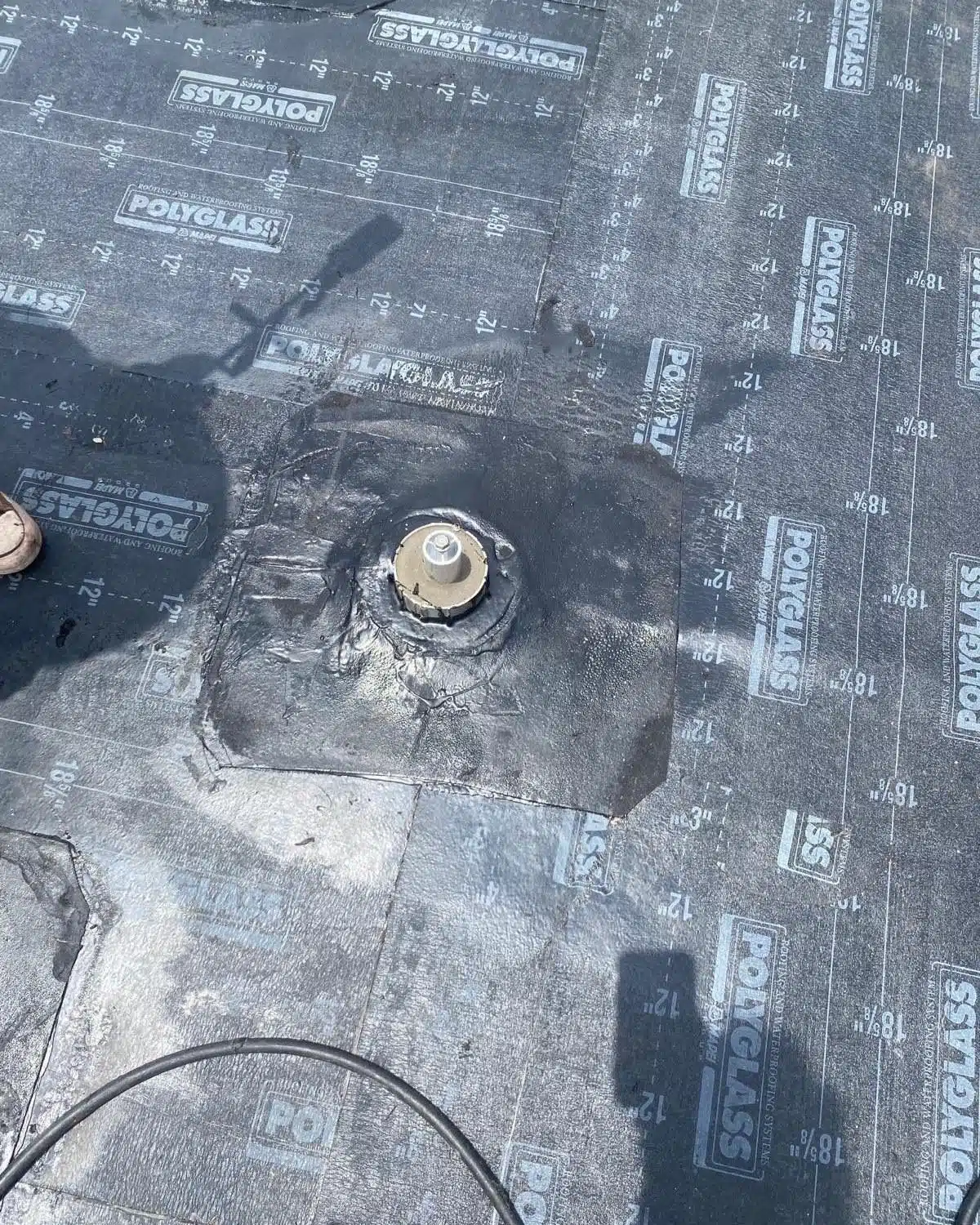
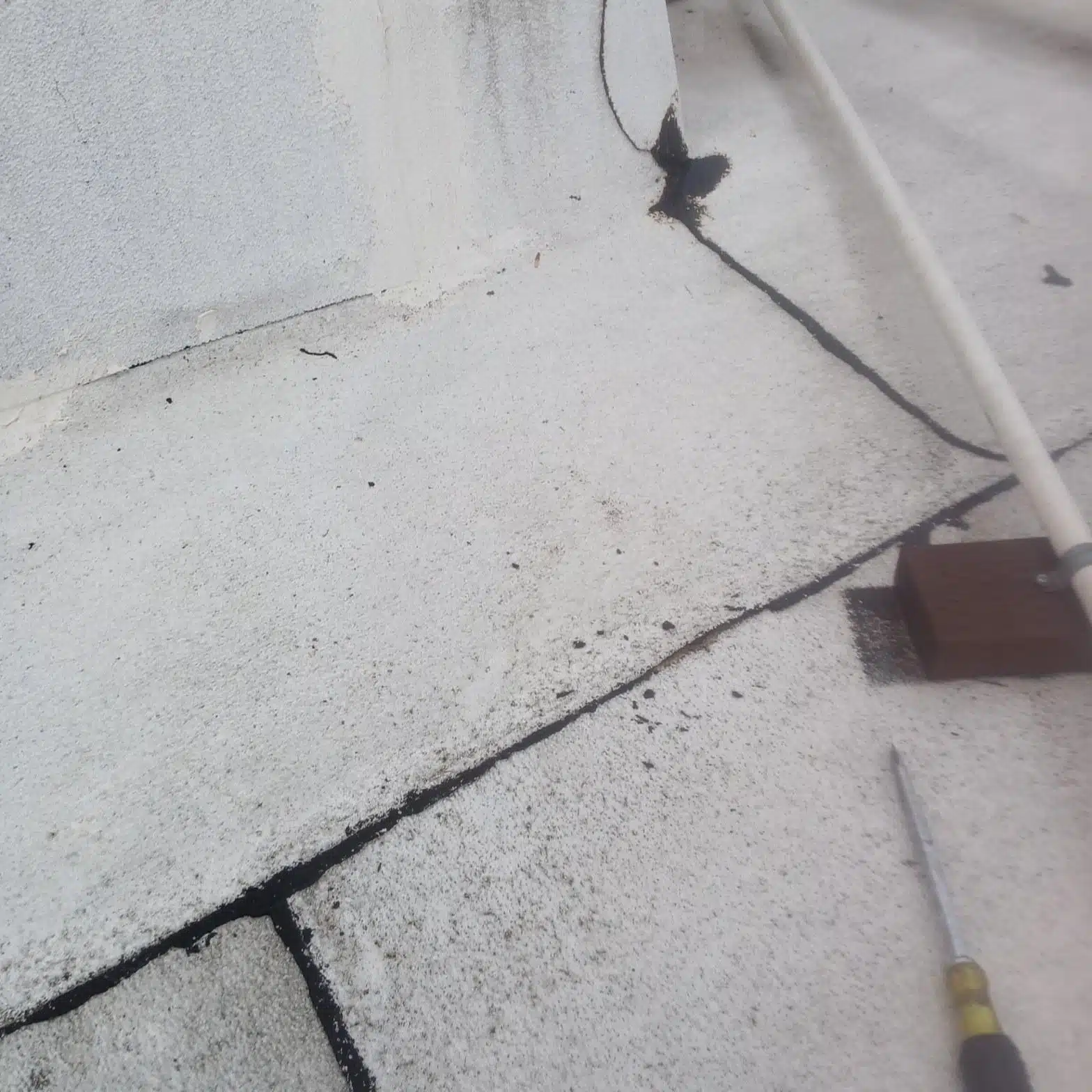
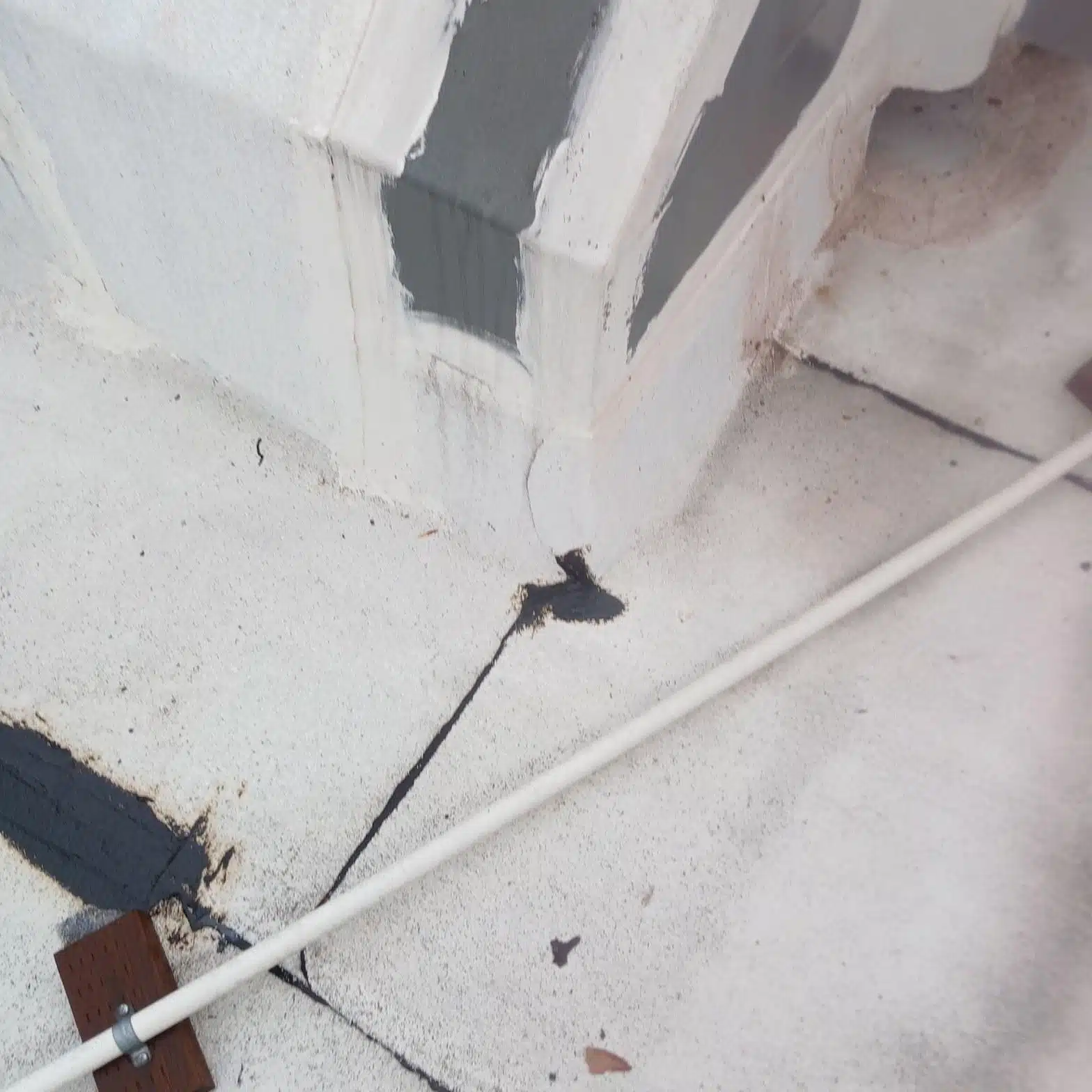
The most detail-intensive part of any flat roof is the pipe penetration. A standard boot fitting on a low-slope roof is a known failure point because the collar sits proud of the membrane surface and the bond between rubber and felt degrades with UV exposure over time. Here, the penetration was handled by cutting the membrane tight around the pipe, building up a heat-fused Polyglass collar patch that laps at least several inches in every direction, and pressing the patch down firmly while the modified bitumen is still workable from the torch. The result is a watertight transition that is part of the continuous membrane rather than a separate component sitting on top of it.
What Is the White Coating on the Flat Roof?
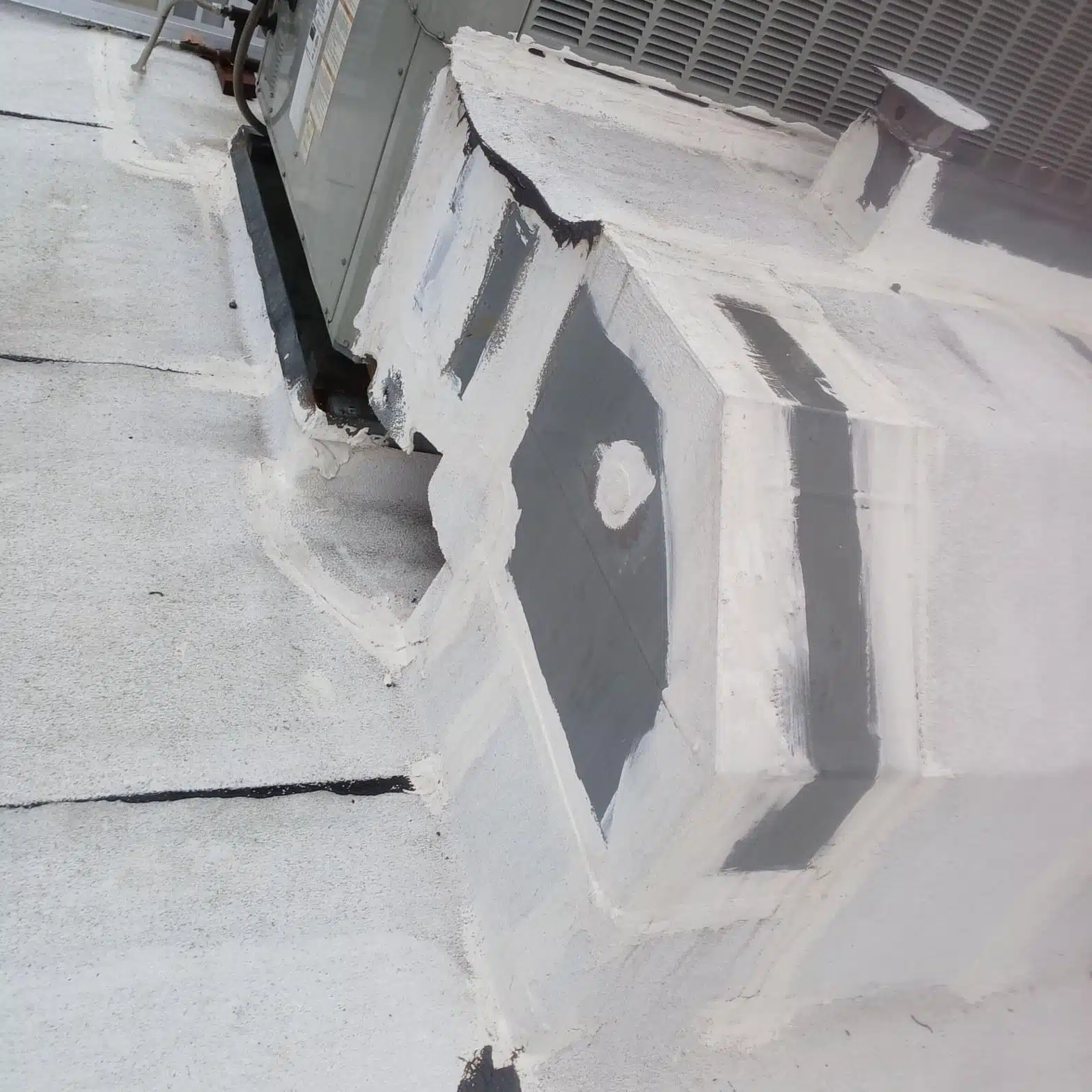
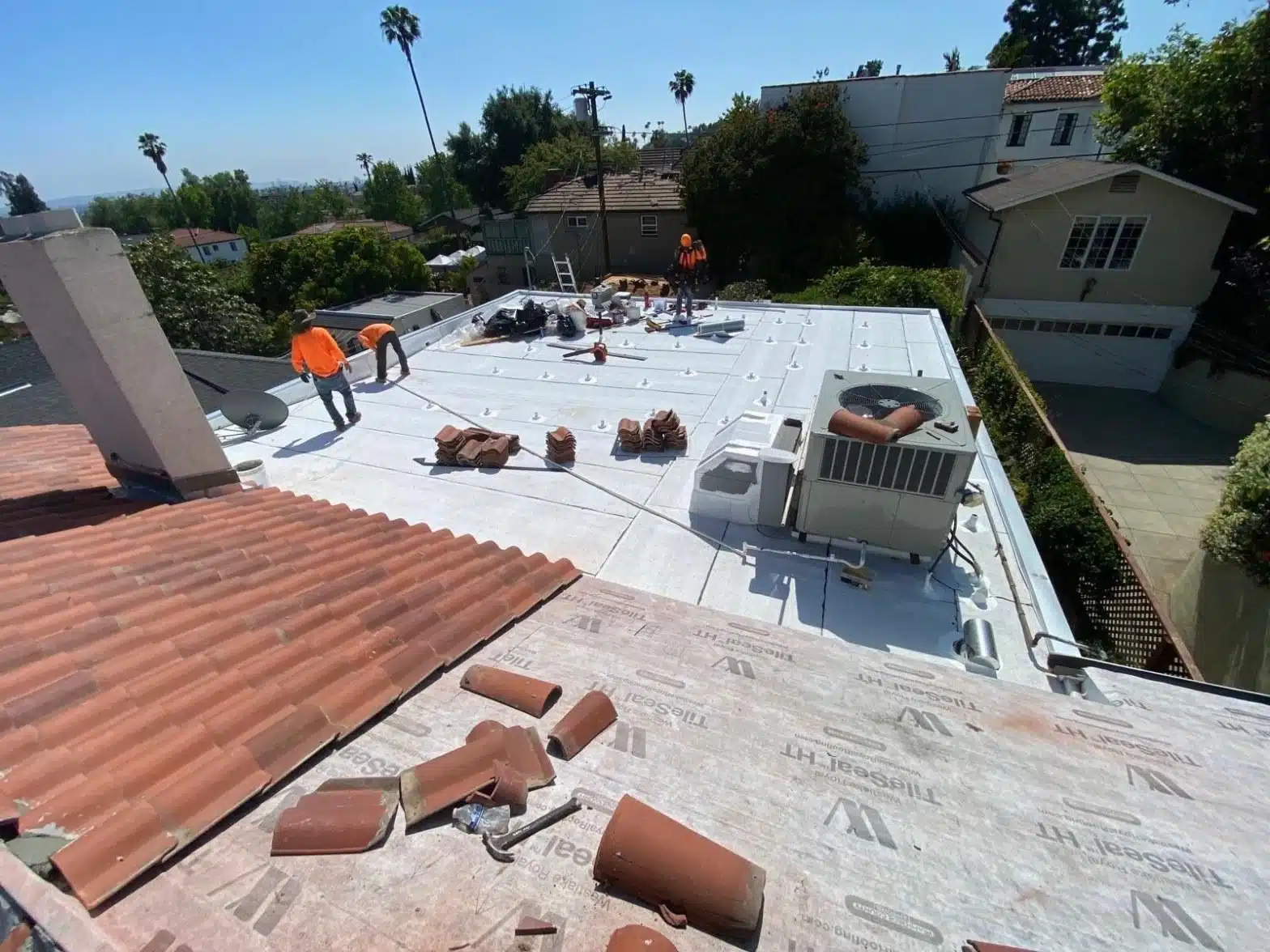
After the Polyglass membrane was fully cured, a white reflective coating was applied across the entire flat field and carried continuously over the parapet corners, up the face of the parapet walls, and around the scupper details. A coating applied this way seals the lap seams on the face of the parapet and prevents the edge condition, where the membrane terminates against the wall, from becoming an entry point for wind-driven rain. The photos show the coating brushed onto the vertical and horizontal faces of the parapet corner in a single unbroken film.
White reflective coatings on flat roofs align with California’s Title 24 building energy standards, which set minimum solar reflectance values for low-slope roofing on residential structures. A white or light-colored surface reflects a substantially higher fraction of incoming solar radiation than a dark modified bitumen surface, which matters in an urban neighborhood where roof temperatures on uncoated dark surfaces can exceed 150°F on a clear summer afternoon.
The parapet corner was coated through in the same material, carrying the finish up the wall and sealing the base to the membrane without bridging in a way that would hold water. All pipe stacks on the flat field received the same treatment: the coating was brushed from the flat surface up onto the boot collar in a continuous sweep.
The Finished Roof: Two Systems, One Property
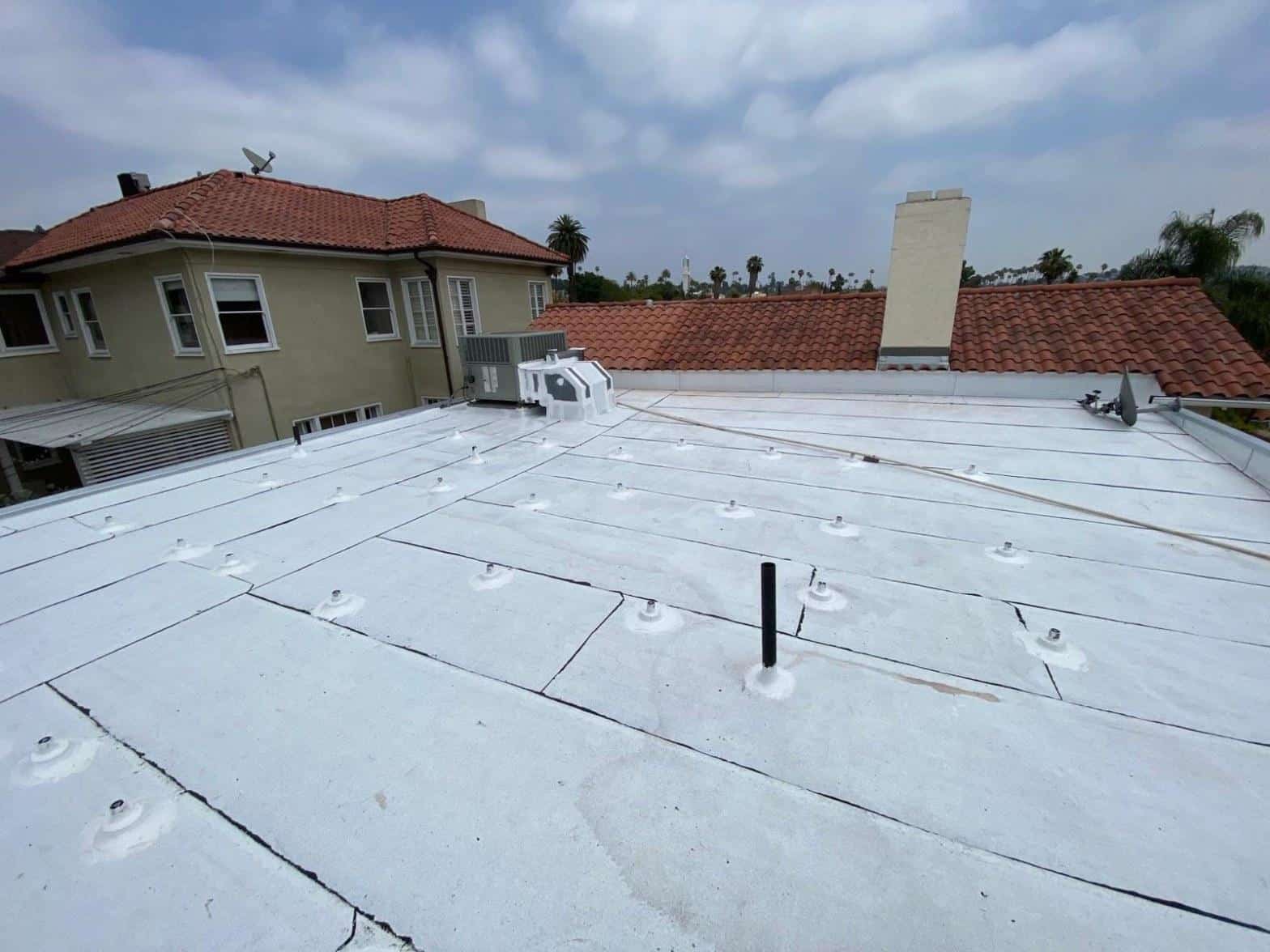
Standing back from the completed project, the two roof systems read as parts of one coherent building rather than a patchwork of different repairs. The white flat field behind the parapet is clean and fully sealed, with every boot, corner, and scupper integrated into the coating. Beyond the parapet, the original red clay barrel tiles run in tight, even rows from the ridge down to the eave, exactly as they did before the work began.
The December 2025 and March 2026 follow-up visits confirmed that both systems were performing as intended after the first full Southern California rainy season. Penetrations, valleys, and parapet corners, the three locations that account for the vast majority of residential roof leaks, all showed no signs of intrusion.
Projects like this one illustrate a point that matters for owners of older Spanish-style homes throughout Los Feliz and surrounding neighborhoods: the original clay barrel tile is frequently worth saving. Fired clay tile manufactured for mid-century California construction is dense, colorfast, and dimensionally stable in a way that modern concrete tile often is not. The cost and effort of lifting, sorting, and restacking it are justified when the alternative is sourcing new tile that may not match the original profile and will certainly not carry the same fired color.
In our experience, the decks under these older Los Angeles tile roofs are almost always sound once the failed felt is stripped away. The deck itself is rarely what drives the need for intervention. It is the underlayment and the flashing details that have given out.
Ready to Talk About a Similar Project?
If your Los Feliz, Silver Lake, or Los Angeles area home has a clay tile roof that is showing water intrusion, lifted tile, or aging felt underlayment, the tile itself is very often salvageable. The same applies to flat sections that need a fresh membrane and coating system. Contact Roof Repair & Construction Inc. to schedule an inspection and get a written scope before any work begins. Call the number on this site or use the contact form to describe your project.
Gallery
Explore our full range of Roof Repair services across Southern California.
Frequently Asked Questions
Can my existing clay barrel tiles be reused instead of replaced?
Yes, in most cases original clay barrel tiles can be carefully lifted, sorted, and re-laid over new underlayment. The tiles on this Los Feliz home were stacked in organized rows on the fresh deck and reinstalled without purchasing a single new field tile. Clay fired for mid-century California construction is typically dense and colorfast enough to outlast several underlayment cycles.
How long does a clay tile re-lay project take from start to finish?
The timeline depends on the size of the roof and what is found once the deck is stripped, but this Los Feliz project ran from an initial start date of May 24, 2024, through final completion in March 2026, including follow-up inspections in December 2025 and March 2026. Larger or more complex properties, especially those combining pitched tile sections with a flat roof, should expect a multi-phase schedule.
What underlayment goes under clay barrel tile in California?
A high-temperature self-adhering underlayment rated for use under clay and concrete tile is the current standard for California re-roofs. On this Los Feliz project, TileSeal HT was installed across the stripped deck before any tile went back down. Self-adhering products bond directly to the deck, so a cracked or displaced tile above does not automatically mean water gets to the wood below.
What is a torch-applied modified bitumen flat roof and how is it different from other flat roof systems?
A torch-applied modified bitumen membrane is a reinforced asphalt sheet that is heat-fused to the layer below it using an open-flame torch, creating a continuous waterproofing bond at every seam and penetration. It is not a single-ply membrane attached mechanically or with adhesive. On this Los Feliz flat roof, every seam and pipe penetration was torch-sealed, and the finished membrane was then covered with a white reflective coating.
Why is there a white coating on the flat part of my roof?
White reflective coatings are applied over modified bitumen membranes to reflect solar heat and to seal the surface and lap seams of the membrane below. California's Title 24 building energy standards set minimum solar reflectance requirements for low-slope residential roofing, and uncoated dark bitumen surfaces can reach temperatures above 150°F under direct sun. The coating on this Los Feliz project was carried over the parapet walls and around penetrations to seal every edge condition.
Do I need a licensed contractor to do torch-applied roofing in California?
Yes. The California Contractors State License Board (CSLB) requires a C-39 roofing license for torch-applied work and other roofing contracts above a minimum threshold. Homeowners should verify that any contractor they hire holds a current, active C-39 license before work begins. You can confirm a contractor's license status directly on the CSLB website at cslb.ca.gov.