
What This Project Involved
A Spanish-style home in Eagle Rock needed its clay mission tile roof repaired: not a full house re-roof, but a focused re-lay on a section where the underlayment had reached the end of its serviceable life. The terracotta S-profile tiles themselves were still sound, so the plan was to lift them carefully, strip the deck down to bare wood, install fresh underlayment, set new flashing, lay battens, and put the original tiles back exactly where they came from.
The property sits at 5321 Townsend Ave in Eagle Rock, a neighborhood recognized for its concentration of Spanish Colonial Revival architecture. Many of these homes carry clay tile roofs that were installed decades ago, and felt underlayment under clay tile typically has a serviceable life of 20 to 30 years before moisture intrusion risk increases meaningfully. When that layer gives out, the tile above is often perfectly reusable, which is exactly what made a re-lay the right call here rather than a full material replacement.
The job ran three days, from June 3 to June 5, 2026, and the crew worked in fall-protection harnesses throughout. The slope directly overlooks a hardwood pool deck and pool, which introduced a property-protection requirement before a single tile could be touched.
Why Protecting the Deck Came First
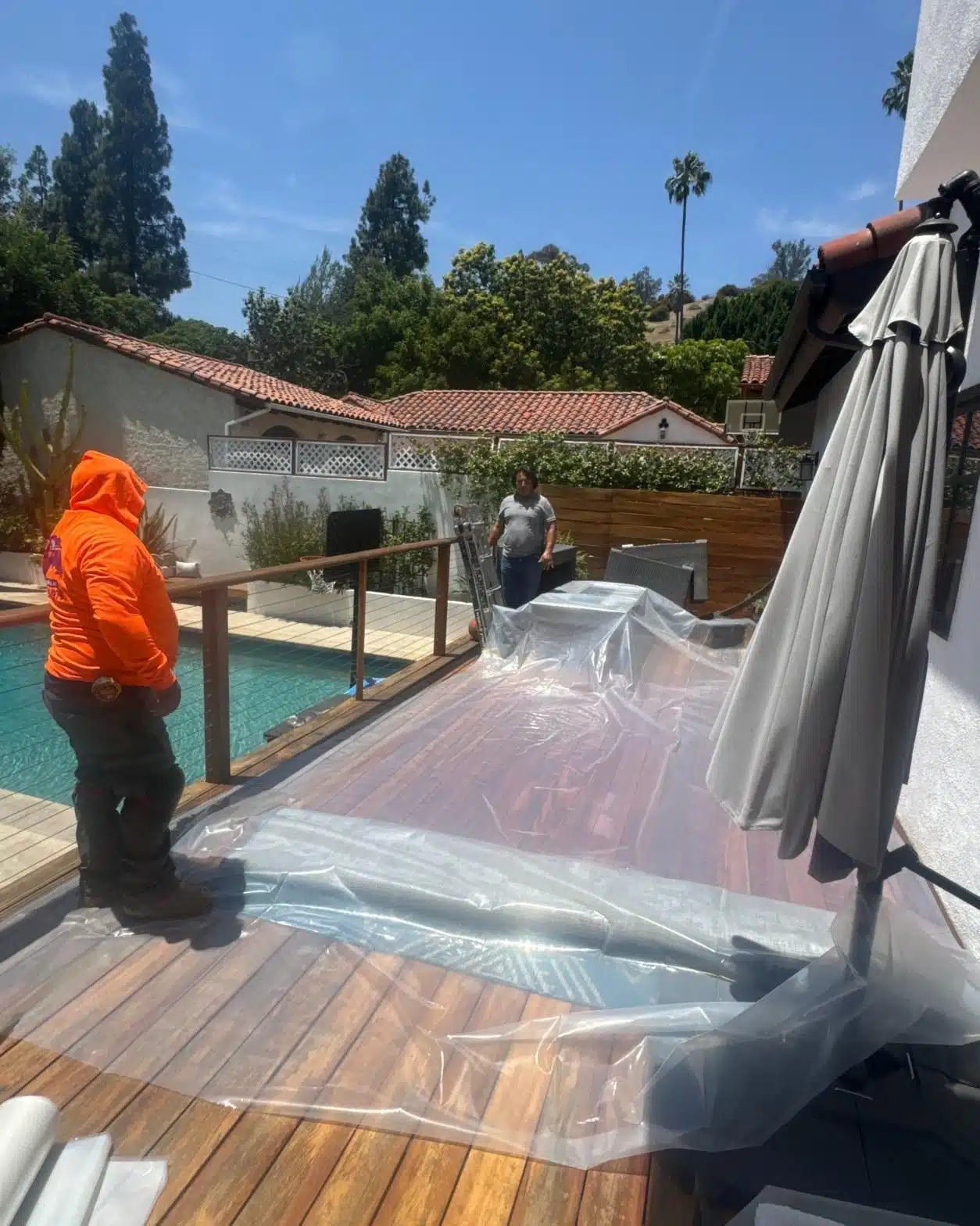
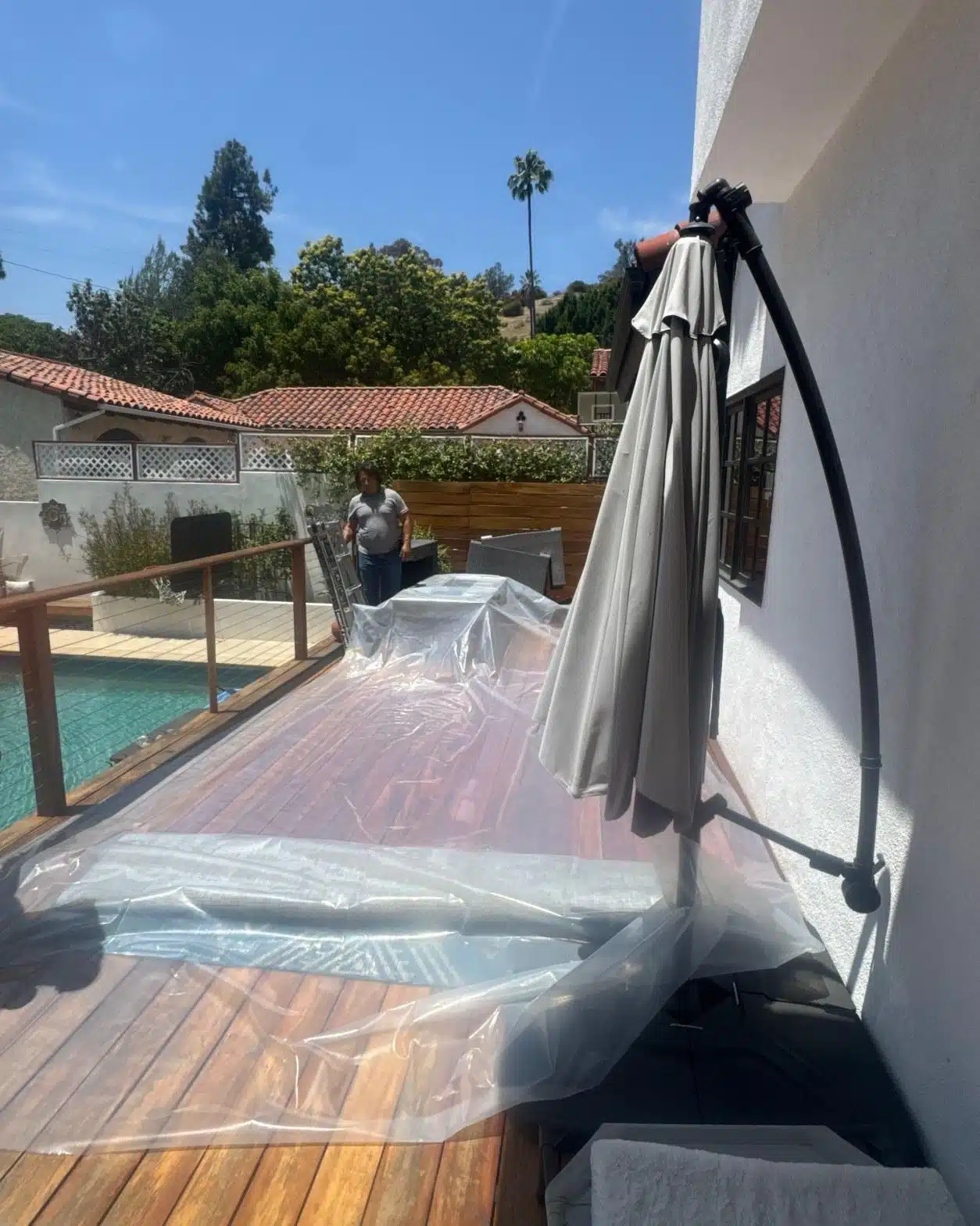
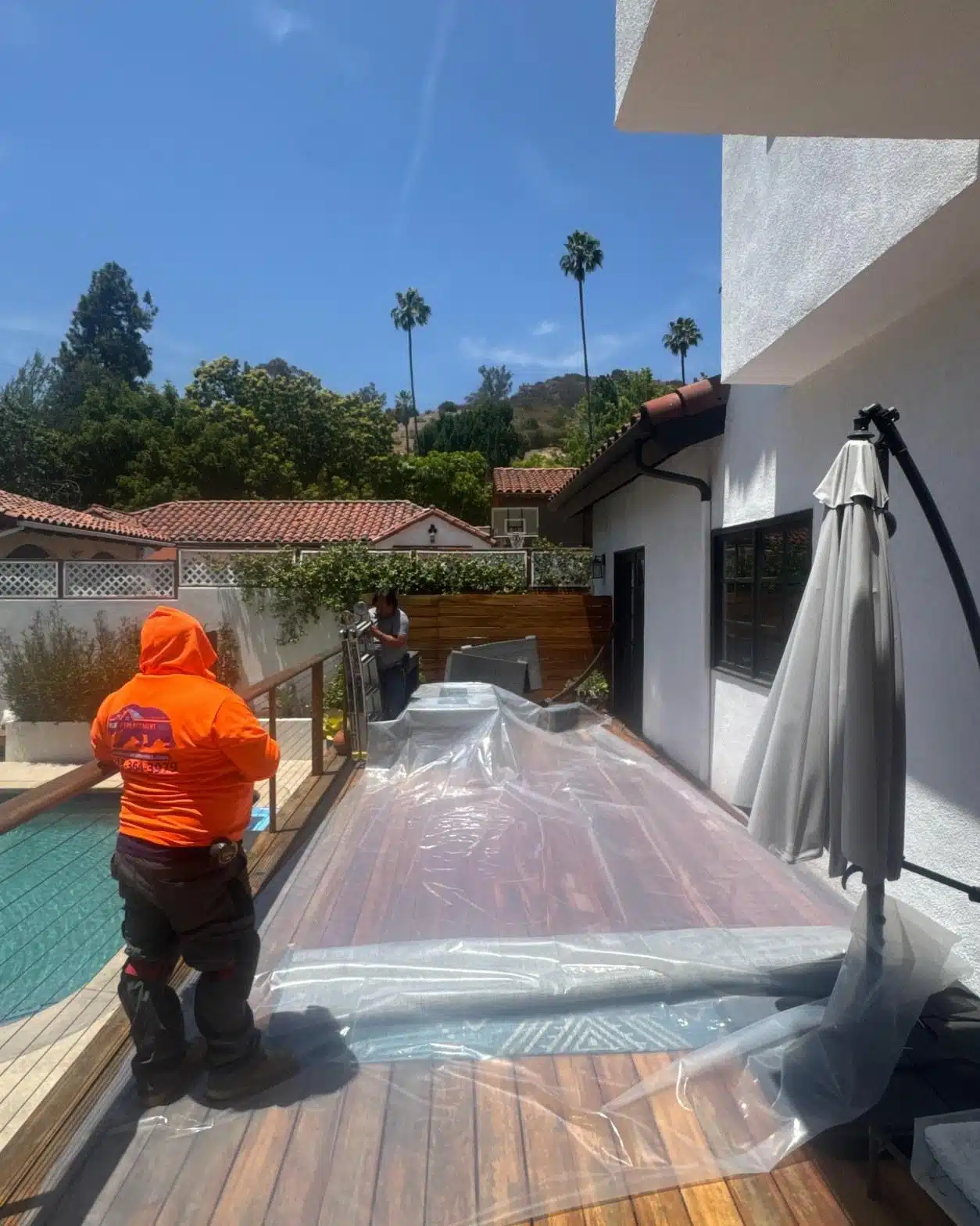
Before any tile work began, the crew spread plastic sheeting across the entire hardwood pool deck and draped it over the outdoor furniture and umbrella below. On a job like this, where the work area is directly above a finished hardwood surface, that step is not optional. Broken clay tile, old nails, dried mortar chips, and dust from the stripped underlayment will reach the deck if it is left exposed. A hardwood deck stained with tile debris or gouged by a falling fastener is a problem that cannot be undone after the fact.
The sheeting ran the full length of the deck and was weighted and tucked at the edges so wind could not shift it during the work day. Outdoor furniture, including a large patio umbrella, was covered separately. This protection sequence added time to the first morning, but it meant the homeowner’s outdoor living space came through the project without damage.
On our jobs over pool decks and finished hardscape, we find that the debris pattern from lifted tile is wider than it looks from the ground: even tiles stacked carefully on the slope shed grit and dried mortar as they are moved, and that material travels. Covering the full deck, not just the section directly below the work, is the approach that actually works.
How the Tile Section Was Stripped and Prepped
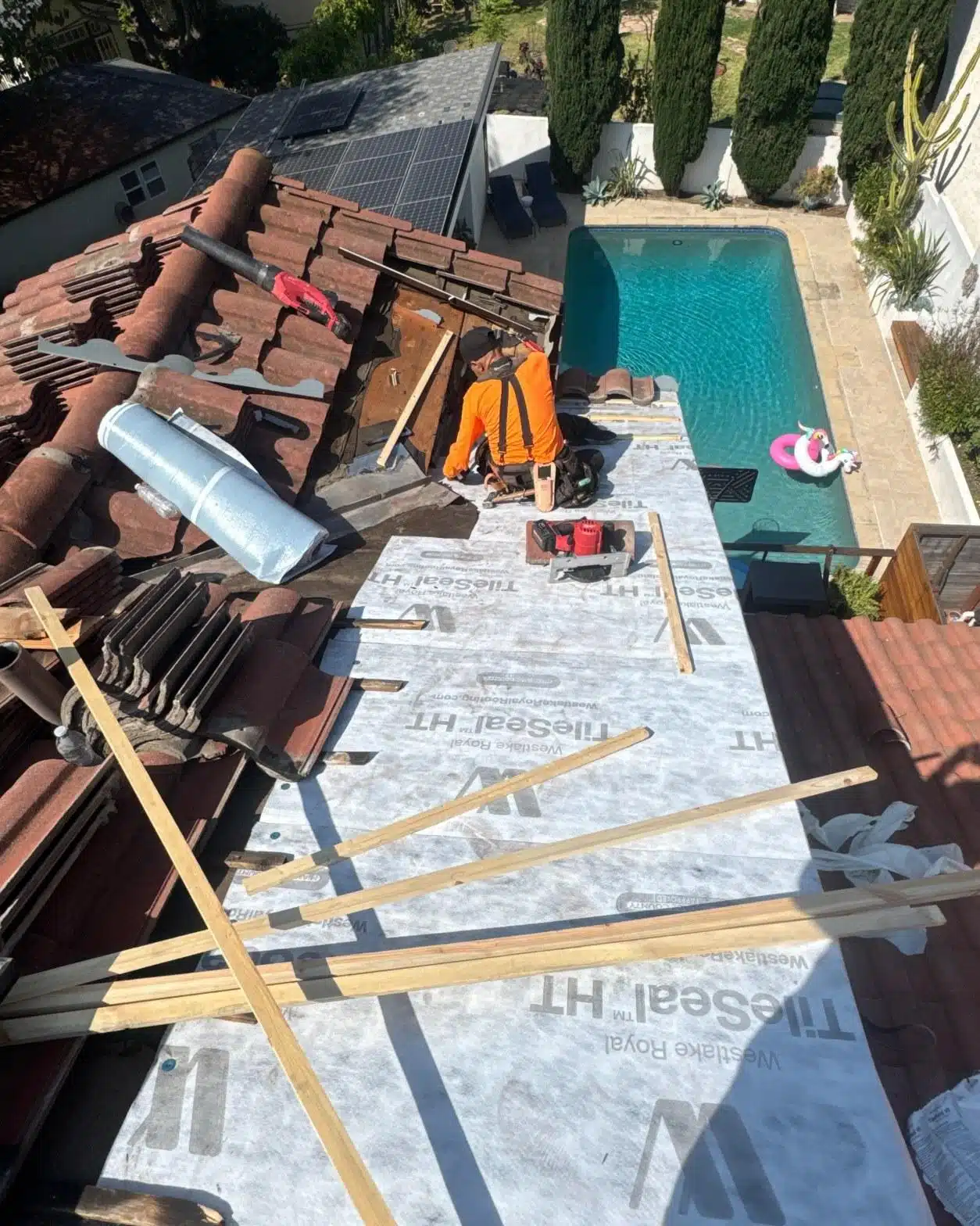
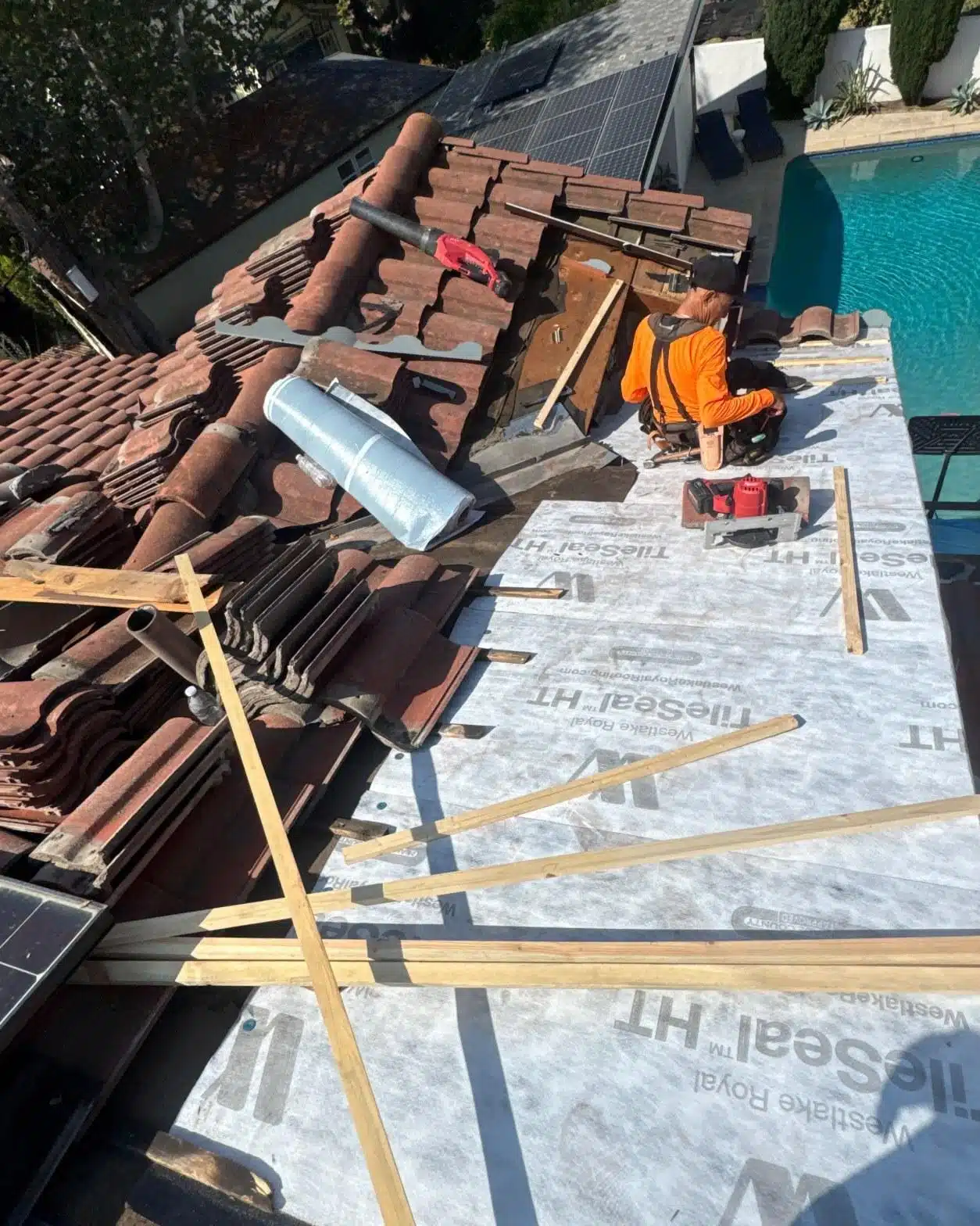
The crew lifted each original terracotta mission tile by hand and stacked it on the roof in organized rows, keeping the tiles on the slope so they would be close at hand for re-laying. This is careful, slow work: S-profile clay tiles interlock, and a tile cracked during removal cannot be reused. Once each section was cleared, the old underlayment was torn off and the wood deck beneath was inspected.
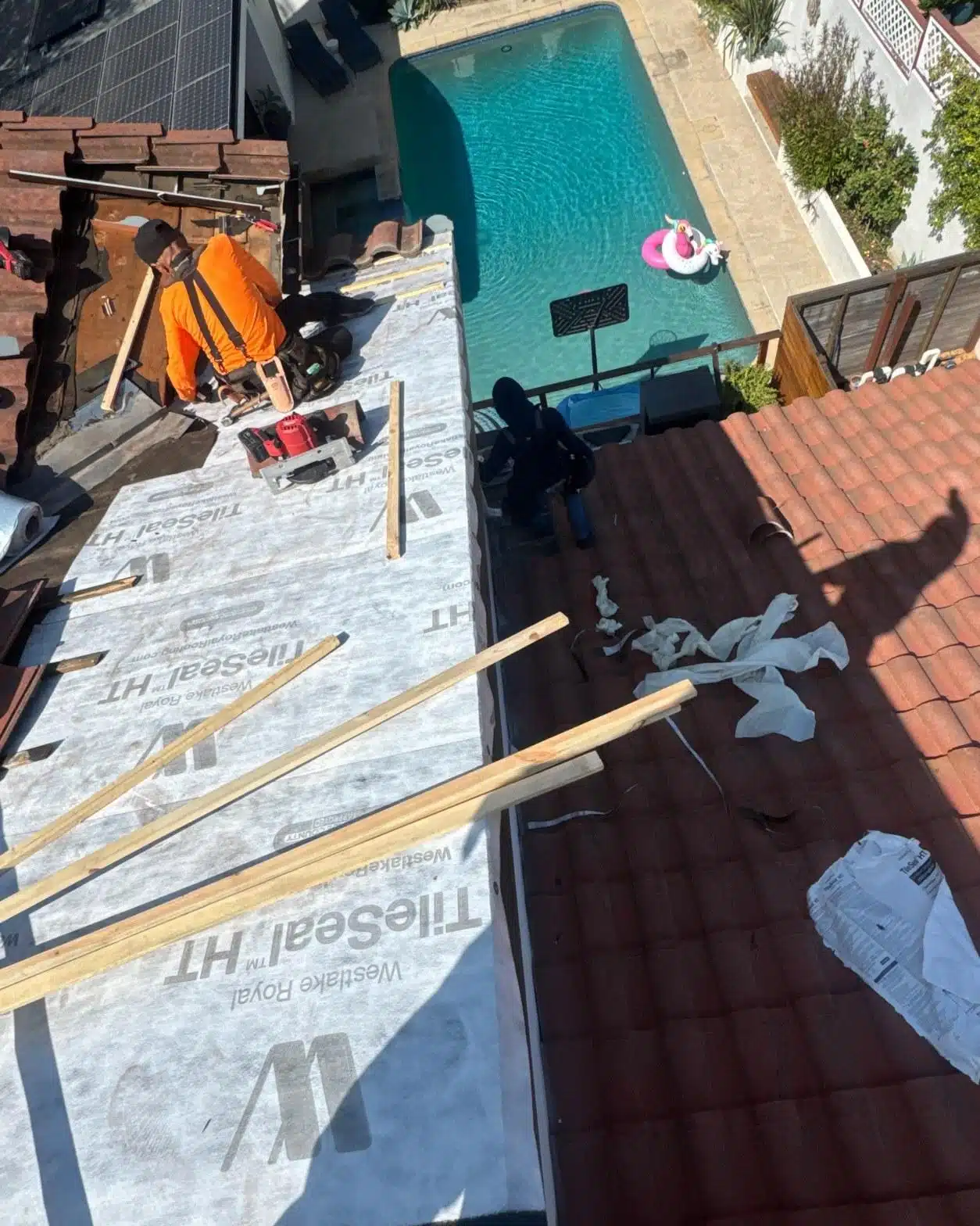
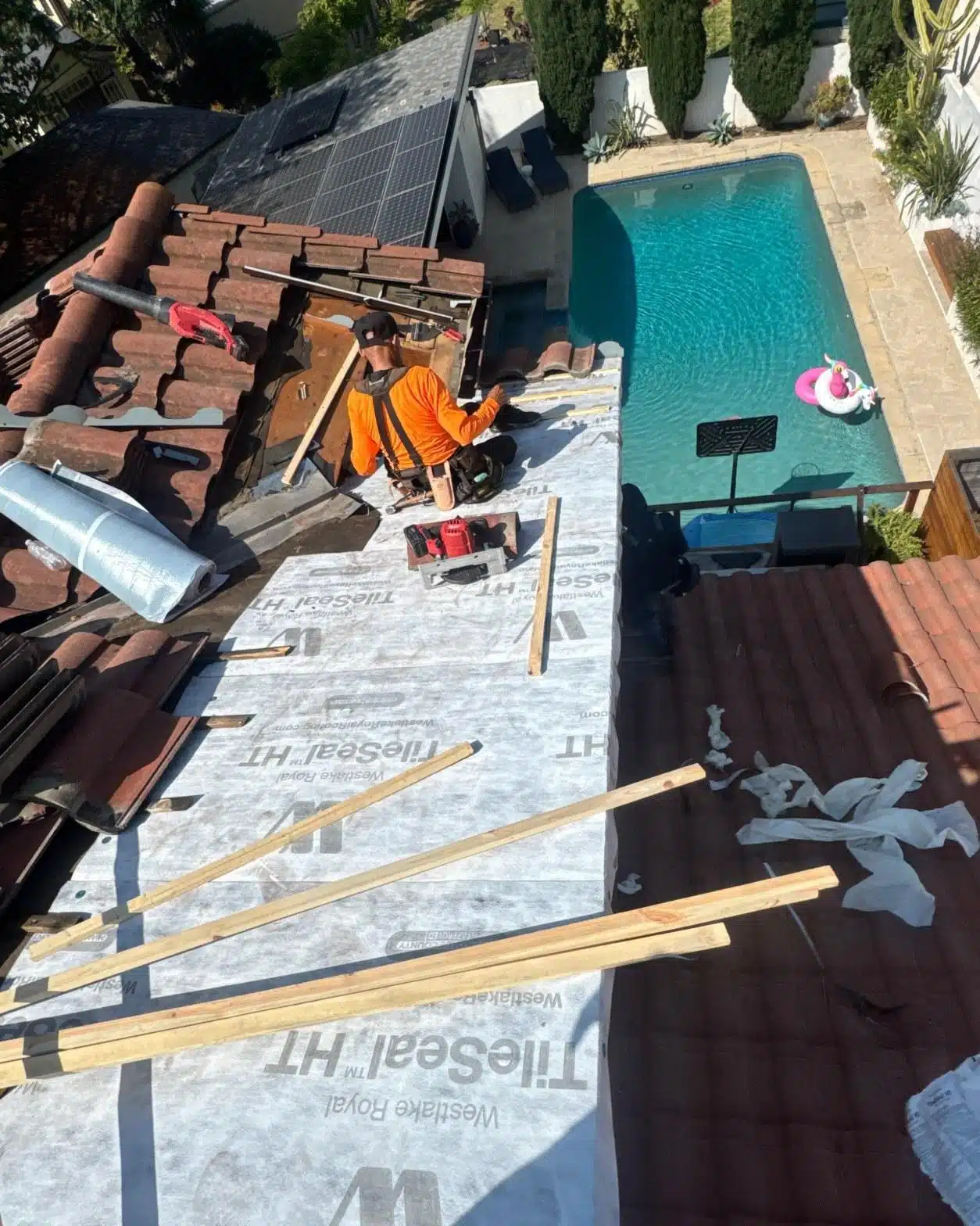
With the deck bare, the crew installed Westlake Royal TileSeal HT, a self-adhering underlayment engineered for tile roofs operating in high-temperature climates. The product is rated for use under tile in conditions where roof-deck temperatures can climb well above ambient air temperature, relevant in Eagle Rock, where summer surface temperatures on south-facing roofs regularly exceed 150°F in the afternoon. The rolls visible in the photos are printed clearly with the Westlake Royal TileSeal HT name, and the product was lapped and fastened in overlapping horizontal courses from eave to ridge.
After the underlayment was down, new brown sheet-metal ridge and hip flashing was set at the transitions. Wood battens, the horizontal strips visible in several of the site photos, were then laid across the underlayment surface. Battens serve two functions on a mission tile roof: they give the tile an elevated nailing surface that keeps it off the underlayment membrane, and they create an air gap that allows any incidental moisture under the tile to drain and dry rather than pond.
Re-Laying the Original Tiles
With underlayment, flashing, and battens complete, the original terracotta tiles were re-laid course by course from the eave up. Because the tiles had been lifted and stacked on the roof rather than lowered to the ground, the re-lay moved efficiently: material was already at hand on the slope, and the crew did not need to stage a ground-to-roof lift operation.
Mission tiles, also called S-profile or barrel tiles, interlock in a specific pattern where a concave pan tile and a convex cover tile alternate. Getting that alignment correct from the first course is important because errors compound upward. The crew worked in harnesses on the slope throughout the re-lay phase, the same fall-protection setup visible in the featured photo and in several of the site images.
In our experience on Spanish-style roofs where the original tiles are being reused, the tile-to-batten alignment at the ridge is the point that requires the most attention: the cover tiles at the hip and ridge cap need to seat cleanly on the new flashing, and that fit is set by how accurately the batten spacing was laid out on the deck below. Getting those measurements right before the first tile goes back down saves adjustment work at the top.
The finished section maintained the original terracotta color and profile of the surrounding roof, which matters on a property where the tile contributes to the character of the architecture. Because no new tiles were introduced, there is no color-match issue between the repaired section and the rest of the roof.
Working at the Wall-to-Roof Transitions
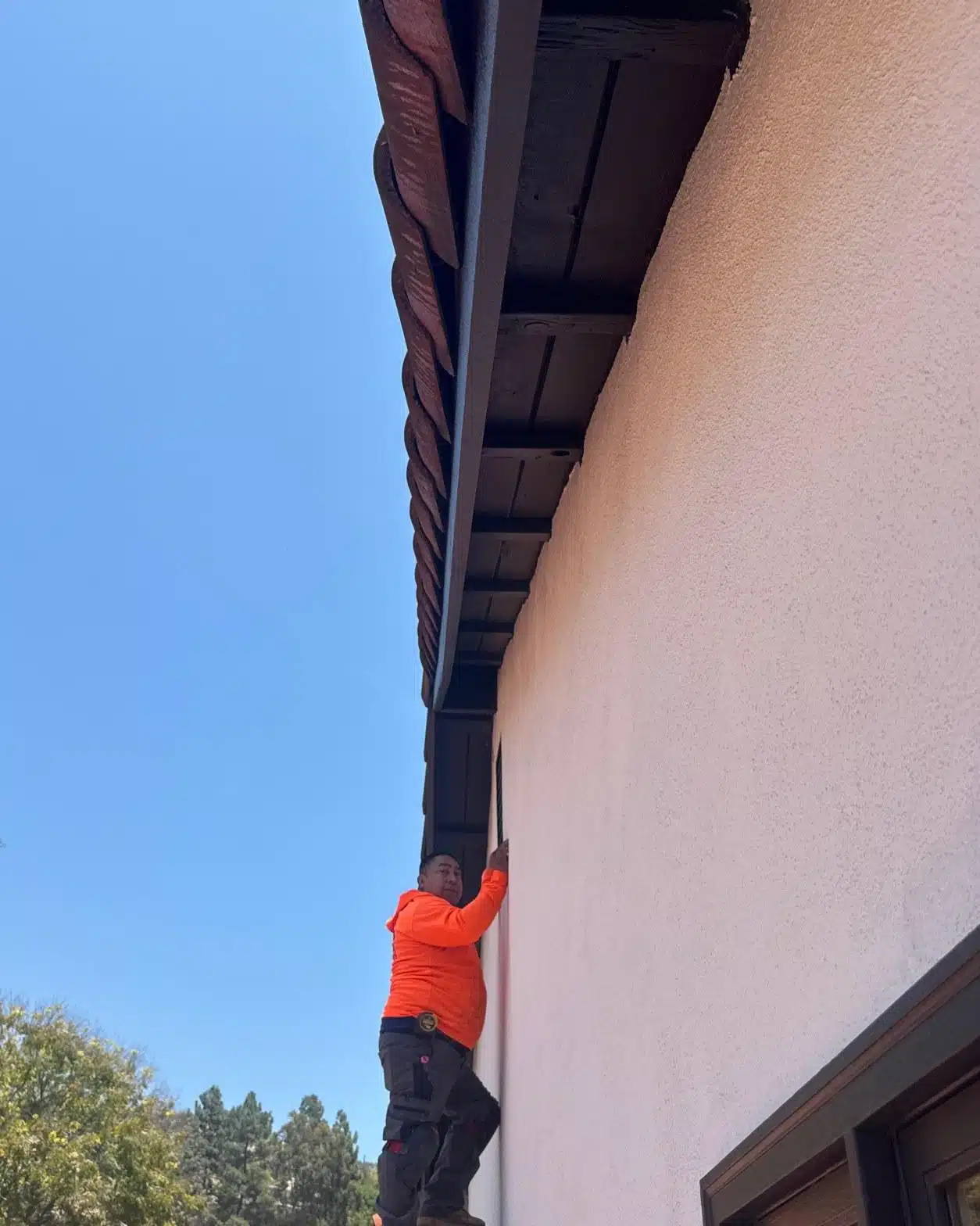
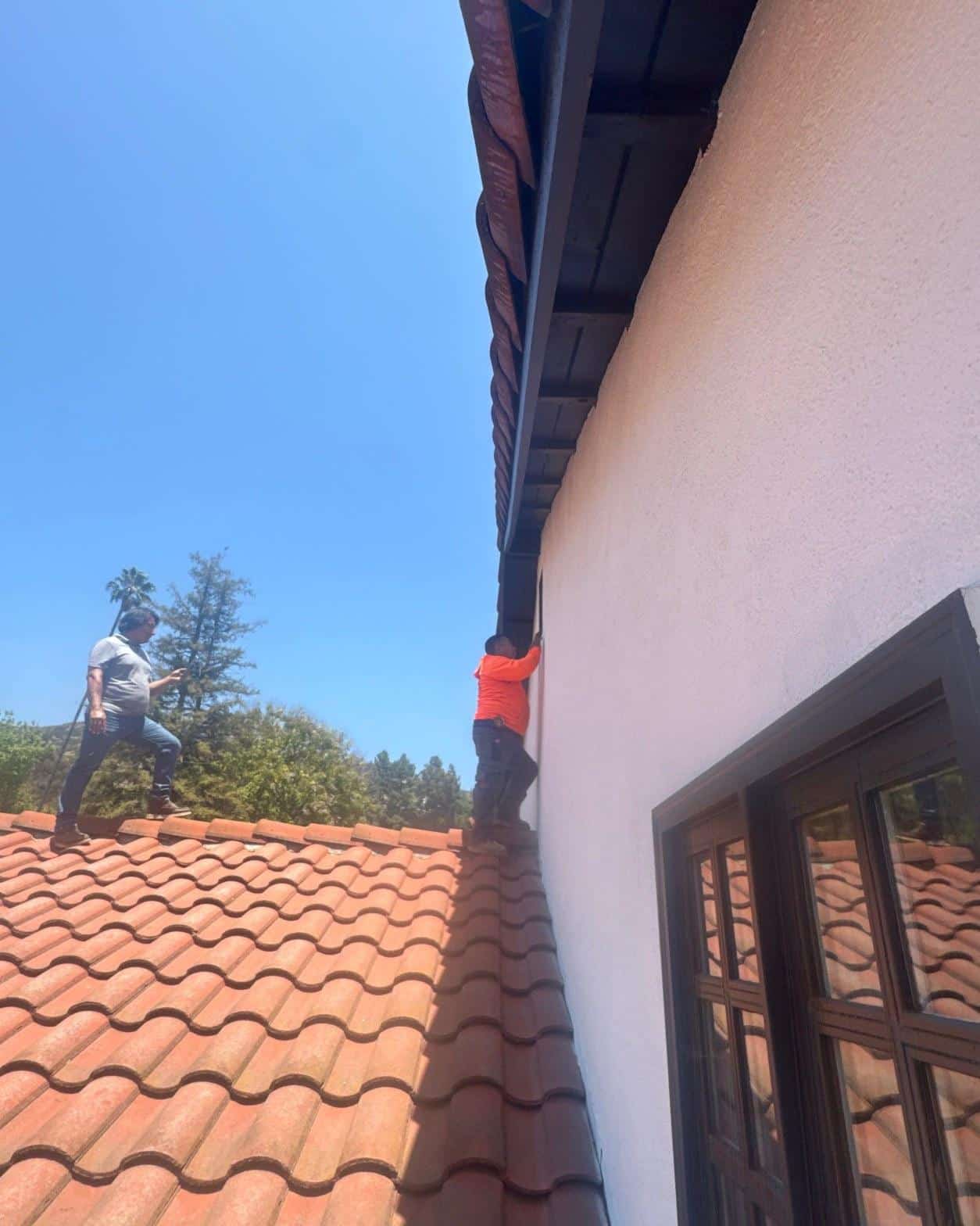
Where the tile slope meets the stucco wall, the flashing and tile termination require precise fitting to keep the joint watertight. This junction, visible in one of the site photos, is a common point of failure on older Spanish-style homes because original lead or galvanized step flashing corrodes over time and the stucco above can crack, allowing water to enter behind the tile rather than in front of it.
On this project, the crew addressed the tile-to-wall transition as part of the re-lay scope. The new brown sheet-metal flashing was set to integrate properly with the stucco face, and tiles at the rake were cut and fitted to close the gap cleanly. Work at this junction is done from a ladder as well as from the roof slope, as the crew member in the photo demonstrates.
Licensed by the California Contractors State License Board (CSLB), Roof Repair & Construction Inc. carries the credentials required to perform residential roofing work in California, including the structural and flashing components that come with a re-lay project like this one. California’s roofing license requirements are administered through the CSLB, and homeowners can verify any contractor’s license status directly on the CSLB website before signing a contract.
Eagle Rock’s housing stock, documented in Los Angeles city housing data, includes a significant share of pre-1960 Spanish and Mediterranean Revival homes, many of which still carry their original clay tile. As of 2026, demand for experienced tile re-lay contractors in this part of Los Angeles has grown as more of these roofs reach the age where underlayment replacement becomes necessary.
What the Completed Scope Looked Like
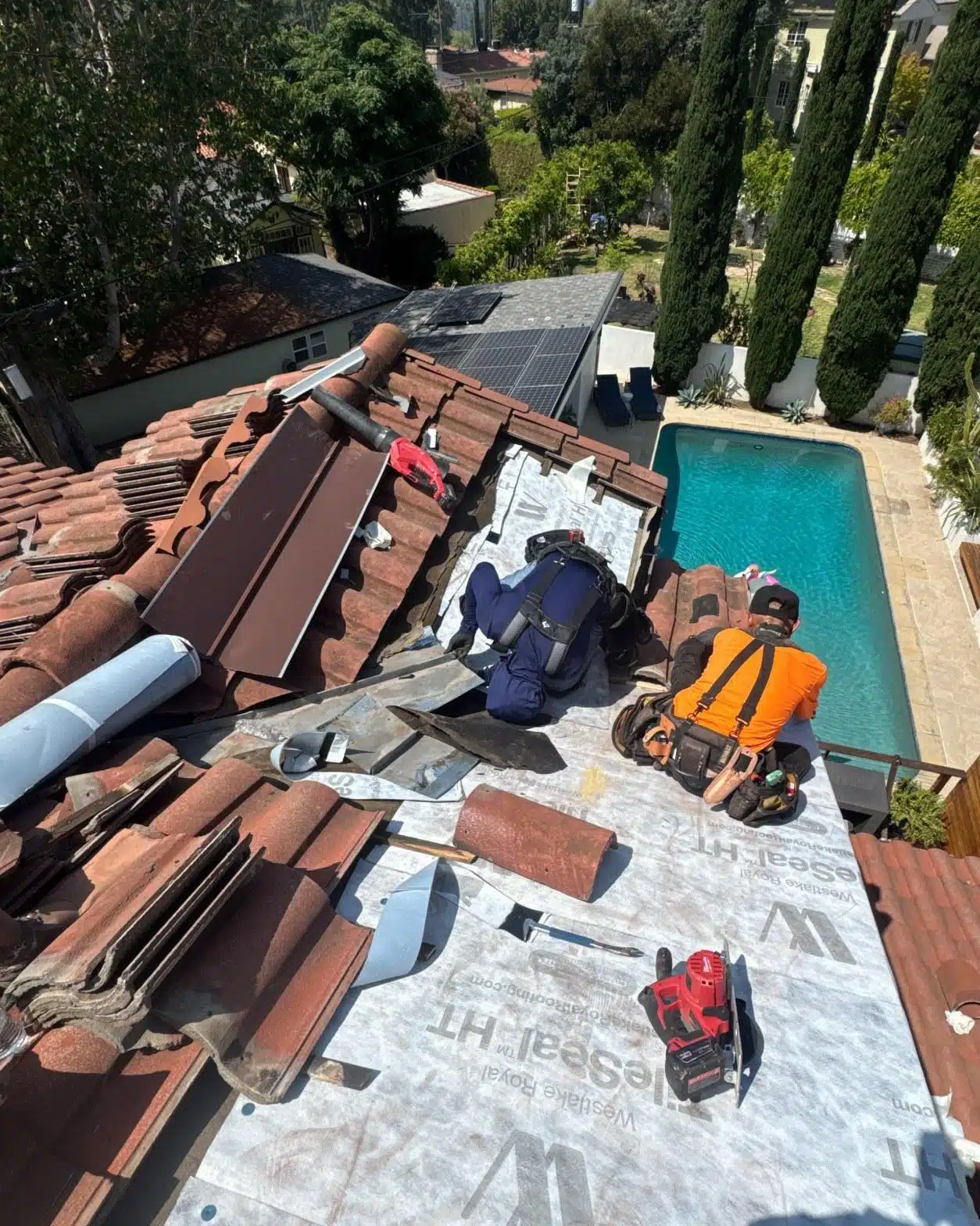
After three days on site, the repaired section of the roof had new Westlake Royal TileSeal HT underlayment under the deck, new ridge and hip flashing at the transitions, fresh wood battens, and the original terracotta mission tiles re-laid in the correct S-profile pattern. The photos in this article document the work in progress: tiles stacked on the slope, fresh underlayment rolled out, and battens positioned for tile nailing. This is a re-lay of one section of the roof, not a whole-house re-roof, and the photos reflect that accurately.
The pool deck and furniture came through the job undamaged, protected by the plastic sheeting the crew installed before the first tile was lifted. That protection step, easy to overlook in a project summary, is one of the more important logistics decisions on a property where expensive finishes sit directly below the work area.
If your Eagle Rock home or neighboring Los Angeles neighborhood property has a clay tile roof showing signs of underlayment failure, lifted or cracked tiles, or leaks at the ridge or hip transitions, a tile re-lay may preserve the original material while addressing the actual source of the problem. Call Roof Repair & Construction Inc. to describe what you are seeing and schedule an on-site evaluation. The photos and details from this project are here so you can see exactly how this type of work is carried out before we set foot on your roof.
Gallery
Explore our full range of Roof Repair services across Southern California.
Frequently Asked Questions
Do my clay tiles have to be replaced when the underlayment wears out?
Not necessarily. If the clay tiles themselves are structurally intact, a tile re-lay is possible: the tiles are lifted, the old underlayment is stripped and replaced, and the original tiles are re-laid over the new membrane. On the Eagle Rock project documented here, the original terracotta mission tiles were reused in full because they had no cracking or structural failure.
How long does a clay tile re-lay usually take?
The Eagle Rock project at 5321 Townsend Ave ran three days, from June 3 to June 5, 2026, covering a section of a Spanish-style home's roof. Timeline depends on the size of the section being addressed, the condition of the deck once the tiles are lifted, and how much flashing or batten work is required.
What is Westlake Royal TileSeal HT and why is it used under clay tile?
Westlake Royal TileSeal HT is a self-adhering high-temperature underlayment designed specifically for tile roof applications. It is chosen for tile work because roof-deck temperatures under clay tile can climb well above ambient air temperature on summer afternoons, and standard felt underlayment is not rated for sustained exposure at those levels. The product name is printed on every roll and was visible throughout this Eagle Rock job.
What happens if I leave old underlayment under clay tile too long?
Felt underlayment under clay tile typically has a serviceable life of 20 to 30 years. Once it degrades, moisture that gets past the tile, at the ridge, hips, or through cracked mortar, has nothing to stop it from reaching the wood deck. The result is deck rot, interior leaks, and in some cases structural damage that is far more expensive to repair than a timely re-lay.
Do roofers need to protect my deck and furniture during a tile job?
Yes, and any crew working above a finished surface should do this before the first tile comes off. On the Eagle Rock project, plastic sheeting covered the full hardwood pool deck and all outdoor furniture before work began, because even carefully handled clay tile sheds grit, dried mortar, and old fasteners as it is lifted and stacked. Skipping that step risks surface damage that cannot be repaired after the fact.
How do I verify that my roofing contractor is licensed in California?
California roofing contractors are licensed through the California Contractors State License Board (CSLB). You can look up any contractor's license number, license status, and insurance information directly on the CSLB website at cslb.ca.gov before signing any contract. Always confirm the license is current and covers the type of roofing work being performed.