Roofing Contractors in California: What to Check Before You Hire in Los Angeles, CA
Before you hire roofing contractors in California, know what to check — from CSLB licensing to roof flashing condition. This guide covers every step for Los Angeles homeowners.
Why Los Angeles Roofs Face Unique Stress Year-Round
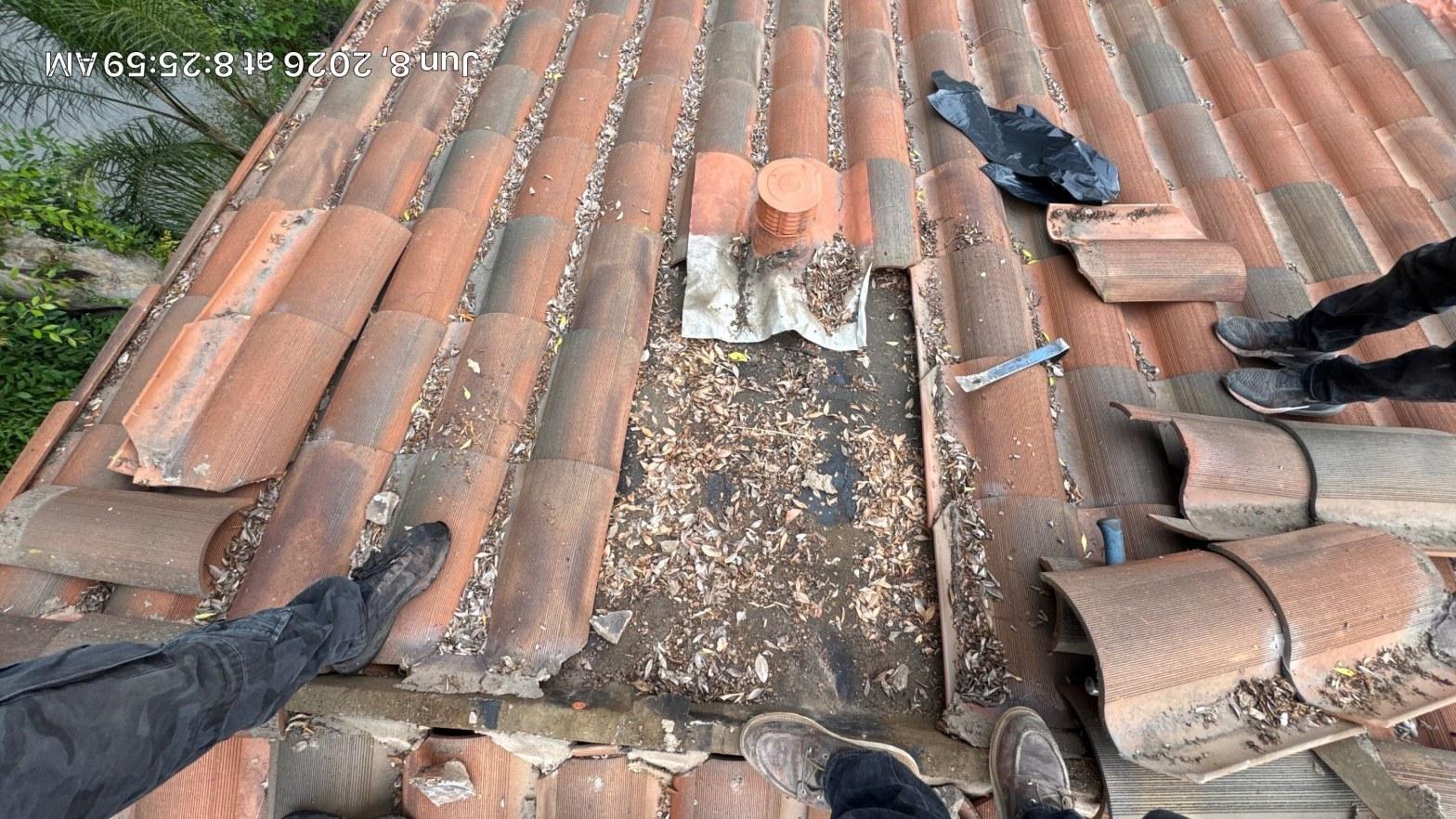
Los Angeles, CA sits in a Mediterranean climate zone where roofs take punishment from multiple directions across all four seasons. When you are searching for roofing contractors in California, understanding that local stress is the first step to hiring the right team.
Summer brings sustained UV radiation that degrades asphalt shingle granules and dries out flashing sealants. According to NOAA’s Los Angeles weather office, average high temperatures in the San Fernando Valley regularly exceed 95°F from June through September, accelerating material breakdown.
Fall brings Santa Ana wind events with gusts that can exceed 60 mph. Those winds lift loose flashing, peel back shingle edges, and drive debris under roof transitions. Coastal neighborhoods from Venice to San Pedro also deal with marine-layer salt drift that corrodes metal flashing 20 to 30 percent faster than inland areas at similar elevations.
Winter rains, while brief, arrive after months of dry heat that has cracked sealants and opened seams. Water finds those gaps fast. A roof that looked fine in October can show ceiling stains by January.
What Are the Red Flags You Can Spot from the Ground?
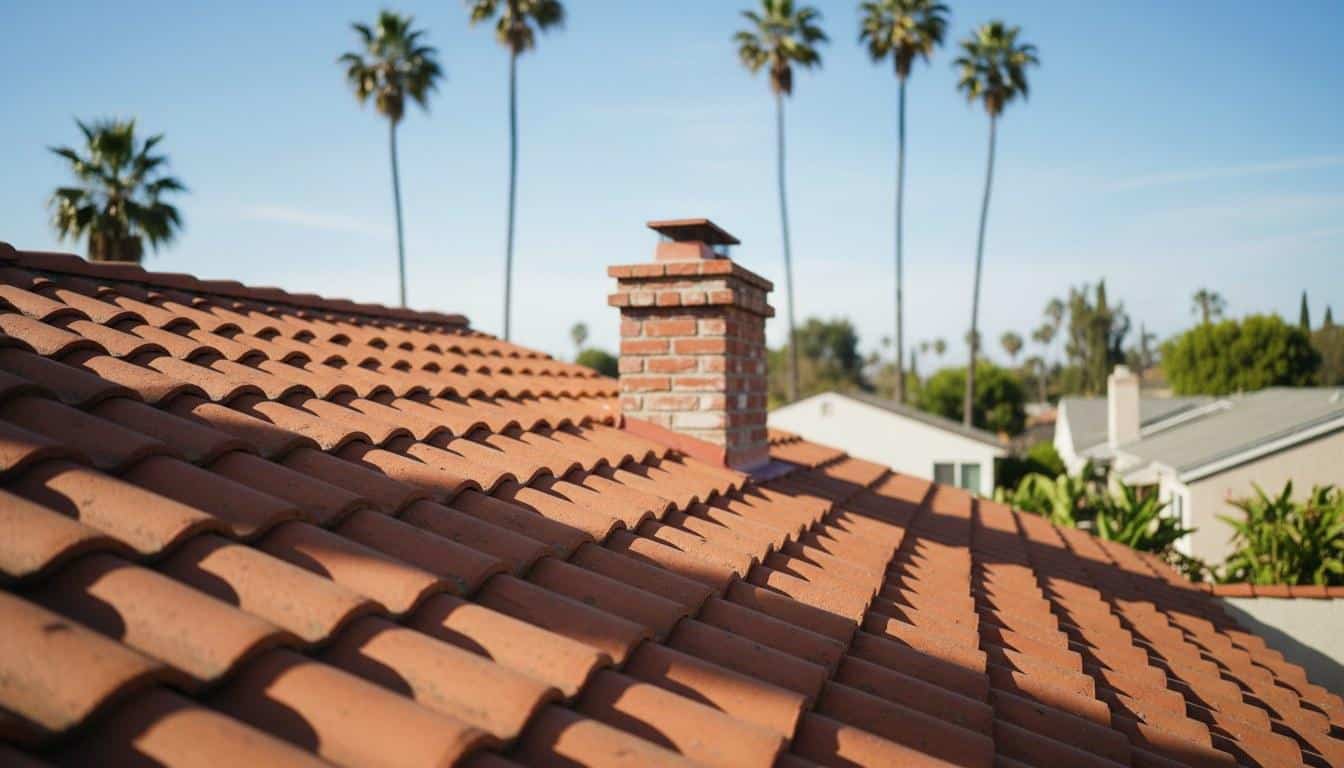
You do not need to climb onto your roof to catch early warning signs. A pair of binoculars and a slow walk around the perimeter of your home in Los Angeles, CA will reveal most of the problems a licensed inspector would flag first.
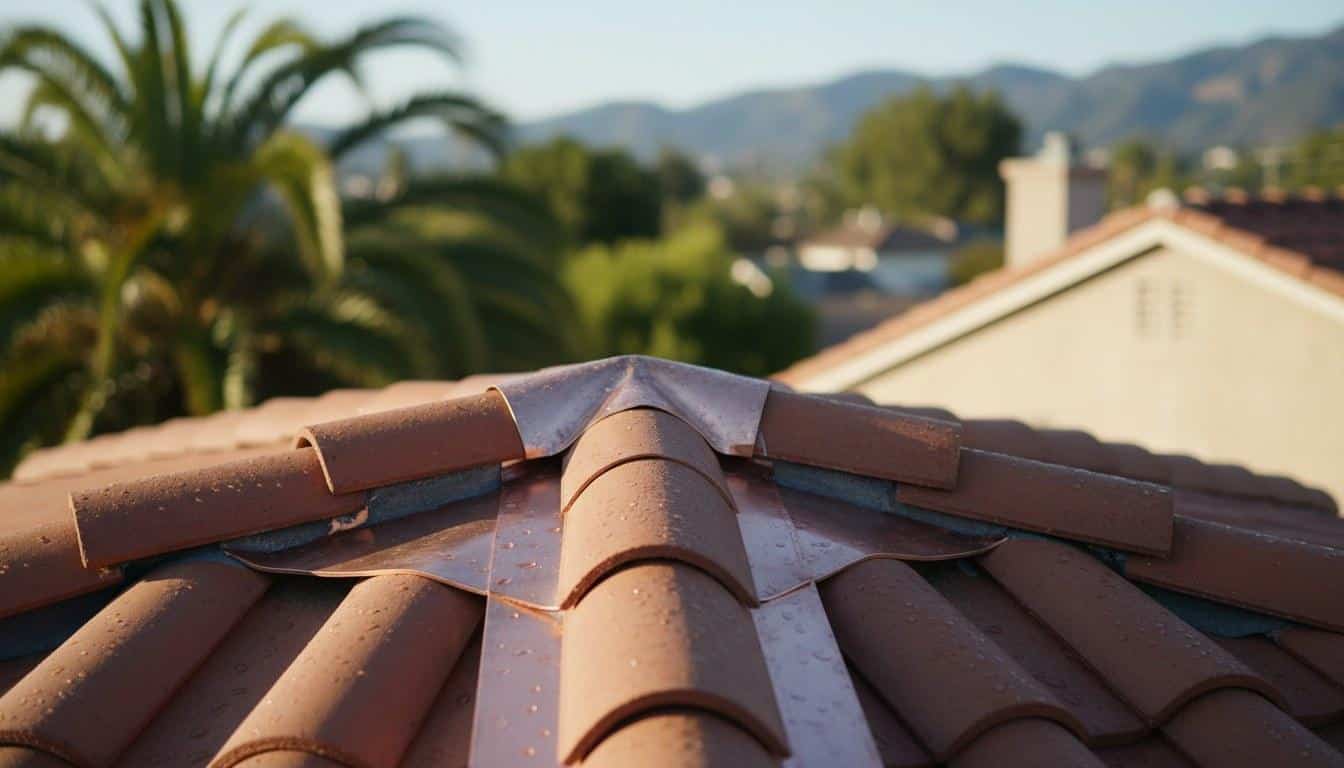
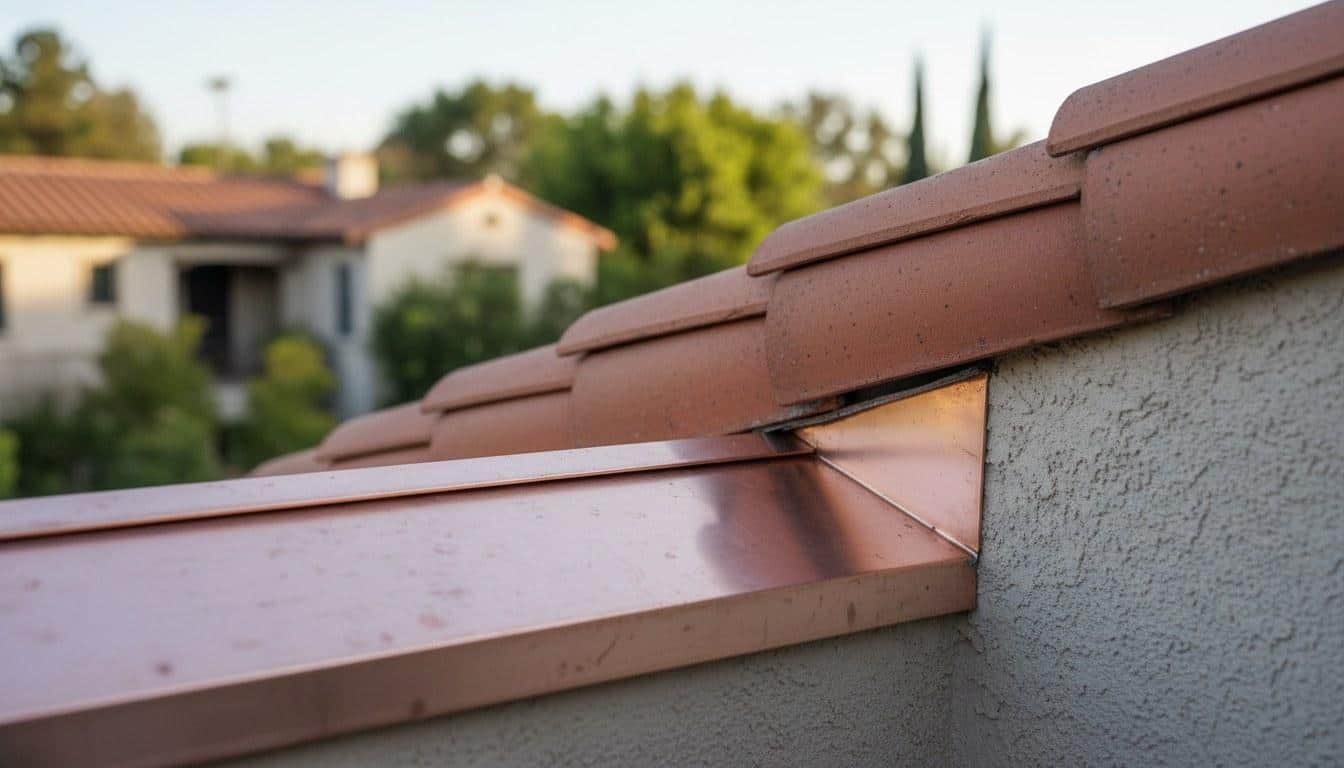
Focus on the transition zones. Roof flashing is the thin metal (usually galvanized steel, aluminum, or copper) that seals the joints where your roof meets a wall, chimney, skylight, vent pipe, or valley. These are the highest-risk points on any roof.
- Lifted or buckled metal flashing: Flashing that has pulled away from a wall or chimney base leaves a direct channel for rainwater to enter the structure.
- Rust stains or orange streaks: Streaks running down a chimney or wall below a metal flashing strip signal corrosion and likely pinhole leaks.
- Missing or cracked shingles near valleys: Valley flashing is hidden under shingles, so damaged shingles nearby often mean the flashing underneath has shifted.
- Granule buildup in gutters: Heavy granule loss from asphalt shingles means the UV-protective layer is gone, and the underlying mat is exposed.
- Sagging fascia or stained soffits: Water that has been running behind flashing for weeks shows up first as discoloration along the roofline.
- Daylight visible around pipe boots: Rubber pipe-boot flashings around plumbing vents crack after 7 to 10 years of UV exposure in Southern California.
If you see two or more of these signs at once, do not wait for the next rain to confirm the problem. Water damage compounds quickly once it gets past the roof deck.
What Should Roofing Contractors in California Check on Your Roof?
A qualified roofer will do more than glance at the surface. Roofing contractors in California operating under California’s Title 24 building energy standards and local building codes are required to evaluate the full system, not just the visible shingles.
Here is what a thorough inspection covers on a typical Los Angeles home:
- Step flashing at walls: Each individual L-shaped piece of metal flashing that weaves between shingle courses along a sidewall should be checked for separation, rust, and missing sealant.
- Counter flashing on chimneys: Two-piece chimney flashing (base flashing plus counter flashing mortared into the chimney) should be inspected for mortar joint failure, which is common after seismic activity.
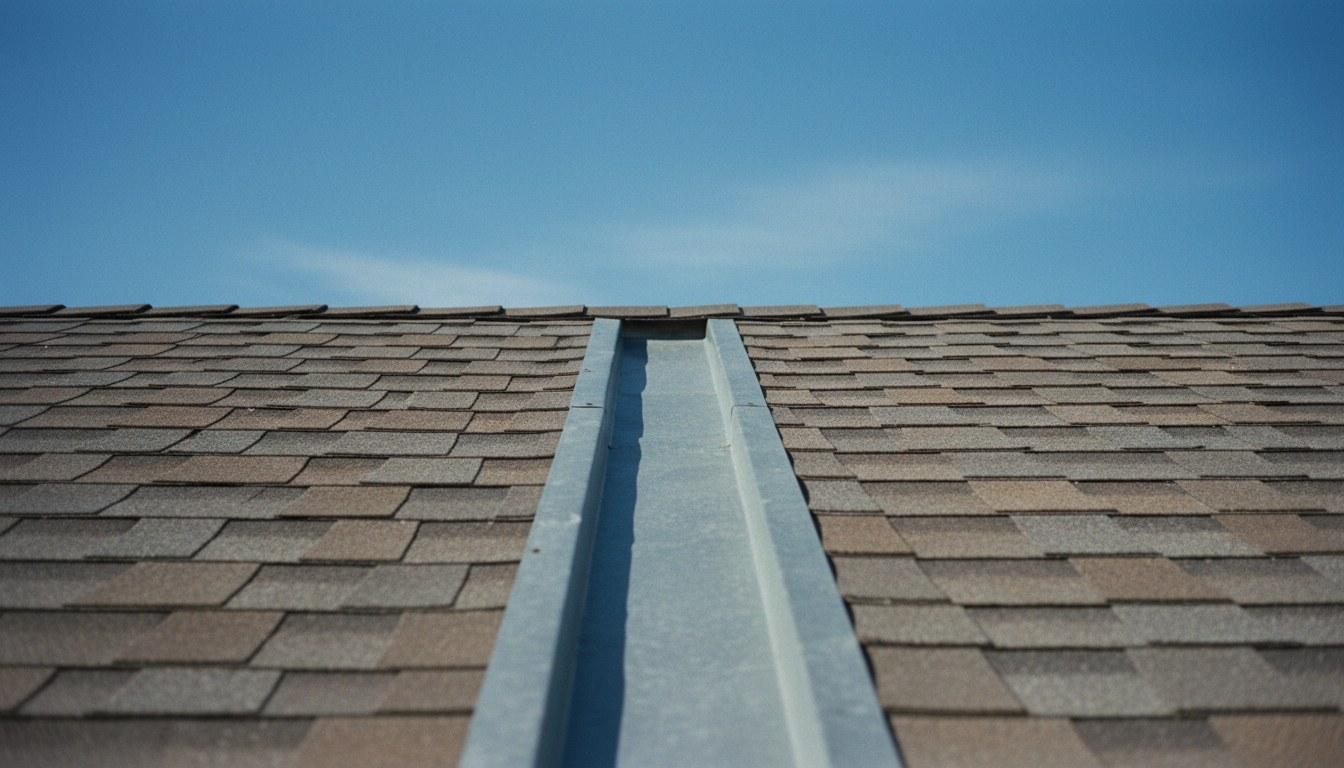
- Valley flashing material: Open metal valleys, closed-cut valleys, and woven valleys each have different failure modes. Metal valley flashings should be at least 16 inches wide per standard practice.
- Drip edge condition: Drip edge metal along eaves and rakes directs water into gutters and away from fascia. Missing or bent drip edge is a code issue in most Los Angeles jurisdictions.
- Roof deck integrity: A roofer should probe for soft spots that indicate rot or delaminated plywood beneath the surface layer.
- Ventilation balance: California’s Title 24 requires specific net free area of attic ventilation. Poor ventilation accelerates shingle aging and can void manufacturer warranties.
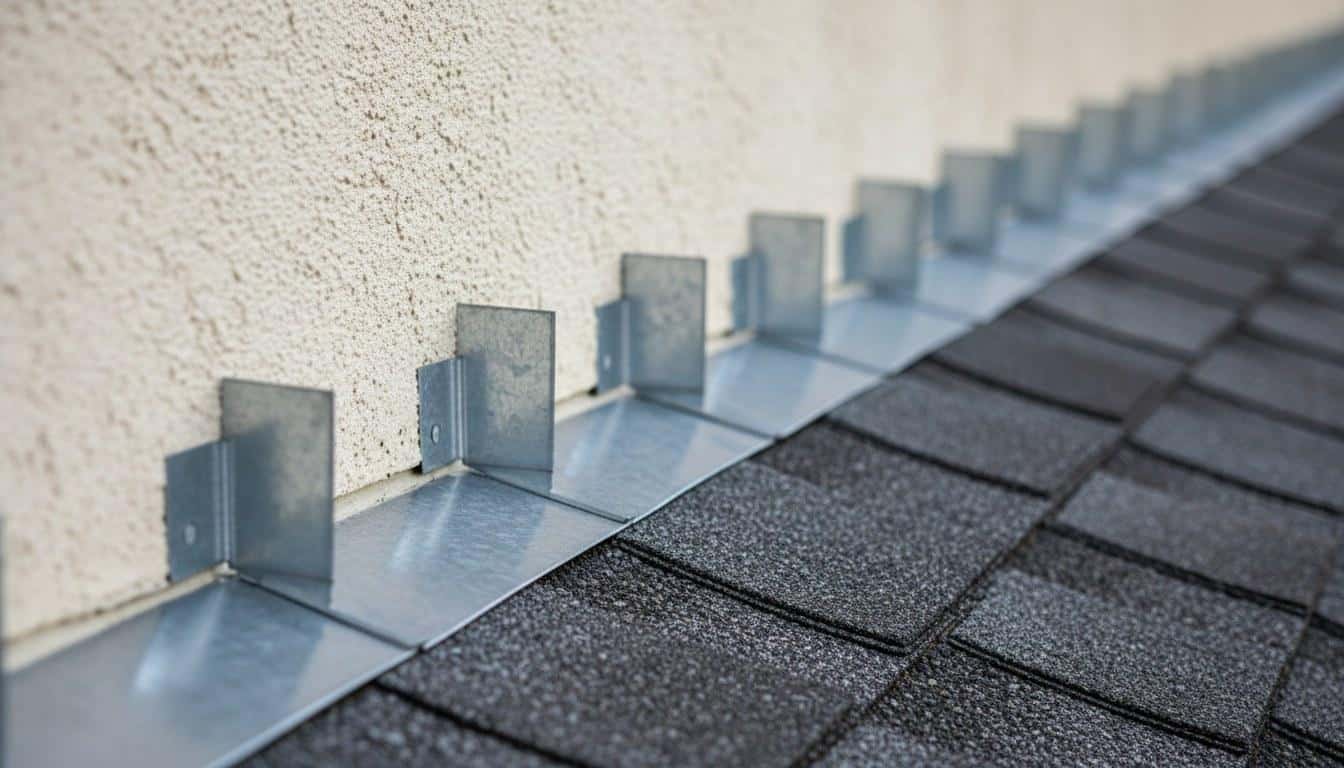
Common roofing materials in the Los Angeles market include concrete or clay tile (very common in older neighborhoods like Los Feliz and Pasadena), asphalt shingle (the most-replaced material we see across the region), standing-seam metal (growing in wildfire-adjacent ZIP codes), and TPO or modified bitumen on low-slope sections of Spanish-style homes. Each material has different flashing requirements and different failure timelines.
Our crews have replaced flashing on more than 40 clay-tile roofs in the 90042 and 90065 ZIP codes over the past two years alone, and nearly every job involved step flashing that had not been touched since original installation 25 to 35 years earlier.
Before hiring anyone, confirm the contractor holds an active license with the California Contractors State License Board (CSLB). A Class C-39 roofing license is the specific credential required for roofing work in California. You can verify any license number on the CSLB website in under two minutes.
How Much Does Roof Flashing Repair or Replacement Cost in Los Angeles, CA?
Flashing repair and replacement costs in the Los Angeles, CA market vary based on the type of flashing, the roofing material it ties into, and whether the underlying deck needs work. Spot repairs on a single pipe boot or a short section of step flashing typically run in the low hundreds. Full chimney flashing replacement on a tile roof generally falls in a higher range.
| Flashing Type | Typical Market Range (LA Region) | Key Cost Factors |
|---|---|---|
| Pipe boot / vent flashing | $150 – $350 per penetration | Rubber vs. metal boot, shingle removal needed |
| Step flashing (per linear foot) | $15 – $35 per linear foot | Tile vs. shingle, wall height, story count |
| Chimney flashing (full replacement) | $500 – $1,500+ | Chimney width, mortar work, material (copper costs more) |
| Valley flashing | $300 – $900 per valley | Valley length, open vs. closed, deck condition |
| Drip edge (full perimeter) | $200 – $600 | Roof perimeter size, material gauge |
These are regional market ranges only. Actual project costs depend on scope, access, and conditions found once work begins. Always get a written line-item estimate before authorizing any work. If your damage is tied to a storm or Santa Ana wind event, check with your homeowner’s insurance carrier. Most California policies have a filing window of 12 to 24 months from the date of loss, and delays can reduce or void the claim.
As of 2024, the Inflation Reduction Act federal tax credit offers homeowners up to 30 percent back on qualifying energy-efficient roofing improvements, including certain metal roofing products that meet ENERGY STAR reflectivity standards. Ask your contractor whether your planned materials qualify before the project begins.
Request a custom quote from Roof Repair & Construction Inc. to get an accurate number for your specific roof and situation.
When Does a Roof Flashing Problem Become an Emergency?
Some flashing issues can wait a few weeks for a scheduled appointment. Others need same-week attention to prevent structural damage. The difference usually comes down to whether water is already moving through the roof system.
Act within 48 to 72 hours if you notice any of the following:
- Active ceiling stains that are growing: A stain that changes size between rain events means water is pooling inside the roof assembly and moving toward drywall or insulation.
- Visible daylight through the attic: Any gap large enough to let light in is large enough to let water in at volume.
- Mold odor in the attic: Mold colonies can establish in as little as 24 to 48 hours on wet wood in warm Southern California temperatures. Remediation costs escalate fast once mold is involved.
- Flashing completely detached after a wind event: An open seam at a chimney or wall junction during the rainy season is an immediate repair, not a scheduled one.
- Water near electrical fixtures: Any sign of water contact with recessed lighting, junction boxes, or wiring is a safety issue that requires same-day response.
Across our service calls in Los Angeles, we find that homeowners who wait more than 30 days after spotting a ceiling stain face an average of 2 to 3 additional repair categories beyond the original flashing fix — typically including insulation replacement and drywall patching.
Homeowners who wait more than 30 days after spotting a ceiling stain face an average of 2 to 3 additional repair categories beyond the original flashing fix.
Permits are required for full roof replacements in most Los Angeles jurisdictions, and some flashing replacements trigger an inspection as well. A licensed contractor will pull the correct permits. If a contractor tells you permits are not needed for a full re-roof, that is a red flag worth walking away from.
Get Roof Help in Los Angeles, CA
Do not let a small flashing gap turn into a major repair bill. Schedule a roof inspection before the next rain season hits.
Roof Repair & Construction Inc. serves Los Angeles, CA and the surrounding region. The team is licensed by the California Contractors State License Board (CSLB) and handles everything from single-point flashing repairs to full roof replacements on tile, shingle, metal, and low-slope systems.
Call (323) 474-1088 to book your inspection or request a written estimate. Get your roof assessed before the next Santa Ana wind event or winter rain puts a gap in your flashing to the test.
Frequently Asked Questions
How do I know if the roof flashing on my Los Angeles home needs to be replaced?
Look for rust streaks below metal joints, lifted or separated metal strips at walls and chimneys, and ceiling stains that appear after rain. Flashing on most Los Angeles homes lasts 15 to 25 years depending on material, but UV exposure and Santa Ana winds shorten that window. If you see two or more warning signs, have a licensed roofer inspect it before the next rainy season.
How do roofing contractors in California apply roof flashing around a chimney?
A licensed roofer installs chimney flashing in two layers: base flashing that bends up the chimney face and weaves under the surrounding shingles, and counter flashing that is cut into the chimney mortar joints and laps over the base flashing. The two-piece design allows the chimney and roof to move independently without breaking the seal. Mortar joints are then sealed with a flexible roofing sealant rated for Southern California temperatures.
How do I put flashing on a roof valley myself?
Valley flashing replacement is not a recommended DIY project for most homeowners because it requires removing and reinstalling surrounding shingles or tile without cracking them. Improper installation leaves gaps that cause leaks within one or two rain events. In Los Angeles, CA, a licensed roofer can replace a single valley typically in a few hours, and the cost of a professional repair is far lower than fixing water damage from a failed DIY attempt.
Does a roofing contractor in California need a specific license for flashing work?
Yes. California requires a Class C-39 Roofing Contractor license for roofing and flashing work. You can verify any contractor's license status in real time on the California Contractors State License Board (CSLB) website at cslb.ca.gov. Always check before signing a contract or making any deposit.
Will my homeowner's insurance in California cover roof flashing damage?
Most California homeowner's insurance policies cover sudden flashing damage caused by a covered event like a windstorm or falling debris, but they typically exclude gradual wear and deferred maintenance. If a Santa Ana wind event lifted your flashing, document the damage with dated photos and file your claim promptly — most policies have a 12 to 24 month window from the date of loss. A licensed roofer can provide a written damage report to support your claim.