Affordable Roof Repair: How to Get Quality Work Without Overpaying in Los Angeles, CA
Cost-conscious Los Angeles homeowners can get quality roof repairs without overpaying — if they know what to look for, when to act, and how to choose the right contractor.
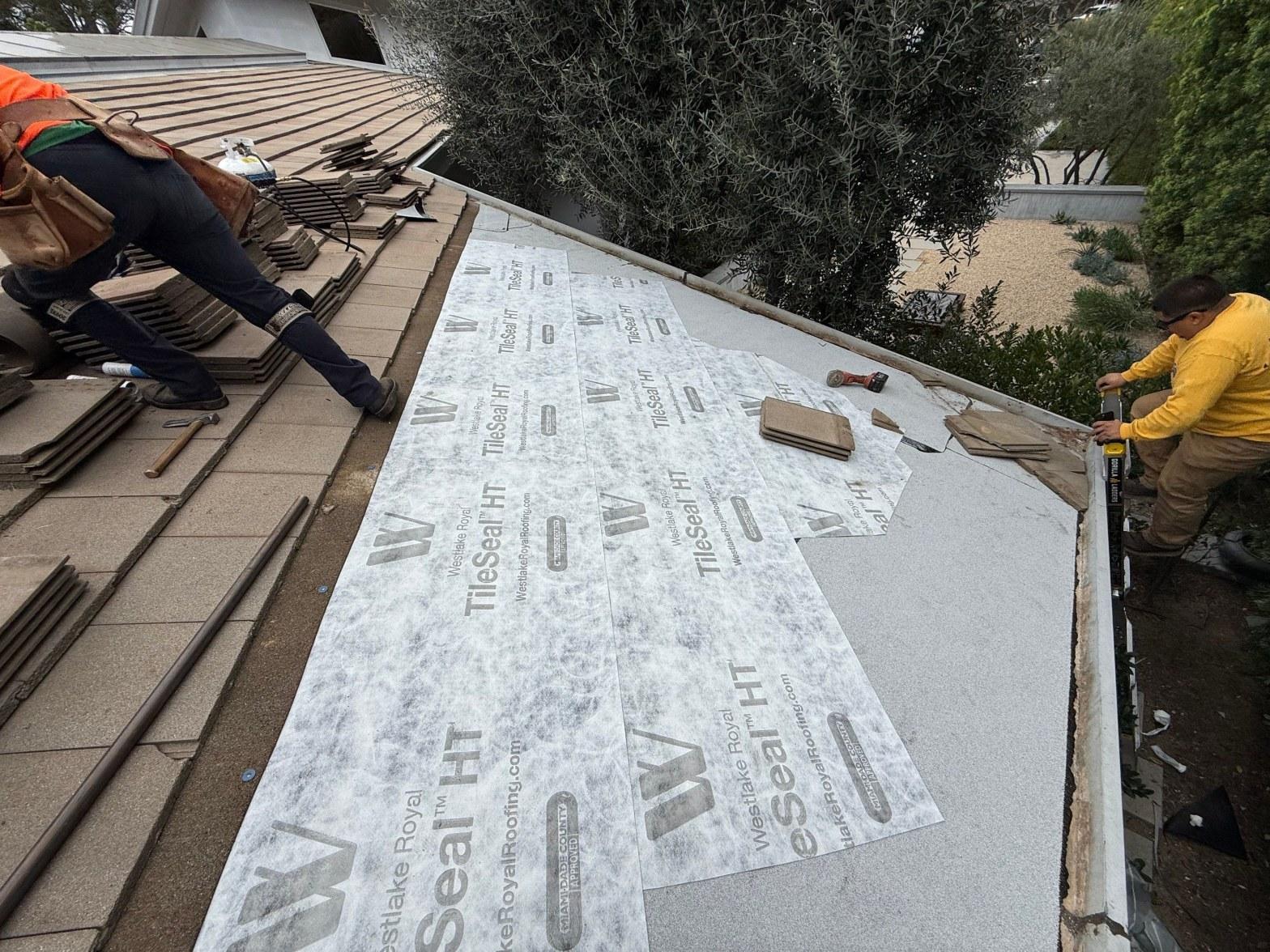
Why Los Angeles Roofs Need Attention Even Without Snow or Hail
Los Angeles, CA sits in a Mediterranean climate zone, which means UV radiation, Santa Ana wind events, and sudden winter rain cycles all stress roofs in ways most homeowners underestimate. If your roof has not been inspected in the last two to three years, there is a real chance minor damage is already in progress.
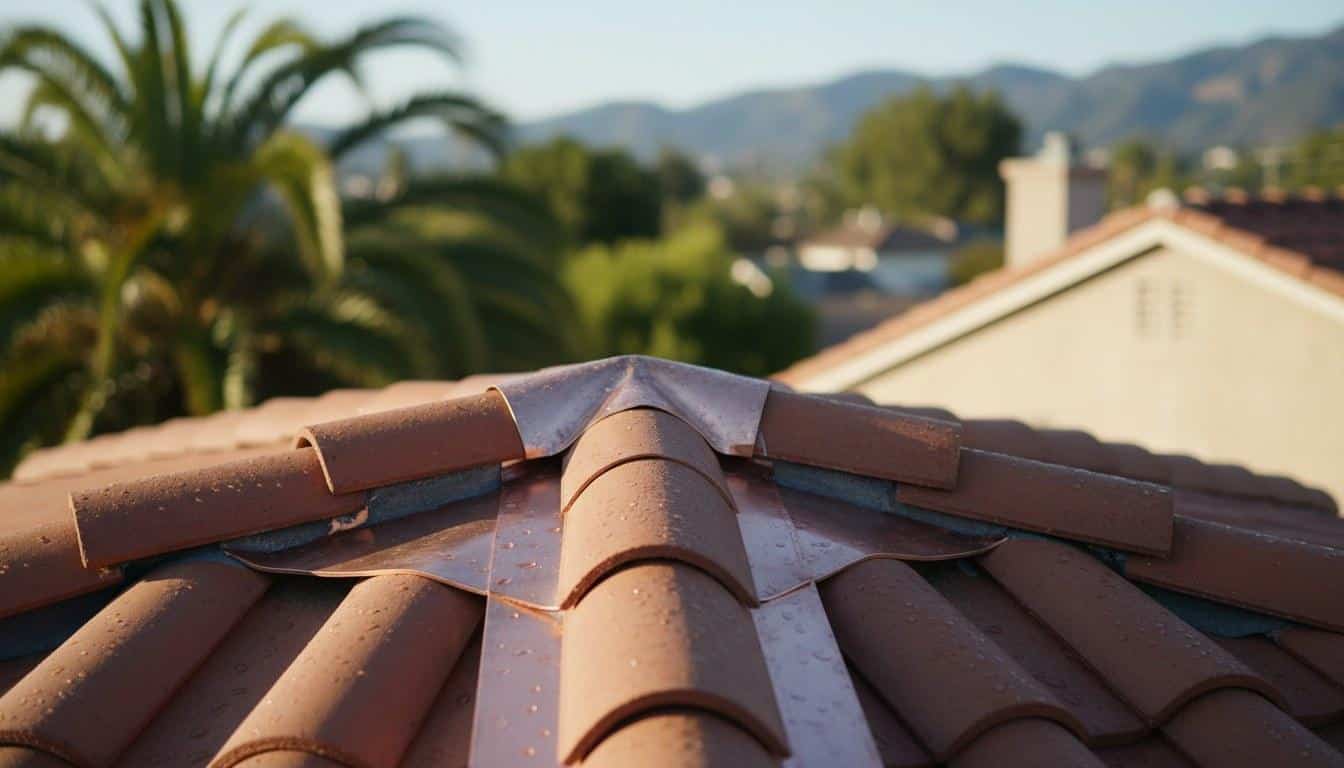
Southern California’s dry summers followed by concentrated winter rain are especially hard on roof flashing — the metal strips that seal joints around chimneys, skylights, vents, and valleys. Flashing expands in 90-plus-degree summer heat and contracts when coastal marine-layer moisture rolls in overnight. After three to five years of that cycle, sealant cracks and metal lifts.
Santa Ana wind events, which routinely hit 50 to 70 mph across the San Fernando Valley and hillside neighborhoods, can lift flashing edges and dislodge roofing tiles in a single afternoon. The result is a leak path that stays invisible until the first heavy rain arrives — sometimes months later.
The good news: catching these issues early is exactly how you get affordable roof repair instead of a full replacement. A flashing repair addressed at the right time typically costs a fraction of what a water-damaged deck or rotted rafter costs to fix.
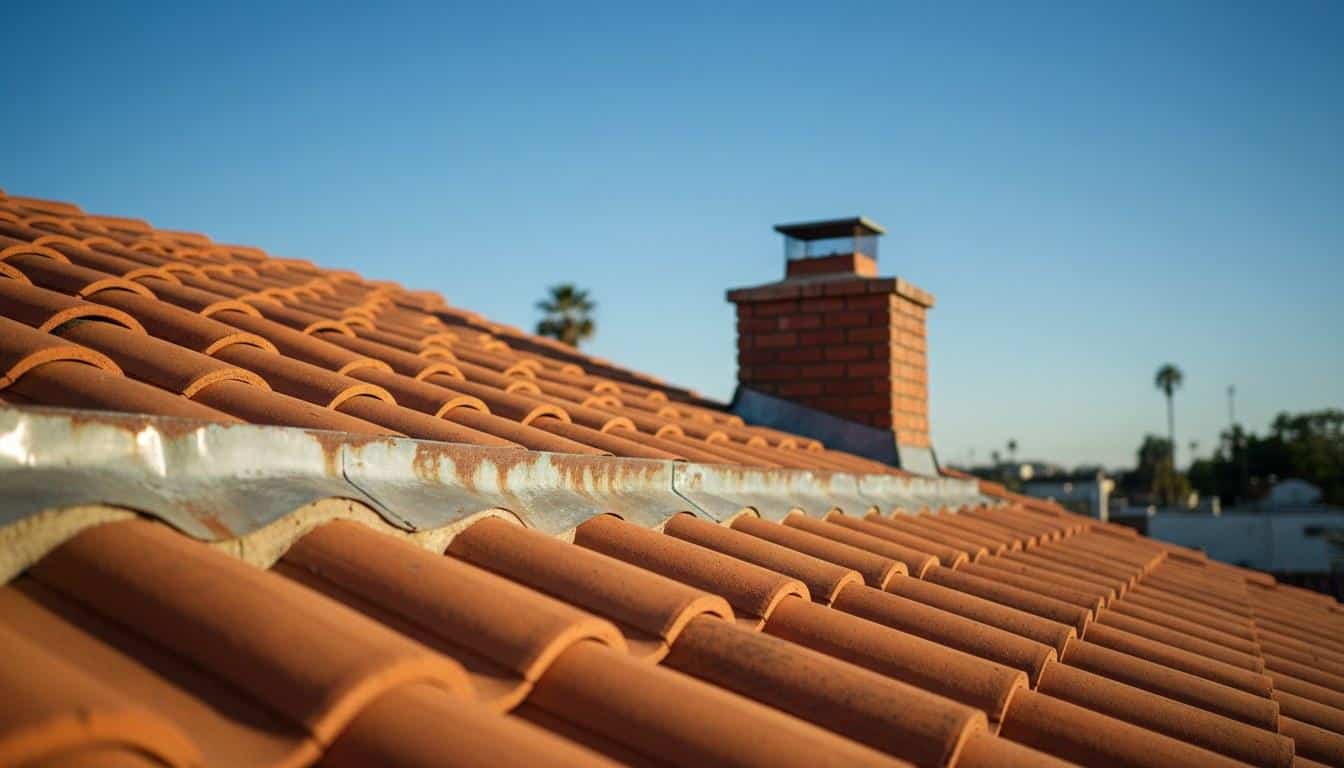
What Is Roof Flashing and Why Does It Fail First?
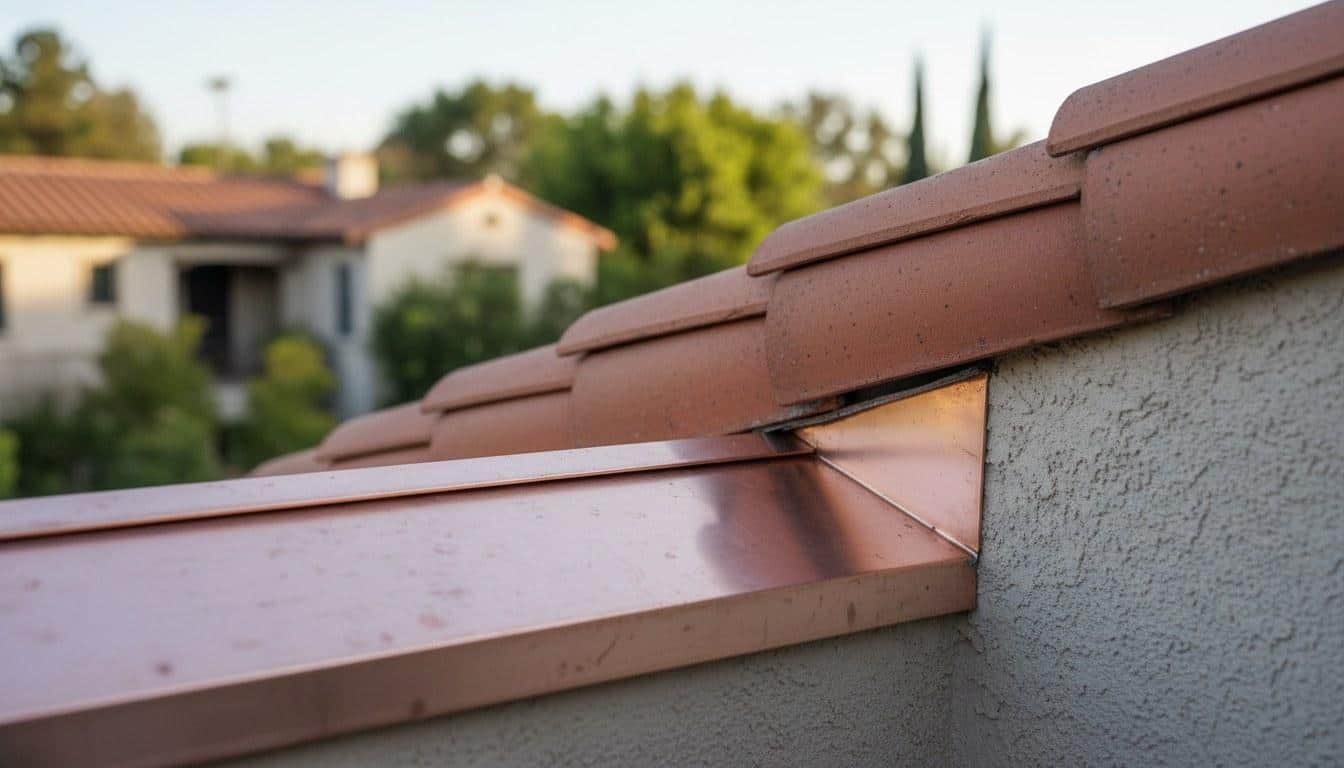
Roof flashing is thin metal — usually galvanized steel, aluminum, or copper — installed at every joint and transition point on a roof to redirect water away from seams. It is the first line of defense at chimneys, skylights, pipe boots, dormers, and roof-to-wall connections.
Flashings fail before the field shingles or tiles do because they sit at stress points. Every penetration in a roof is a potential leak, and flashing is what keeps those penetrations sealed. Common failure types include:
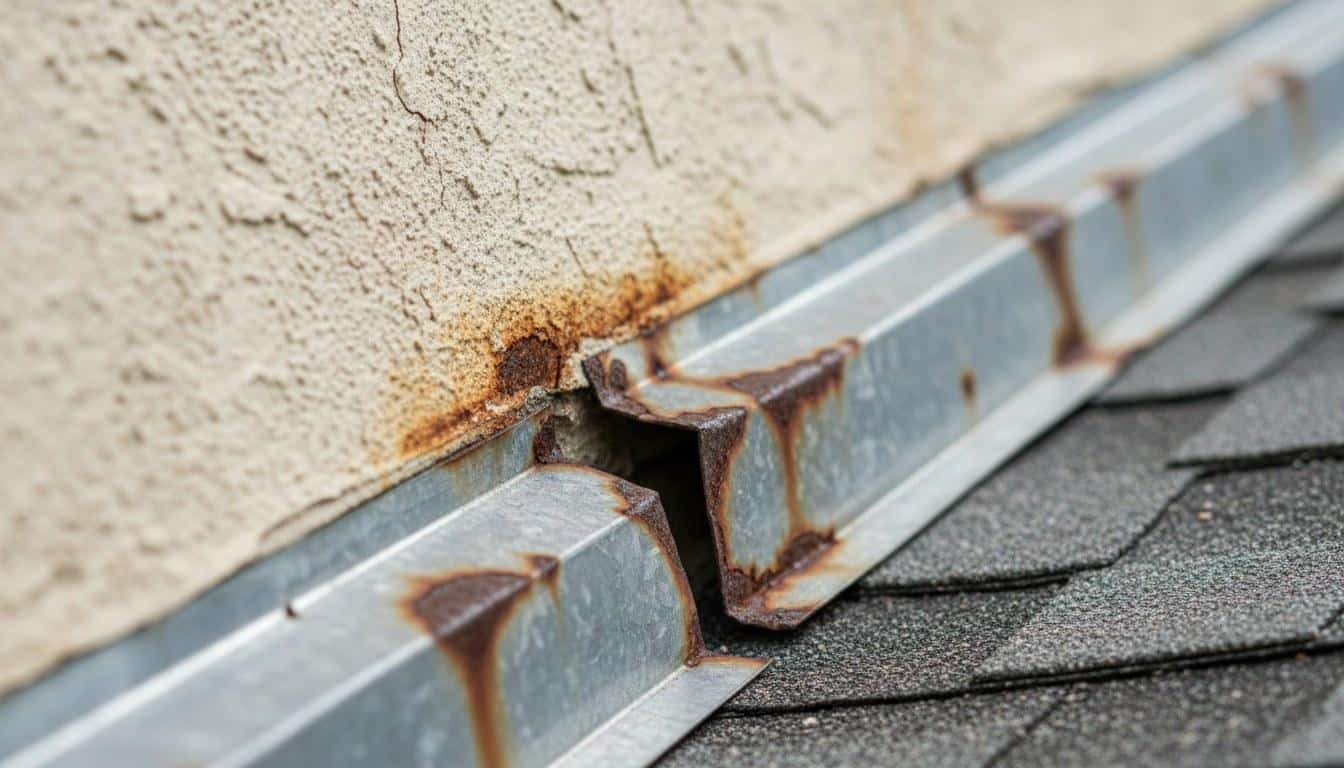
- Step flashing separation: Individual L-shaped metal pieces along a wall-to-roof joint pull away from the siding or mortar, leaving a gap water runs straight into.
- Counter flashing cracks: The upper flashing embedded in chimney mortar dries out and cracks, especially after repeated heat cycles in Los Angeles summers.
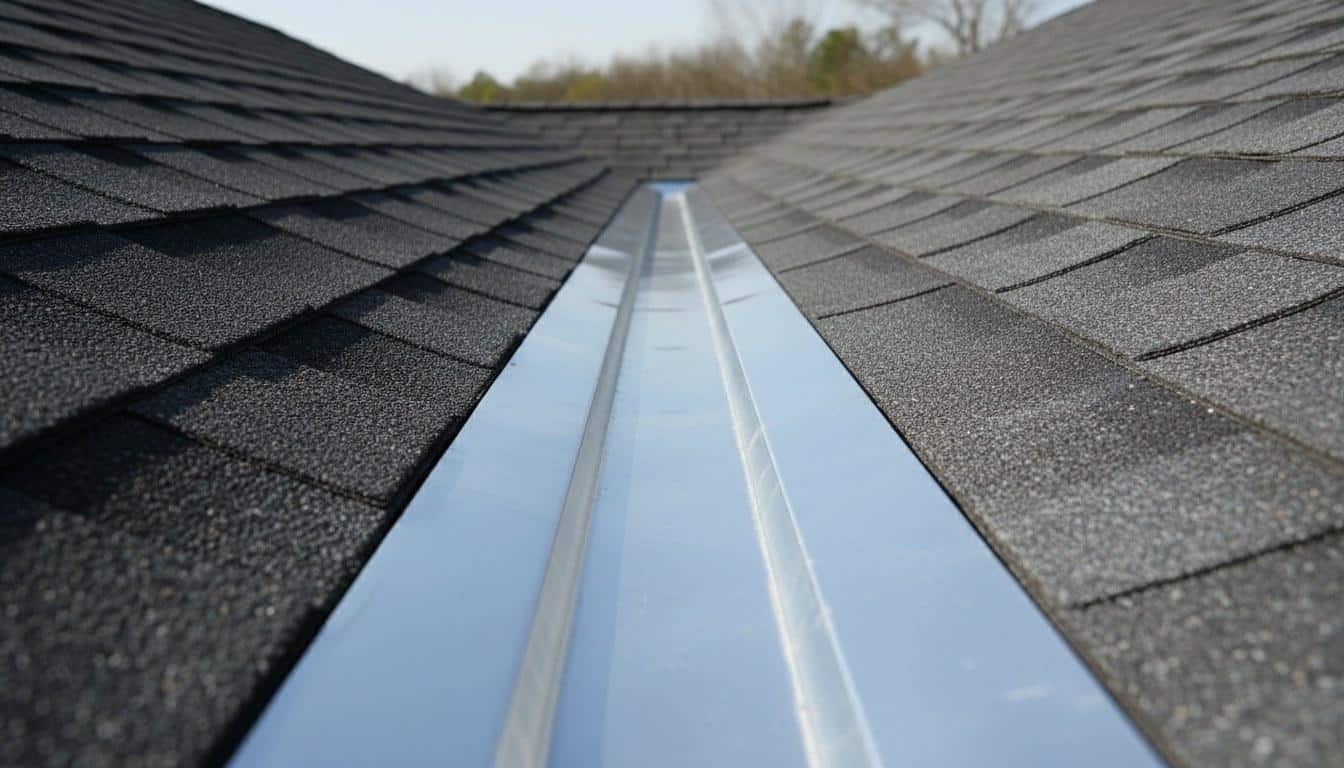
- Valley flashing rust: Open metal valleys on older homes develop rust pinholes that allow water to seep under shingles gradually.
- Pipe boot seal failure: The rubber collar around plumbing vents hardens and splits, typically within 10 to 15 years on asphalt-shingle roofs.
- Improper overlap: Flashings installed with less than the code-required 4-inch overlap allow wind-driven rain to push water uphill under the metal.
In Los Angeles, galvanized steel flashing is the most common material on older homes, while aluminum is frequently used on newer construction. Copper flashing lasts the longest — often 50 or more years — but carries a higher material cost. For a deeper look at how flashing repair fits into overall pricing, see our 2026 Pricing Guide for Roof Flashing in Los Angeles.
Copper flashing lasts the longest — often 50 or more years — but carries a higher material cost than galvanized steel or aluminum.
Our crew responds to flashing-related service calls across Los Angeles roughly 3 times more often in November through January than in any other three-month window — a direct result of the first rains exposing damage that built up all summer.
What Warning Signs Can You Spot From the Ground?
You do not need to climb onto your roof to spot most early warning signs — a pair of binoculars and a walk around the perimeter of your home will reveal the most common problems. Never walk on a roof yourself unless you are a trained professional with proper fall protection.
From the ground or from a safely positioned ladder at the eave level only, look for these red flags:
- Lifted or buckled flashing edges: Metal that has separated from the surface it was sealing will show a visible gap or curl, especially at chimney bases and skylights.
- Missing or cracked caulk lines: Dark gaps or crumbling sealant at any roof penetration are a sign the waterproof seal has broken down.
- Rust staining on the roof surface: Orange or brown streaks running down from a metal flashing point indicate the metal is corroding and may have pinholes.
- Displaced or cracked tiles: On clay or concrete tile roofs — common in neighborhoods from Silver Lake to Palos Verdes — cracked tiles expose the underlayment beneath.
- Granule loss on asphalt shingles: Bare patches or gutters full of dark granules signal shingles past their service life, typically 20 to 30 years for standard 3-tab or architectural shingles.
- Interior water stains: Brown rings on ceilings or walls near exterior roof lines are a near-certain sign of an active or recent leak path.
- Daylight in the attic: If you can safely access your attic, any visible light coming through the roof deck indicates a gap that water can follow.
Spotting even one of these signs early is the most reliable way to keep repair costs manageable. A single displaced tile or a cracked flashing seal caught before the rainy season is a small repair. The same problem ignored through a wet winter can mean damaged decking, mold remediation, and a bill that is several times larger.
What Does Affordable Roof Repair Actually Cost in Los Angeles?
In the Los Angeles market, minor to moderate roof repairs — including flashing replacement, single-section tile work, or localized shingle patching — typically range from $300 to $1,500 depending on scope, material, and roof access. More complex jobs involving multiple flashings, chimney rebuilds, or large tile sections can run from $1,500 to $4,000 or more.
Several factors move the price up or down:
- Roof pitch and height: Steep roofs above a two-story home require more labor and safety equipment, which adds to the total.
- Material type: Copper flashing costs more than galvanized steel or aluminum. Clay tile costs more per piece than asphalt shingle.
- Extent of water damage: If water has already reached the roof deck, damaged sheathing or insulation must be replaced before new flashing or roofing goes on top.
- Permit requirements: Los Angeles Department of Building and Safety requires permits for full re-roofs and some structural repairs. Minor flashing repairs generally do not require a permit, but your contractor should confirm this for your specific project.
- Insurance involvement: If damage was caused by a Santa Ana wind event or a storm, a homeowner’s insurance claim may cover part or all of the repair. Most policies require claims to be filed within 12 months of the damage event, so timing matters.
As of 2026, labor costs in the Los Angeles market reflect the region’s higher cost of living. Getting two or three written quotes from licensed contractors is the single most effective step for finding an affordable roof repair service near you without sacrificing quality.
Keep in mind that California’s Title 24 building energy standards apply to re-roofing projects above a certain scope. A licensed contractor will know whether your project triggers those requirements and can factor compliance into the quote upfront.
Across our service calls in Los Angeles, we find that roughly 60 percent of homeowners who call about a leak have damage that could have been repaired for under $800 if caught one rainy season earlier. Waiting consistently doubles or triples the final cost.
Roughly 60 percent of homeowners who call about a leak have damage that could have been repaired for under $800 if caught one rainy season earlier.
What Does a Licensed Roofer Do on a Flashing or Repair Job?
A licensed roofer follows a defined process on any repair job — starting with a full inspection, not just a patch of the visible problem. Skipping the inspection step is the most common cause of repeat leaks after a cheap repair.
Here is what a proper repair sequence looks like:
- Full roof inspection: The roofer examines all flashings, field roofing, penetrations, and the attic if accessible. They document existing damage with photos before any work begins.
- Written scope and quote: A reputable contractor provides a written quote that itemizes materials, labor, and any permit fees. Verbal-only quotes are a red flag.
- Removal of failed material: Old flashing, cracked sealant, or damaged shingles are removed completely. Patching over failed material without removing it is a shortcut that fails quickly.
- Deck inspection and repair: Once old material is off, the contractor checks the roof deck for soft spots, rot, or delamination. Damaged decking is replaced before new material goes down.
- Installation to code: New flashing is installed with correct overlaps — a minimum of 4 inches at most joints — and sealed with compatible roofing caulk or mortar. Step flashing is woven with new shingles or tiles, not just slipped under existing ones.
- Cleanup and final inspection: All debris is removed, gutters are cleared of material, and the contractor walks the repair area with the homeowner before closing out the job.
Contractors working in California should be Licensed by the California Contractors State License Board (CSLB). You can verify any contractor’s license number on the CSLB website before signing anything. A valid CSLB license means the contractor carries workers’ compensation and general liability insurance — which protects you if anything goes wrong on your property.
Common roof materials in the Los Angeles market each have specific flashing requirements:
| Roof Material | Typical Flashing Type | Key Repair Consideration |
|---|---|---|
| Asphalt shingle (3-tab or architectural) | Galvanized steel or aluminum step and counter flashing | Flashing must be woven into new shingle courses, not just re-caulked |
| Clay or concrete tile | Aluminum or copper valley and chimney flashing | Tiles must be carefully removed and re-set; cracked tiles replaced individually |
| TPO or flat membrane (low-slope) | Membrane-integrated metal edge and pitch-pan flashing | Seams at penetrations require heat-welded or chemically bonded repairs |
| Metal standing-seam | Integral panel flashing at ridge and eave | Panel fastener and sealant inspection every 5 to 7 years in high-UV zones |
Get Affordable Roof Repair in Los Angeles, CA
Schedule a roof inspection before the next rainy season — catching flashing failures and minor damage now is the most reliable way to keep repair costs low. Small problems rarely stay small in Los Angeles, where a single overnight rain event can push water through a compromised flashing joint and into your home’s structure.
Roof Repair & Construction Inc. provides affordable roof repair services across Los Angeles, CA — from Inglewood and Lawndale to Santa Monica and the San Fernando Valley. Whether you have a cracked pipe boot, lifted chimney flashing, or a tile section that shifted after a wind event, the team can assess the damage and give you a written quote with no obligation.
Call (323) 474-1088 to schedule your inspection or request a custom quote. Same-day and next-day appointments are available across Los Angeles ZIP codes. Do not wait until a stain appears on your ceiling — get a written scope and price before the repair becomes a replacement.
Frequently Asked Questions
How do I put flashing on a roof — can I do it myself?
Installing roof flashing correctly requires removing existing shingles or tiles, cutting and bending metal to fit, and weaving the new flashing into the roofing courses in the right sequence. A DIY attempt that skips any of these steps will likely leak within one to two rainy seasons. In Los Angeles, CA, most homeowners get better long-term value from hiring a licensed contractor who can also inspect for hidden damage while the roof surface is open.
How much does affordable roof repair typically cost in Los Angeles?
Minor repairs like a single flashing replacement or a small shingle patch typically range from $300 to $800 in the Los Angeles market. More involved work — such as chimney counter flashing, valley flashing on a tile roof, or repairs that include deck replacement — generally runs from $1,000 to $3,500 or more depending on scope and material. Getting two or three written quotes from CSLB-licensed contractors is the best way to confirm a fair price for your specific project.
How do I know if my roof flashing is causing a leak?
The most common signs are water stains on ceilings or walls near a chimney, skylight, or exterior wall line, and visible rust streaks or lifted metal edges on the roof surface. You can check from the ground with binoculars — look for gaps, curled metal, or missing caulk at any point where the roof meets a vertical surface. If you see any of these, call an affordable roof repair contractor before the next rain to get a proper inspection.
Does homeowner's insurance cover roof flashing repairs in California?
California homeowner's insurance policies typically cover sudden damage caused by wind, falling objects, or storm events — including flashing damage from a Santa Ana wind event. Gradual deterioration from age or lack of maintenance is usually excluded. Most policies require you to file a claim within 12 months of the damage event, so document any wind or storm damage with photos as soon as you notice it and contact your insurer promptly.
How long does a roof flashing repair take in Los Angeles?
Most flashing repairs — replacing step flashing along a wall, re-seating chimney counter flashing, or fixing a pipe boot — take between two and four hours for a single-family home in Los Angeles. If the repair requires removing and resetting multiple tile sections or replacing damaged roof decking underneath, the job can extend to a full day. Your contractor should give you a realistic time estimate in the written scope before work begins.