Roof flashing is the thin metal barrier that keeps water out of the joints and seams on your roof. This maintenance checklist helps Southern California homeowners spot problems early and protect their home before the rainy season.
Roof flashing is the thin metal barrier that keeps water out of the joints and seams on your roof. This maintenance checklist helps Southern California homeowners spot problems early and protect their home before the rainy season.
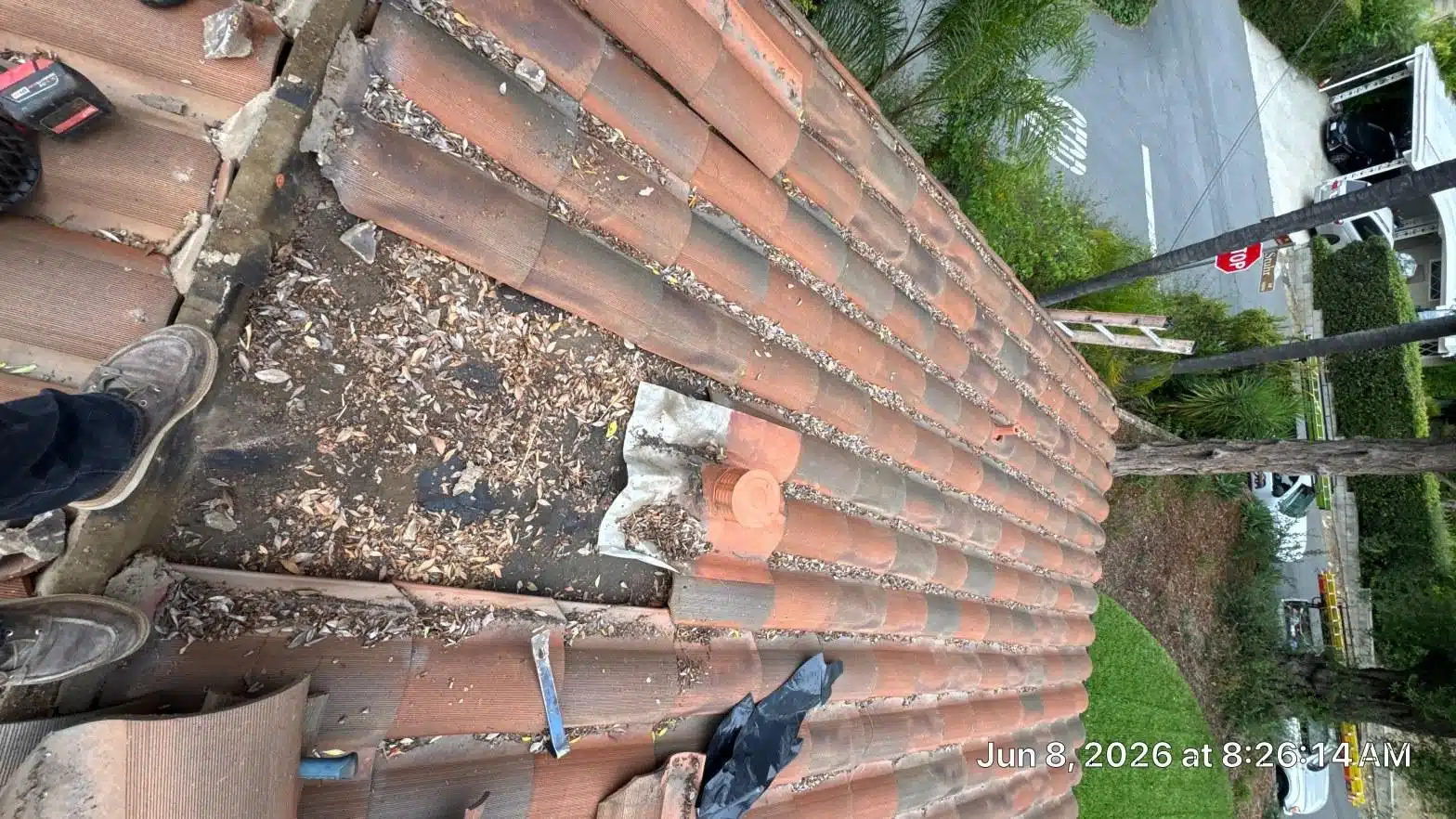
Why Does Roof Flashing Matter So Much in Southern California?
When it fails, water finds a direct path into your home’s structure. Southern California sits in a Mediterranean climate zone, which means long dry summers followed by concentrated winter rainfall that can dump several inches in just a few days.
That feast-or-famine rain pattern is hard on flashing. Months of UV exposure from NOAA-documented Southern California sun intensity dry out and crack the sealant around metal flashing. Then the first heavy rain of the season drives water straight into those gaps. In older neighborhoods, flat and low-slope roofs covered in TPO membrane are especially vulnerable because their flashing seams handle pooled water rather than runoff.
Fall’s Santa Ana winds add another stress. Gusts regularly exceed 50 mph across the region, and those winds can lift flashing edges that were only slightly loose, turning a minor maintenance item into an emergency roof repair in Southern California overnight. Getting ahead of this cycle with a pre-summer inspection is the smartest move a homeowner can make.
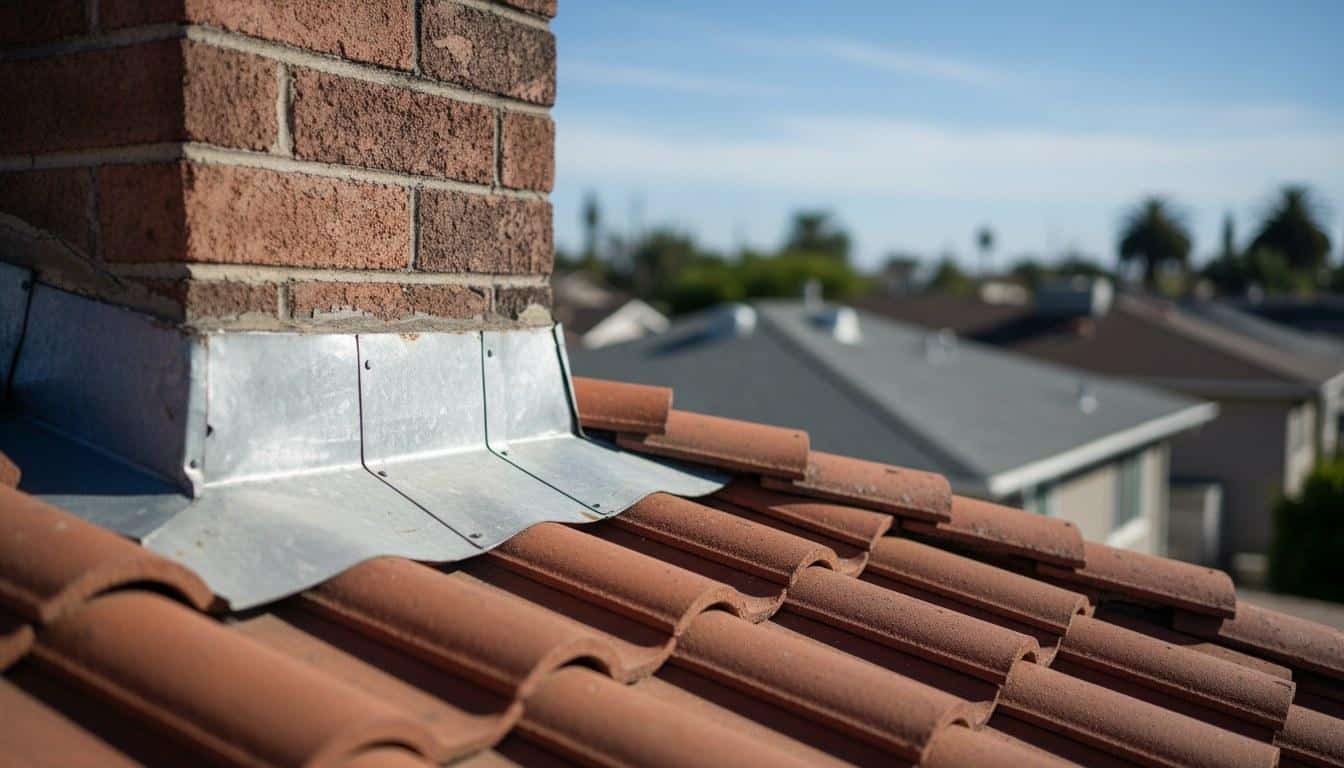
What Are the Warning Signs of Failing Roof Flashing in Southern California?
Most flashing failures give visible clues from the ground or from inside your attic well before they cause major damage. Catching them early is the difference between a simple sealant repair and a full drywall replacement. Here are the red flags to watch for between professional services:
- Rust or brown streaks on the roof surface: Rust lines running down from a chimney, skylight, or vent base mean the metal flashing there is corroding and losing its watertight seal.
- Lifted or buckled metal edges: Flashing that has pulled away from the wall or roof surface, even a quarter inch, allows wind-driven rain to enter. This is especially common after Santa Ana wind events.
- Cracked or missing caulk at seams: The sealant bridging metal flashing to roofing material shrinks and cracks after repeated UV exposure. White or gray chalky lines around vents and chimneys are a clear sign it has failed.
- Water stains on interior ceilings or walls: Stains near a chimney wall, dormer, or skylight almost always trace back to flashing, not the roofing material itself.
- Granule loss on shingles directly below a flashing joint: Water channeling incorrectly off failed flashing erodes the granule coating on asphalt shingles, shortening their life.
- Daylight visible in the attic near roof penetrations: Any light entering around a pipe boot, vent, or chimney base means the flashing seal is broken.
- Efflorescence on chimney brick: White mineral deposits on brick directly below the chimney cap indicate water has been wicking through a failed flashing joint for some time.
Our team responds to roofing calls across Southern California throughout the year, and we see roughly 6 out of every 10 roof leak calls trace back to flashing failures rather than damaged shingles or membrane. That ratio holds true across both asphalt shingle homes and clay tile roofs.
What Can You Safely Check Yourself Each Season?
You do not need to walk on your roof to run a useful flashing inspection. A pair of binoculars, a flashlight for the attic, and a garden hose are the only tools you need for a safe ground-level check. Here is a season-by-season checklist built for the Southern California climate cycle:
Late Spring (April to May), Pre-Summer Prep
- Scan all roof valleys and ridge lines with binoculars for lifted or missing metal flashing strips.
- Check around every skylight, solar panel mount, and vent pipe for cracked caulk or rust staining.
- Enter the attic during daylight and look for any pinhole light around penetrations or along the eave line.
- Clear any debris from valleys and gutters so standing water does not back up against flashing joints.
Late Summer (August to September), Post-Heat, Pre-Rain Season
- Repeat the binocular scan after peak UV months, when sealant is most likely to have cracked.
- Run a garden hose slowly over the chimney base and each vent for 3 to 5 minutes while a second person watches the attic ceiling for drips.
- Check that step flashing along any dormers or wall junctions is still flat and tight against the surface.
After Every Major Santa Ana Wind Event
- Do a quick visual scan from the ground for any obviously lifted metal edges or displaced tiles near flashing joints.
- Look for new debris accumulation in valleys that could dam water against a seam.
After the First Heavy Rain of the Season (November to December)
- Check interior ceilings near chimneys, skylights, and dormers within 24 hours of a significant rain event.
- Look for new water stains or damp insulation in the attic.
The table below summarizes the core maintenance tasks, how often to do them, and whether they are safe for a homeowner or require a licensed professional.
| Task | Frequency | DIY or Pro? |
|---|---|---|
| Binocular scan of all flashing from ground level | Twice a year (spring and late summer) | DIY |
| Attic inspection for daylight or moisture at penetrations | Twice a year | DIY |
| Garden-hose water test at chimney and vents | Once a year (late summer) | DIY (two-person job) |
| Valley and gutter debris clearance | After every major wind event and before rainy season | DIY or Pro |
| Sealant inspection and reapplication at flashing joints | Every 3 to 5 years, or when cracking is visible | Pro recommended |
| Full step-flashing and counter-flashing inspection | Every 2 to 3 years | Pro (requires roof access) |
| Chimney flashing re-bedding and re-pointing | Every 5 to 10 years depending on material | Pro |
| TPO or flat-roof membrane flashing seam inspection | Annually | Pro |
| Post-Santa Ana wind emergency check | After any wind event exceeding 40 mph | DIY (ground only) then Pro if issues found |
| Full professional roof flashing inspection | Once a year | Pro |
What Does a Professional Roof Flashing Inspection Cover?
A licensed roofer’s flashing inspection goes well beyond what you can see from the ground. A thorough professional inspection typically covers 8 to 12 distinct flashing locations on a standard single-family home and takes 45 to 90 minutes depending on roof complexity. Here is what a qualified contractor checks on every visit:
- Chimney flashing system: This includes base flashing, counter-flashing, and saddle or cricket flashing behind wide chimneys. Each layer is checked for proper overlap, fastener integrity, and sealant condition.
- Step and kick-out flashing at wall junctions: Every point where a sloped roof meets a vertical wall gets individual step-flashing pieces inspected for lifting, corrosion, and correct overlap with the roofing material below.
- Valley flashing: Open metal valleys on asphalt shingle and tile roofs are checked for rust, holes, and debris dams. Closed valleys on composition roofs are probed for hidden moisture.
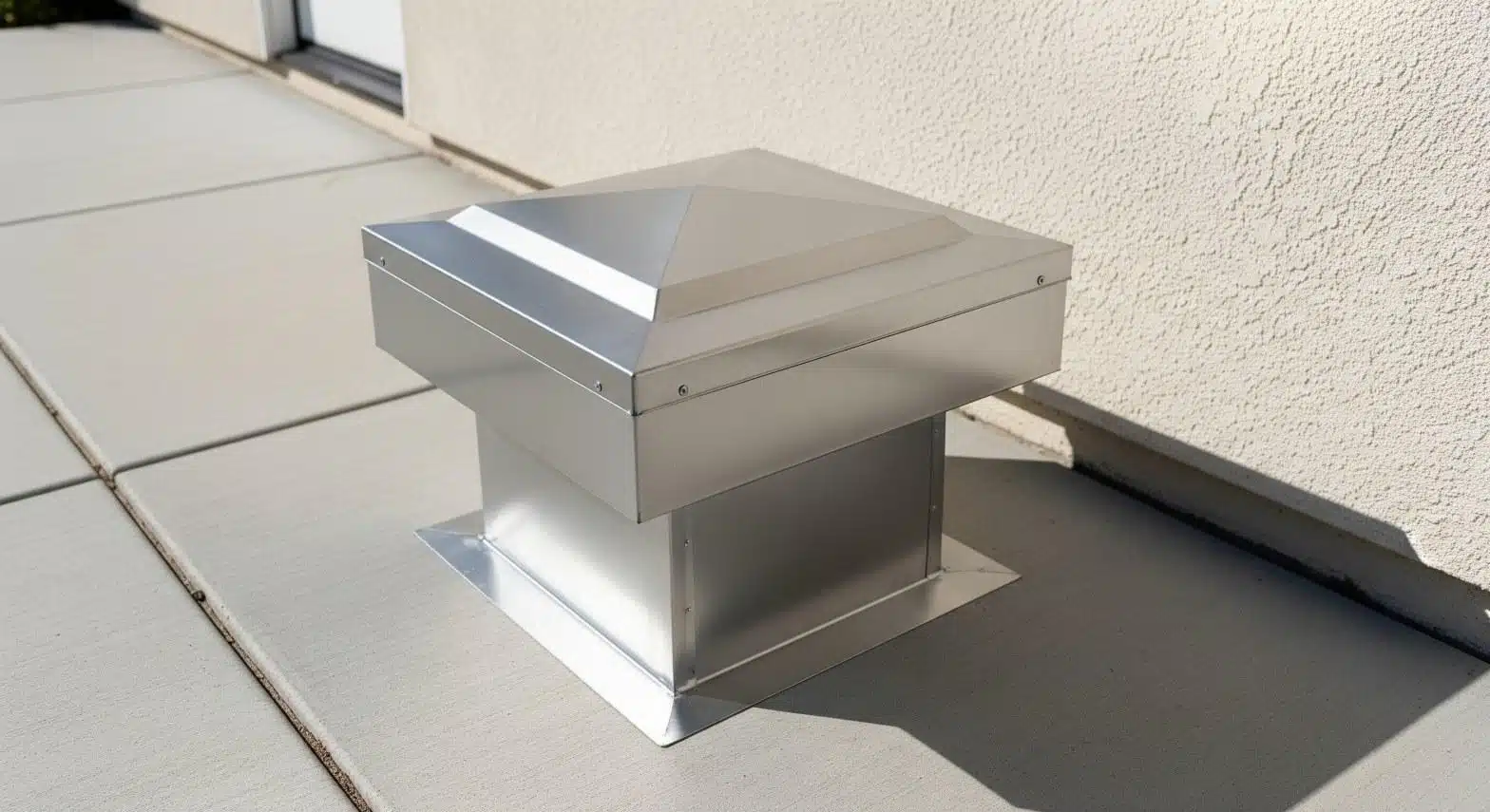
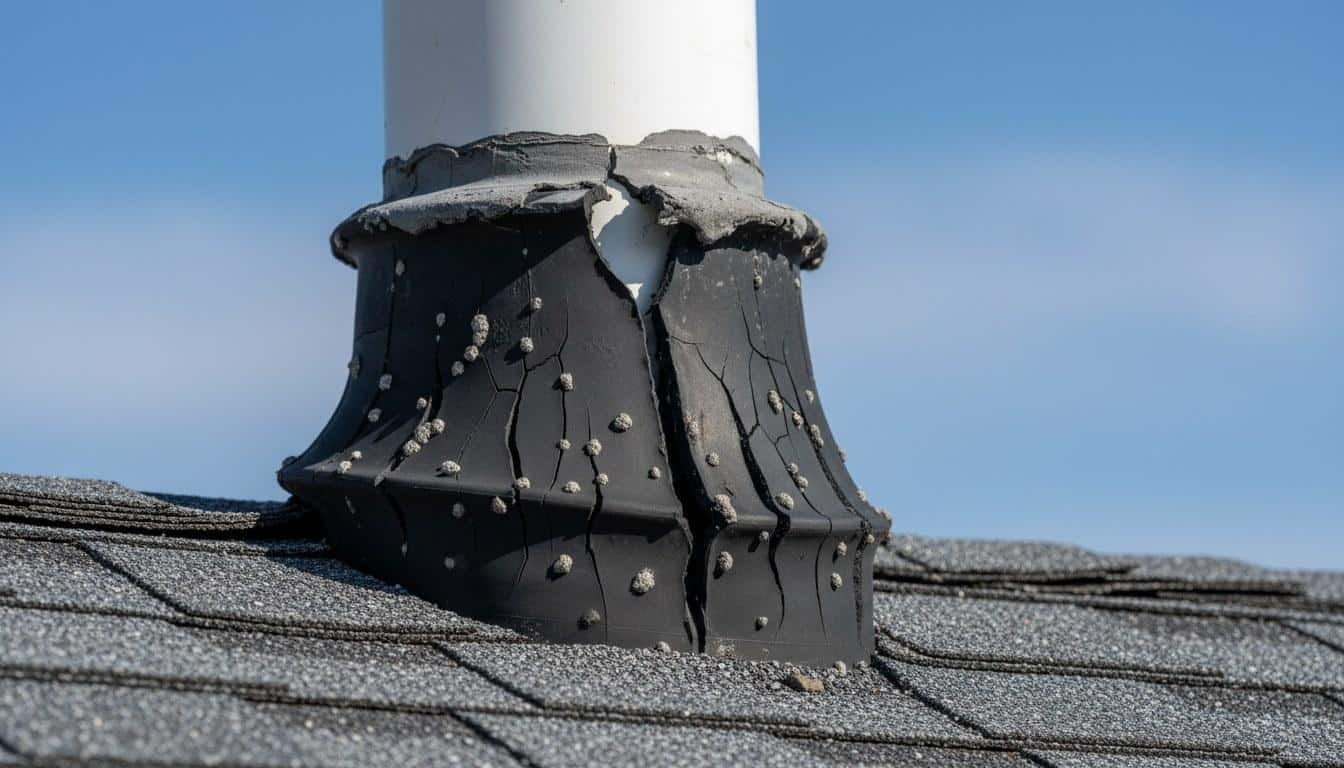
- Pipe boot and vent flashing: Rubber pipe boots degrade in 8 to 15 years under the intense regional sun. A pro checks the collar seal and the bond between the boot and the surrounding shingles or membrane.
- Skylight curb flashing: Skylights have a four-sided flashing system. Each corner, the most vulnerable point, is checked for cracking and separation.
- Drip edge and eave flashing: The metal strip at the roof’s edge that directs water into the gutter is checked for correct overlap, fastening, and corrosion, especially in coastal areas where marine-layer salt air accelerates rust.
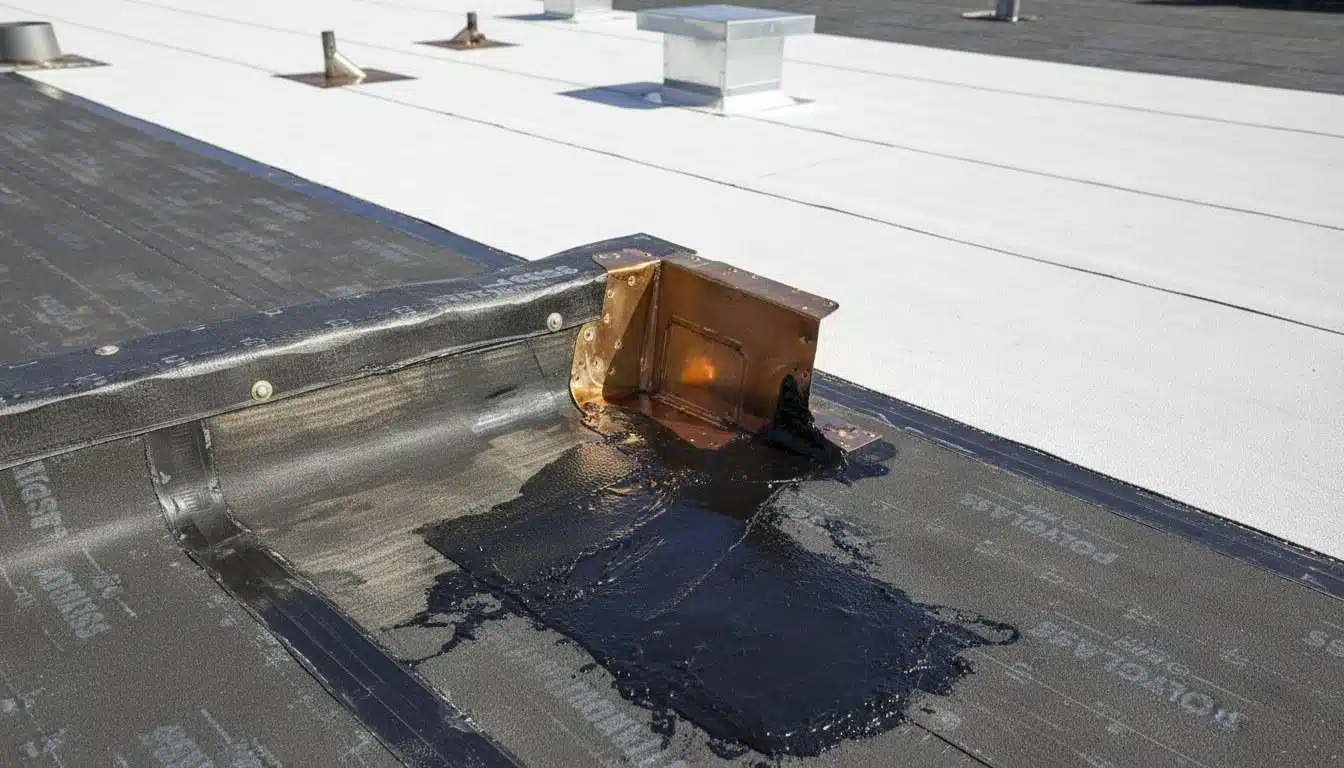
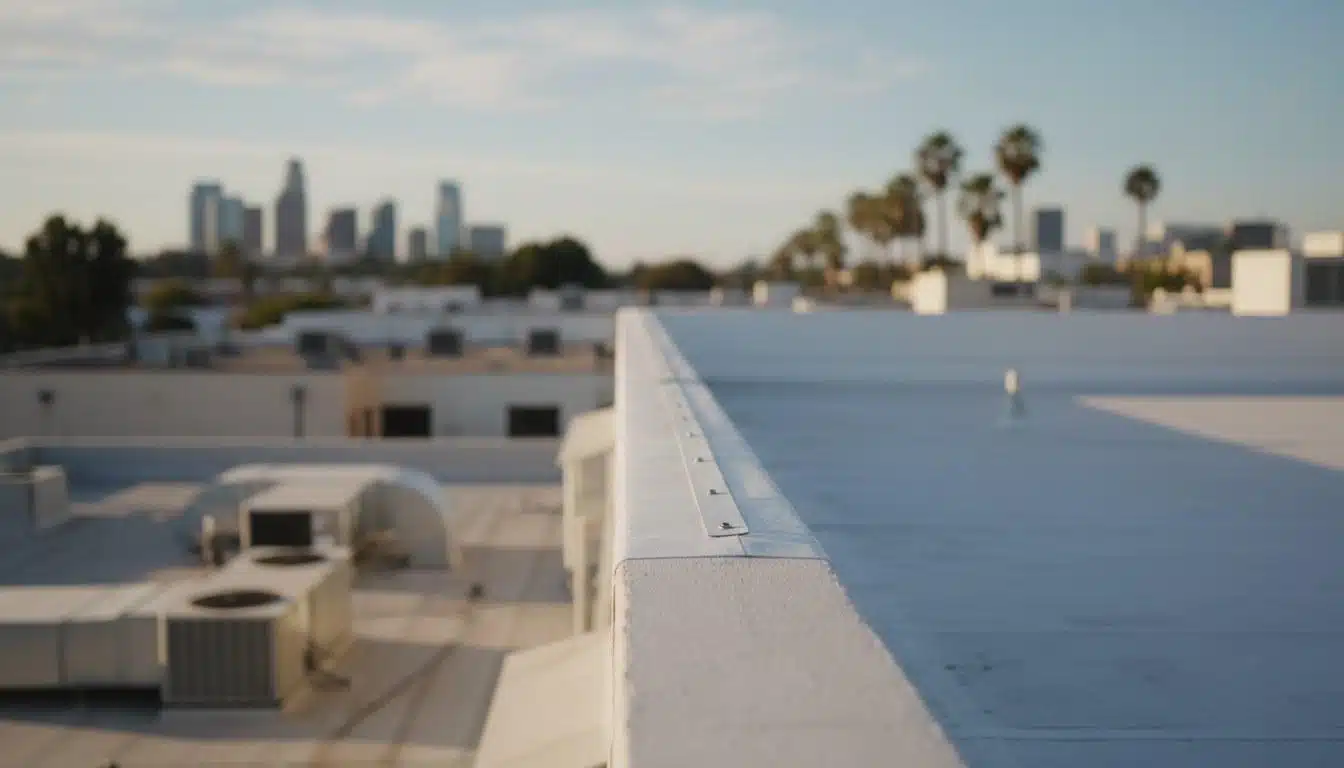
- TPO and flat-roof membrane seams: On commercial and flat residential roofs, every heat-welded seam and termination bar is probed for delamination.
Work performed by a roofer in California must comply with California Contractors State License Board (CSLB) requirements. Always verify your contractor holds an active C-39 Roofing license before any work begins. Permitted work may also need to meet California’s Title 24 building energy standards where roof assembly changes are involved.
How Much Does Roof Flashing Repair Typically Cost in Southern California?
Flashing repair costs across Southern California vary widely based on the type of flashing, the roofing material it interfaces with, and how much water damage has already occurred beneath it. Here are typical regional ranges as market context, not quotes from any specific contractor:
- Sealant-only reapplication at a few joints: Generally ranges from $150 to $400 for a small number of locations, depending on access difficulty and the number of penetrations.
- Single pipe boot replacement: Typically $200 to $500 per boot on an asphalt shingle roof, higher on clay tile where surrounding tiles must be removed and reset.
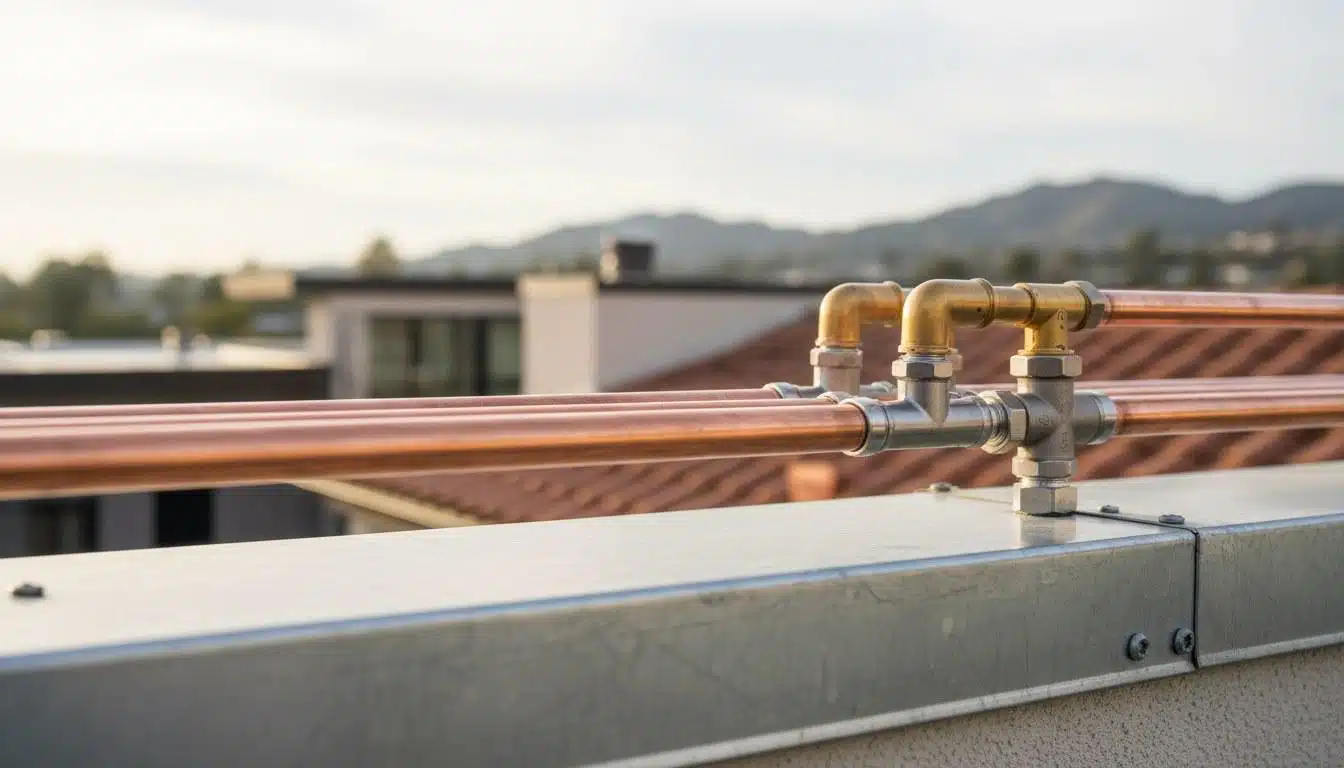
- Chimney flashing replacement (full system): Projects in this category typically range from $800 to $2,500 in this market, depending on chimney width, flashing material chosen (aluminum vs. copper), and whether re-pointing of the brick mortar is also needed.
- Valley flashing replacement: Typically $500 to $1,500 per valley on an asphalt shingle roof; higher on concrete or clay tile roofs where tile removal and resetting adds labor time.
- Full perimeter drip-edge replacement: Generally $300 to $900 for an average single-family home, depending on linear footage and roof-edge complexity.
The cost of waiting is always higher. A flashing gap that costs a few hundred dollars to seal today can allow water to rot roof decking, insulation, and framing, repairs that can run $3,000 to $15,000 or more depending on how long the leak went undetected. Homeowners with active policies should also check their insurance carrier’s filing window; many California policies require damage to be reported within 12 months of the event that caused it.
A flashing gap that costs a few hundred dollars to seal today can allow water to rot roof decking, insulation, and framing, repairs that can run $3,000 to $15,000 or more.
Across our service calls throughout Southern California, we find that homes where flashing was last professionally inspected more than 5 years ago have an average of 3 to 4 correctable deficiencies by the time we arrive, most of which were invisible from the ground but had already allowed moisture into the roof assembly.
Homes where flashing was last professionally inspected more than 5 years ago have an average of 3 to 4 correctable deficiencies by the time a roofer arrives.
For affordable roofing services in Southern California, the most cost-effective path is always a scheduled annual inspection rather than reactive roof repair in Southern California after a leak has already developed. The Inflation Reduction Act federal tax credit may also apply if your flashing repair is part of a broader energy-efficient roofing upgrade, worth confirming with your tax advisor.
Schedule Your Roof Flashing Service
Summer is the best time to get a professional roof flashing inspection on the calendar. Roofers are less backlogged than during the rainy season, and any deficiencies found can be corrected before the first heavy rain arrives in November or December.
Contact Roof Repair & Construction Inc. to book your flashing inspection or to get a written quote on any repair identified during your own ground-level check. The team serves homeowners across Southern California, including ZIP codes 90012, 90013, 90014, 90015, and 90017.
Call (323) 474-1088 to schedule. Request a custom quote before any work begins so you know exactly what the project involves and what it will cost.
Explore our full range of roofing services across Southern California.
Frequently Asked Questions
How do I know if my roof flashing needs to be replaced?
The clearest signs are rust stains running down from a chimney or vent, lifted or buckled metal edges visible from the ground, and water stains on interior ceilings near roof penetrations. If your flashing sealant is cracking or the metal has visible holes, replacement is likely overdue. A licensed roofer can confirm the extent of the damage with a close-up inspection. Call Roof Repair & Construction Inc. at (323) 474-1088 if you spot any of these warning signs.
How do you put flashing on a roof, is it something I can do myself?
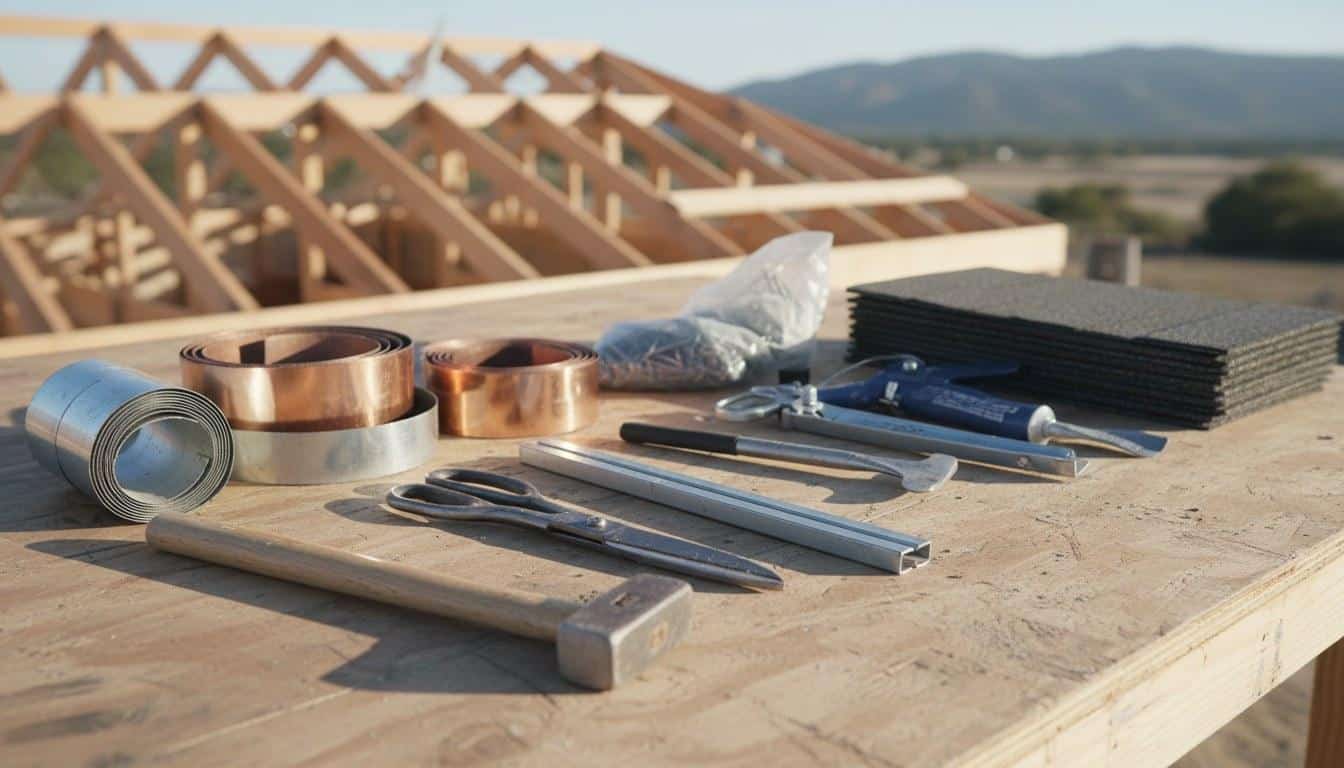
Installing roof flashing correctly requires cutting metal to precise dimensions, integrating it with the surrounding roofing material in the right sequence, and sealing every joint so it sheds water rather than trapping it. While a homeowner can apply fresh sealant to an existing joint as a temporary fix, full flashing installation or replacement should be done by a licensed contractor. Improper installation can void your roofing warranty and create new leak points. The contractor must hold an active CSLB C-39 Roofing license.
How often should roof flashing be inspected in Southern California?
Homeowners across Southern California should have their roof flashing professionally inspected at least once a year, ideally in late summer before the rainy season begins. The combination of intense UV exposure in summer and concentrated winter rainfall makes annual checks the right interval for this climate. Ground-level self-checks with binoculars should be done twice a year and after any major Santa Ana wind event.
What type of metal flashing lasts the longest on a Southern California roof?
Copper flashing has the longest service life, often 50 years or more, and handles the UV and salt-air conditions of the Southern California climate well, but it is also the most expensive option. Galvanized steel and aluminum are the most common choices and typically last 20 to 30 years with proper maintenance. In coastal areas where marine-layer salt air is a factor, aluminum or copper is generally preferred over galvanized steel, which rusts faster in those conditions.
Will my homeowner's insurance cover roof flashing damage in California?
California homeowner's insurance policies typically cover flashing damage caused by a sudden event, like a windstorm or falling debris, but not gradual deterioration from age or lack of maintenance. If a Santa Ana wind event lifted your flashing, document the damage with photos and contact your insurer promptly. Most California policies require damage to be reported within 12 months of the event. A licensed roofer can provide a written damage assessment to support your claim.