Affordable roof maintenance across Southern California can prevent costly repairs before summer heat and Santa Ana winds take a toll. This 2026 guide covers what to inspect, what it costs, and when to call a licensed roofer.
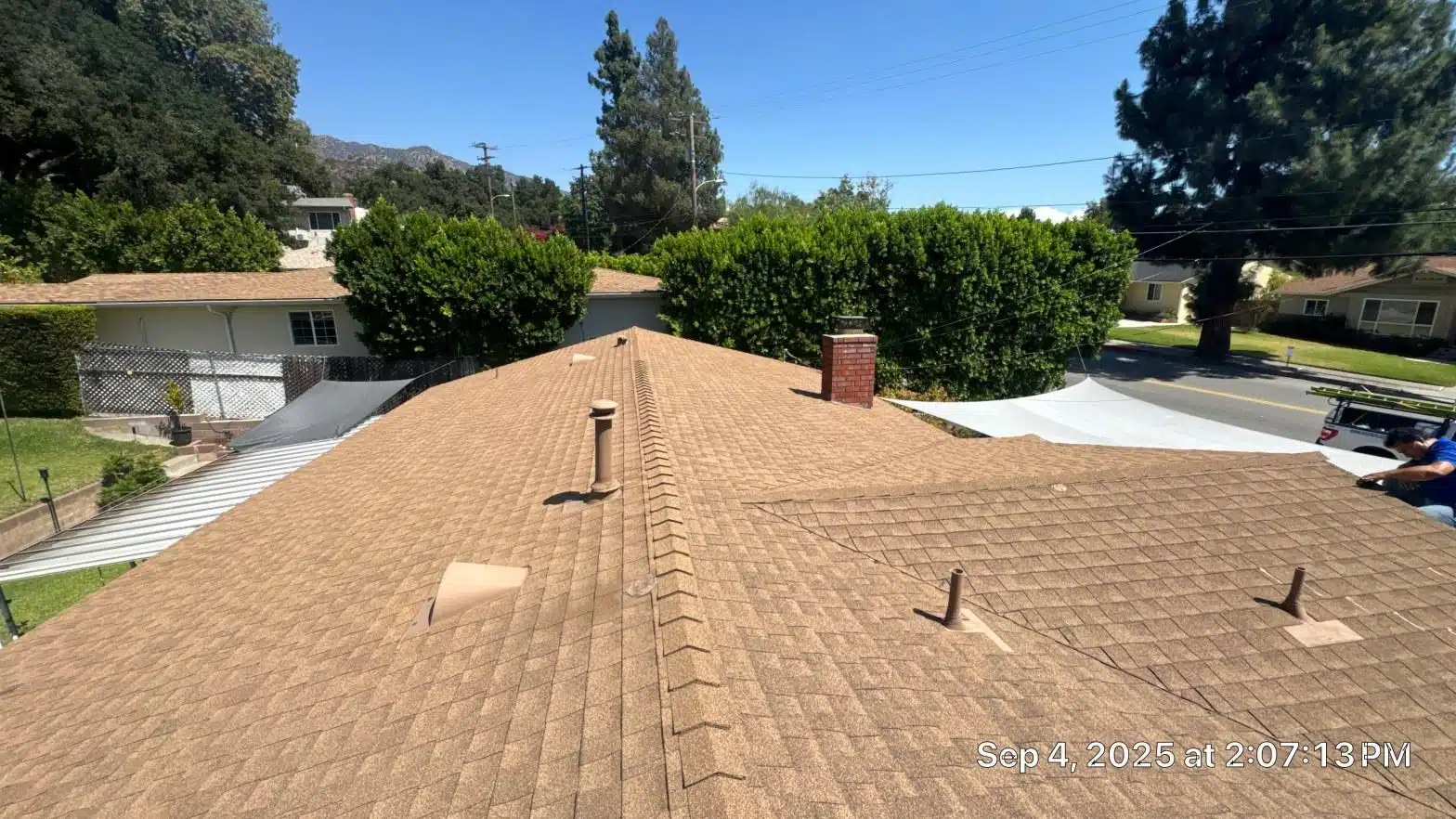
Why Southern California Homeowners Should Act on Roof Maintenance Before Summer 2026
Southern California summers bring intense UV radiation, prolonged dry heat, and fall Santa Ana winds that can push gusts past 60 mph, conditions that quietly degrade roofing materials year after year. According to NOAA’s Southern California weather office, the region averages over 280 sunny days per year, meaning roofing materials absorb solar radiation almost every day of the year.
That constant UV exposure breaks down asphalt shingles, dries out sealants around metal flashing, and causes clay or concrete tiles to become brittle at their edges. By the time visible damage appears, water intrusion may have already started behind the scenes.
Affordable roof maintenance is the most cost-effective way to stay ahead of these problems. A small investment in inspection and upkeep now avoids the far larger bill that comes when a minor leak becomes a rotted deck or a damaged ceiling.
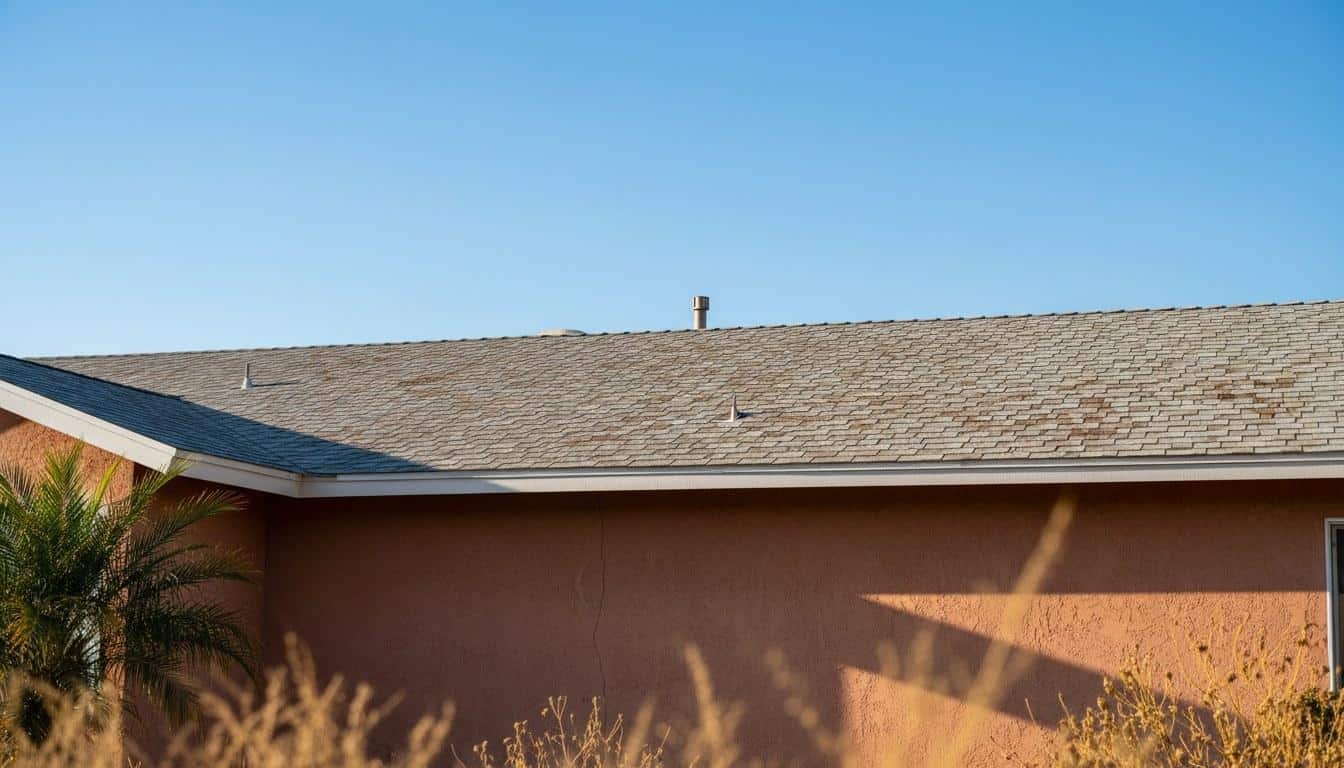
What Is Roof Flashing and Why Does It Matter So Much?
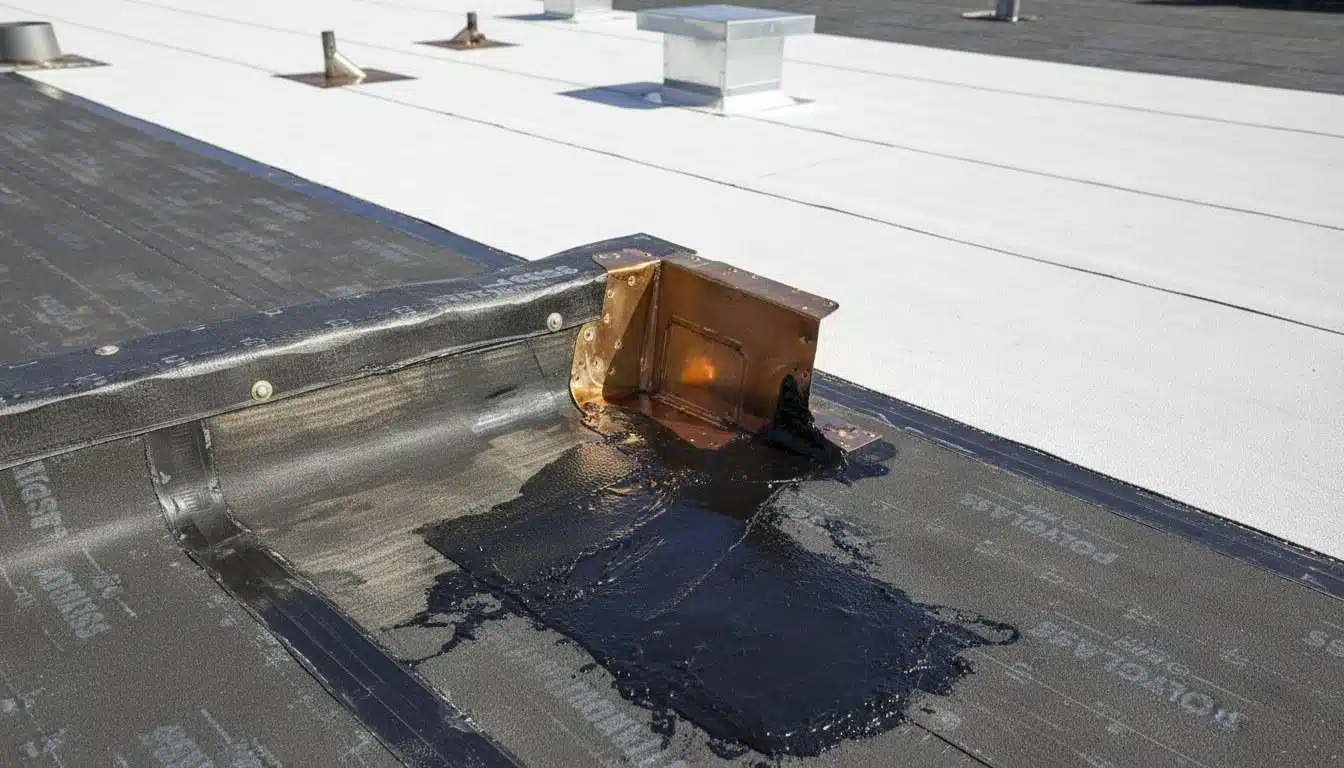
Roof flashing is the thin metal sheeting, most often galvanized steel, aluminum, or copper, installed at every joint, valley, and penetration point on your roof to direct water away from vulnerable seams. Without properly sealed flashing, water finds its way into the roof deck at chimneys, skylights, vents, and the valleys where two roof slopes meet.
In Southern California, flashing is especially prone to failure because of the temperature swings between hot afternoons and cooler marine-layer mornings near coastal neighborhoods like Southern California or El Segundo. That daily expansion and contraction loosens sealants and lifts flashing edges over time.
Common flashing types you will find on regional homes include:
- Step flashing: Layered L-shaped pieces installed along roof-to-wall joints, such as where a dormer meets the main roof.
- Counter flashing: Metal embedded into mortar or stucco above step flashing, common at chimneys throughout the San Fernando Valley.
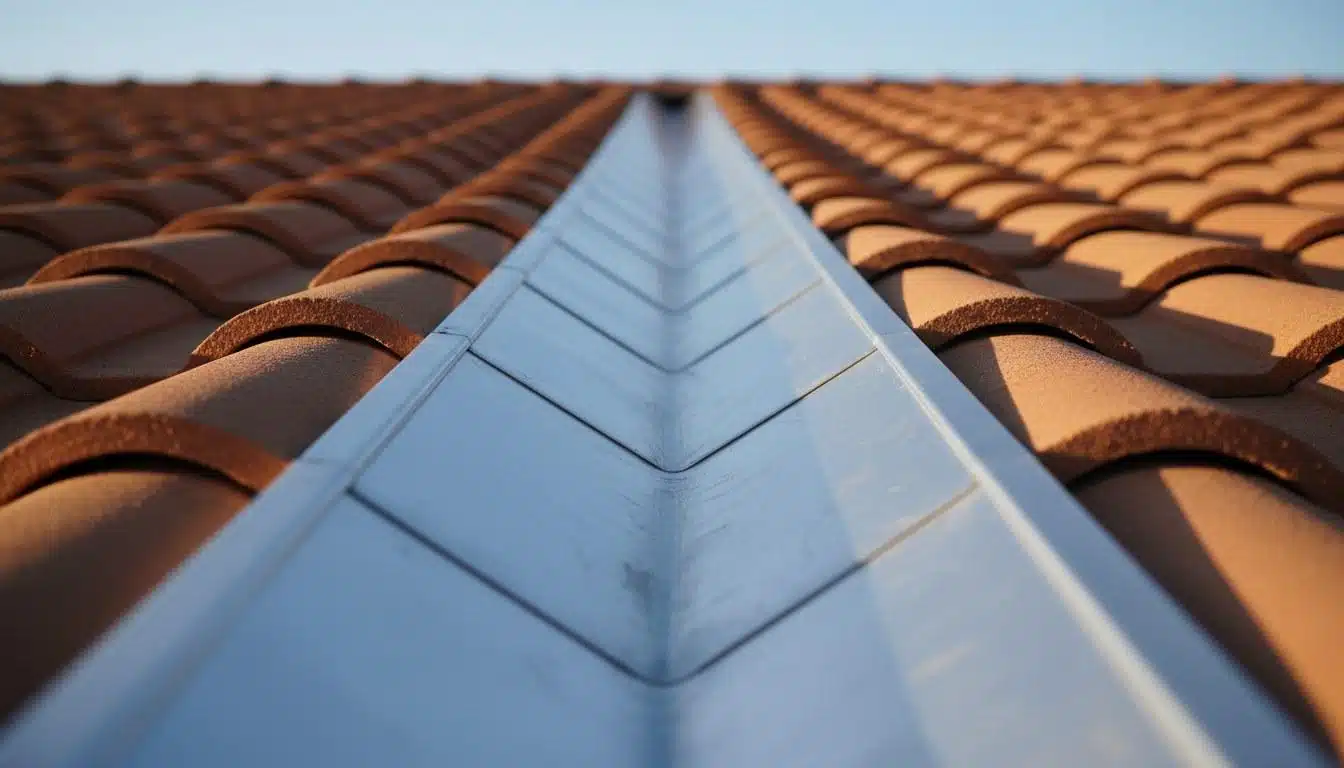
- Valley flashing: A continuous strip of metal flashing running the full length of a roof valley where two slopes converge.
- Drip edge flashing: Installed along eaves and rakes to channel water into gutters and away from the fascia board.
- Pipe boot flashing: A collar of metal and rubber that seals around plumbing vents penetrating the roof surface.
When any of these fail, the result is a water path directly into your home’s structure. California’s Title 24 building energy standards also require proper roof envelope integrity, which includes correctly installed and maintained flashing details on permitted work.
What Are the Warning Signs You Can Spot from the Ground?
You do not need to walk on your roof to catch most early warning signs, a pair of binoculars and a slow walk around your home’s perimeter will reveal the most common problems. Walking on a roof without proper training is dangerous and can crack tiles or damage shingles, so ground-level checks are the right first step for any homeowner.
In roughly 6 out of 10 cases, the homeowner spotted the first sign of trouble from the driveway before calling us.
Watch for these red flags from the ground:
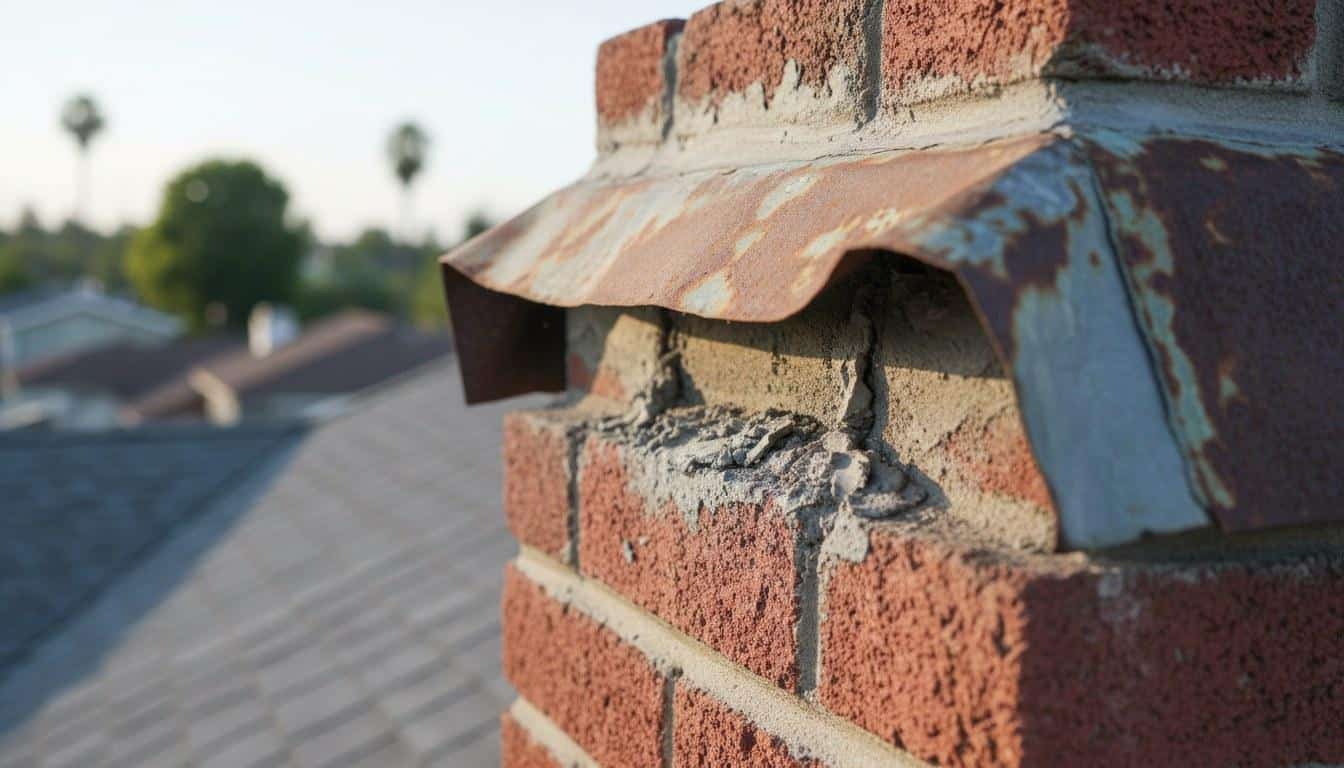
- Lifted or buckled flashing: Metal edges that have pulled away from the roof surface or wall, visible as a gap or a curled strip of metal near chimneys or skylights.
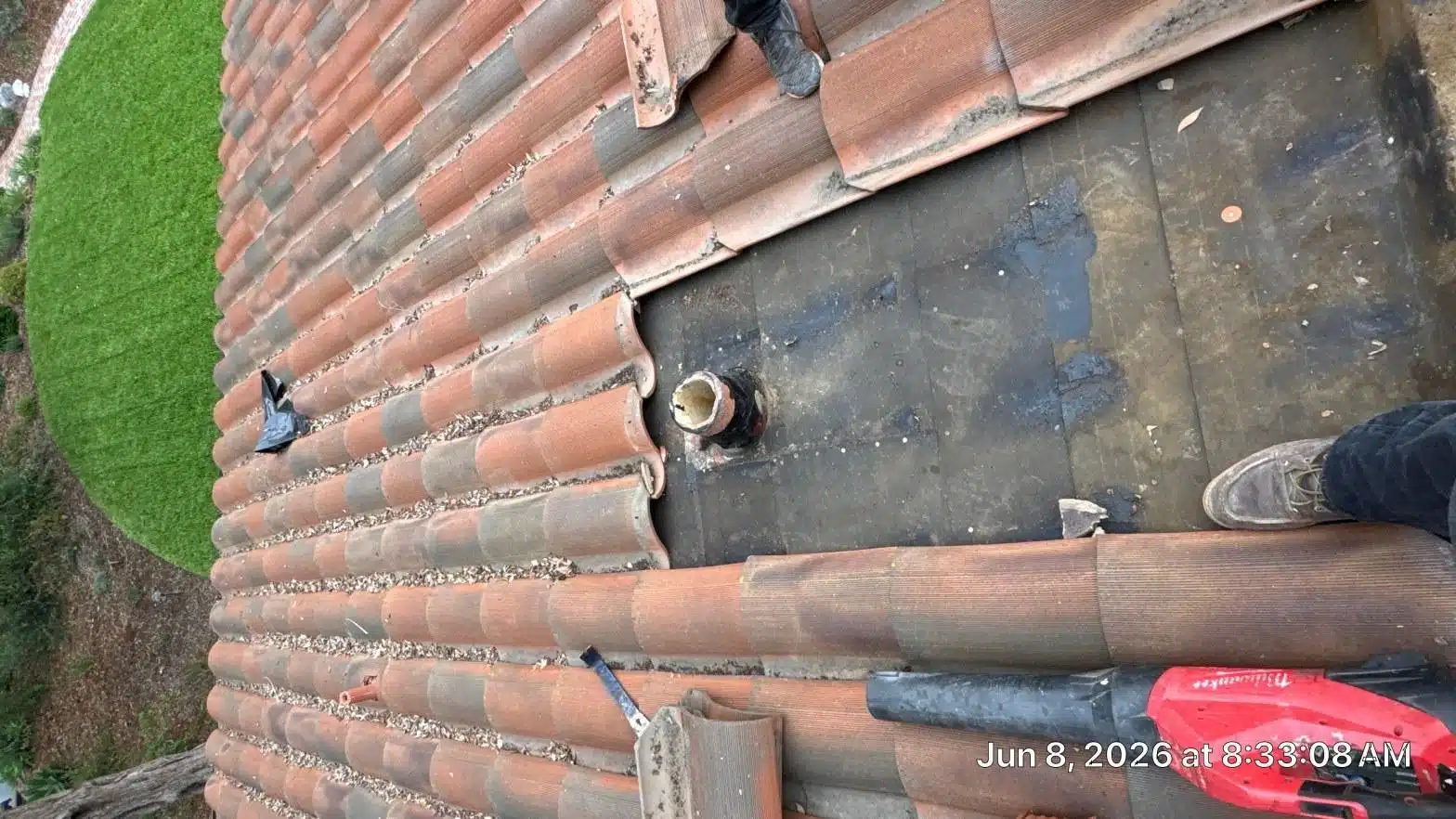
- Missing shingles or cracked tiles: Bare patches on the roof deck or visible cracks in clay or concrete tiles, especially after a Santa Ana wind event.
- Rust stains on flashing: Orange or brown streaks running down from metal flashing points indicate the galvanized coating has worn through.
- Granule loss on shingles: Check the gutters after rain, a heavy accumulation of dark granules signals aging asphalt shingles that are losing their UV protection.
- Sagging roofline: Any visible dip or wave in what should be a straight ridge line suggests structural moisture damage below.
- Dark stains on interior ceilings: Brown rings or bubbling paint on ceilings directly below the roof are a strong indicator of active water intrusion at a flashing point.
- Daylight through attic boards: A quick attic check in daylight, look up toward the roof deck for any pinpoints of light, which signal gaps in the envelope.
If you see two or more of these signs at once, the situation has moved from routine maintenance to a repair that should happen within the next 30 days, not at the end of the season.
How Much Does Affordable Roof Maintenance Cost in Southern California?
In the Southern California regional market, a professional roof inspection typically ranges from $150 to $400 depending on roof size and complexity, while targeted flashing repairs generally fall between $200 and $600 per repair zone. Full preventive maintenance packages that include inspection, minor flashing re-sealing, gutter clearing, and a written report typically range from $300 to $800 for a standard single-family home.
Compare that to the cost of ignoring problems. A water-damaged roof deck replacement can run from $1,500 to over $5,000 depending on the area affected. A full roof replacement on a 1,500-square-foot home typically ranges from $8,000 to $20,000 or more depending on material choice.
A water-damaged roof deck replacement in the Southern California market can run from $1,500 to over $5,000 depending on the area affected.
Several factors move the cost of a maintenance visit up or down:
- Roof pitch: Steeper roofs require more safety equipment and take longer to service safely.
- Roofing material: Clay and concrete tile roofs common in older neighborhoods or Southern California require more careful handling than asphalt shingle roofs.
- Number of penetrations: Each skylight, chimney, vent stack, or solar panel mount adds a flashing point that needs inspection.
- Accessibility: Homes with limited yard access or multi-story structures require additional setup time.
- Extent of existing damage: If active repairs are needed alongside the maintenance visit, costs increase accordingly.
As of 2026, homeowners who use energy-efficient roofing materials during repair work may also qualify for the Inflation Reduction Act federal tax credit, which covers up to 30% of the cost of qualifying energy-efficient upgrades. Ask about eligible materials when you request your quote.
Request a custom quote from Roof Repair & Construction Inc. to get a number specific to your home’s size, material, and condition.
What Does a Licensed Roofer Actually Do During a Maintenance Visit?
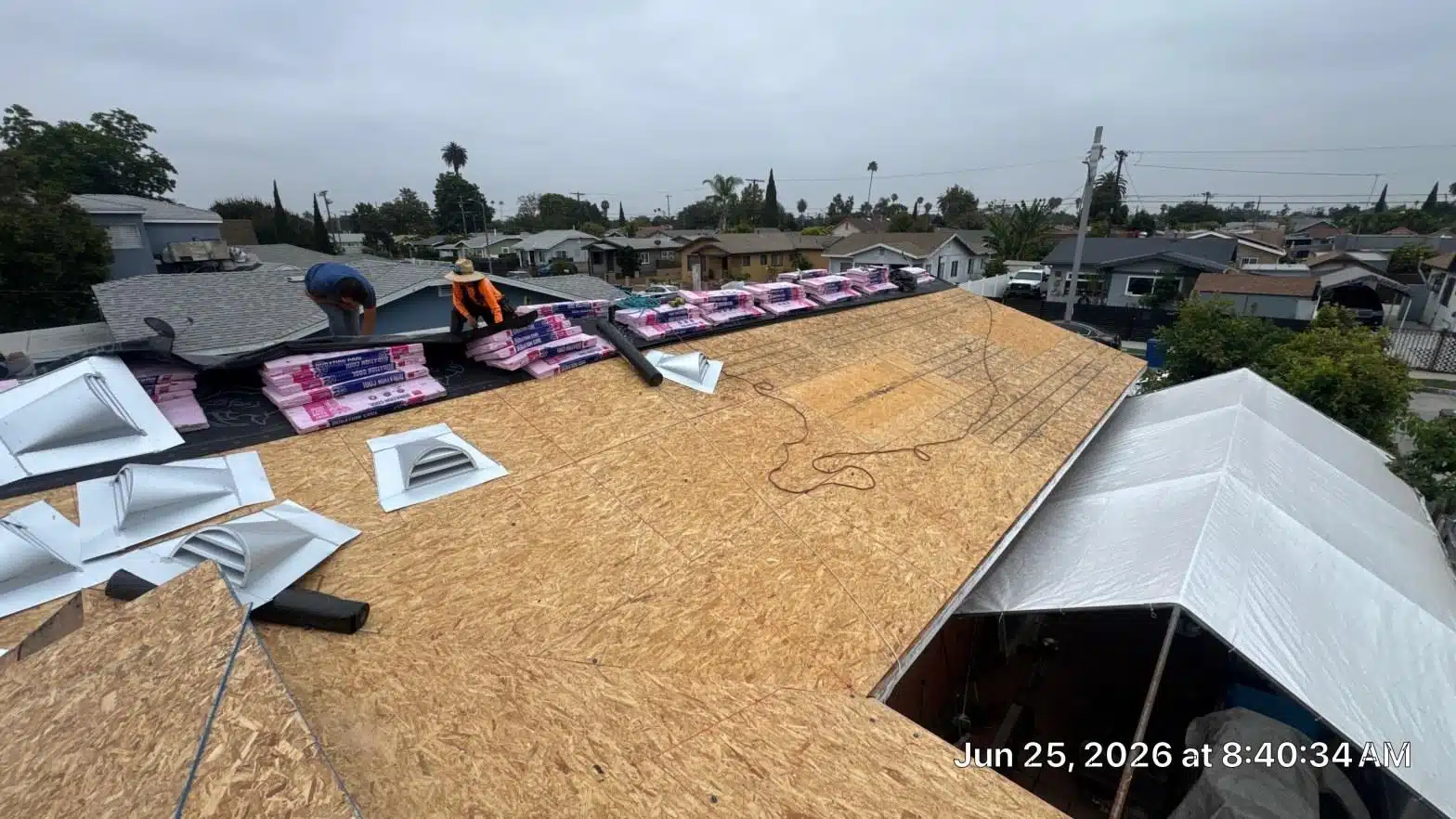
A licensed roofer performs a systematic inspection of every roof surface, flashing point, penetration, and drainage component, then documents findings and completes any approved minor repairs the same day. This is very different from a visual glance from a ladder.
Contractors working in California must be licensed by the California Contractors State License Board (CSLB). Always verify a contractor’s license number on the CSLB website before any work begins.
A thorough maintenance visit from a qualified roofer includes these steps:
- Attic inspection first: The roofer checks for moisture staining, daylight gaps, and insulation condition before going on the roof, since the attic reveals problems the surface may hide.
- Full surface walk: Every square foot of roofing material is checked for cracking, lifting, granule loss, or displacement.
- Flashing inspection at all penetrations: Each piece of metal flashing is checked for rust, lifted edges, failed sealant, and gaps. Step flashing, counter flashing, valley flashing, and pipe boot flashing are all examined individually.
- Re-sealing and re-bedding: Loose flashing is re-secured and re-sealed with appropriate roofing caulk or roofing cement rated for Southern California’s UV exposure.
- Gutter and downspout check: Blocked gutters cause water to back up under roofing materials, so clearing and inspecting them is part of any complete maintenance visit.
- Written report with photos: A professional contractor provides a written summary of findings, photos of problem areas, and a prioritized list of any recommended repairs.
Across our service calls, we find that homes with clay tile roofs average 3 to 5 failed flashing seals per maintenance visit, compared to 1 to 2 on comparable asphalt shingle roofs of the same age, a pattern we trace to the greater thermal mass of tile expanding and contracting against metal flashing through each daily heat cycle.
Homes with clay tile roofs average 3 to 5 failed flashing seals per maintenance visit, compared to 1 to 2 on comparable asphalt shingle roofs of the same age.
| Roofing Material | Common in LA Neighborhoods | Typical Flashing Concern | Maintenance Frequency |
|---|---|---|---|
| Asphalt Shingle | across Southern California | Granule loss, lifted drip edge | Every 1-2 years |
| Clay / Concrete Tile | Southern California | Counter flashing separation, cracked tiles | Every 1-2 years |
| Metal Standing-Seam | Modern builds, hillside homes | Panel joint sealant, eave flashing | Every 2-3 years |
| TPO / Flat Membrane | Commercial, flat-roof bungalows | Membrane-to-flashing termination bar | Every 1-2 years |
If a maintenance visit uncovers damage that requires a permit, such as replacing more than 10% of a roof’s total area, your roofer should pull the appropriate permit through the Los Angeles Department of Building and Safety before work begins. Permitted work protects your home’s insurance coverage and resale value.
Get Affordable Roof Maintenance Help in Southern California
Schedule your roof inspection before the peak summer heat arrives. Small problems found in spring cost a fraction of what they cost after months of 90-plus-degree days have worsened them.
Call Roof Repair & Construction Inc. at (323) 474-1088 to book your maintenance visit. Get a written assessment of your roof’s condition, a clear list of any repairs needed, and a custom quote, all specific to your home in Southern California.
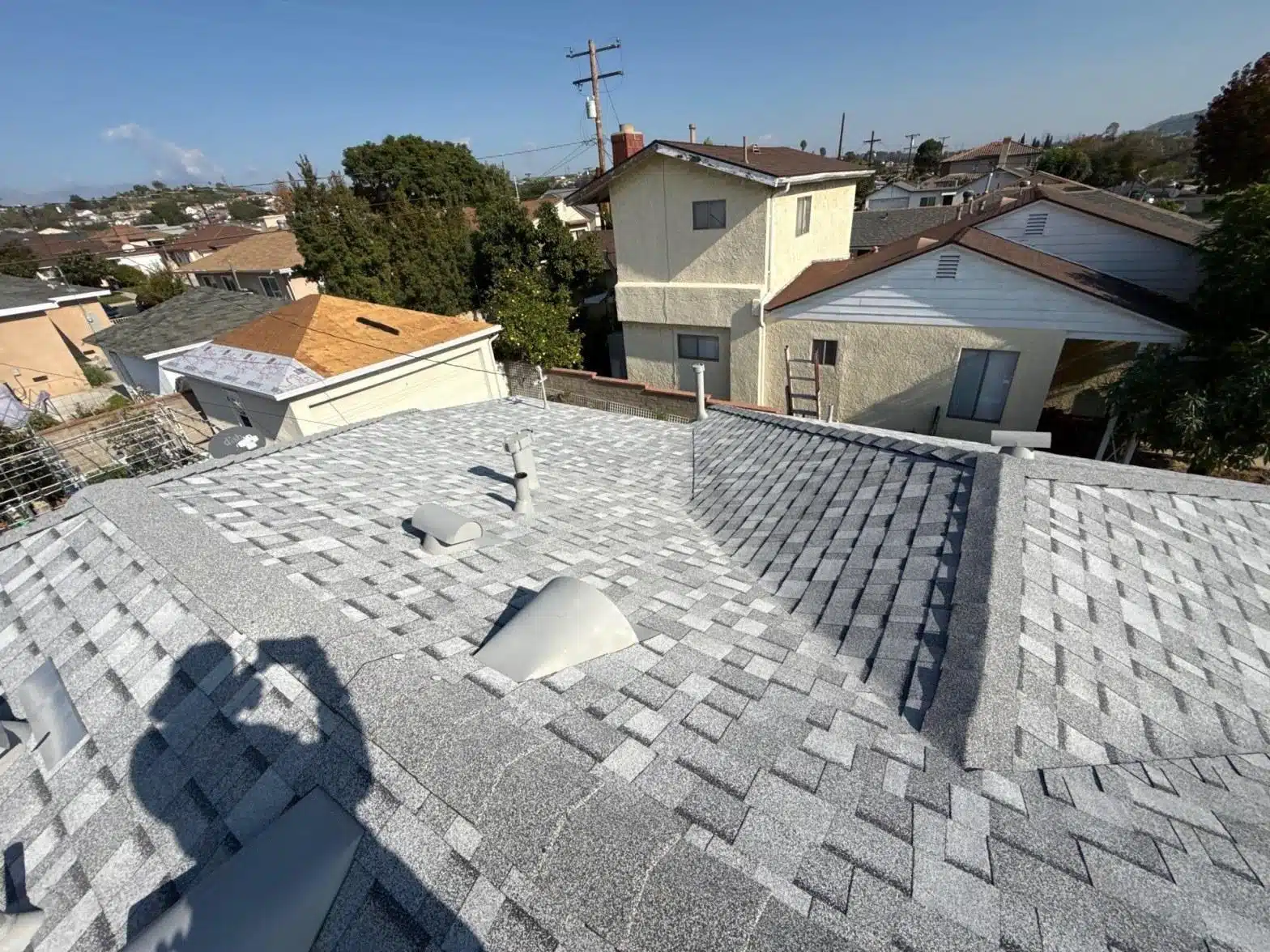
Roof Repair & Construction Inc. serves homeowners across Southern California. Whether your home has asphalt shingles, clay tile, or a flat TPO membrane, the team handles every roof type and every flashing detail.
Do not wait until a stain appears on your ceiling. Call (323) 474-1088 today and get affordable roof maintenance scheduled before summer heat turns a small fix into a major repair.
Explore our full range of roofing services across Southern California.
Frequently Asked Questions
How do I put flashing on a roof myself, is it something a homeowner can do?
Basic flashing re-sealing with roofing caulk is something a careful homeowner can do from a ladder at the eave level, but anything that requires walking the roof or removing tiles should be left to a licensed roofer. Improper flashing installation can void your roofing warranty and may not meet California building code if the repair area is large enough to require a permit. For safety and code compliance, call a professional for anything beyond surface-level sealant touch-ups.
How often should I schedule roof maintenance on my Southern California home?
Most roofing professionals recommend an inspection every 12 to 24 months for homes in Southern California. After a significant Santa Ana wind event or a rare heavy rainstorm, an additional check is a good idea even if your last inspection was recent. Catching lifted flashing or displaced tiles within 30 days of a storm prevents water intrusion from becoming structural damage.
What is the difference between flashing and regular roofing material?
Roofing material, shingles, tiles, or membrane, covers the broad surface of your roof, while metal flashing seals the joints, edges, and penetrations where water would otherwise find a path inside. Flashing is typically made of galvanized steel, aluminum, or copper and is installed at chimneys, skylights, vents, and roof valleys. Both need regular inspection, but flashing tends to fail faster in Southern California because of daily temperature swings.
Does homeowner's insurance cover roof flashing repairs in California?
California homeowner's insurance policies typically cover sudden damage from a covered event, such as wind or falling debris, but not gradual deterioration from age or lack of maintenance. If a Santa Ana windstorm lifts your flashing and causes a leak, document the damage with photos immediately and file within your policy's reporting window, which is often 30 to 60 days. Routine maintenance and wear-related repairs are generally not covered, which is another reason to stay ahead of problems with annual upkeep.
How much does affordable roof maintenance usually cost in Southern California?
Across the Southern California market, a professional roof maintenance visit that includes inspection, minor flashing re-sealing, and a written report typically ranges from $300 to $800 for a standard single-family home. Targeted flashing repairs generally add $200 to $600 per repair zone depending on the material and complexity. Contact Roof Repair & Construction Inc. at (323) 474-1088 for a custom quote based on your specific roof size, material, and condition.