
What Did This Reroof Project Actually Involve?
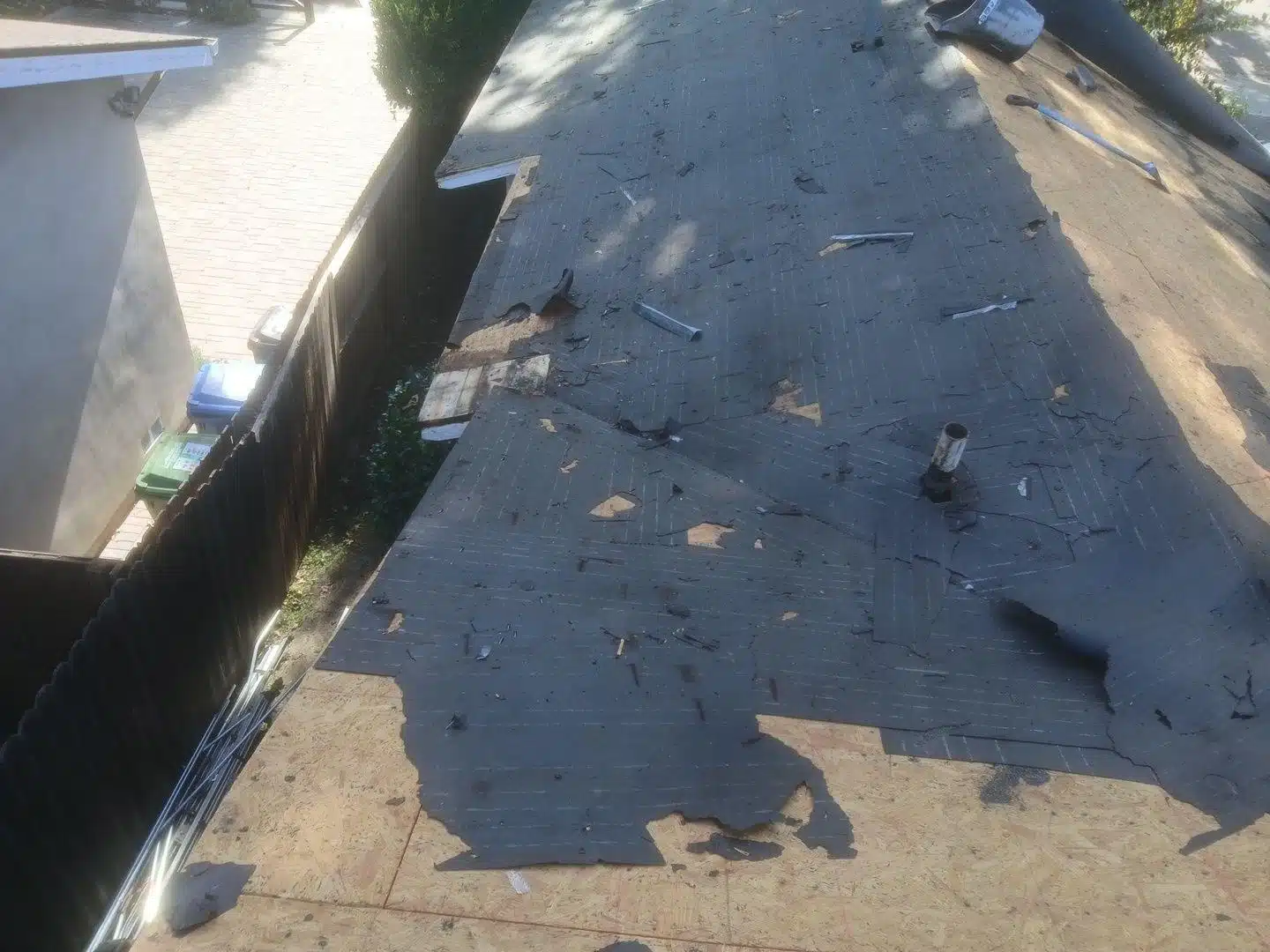
This job was a ground-up shingle reroof on a single-family home in Los Angeles County, completed on November 26, 2025. The existing deck was too deteriorated to reroof over, so the crew tore off all old material and replaced the full OSB decking before a single square of underlayment went down. The homeowner’s goal was straightforward: stop recurring leaks, address visible deck rot, and get the home to a sound waterproof condition before winter rainfall arrived.
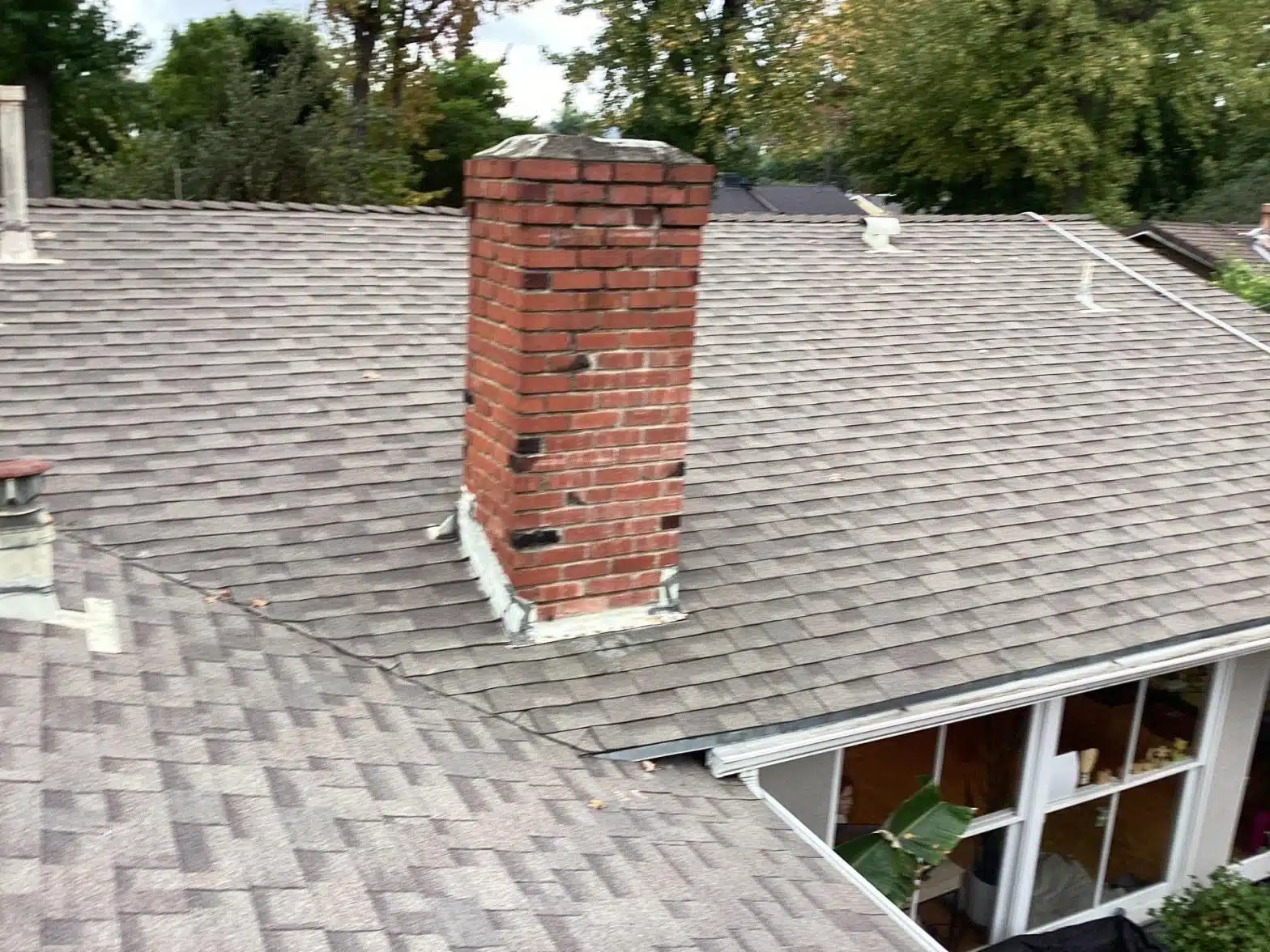
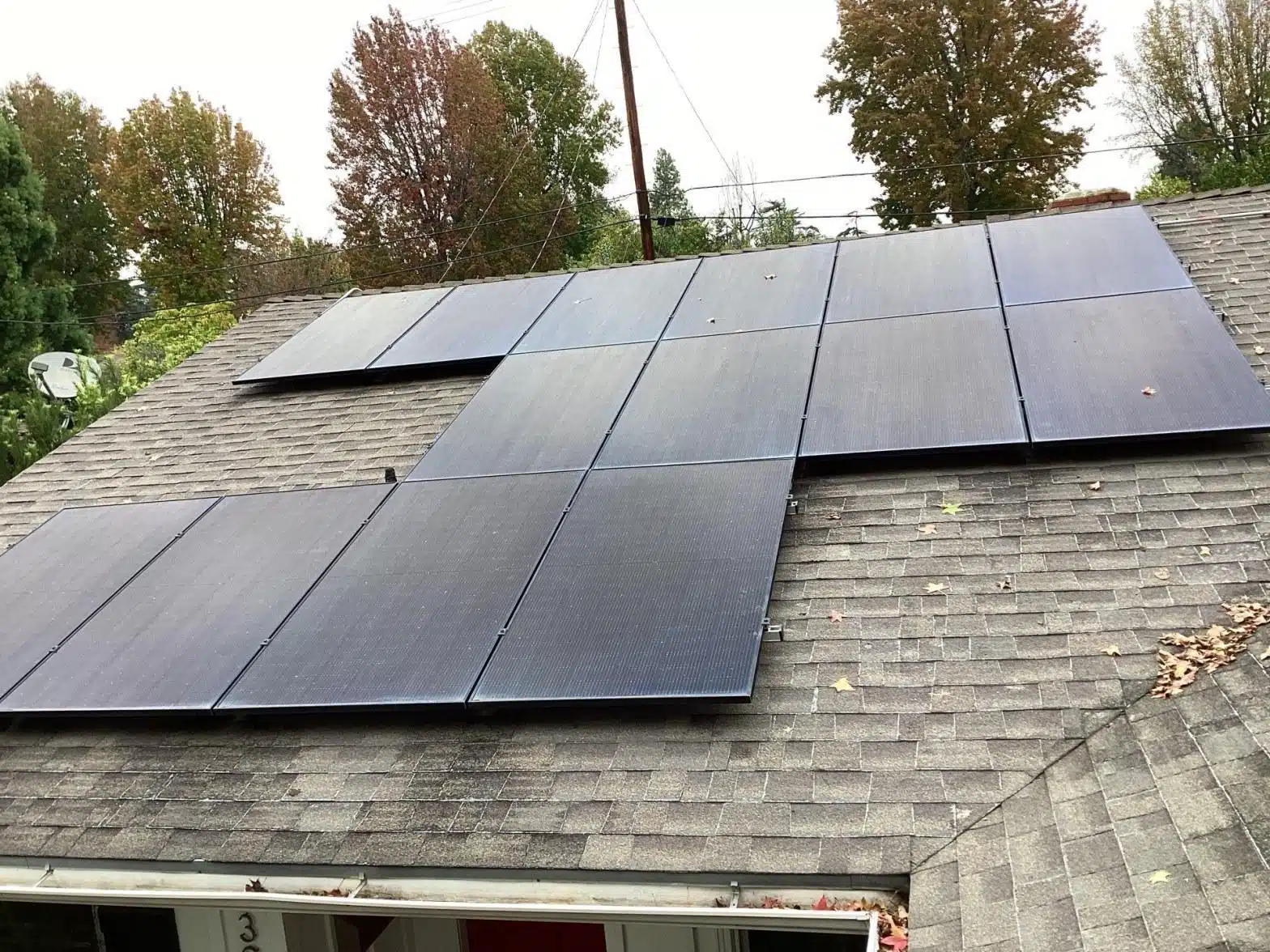
The property presented a few complications that pushed this beyond a standard reroof. The roof plane is large, with multiple sections at different pitches, and a full-height brick chimney penetrates the field, a classic source of water intrusion when flashing fails. The existing solar array also required careful coordination to work around without damaging the panel mounts.
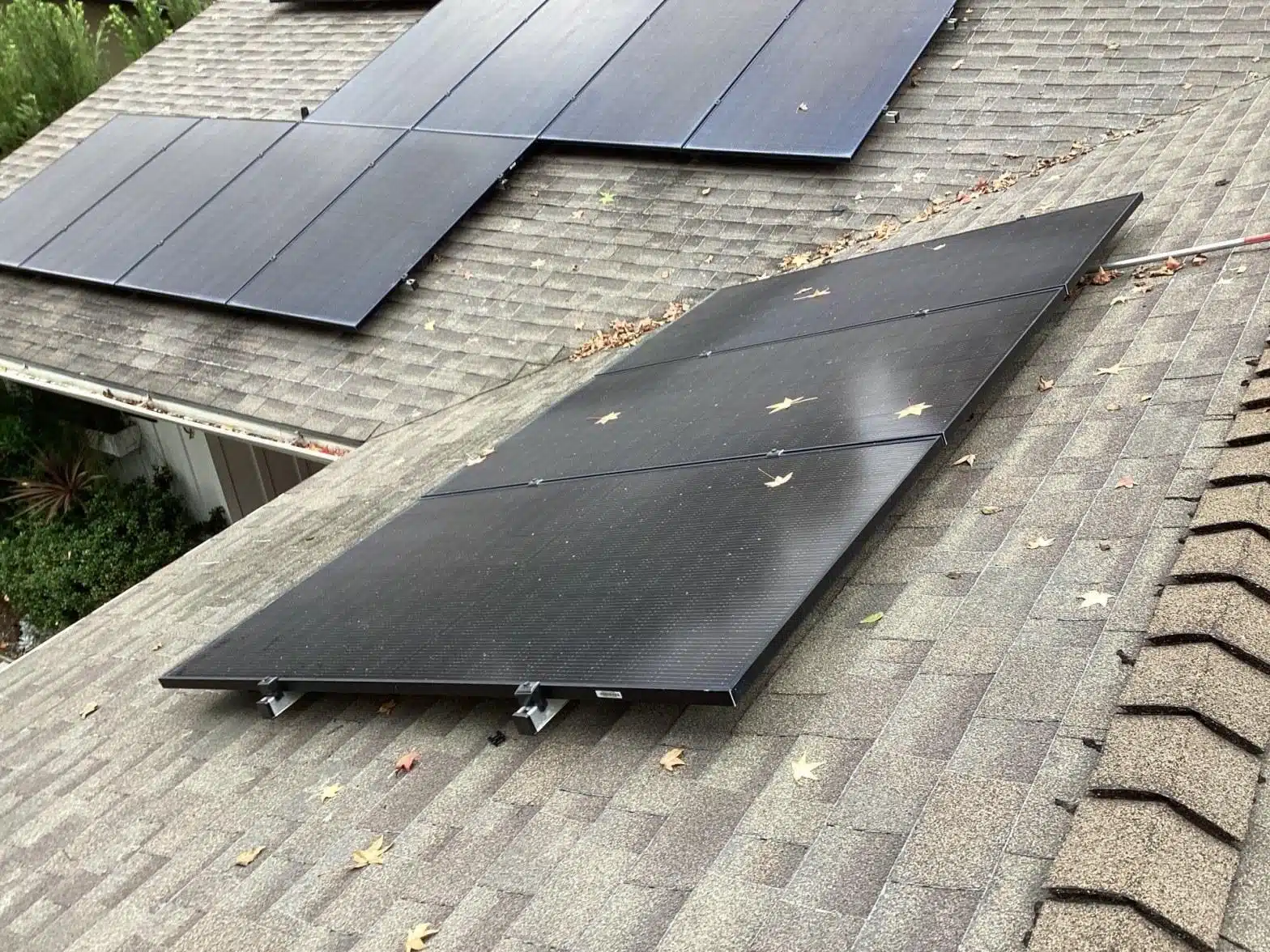
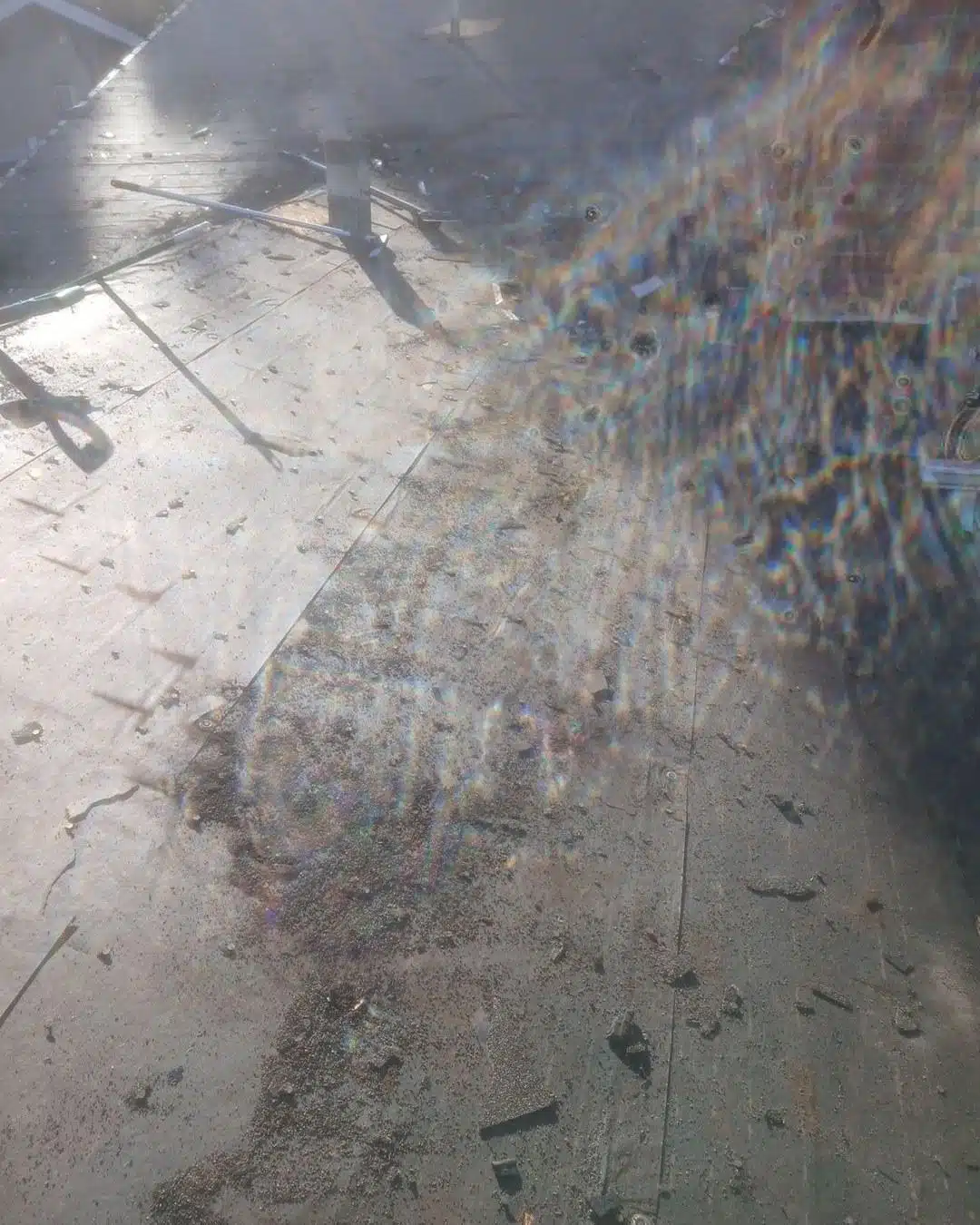
Solar panels were temporarily unracked from their mounting hardware during the decking phase. The shingle surface visible beneath those panels showed granule loss and surface cracking consistent with a roof that had exceeded its 20- to 25-year service life, the typical range for a standard 3-tab or entry-level architectural shingle in the Southern California climate, where UV exposure accelerates shingle aging compared to cooler regions.
Why Did the Entire Deck Need Replacement?
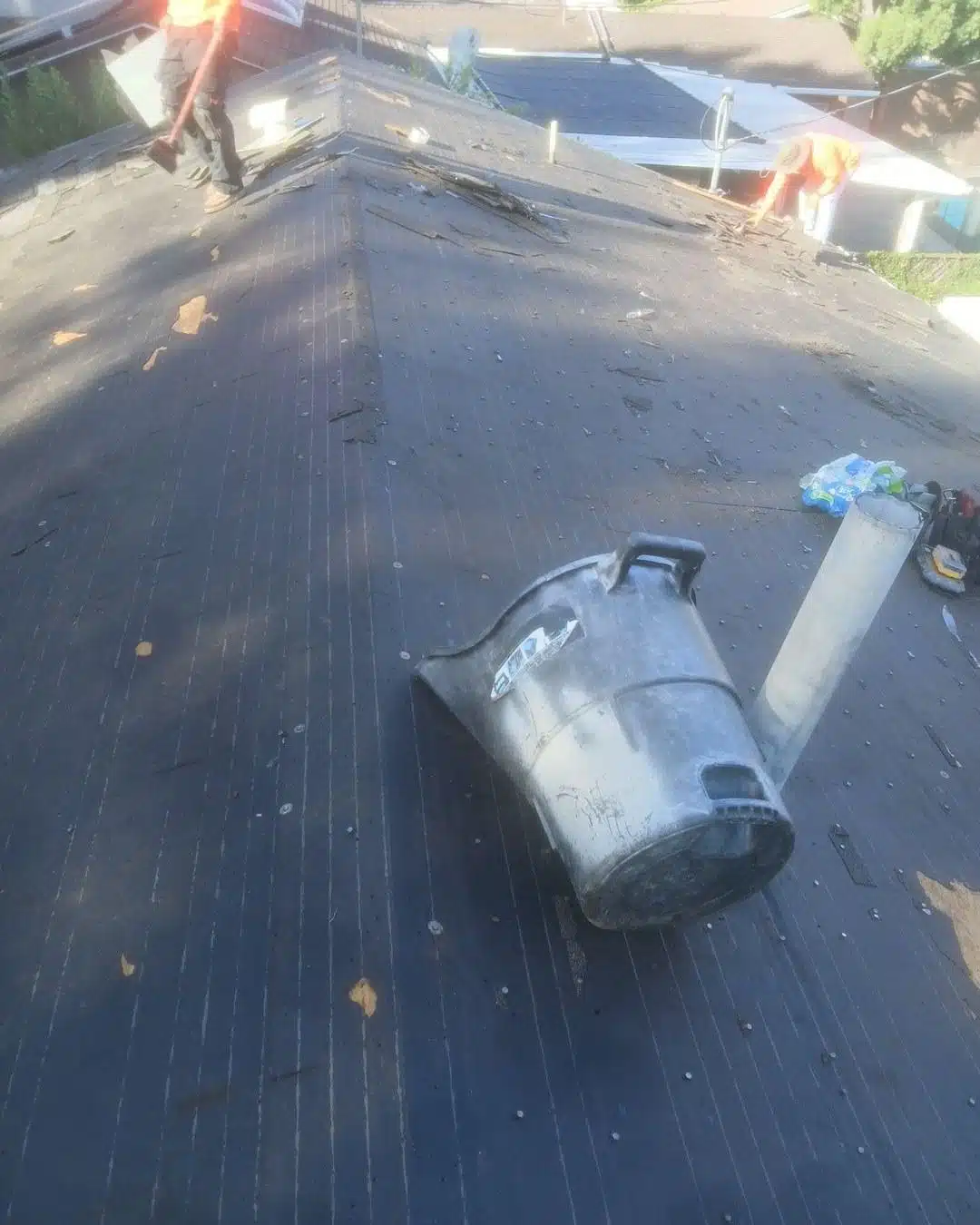
When the tear-off exposed the structural deck, the panels showed delamination, soft spots, and surface checking across multiple roof sections, damage that rules out a simple overlay or a partial re-deck. A reroof installed over compromised OSB will fail prematurely because fasteners won’t hold at rated pull-through values, and trapped moisture will continue rotting the substrate from below.
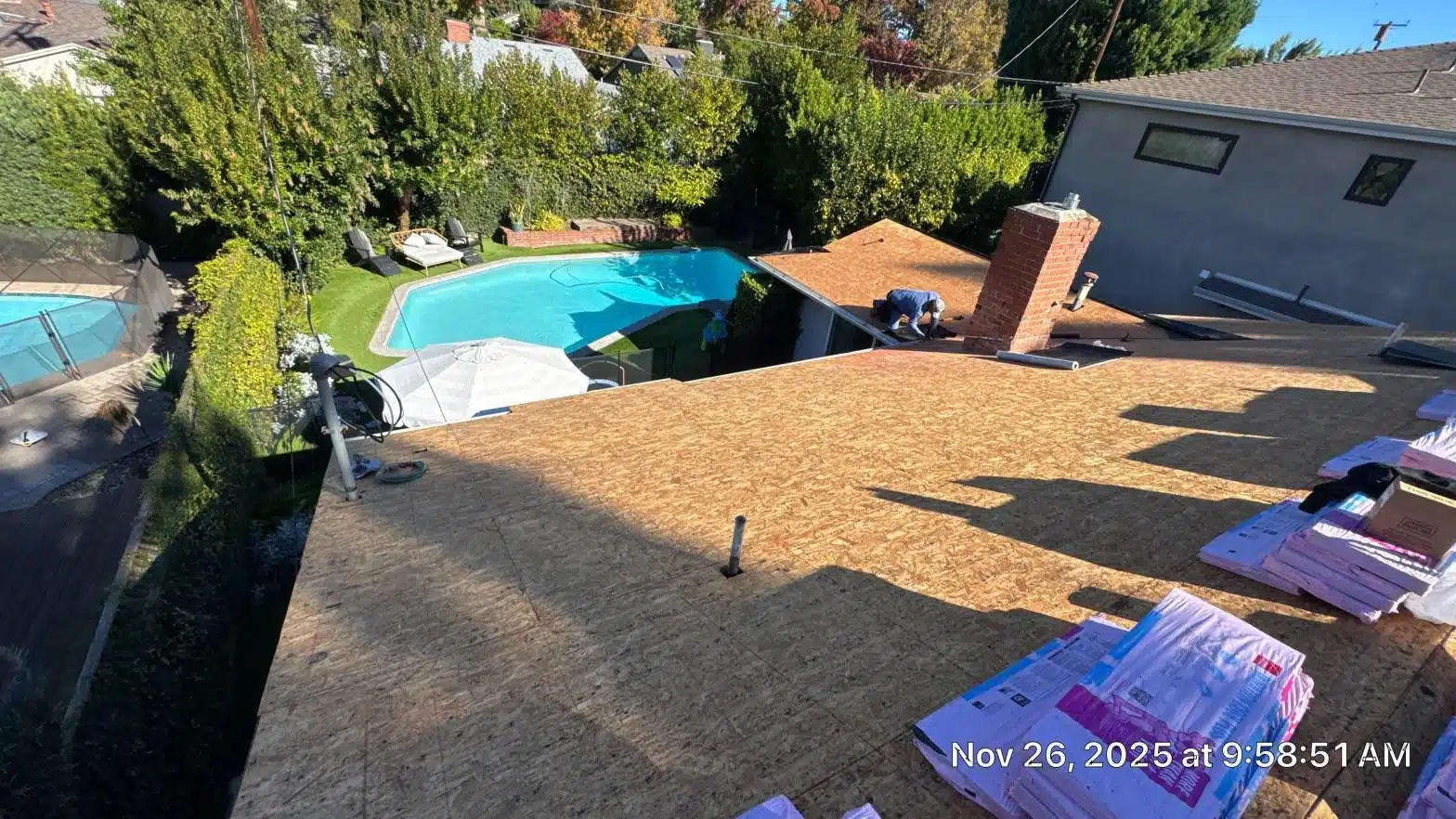
Replacing the deck in full brought the structure back to a sound nailing base. New 7/16-inch OSB panels were fastened to the rafters across the entire field. This also gave the crew a clean inspection of the framing below, confirming no rafter damage that would require structural repair before shingles went on.
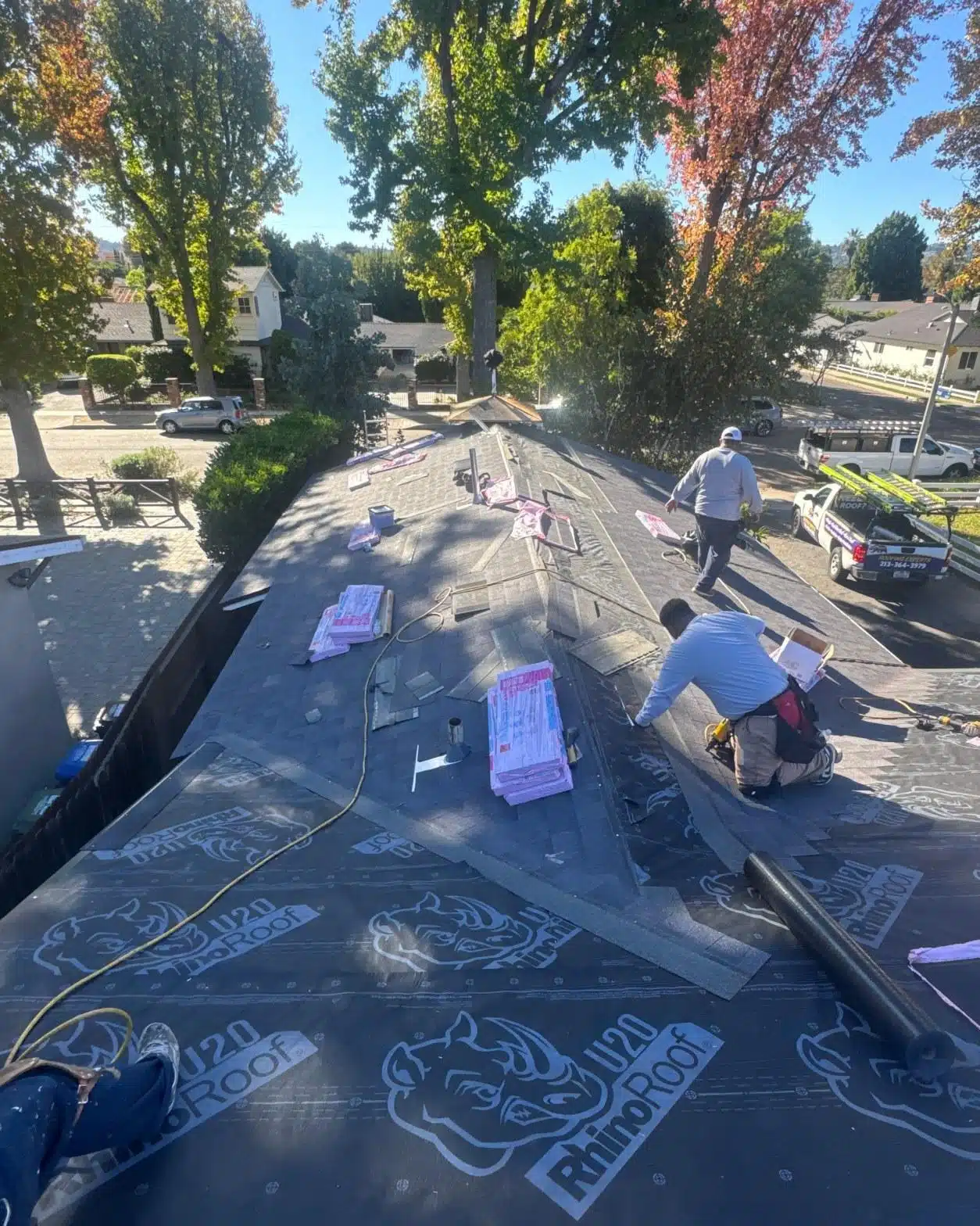
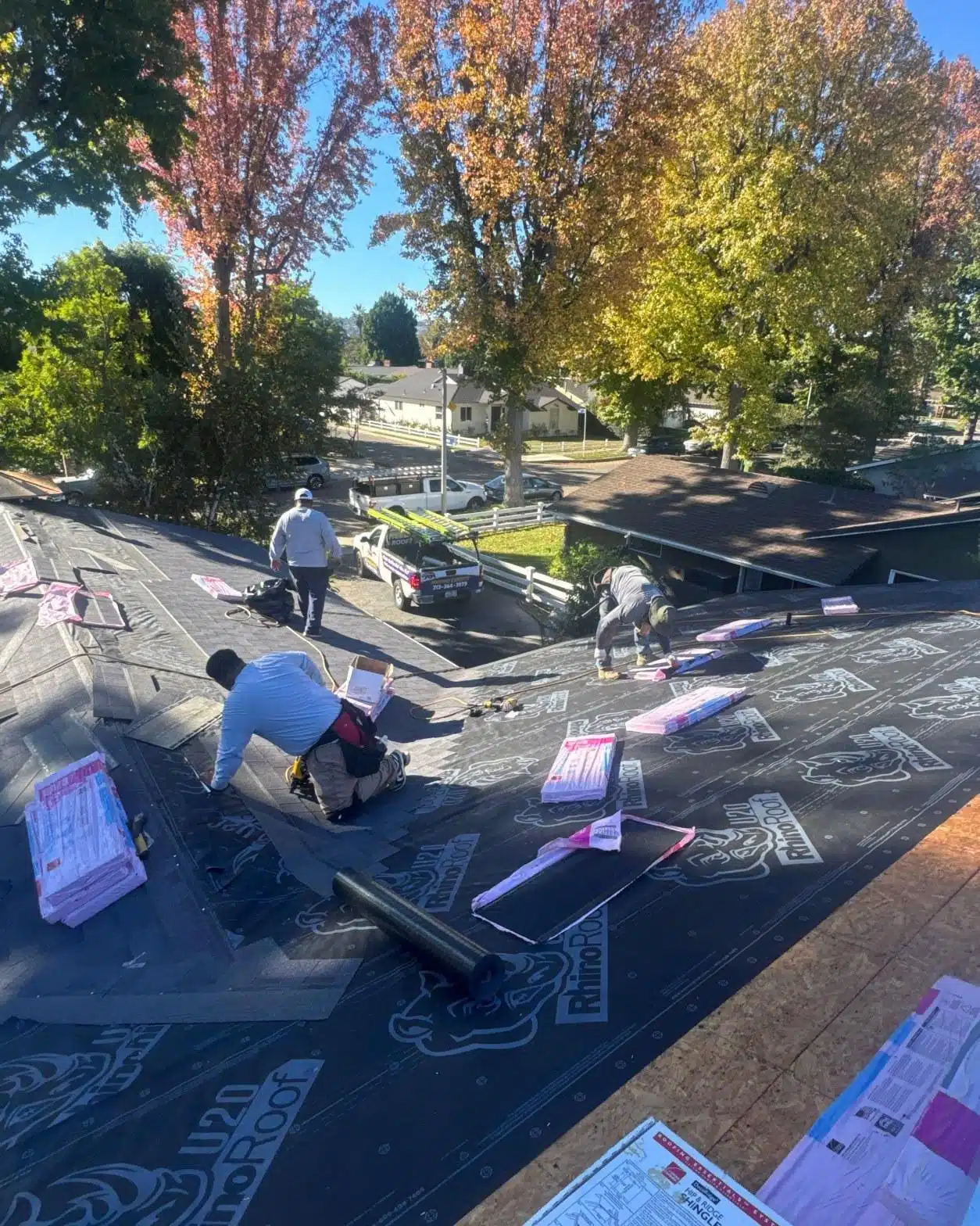
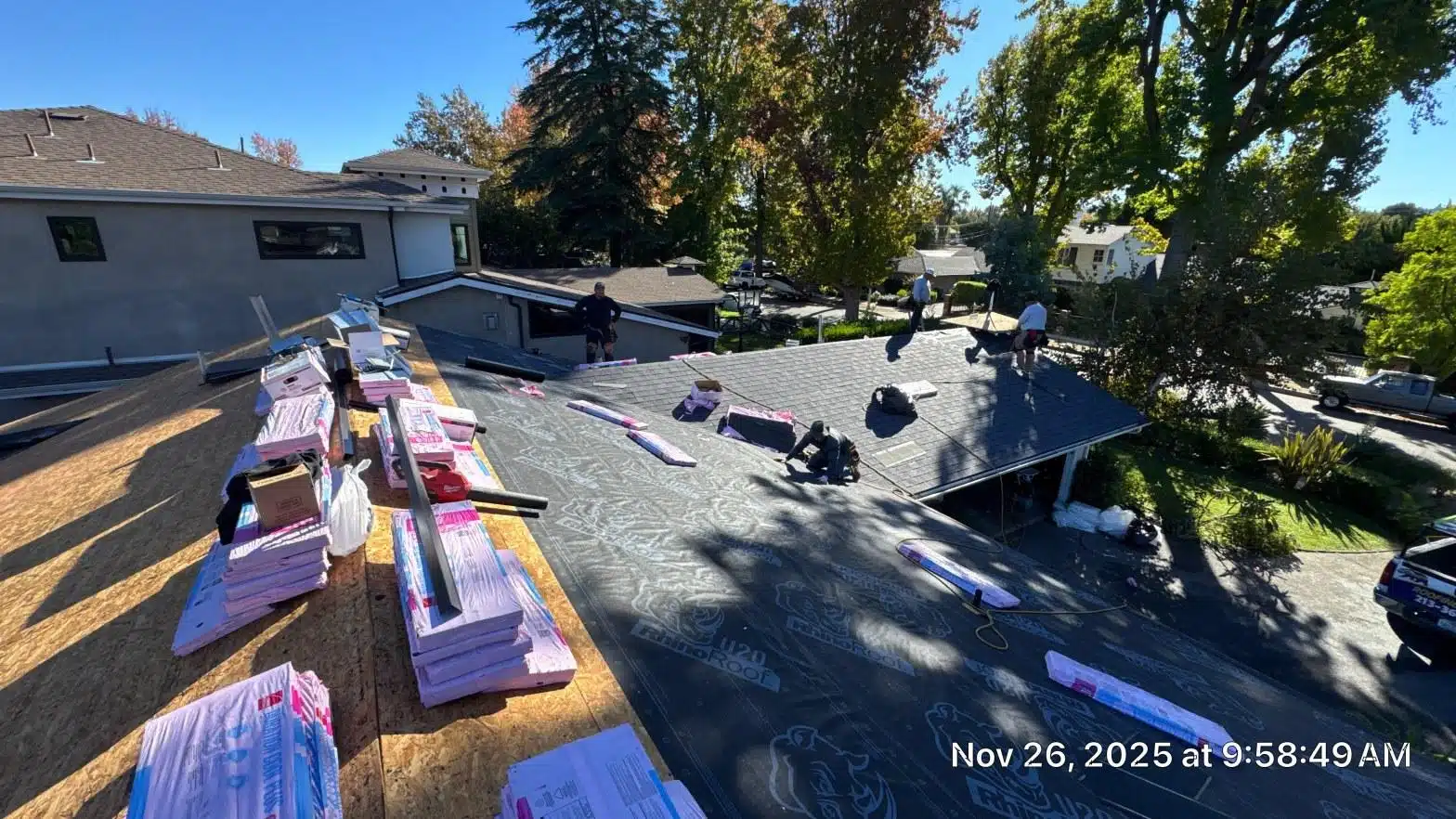
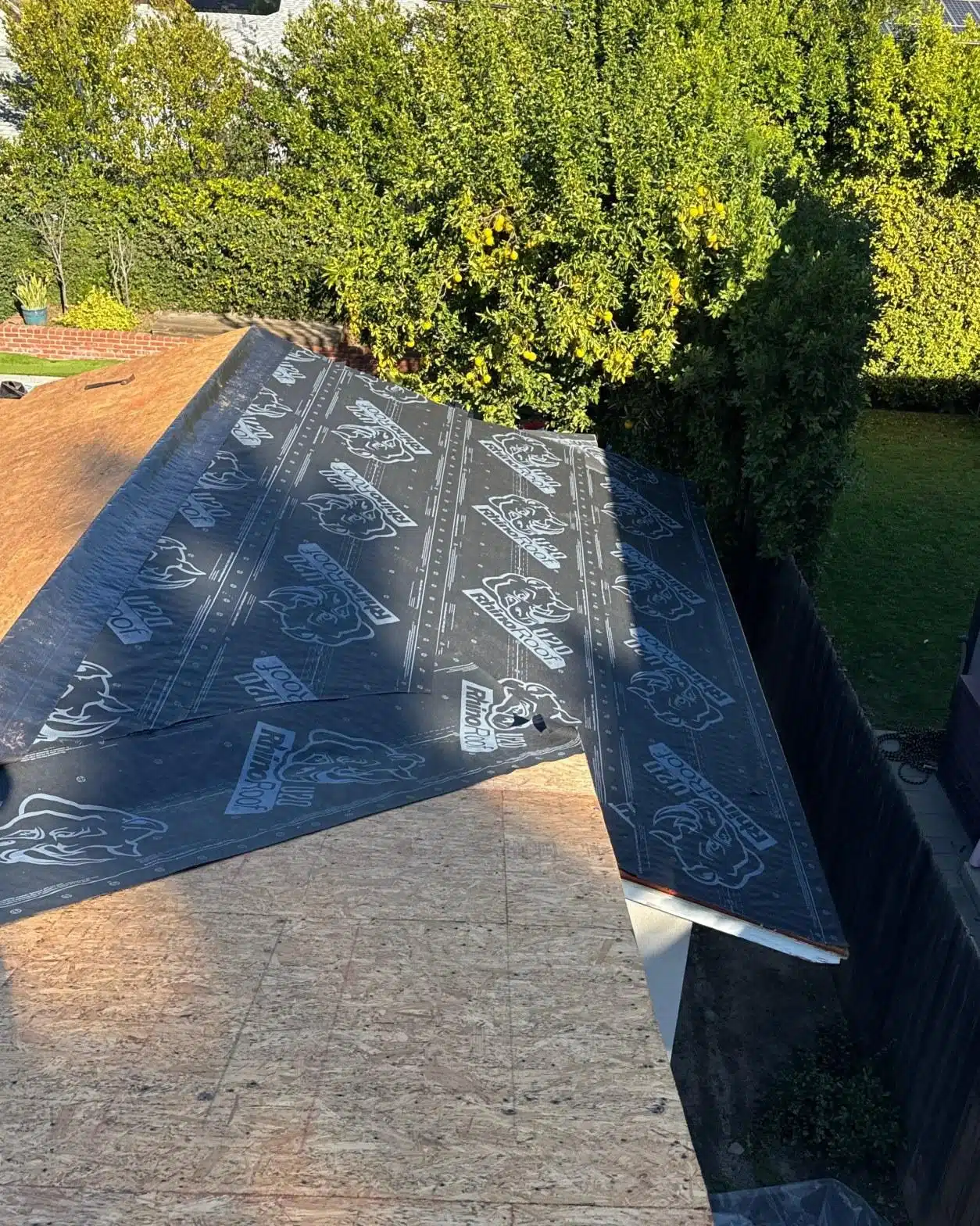
Our crew on this project pulled 3 full rolls of synthetic underlayment across just the main rear section visible in the mid-morning photos, a pace that reflects how much square footage the crew was covering before noon on a single day’s install.
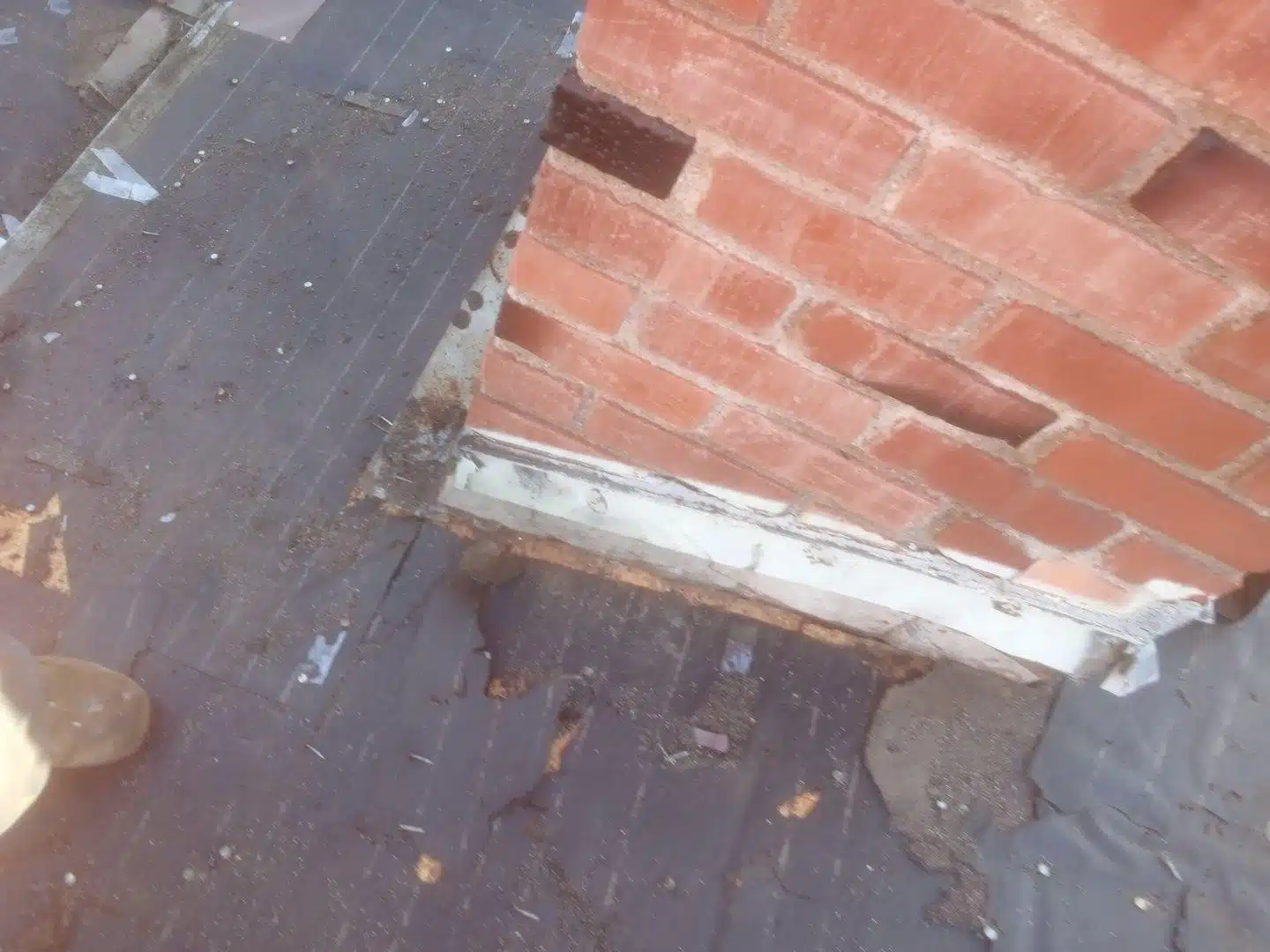
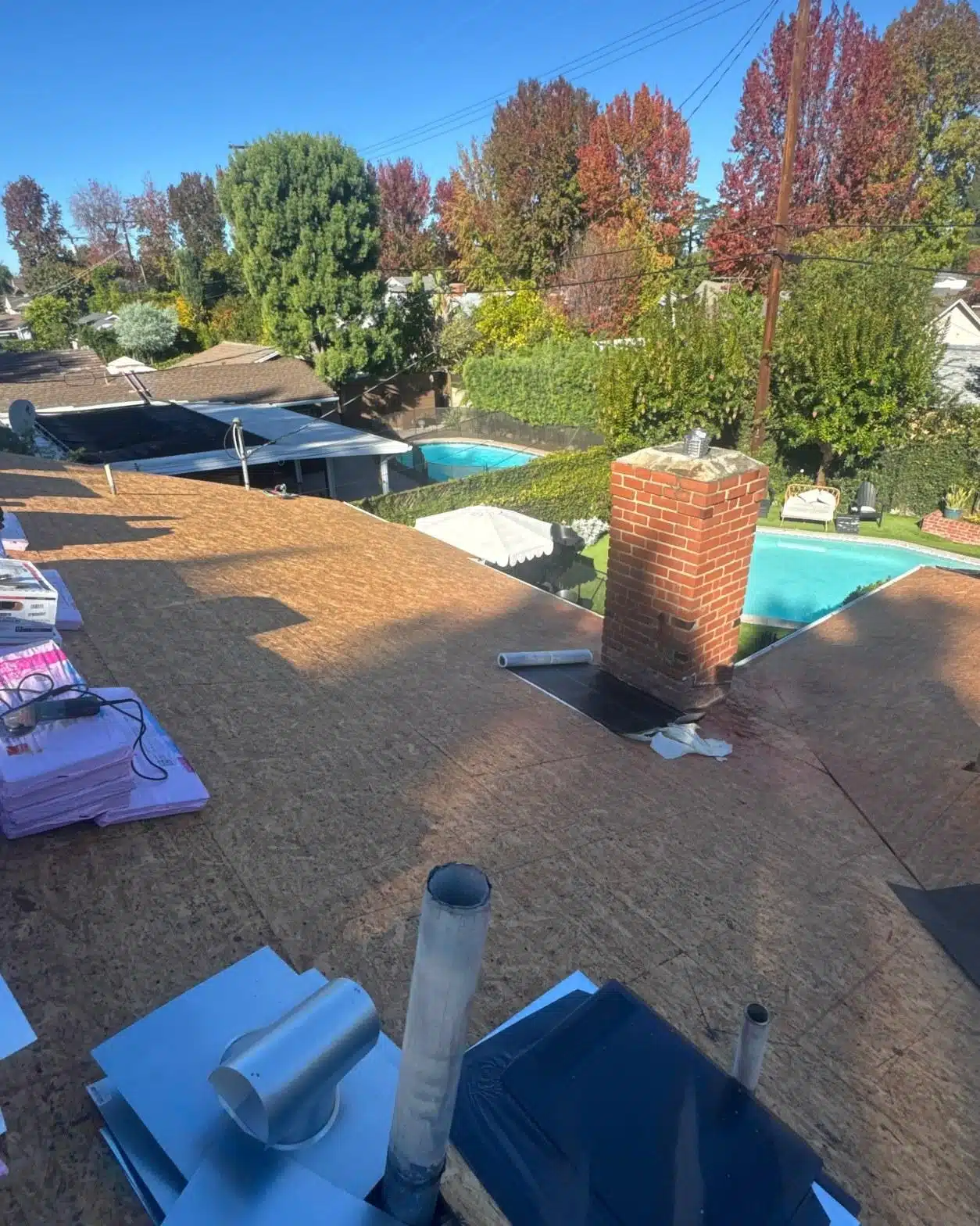
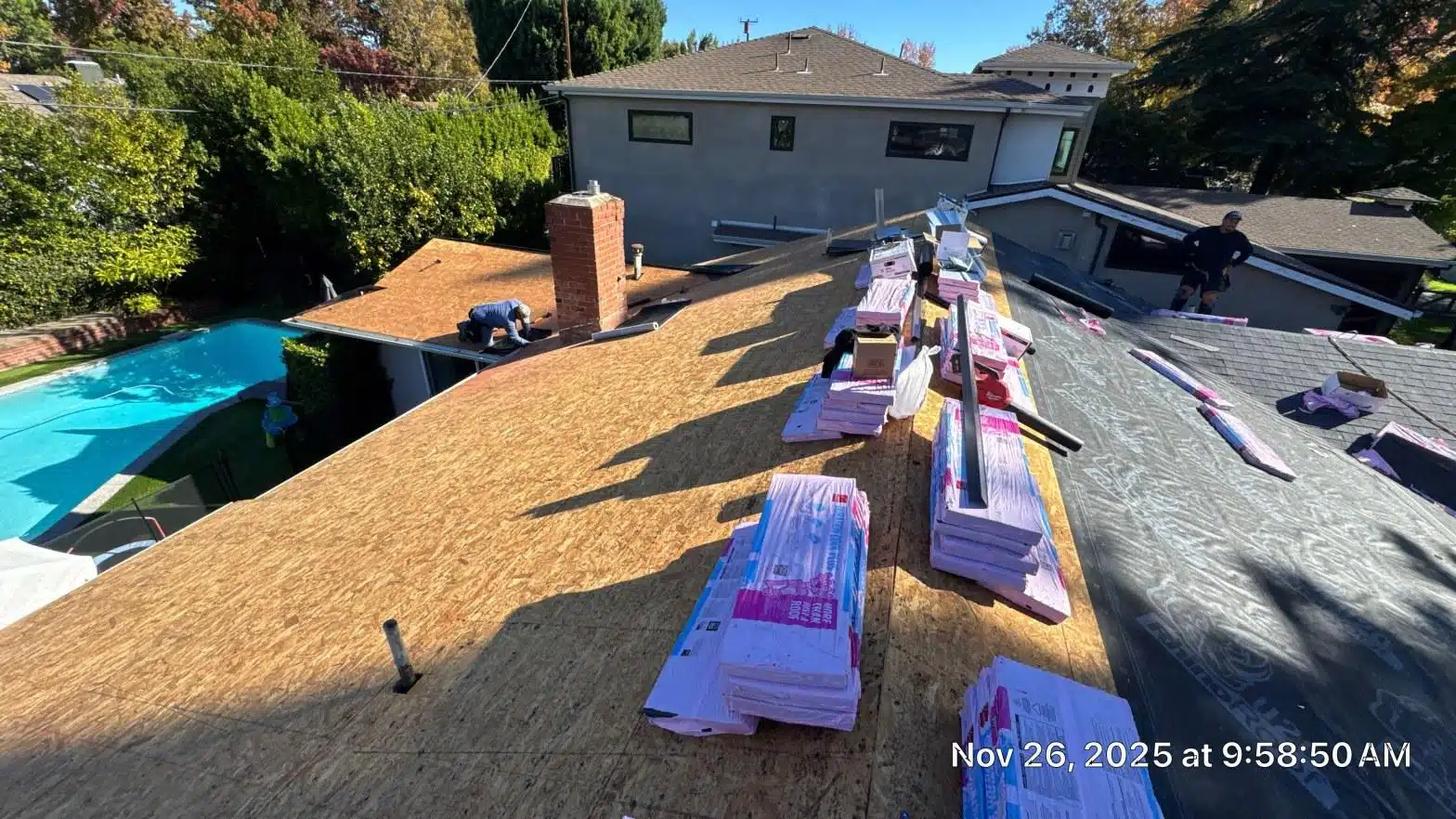
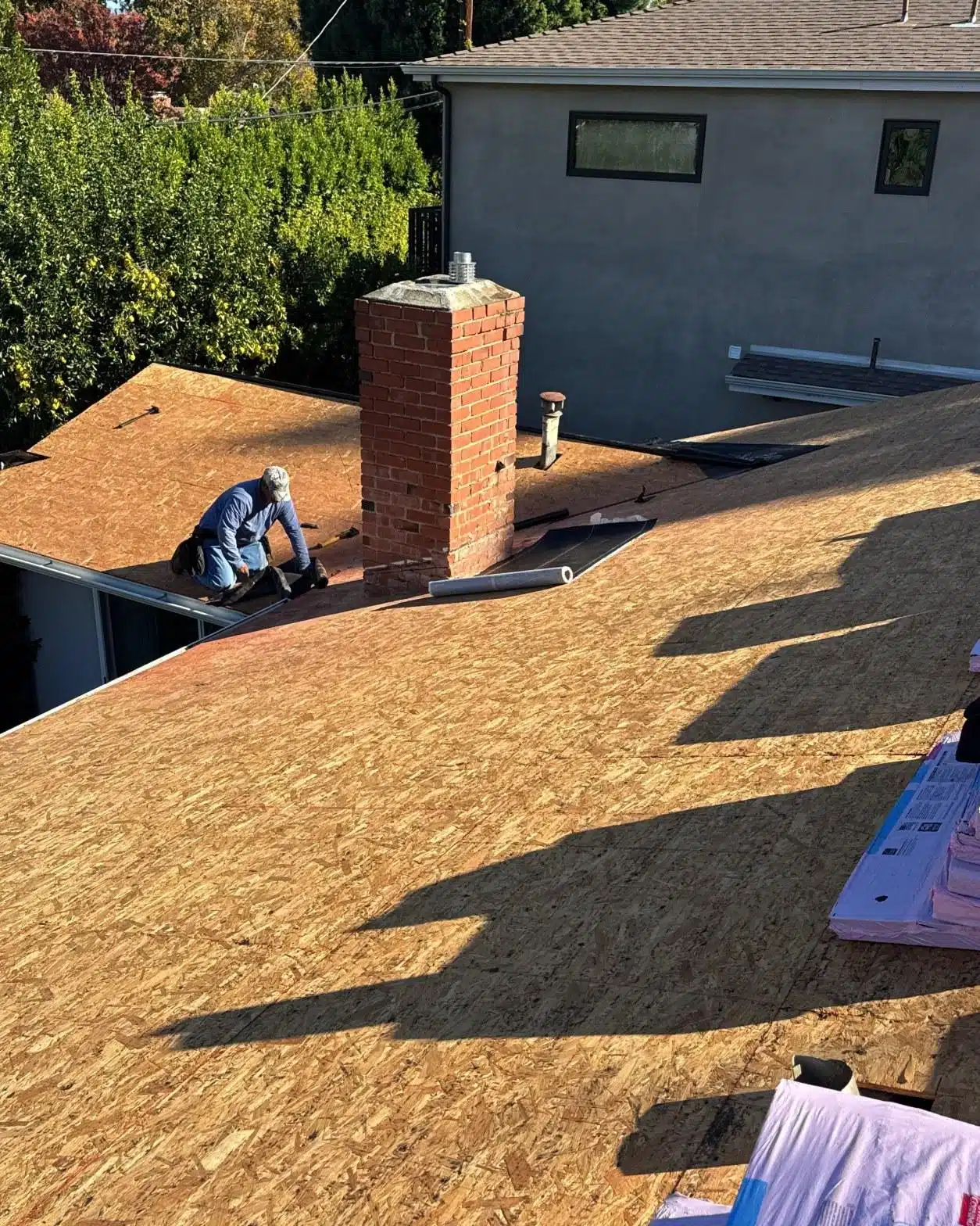
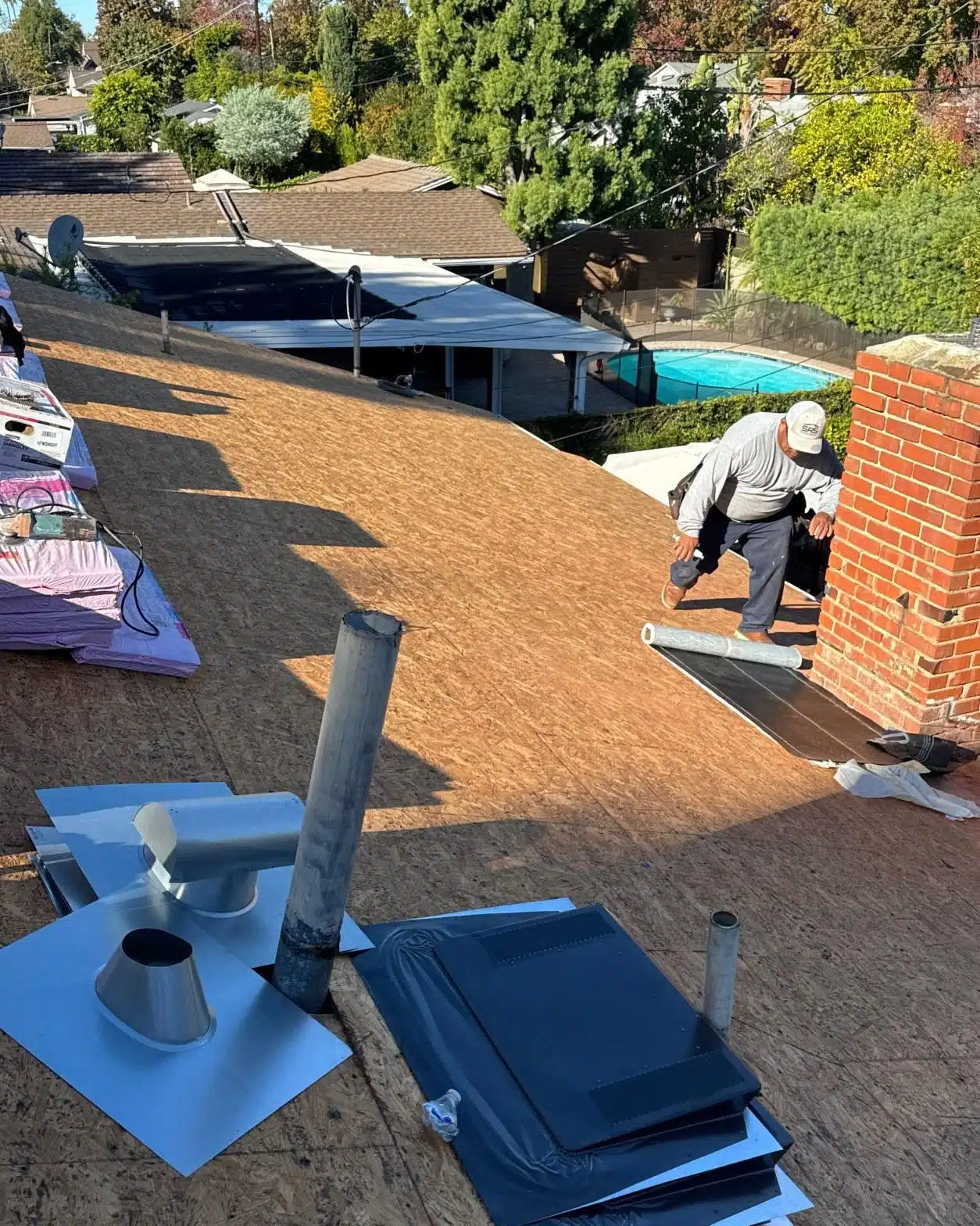
The chimney base told a clear story. As you can see in this close-up, the existing step flashing and counter-flashing had separated from the mortar joints, and the sealant bead had cracked through entirely. Water was tracking directly behind the flashing and down the interior face of the chimney. Failing chimney flashing accounts for a significant share of leak calls on homes with masonry chimneys, and CSLB-licensed roofing contractors are required to address penetration flashing as part of a complete reroof rather than leaving old flashing in place. The repair here involved re-bedding the counter-flashing into fresh mortar joints, sealing the reglet, and installing new step flashing integrated with the new underlayment layer.
How the Underlayment and Shingle Layers Went Down
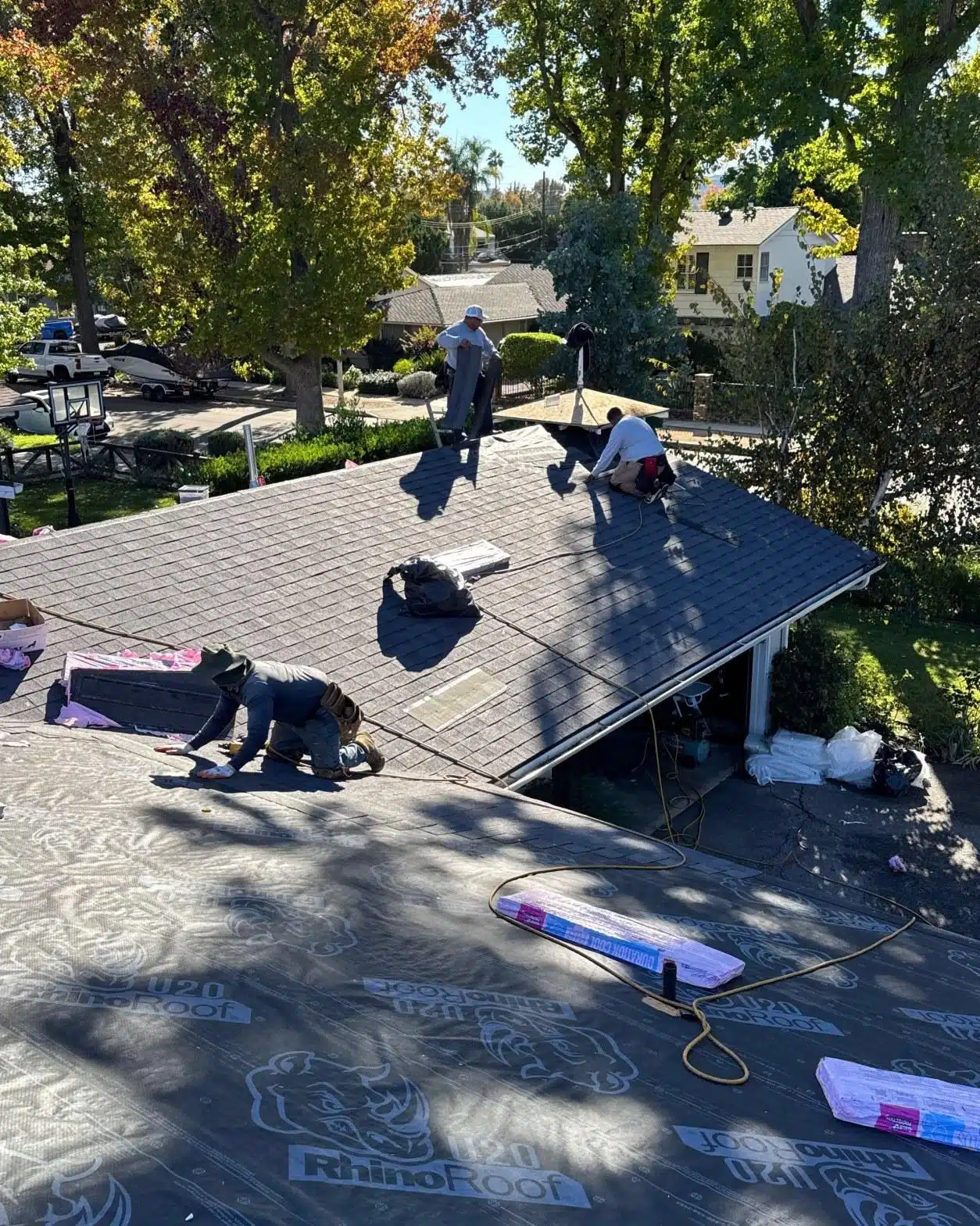
Synthetic underlayment was rolled across the fresh OSB in overlapping courses starting at the eave and working toward the ridge, stapled and lapped per manufacturer specification before any shingles were staged on the deck. This sequence matters: shingle bundles are heavy, and staging them on unprotected OSB during a multi-day job risks surface crushing and moisture absorption if rain moves in overnight.
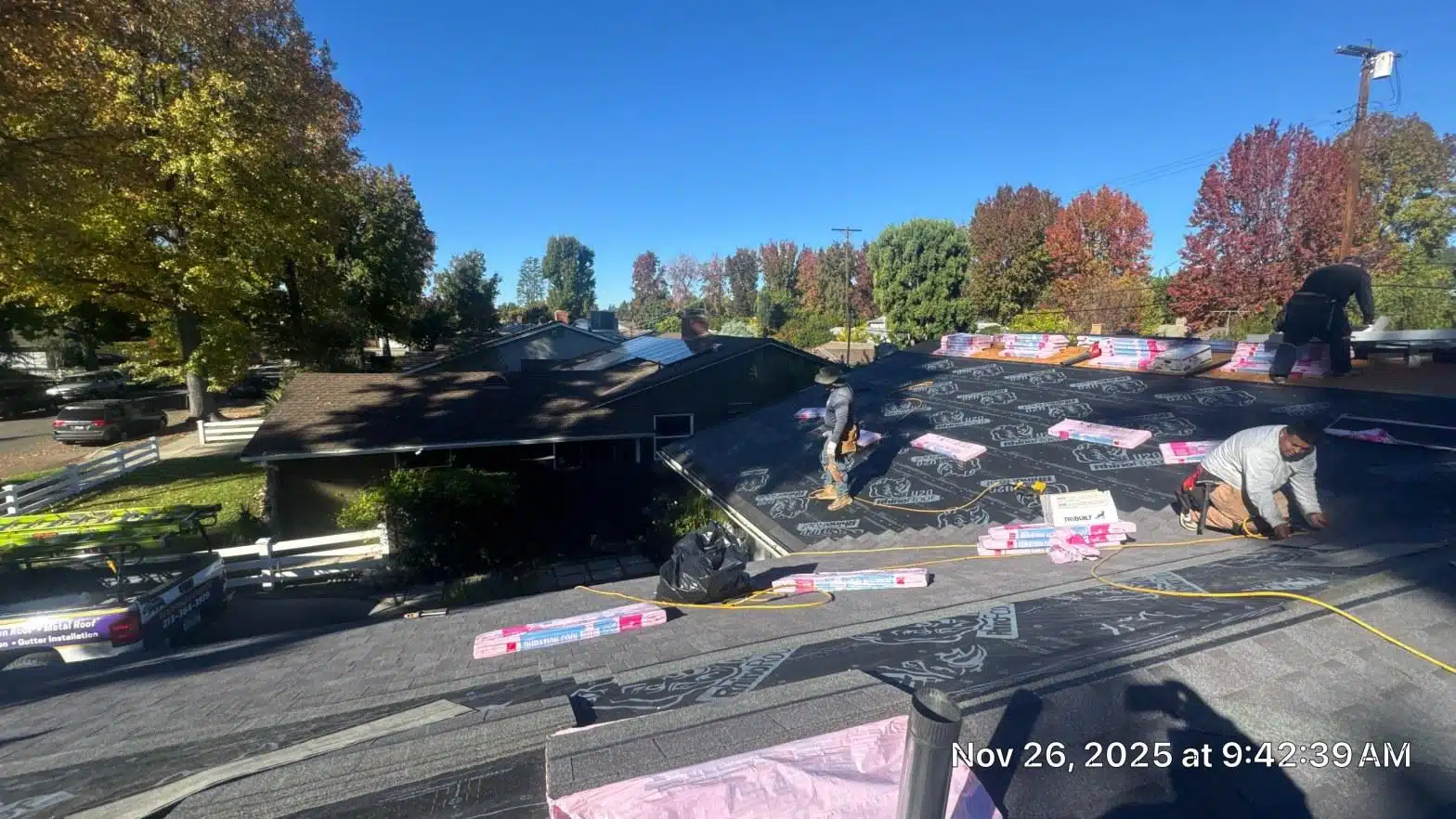
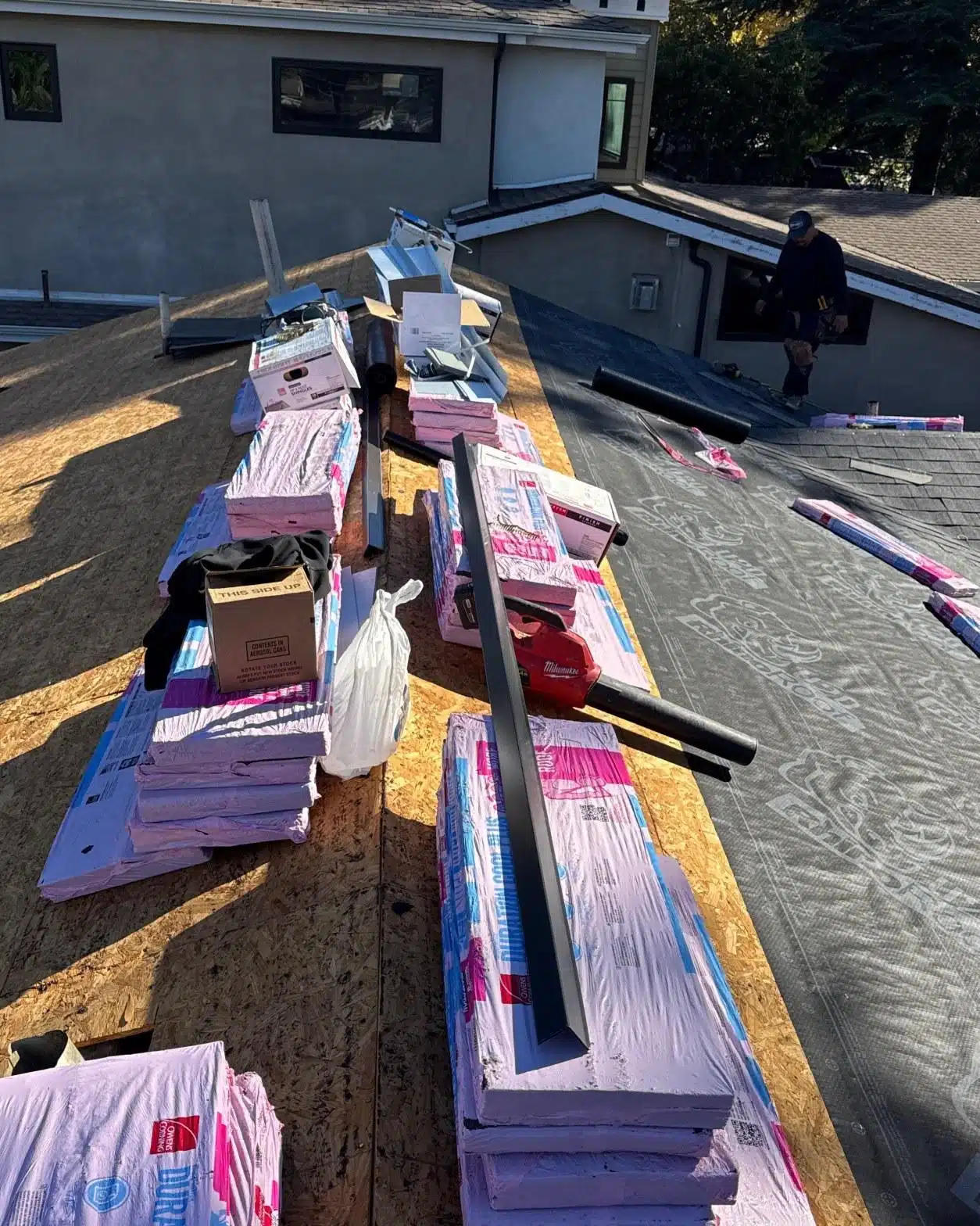
With the underlayment down across the main field, shingle bundles were distributed evenly across the slope so no single rafter bay carried concentrated point loads. The crew worked two sections simultaneously, which is typical on a roof this size. New architectural shingles were nailed off in staggered courses from the eave up. The November date is worth noting: Los Angeles County’s November average high sits around 70°F, which is within the acceptable installation temperature range for asphalt shingles (most manufacturers specify above 40°F for proper sealing-strip activation).
The Finished Deck Condition Before Shingle Completion
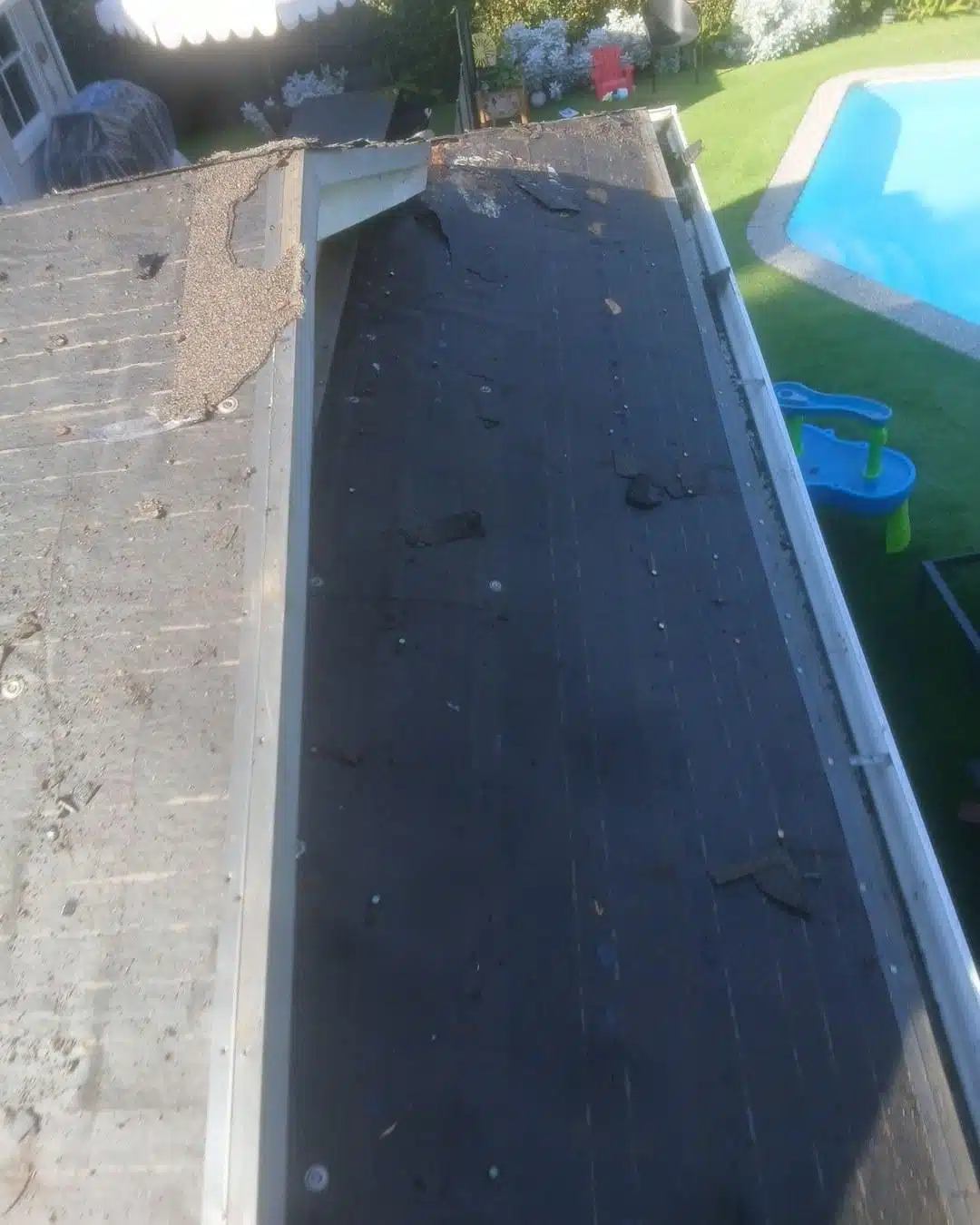
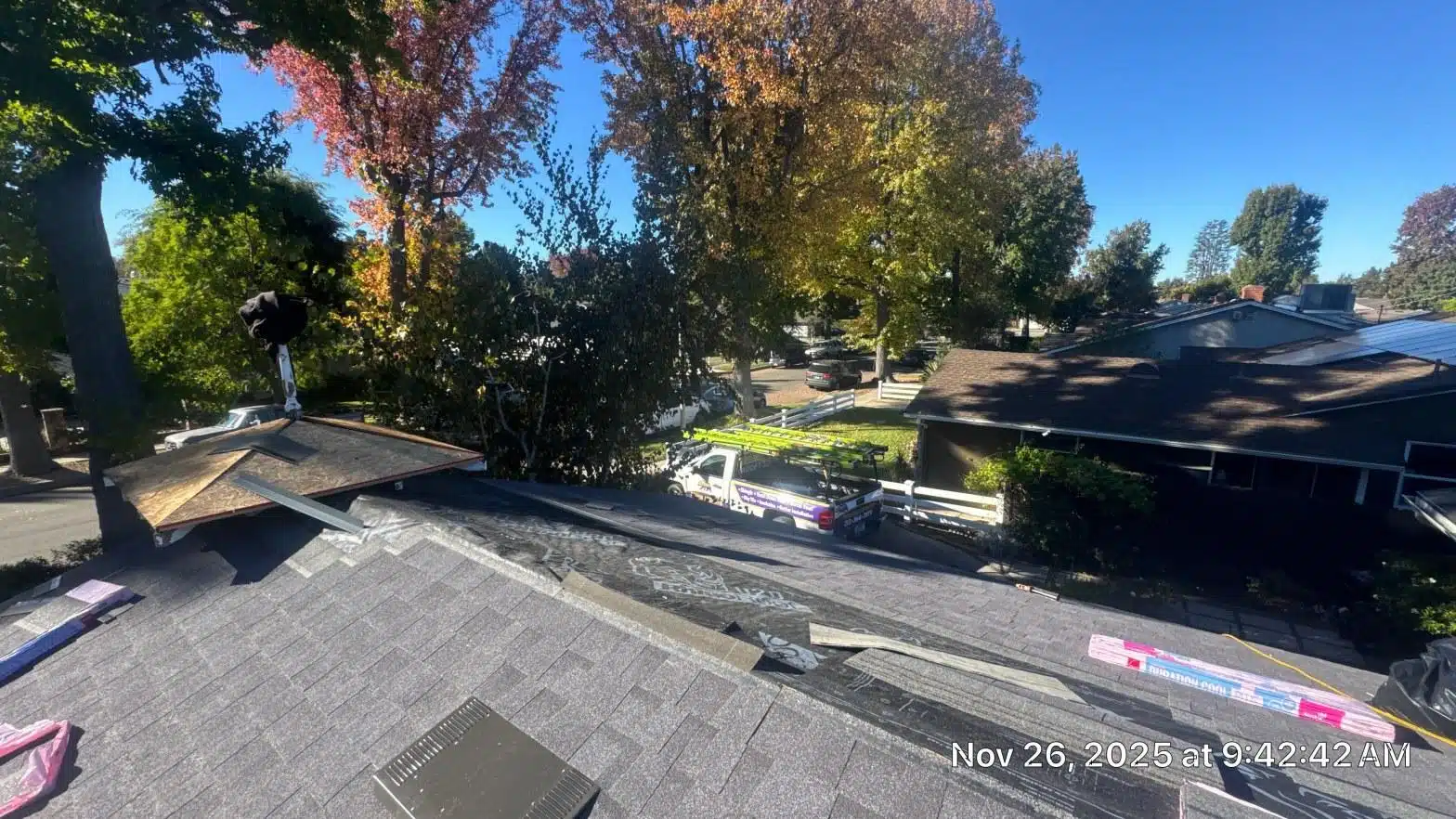
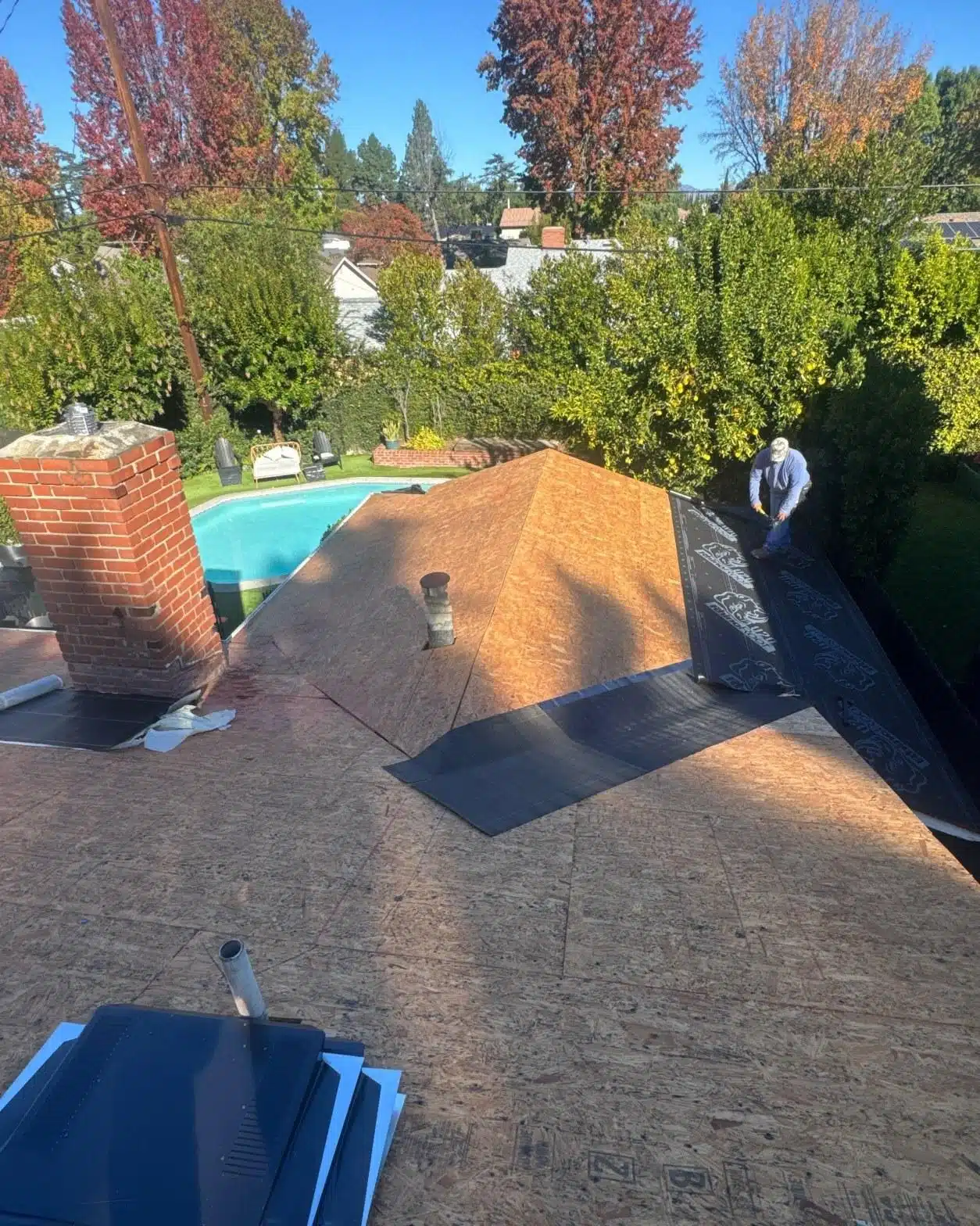
By late morning on November 26, the OSB deck was fully replaced, underlayment was lapped and fastened on the rear and side sections, and shingle installation was underway on the front-facing slopes. The chimney was standing clear with new flashing in place and the surrounding field ready to receive its final shingle courses.
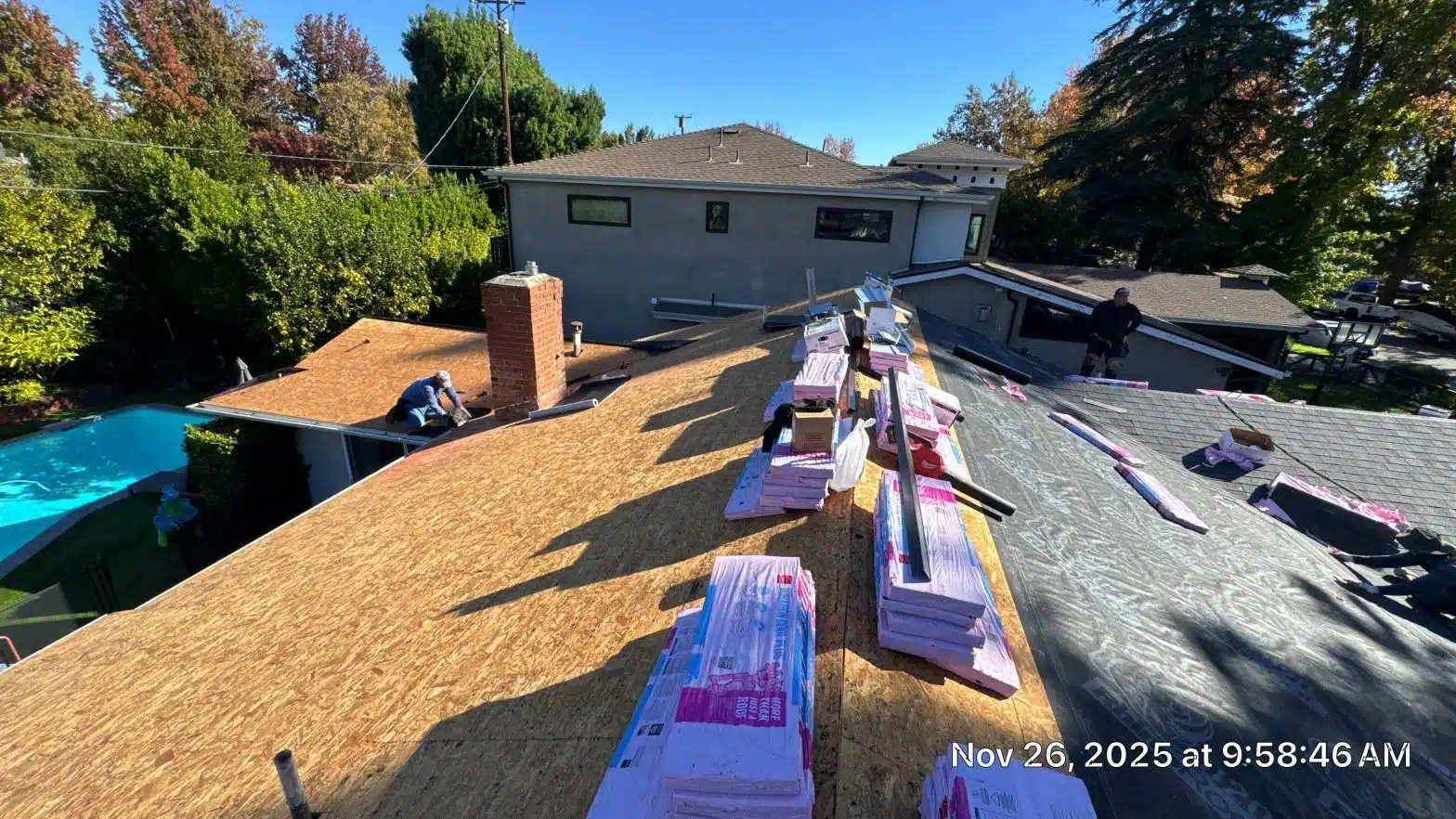
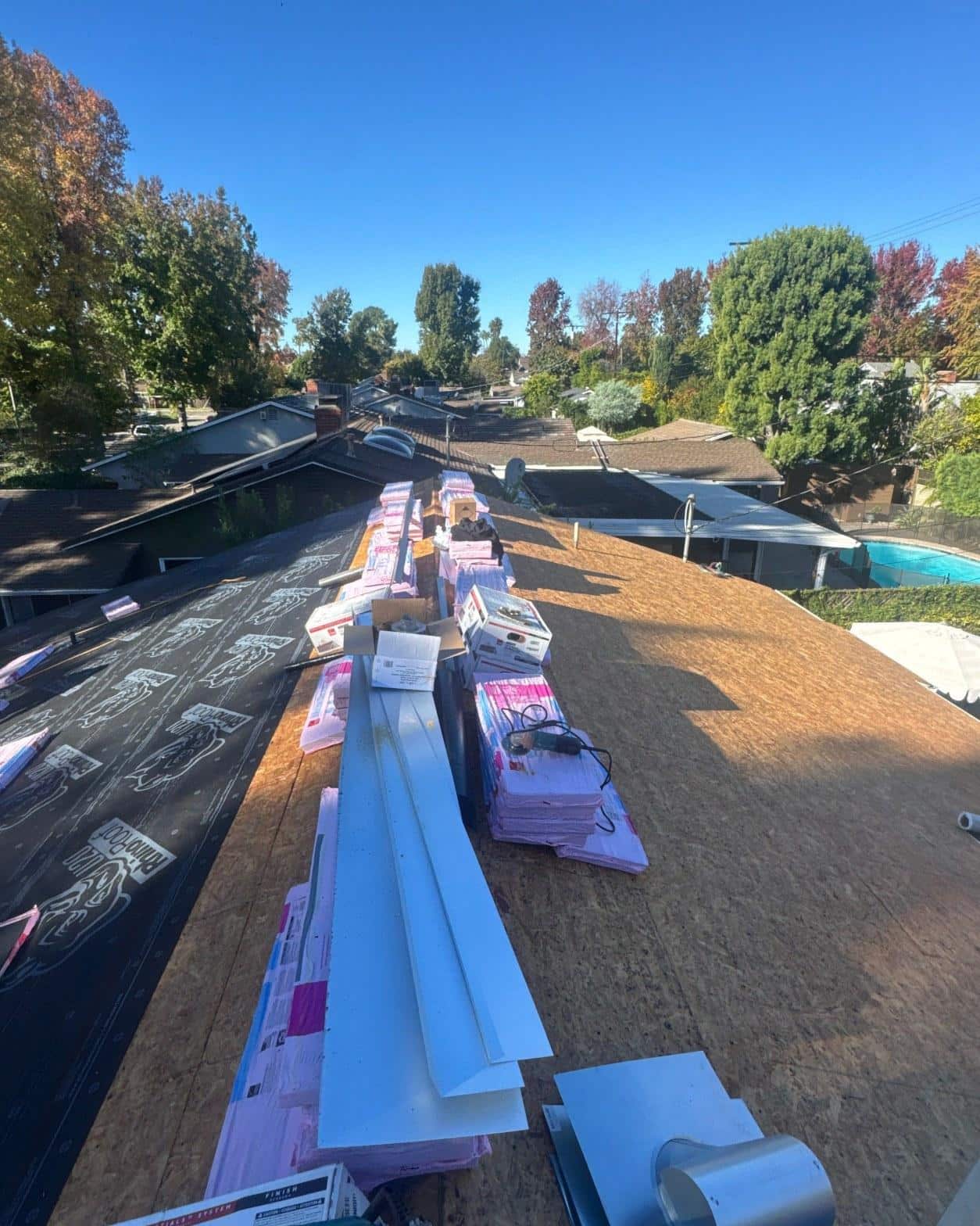
The overview from the ridge shows how much of the deck had already been covered. Shingle bundles staged along the centerline allowed the crew to work both sides of the ridge without staging on finished shingle surfaces. The pool-side section of the roof, visible in the background, had already received its first courses of shingles, demonstrating the progress a well-coordinated crew can make when the deck prep is completed cleanly.
Roof Repair & Construction Inc. performed this project under a valid license issued by the California Contractors State License Board (CSLB), as required for any structural roofing work on a California residential property.
Ready to Talk About a Similar Reroof?
If your home has aging shingles, soft spots in the deck, or a chimney that has been leaking for more than one rainy season, a full tear-off reroof may be the most cost-effective long-term fix. Call Roof Repair & Construction Inc. for a written estimate, or fill out the contact form on this site to describe your project. A crew member will follow up to schedule an on-site look at your roof before any work is proposed.
Gallery
Explore our full range of Roof Repair services across Southern California.
Frequently Asked Questions
How do I know if my roof deck needs to be replaced or if I can just put new shingles over the old ones?
If the OSB or plywood beneath your shingles shows soft spots when you walk on them, visible delamination, or surface rot, the deck needs full replacement before new shingles go down. Overlaying new shingles on a compromised deck shortens the life of the new roof and can void the shingle manufacturer's warranty. A licensed roofing contractor can confirm deck condition during the tear-off phase.
Why does my chimney keep leaking even after I had it sealed?
Most chimney leaks on brick chimneys come from failed step flashing or counter-flashing that has separated from the mortar joints, not from the sealant bead itself. When the flashing pulls away from the masonry, water runs directly behind it and into the structure. A lasting repair means re-bedding the counter-flashing into fresh mortar and integrating new step flashing with the roofing underlayment, not just applying more sealant over old metal.
Can a roofer work around my solar panels during a reroof?
Yes. The standard process is to temporarily unrack the panels from their rail mounts, complete the tear-off and new roofing installation, then remount the panels on the new surface. This is typically coordinated between the roofing contractor and the solar installer. Panels should never be left sitting on deteriorated shingles while roofing work continues around them.
How long does a full shingle reroof usually take on a single-family home?
A straightforward shingle reroof on a standard single-family home generally takes one to two days for a full crew. When the deck also needs complete replacement, as in this project, the job typically runs two to three days depending on roof size, pitch, and the number of penetrations like chimneys and vents that require custom flashing work.
What is the difference between synthetic underlayment and felt paper on a shingle roof?
Synthetic underlayment is made from woven polypropylene and is lighter, stronger, and more resistant to tearing during installation than traditional 15- or 30-pound asphalt felt. It also resists moisture absorption better if it gets exposed to dew or light rain before shingles go down. Most reroofing projects in Southern California now use synthetic underlayment because it handles the UV exposure during a multi-day install without degrading.
Does a reroof in California require a permit?
Most full reroof projects in California require a building permit, particularly when the structural deck is being replaced. Permit requirements are set by the local jurisdiction's building department, and work must be performed by a contractor holding a valid license issued by the California Contractors State License Board (CSLB). Unpermitted roofing work can create complications when selling the property or filing an insurance claim.