
This project came to us from a homeowner in Los Angeles County whose property had two distinct roof sections: a low-slope flat roof covered in an aging modified bitumen membrane, and an adjoining pitched shingle section that had lost granules and needed targeted repairs. The goal was straightforward: stop active moisture intrusion on the flat section, protect the shingle section before another rainy season, and do both without replacing the entire building envelope at once.
What Did the Flat Roof Look Like Before Work Started?
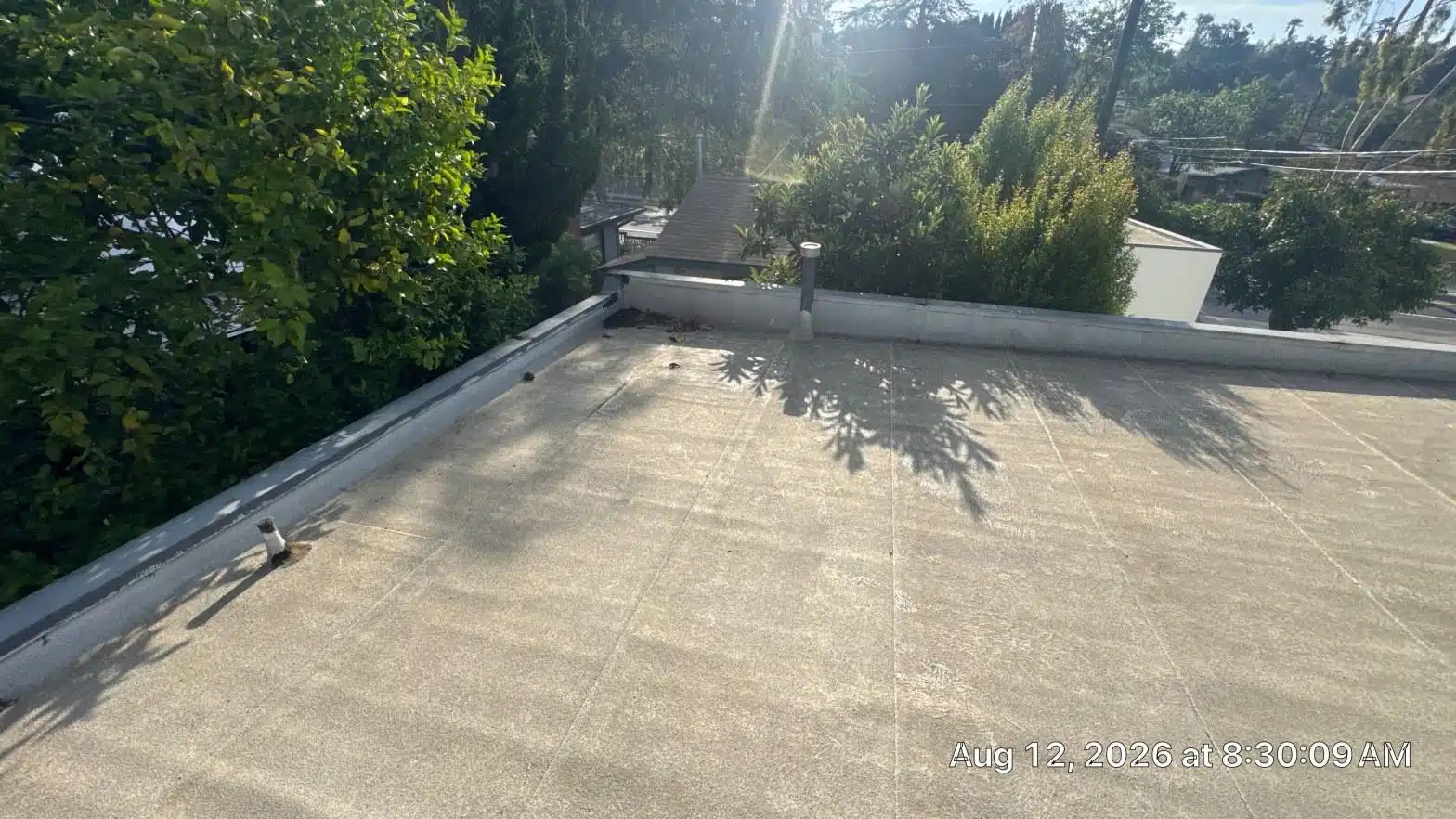
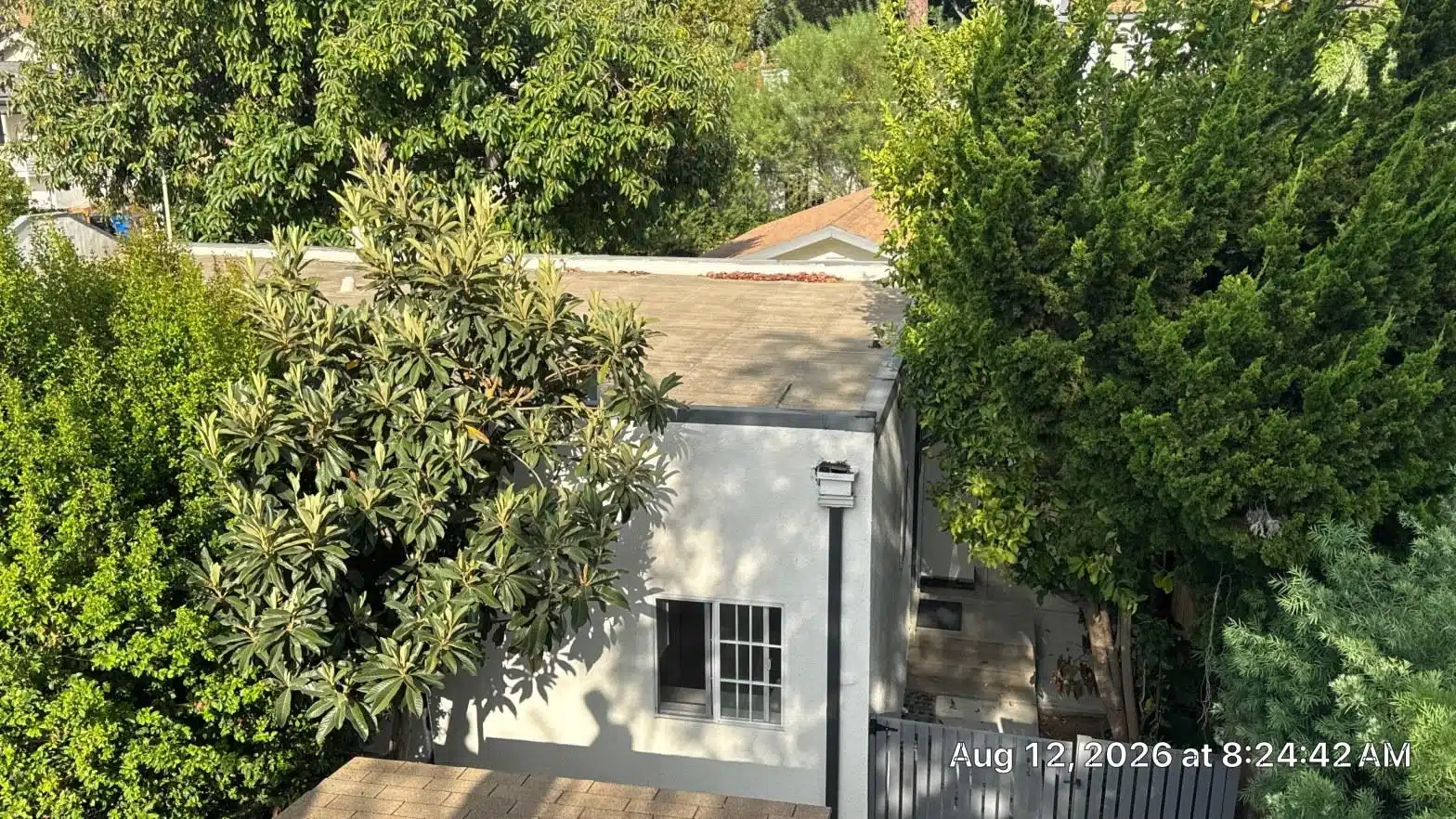
The existing flat roof membrane showed widespread surface oxidation, visible seam lines that had begun to separate, and standing-water staining across nearly the entire field of the roof. The parapet walls were intact, but the membrane had clearly exceeded its useful life. Modified bitumen membranes installed without a reflective cap sheet typically last 15 to 20 years under Southern California UV exposure; this one appeared to have reached that ceiling.
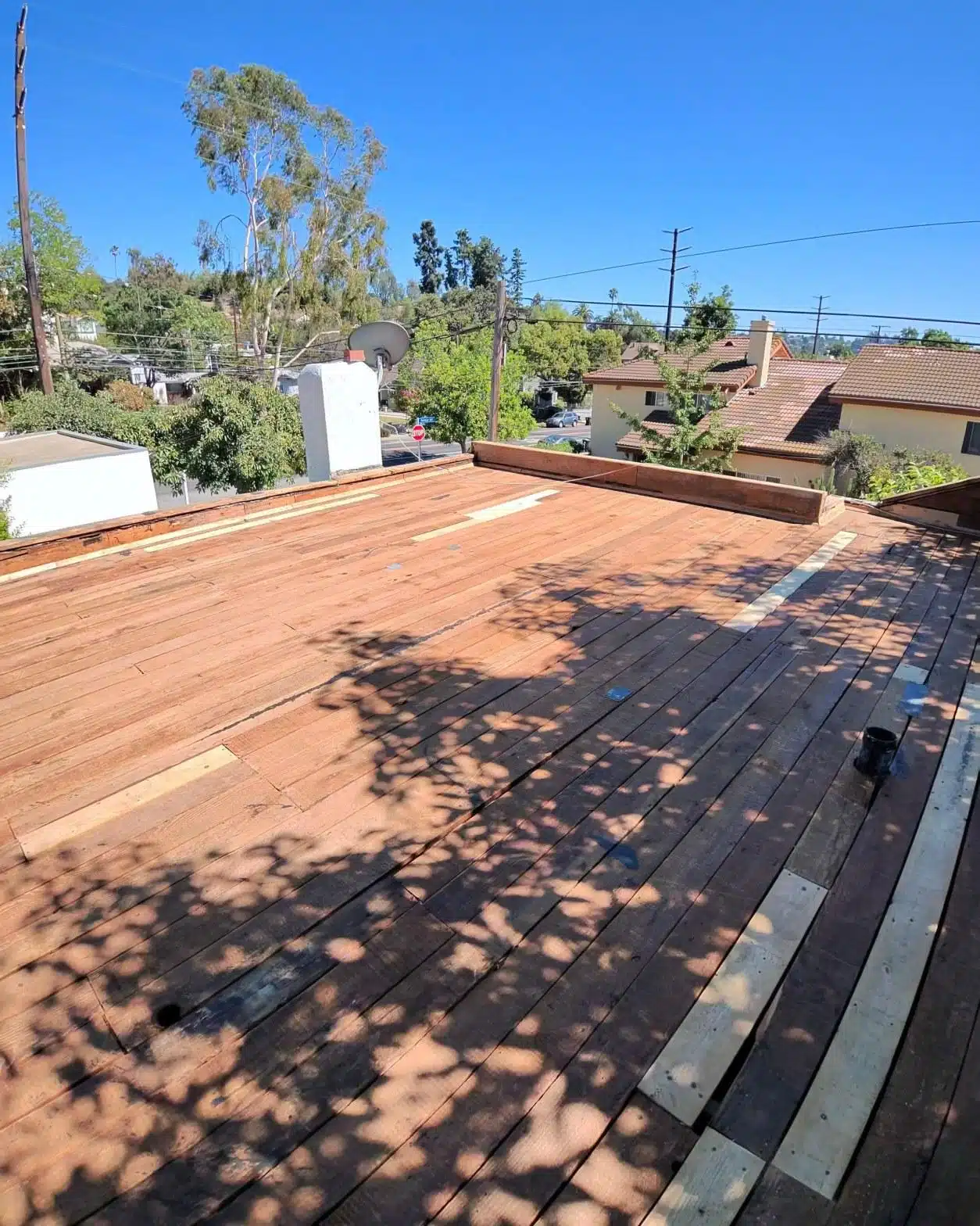
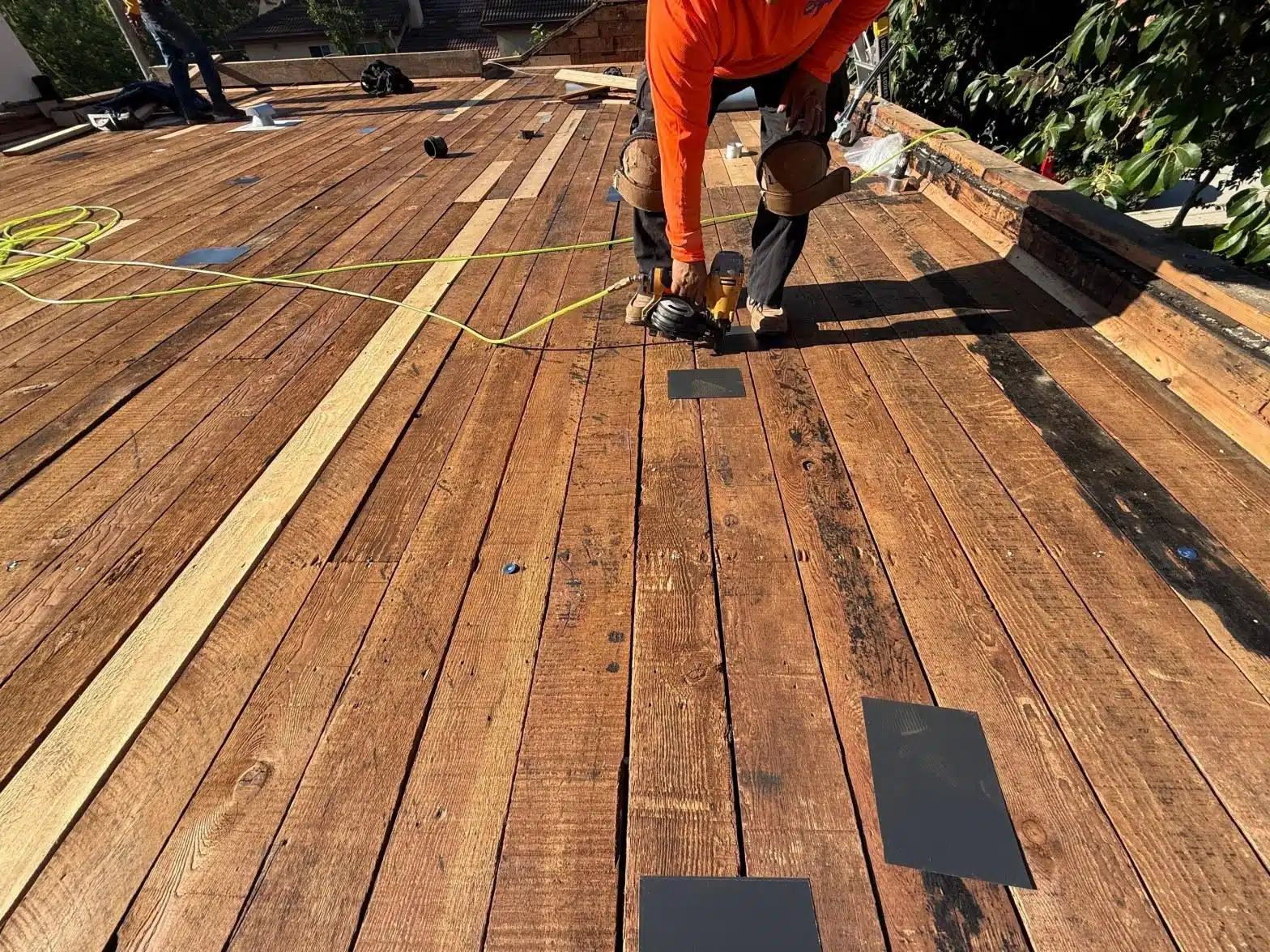
A close inspection of the decking beneath the membrane revealed the second problem: several wood planks had softened from repeated moisture cycling. Rotted or spongy decking cannot hold fasteners properly, and any new membrane torched down over compromised wood risks adhesion failure within a few seasons. Those boards had to come out before anything else could proceed.
How Was the Deck Repaired Before the New Membrane Went Down?
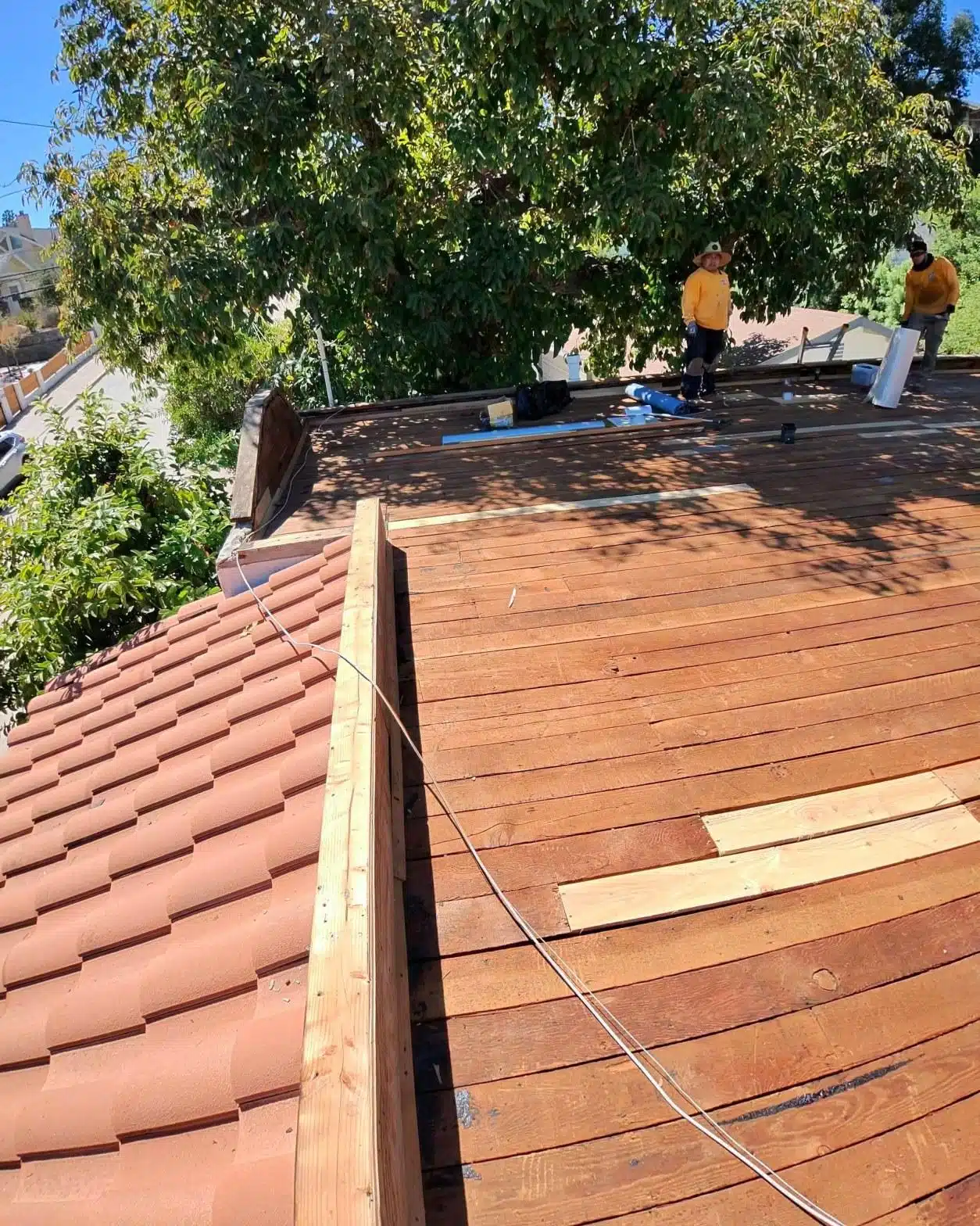
Rotted boards were cut out individually and replaced with new-cut lumber fastened flush to the existing joists, so the finished deck surface was level and solid before any membrane work began. You can see in the photo below exactly where a fresh plank sits alongside the weathered original boards, still light in color before stain and sealer would blend it in. The black metal plates at the board joints are hurricane ties, adding shear resistance at each splice point.
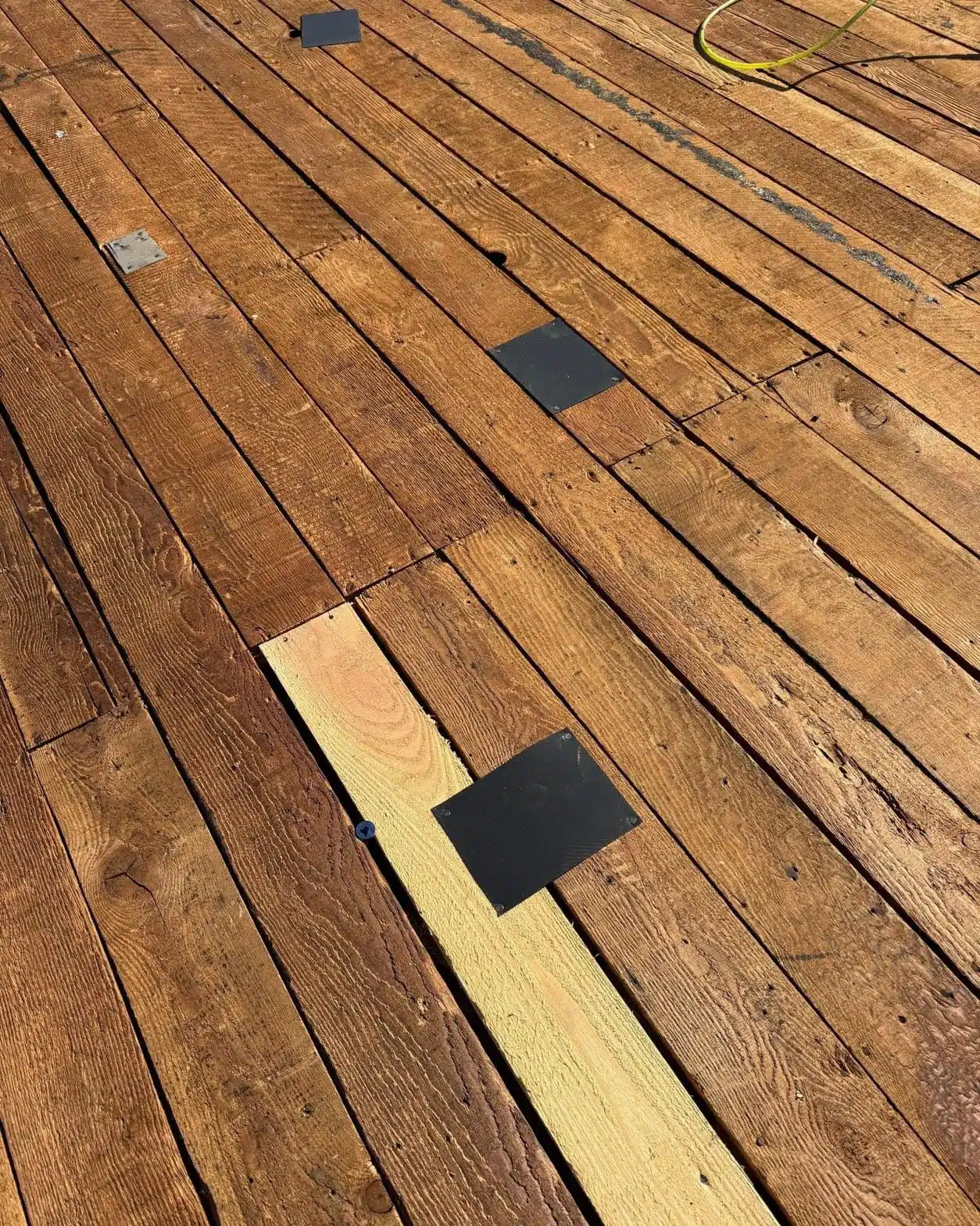
This kind of targeted deck repair typically adds one half to one full day to a flat roof job, depending on how many boards need replacement. On this project, the deck repairs were localized to a specific run of planks rather than spread across the whole surface, so the timeline stayed manageable. Skipping this step is the single most common reason a new flat roof fails prematurely: the membrane is only as durable as what it bonds to.
Our crew replaced 6 individual deck boards on this job before torching down a single square of new membrane. Structural repairs like these are non-negotiable for a system meant to last.
Installing the New Torch-Down Membrane and Reflective Coating
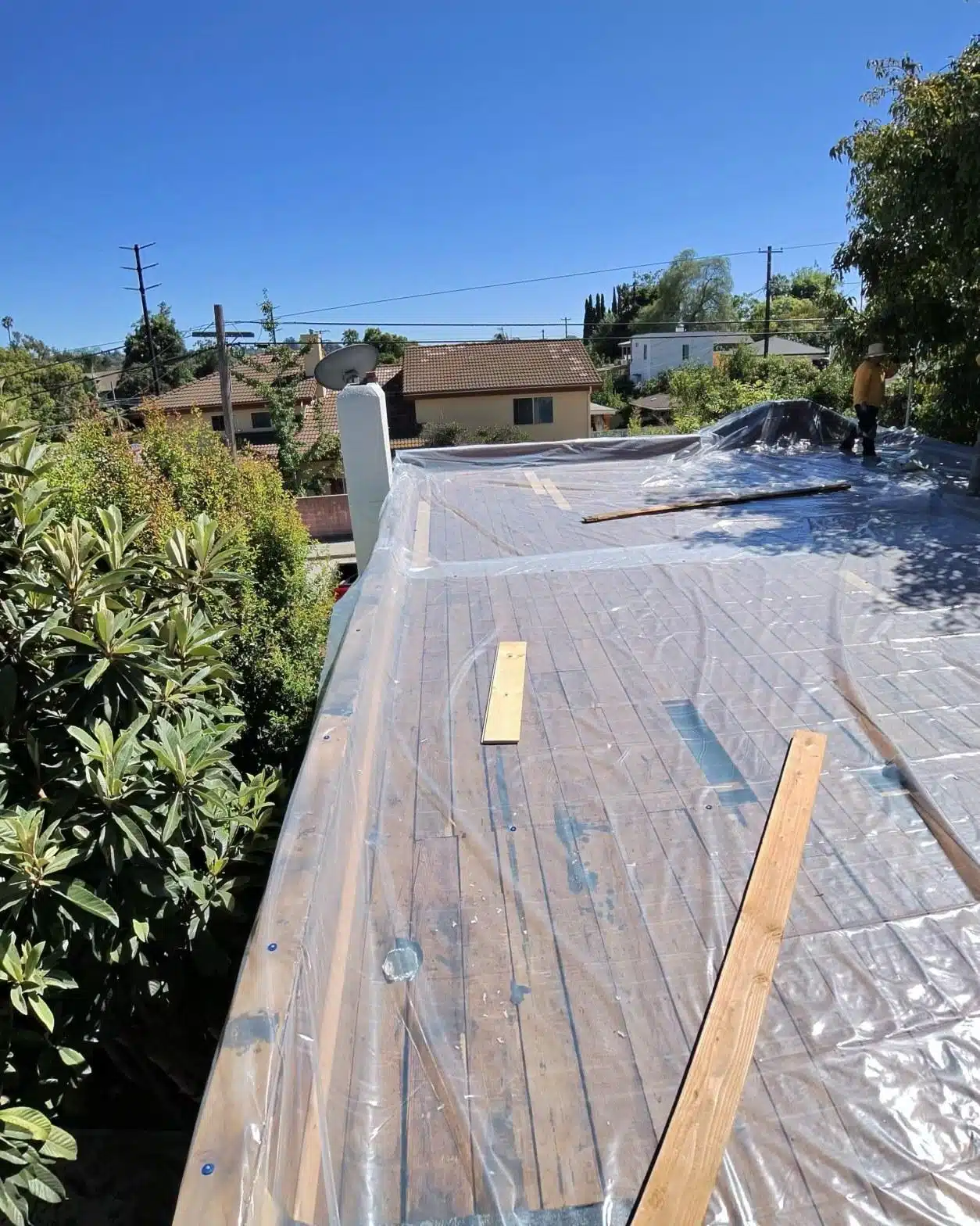
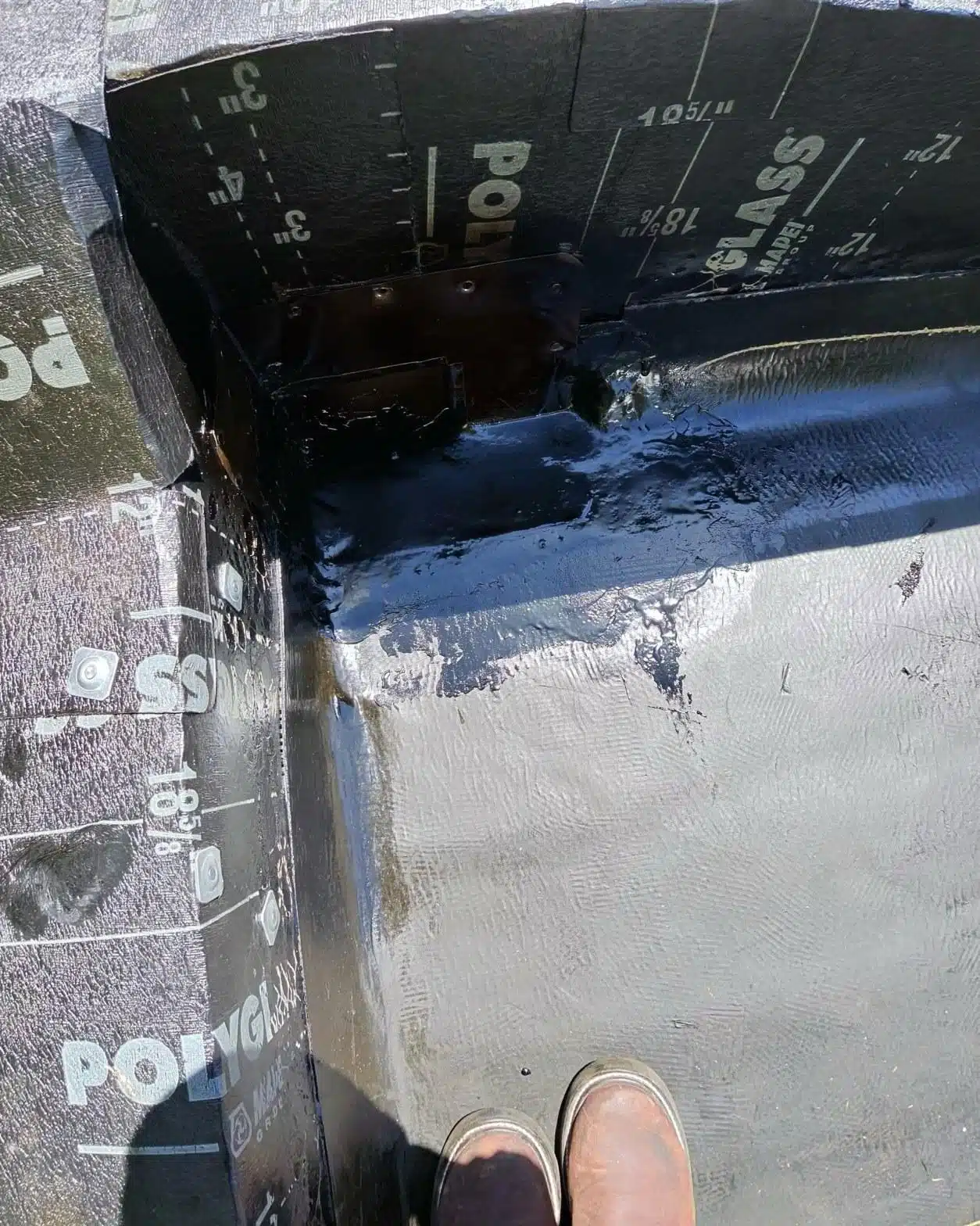
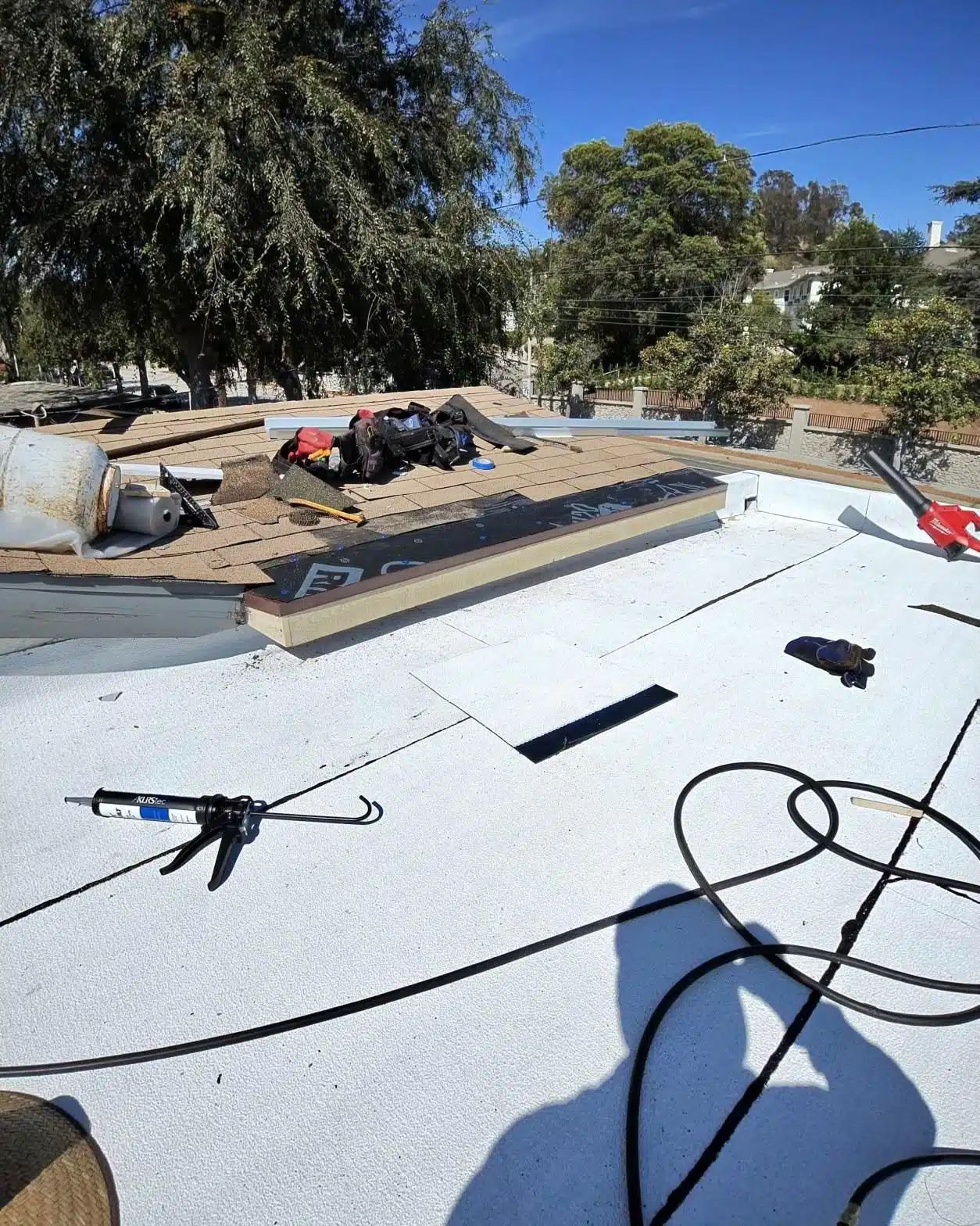
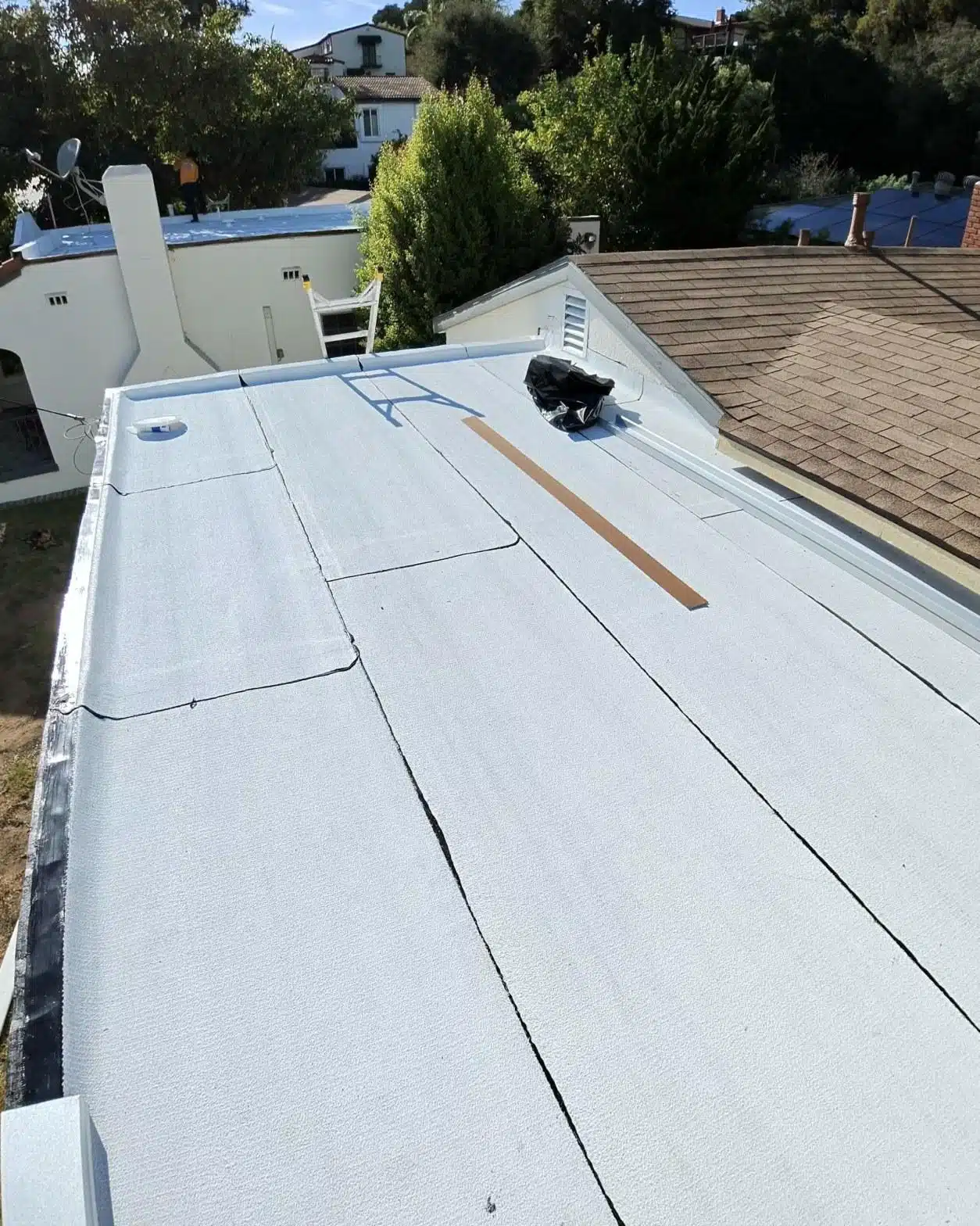
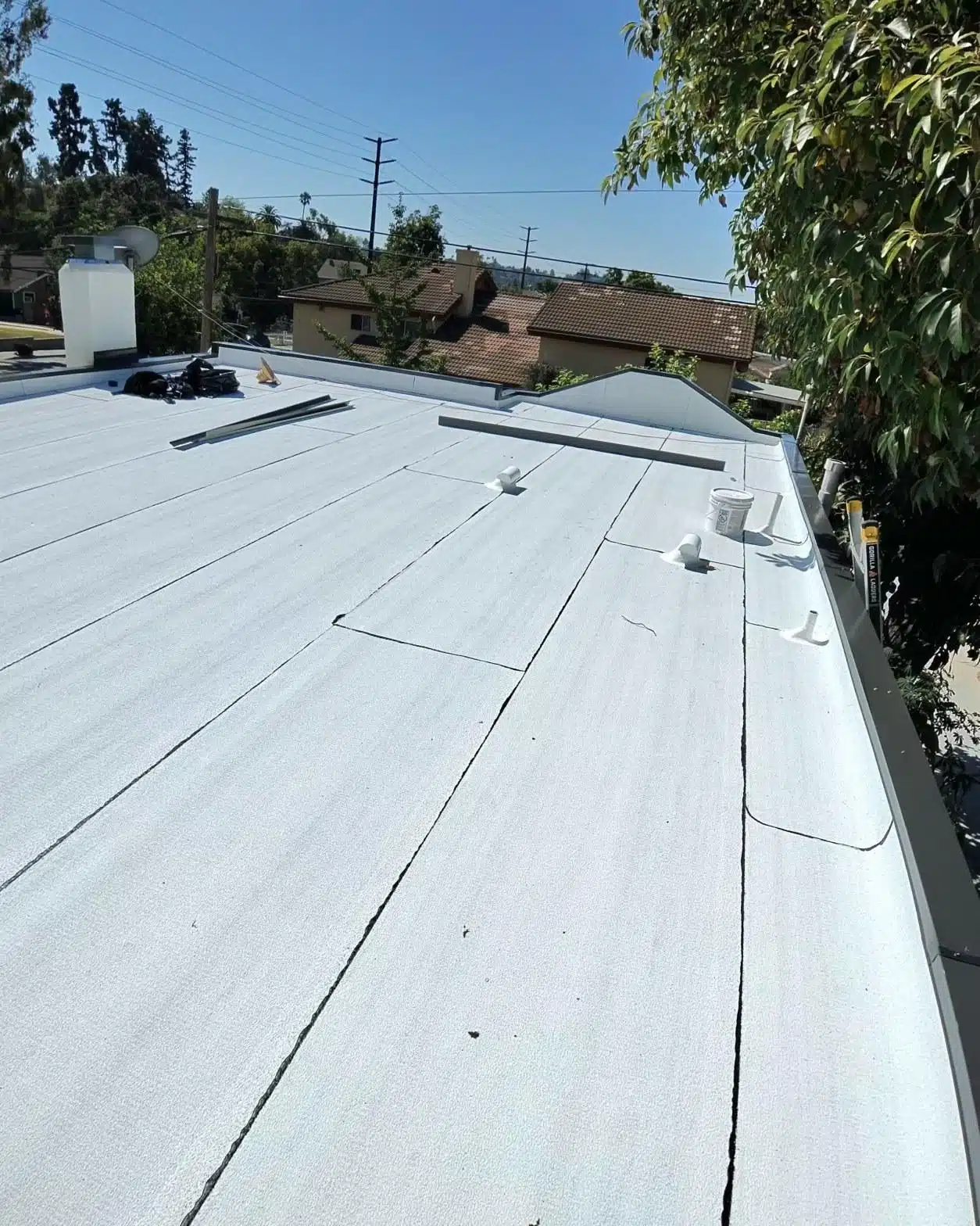
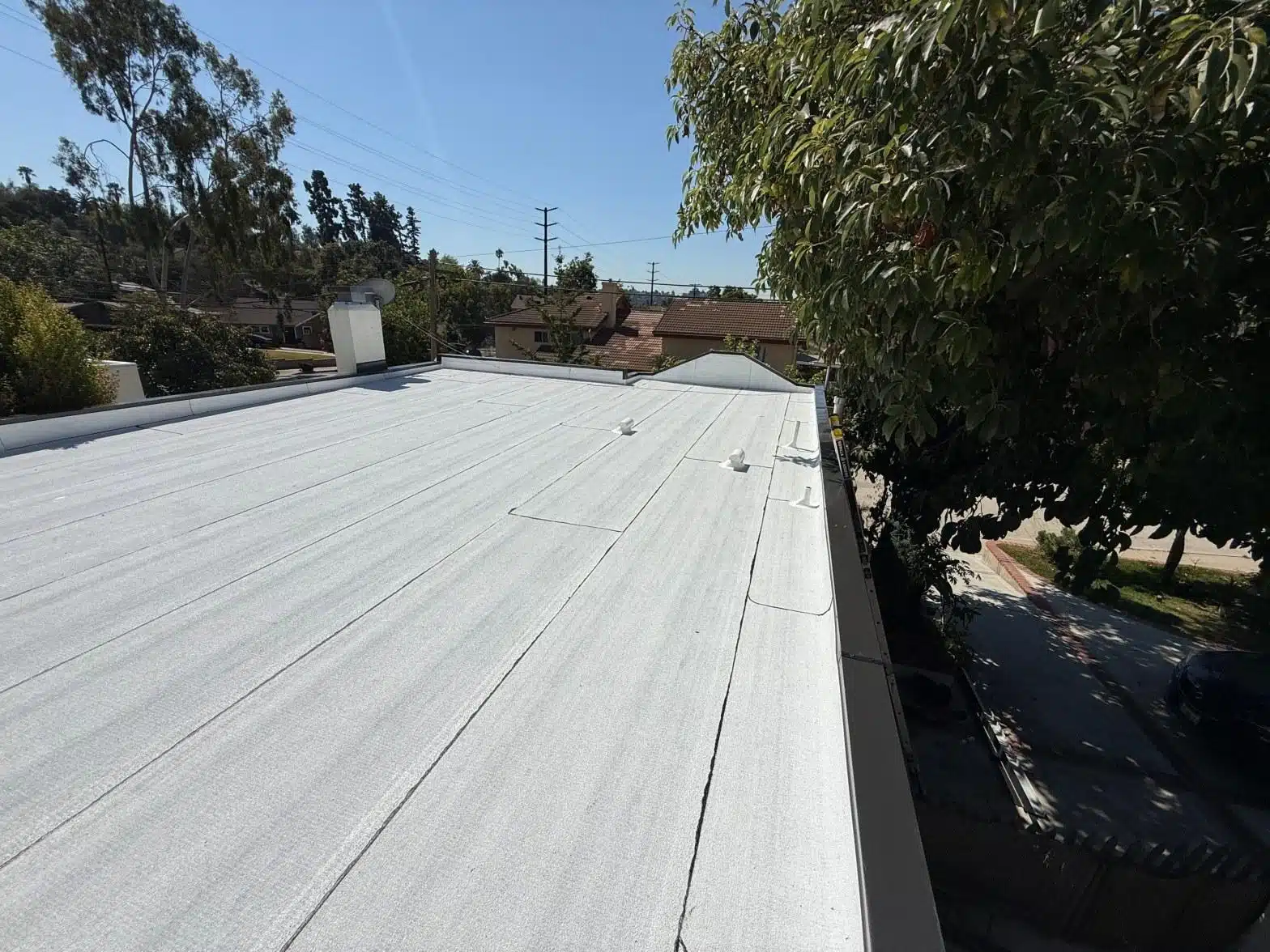
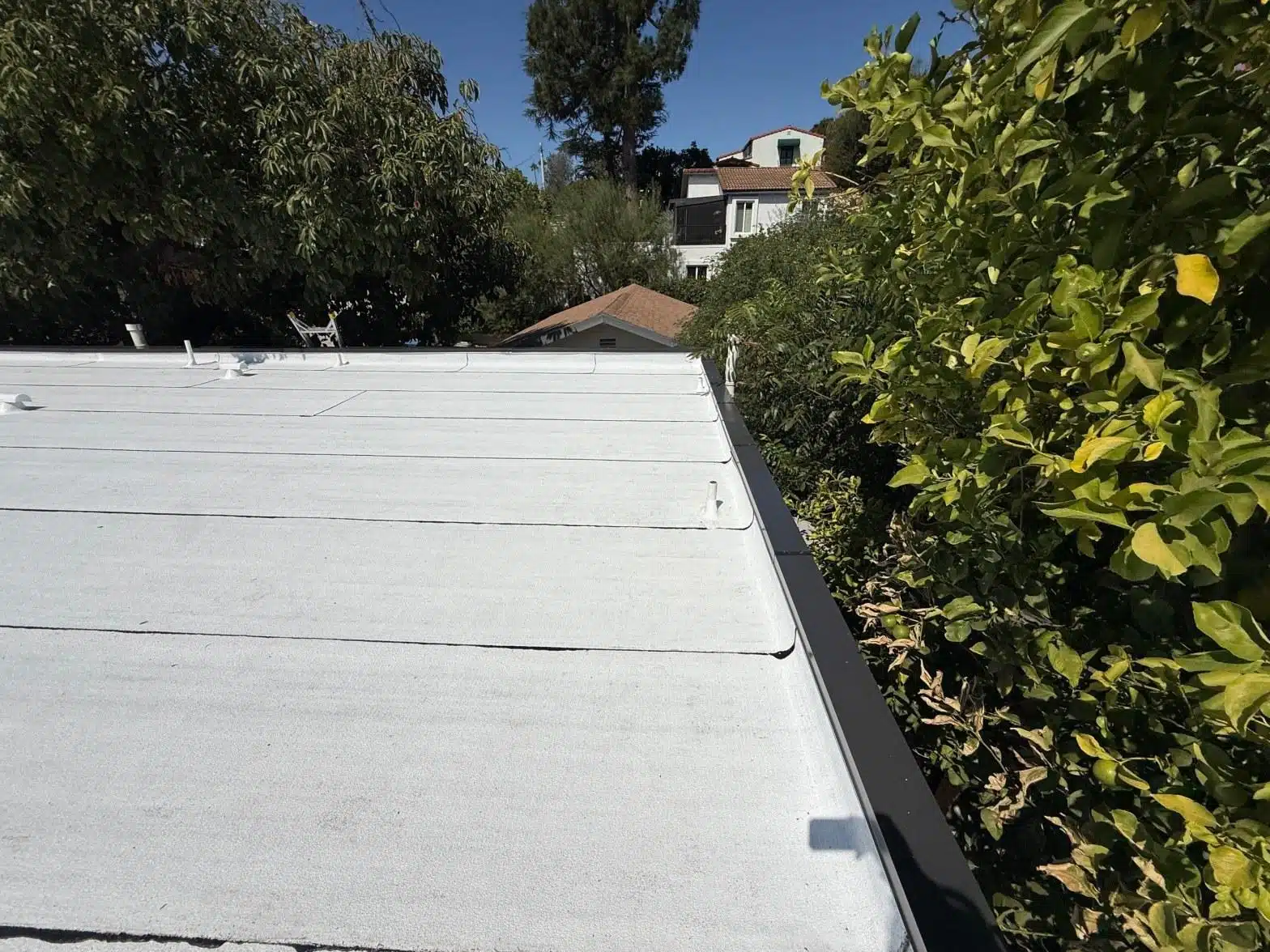
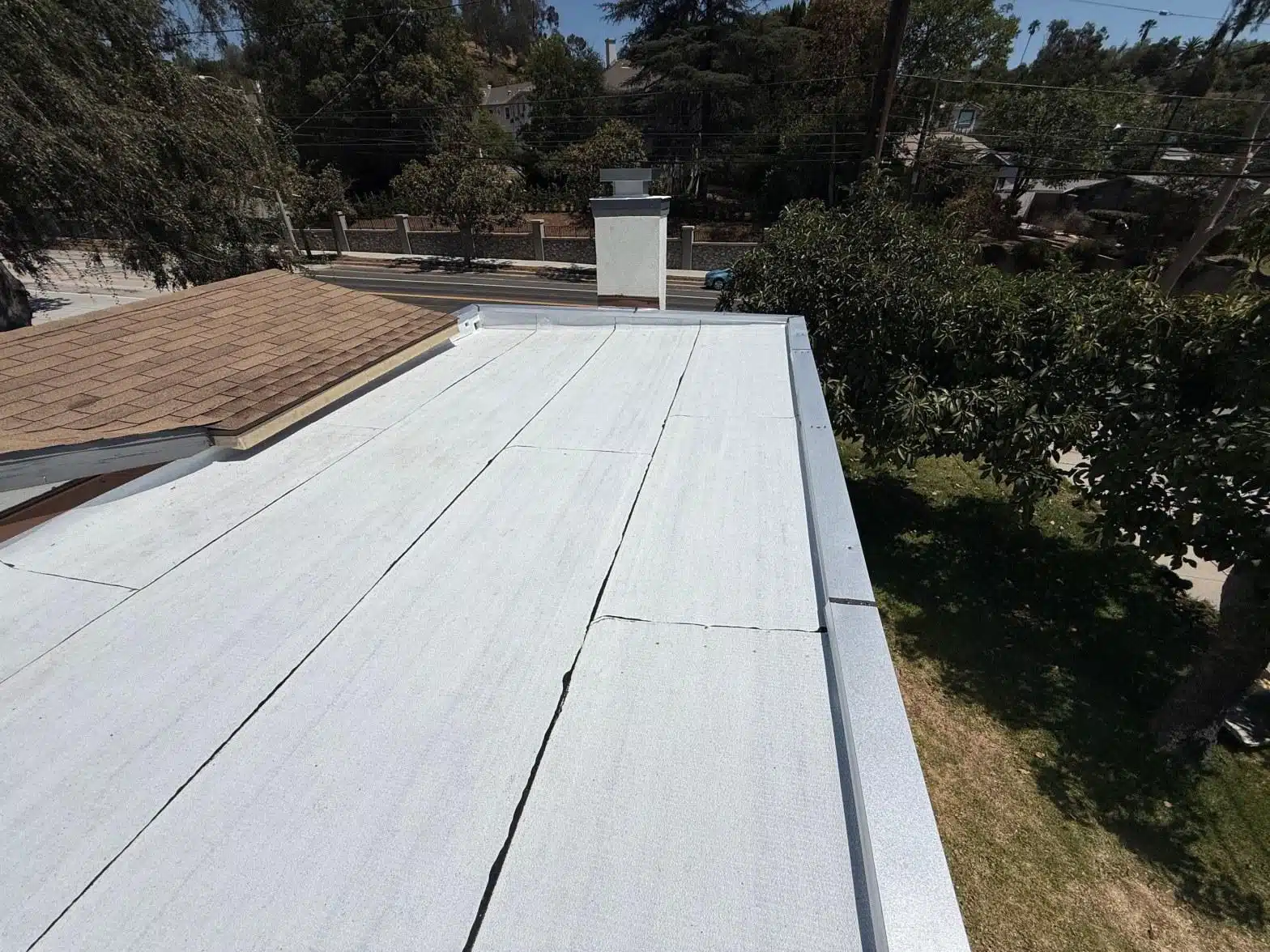
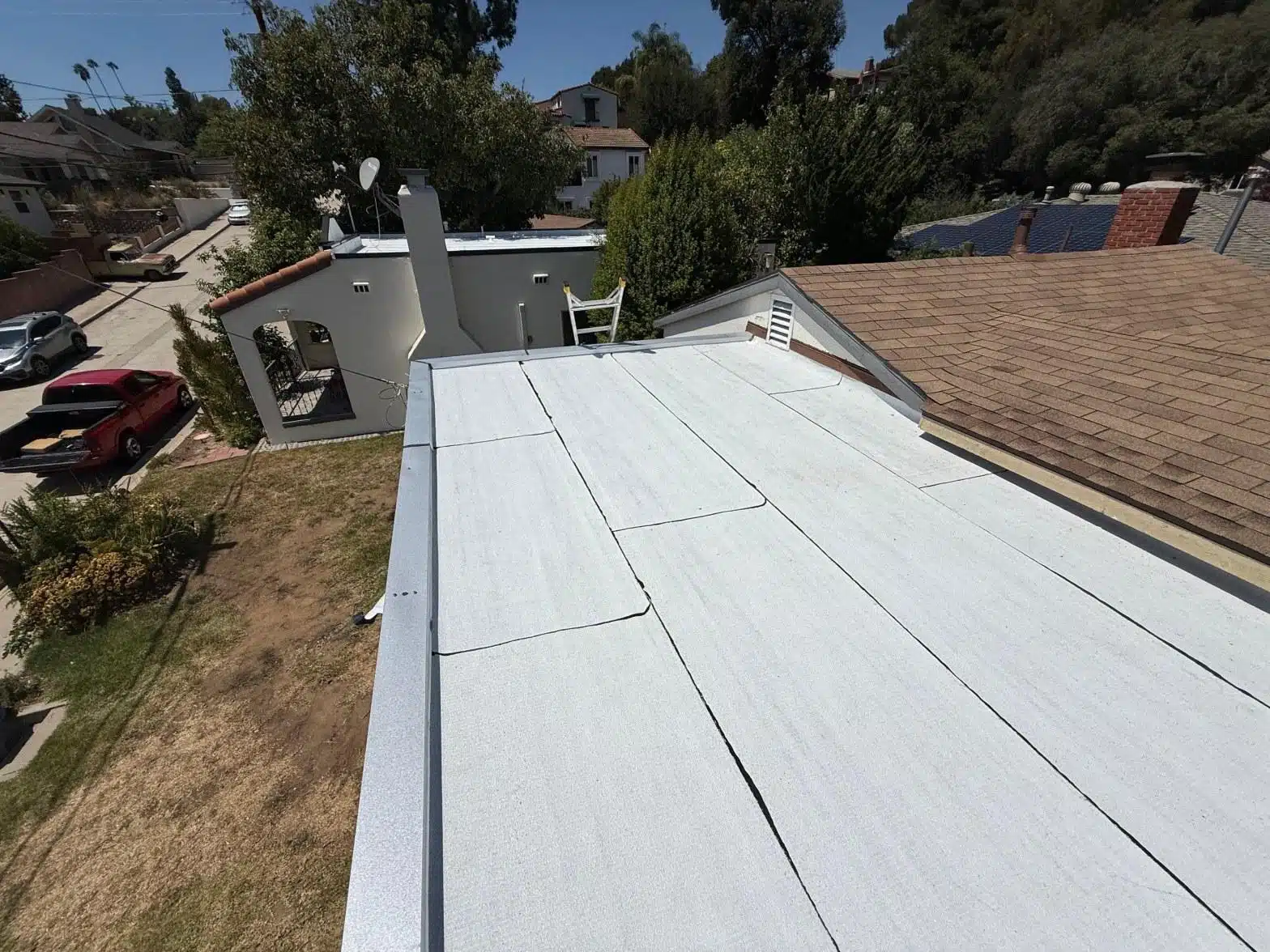
The new modified bitumen membrane was installed in overlapping courses running from the low edge toward the parapet walls, with each seam heat-welded using an open-flame torch to create a continuous waterproof bond. The finished field was then coated with a white elastomeric reflective coating, visible in the featured photo at the top of this article.
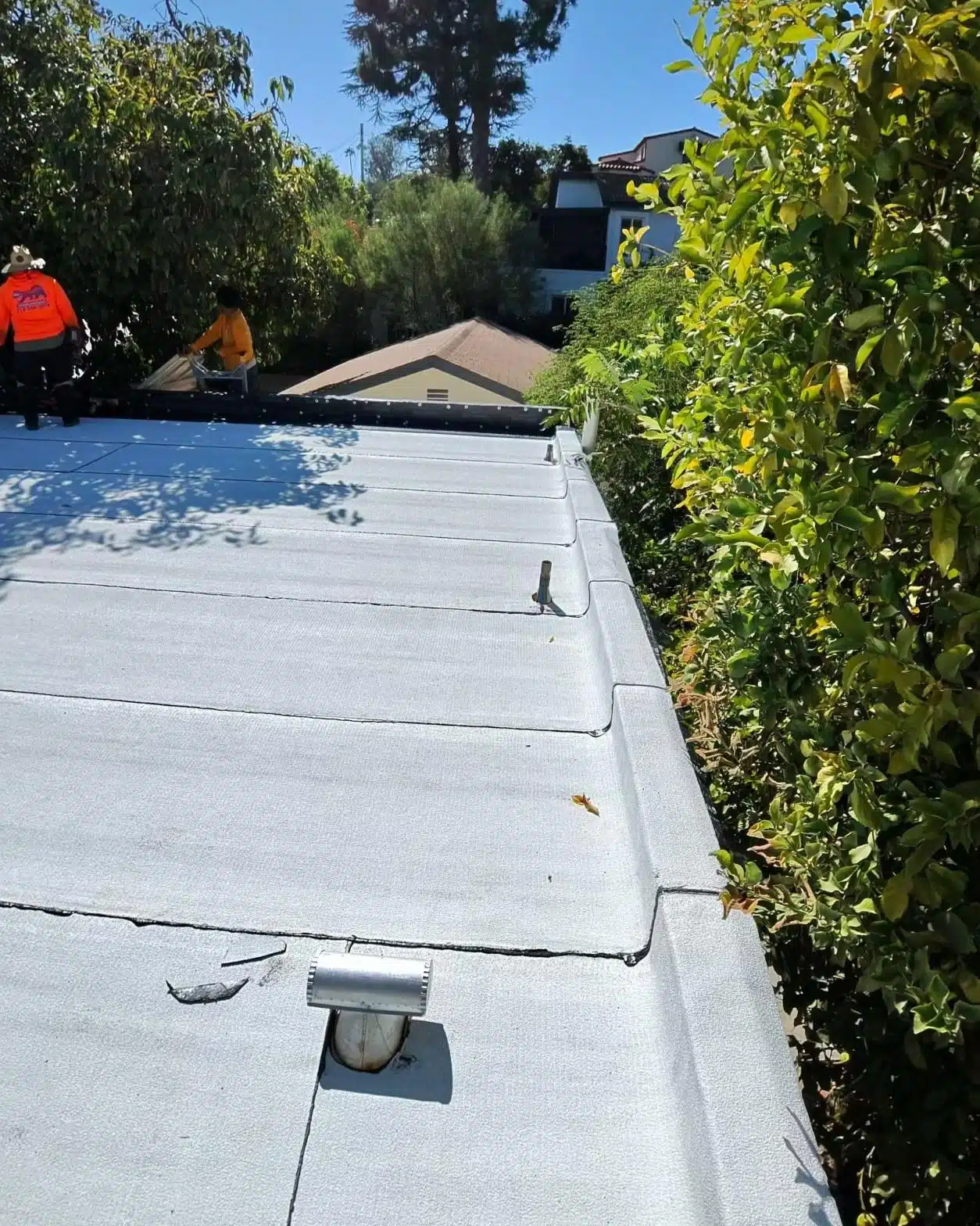
That white coating matters more than aesthetics. California’s Title 24 building energy standards have required cool-roof surfaces on low-slope residential roofs since the 2016 code cycle, and the 2022 update tightened those requirements further. A white or light-colored membrane coating with a Solar Reflectance Index above 82 qualifies. Beyond code compliance, reflective coatings reduce roof-surface temperatures by as much as 50 to 60 degrees Fahrenheit on a clear summer day compared to an uncoated black membrane, which translates directly to lower cooling loads inside the building. ENERGY STAR’s roofing product criteria provide the baseline reflectance and emittance thresholds contractors and homeowners can reference when selecting coating products.
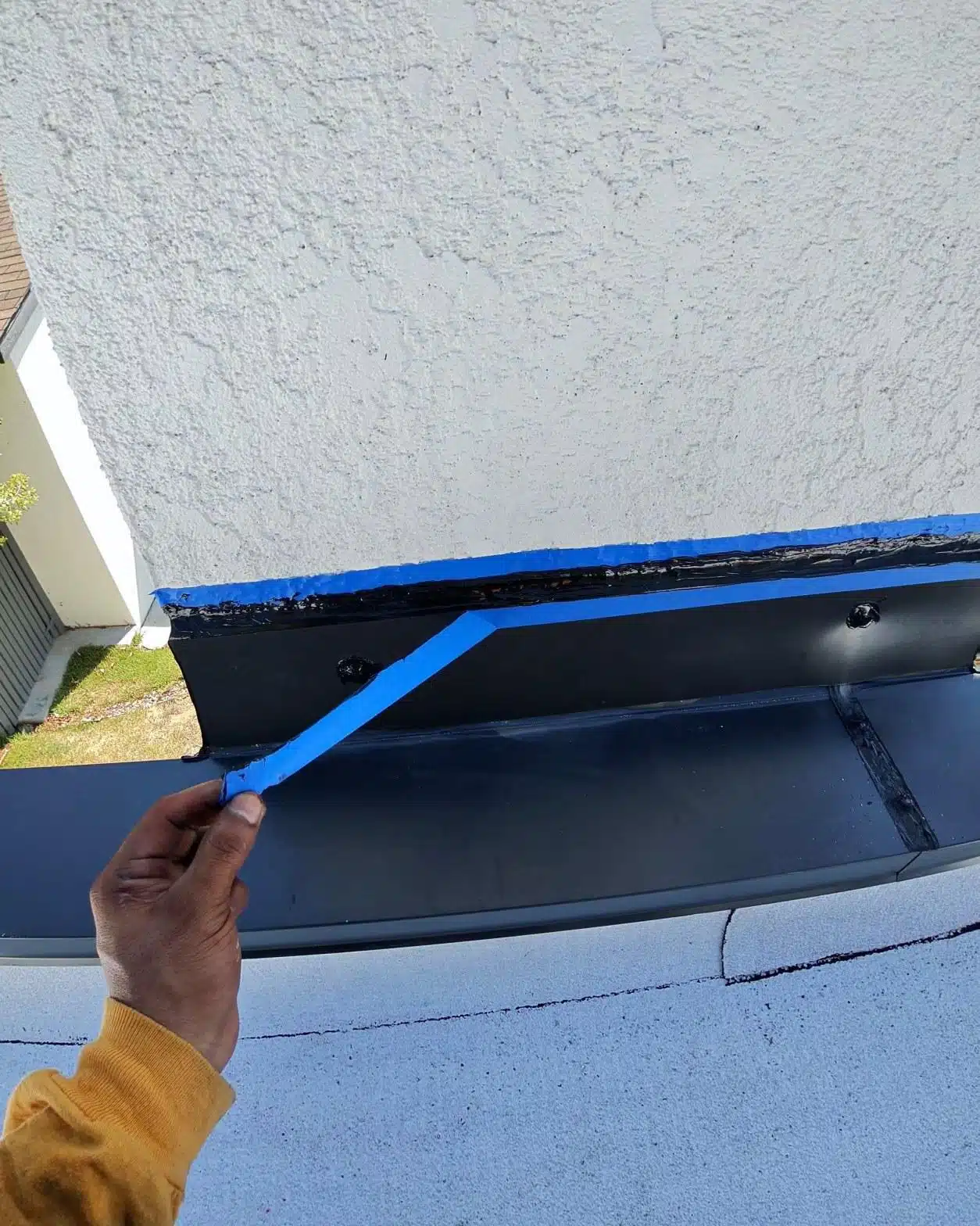
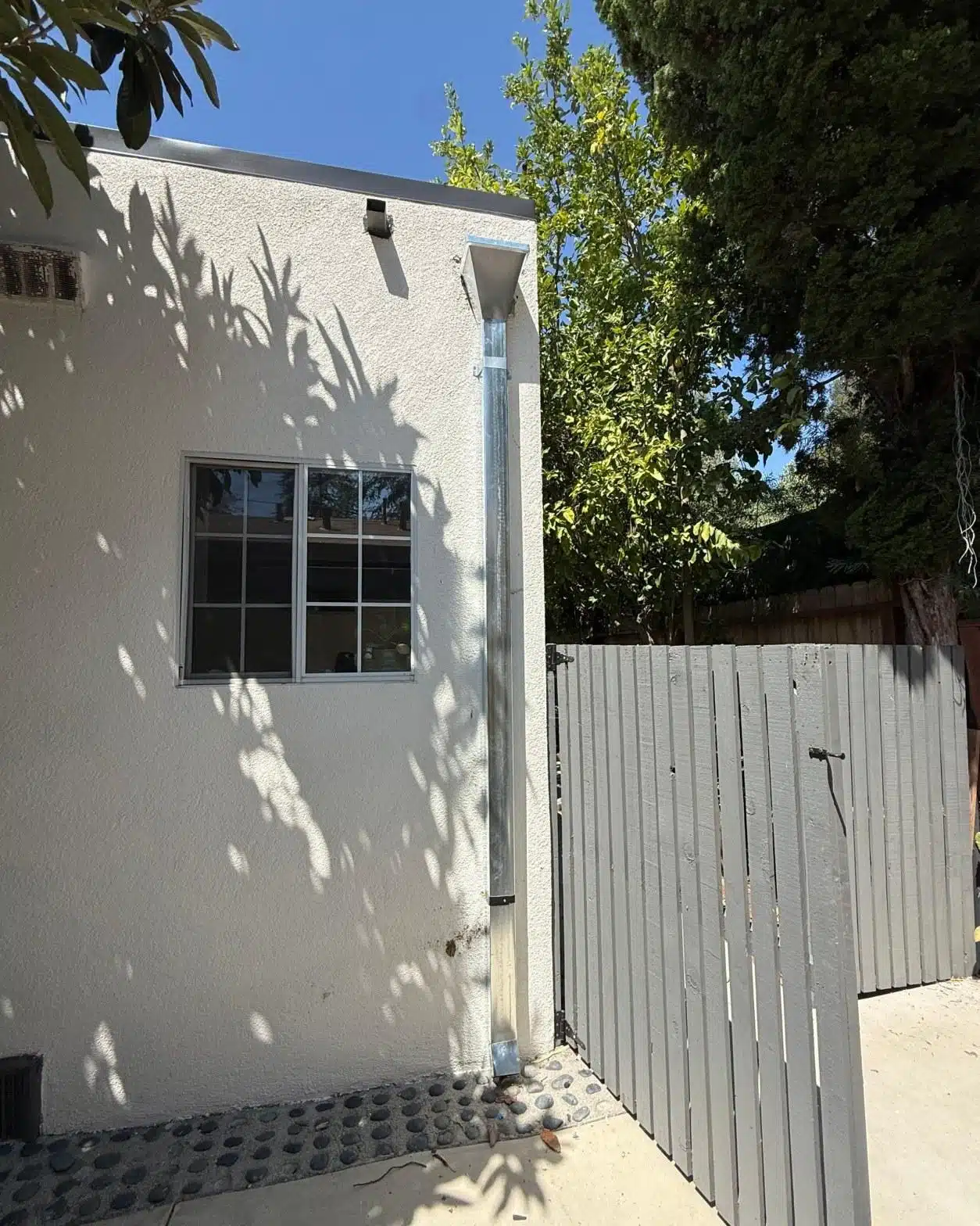
The crew also installed a new galvanized downspout on the building’s side wall to route drainage from the flat roof away from the foundation, a small addition that prevents the kind of long-term water infiltration at the base of the wall that causes far more expensive repairs down the road.
The Shingle Section Tune-Up
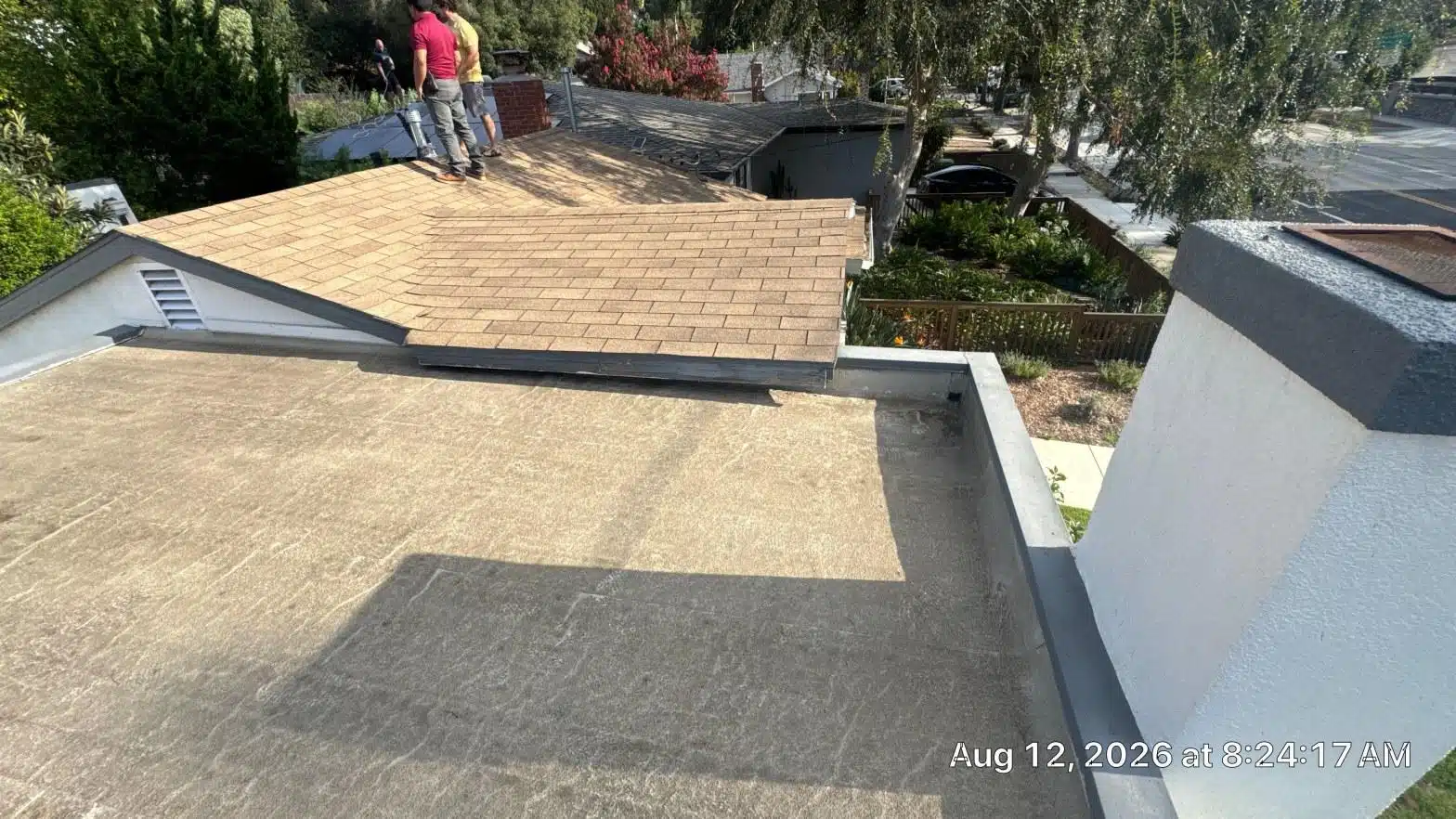
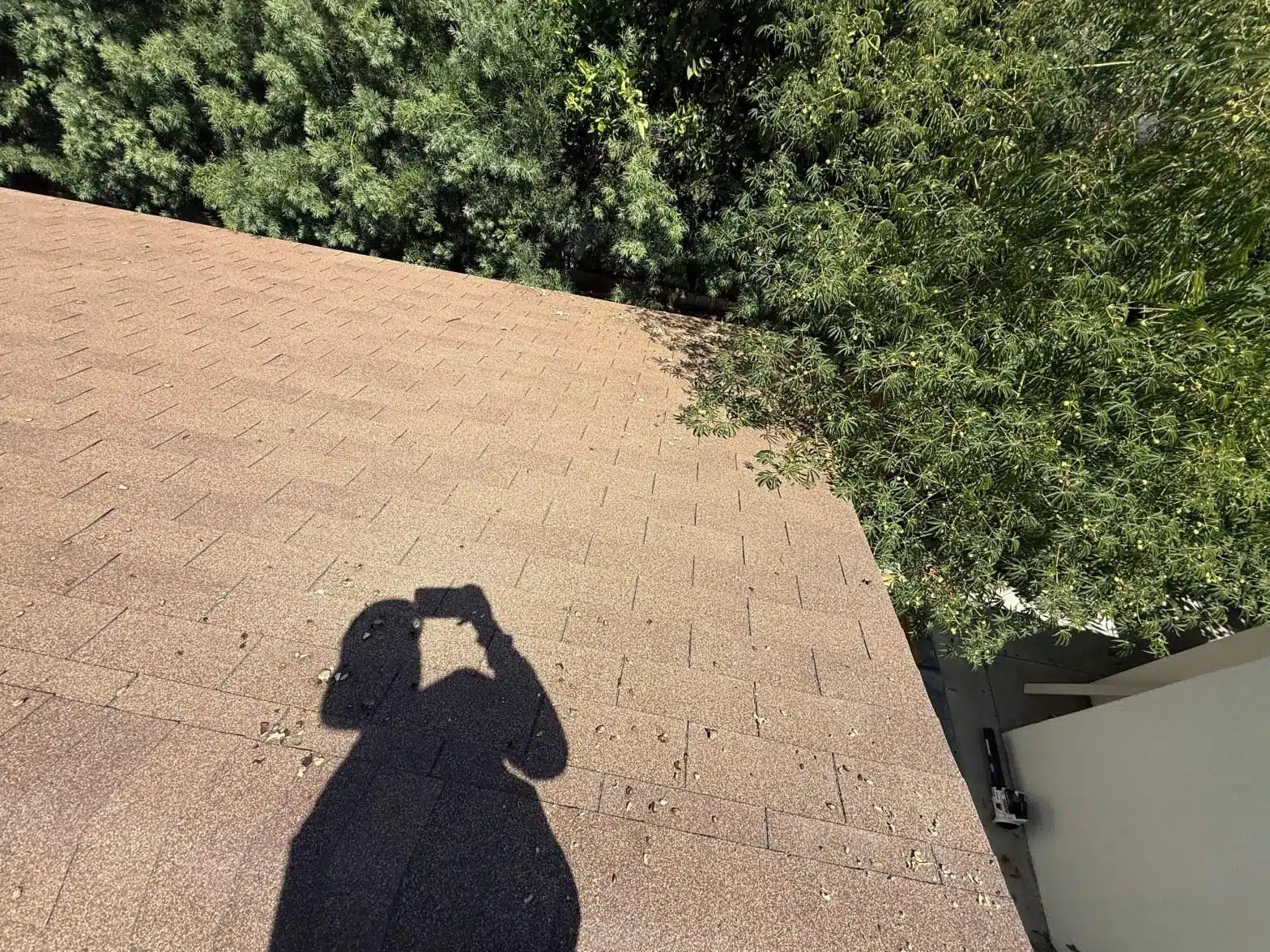
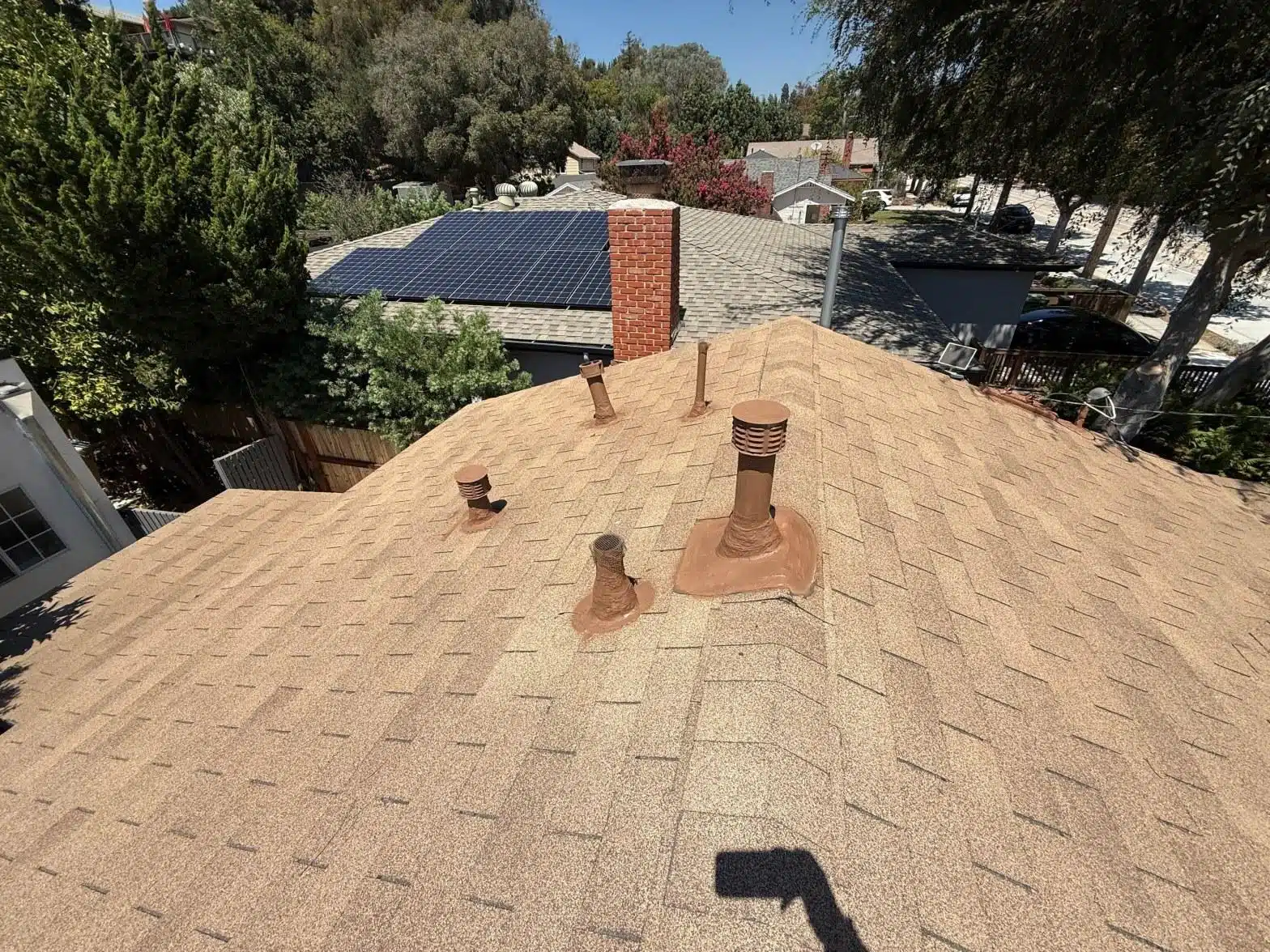
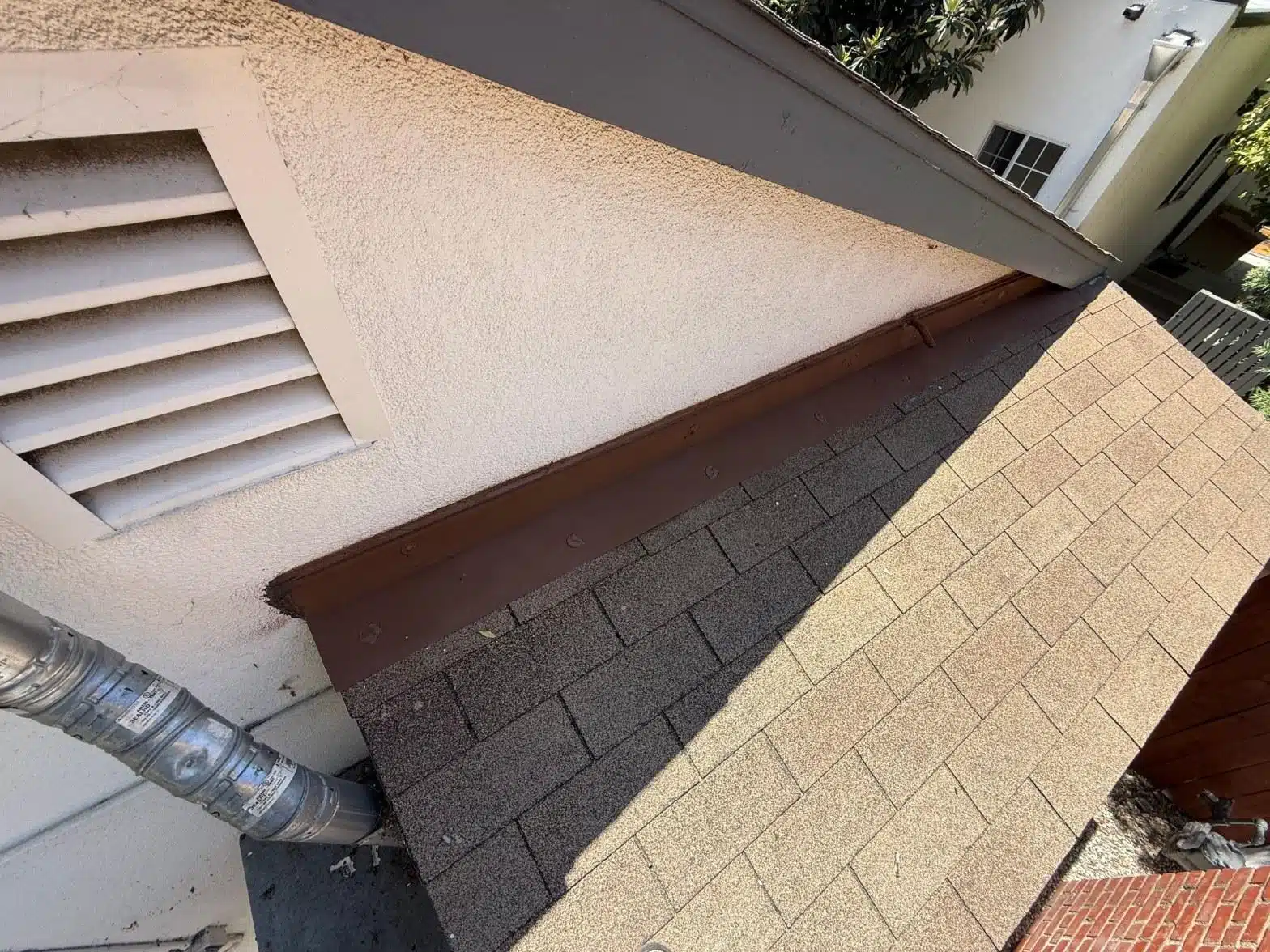
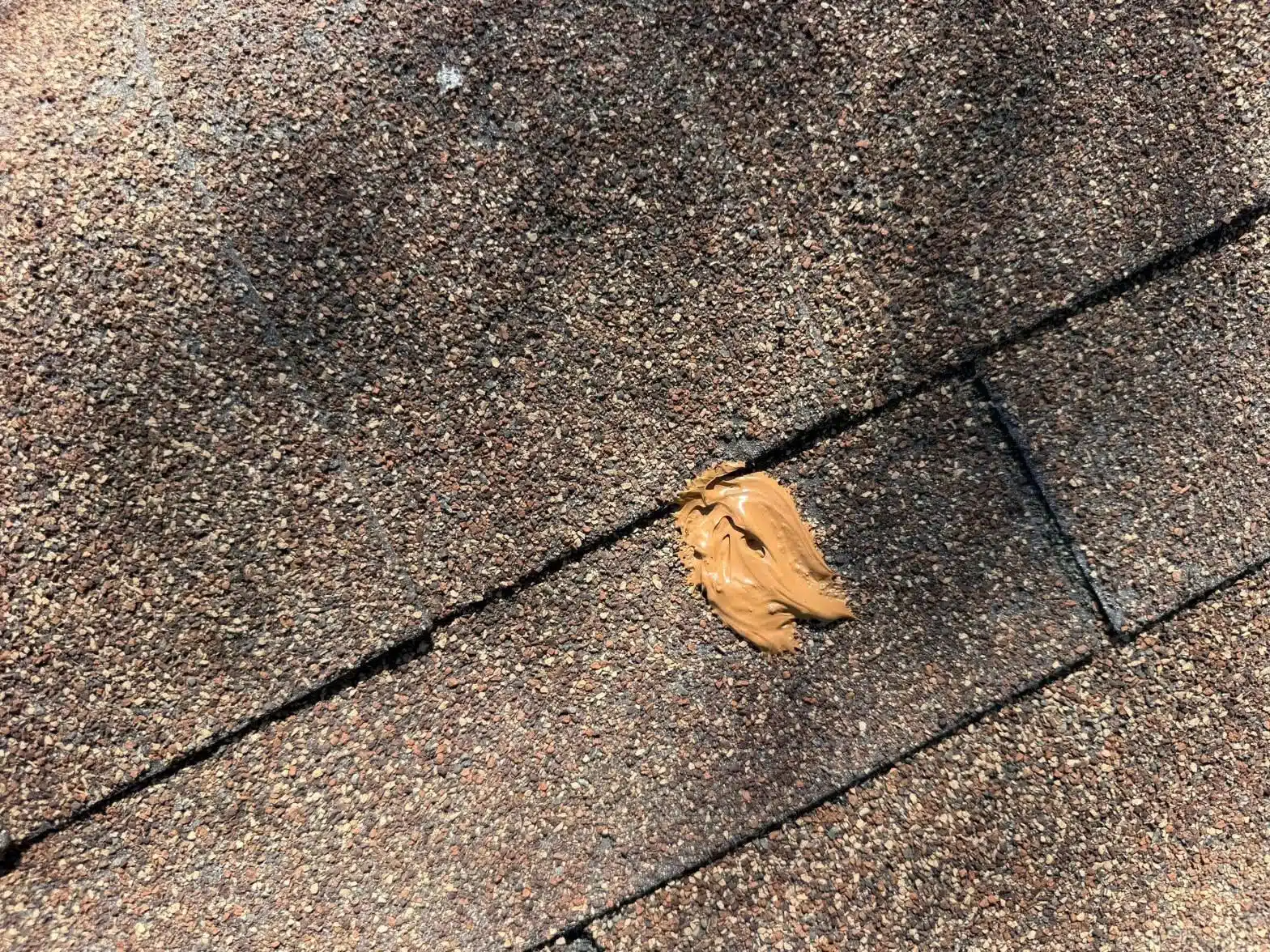
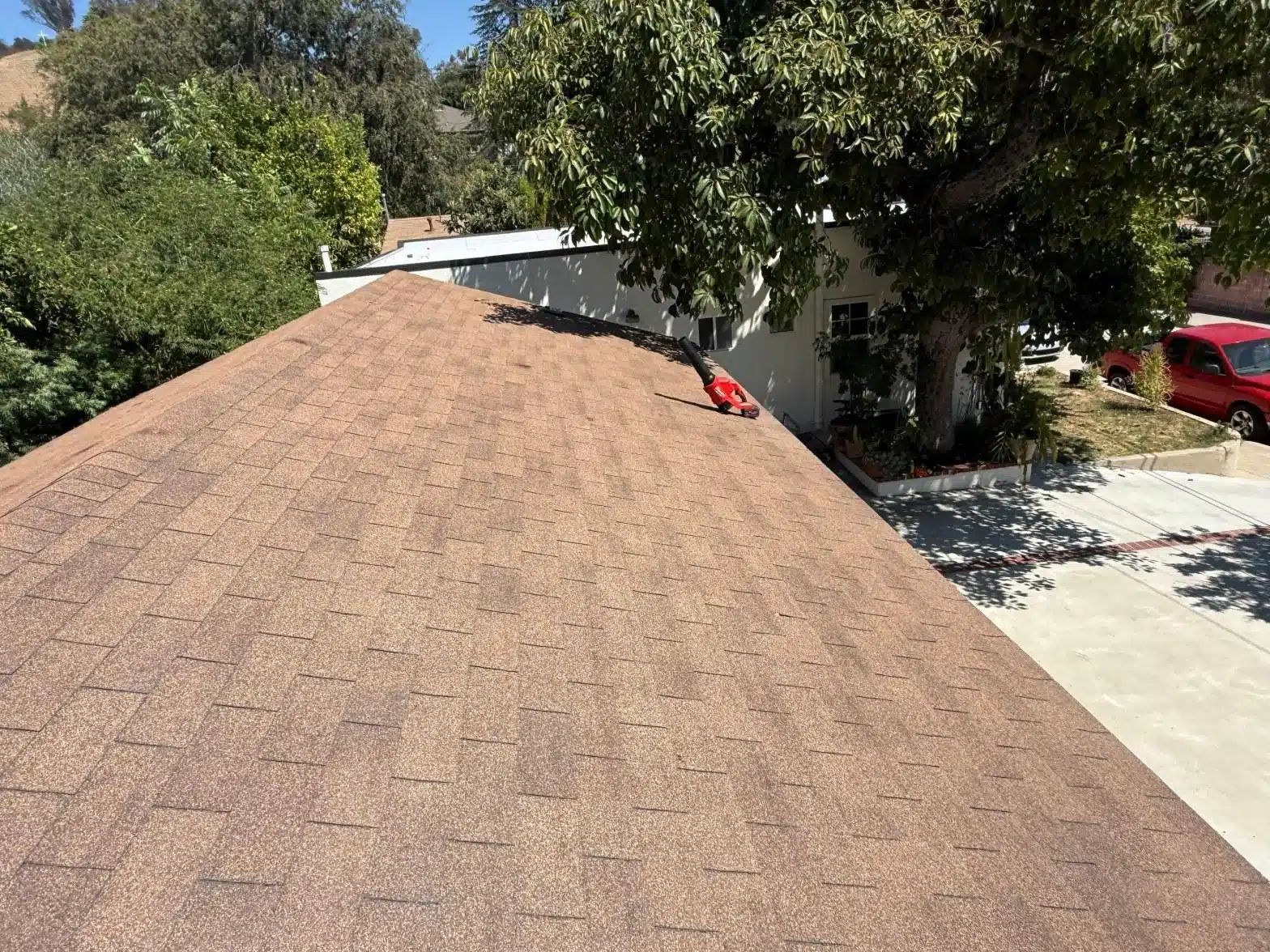
The pitched shingle section received a targeted tune-up rather than a full replacement: loose or lifted shingles were re-secured, exposed nail heads were sealed, and debris was cleared from valleys and along the eave line. The gallery photos show the finished shingle field in good, uniform condition after the work was completed. A full shingle replacement was not warranted here because the shingles retained adequate granule coverage and the substrate was sound. Tune-ups on shingle roofs that are structurally solid but showing minor wear typically extend service life by 5 to 8 years and cost a fraction of a full reroof.
This is licensed work. Roof Repair & Construction Inc. is licensed by the California Contractors State License Board (CSLB), and any structural or membrane work on a residential roof in California requires a valid contractor’s license.
Ready to Assess Your Flat or Shingle Roof?
If your flat roof membrane is showing seam separation, surface oxidation, or is more than 15 years old, schedule an inspection before the next rainy season arrives. The same applies if your shingle section has bare patches, lifted edges, or drainage issues. Call Roof Repair & Construction Inc. for a written assessment and itemized scope of work before any repairs begin.
Gallery
Explore our full range of Roof Repair services across Southern California.
Frequently Asked Questions
How long does a torch-down flat roof replacement usually take?
Most residential torch-down flat roof replacements take 2 to 4 days from tear-off to finished coating. If rotted deck boards need replacement first, add half a day to a full day depending on how many boards are affected. Projects where the decking is solid and the tear-off is straightforward can often be completed in 2 days.
Do I have to use a white or reflective coating on my flat roof in California?
Yes, for most low-slope residential roofs in California. California's Title 24 building energy standards require cool-roof surfaces on low-slope roofs, and the 2022 code update tightened those requirements. A white elastomeric coating with a Solar Reflectance Index above 82 is the most common way to comply, and it also reduces roof-surface temperatures by up to 50 to 60 degrees Fahrenheit compared to an uncoated dark membrane.
Why did you replace some deck boards before putting down the new membrane?
Rotted or softened wood cannot hold torch-down membrane fasteners properly, and a membrane torched over compromised decking risks adhesion failure within a few seasons. Replacing damaged boards before any membrane work is installed is standard practice and protects the long-term waterproof integrity of the whole system.
Can you repair just part of a flat roof, or does the whole thing have to be replaced?
Partial repairs are possible when damage is localized, but they are not always the right call. Once a modified bitumen membrane has oxidized across most of its surface and seams have begun separating field-wide, a full replacement is more cost-effective than patching because the underlying membrane can no longer bond reliably. A qualified contractor should inspect the full field before recommending spot repair versus replacement.
What is a shingle roof tune-up, and when does it make sense instead of a full replacement?
A shingle tune-up involves re-securing lifted or loose shingles, sealing exposed nail heads, clearing debris from valleys, and addressing any minor flashing issues, without tearing off the entire roof. It makes sense when the shingles still have adequate granule coverage, the decking beneath is structurally sound, and wear is minor rather than systemic. A tune-up on a roof in that condition can extend its service life by 5 to 8 years.
Does a flat roof replacement in California require a licensed contractor?
Yes. Any structural or membrane roofing work on a residential property in California must be performed by a contractor licensed by the California Contractors State License Board (CSLB). Homeowners should verify a contractor's license number on the CSLB website before signing any agreement, since unlicensed work can void insurance coverage and create liability issues at resale.