
What Was the Scope of This Reroof Project?
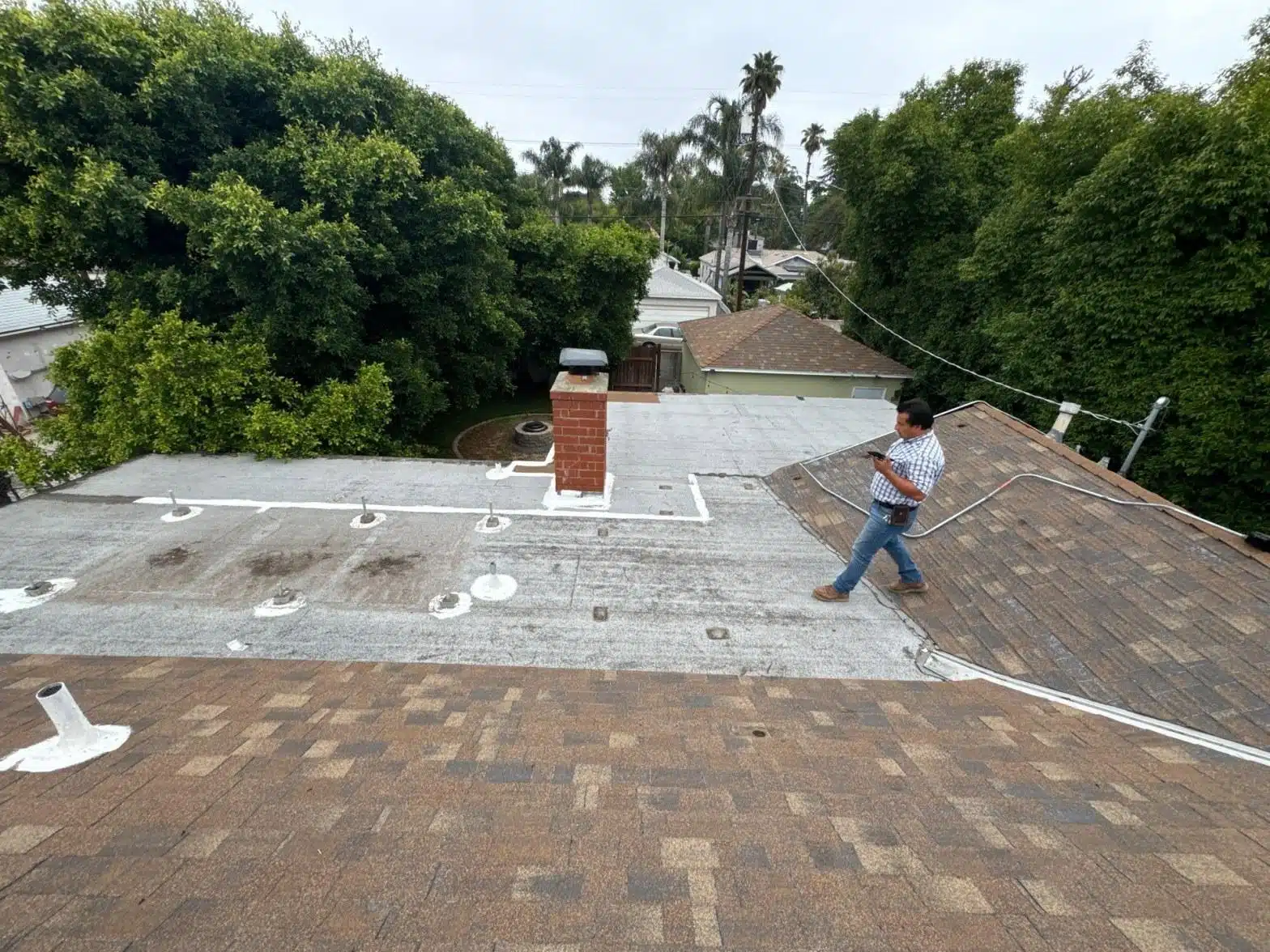
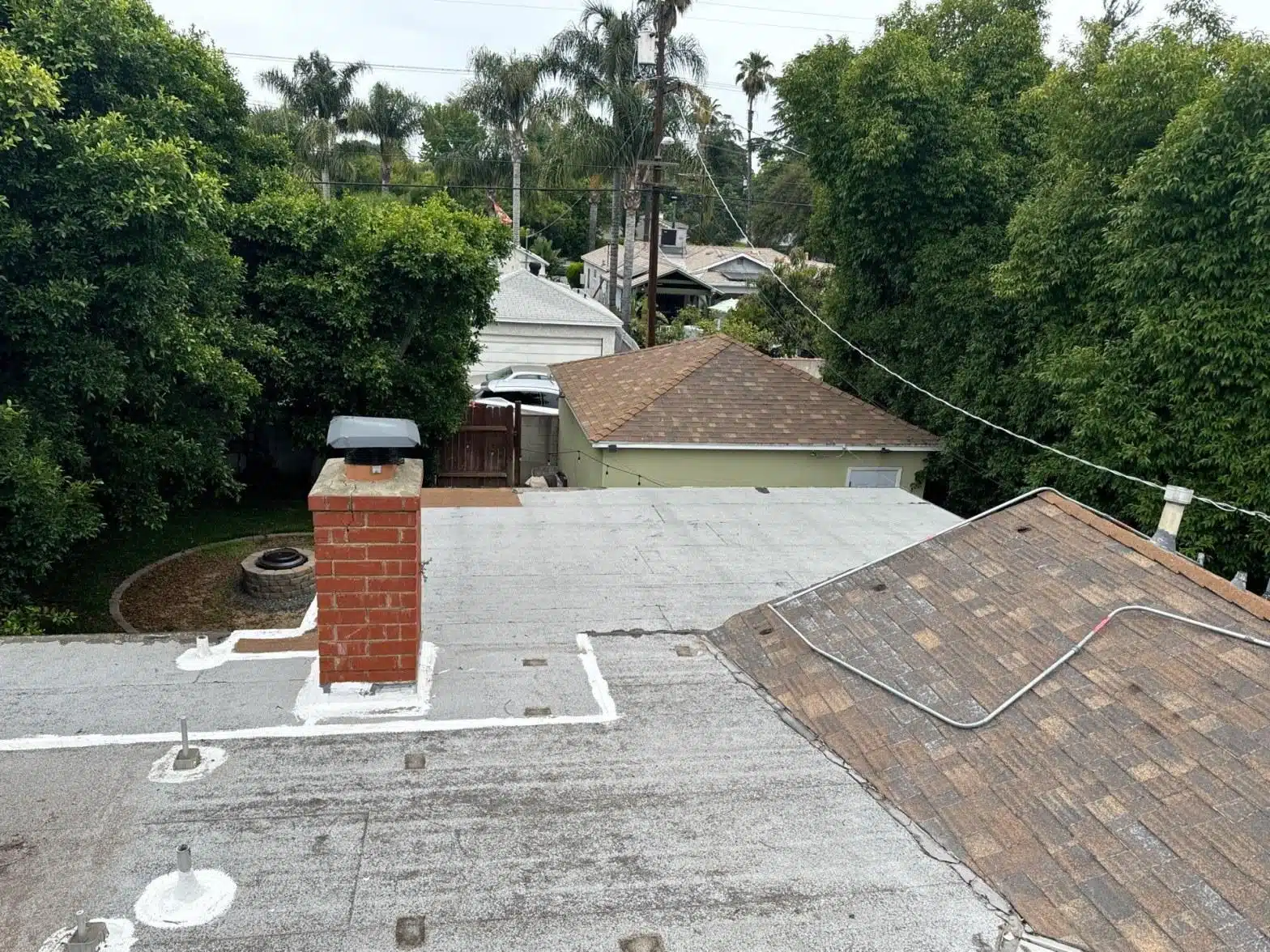
This Los Angeles County home needed a full reroof on two fundamentally different roof types at the same time: a pitched asphalt shingle section and a low-slope flat section. Handling both in a single mobilization keeps the home weather-tight without the gaps and scheduling risk that come from doing each system on separate visits, a practical priority on any house where the two roof planes drain toward each other.
The homeowner’s goal was straightforward: replace aging materials on both sections before the next rainy season and bring the whole roof up to a single consistent standard.
What Did We Find When We Stripped the Pitched Sections?
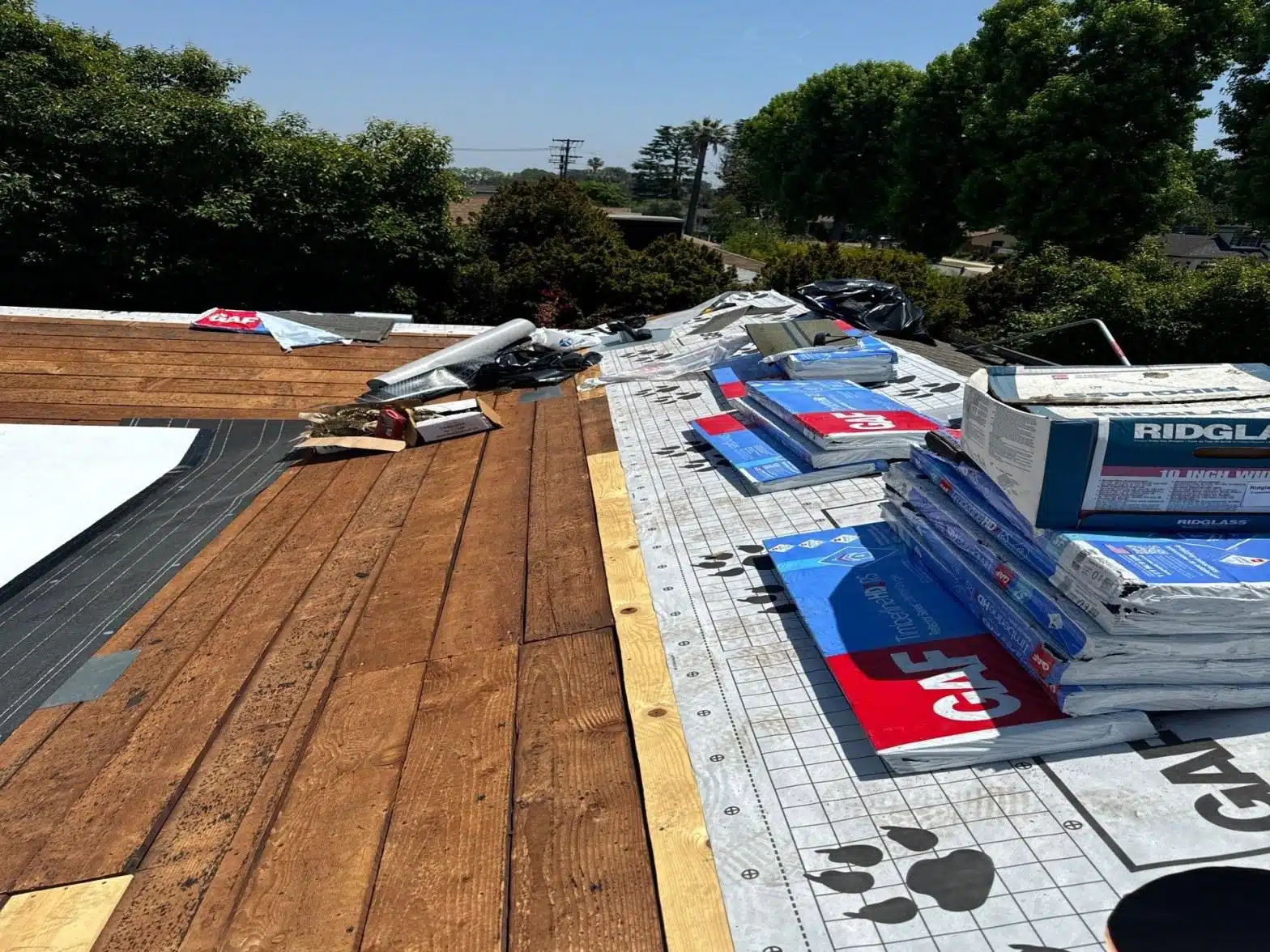
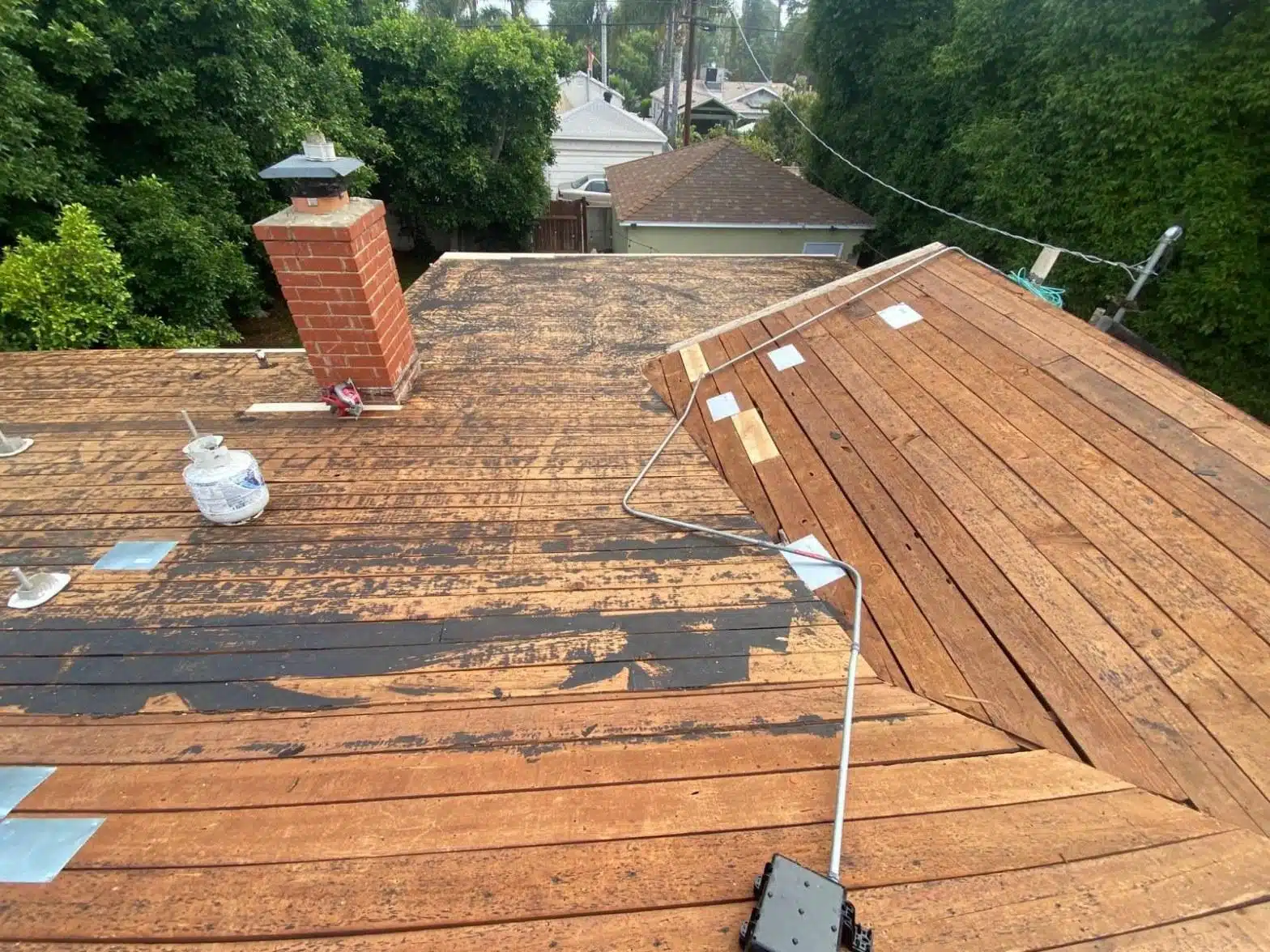
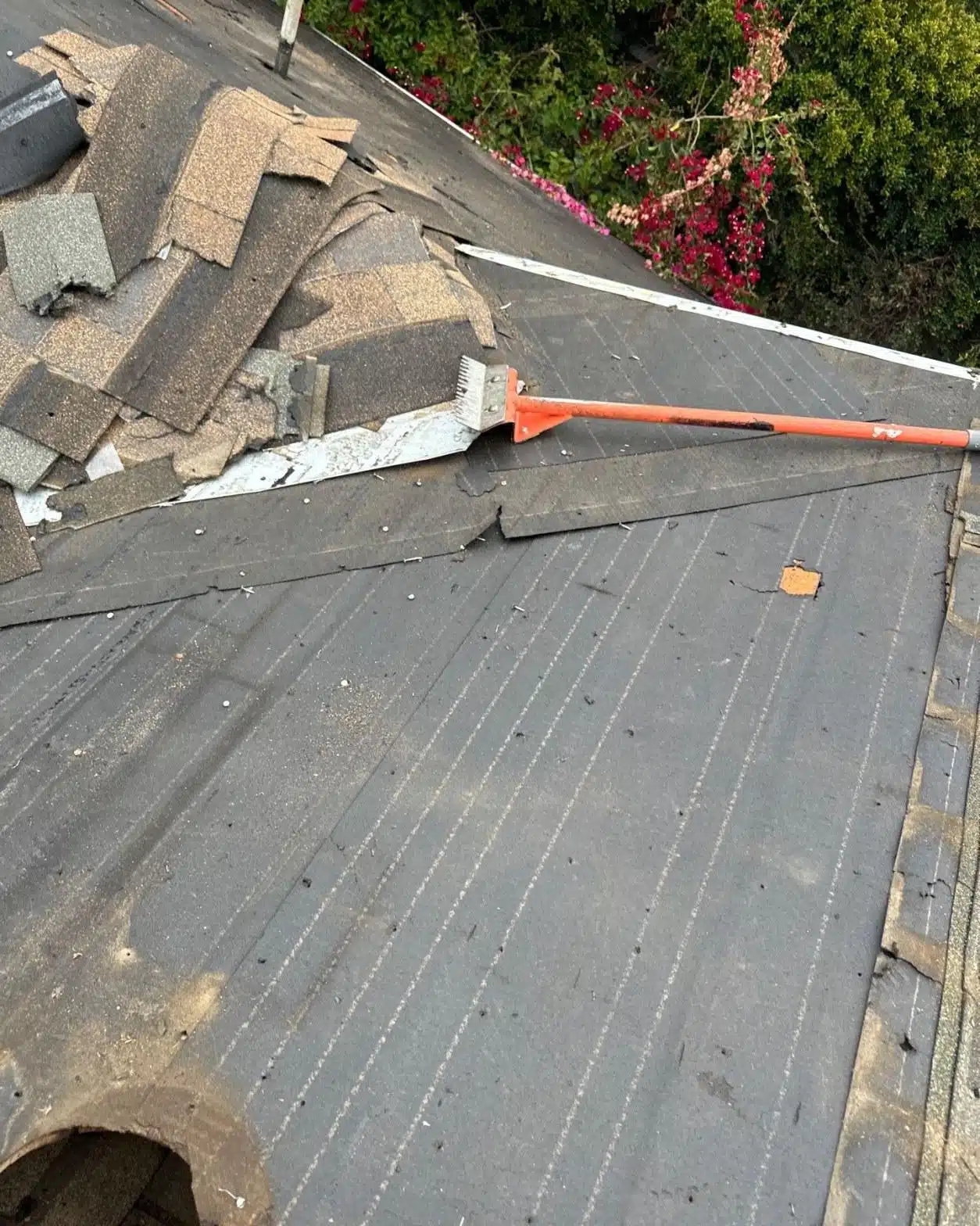
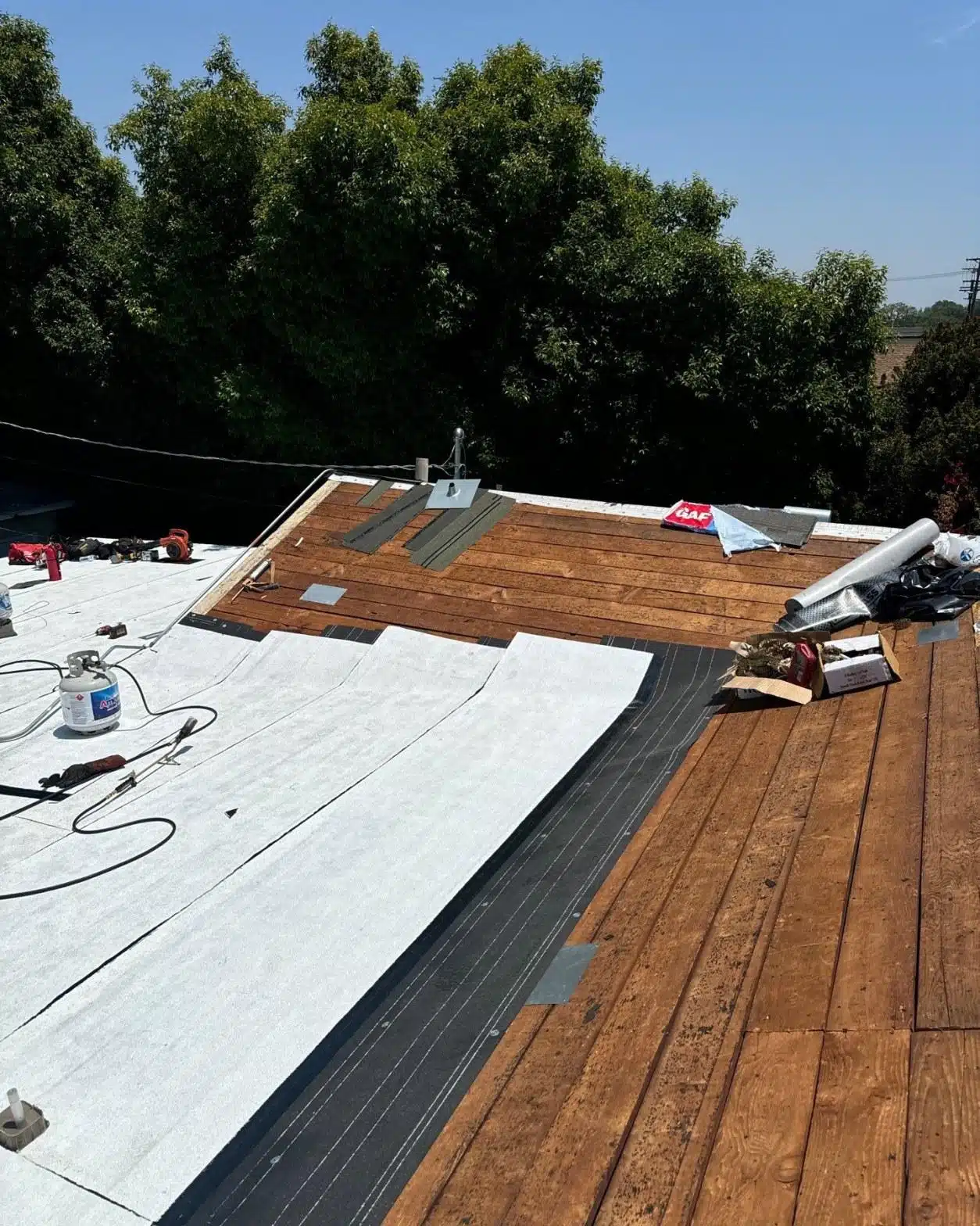
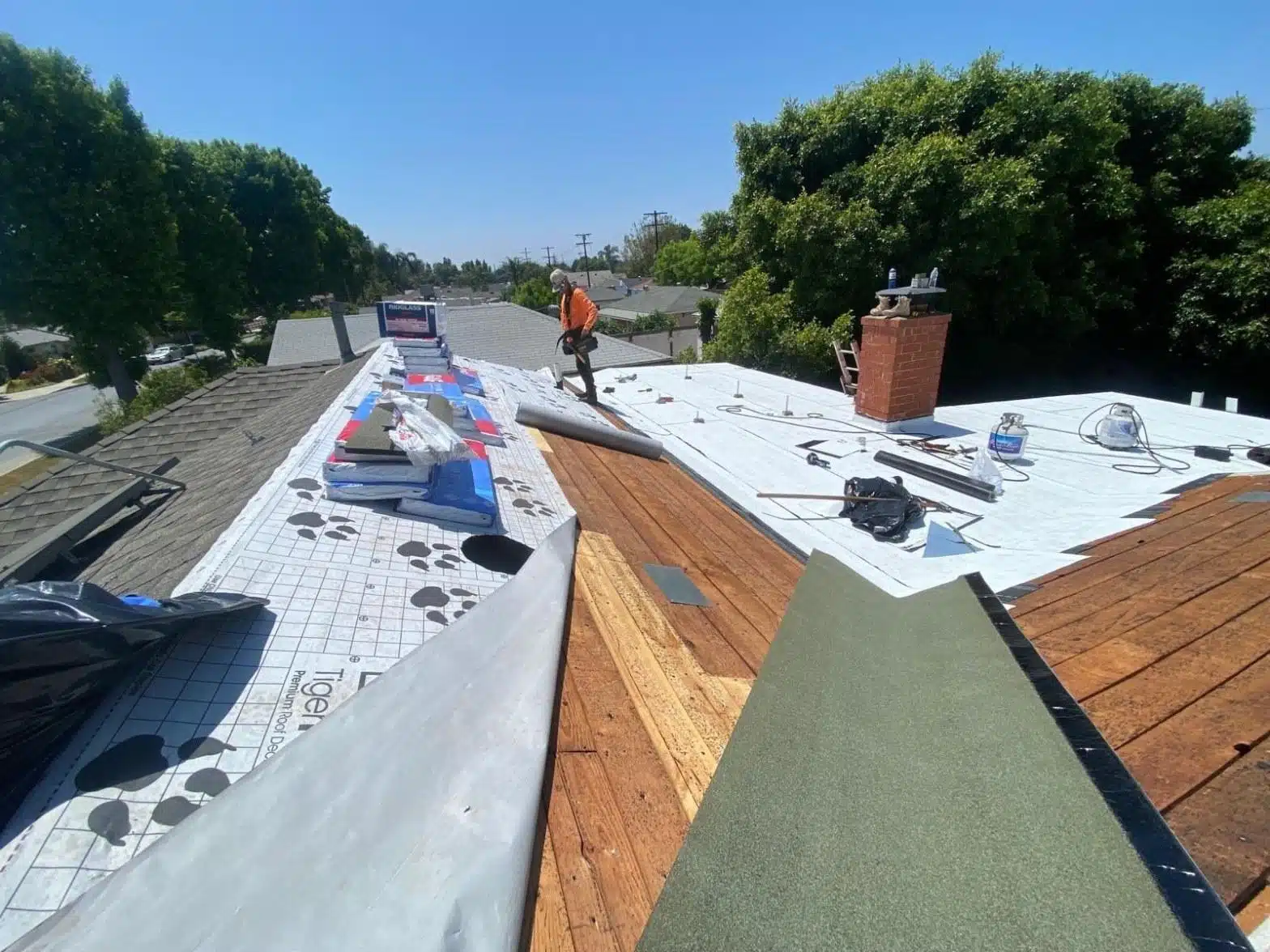
The pitched sections were torn off completely, right down to the original wood plank decking. This is the correct starting point for a quality reroof: decking exposed this way lets the crew inspect every plank for soft spots, rot, or fastener pull-through before any new material goes on top. Wood plank decking is common on Los Angeles County homes built before the 1970s, and the planks here were sound enough to receive new underlayment directly.
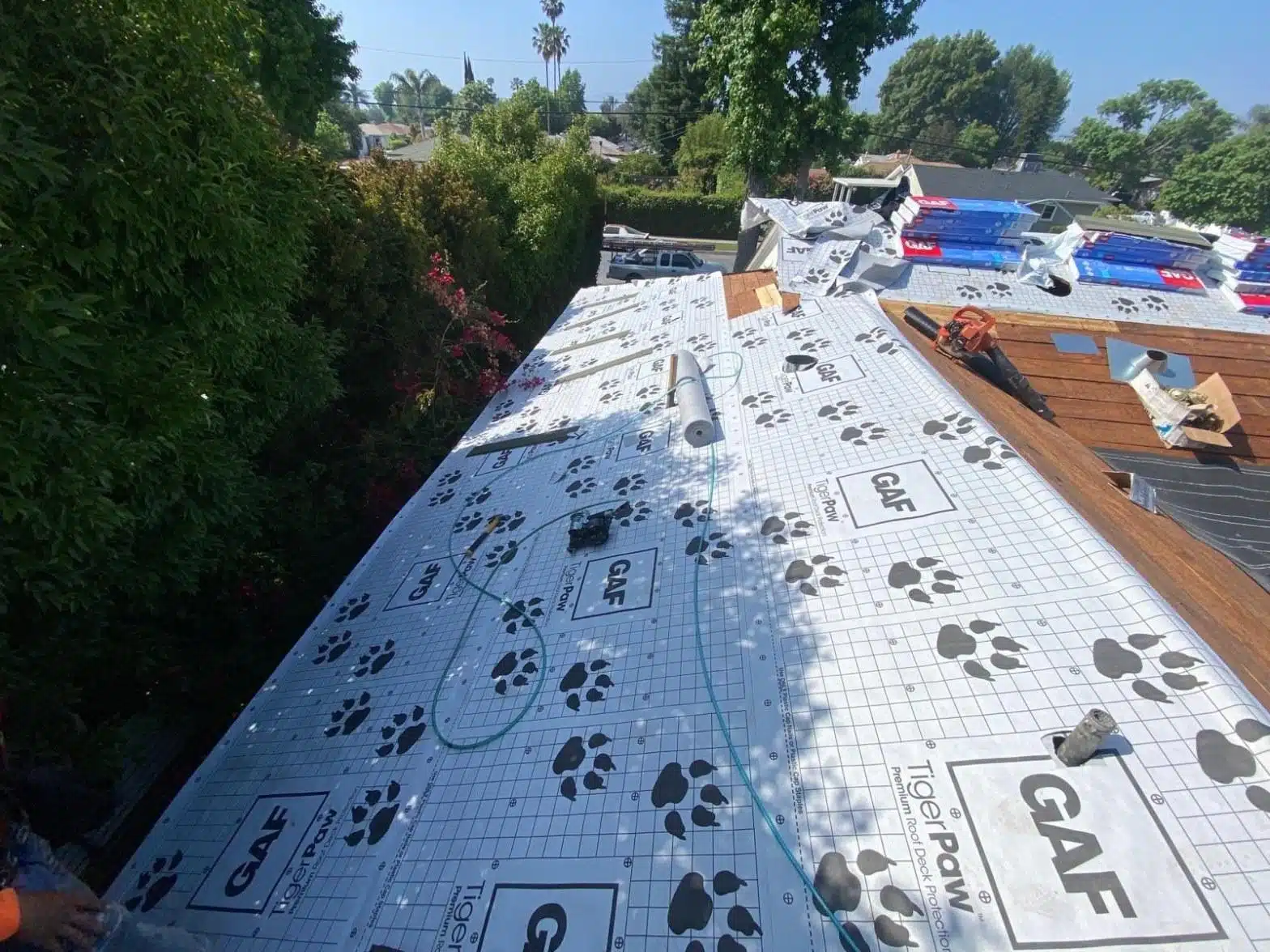
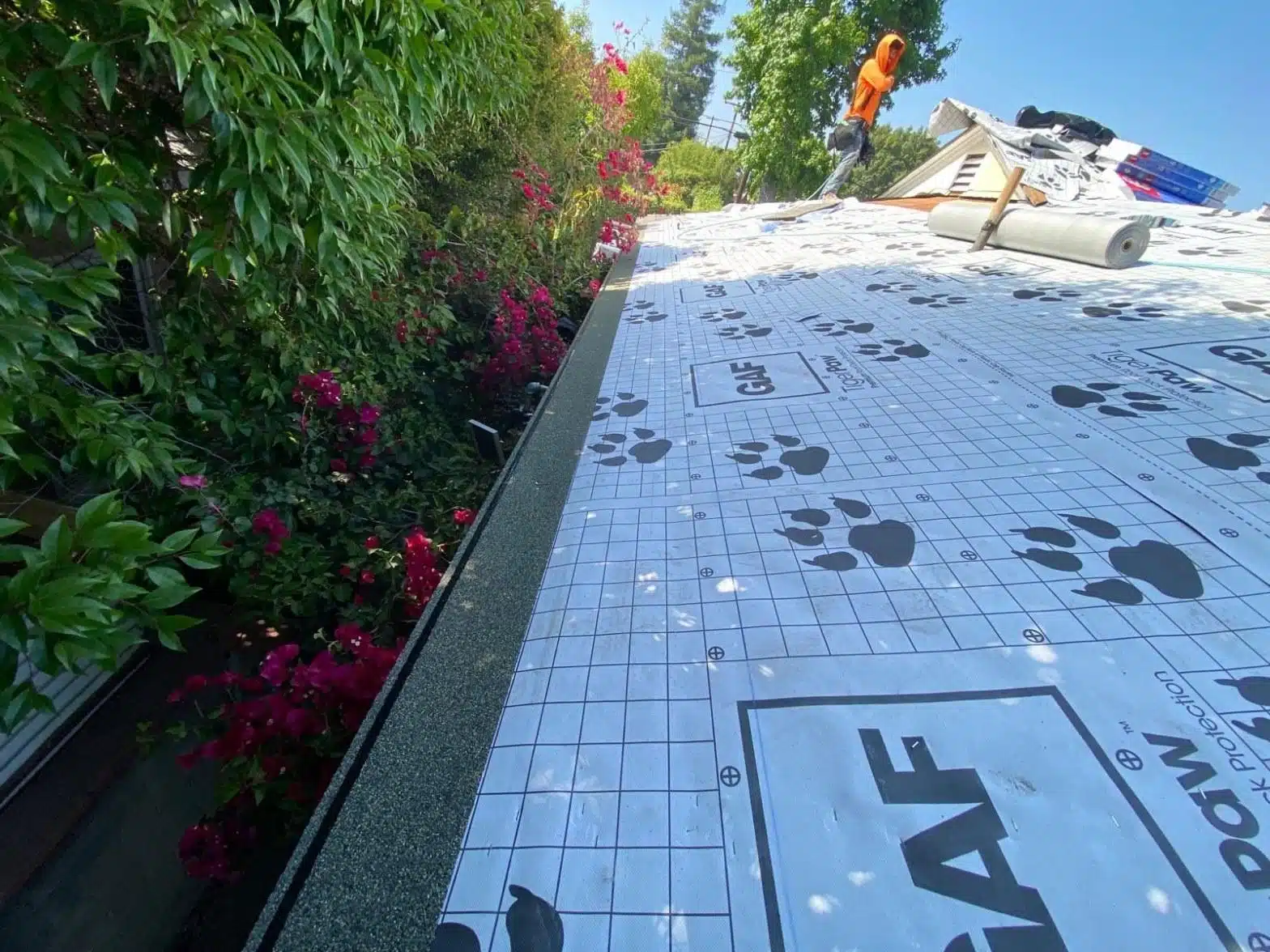
Once the deck was clean and confirmed solid, we installed GAF Tiger Paw synthetic underlayment across the entire pitched surface. Tiger Paw is a polypropylene-based sheet rated to provide a secondary weather barrier during installation, an important detail in a region where the National Weather Service Los Angeles office records the bulk of annual rainfall between November and March, meaning even a short installation window can catch an unexpected storm. The underlayment’s printed nail-spacing grid also speeds up accurate fastening across a large deck area.
How Did We Finish the Pitched Roof?
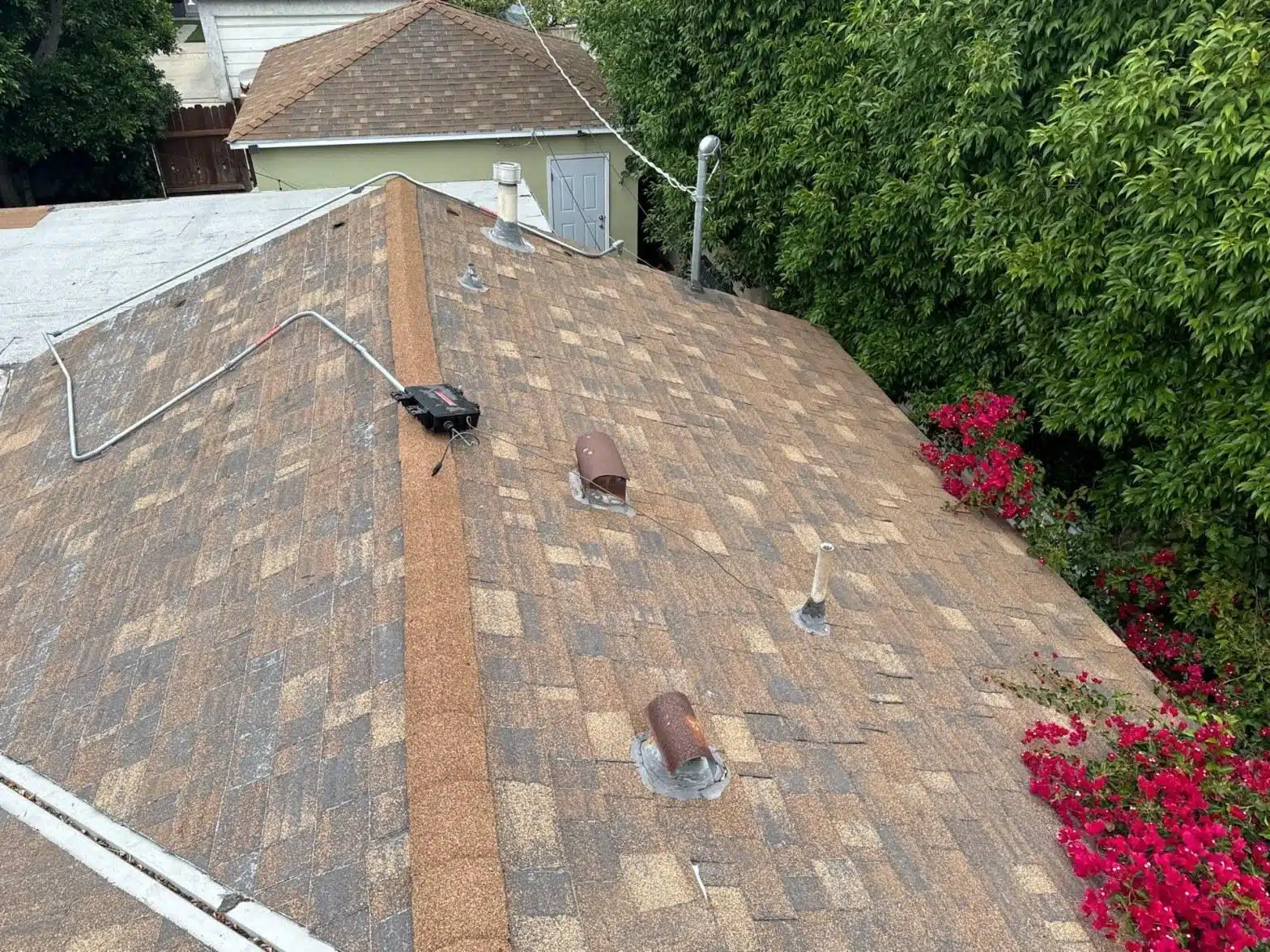
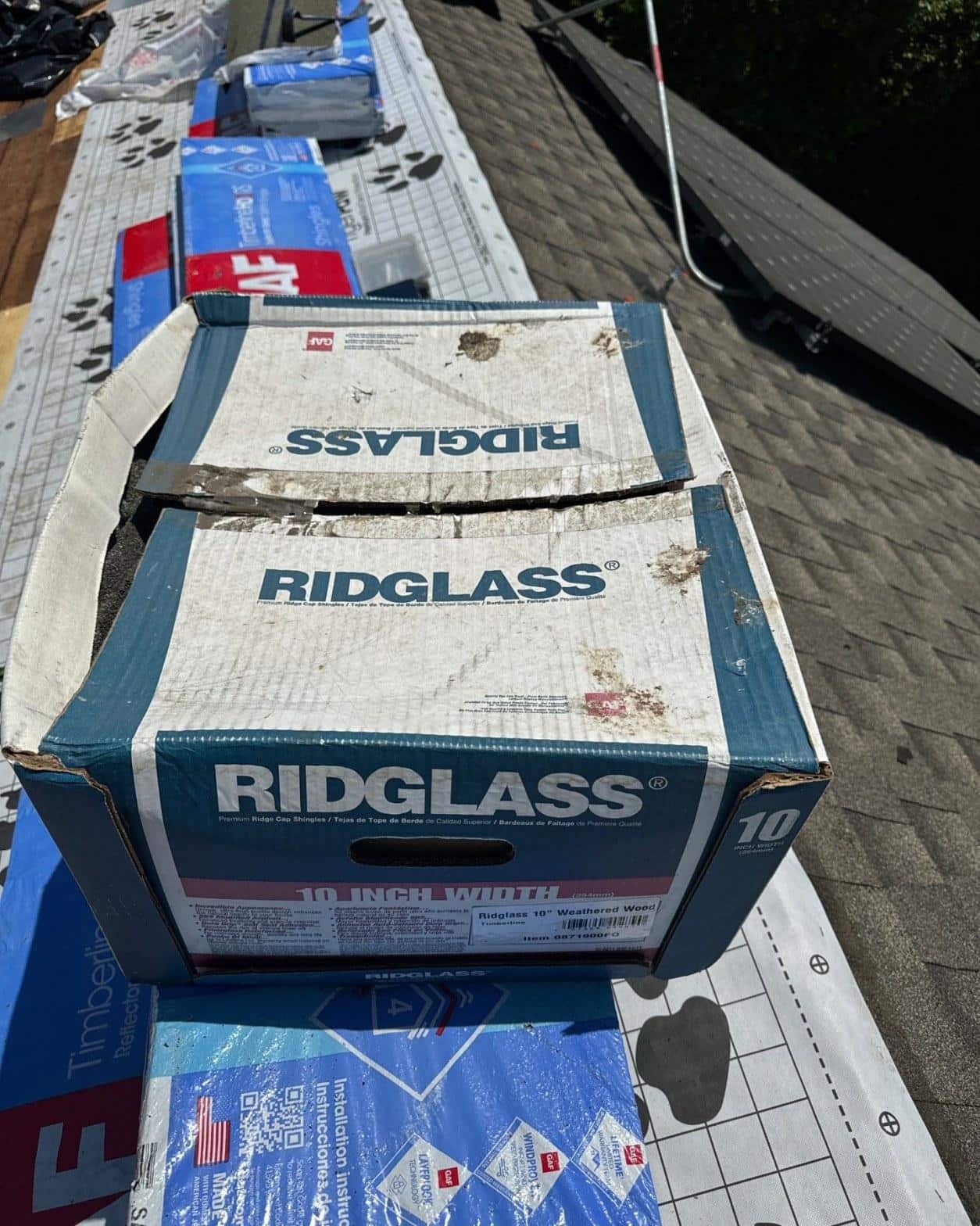
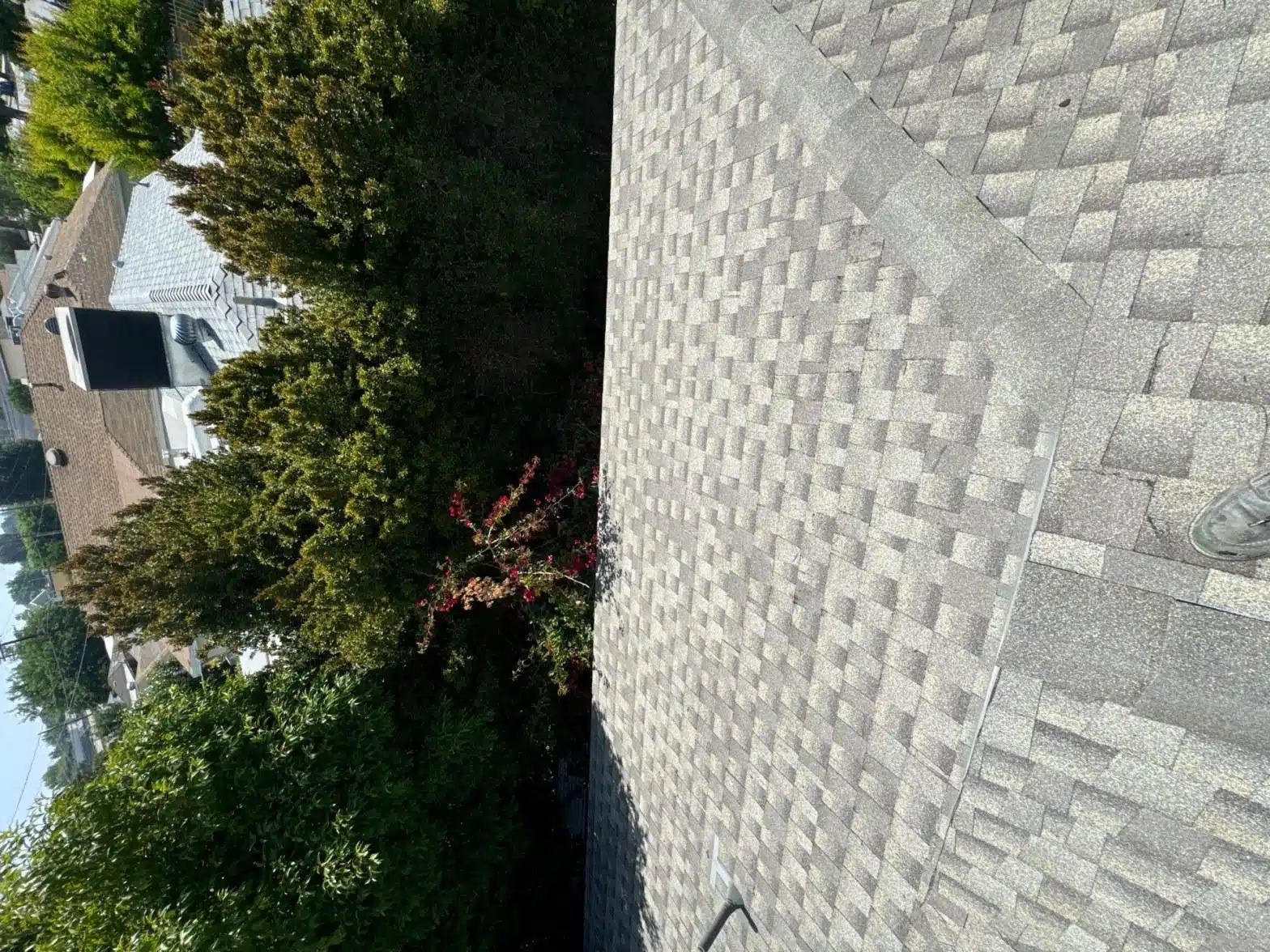
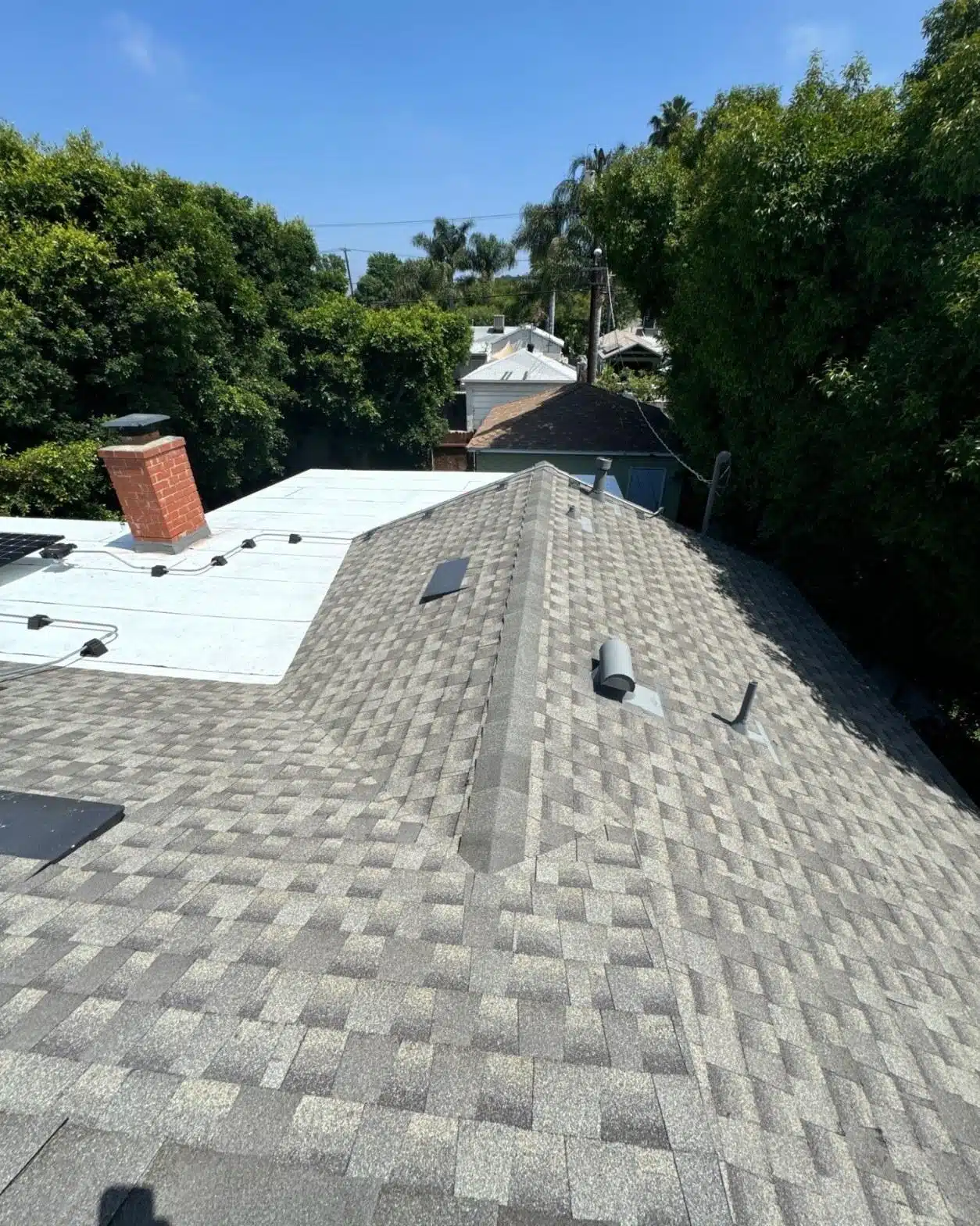
New GAF asphalt shingles were installed over the underlayment, with GAF Ridglass fiber glass ridge cap shingles running the full length of every hip and ridge. Ridge caps are the most wind-exposed point on any shingle roof; using a purpose-made product rated for ridge application rather than cutting standard shingles matters for long-term performance. GAF is one of the largest roofing manufacturers in North America, and their Ridglass caps are designed to match shingle granule color while providing a thicker, pre-bent profile at the ridge.
Our crew staged the shingle bundles directly on the covered deck in manageable loads, visible in the photos, to avoid overloading any one section of the older plank decking. A standard 30-square shingle job typically involves moving roughly 90 to 100 bundles, each weighing about 65 to 70 pounds, so distributing that weight deliberately across the roof surface is a standard precaution on plank-decked homes.
What System Did the Flat Section Receive?
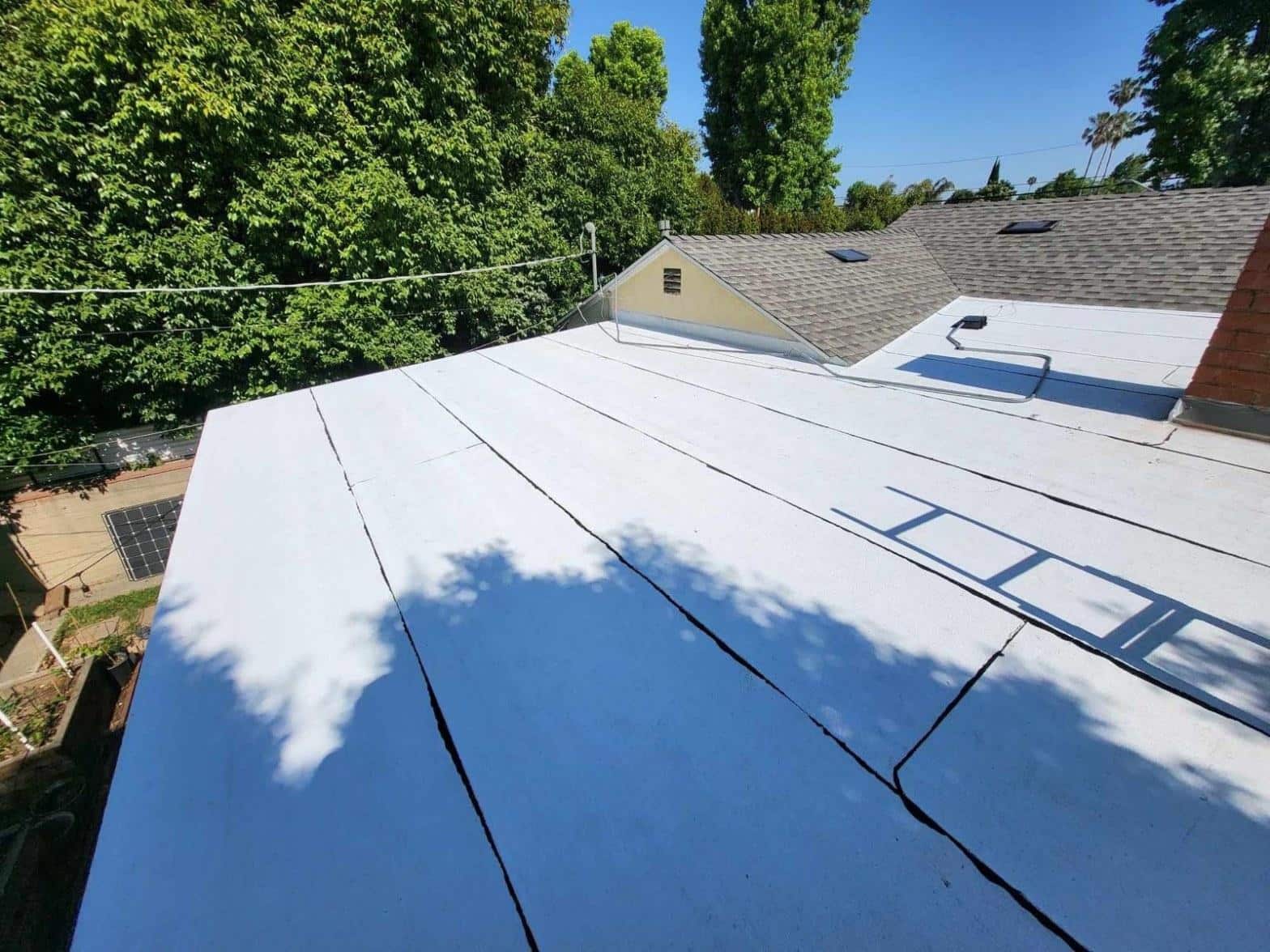
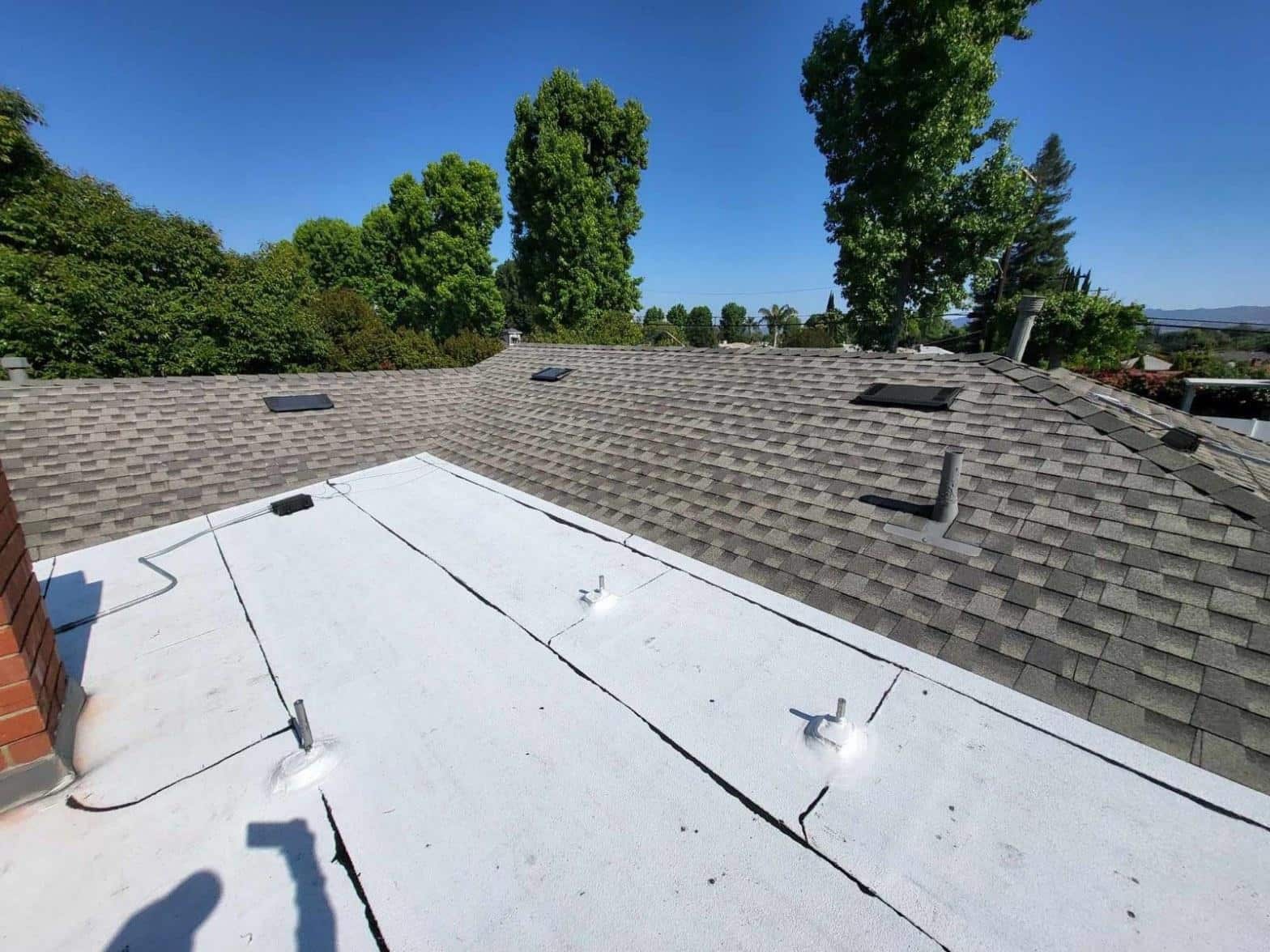
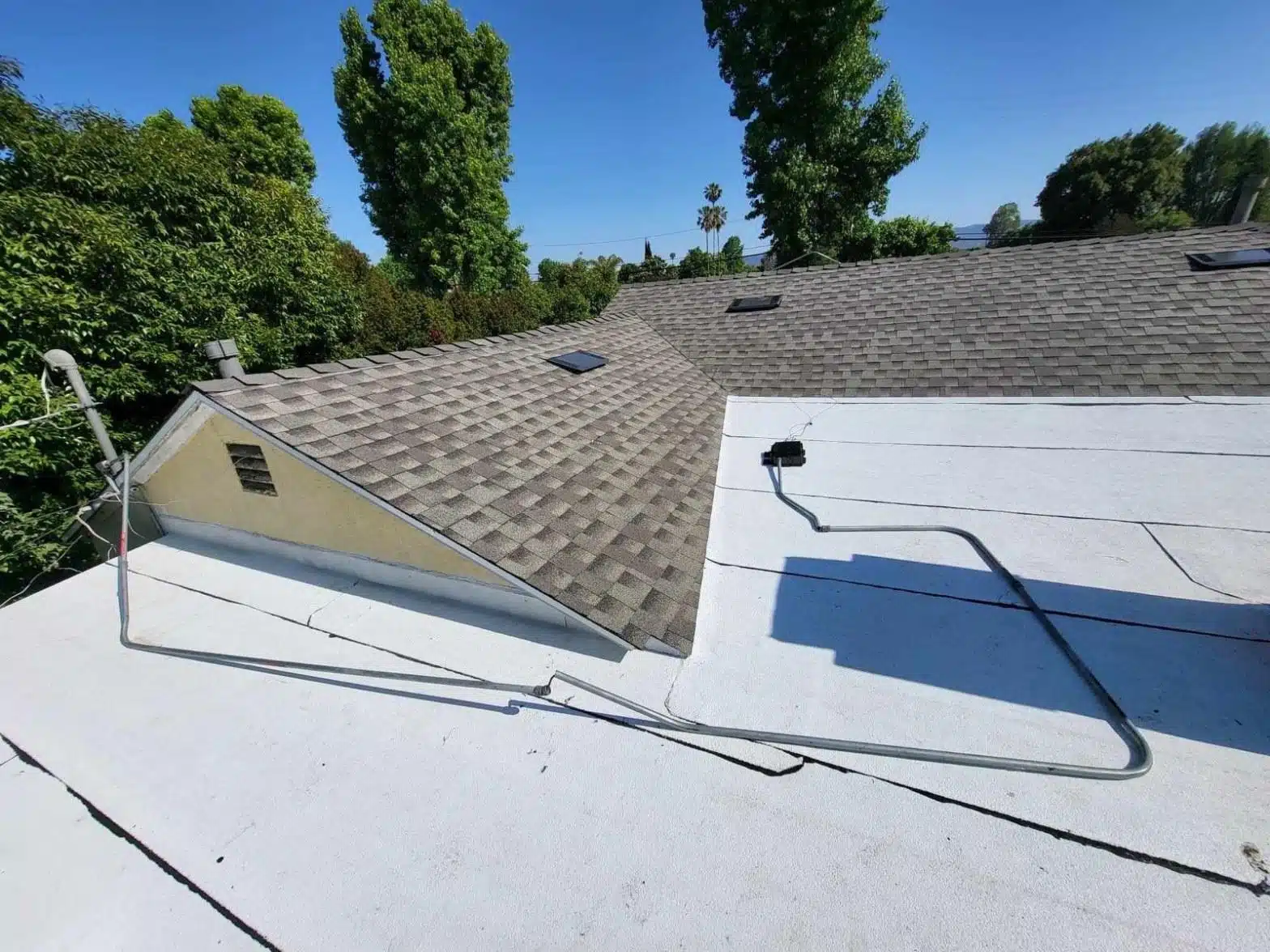
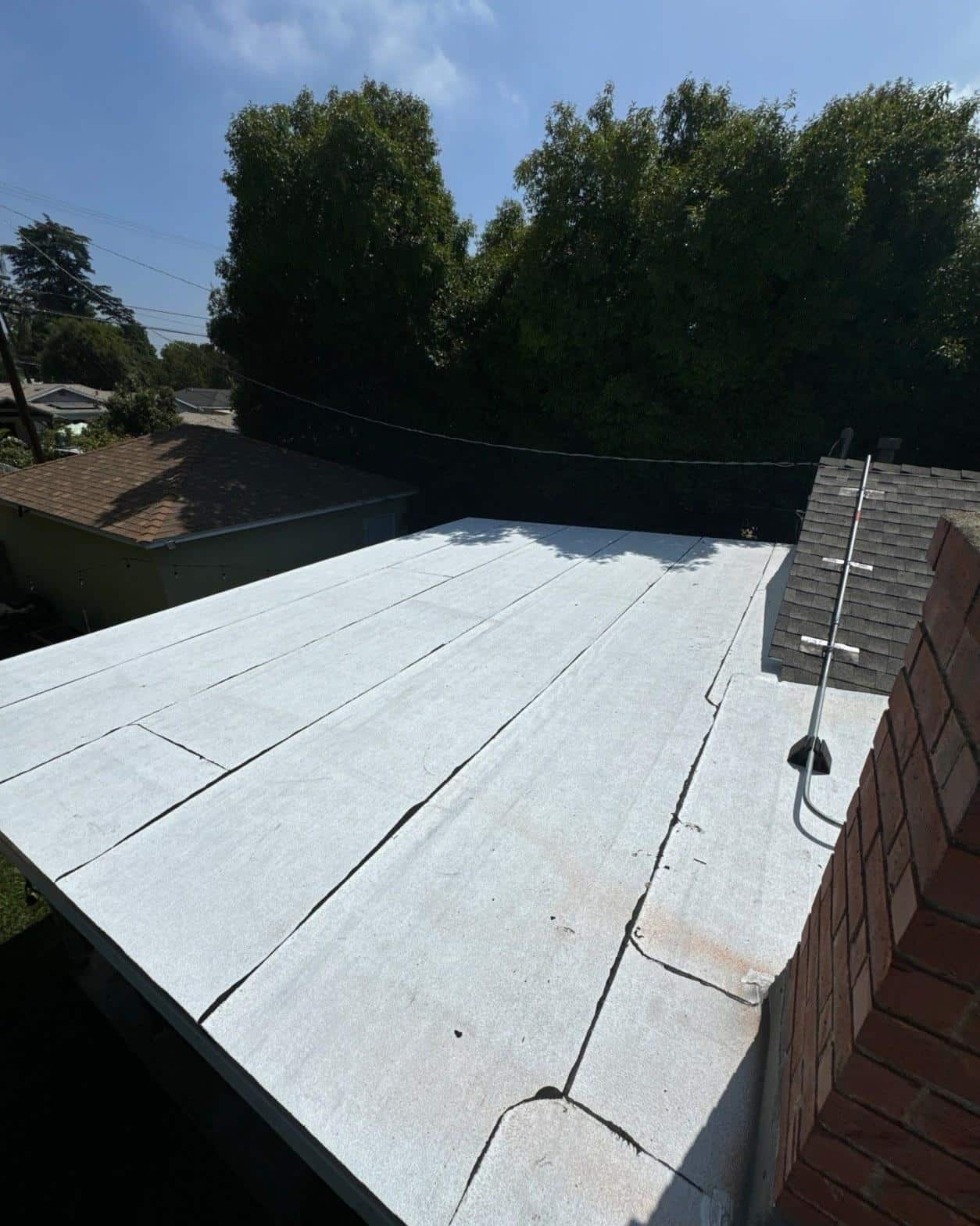
The flat section was replaced with a torch-applied modified bitumen system, not a TPO membrane or a traditional built-up roof. Modified bitumen is a two-layer system: a black SBS or APP base sheet is first torched to the deck to create a fully adhered foundation, then a white granulated cap sheet is torched over it to form the finished waterproofing surface. The propane torch bonds each layer directly to the one beneath it, eliminating the air pockets and seam failures that plague mechanically fastened or loosely laid membranes.
The white granulated surface of the cap sheet serves a real function in Southern California’s climate. California’s Title 24 building energy standards encourage cool roof surfaces on low-slope residential roofs; a white cap sheet reflects a meaningful share of solar radiation compared with a dark-surfaced alternative, which helps reduce attic heat gain during the region’s long warm season that can stretch from May through October.
Modified bitumen cap sheets with a white mineral granule surface typically carry a solar reflectance index well above 50, and the fully adhered installation method means the membrane moves with the deck rather than bridging over gaps.
The Finished Project
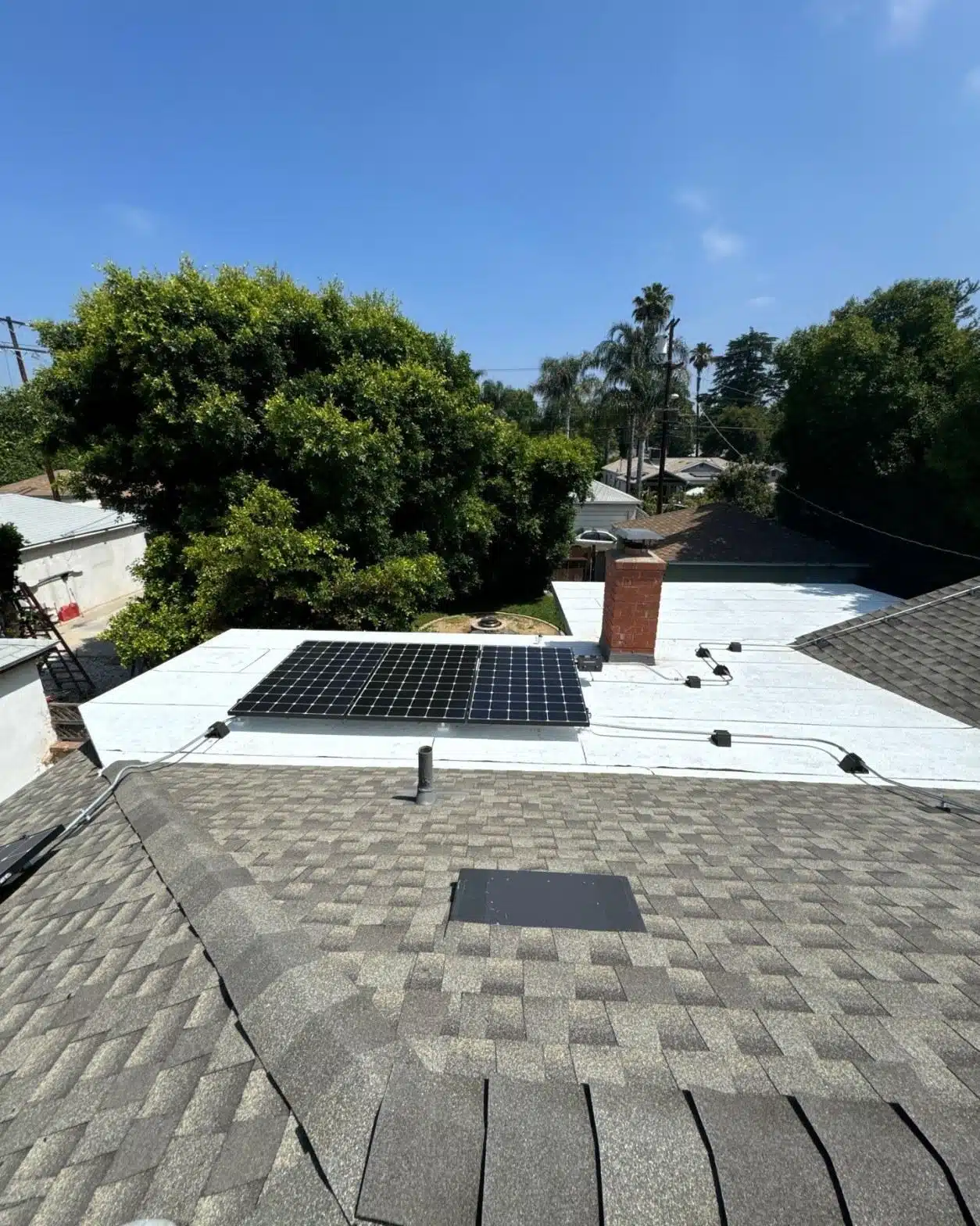
With both roof systems completed, the home now has a continuous, properly terminated waterproofing envelope from ridge to flat-section edge. The pitched planes carry uniform gray asphalt shingles with clean Ridglass caps at every ridge line, and the flat section presents a bright white granulated surface that sheds standing water toward its drains.
If your home has a similar combination of pitched and flat roof sections, or if you have an older house with original wood plank decking that hasn’t been inspected in years, Roof Repair & Construction Inc. is licensed by the California Contractors State License Board (CSLB) and works on both roof types. Call us to schedule a roof assessment and get a written scope before any work begins.
Gallery
Frequently Asked Questions
What is the difference between a torch-down roof and a TPO roof?
A torch-down roof uses modified bitumen sheets, typically a black base sheet and a granulated cap sheet, that are bonded to the deck with a propane torch, creating a fully adhered waterproof membrane. A TPO roof is a single-ply thermoplastic membrane mechanically fastened or adhered with adhesive and heat-welded at the seams. They are different materials, different installation methods, and different price points; modified bitumen is commonly chosen for smaller residential flat sections because it is durable and well-suited to torch application on wood-decked homes.
Do I need to replace my flat roof and shingle roof at the same time?
Not always, but doing both together on a mixed-roof home saves significant labor cost because the crew is already mobilized, staging, and working on the structure in a single visit. It also eliminates the risk of a newly replaced shingle section draining onto an aging flat section, which is a common leak point. If both systems are within a few years of end of life, a combined replacement typically makes financial sense.
How do I know if my old wood plank decking needs to be replaced during a reroof?
Once the old shingles and underlayment are torn off, the crew inspects each plank for soft spots, visible rot, cupping, and fastener pull-through. Planks that flex underfoot, show dark staining from prolonged moisture, or have fasteners backing out should be replaced before new underlayment goes down. On this Los Angeles County project the original planks were structurally sound and received new materials directly, but that determination can only be made after a full tear-off.
Why does a white granulated cap sheet matter on a flat roof in Southern California?
Southern California's warm season runs roughly from May through October, and a flat roof with a dark surface can absorb enough heat to raise attic temperatures significantly. A white mineral granule cap sheet reflects a greater share of solar radiation, which helps keep the roof membrane cooler and reduces heat transfer into the living space below. California's Title 24 building energy standards recognize cool roof surfaces on low-slope residential roofs as an energy-efficiency measure.
What is GAF Tiger Paw underlayment and why is it used instead of felt paper?
GAF Tiger Paw is a synthetic polypropylene underlayment that acts as the secondary weather barrier between the roof deck and the shingles. Compared with traditional 15-pound or 30-pound asphalt felt, synthetic underlayment is lighter, more tear-resistant during installation, and does not absorb water and wrinkle if it gets wet before the shingles go on. The printed nail-spacing grid on Tiger Paw also helps installers maintain consistent fastening patterns across the deck.
How long does a full reroof on a home with both pitched and flat sections usually take?
Most residential reroofs covering both a pitched shingle section and a flat modified bitumen section are completed in 2 to 4 working days, depending on the total square footage, the complexity of the roof geometry, and whether any decking repairs are needed after tear-off. The flat section's torch-down installation typically adds at least a half-day to the schedule compared with a pitched-only job.