
What Brought Us to 1364 Green Ln
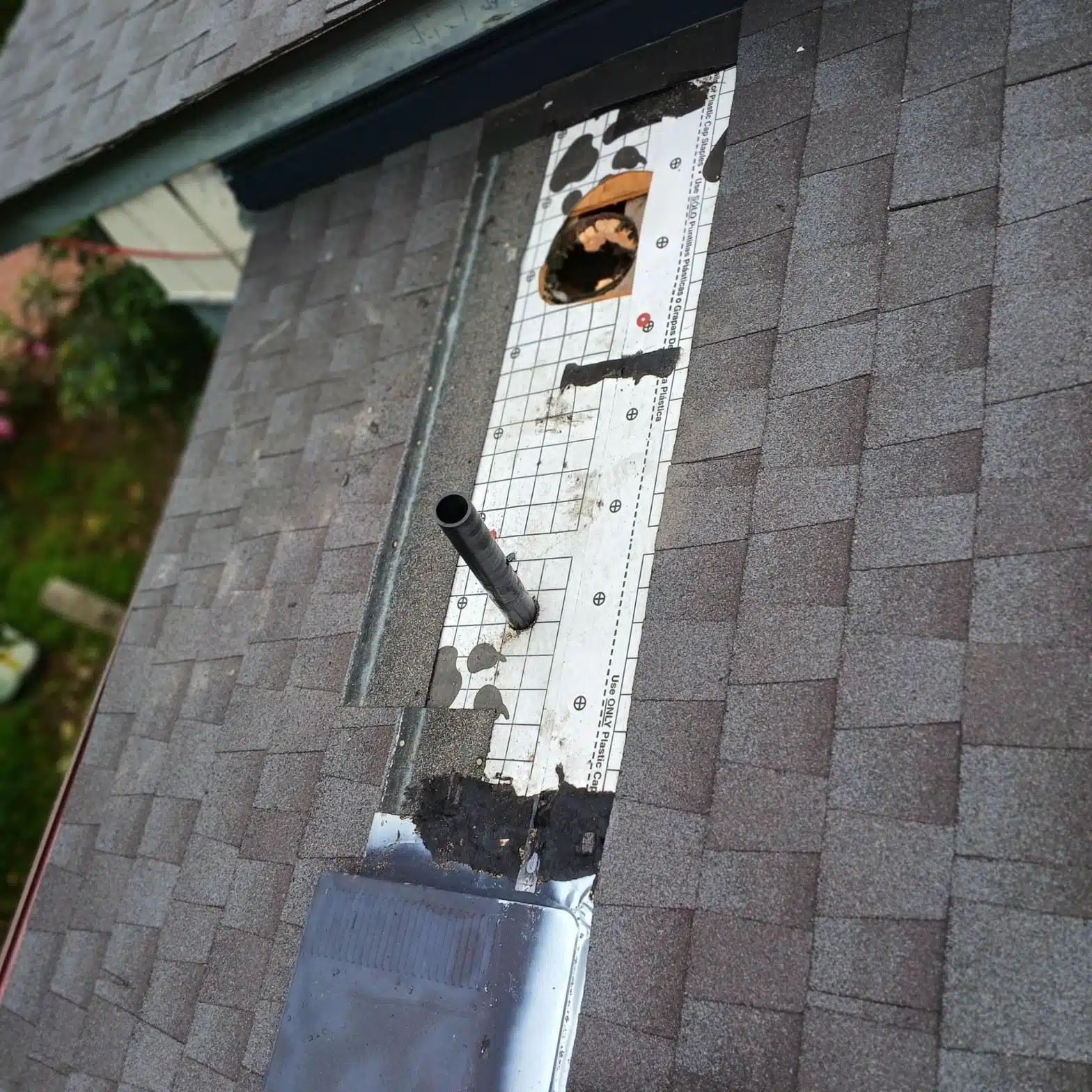
This job started with a single failing area on an otherwise intact asphalt shingle roof. The homeowner at 1364 Green Ln in La Canada Flintridge noticed signs of water intrusion near a plumbing vent stack, a classic scenario where a small penetration becomes the path of least resistance for every rain event. Rather than recommending a full reroof, we scoped the damaged section and confirmed that the problem was contained to one localized zone beside the vent pipe. The goal was to open that section, assess what water had reached underneath, make it sound again, and close it up so the rest of the roof could keep doing its job.
La Canada Flintridge sits at the base of the San Gabriel Mountains, where the National Weather Service Los Angeles office regularly records winter rainfall events that push moisture into any unsealed penetration on a roof. A plumbing vent that exits through the shingle field, as this one did, relies entirely on its boot flashing and the surrounding shingle courses to stay watertight. When that system degrades, water does not announce itself immediately. It travels slowly through the felt underlayment and into the plywood decking beneath, often causing rot that is far more extensive than the surface shingles suggest.
The photo above shows the valley beside the vent stripped back to the underlayment layer. The black staining, the torn felt, and the open hole through the sheathing all tell the same story: water had been getting in long enough to compromise the structural layer beneath. That hole in the decking is not impact damage. It is wood that softened and eventually gave way under the weight of foot traffic and the freeze-thaw cycling that comes with winter nights at this elevation.
What We Found When We Opened the Roof
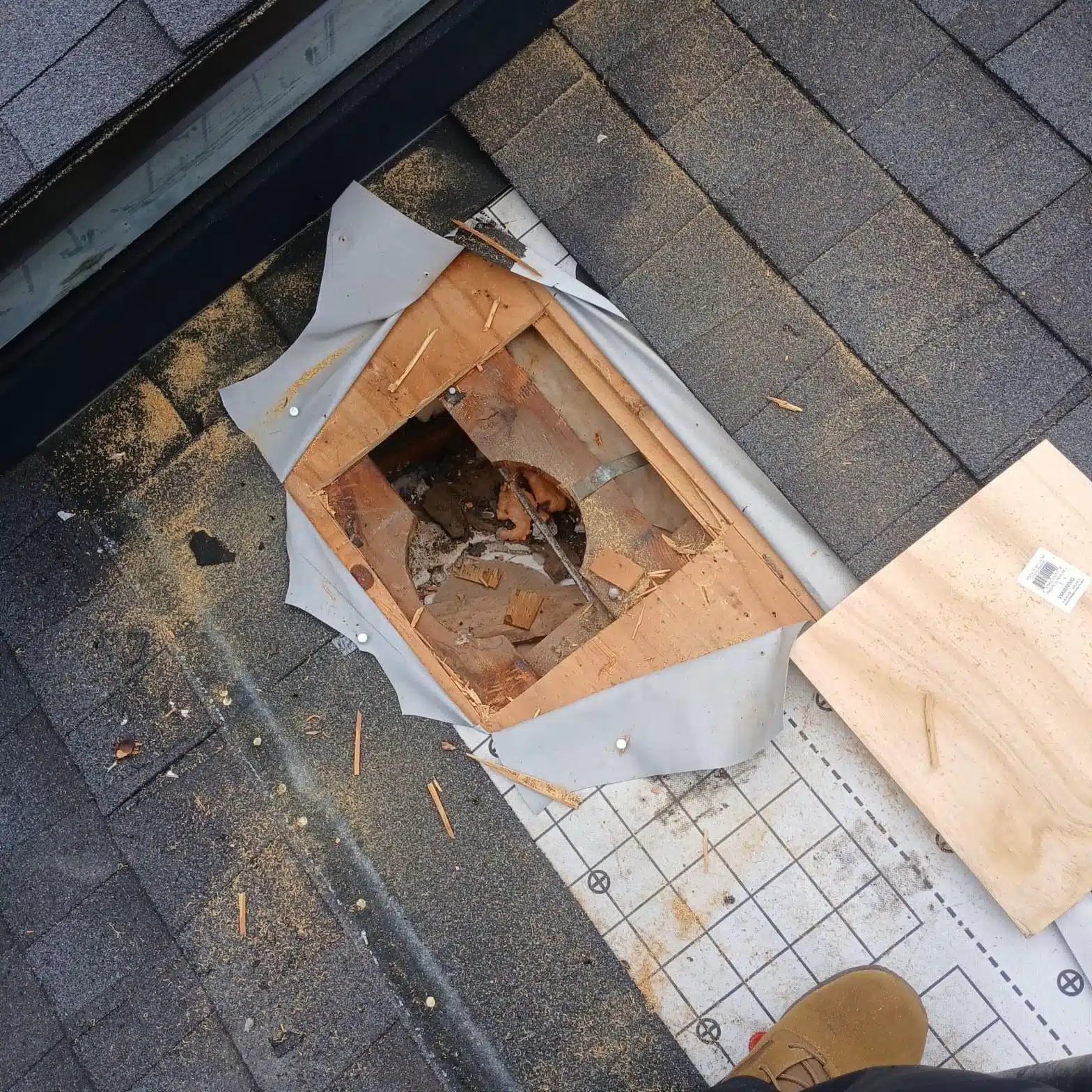
When the shingles came off, the plywood beneath the vent penetration had rotted through completely, leaving an open hole in the sheathing. This is the detail that separates a simple re-shingle from a repair that actually solves the problem. Laying new shingles over compromised decking would have produced the same failure within a short time, because the structural layer that holds the fasteners and supports the new materials was no longer sound.
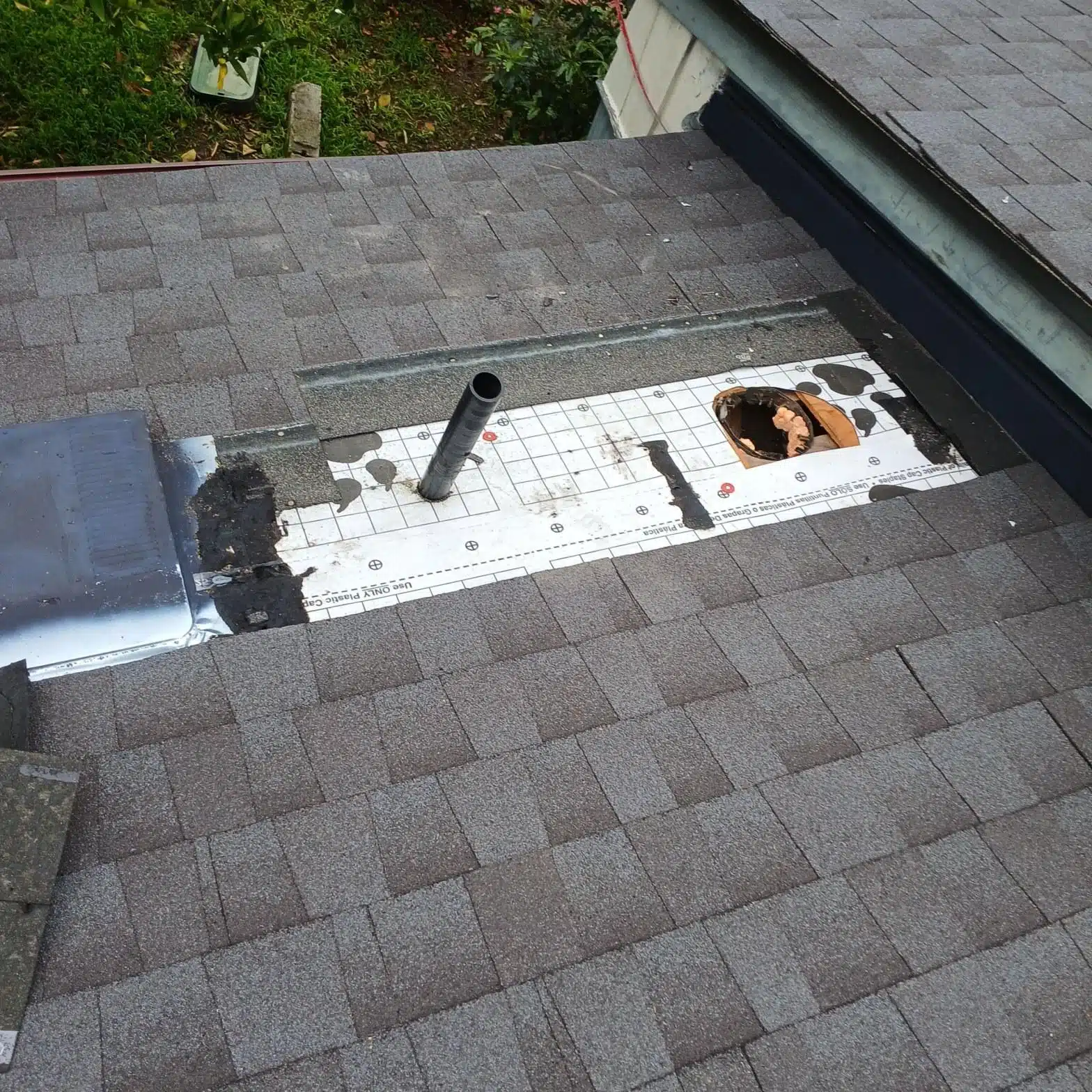
The second photo documents the moment the rotted plywood was cut out and lifted away. The opening left behind shows dark, deteriorated wood around the perimeter of the cut and debris that had accumulated in the cavity below. The fresh piece of plywood visible to the right is the replacement panel, sized to fit the opening and ready to be fastened into the surrounding sound framing. Per California Contractors State License Board (CSLB) standards, work of this nature on a residential structure must be performed by a licensed contractor, and Roof Repair & Construction Inc. is licensed by the California Contractors State License Board (CSLB).
The decking replacement step is not optional when rot reaches this stage. Plywood sheathing is typically 7/16 inch or 5/8 inch thick on residential roofs of this era, and once the wood fiber breaks down from sustained moisture, it loses the shear strength and fastener-holding capacity it needs to anchor shingles through wind events. Attempting to patch around a hole like this with roofing cement or tape would be a surface fix on a structural problem.
Our crew also noted that the original underlayment in the valley showed multiple failure points, not just the area directly around the vent. That meant the membrane replacement needed to extend beyond the immediate opening to cover the full disturbed zone and create a continuous watertight layer before any shingles went back on.
Rebuilding the Deck and Membrane Layer
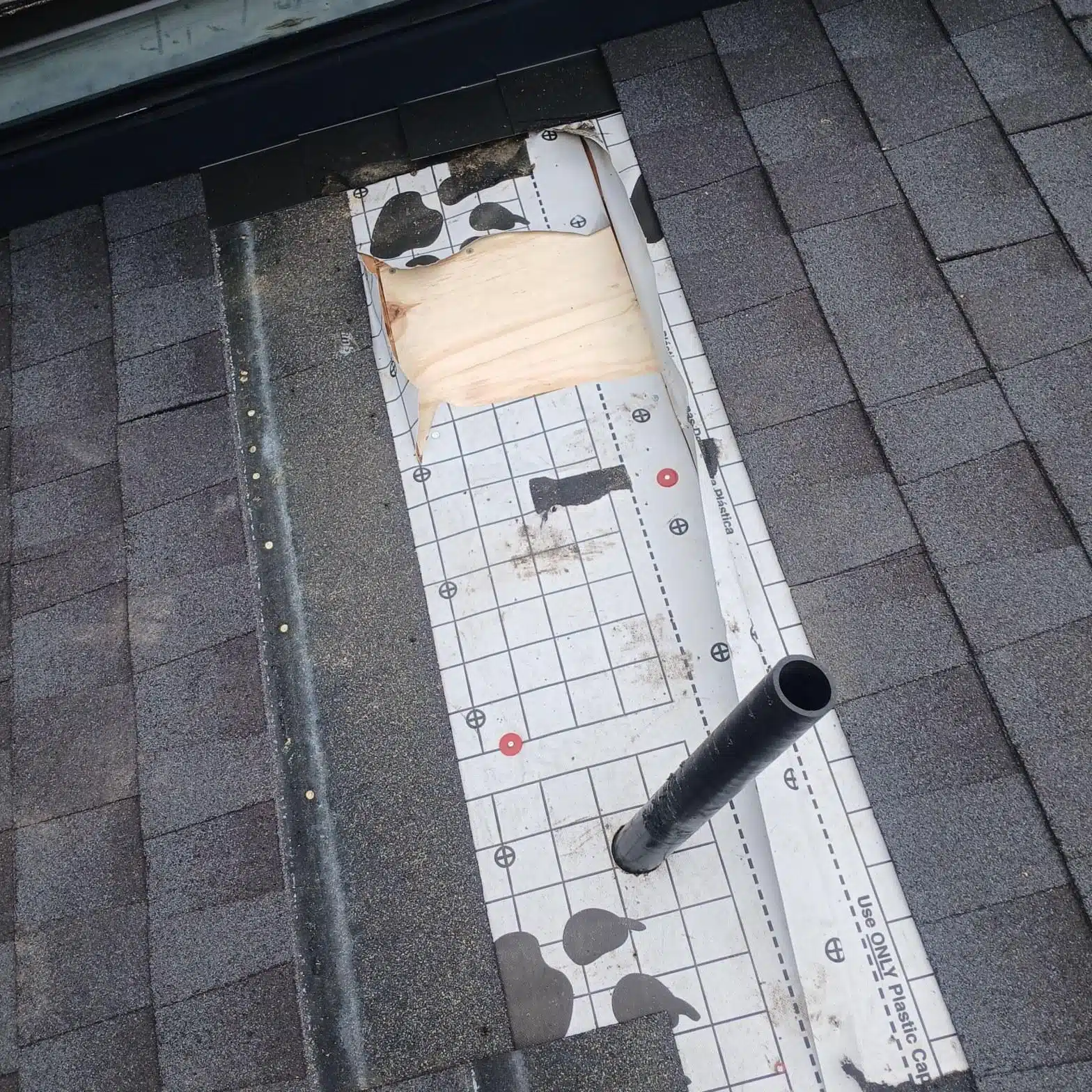
The new plywood panel was set, fastened, and covered with a self-adhered membrane run continuously over the repaired deck and up around the vent penetration. Self-adhered membranes, sometimes called peel-and-stick underlayment, bond directly to the substrate rather than relying on mechanical fasteners alone, which makes them far more resistant to wind-driven rain and lateral water migration than standard felt in a vulnerable area like a valley beside a penetration.
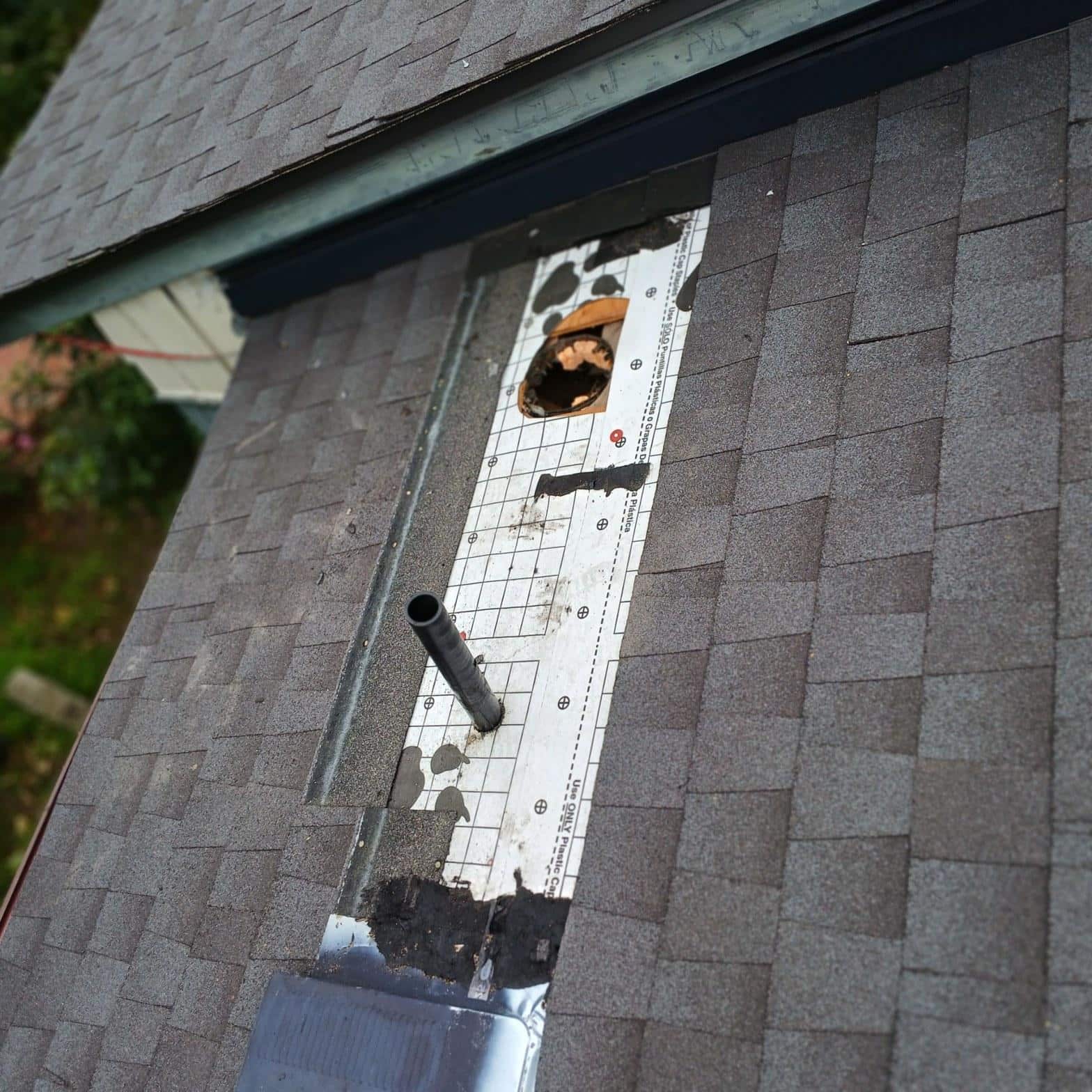
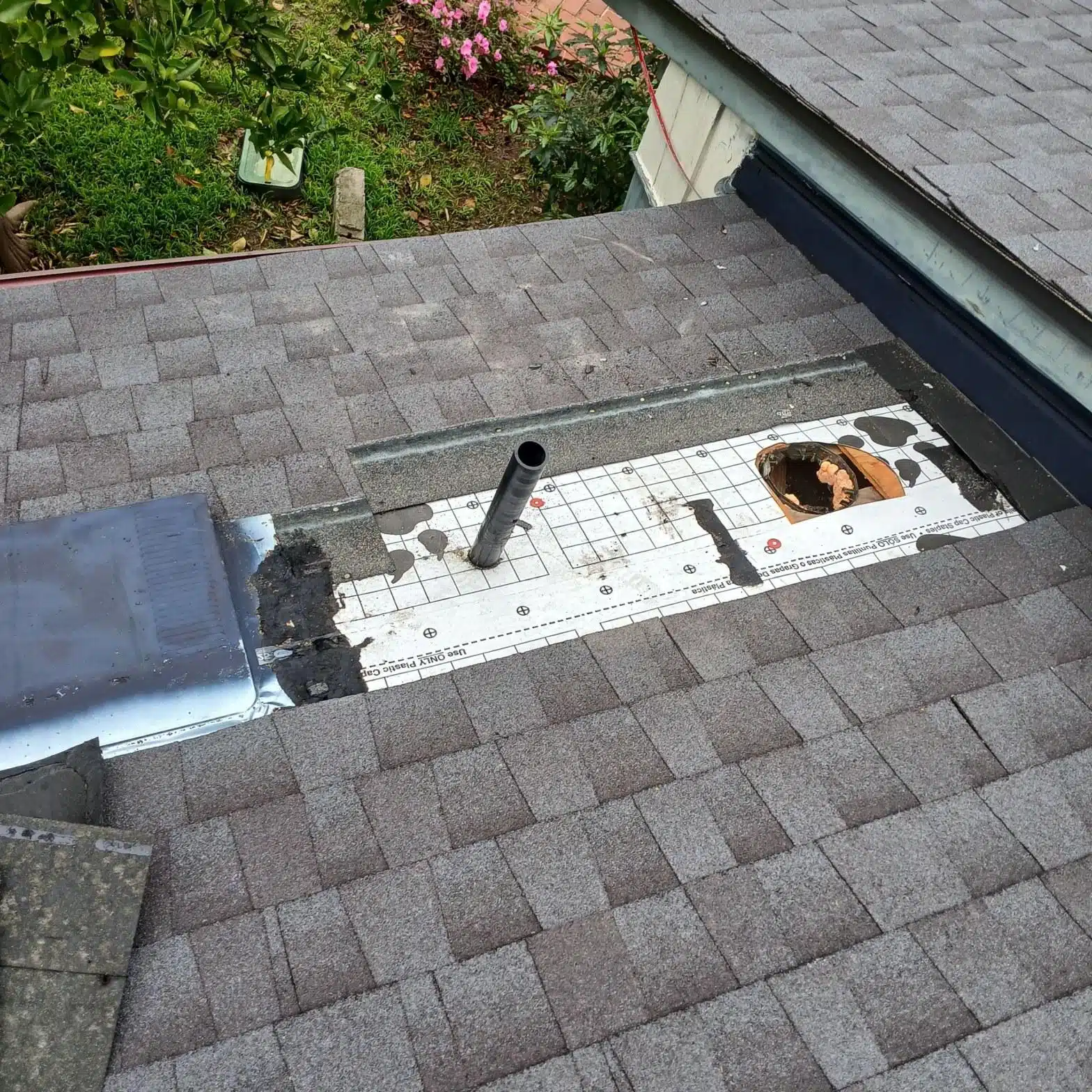
The third photo captures the intermediate state: the new sheathing patch is in place, the self-adhered underlayment is laid over the repaired section, and the plumbing vent pipe is standing through the prepared field ready to receive its new boot. The white grid-patterned membrane visible in the photos is the self-adhered layer. Its printed layout grid is a fastening guide, not a decorative pattern. Notice how the existing shingles on both sides of the repair zone remain in position. That is what a targeted repair looks like in progress: the work is confined to exactly the area that needs it, and the surrounding roof is left undisturbed.
The valley flashing at the left edge of the opening also received attention. Metal valley flashing manages the concentrated water flow that collects where two roof planes meet, and any repair that opens a valley section has to account for that flashing being re-seated correctly on the way out. A valley that sheds several hundred square feet of roof area into a narrow channel handles significant water volume during a heavy rain. Leaving the flashing edge loose or proud after a repair creates a new entry point immediately.
Installing the New Vent Boot and Roof Vent
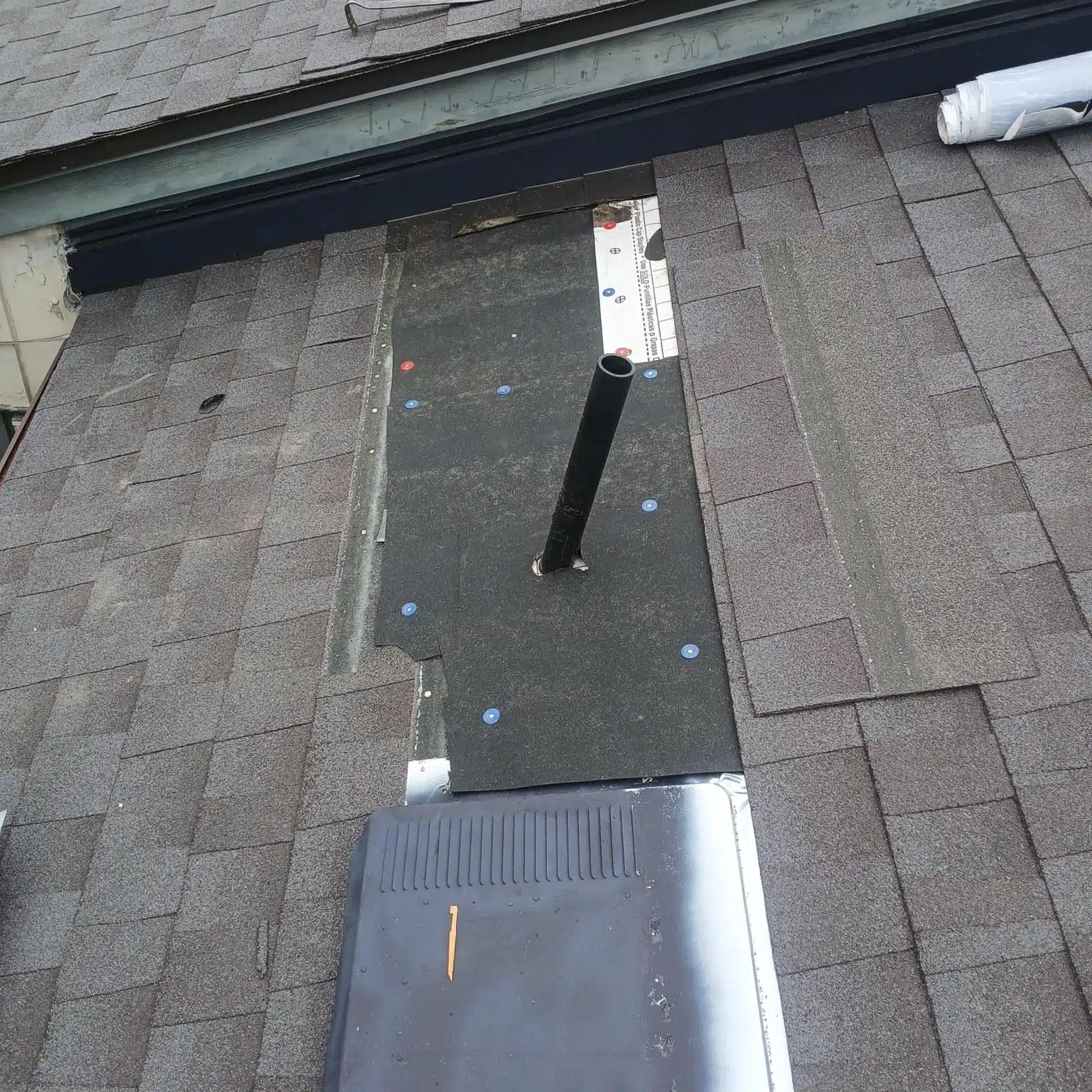
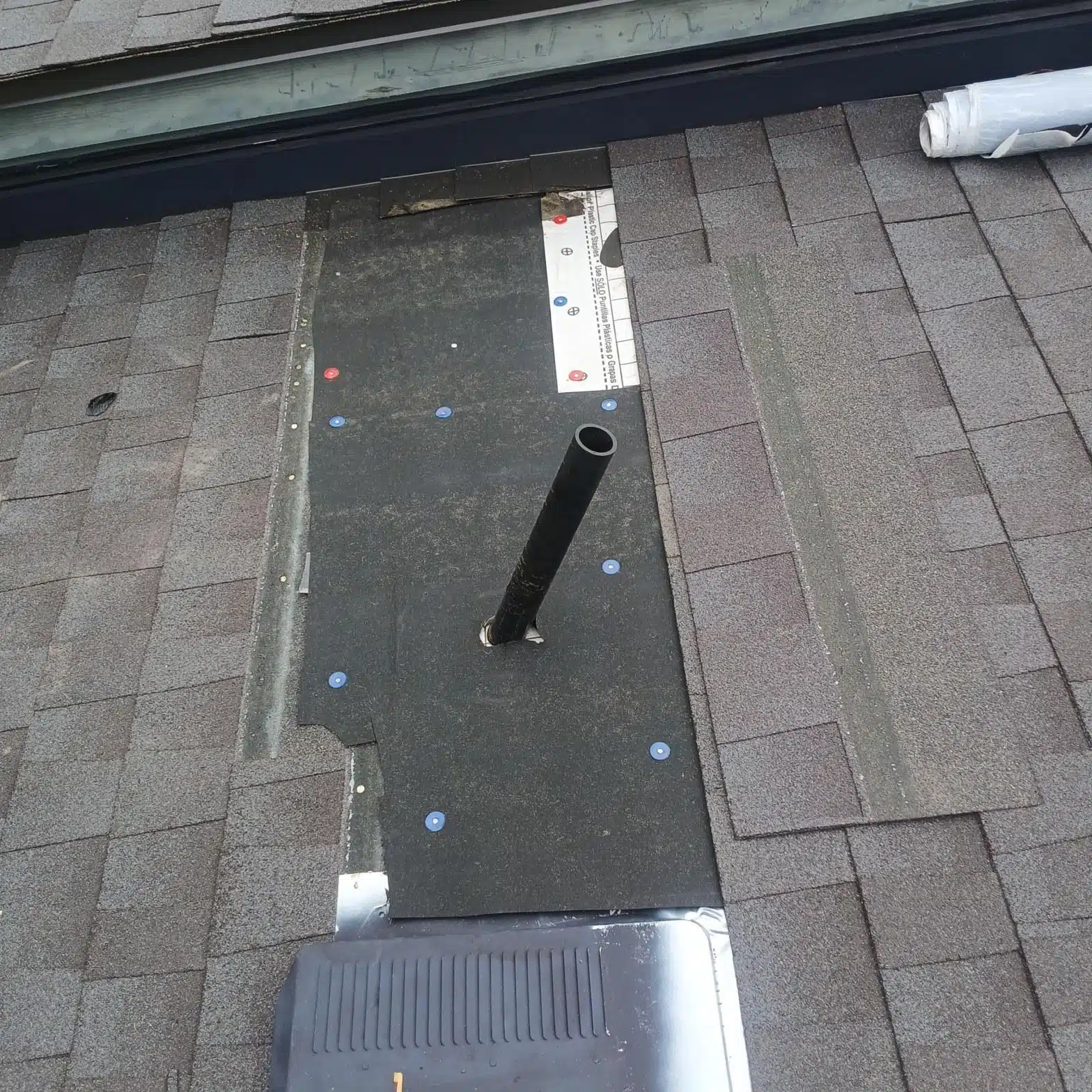
The final assembly set a new rubber pipe boot over the plumbing vent, integrated it into the repaired underlayment, and wove the replacement shingle courses back in over the full section. A pipe boot’s rubber collar compresses around the pipe diameter to form a watertight seal at the penetration. The flange of the boot sits flat on the deck, tucked under the shingles above and over the shingles below so that any water running down the roof slides over the boot rather than under it.
This photo shows the new underlayment fully installed across the repair zone with the vent pipe centered and standing cleanly through the membrane. The colored cap fasteners visible in a grid pattern across the black felt are a moisture-resistant fastening system designed to resist pull-through. The low-profile roof vent visible at the bottom of the frame was also part of this day’s scope, positioned to handle attic ventilation for the section of the roof served by this area. Proper attic ventilation is not just a comfort issue. The California Energy Commission recognizes attic ventilation as a factor in thermal performance and moisture management in residential buildings. An underventilated attic holds heat and moisture that accelerate shingle aging from below, the same direction homeowners never think to look.
The fifth photo shows the completed underlayment installation just before the shingles went back on. The pipe boot collar is seated around the vent, the membrane runs cleanly to the valley edge, and the low-profile vent at the bottom is integrated into the shingle field. At this stage the deck is fully protected even before the shingles return: the self-adhered membrane is itself a waterproof layer that would hold through a rain event if one arrived before shingling was complete.
When we see a vent boot that has been sealed over with roofing cement rather than replaced, it is usually because the original boot cracked or shrank and someone tried to extend its life with a surface application. That approach delays the inevitable while making the eventual repair more involved, because the cement has to be cleaned off before a proper boot can seat flat. On this job the vent assembly was replaced outright so the finished product would perform as a new installation rather than a patched one.
The Finished Repair
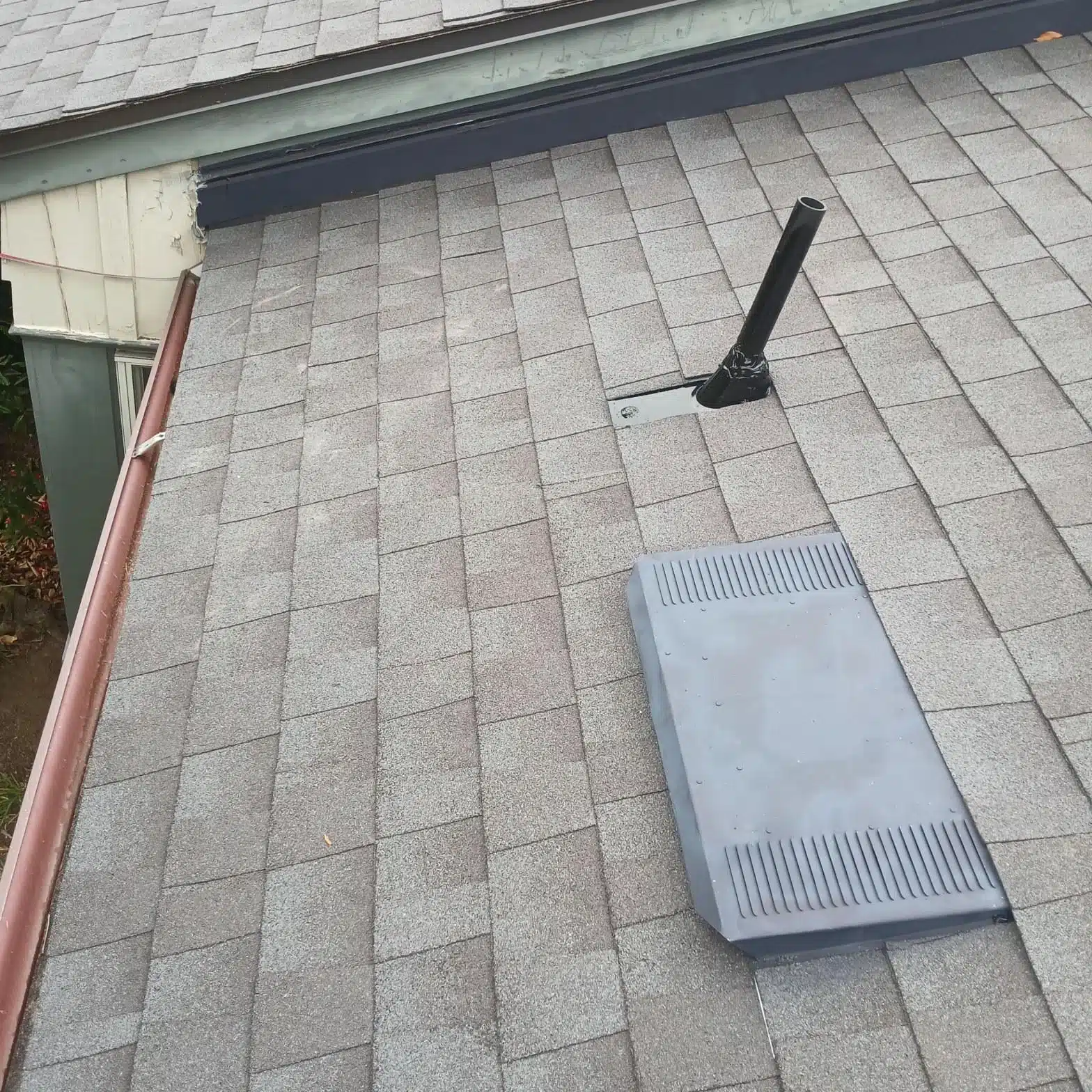
By the end of February 10, 2026, the repaired section was fully shingled, the vent boot was set, and the roof was closed and weathertight. The two-story home’s gray asphalt shingle roof looks continuous again from the street, with no visible sign of the work zone except the slightly cleaner color of the new shingle courses woven into the existing field.
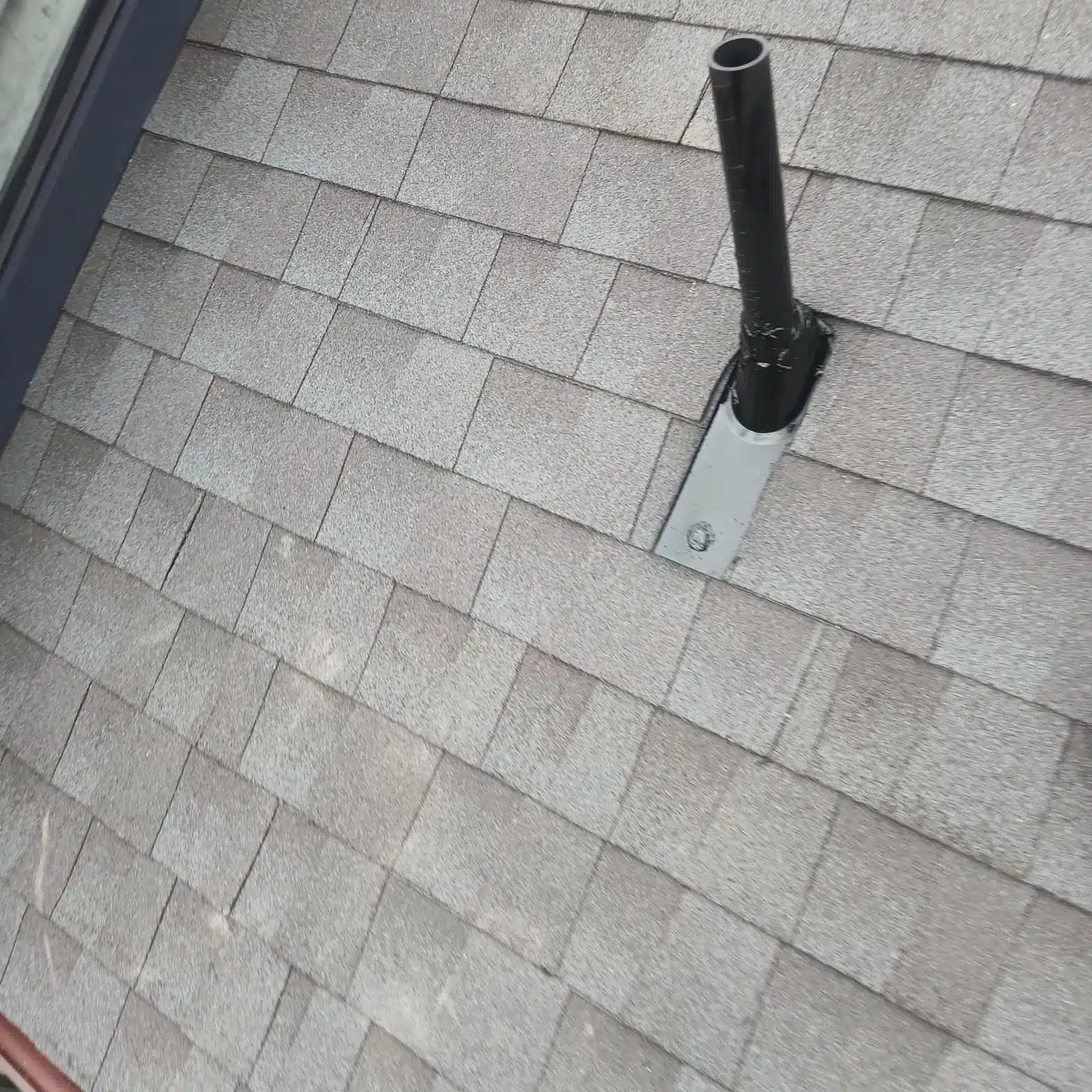
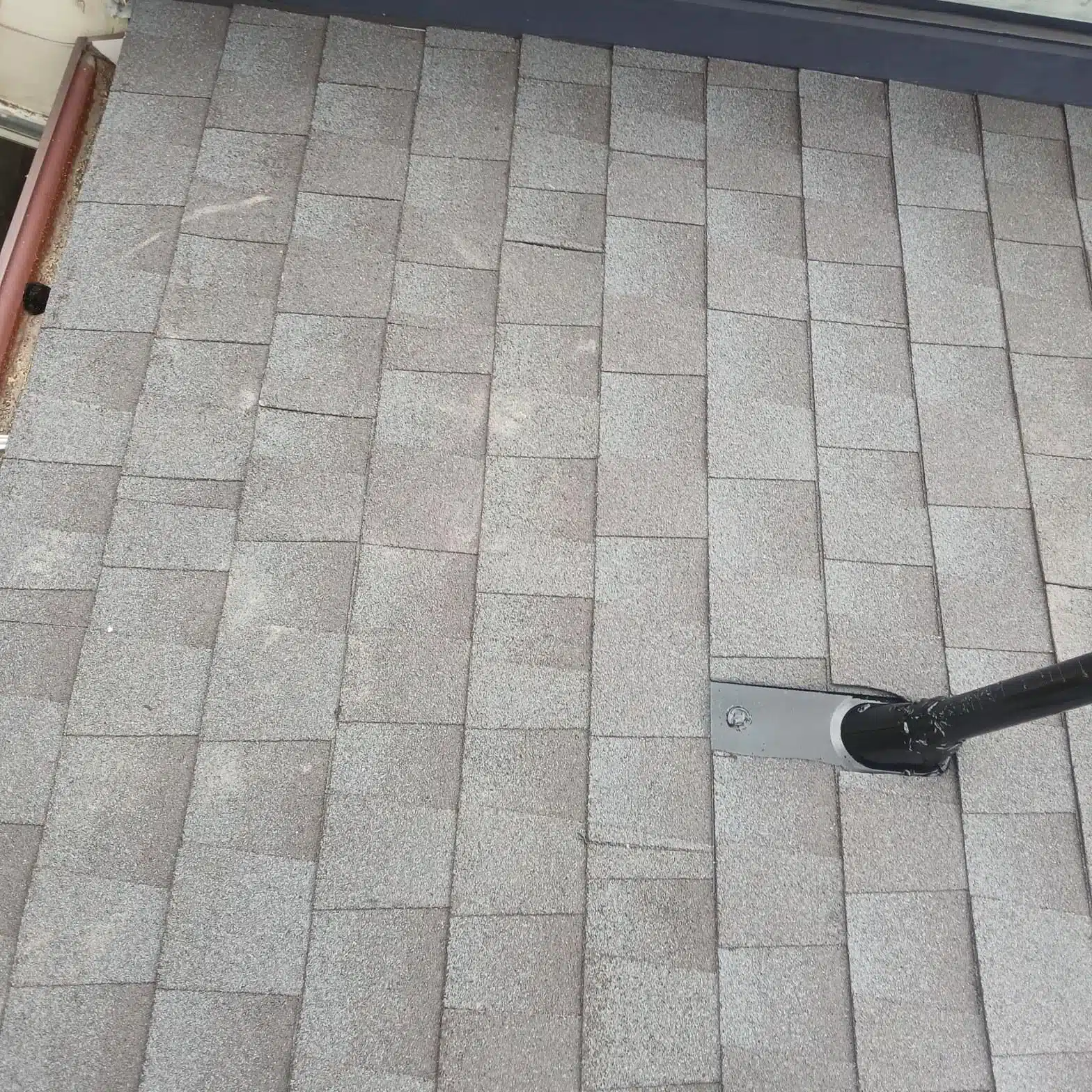
The after photo shows the completed surface: fresh shingles across the repaired area, the new rubber boot sealed around the plumbing vent, and the low-profile roof vent seated flat to the shingle plane. The copper downspout visible at the left edge of the frame will now receive water from a deck and valley system that is structurally sound and properly sealed at every penetration. That is what this repair was meant to accomplish: not a cosmetic fix, but a rebuilt assembly that addresses the source of the water entry rather than its symptoms.
If your home has a plumbing vent, skylight, chimney, or other penetration through the shingle field, those are the locations most worth monitoring after a wet season. A visual check from the ground, combined with a look at the interior ceiling below after any significant rain, can flag a developing problem before it reaches the stage this roof was at when we arrived.
If you are dealing with water entry near a vent or any other roof penetration in La Canada Flintridge or the surrounding foothill communities, Roof Repair & Construction Inc. is available to inspect and assess the scope. Contact us to schedule a roof evaluation and get a written scope of work before any repair begins.
Gallery
 roof flashing
Explore our full range of Roof Repair services across Southern California.
Frequently Asked Questions
How do I know if my roof deck is rotted under my shingles?
The most common signs are shingles that feel soft or spongy underfoot near a vent or chimney, water stains on the ceiling directly below a penetration, and shingles that have lifted or buckled around the vent pipe. On this La Canada Flintridge job, the homeowner noticed interior moisture near the plumbing vent before the deck damage was visible from the outside. When in doubt, a targeted inspection that lifts a few shingles near a penetration can confirm whether the plywood underneath is still sound.
Does the whole roof have to be replaced if one section of the deck is rotted?
No, not necessarily. If the rot is confined to a localized area, as it was at this La Canada Flintridge property, the damaged plywood can be cut out, a new panel fastened in its place, and the shingles woven back in over fresh underlayment. A full reroof is warranted when the shingles or the deck are deteriorated across a large portion of the roof surface. A targeted repair like this one can restore a sound assembly without disturbing the sections of the roof that are still performing correctly.
How long does a targeted shingle and deck repair usually take to complete?
A localized repair like this one, covering a single failed section around a plumbing vent with deck replacement and shingle weave-in, was completed in one day on February 10, 2026. Larger sections involving more penetrations or a wider area of rot would take longer, but most targeted repairs on a single roof section are finished within one to two days depending on the extent of the damage found once the shingles are lifted.
Why does my plumbing vent pipe cause roof leaks?
The rubber boot flashing that seals a plumbing vent where it exits through the shingle field has a finite service life. As the rubber ages it shrinks, cracks, and loses its seal around the pipe, allowing water to run down the outside of the pipe and into the roof assembly. On the La Canada Flintridge home repaired on this project, that failure at the boot eventually saturated the underlayment and reached the plywood decking, causing the rot visible in the photos. Replacing the boot at the first sign of cracking or lifting prevents the water from ever reaching the deck.
Do I need a permit to replace a section of rotted roof decking in California?
California building permit requirements for roof repairs vary by jurisdiction and scope. The California Contractors State License Board (CSLB) requires that structural work on a residential roof, including deck replacement, be performed by a licensed contractor. Homeowners should contact their local building department to determine whether a permit is required for the specific scope of work before repairs begin.
What is a self-adhered roofing membrane and why is it used in repairs like this?
A self-adhered membrane, sometimes called peel-and-stick underlayment, bonds directly to the roof deck surface and seals around fasteners rather than relying on lapped felt alone. It is used in vulnerable areas like valleys and around penetrations because it creates a continuous waterproof layer that resists wind-driven rain and lateral water migration. On the La Canada Flintridge repair, the self-adhered layer was run over the new plywood patch and up around the plumbing vent before the shingles were reinstalled, giving the repaired section a watertight base independent of the shingles above it.