Finding an affordable roof repair contractor in California doesn't mean settling for less. This guide covers costs, red flags, flashing repairs, and how to hire smart.
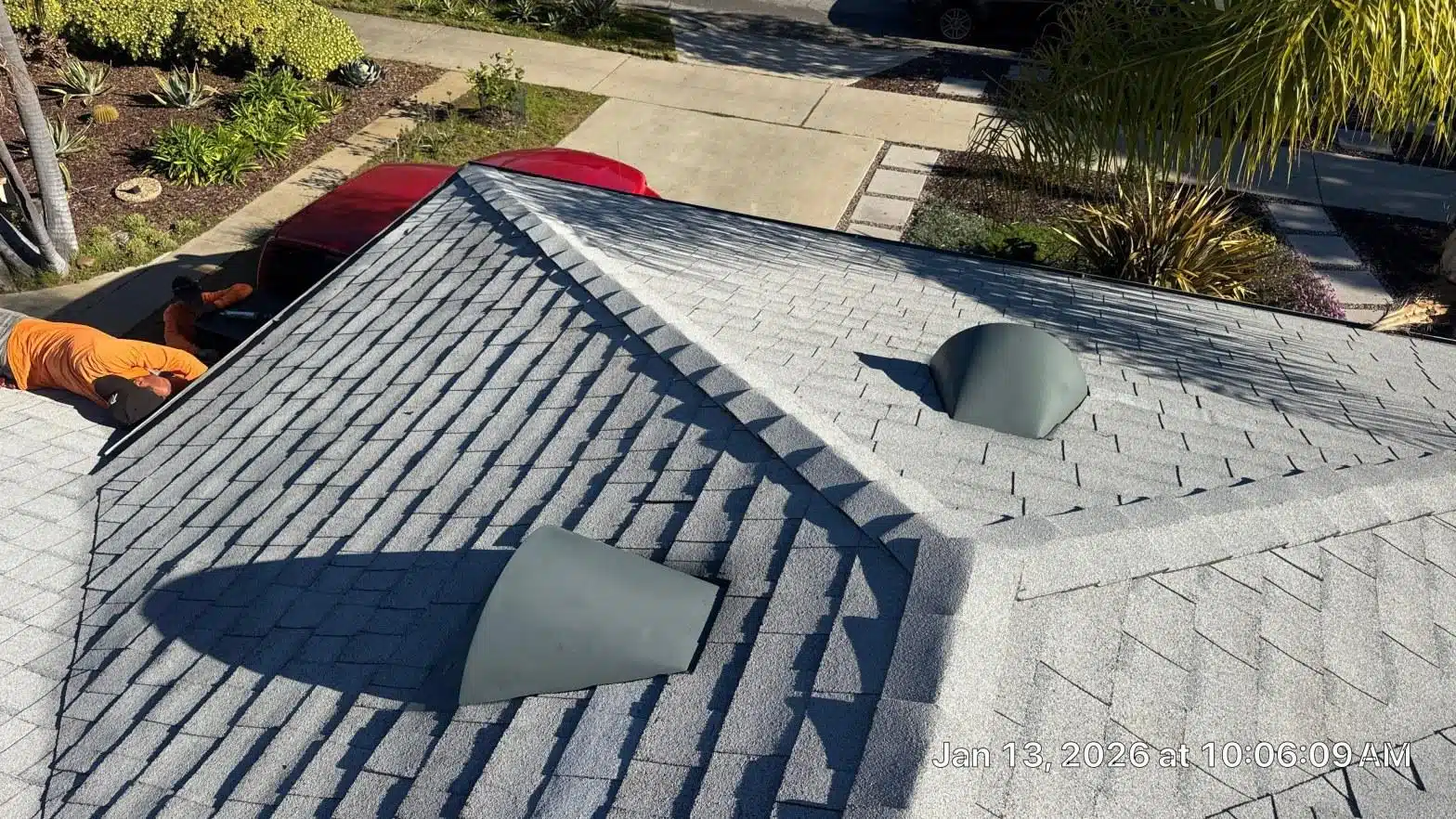
Finding an affordable roof repair contractor in California means finding someone who gives you quality work at a price that makes sense, not just the cheapest bid on the block. Across California, homeowners face a wide range of roofing prices, and the gap between a fair deal and an expensive mistake often comes down to knowing what to look for. This guide walks you through real costs, what roof flashing repairs involve, how to screen contractors, and how to protect your budget without sacrificing the job.
What Makes a Roof Repair Contractor Truly Affordable?
A truly affordable roof repair contractor combines competitive pricing with transparent estimates, proper licensing, and materials that last. A contractor who charges less but uses substandard flashing metal or skips underlayment can cost you two or three times more within a few years in repeat repairs.
Affordability is about total value over time. A roof repaired correctly the first time, with proper metal flashing, sealed penetrations, and quality underlayment, should last 10 to 20 years before needing attention again. A quick patch job may fail within 12 to 18 months, especially under California’s intense UV exposure and seasonal rain cycles.
The contractors who deliver the best long-term value share a few traits:
- Clear written estimates: Itemized line items for labor, materials, and any disposal fees, no vague lump sums.
- CSLB licensing: Licensed by the California Contractors State License Board (CSLB), which you can verify online in seconds.
- Proof of insurance: General liability and workers’ compensation coverage protect you if something goes wrong on your property.
- Warranty on labor: At least a 1- to 2-year workmanship warranty is standard among reputable contractors.
- Local references: Recent jobs in your county or region you can actually call and verify.
What Does Roof Repair Cost in California?
Minor roof repairs in California typically range from $300 to $1,500, while more involved work, like full flashing replacement, valley repair, or multi-section leak remediation, generally runs $1,500 to $5,000 or more. Emergency repairs after storm damage can push costs higher depending on access difficulty and the extent of water intrusion.
Several factors move the price up or down significantly:
| Repair Type | Typical Market Range (CA) | Key Cost Drivers |
|---|---|---|
| Shingle patch (1-10 shingles) | $300 to $700 | Shingle type, roof pitch, access |
| Roof flashing repair or replacement | $500 to $1,800 | Metal type, linear footage, location |
| Valley flashing replacement | $800 to $2,500 | Valley length, existing damage, underlayment |
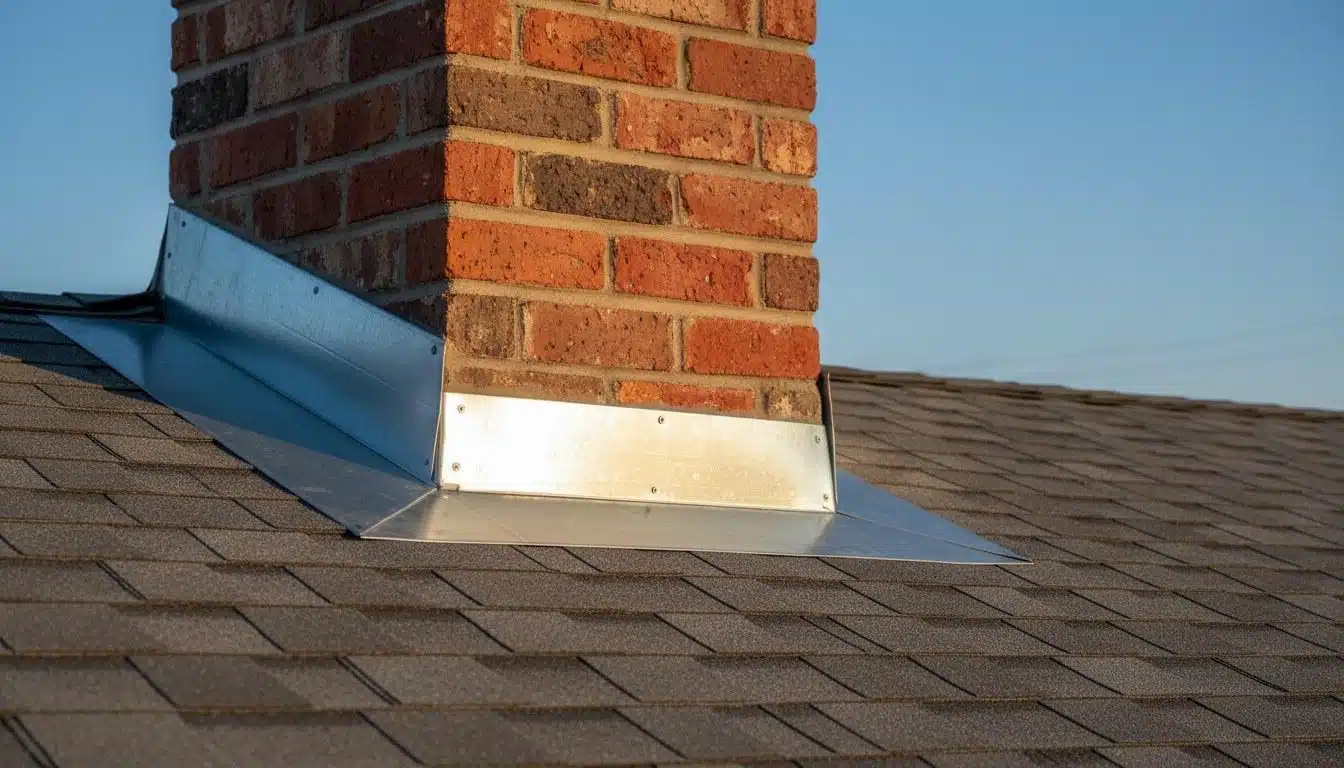
| Chimney flashing repair | $600 to $1,500 | Chimney size, counter vs. step flashing |
| Skylight flashing and reseal | $400 to $1,200 | Skylight size, flashing condition, sealant type |
| Leak investigation and repair | $350 to $1,500+ | Source complexity, interior damage, decking rot |
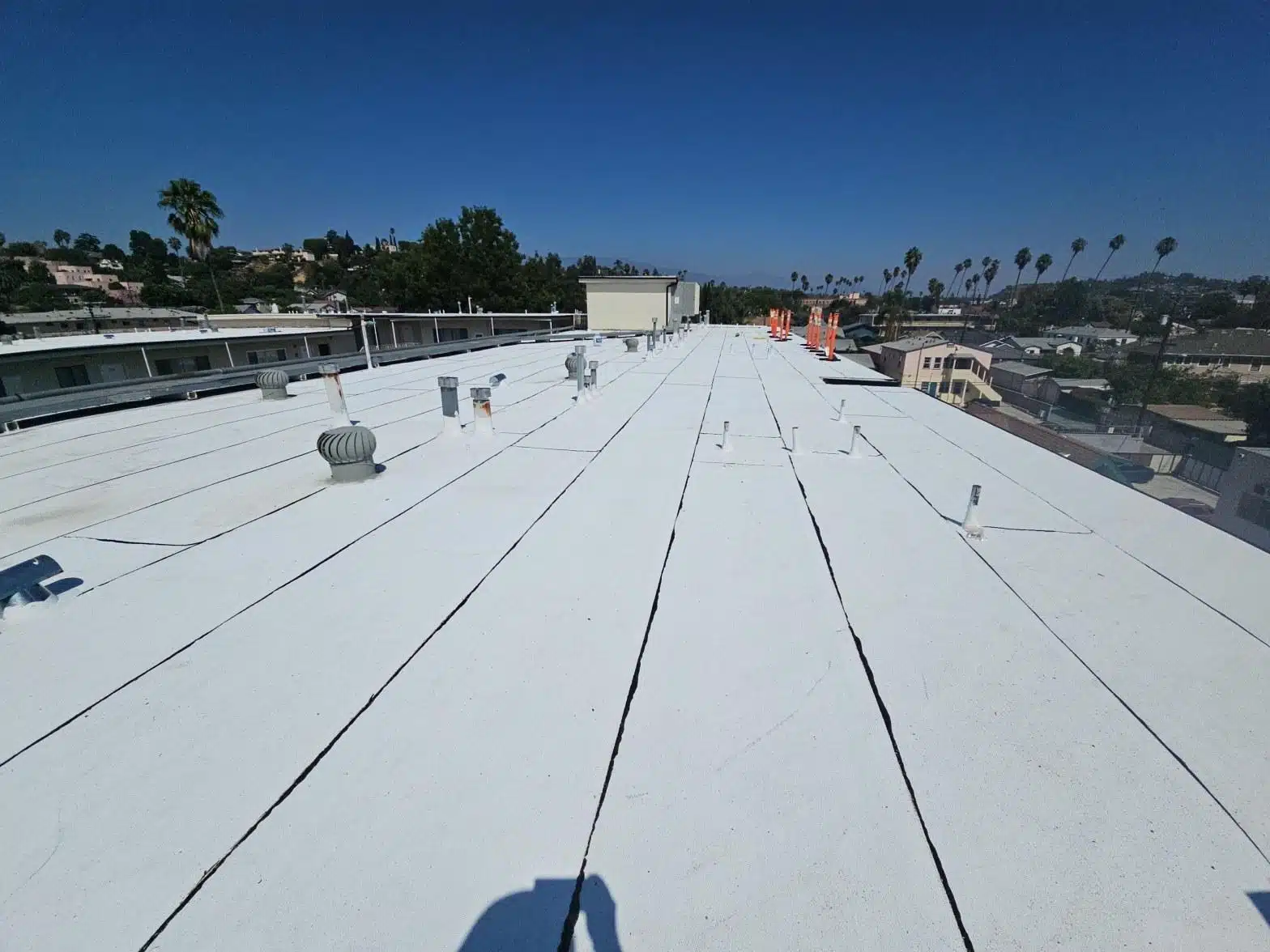
Roof pitch matters a lot. Steeper roofs (above 6:12 pitch) require safety equipment and slower work, which adds labor time. Flat or low-slope roofs common on commercial and some residential properties in Southern California often use different materials, modified bitumen or TPO membrane, that carry their own price points.
As of 2026, labor costs in high-demand California markets have risen roughly 15 to 20 percent compared to pre-2022 levels, driven by material supply chain shifts and increased demand after back-to-back wet seasons. Always request a custom quote rather than relying on online averages alone.
What Is Roof Flashing and Why Does It Drive Up Repair Costs?
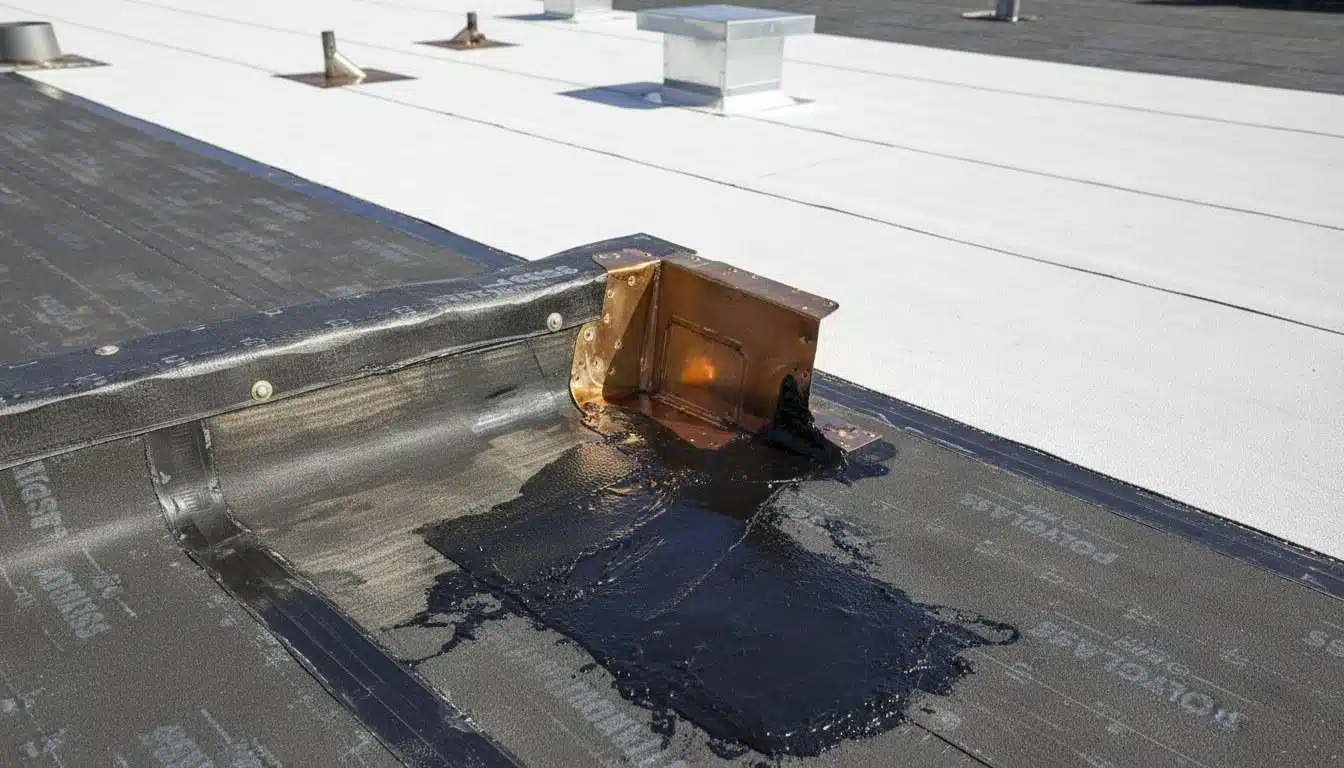
Roof flashing is thin metal, typically galvanized steel, aluminum, or copper, installed at joints, edges, and penetrations to direct water away from vulnerable areas of the roof. It is one of the most common sources of leaks and one of the most frequently underrepaired parts of any roof.
Flashing appears in several critical locations:
- Step flashing: Interlaced metal pieces that run along the joint where a roof meets a wall or dormer. Each piece overlaps the one below it, creating a staircase-like water barrier.
- Counter flashing: Embedded into mortar or siding above step flashing to cap the joint and prevent water from running behind the lower layer.
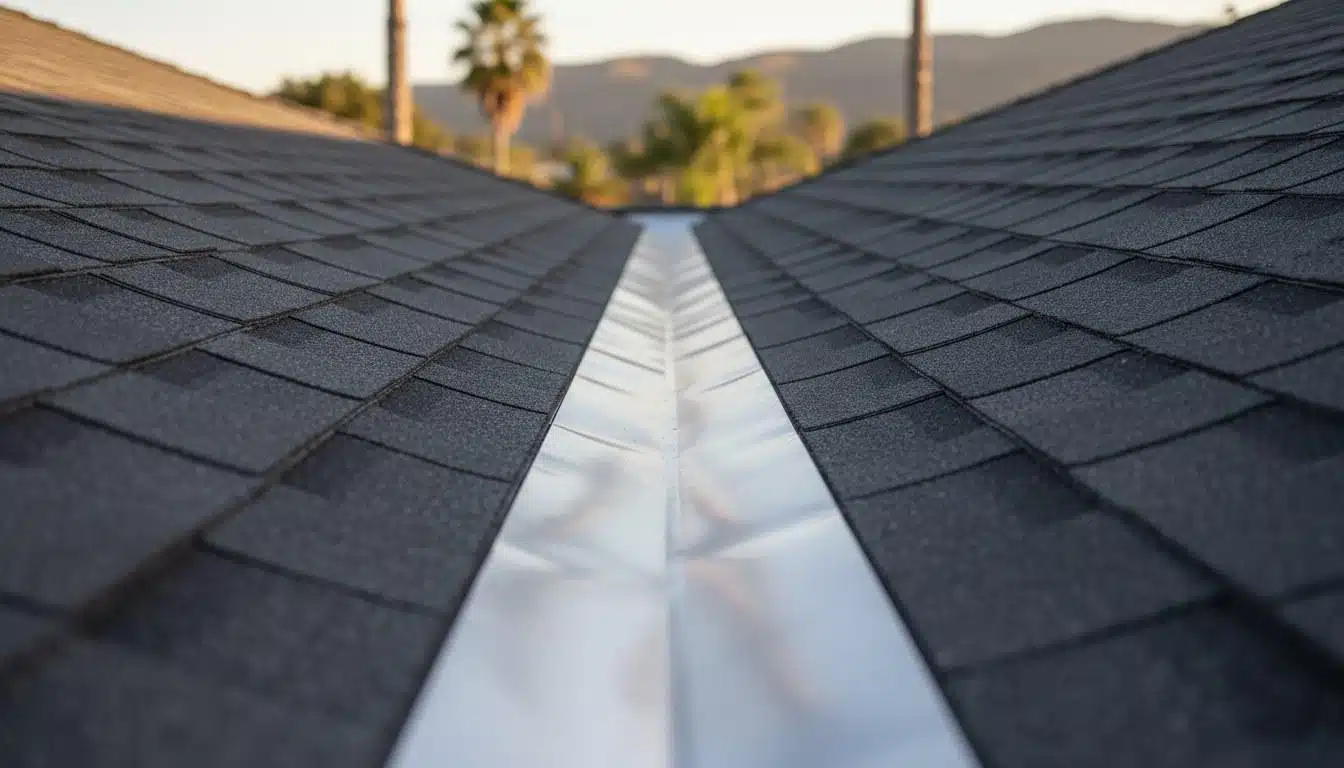
- Valley flashing: A continuous metal strip running along the V-shaped channel where two roof planes meet. Open valleys use exposed metal; closed valleys weave shingles over the channel.
- Drip edge flashing: Installed along the eaves and rakes to direct water off the roof edge and away from the fascia board.
- Pipe boot flashing: A rubber or metal collar that seals around plumbing vents, HVAC pipes, and other roof penetrations.
- Chimney flashing: A combination of base, step, counter, and saddle (cricket) flashing that seals all four sides of a chimney.
Flashing repairs cost more than simple shingle patches because they often require removing existing shingles, cutting into siding or mortar, and carefully reinstalling everything in the correct sequence. Skipping any step creates a new leak path. Our crews have found that in California homes built before 1990, corroded or missing step flashing is the root cause of interior water damage in more than half of the leak calls we respond to, often after the damage has already spread to the sheathing beneath.
In California homes built before 1990, corroded or missing step flashing is the root cause of interior water damage in more than half of the leak calls we respond to.
California’s Title 24 building energy standards also affect how roof assemblies must be sealed and ventilated, which can influence how flashing is installed during permitted repairs. Always confirm your contractor pulls the necessary permits when structural or significant flashing work is involved.
How Do You Qualify and Compare Roof Repair Contractors?
Get at least three written quotes, verify each contractor’s CSLB license number online, and compare the scope of work, not just the bottom-line price. A quote that lists “roof repair” for $400 tells you almost nothing; a quote that specifies “remove and replace 6 linear feet of step flashing with 26-gauge galvanized steel, reseat three courses of shingles, and apply sealant at chimney base” tells you exactly what you’re buying.
Use this checklist when screening any contractor:
- Look up their CSLB license at cslb.ca.gov and confirm it is active and in good standing.
- Ask for a certificate of insurance showing general liability (at least $1 million per occurrence) and workers’ compensation.
- Request an itemized written estimate that breaks out labor, materials, disposal, and permit fees separately.
- Ask what type of flashing metal they use and why: galvanized steel, aluminum, and copper each have different lifespans and price points.
- Confirm the warranty: how long on labor, how long on materials, and what voids it.
- Check reviews on multiple platforms and ask for two or three references from jobs completed in the past six months.
Comparing contractors side by side is easier with a simple table. When you get multiple quotes, note these details for each:
| Evaluation Factor | What to Look For | Red Flag |
|---|---|---|
| License status | Active CSLB license, correct classification | Expired, suspended, or no license |
| Estimate format | Itemized by material and labor | Single lump-sum with no detail |
| Flashing material specified | Named metal type and gauge | “Standard flashing” with no specification |
| Permit handling | Contractor pulls permit when required | Suggests skipping permits to save money |
| Warranty | 1-5 years on workmanship in writing | Verbal-only or no warranty offered |
| Payment terms | Deposit of 10-30%, balance on completion | Demands full payment upfront |
What Are the Red Flags of a Bad Low-Cost Contractor?
The biggest warning signs of an unreliable low-cost contractor are pressure to decide immediately, a request for full payment before work starts, and no verifiable license or insurance. These patterns appear frequently after major storms, when unlicensed operators move through neighborhoods offering fast, cheap fixes.
Watch for these specific warning signs:
- Door-to-door solicitation after storms: Legitimate contractors rarely need to knock on doors. Storm chasers often disappear after collecting payment.
- No physical address or local presence: A contractor with no verifiable business address in California is harder to hold accountable.
- Unusually low bids: A quote that is 40 to 50 percent below other estimates usually means corners are being cut on materials, labor, or both.
- Pressure tactics: “This price is only good today” is a sales tactic, not a reflection of real material costs.
- Cash-only payment requests: Cash with no receipt leaves you with no paper trail if the work fails.
- Vague contracts: Any contract that does not specify materials, scope, start date, and completion timeline is a liability for you.
California law under the Business and Professions Code requires contractors to be licensed for projects over $500 in combined labor and materials. Hiring an unlicensed contractor above that threshold puts you at legal and financial risk if an injury occurs on your property or the work fails inspection.
How Can You Lower Your Roof Repair Bill Without Cutting Corners?
Timing your repair, addressing problems early, and understanding available financial assistance are the three most effective ways to keep roof repair costs manageable. Waiting until a small flashing gap becomes a major leak can turn a $600 repair into a $4,000 project once decking rot and interior damage are factored in.
Waiting until a small flashing gap becomes a major leak can turn a $600 repair into a $4,000 project once decking rot and interior damage are factored in.
Here are practical strategies that actually work:
- Schedule repairs in the off-season: Late summer and early fall (August through October) are typically slower for roofers in California, which can mean more competitive pricing and faster scheduling.
- Address leaks immediately: Water damage compounds quickly. A roof that leaks for even one rainy season can develop mold, rotted sheathing, and damaged insulation, all of which add to the final bill.
- Bundle repairs: If you have multiple small issues, a few missing shingles, a failing pipe boot, and deteriorated drip edge, having them addressed in one visit costs less than three separate service calls.
- Check your homeowner’s insurance: Storm damage, wind-lifted shingles, and hail damage are often covered under standard policies. File a claim before paying out of pocket.
- Ask about financing options: Many reputable contractors offer payment plans or financing through third-party lenders for larger repairs.
- Look into energy efficiency rebates: If your repair involves upgrading roof materials or improving ventilation, programs like federal weatherization assistance or California utility rebates may offset some costs.
We see roughly 30 to 40 percent of our repair calls each spring involve damage that started as a minor flashing separation the prior fall, a repair that would have cost under $700 if caught early but grew into a $2,500-plus job by the time water reached the ceiling drywall.
The Inflation Reduction Act federal tax credit also provides opportunities for homeowners making energy-related improvements. While standard roof repairs typically do not qualify, energy-efficient roofing materials installed as part of a broader improvement may be eligible, check IRS guidance or consult a tax professional for your specific situation.
Ready to Get a Fair Quote on Your Roof Repair?
Schedule your roof inspection and get a written, itemized estimate before any work begins. Roof Repair & Construction Inc. serves homeowners across Southern California with transparent pricing, licensed crews, and repairs backed by a written workmanship warranty.
Whether you need flashing replaced at a chimney or skylight, a full valley repair, or a leak tracked down and sealed, the process starts with an honest assessment, not a sales pitch. Call (323) 474-1088 to book your inspection or request a custom quote. An affordable roof repair contractor is one you can trust to do the job right the first time, and that is exactly what Roof Repair & Construction Inc. delivers.
Frequently Asked Questions
How do I know if my roof flashing actually needs to be replaced?
Flashing needs replacement when it shows visible rust, cracks, gaps at seams, or has pulled away from the surface it is sealing. Inside the home, water stains near chimneys, skylights, or dormers after rain are a strong sign that flashing has failed. A licensed contractor can inspect the flashing and tell you whether a reseal or a full replacement is the right call.
How much does it typically cost to repair roof flashing in California?
Roof flashing repair in California typically ranges from $500 to $1,800 depending on the location, the type of metal used, and how much existing material needs to be removed. Chimney flashing and valley flashing tend to cost more than simple pipe boot or drip edge repairs. Always get an itemized written estimate so you know exactly what is included.
Can I put new flashing on a roof myself, or do I need a contractor?
Some basic pipe boot replacements are within reach of a skilled DIYer, but step flashing, chimney flashing, and valley flashing require precise sequencing with shingles and underlayment that is easy to get wrong. An improper installation can void your shingle warranty and create new leak paths. For anything beyond a simple sealant touch-up, hiring a licensed contractor is the safer and more cost-effective choice long-term.
How do I verify that a roofing contractor in California is actually licensed?
You can verify any California roofing contractor's license instantly at cslb.ca.gov using the contractor's name or license number. Look for an active status and confirm the license classification covers roofing work. A licensed contractor is legally required to carry insurance, which protects you if anything goes wrong during the repair.
What is the best time of year to schedule a roof repair in California to get a fair price?
Late summer through early fall, roughly August through October, is typically the best window in California for competitive pricing and faster contractor availability, since demand slows before the rainy season begins. Avoid waiting until the first storms hit, when scheduling backlogs and emergency pricing can both increase your costs significantly.