When you search for roof repair near me in Southern California, knowing what to look for saves you time and money. This guide covers roof flashing, warning signs, and how to choose a licensed contractor.
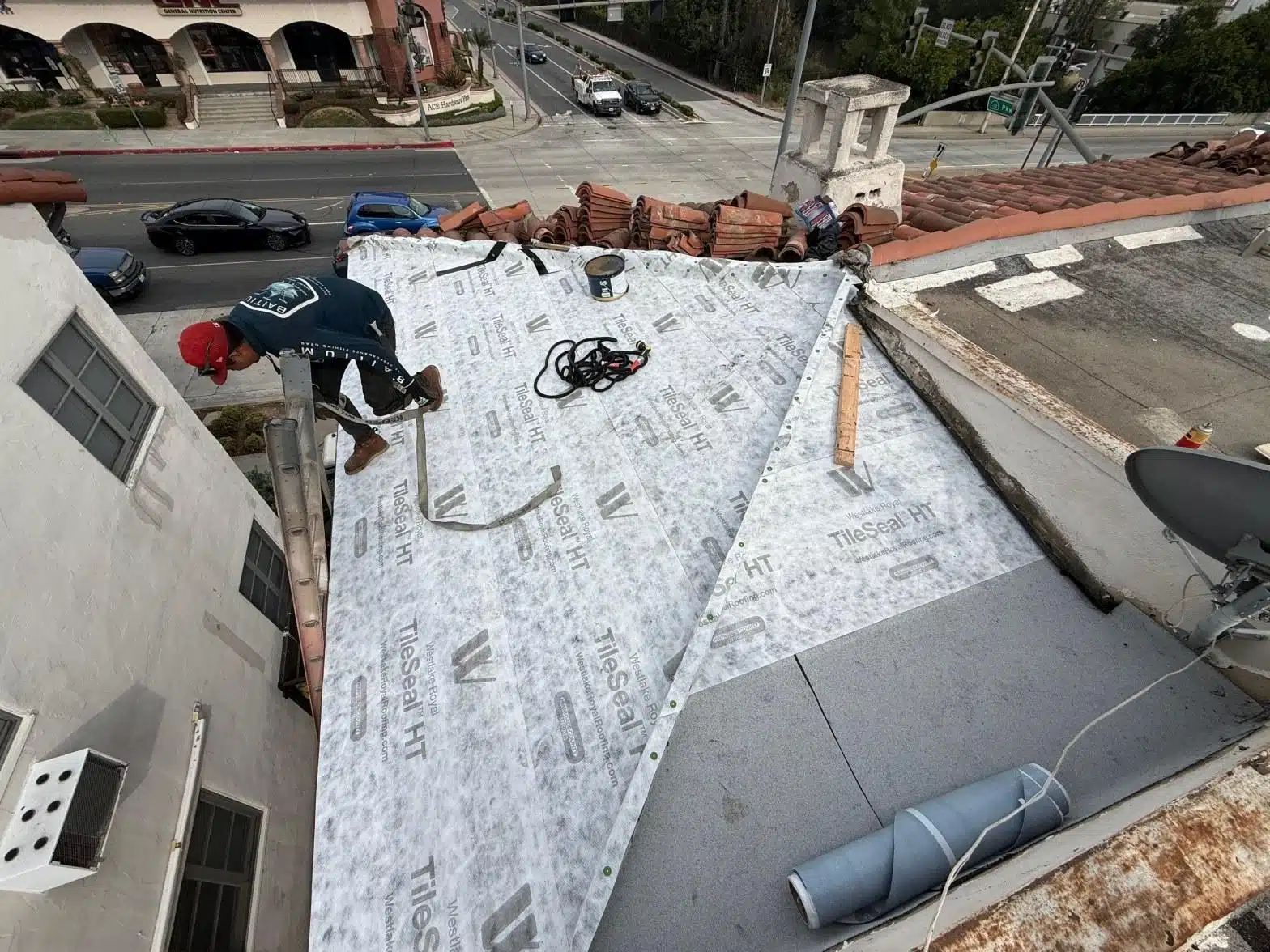
Why Southern California Roofs Need Attention Every Year
Southern California, CA sits in a Mediterranean climate zone where roofs face UV radiation for roughly 280 sunny days a year, followed by sudden heavy rain events in winter and powerful Santa Ana wind gusts that can exceed 60 mph in fall. That combination dries out sealants, lifts shingles, and stresses every metal flashing joint on the roof.
The National Weather Service Southern California office tracks Santa Ana wind events that typically peak between October and January, the same window when deferred roof maintenance turns into emergency calls. Foothill communities across the region see the strongest gusts and the most wind-driven roof damage each season.
When you start searching for roof repair near me, understanding what your local climate actually does to a roof helps you ask the right questions and avoid contractors who give vague answers.
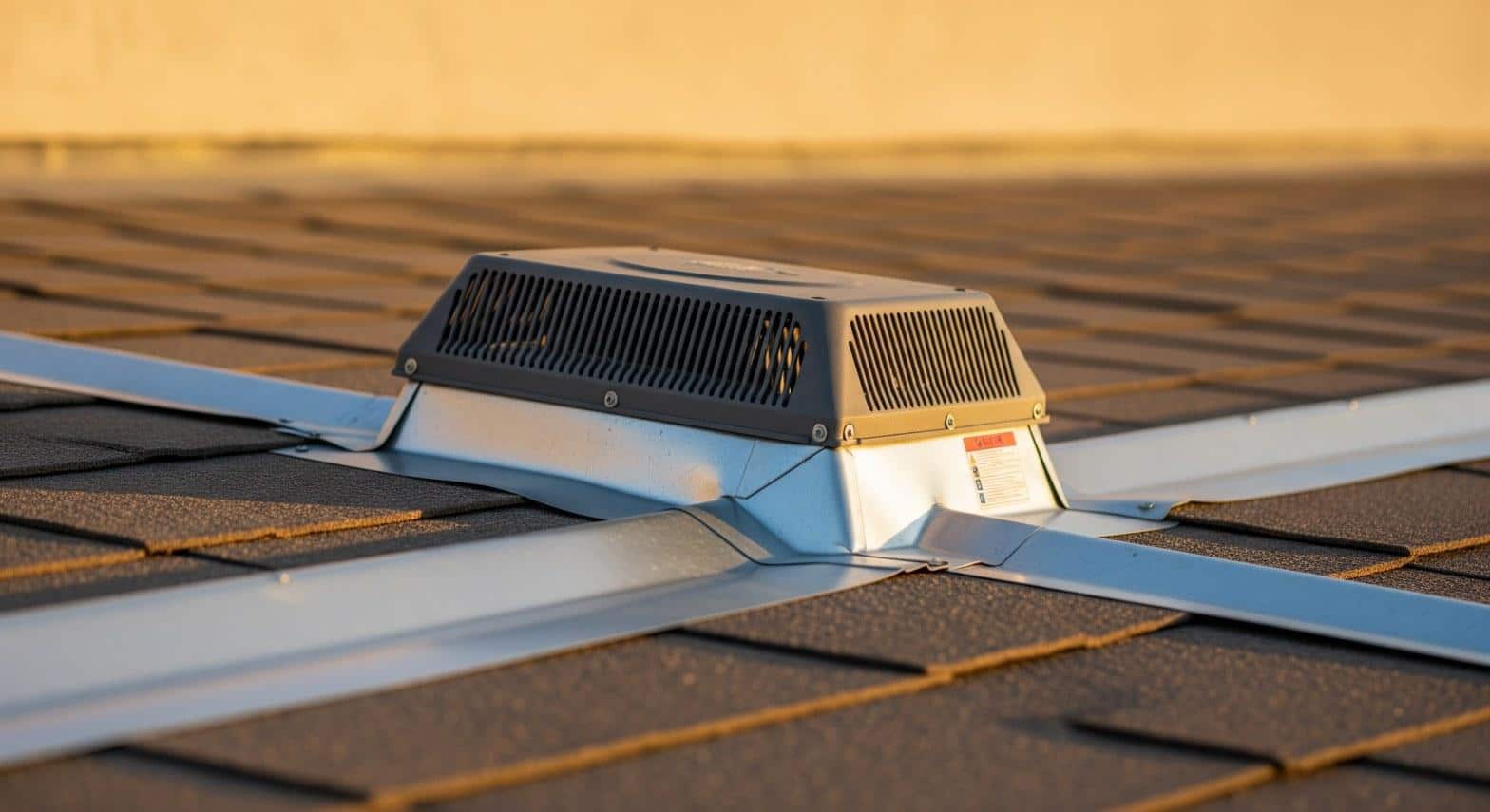
What Is Roof Flashing and Why Does It Fail?
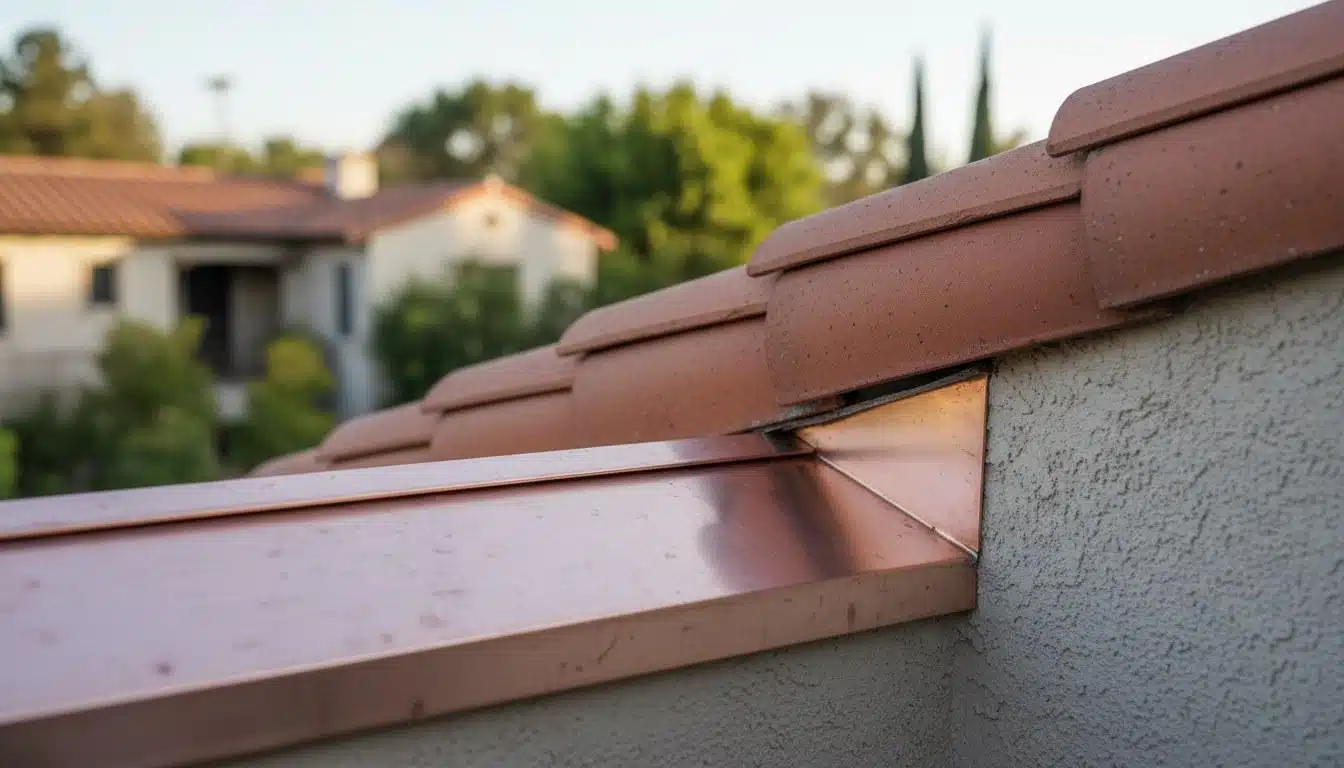
Roof flashing is thin metal sheeting, usually galvanized steel, aluminum, or copper, installed at every joint where the roof surface meets a vertical structure: chimneys, skylights, vent pipes, dormers, and roof-to-wall connections. Its job is to channel water away from those joints so it never reaches the roof deck or the interior framing below.
Flashing fails for a few predictable reasons. Sealant dries and cracks after years of UV exposure. Metal expands and contracts with temperature swings, eventually loosening fasteners. Improper installation, lapping pieces in the wrong direction, skipping step flashing at wall intersections, lets water migrate behind the metal strip rather than over it.
The dry heat across the region accelerates sealant degradation. Most roofing sealants are rated for 10 to 20 years, but in direct Southern California sun they often show cracking within 7 to 10 years. Once a flashing seal opens even a few millimeters, a single winter rain event can push several gallons of water into wall cavities before a homeowner notices any staining on the ceiling.
Most roofing sealants are rated for 10 to 20 years, but in direct Southern California sun they often show cracking within 7 to 10 years.
Common flashing types you will hear a roofer mention include:
- Step flashing: Individual L-shaped metal pieces woven between shingles along a wall or dormer, the most critical type to install correctly.
- Counter flashing: A second layer of metal embedded into mortar or a reglet cut in masonry, folded over step flashing to seal the top edge.
- Valley flashing: A continuous strip running the length of a roof valley where two slopes meet.
- Pipe boot flashing: A pre-formed metal collar that seals around vent pipes; the rubber gasket at the top is typically the first component to crack.
- Drip edge flashing: A metal strip along eaves and rakes that directs water into gutters and away from fascia boards.
Our crew responds to roughly 3 times more flashing-related leak calls in January and February than in any other two-month window, almost always tracing back to sealant that dried out the previous summer and went unnoticed until the first real rain hit.
What Warning Signs Can You Spot From the Ground?
You do not need to climb onto a roof to catch early warning signs, binoculars or a smartphone camera with zoom are enough to check most flashing and shingle conditions from the driveway. Walking on a roof without proper equipment creates safety risks and can crack tile or puncture membrane roofing.
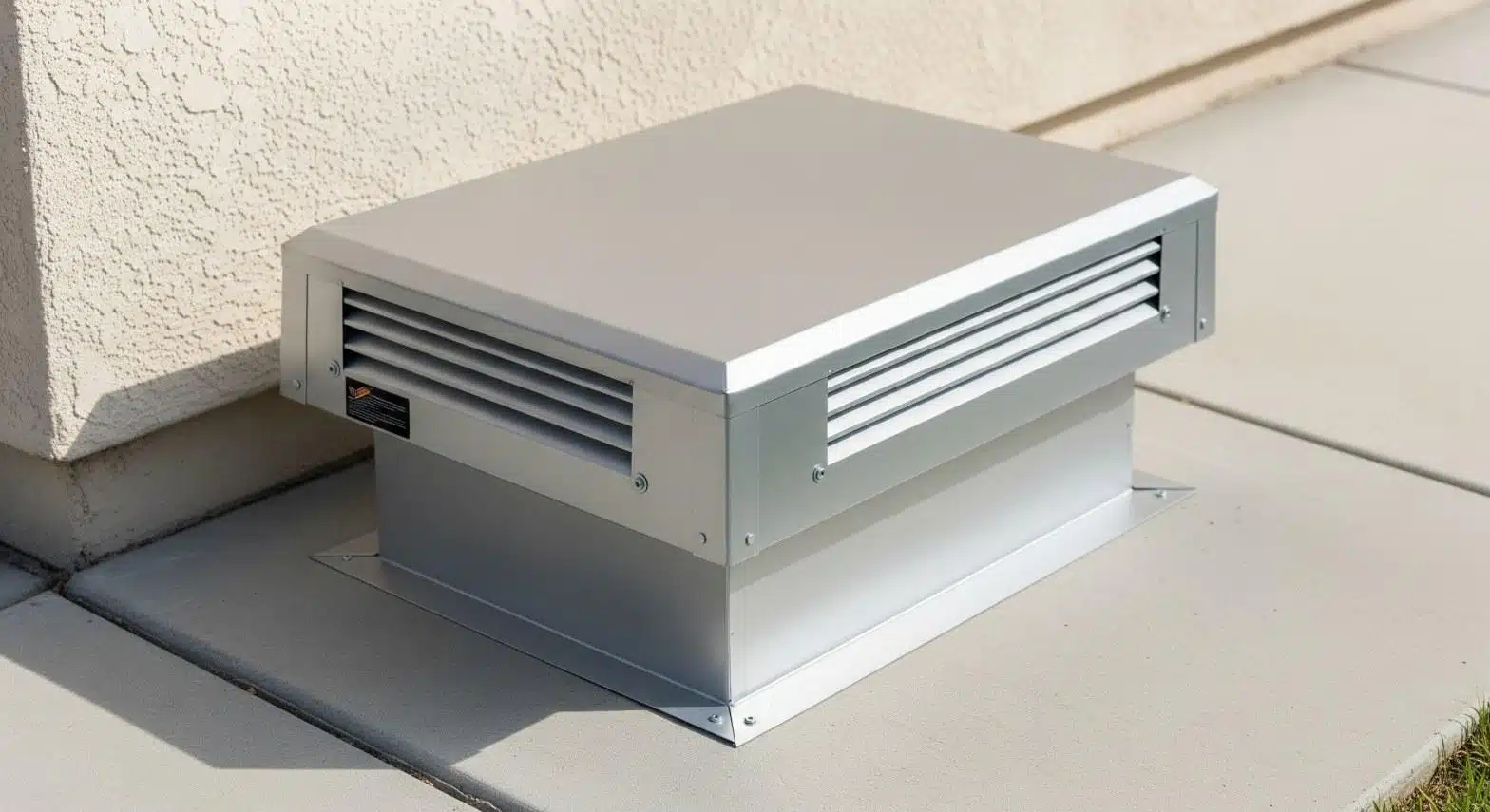
Scan your roof from the ground and look for these specific indicators:
- Lifted or buckled flashing: Metal that is no longer lying flat against the surface it seals, often visible at chimney corners or along dormers.
- White mineral streaks below flashing: Efflorescence running down masonry below a chimney flashing line signals chronic water intrusion.
- Missing shingles or granule loss: Bare dark patches on asphalt shingles mean the UV-protective layer has worn through, typically after 15 to 20 years on a standard 3-tab shingle.
- Rust staining: Orange streaks below metal flashing, vents, or pipe boots indicate the metal is corroding, a sign it is near the end of its useful life.
- Sagging roof deck sections: A wavy or dipped appearance between rafters suggests moisture has already reached the plywood sheathing.
- Cracked or displaced clay or concrete tiles: Very common in Southern California where clay tile is a dominant roofing material; a single cracked tile can expose the underlayment to direct rain.
- Interior water stains: Brown rings on ceilings or walls, especially near exterior walls or below a skylight, are a near-certain sign of a flashing or membrane failure above.
If you spot two or more of these signs at once, the repair window is likely short. A single failed pipe boot seal, for example, can let water travel 6 to 10 feet along a rafter before it shows up as a ceiling stain, making the stain a poor guide to where the actual leak is.
When Does Roof Damage Become a Now-Not-Later Emergency?
Four conditions turn a routine repair into an emergency: active water intrusion during a rain event, visible sagging of the roof deck, storm damage that exposes the underlayment or deck, and any situation where mold growth is already visible in an attic or ceiling cavity.
Across Southern California the rainy season runs roughly from November through March, according to NOAA climate data. A roof that has a compromised flashing joint or a cracked tile going into October is a liability. Water that reaches OSB or plywood roof sheathing can cause structural softening within 48 to 72 hours of sustained exposure. Replacing saturated sheathing adds significant cost and time compared to a simple flashing repair caught before rain season.
Water that reaches OSB or plywood roof sheathing can cause structural softening within 48 to 72 hours of sustained exposure.
California homeowners filing insurance claims for storm damage should be aware that most standard homeowner policies have a reporting window, often 1 year from the date of the event, though policy language varies. Documenting damage with photos immediately after a Santa Ana wind event or a heavy rain storm protects your claim timeline. Check your specific policy terms and contact your insurer promptly.
If you need 24 hour roof repair or emergency tarping after a storm, acting within the first 24 hours limits secondary water damage to insulation, drywall, and framing, costs that can multiply quickly once moisture spreads.
What Does a Licensed Roofer Actually Do on a Flashing or Repair Job?
A qualified roofer starts with a full roof inspection before quoting any work, not just the visible symptom, but the surrounding field of shingles or tile, all penetrations, and the attic below the suspected leak area. Skipping the attic inspection is a red flag; water travels along rafters and sheathing, so the entry point is rarely directly above the ceiling stain.
On a typical flashing repair, the process follows these steps:
- Remove the existing flashing and any overlapping shingles or tiles to expose the joint completely.
- Inspect the roof deck underneath for rot, soft spots, or mold; replace any damaged sheathing before re-flashing.
- Install new metal flashing: step flashing pieces are woven one-by-one with each course of shingles; counter flashing is re-embedded or re-sealed at the masonry line.
- Apply roofing cement or compatible sealant at all laps and termination points.
- Re-lay shingles or tiles over the new flashing and nail or clip them to code.
- Conduct a final water test or visual inspection from the attic with a hose to confirm the repair is watertight.
In California, roofing work above a certain dollar threshold requires a permit in most jurisdictions, and the contractor must be licensed by the California Contractors State License Board (CSLB) under a C-39 Roofing classification. Always verify the license number on the CSLB website before signing a contract. An unlicensed roofer doing permitted work exposes the homeowner to liability and can void a homeowner’s insurance claim.
Common roof materials across the Southern California market each have specific flashing requirements:
| Roof Material | Common Flashing Metal Used | Typical Flashing Lifespan |
|---|---|---|
| Asphalt shingle | Galvanized steel or aluminum | 15 to 30 years depending on sealant maintenance |
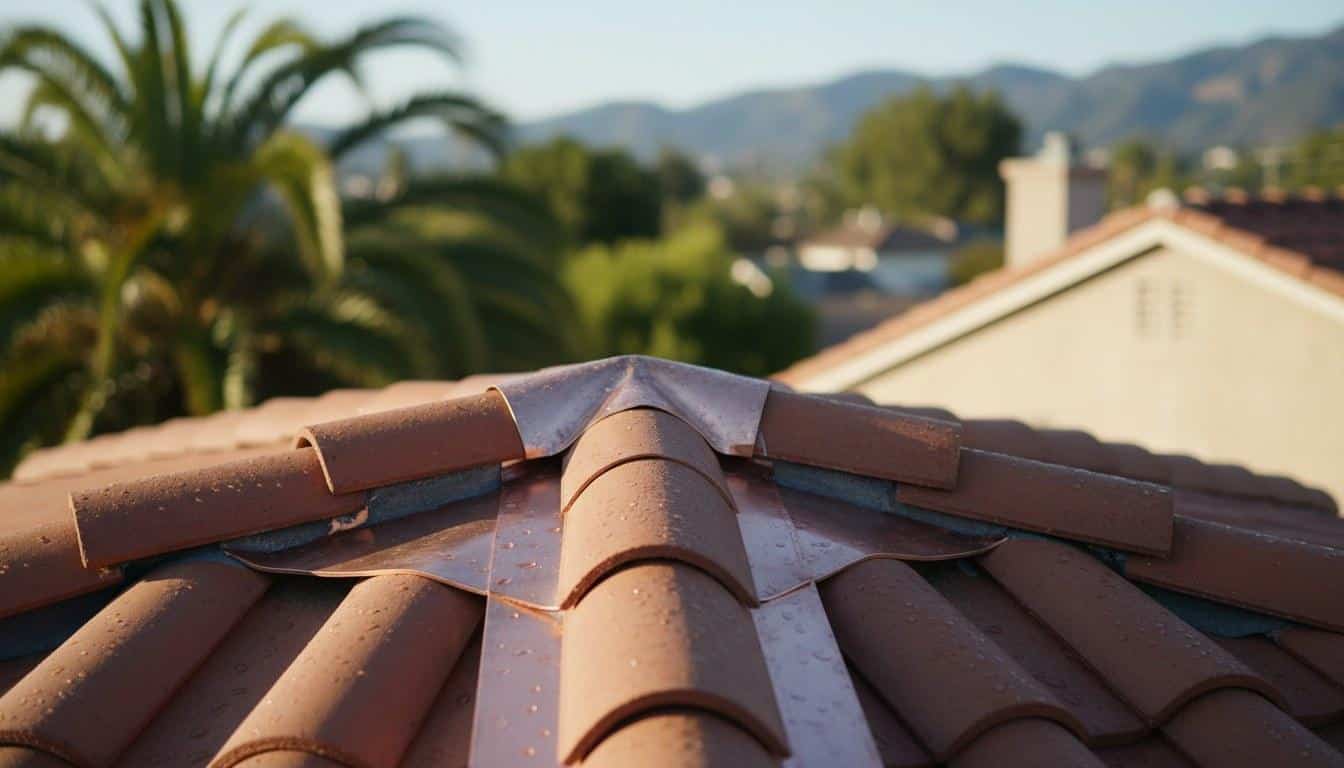
| Clay or concrete tile | Copper or lead-coated copper | 30 to 50 years; tile outlasts flashing in many cases |
| Metal standing-seam | Matching steel or aluminum; factory trims | 40 to 60 years with proper fastener inspection |
| TPO flat/low-slope membrane | Aluminum termination bar; TPO-bonded metal edge | 15 to 25 years; seams are the primary failure point |
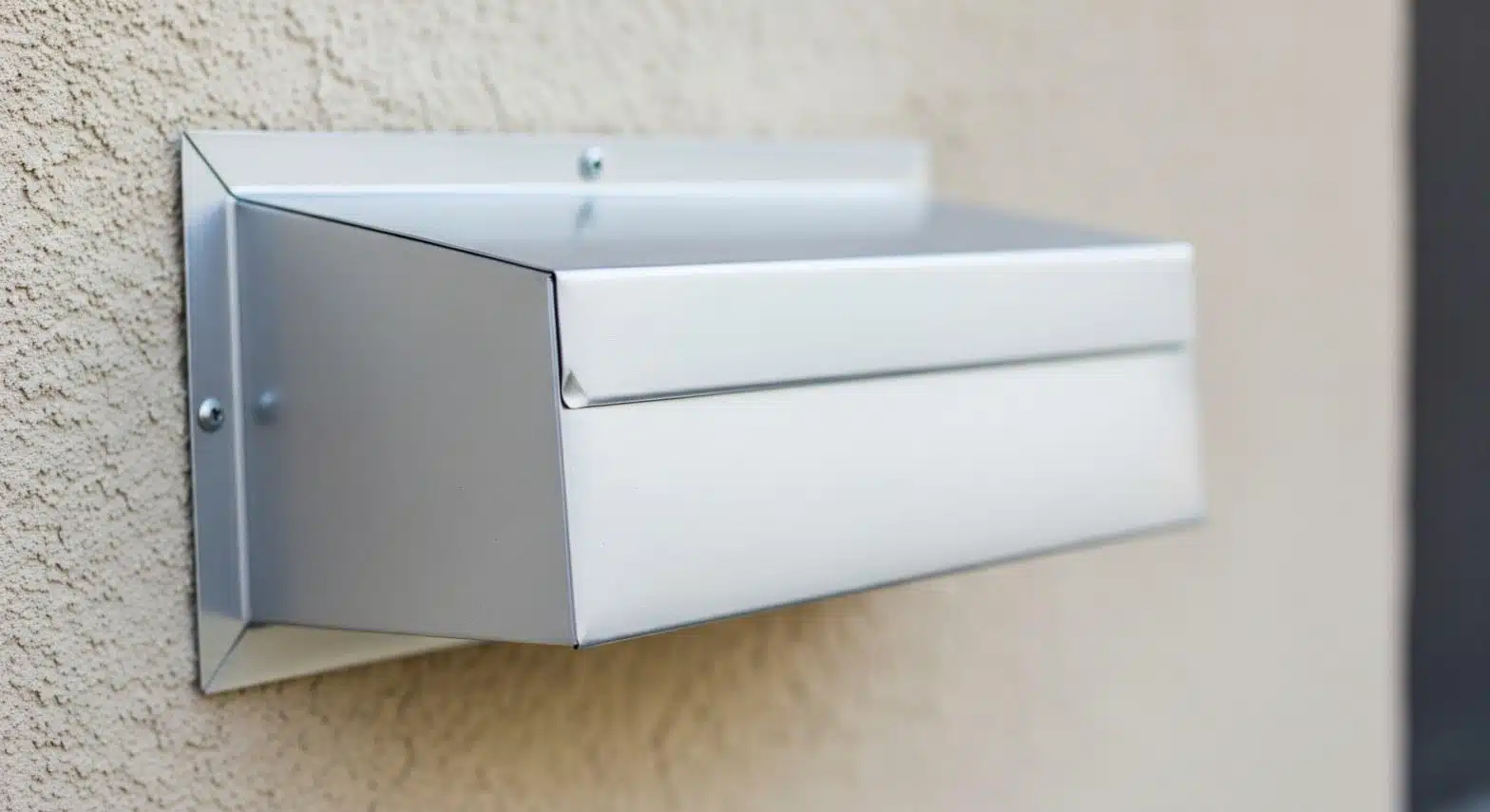
Across our service calls in Southern California, we see clay and concrete tile roofs account for more than half of all flashing repair jobs, largely because the tile itself can last 50 years but the original step flashing and counter flashing was installed with materials and sealants that were only rated for 20 to 25 years.
Clay and concrete tile roofs account for more than half of all flashing repair jobs in Southern California, largely because the original step flashing was installed with materials only rated for 20 to 25 years.
What Does Roof Repair Cost in the Southern California Market?
In the Southern California market, a targeted flashing repair on a single penetration, one chimney, one skylight, or one pipe boot, typically ranges from a few hundred dollars to around $1,500 depending on access difficulty, material type, and whether any sheathing replacement is needed. More extensive re-flashing of an entire chimney with counter flashing and step flashing on a two-story tile roof generally runs higher, often in the $1,500 to $4,000 range.
Factors that move the price up or down include:
- Roof pitch and height: Steeper pitches above 6:12 require additional safety equipment and slow the work down, increasing labor cost.
- Material choice: Copper flashing costs roughly 3 to 4 times more than galvanized steel but is the standard on clay tile roofs and lasts significantly longer.
- Deck damage: If the sheathing underneath the flashing is soft or rotten, adding even a 4×8 sheet of replacement OSB adds material and labor to the scope.
- Permit requirements: Some jurisdictions in Los Angeles County require permits for flashing repairs that involve structural sheathing replacement, adding a permit fee to the project.
- Emergency or after-hours service: 24 hour emergency roof repair calls typically carry a premium over standard scheduled work.
For homeowners looking for affordable roof repair near me, getting at least two written quotes from licensed C-39 contractors is the best way to understand what a fair market price looks like for your specific scope. Beware of quotes that are dramatically below market; they often exclude sheathing inspection, use lower-grade materials, or skip the permit process entirely.
For a custom quote specific to your roof type, pitch, and location, contact Roof Repair & Construction Inc. directly.
Get Roof Repair Near Me in Southern California
Schedule a roof inspection before the next rain season arrives. Call Roof Repair & Construction Inc. at (323) 474-1088 to book a full roof and flashing assessment for your Southern California home. Same-day and emergency appointments are available across Southern California ZIP codes.
Get a written quote before any work begins. A licensed C-39 roofer will inspect every flashing joint, penetration, and the attic below, not just the visible symptom, so you know exactly what the repair involves and what it will cost.
Explore our full range of roofing services across Southern California.
Frequently Asked Questions
How do I put flashing on a roof myself?
Applying roof flashing yourself is possible on simple repairs like replacing a cracked pipe boot collar, but step flashing and counter flashing at a chimney or dormer are best left to a licensed roofer. Each piece of step flashing must be woven one-by-one with each shingle course, and a single mis-lapped piece can direct water behind the metal rather than over it. In Southern California roofing work above a certain dollar amount requires a permit and a C-39 licensed contractor. If you are unsure, call Roof Repair & Construction Inc. at (323) 474-1088 for an inspection before attempting the repair.
How do I know if my roof flashing is the cause of my leak?
The most reliable indicator is the location of the leak relative to a roof penetration or joint. If water staining on your ceiling appears near a chimney, skylight, vent pipe, or an exterior wall intersection, failing flashing is the most likely cause. A roofer will confirm by inspecting the attic below the stain and tracing the water path back to the entry point, which is often several feet from where the stain appears on the ceiling.
Can I get same-day or 24 hour roof repair in Southern California?
Yes, emergency and 24 hour roof repair service is available in Southern California for situations like active leaks during a rain event or storm damage that exposes the roof deck. Acting within the first 24 hours limits secondary damage to insulation, drywall, and framing. Roof Repair & Construction Inc. offers emergency appointments across Southern California, call (323) 474-1088 to reach the team.
How long does roof flashing last on a Southern California home?
Flashing lifespan depends heavily on the metal used and how well the sealant is maintained. Galvanized steel flashing on an asphalt shingle roof typically lasts 15 to 30 years, while copper flashing on clay tile can last 30 to 50 years. Across Southern California, the intense UV exposure and dry heat degrade sealants faster than in cooler climates, so inspecting sealant condition every 5 to 7 years is a reasonable maintenance schedule.
Do I need a permit for a roof flashing repair in Southern California?
Permit requirements depend on the scope of work and the jurisdiction. A like-for-like flashing repair that does not involve structural sheathing replacement often falls below the permit threshold, but any work that replaces roof sheathing or involves significant structural components typically requires a permit. Your contractor must be licensed by the California Contractors State License Board (CSLB) under a C-39 Roofing classification. Always confirm permit requirements with your local building department before work begins.