When you search for roof leak repair near me in Southern California, knowing how to pick the right contractor makes all the difference. This guide covers what to look for, what to ask, and how to avoid costly hiring mistakes.
What Should Southern California Homeowners Know Before Searching for Roof Leak Repair Near Me?
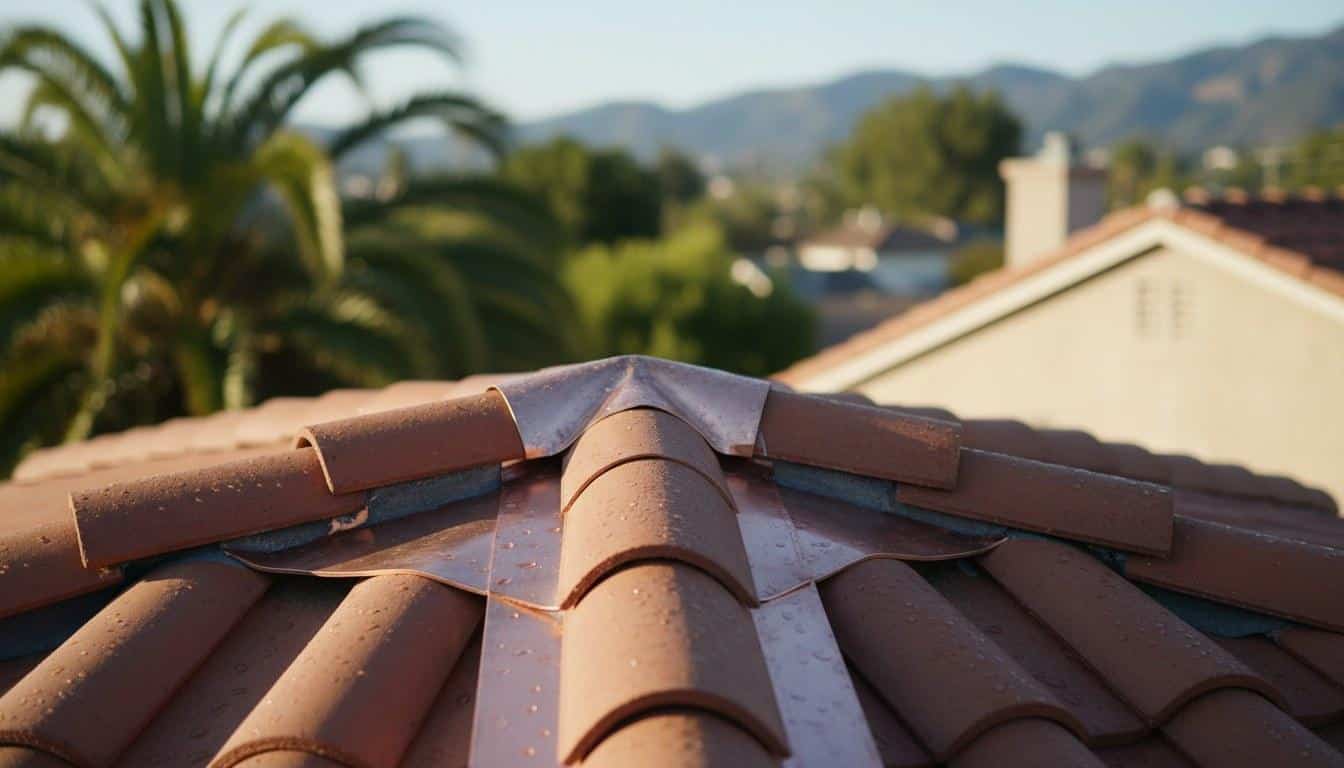
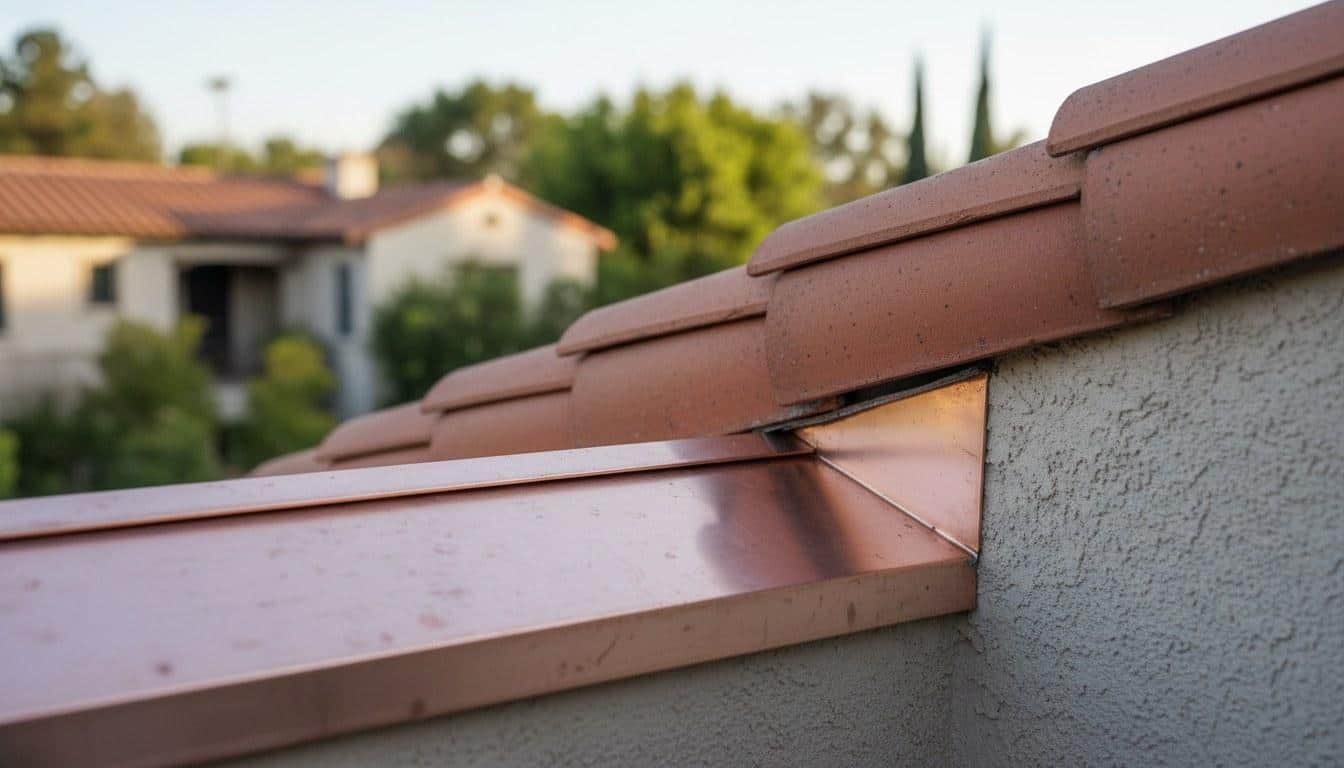
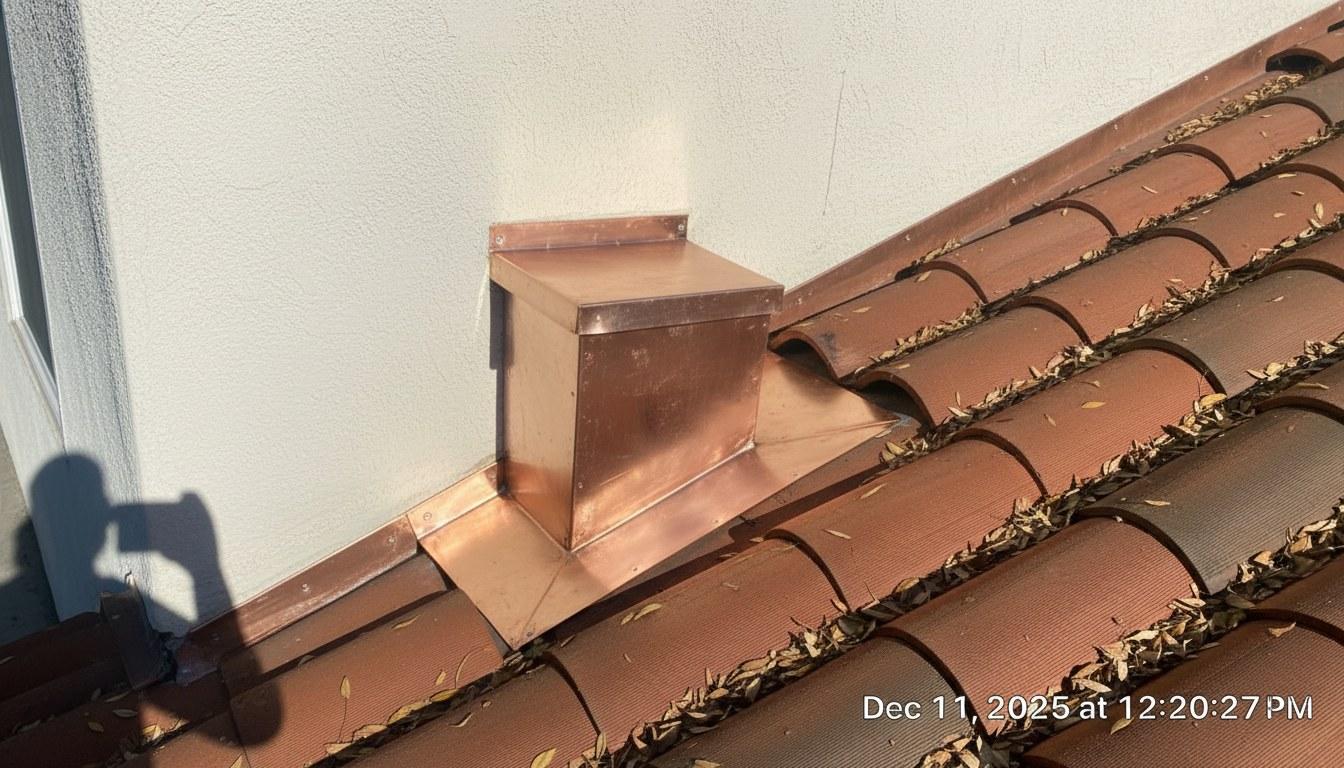
If you are searching for roof leak repair near me in Southern California, CA, the most important thing to know upfront is that the majority of residential roof leaks originate at the flashing, not the shingles or tiles themselves. Flashing is the thin metal sheeting, usually galvanized steel or aluminum, installed at every roof joint: around chimneys, skylights, vent pipes, dormers, and along valleys where two roof planes meet.
Southern California has a Mediterranean climate that creates specific stress patterns on roofing systems. Summers are hot and dry, with UV radiation that degrades sealants around flashing in as little as 3 to 5 years. Fall brings Santa Ana wind events that can lift flashing edges and force debris under metal seams. Winter rain, even light rain, finds every gap that heat and wind created over the previous nine months.
The 2024 and 2025 wet seasons reminded many homeowners across the region that even a modest rainfall of 2 to 3 inches can expose flashing failures that went unnoticed all summer. Catching those failures before the next rain is the goal of this guide.
For a broader overview of roof leak repair costs and scenarios in California, see the cost guide on the Roof Repair & Construction Inc. site. This article focuses specifically on how to evaluate contractors and flashing repairs so you hire the right person for the job.
What Are the Signs of a Roof Flashing Problem You Can Spot from the Ground in Southern California?
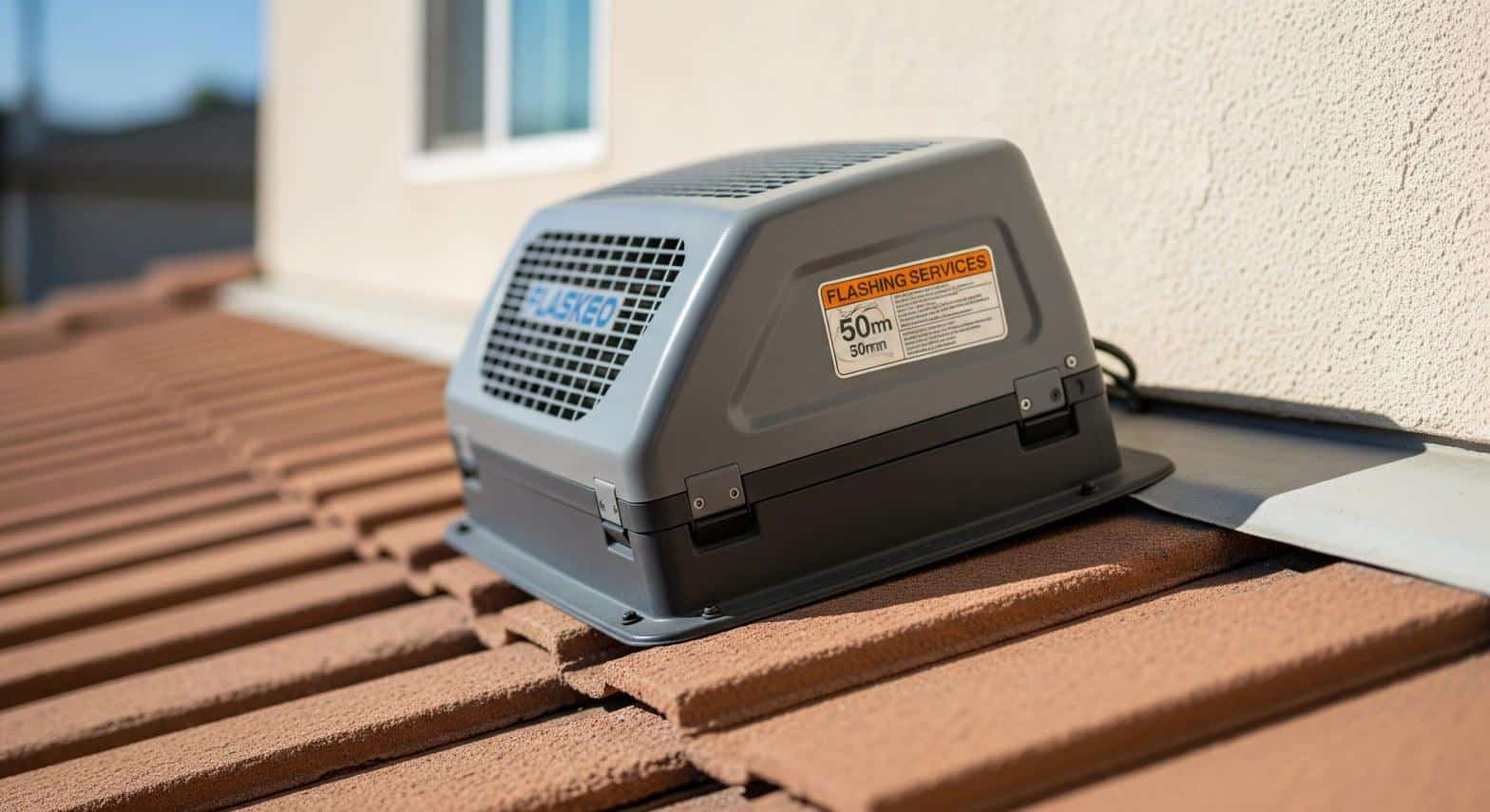
You do not need to climb onto your roof to find most flashing problems, roughly 70% of visible warning signs are detectable from the ground with a pair of binoculars or even a smartphone camera with zoom. Knowing what to look for saves you from calling a contractor without any information, and it helps you describe the problem accurately when you do call.
Walk the perimeter of your home and scan the roofline. Look for these specific warning signs:
- Lifted or buckled metal strips: Flashing along chimneys or skylights should lie flat and tight. Any visible gap between the metal and the masonry or roofing surface is a direct water entry point.
- Rust staining: Orange or brown streaks running down from a chimney or vent pipe indicate that galvanized flashing has begun to corrode, a sign the protective coating has failed.
- Missing sections: Santa Ana wind events can physically tear away flashing, especially on older homes with dried-out sealant. A bare metal edge or exposed underlayment is a now-not-later problem.
- Cracked or missing step flashing at wall junctions: Where a roof plane meets a vertical wall, common on Southern California additions and dormers, step flashing should be visible as overlapping metal tabs. Gaps here are a leading cause of interior wall water damage.
- Deteriorated sealant (roof caulk): White, gray, or black caulk beads around pipe boots and vent flashings that are cracked, shrunk, or pulling away from the surface signal that the seal is gone.
- Dark staining on interior ceilings or walls: Water stains inside the home, especially near the top of exterior walls or below a skylight, almost always point back to failed flashing above.
Our team responds to roughly 4 out of every 5 flashing-related service calls after homeowners first noticed ceiling stains, by which point water had already been tracking inside for at least one full rain season.
What Can You Safely Inspect Yourself, Without Getting on the Roof?
A careful ground-level and attic inspection gives you about 80% of the information a contractor will need to quote a flashing repair, and it keeps you safe. The U.S. Department of Energy recommends homeowners inspect attic spaces for signs of moisture at least once a year, particularly before the rainy season.
Here is what to check safely, in order:
- Attic inspection: On a sunny day, go into your attic with a flashlight. Look for daylight coming through the roof deck, any pinhole of light is a gap. Check for dark water staining on rafters or sheathing, soft or spongy wood, and active moisture or mold. These signs point directly to the leak location above.
- Ceiling and upper wall scan: Walk every room and look up. Pay close attention to rooms directly below a chimney, skylight, or roof valley. Bubbling paint, soft drywall, or brown rings are all evidence of water intrusion.
- Gutters and downspouts: Clogged gutters cause water to back up under the roof edge, which can mimic a flashing failure. Clear debris and check that gutters are not pulling away from the fascia, a gap there lets water run behind the fascia board and into the wall.
- Ground-level photo documentation: Use your phone to photograph any visible flashing from the ground. A contractor can often assess the severity of the damage from clear photos before scheduling a site visit.
Do not walk on the roof yourself. In Southern California, clay tile and concrete tile roofs, common across the region, are brittle and can crack under foot traffic, creating new damage. Asphalt shingle roofs become slippery when dry or damp. Leave the roof surface to a licensed professional with proper fall protection.
Which Roof Flashing and Leak Repairs Cannot Wait in Southern California?
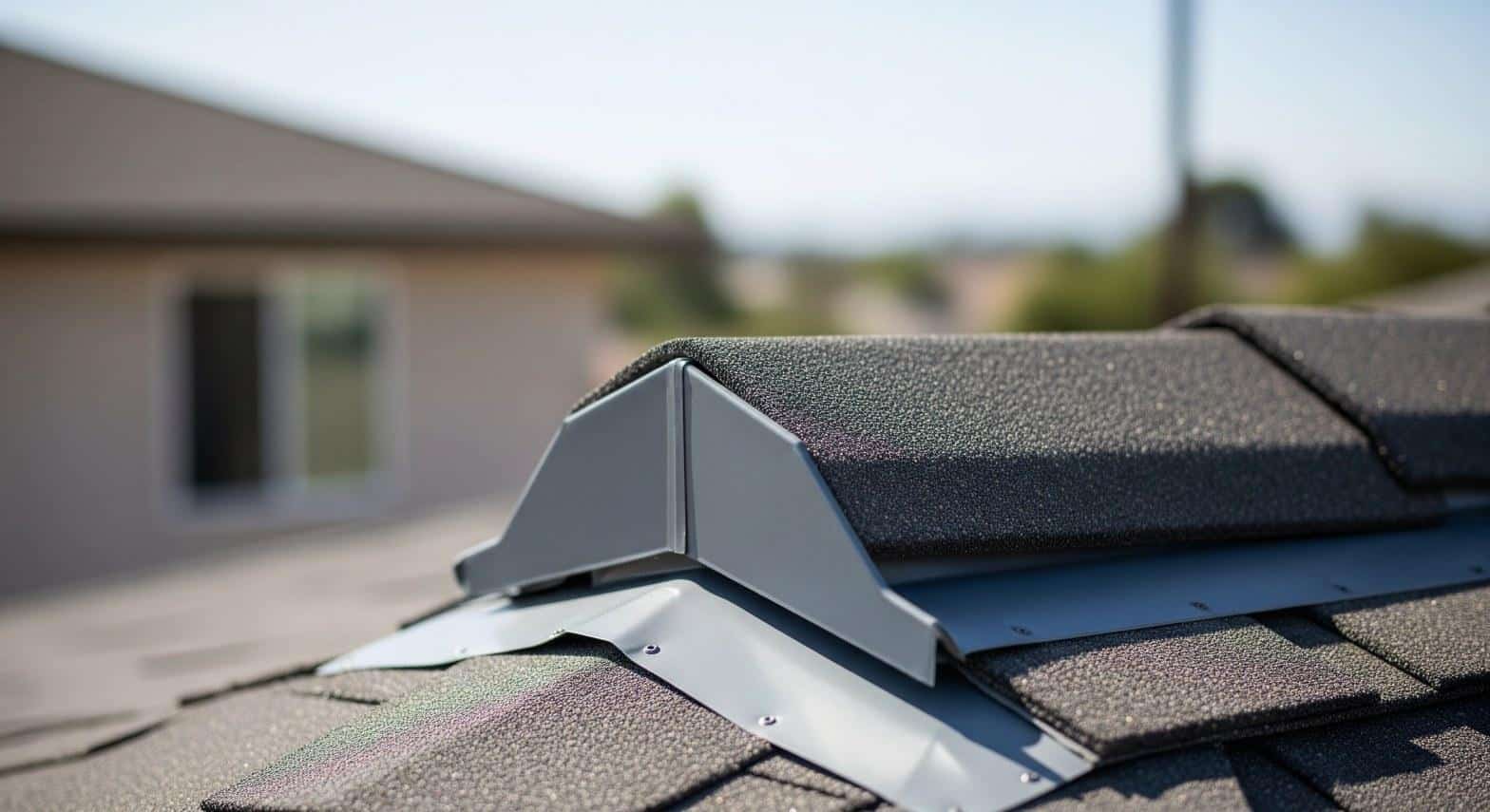
Some roof flashing failures in Southern California become emergency repairs the moment they are discovered, waiting even 30 days can turn a $400 flashing fix into a $4,000 or more water-damage restoration job. The cost of waiting scales quickly once water reaches the roof deck, insulation, or interior framing.
Treat the following as now-not-later situations:
- Active interior dripping during or after rain: Water is already past the roof deck. Every additional rain event adds damage.
- Missing flashing on a chimney or skylight: There is no barrier at all. Even a light coastal drizzle enters freely.
- Visible daylight through the attic roof deck: The sheathing is exposed. One rain event can saturate insulation and begin mold growth within 24 to 48 hours.
- Soft or spongy roof deck sections: Wood rot has already started. The longer it continues, the more structural material needs replacement.
- Flashing damage after a Santa Ana wind event: Wind-lifted flashing rarely reseals on its own. It typically gets worse with each subsequent weather event.
California’s Department of Insurance recommends filing homeowner insurance claims for storm-related roof damage within 60 days of the event. If a Santa Ana wind or heavy rain caused the flashing failure, document it with dated photos and contact your insurer promptly, waiting longer can complicate or void the claim.
What Does a Licensed Roofer Actually Do on a Flashing or Leak Repair Job?
A licensed roofer performing a flashing repair follows a specific sequence that takes between 2 and 6 hours for most single-family homes, depending on the number of problem areas and the roofing material involved. Understanding the process helps you evaluate quotes and avoid contractors who skip critical steps.
Here is what a proper flashing repair job includes:
- Full roof inspection: The contractor walks the entire roof surface and identifies all flashing locations, not just the one you called about. A professional looks at chimney flashing, valley flashing, step flashing at walls, drip edge, pipe boots, and skylight curb flashing.
- Removal of failed material: Old caulk, corroded metal, and deteriorated underlayment are removed before any new material goes on. Patching over failed flashing without removing it is a common shortcut that leads to repeat leaks.
- Installation of new flashing: Replacement flashing is cut and bent to fit the specific geometry of your roof. On clay or concrete tile roofs, the dominant material in many Southern California ZIP codes including 90028 and 90046, tiles must be carefully lifted, flashing installed underneath, and tiles reset without cracking them.
- Sealant application: High-quality roofing sealant rated for UV exposure is applied at all metal-to-surface transitions. In Southern California’s climate, a polyurethane or rubberized sealant holds up significantly longer than standard silicone caulk.
- Water test and documentation: A reputable contractor will perform a hose test or point-by-point inspection and provide written documentation of the work completed. This matters for insurance claims and future resale disclosures.
Contractors licensed by the California Contractors State License Board (CSLB) are required to carry workers’ compensation and general liability insurance. Always verify the license number on the CSLB website before signing any contract; it takes less than two minutes.
| Roof Type | Common in LA | Flashing Material Used | Complexity | Key Risk if Delayed |
|---|---|---|---|---|
| Asphalt Shingle | Yes, widespread in the Valley and South LA | Galvanized steel or aluminum | Low to moderate | Sheathing rot within 1-2 rain seasons |
| Concrete or Clay Tile | Yes, common in older, established neighborhoods | Aluminum or copper step flashing | High, tiles must be lifted | Cracked tiles and structural moisture damage |
| Metal Standing Seam | Moderate, modern builds and ADUs | Matching metal with butyl tape | Moderate, seam alignment critical | Seam separation and panel corrosion |
| TPO / Flat Roof | Yes, commercial and flat-roof homes in Southern California | TPO membrane flashing, clamped or heat-welded | Moderate to high | Membrane delamination and interior flooding |
| Slate | Rare, older historic homes in Southern California | Copper flashing preferred | High, specialty skill required | Irreplaceable slate cracking during improper repair |
How Much Does Roof Leak Repair Typically Cost in the Southern California Market?
In the Southern California market, flashing repairs and roof leak repairs typically range from around $300 for a single pipe boot replacement to $2,500 or more for a full chimney flashing rebuild on a tile roof. Larger projects involving deck repair, multiple flashing zones, or specialty materials like copper push costs higher.
The factors that move the price most significantly include:
- Roof pitch and height: Steeper roofs require more safety equipment and take longer to navigate safely.
- Roofing material: Tile roofs require careful tile removal and resetting, which adds labor time compared to shingle roofs.
- Number of flashing locations: A single valley repair costs far less than replacing step flashing, chimney flashing, and pipe boots in the same visit.
- Extent of water damage: If the leak has reached the roof deck or interior framing, deck replacement or structural drying adds to the scope.
- Permit requirements: Certain repair scopes in Southern California require a permit under the Los Angeles Department of Building and Safety rules, which adds a permit fee and inspection step.
For a precise number on your specific project, request a custom quote from Roof Repair & Construction Inc. before any work begins. A written, itemized quote protects you and makes it easier to compare bids accurately.
What Mistakes Should You Avoid When Hiring a Roof Leak Contractor in Southern California?
The most expensive mistake homeowners make when searching for roof leak repair near me is hiring based on price alone, without verifying the contractor’s CSLB license, insurance, and material specifications. A low bid that skips proper flashing removal or uses substandard sealant typically fails within one to two rain seasons.
Avoid these common hiring pitfalls:
- Hiring an unlicensed contractor: In California, roofing work over $500 requires a licensed contractor. Unlicensed work voids most homeowner insurance policies for that repair and leaves you with no legal recourse if the work fails.
- Accepting a verbal quote only: Always get a written, itemized quote that specifies the materials being used, the scope of work, and the payment schedule. Verbal agreements are nearly impossible to enforce.
- Skipping the CSLB license check: Verify any contractor’s license number at cslb.ca.gov before signing anything. An active license with no disciplinary actions is a baseline requirement, not a bonus.
- Paying more than 10% or $1,000 upfront: California law limits contractor down payments to the lower of these two amounts for most residential projects. A contractor demanding 50% upfront before starting is a red flag.
- Ignoring the full inspection: A contractor who quotes a repair after a 5-minute look from the driveway without accessing the roof is guessing. A proper quote requires a full roof inspection.
- Delaying after a temporary patch: Roof cement and tarps are emergency measures, not repairs. A temporary patch buys time but does not stop the underlying flashing failure from worsening.
Get Expert Roof Leak Repair in Southern California
Schedule a full roof inspection before the next rain event hits. Call Roof Repair & Construction Inc. at (323) 474-1088 to book your inspection and get a written, itemized quote for your flashing or leak repair.
Roof Repair & Construction Inc. serves homeowners across Southern California, from the coast to the inland valleys. Whether your home has a clay tile roof, asphalt shingles, or a flat TPO system, get a clear assessment and a real number before any work begins.
Do not wait for the next rainstorm to confirm what you already suspect. Call (323) 474-1088 today.
Explore our full range of roofing services across Southern California.
Frequently Asked Questions
How do I put flashing on a roof, can I do it myself?
Installing roof flashing correctly requires bending metal to match your roof's specific angles, lifting existing shingles or tiles without cracking them, and sealing every transition with the right sealant for your climate. DIY flashing attempts on clay or concrete tile roofs frequently crack irreplaceable tiles, creating more damage than the original leak. For most homeowners, a licensed contractor completes a standard flashing repair in 2 to 6 hours, the cost of professional work is almost always less than the cost of fixing a DIY mistake.
How do I know if my roof leak is coming from the flashing or the shingles?
Most roof leaks in Southern California originate at flashing joints, around chimneys, skylights, vents, and roof valleys, rather than from shingle failure. If the leak appears directly below one of these features, flashing is the likely culprit. If the leak is in the middle of a large roof plane with no nearby penetration, deteriorated or missing shingles are more likely. A licensed roofer can pinpoint the source during a full inspection.
How much does roof flashing repair usually cost in Southern California?
Across Southern California, flashing repairs typically range from around $300 for a single pipe boot or small section to $2,500 or more for a full chimney flashing rebuild on a tile roof. The main cost drivers are roof pitch, the type of roofing material, and how many flashing locations need attention. Contact Roof Repair & Construction Inc. at (323) 474-1088 for a written quote specific to your home.
What type of metal flashing is best for a Southern California roof?
Aluminum flashing is the most common choice for Southern California homes because it resists corrosion in the mild, coastal climate and is compatible with both asphalt shingles and concrete tile. Copper flashing is more durable, lasting 50 years or more, and is preferred for historic or slate roofs, but it costs significantly more. Galvanized steel is used on budget repairs but can rust within 10 to 15 years in coastal areas with marine-layer moisture. Your contractor should specify the material in writing before work begins.
Will my homeowner's insurance cover a roof flashing repair in Southern California?
Homeowner's insurance in California typically covers flashing damage caused by a sudden event, like a Santa Ana wind storm or falling debris, but usually does not cover damage from gradual wear or deferred maintenance. California's Department of Insurance recommends filing storm-related claims within 60 days of the event. Document the damage with dated photos immediately after any wind or rain event and contact your insurer before scheduling repairs, so the work can be properly assessed.