
Emergency Roof Inspection: 5 Myths Debunked
Southern California homeowners often delay roof inspections because they believe common myths about emergency repairs, myths that can cost thousands in water damage, structural deterioration, and mold remediation. This article debunks five widespread misconceptions and provides a practical checklist so you can recognize genuine emergencies and act fast. Wherever you live in Southern California, understanding what actually constitutes an emergency roof situation could save your home and your wallet.
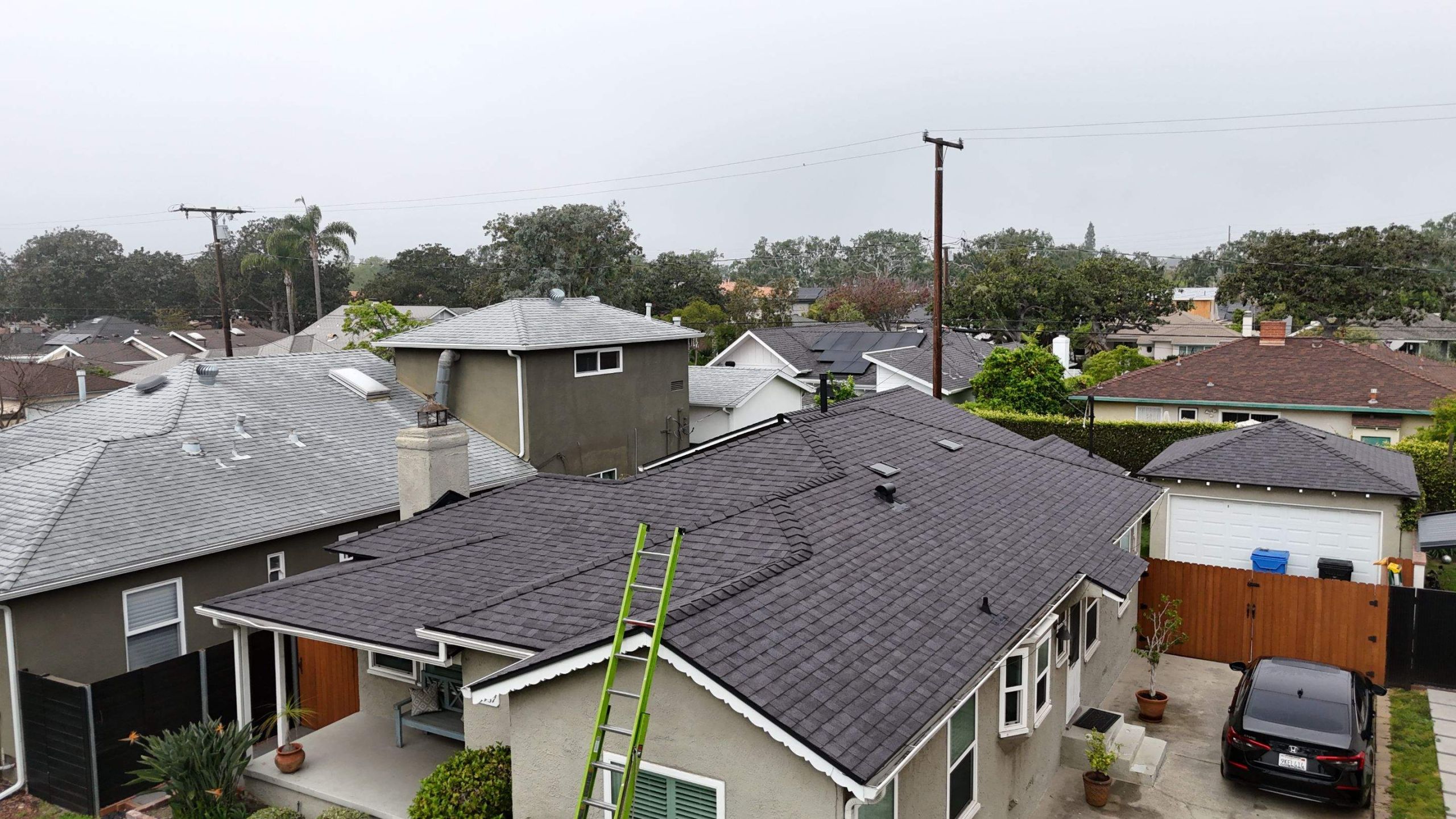
A quiet suburban neighborhood under an overcast sky. A bright green ladder leans against a freshly shingled roof.
📋 In This Guide
Myth #1: “I Don’t Need an Emergency Inspection Unless My Roof Is Visibly Leaking”
This is one of the costliest beliefs homeowners hold. Water damage doesn’t announce itself at the moment it starts; it spreads silently through insulation, attic framing, and drywall before you see a stain on your ceiling. By the time you notice active dripping, the underlying structural damage may already be extensive. Southern California experiences unpredictable weather: Santa Ana winds can exceed 60 mph in fall and winter, and unexpected storms can tear shingles or damage flashing without creating immediate interior leaks. An emergency roof inspection catches problems like missing shingles, compromised flashing around chimneys and vents, and punctures in metal roofing before they allow water intrusion. A roofing contractor in Southern California trained in emergency assessment will find damage hidden from ground level, damage that becomes a full-blown leak within weeks. Action step: After any severe wind event or heavy storm, inspect your attic for dark stains, damp insulation, or water marks on rafter tails. If you find any, call for an emergency inspection the same day.
Myth #2: “Emergency Repairs Always Cost Twice as Much as Regular Repairs”
This myth causes people to ignore urgent damage, thinking they’ll save money by waiting for a routine appointment. In reality, delaying emergency roof repair Southern California work exponentially increases costs. A small leak ignored for two months can rot wooden decking, damage multiple roof layers, and compromise attic insulation, turning a few hundred dollars in repairs into thousands in replacement.
How Water Damage Compounds Costs
Water travels laterally under roofing materials before finding a path into your home. During that journey, it degrades adhesives, rusts fasteners, and softens the roof deck. Ignoring a small puncture or loose flashing for even six weeks allows water to damage framing that now requires structural repair rather than simple patching.
Emergency Response vs. Preventive Cost
Yes, same-day or 24-hour emergency availability costs more per hour than scheduled maintenance. But the actual repair scope, tarping, temporary stabilization, and documentation for insurance, often totals less than the permanent damage that occurs if you delay. Insurance claims also process faster when you have documented emergency response, potentially saving you deductible disputes. Action step: When you notice potential emergency damage, get a free quote immediately. Delaying a consultation costs far more than the inspection itself.
Myth #3: “I Can Just Patch or Tape a Damaged Section Myself”
DIY roof patching is tempting for budget-conscious homeowners, but temporary fixes on roofs often fail because they don’t address the root cause of water entry and don’t use proper weather-resistant materials. Roofing involves material-specific techniques: asphalt shingles need particular fastening patterns and sealants, metal roofing requires specialized overlaps and fasteners, and tile systems demand careful re-bedding. A temporary patch might stop one leak but miss secondary water entry points, cracks in adjacent shingles, compromised underlayment, or deteriorated flashing that a professional inspection would identify. When you contact a licensed roof flashing repair contractor in Southern California, they assess the entire vulnerable zone, not just the obvious damage. Action step: Temporary tarping to prevent water entry until a professional arrives is acceptable. Permanent patching with caulk, tape, or roofing cement is not; these fail within months and void warranties.
Myth #4: “My Insurance Won’t Cover Emergency Roof Damage”
Many homeowners across the region assume they must pay out of pocket for emergency repairs, which isn’t always true. Homeowners insurance policies typically cover sudden, accidental damage from wind, hail, falling trees, and other weather events. Pre-existing deterioration or poor maintenance may not be covered, but damage from a recent storm almost always is.
Documentation and Insurance Claims
The key to insurance approval is rapid, professional documentation. When you call for an emergency roof inspection, the contractor photographs damage, identifies the cause (storm, wind, hail), and produces a detailed assessment. This documentation is essential for your claim. Insurance adjusters expect to see evidence from a qualified professional, not homeowner photos. A roofing contractor who regularly handles insurance claims knows how to document damage in ways that satisfy adjusters and speeds approval.
Coordination with Adjusters
Professional contractors coordinate directly with insurance companies, which streamlines the process. They can also advise whether the damage warrants a full roof replacement versus targeted repairs, which affects your claim payout. Action step: Contact your insurance company the same day you notice emergency damage. Then call a licensed contractor to schedule an inspection that same day or within 24 hours. Timely documentation protects your claim.
Myth #5: “Small Water Stains Don’t Require Immediate Inspection”
A single, small water stain on a ceiling or wall seems minor, until you realize it’s the first visible sign of roof damage that’s been spreading for weeks. In Southern California’s dry climate, water stains often don’t appear immediately; they show up only after water has traveled horizontally through attic spaces and finally found a low point in the drywall. Santa Ana winds and the region’s seasonal storms can compromise roofing materials incrementally. Loose shingles from one wind event, combined with poor flashing that’s been quietly leaking, create a pattern of damage that accelerates over time. A small stain today becomes a large, moldy patch in two months if the roof isn’t professionally inspected and repaired. Action step: Any water stain, however small, warrants an emergency inspection. Don’t wait for it to worsen. Call within 24 hours of noticing discoloration.
Your Emergency Roof Inspection Checklist
Use this practical framework to determine whether your situation qualifies as an emergency:
- Check for visible entry points: Go into your attic after a storm and look for daylight coming through the roof deck, damp insulation, or visible water pooling. Even a small gap is an emergency.
- Inspect for recent wind damage: After Santa Ana winds or storms, walk your yard and look for fallen branches, missing shingles on your roof or neighbors’ roofs, and displaced flashing or gutters.
- Examine interior ceilings and walls: Water stains, soft drywall, peeling paint, or musty smells in upper rooms indicate roof leaks. Even light discoloration requires same-day inspection.
- Check your energy bills: A sudden, unexplained spike in heating or cooling costs often signals roof damage that compromises insulation or allows air leakage. Have this evaluated immediately.
- Look for sagging roof lines: From ground level, observe your roofline for dips, sags, or waviness. This indicates water-saturated decking and is a structural emergency.
- Document everything with photos: If you photograph damage, take wide shots showing your address, roof section, and surrounding area. This helps your insurance claim and contractor assessment.
What Happens During an Emergency Roof Inspection
A professional emergency inspection from Roof Repair & Construction Inc. follows a systematic process. The contractor first examines your roof from the ground, noting visible damage, missing shingles, and compromised gutters. They then climb onto the roof to assess flashing, check underlayment, and identify secondary entry points you can’t see from below. Simultaneously, they inspect your attic for water stains, rot, mold, and wet insulation. The inspector documents all findings with measurements and photographs, explaining what they see so you understand the scope of the problem. They provide recommendations for immediate stabilization (tarping, water extraction) and permanent repairs. For insurance claims, they generate a detailed report with cause-of-damage assessment that supports your claim. In high-value Southern California communities where homes can average $900,000 or more, a comprehensive emergency inspection protects your property investment. Water damage spreads fast and compounds, addressing it within 24 hours prevents exponential cost increases. Emergency roof repair services are available across Southern California. Call (323) 474-1088 immediately if you notice any warning signs described in this article. Don’t wait for the damage to worsen, same-day inspection and stabilization prevent thousands in additional repairs.
Preventing Future Emergencies with Maintenance
While emergency repairs address urgent damage, routine maintenance prevents most emergencies from occurring. Annual inspections identify loose shingles, deteriorating flashing, and gutter debris before they become problems. Clearing gutters twice yearly, especially during the dry summer months followed by fall winds, prevents water backup and overflow damage. For rental properties or homes where you manage multiple units, scheduled maintenance is especially cost-effective. Regular contractor visits catch small issues before emergency calls become necessary, which landlords with budget constraints appreciate. After any Santa Ana wind event or heavy storm, have your roof professionally inspected even if you don’t see obvious damage. Many roofs sustain micro-damage that isn’t visible but accelerates failure. Contact Roof Repair & Construction Inc. to schedule post-storm inspections; catching damage early costs far less than waiting for an emergency.
| Warning Sign | Urgency Level | Action Required |
|---|---|---|
| Single water stain on ceiling | High | Inspect within 24 hours |
| Multiple missing shingles after storm | Critical | Tarping needed same day |
| Daylight visible through roof deck | Critical | Emergency inspection + tarping immediately |
| Sagging or dipping roofline | Critical | Professional assessment same day |
| Damp attic insulation or rot | High | Inspection and water extraction within 24 hours |
| Sudden spike in energy bills | Medium | Roof assessment within 48 hours |
Homeowners across Southern California shouldn’t delay when roof emergencies strike. These five debunked myths should empower you to act decisively. If you recognize any of the warning signs in this article, call Roof Repair & Construction Inc. at (323) 474-1088 today. We provide prompt emergency roof inspection and repair services across Southern California, with rapid response and insurance coordination to protect your property.
Explore our full range of roofing services across Southern California.
Frequently Asked Questions
How long does it take for water damage to become serious after a roof leak starts?
Water damage becomes serious within 2-4 weeks. It spreads horizontally through attic spaces and insulation before you see interior stains, rotting wooden framing in the process. By the time you notice a ceiling stain, underlying structural damage may already be extensive, making emergency roof inspection critical within 24 hours of noticing any water signs.
Can I file an insurance claim if I wait a week to call for an emergency roof inspection?
Most homeowners insurance policies cover sudden storm damage, but delays weaken your claim. Adjusters expect rapid documentation from a licensed contractor, and waiting allows additional water damage that complicates assessments. Roof Repair & Construction Inc. recommends calling within 24 hours of damage discovery to preserve your claim and stop further deterioration.
What is the difference between a roof emergency and routine maintenance?
A roof emergency requires same-day or 24-hour response and involves immediate threats to your home: missing shingles after storms, visible leaks, water stains, sagging decks, or daylight through roofing. Routine maintenance is scheduled inspections to catch small issues before they become emergencies. Santa Ana winds and heavy seasonal rains make emergencies common throughout the region.
Do I need an emergency roof inspection if I see just one small water stain?
Yes, even one small stain warrants emergency inspection. Water stains indicate ongoing roof leaks, and delaying inspection allows damage to spread through insulation and framing. A single small stain today becomes a major, costly problem within weeks if left unaddressed.