
When Your Flat Roof Fails: Why Choosing the Right Material Matters
A failing flat roof doesn’t announce itself with a loud crash. Instead, it leaks silently into your walls, attic, and insulation. By the time you notice water stains on your ceiling or soft spots in your drywall, the damage has already spread. Homeowners and commercial property managers across Southern California who delay choosing between TPO and EPDM flat roofing systems often discover that water has compromised structural framing, destroyed fiberglass insulation, and created conditions for mold growth that becomes far more expensive to remediate than the roof repair itself. The difference between these two materials isn’t academic; it directly affects how long your roof lasts, how much you’ll pay in cooling costs, and whether you can file an insurance claim for damage. Making an informed decision now prevents the emergency phone calls, the urgent tarping, and the discovery of hidden water damage later.
📋 In This Guide
TPO and EPDM represent the two dominant flat roofing systems for commercial buildings and modern residential properties across Southern California, and they approach the challenge of weather protection in fundamentally different ways. Understanding how they differ helps you avoid the costly mistakes that lead to premature failure, unexpected leaks, and the need for emergency repairs.
The Core Difference: How TPO and EPDM Protect Your Building
What TPO Actually Is and How It Works
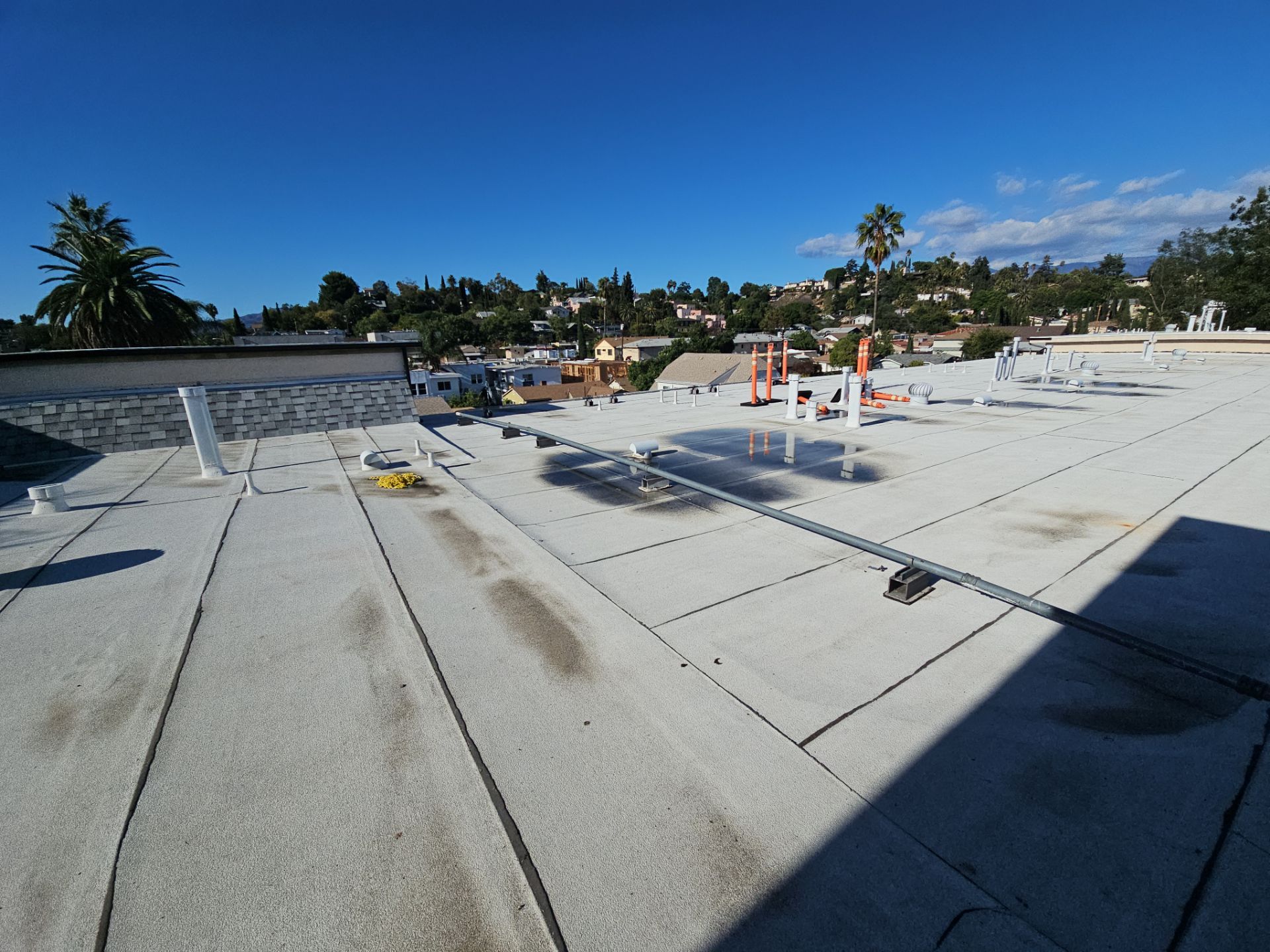
TPO, thermoplastic polyolefin, is a single-ply membrane made from a blend of plastic and rubber compounds that form a cohesive sheet. The material is installed in one continuous layer across your entire roof deck, and its seams are heat-welded together using specialized equipment. This welding process creates a bond that’s as strong as the membrane itself, making seam failure extremely rare when installed by a qualified roofing contractor in Southern California. TPO’s white or light-colored surface reflects solar radiation rather than absorbing it, which is why it’s classified as a cool roof material. For Southern California with high cooling demands during summer months, this reflectivity can meaningfully reduce air conditioning costs, particularly important in a city where temperatures regularly exceed 90°F and many buildings lack modern insulation. The membrane’s thermoplastic composition means it softens slightly when heated during installation and then sets into a durable, flexible state. This flexibility allows TPO to expand and contract with temperature fluctuations without cracking, which is critical in a region that experiences both intense summer heat and cooler winter nights.
Understanding EPDM: The Rubber Alternative
EPDM, ethylene propylene diene monomer, is a synthetic rubber compound that has been used for flat roofing since the 1970s. It’s typically installed as a loose-laid or fully adhered single-ply membrane, and seams are sealed using liquid adhesives or specialized splice tape rather than heat welding. EPDM’s dark color (usually black or charcoal) means it absorbs rather than reflects solar heat, which increases cooling costs but provides some advantages in puncture resistance and UV durability that we’ll explore later. The rubber composition makes EPDM naturally flexible, even in cold temperatures, which prevents brittleness and reduces the risk of stress cracks. Because EPDM has been on the market longer, many property owners in the region already have it installed on existing buildings. This familiarity can be either an advantage or a liability, depending on the age and condition of your current system.
Heat Reflectivity and Cooling Costs: Why This Matters in Southern California
TPO’s light color gives it a solar reflectance rating between 0.65 and 0.85, meaning it bounces back 65-85% of the sun’s energy before it reaches your building’s interior. EPDM’s dark surface typically reflects only 0.05 to 0.10 of solar radiation, absorbing the rest as heat. Across Southern California, where summer cooling represents a significant portion of annual utility costs, this difference compounds over time. A commercial building or large residential property with a 5,000-square-foot flat roof will see measurably lower air conditioning loads with TPO compared to EPDM. The exact savings depend on your insulation value, your roof’s exposure, and how efficiently your HVAC system operates, but property owners upgrading from EPDM to TPO typically report 10-15% reductions in cooling costs during peak summer months. For a property spending $200-300 monthly on cooling in July and August, that’s a meaningful saving that begins paying for itself within the system’s lifespan. However, this advantage only materializes if the TPO membrane stays clean. Accumulation of dirt, algae, and dust reduces reflectivity over time. Properties near industrial corridors or high-traffic areas may experience faster surface degradation, requiring periodic cleaning to maintain the cooling benefit.
Seam Durability and Puncture Resistance: Where Failures Actually Occur
Why Seams Fail and What Happens When They Do
Flat roof leaks originate from three sources: seam failures, punctures or tears in the membrane, and compromised flashing where the roof meets walls, vents, or equipment. Seam failures represent approximately 80% of all flat roof leaks in commercial properties throughout the region. TPO’s heat-welded seams create a molecular bond that’s essentially permanent, the two pieces of membrane fuse together at the microscopic level. When installed correctly, heat-welded TPO seams rarely separate, even after 15-20 years of temperature cycling, building movement, and UV exposure. EPDM seams, by contrast, rely on adhesive or tape to maintain the bond between two pieces of membrane. These sealing methods are durable but not permanent. Over time, adhesive can degrade due to UV exposure, temperature extremes, and chemical reactions with roofing materials or the environment. Splice tape can separate if not applied correctly or if the membrane underneath shifts. When an EPDM seam fails, water infiltration typically follows within hours of the first rainfall, and the leak may not be directly visible, water can travel laterally under the membrane before dripping down into walls or attic spaces, making it difficult to locate without professional leak detection.
Puncture Resistance: Which Material Wins
Despite TPO’s superior seam durability, EPDM has an advantage in puncture resistance. The rubber compound is thicker and more resistant to sharp objects and rough contact. If a worker drops a tool, walks on the roof wearing cleats, or a tree branch falls during a storm, EPDM is less likely to tear. TPO is more puncture-prone, especially in thinner gauges. This is why proper roof maintenance, preventing foot traffic, securing equipment, and managing vegetation, becomes more critical with TPO systems. For buildings with high roof access or commercial properties where maintenance workers frequently traverse the roof, EPDM may be the safer choice. For residential properties where roof access is minimal and foot traffic is rare, TPO’s superior seam durability makes it the lower-risk option.
Lifespan, Warranties, and Long-Term Performance
Both TPO and EPDM are designed to last 20-30 years under typical conditions in Southern California. However, several factors affect actual lifespan in the region’s specific climate. TPO’s white surface provides better protection against UV degradation, which is significant across Southern California with its 300+ sunny days per year. Some premium TPO membranes now include UV-stabilizing additives that extend durability even further. Most manufacturers offer 15-20 year warranties on TPO when installed with proper attachment methods and maintained according to specifications. These warranties typically cover membrane defects, seam failures, and material degradation, but exclude damage from neglect, improper maintenance, or severe weather events. EPDM’s dark color actually absorbs UV radiation, which can cause the material to harden and become brittle over time in intense sun exposure. However, EPDM formulations have improved significantly, and modern EPDM products include UV inhibitors. Manufacturers typically warrant EPDM for 10-15 years, which is notably shorter than TPO warranties. In the region’s intense sun, this matters. A 10-year warranty may feel adequate at purchase, but if your roof reaches year 18 and develops multiple small failures, you’re out of warranty and facing full replacement costs. Additionally, both warranties require proof of professional installation. A roofing contractor in Southern California who cuts corners on installation, improper seam spacing, inadequate fastening, insufficient overlap, voids the warranty immediately. This is why choosing an experienced contractor matters as much as choosing the right material.
Installation Methods: Mechanical Attachment vs. Fully Adhered
How TPO Is Typically Installed
TPO is most commonly installed using mechanical attachment, where the membrane is fastened to the roof deck using plates, fasteners, and bar strips spaced at regular intervals. The heat-welded seams then create a watertight barrier. Some installations use fully adhered TPO, where the entire membrane is glued to the substrate, but this approach is less common because it’s more labor-intensive and mechanical attachment performs equally well. The mechanical approach offers a practical advantage: if flashing or penetrations need repair, the membrane can be carefully unsealed, the repair made, and then resealed without requiring complete re-installation.
How EPDM Installation Differs
EPDM is typically installed loose-laid with perimeter fastening, meaning the membrane is laid across the roof deck and secured only at the edges and around penetrations. Water weight holds the center in place. This approach is faster and requires less labor than fully adhering every square foot. However, in areas with high wind exposure, Southern California experiences occasional Santa Ana winds that can gust over 40 mph, loose-laid EPDM can flap and stress seams. Many contractors in Southern California now recommend fully adhered EPDM installations to prevent this, but that adds labor and cost compared to the loose-laid approach. The seams on EPDM systems require careful work. The contractor must clean the contact surface, apply the appropriate adhesive or apply splice tape, and apply pressure to ensure a tight bond. Quality control is critical, and seam failures are more likely if the installer is rushing or if environmental conditions during installation are poor (rain, excessive wind, very cold temperatures can all compromise adhesive cure).
Local Building Code Compliance and Energy Efficiency Incentives
Properties in the region fall under the jurisdiction of the Los Angeles Department of Building and Safety or their applicable local authority, which enforces the California Building Code. Both TPO and EPDM meet all structural requirements, but there’s an important distinction regarding energy efficiency. California’s Title 24 Building Energy Efficiency Standards encourage cool roof systems that reflect solar radiation. TPO’s high reflectance qualifies automatically for cool roof classification. EPDM’s low reflectance does not meet cool roof standards unless the building compensates with additional insulation or other energy efficiency measures. For new construction or major roof replacements, specifying TPO can help a project comply with Title 24 more efficiently and may qualify for energy efficiency incentives or rebates available through local utility providers or state programs. If you’re replacing a roof and considering financing options, roofing services in Southern California can help identify available incentive programs. Some utility companies offer rebates for cool roof installations, and some areas have grant programs for energy-efficient upgrades. These incentives can offset a portion of the initial material cost, making TPO’s higher upfront expense more economical over time.
Comparing TPO and EPDM: Performance Across Key Factors
| Factor | TPO | EPDM |
|---|---|---|
| Solar Reflectance | 0.65-0.85 (excellent) | 0.05-0.10 (minimal) |
| Seam Durability | Heat-welded, permanent | Adhesive-sealed, degrades over time |
| Puncture Resistance | Moderate (can tear if struck) | High (rubber resists sharp objects) |
| Lifespan in Southern California UV | 20-30 years (UV-stable) | 15-25 years (UV-sensitive) |
| Warranty Typical Term | 15-20 years | 10-15 years |
| Installation Speed | Moderate (heat-welding takes time) | Fast (loose-lay is quick) |
| Cooling Cost Impact | 10-15% reduction possible | Minimal to none |
| Title 24 Compliance | Meets cool roof standard | Requires additional measures |
| Maintenance Needs | Periodic cleaning to maintain reflectance | Routine inspection of seams, less critical |
| Repair Complexity | Moderate (heat-welding equipment needed) | Simple (adhesive or tape patches) |
Making the Right Choice for Your Southern California Property
For most Southern California residential properties and modern commercial buildings, TPO is the stronger long-term choice. The combination of superior seam durability, excellent solar reflectance for cooling cost reduction, longer warranty terms, and compliance with California energy standards makes it the more future-proof option. The heat-welded seams simply don’t fail the way adhesive-sealed EPDM seams can, and that reliability is worth the slightly higher initial investment. However, EPDM remains a valid option if your building has high roof traffic, you’re replacing an existing EPDM system and want consistency, or you’re managing a tight budget and can prioritize initial cost over long-term durability. EPDM’s puncture resistance is real, and for industrial buildings or properties where workers regularly access the roof, that protection justifies the material choice. The most critical factor, regardless of material, is installation quality. A poorly installed TPO system will fail prematurely. A well-installed EPDM system will outperform a rushed TPO installation. Working with an experienced roof repair Southern California contractor who understands both materials, has references from local properties, and stands behind their work ensures you get the performance these materials are designed to deliver. If you’re dealing with a failing flat roof, visible leaks, or need professional assessment of your current system’s condition, Roof Repair & Construction Inc. can evaluate both TPO and EPDM options for your specific property. Call us at (323) 474-1088 for a free inspection and honest recommendation based on your building’s needs and long-term goals. We’ll explain the differences, discuss your applicable building requirements, and help you understand what you’re actually getting for your investment.
Explore our full range of roofing services across Southern California.
Frequently Asked Questions
How long do TPO and EPDM roofs typically last in Southern California?
Both TPO and EPDM are designed for 20-30 years under typical conditions, but TPO generally performs better in Southern California’s intense UV exposure. Most manufacturers warranty TPO for 15-20 years and EPDM for 10-15 years. In the region’s sun, TPO’s UV-stable formulation extends its practical lifespan, while EPDM’s dark surface can harden and become brittle faster.
Does TPO or EPDM save more money on cooling costs?
TPO’s light color reflects 65-85% of solar radiation, potentially reducing cooling costs by 10-15% during Southern California’s hot summers compared to EPDM’s minimal reflectance. The exact savings depend on your insulation and HVAC efficiency, but property owners upgrading from EPDM to TPO typically report meaningful reductions in July and August utility bills.
Can I call Roof Repair & Construction Inc. for emergency flat roof repair?
Yes. We provide emergency roof repair services across Southern California, including same-day tarping and water damage mitigation for failed flat roofs. Call (323) 474-1088 immediately if you have active leaks or structural damage. We'll assess whether TPO or EPDM repair or replacement is the right solution for your property.
Why do TPO seams fail less often than EPDM seams?
TPO seams are heat-welded, creating a permanent molecular bond between two pieces of membrane. EPDM seams rely on adhesive or tape that can degrade over time due to UV exposure and temperature cycling. In Southern California’s extreme sun, adhesive-sealed seams are more prone to separation, making TPO’s permanent welds significantly more reliable for preventing water infiltration.