
What Did This Reroof Project Involve?
This job was a full tear-off reroof on a single-family home in Los Angeles County, completed over two consecutive days in late June 2026. The homeowner came to us with a roof that had aged past the point where repairs made financial sense. Shingles were brittle, the underlying felt had failed, and sections of the original decking showed moisture damage that needed to be addressed before any new surface material could go down.
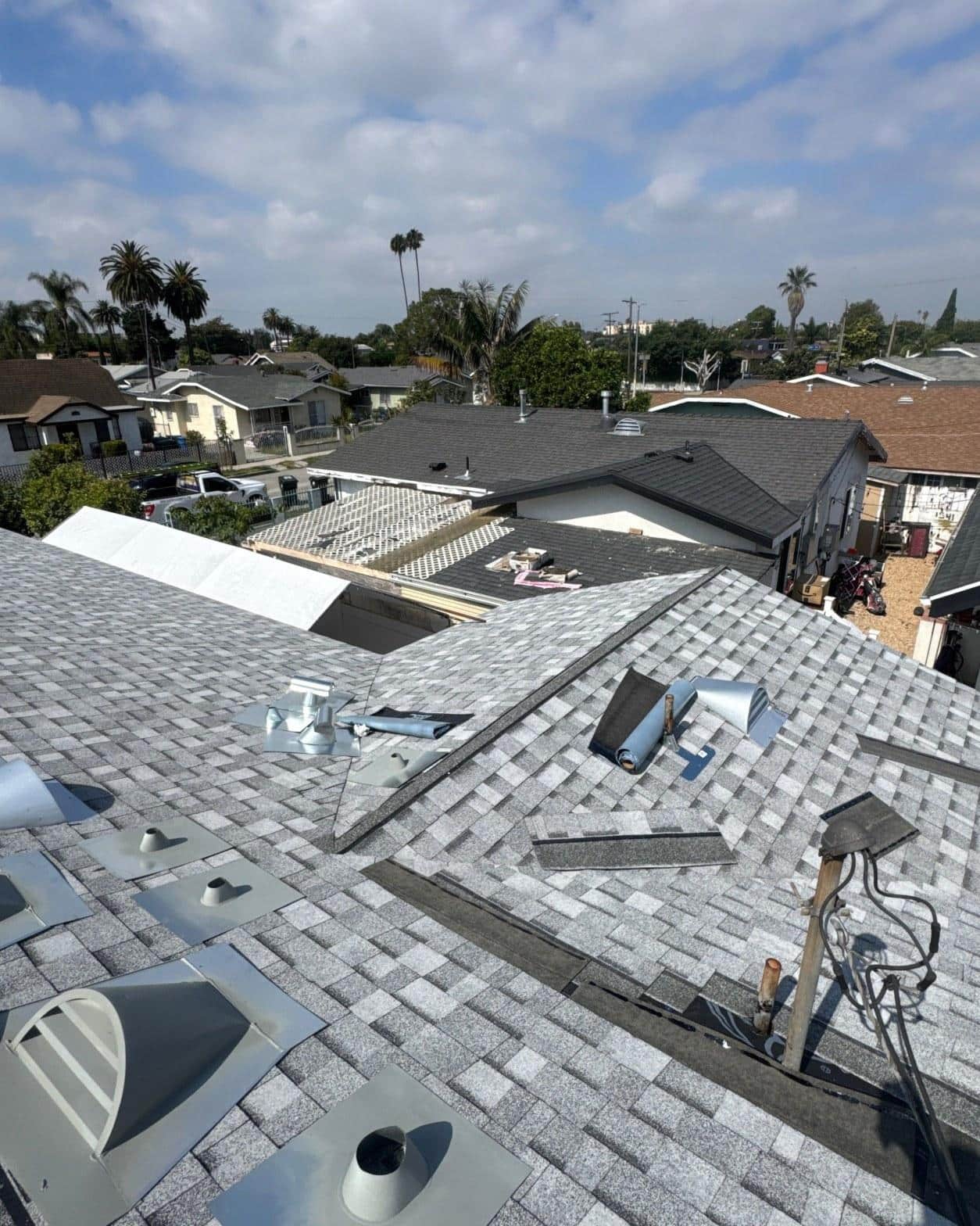
The goal was a clean, code-compliant system from the deck up: new structural panels, synthetic underlayment, and a fresh layer of gray architectural asphalt shingles sized to match the existing roof geometry across a multi-section hip-and-gable layout.
What Did We Find After Stripping the Old Shingles?
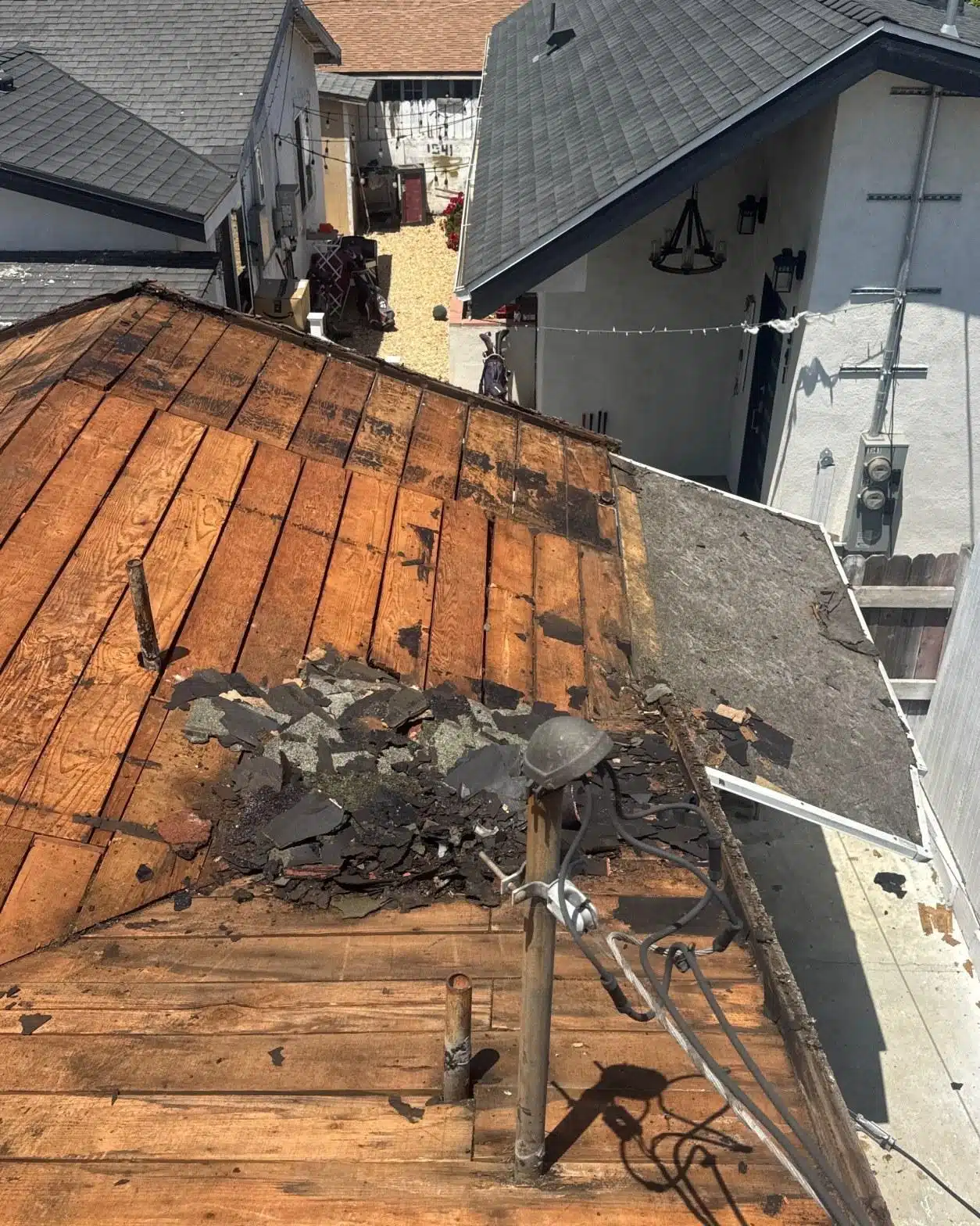
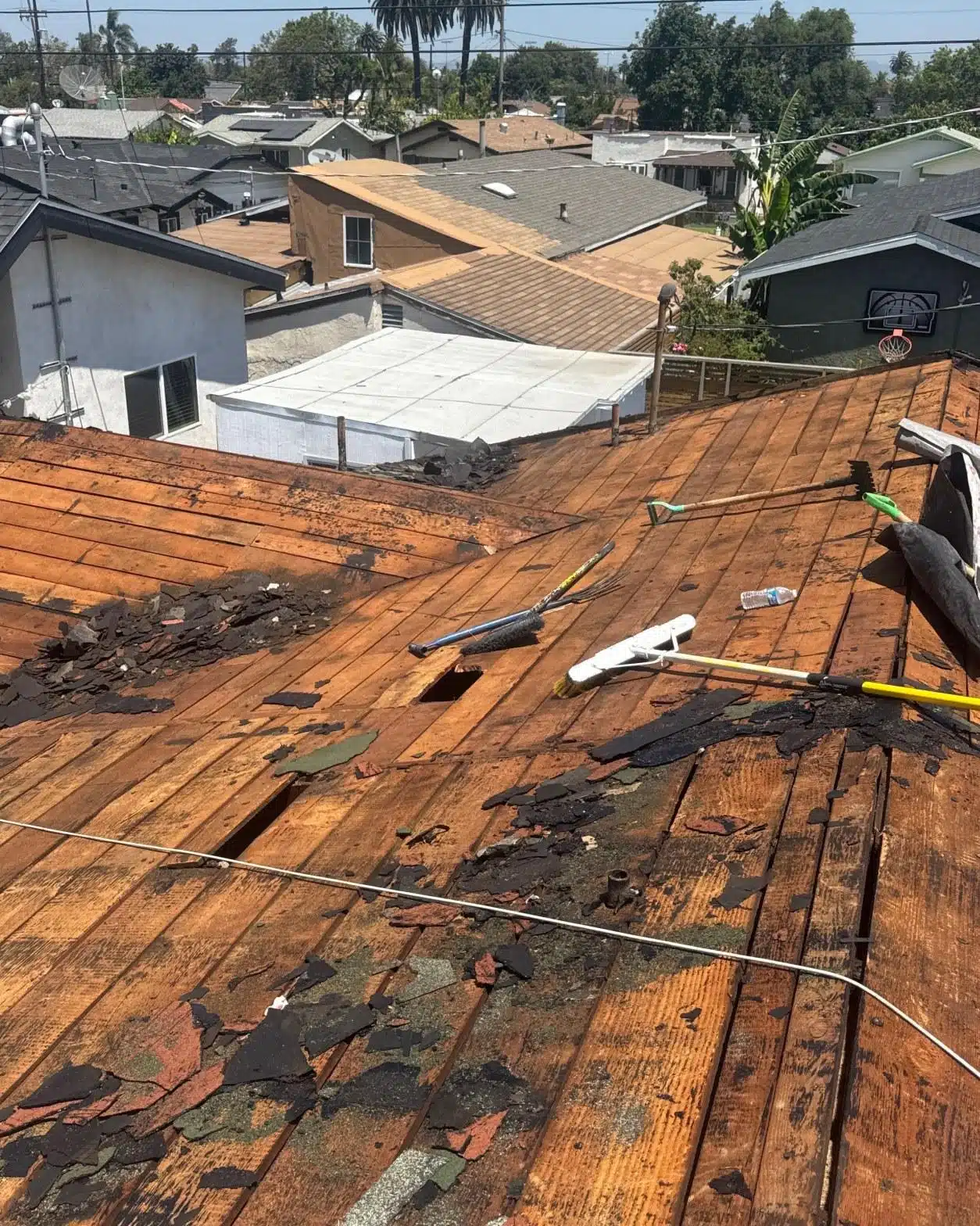
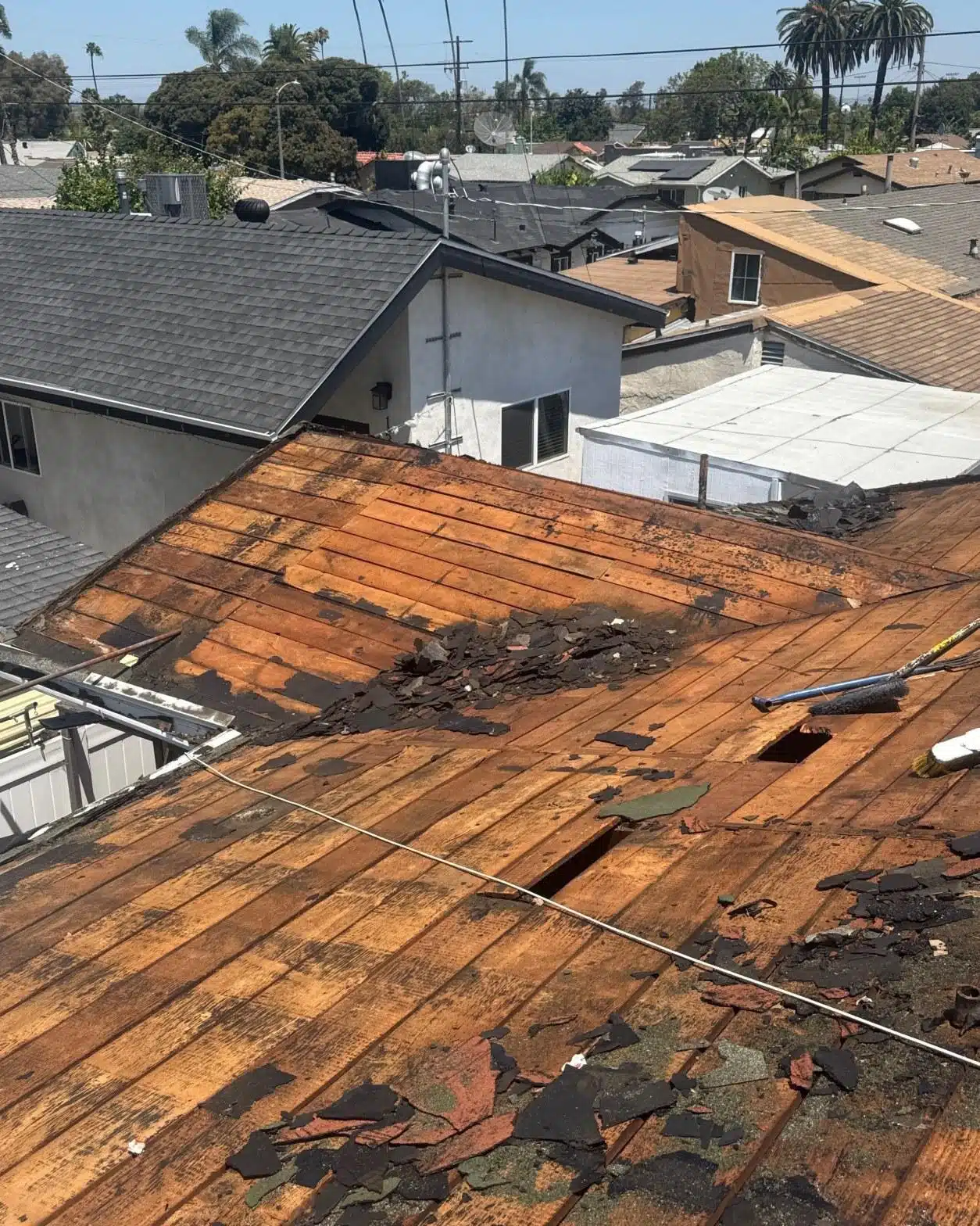
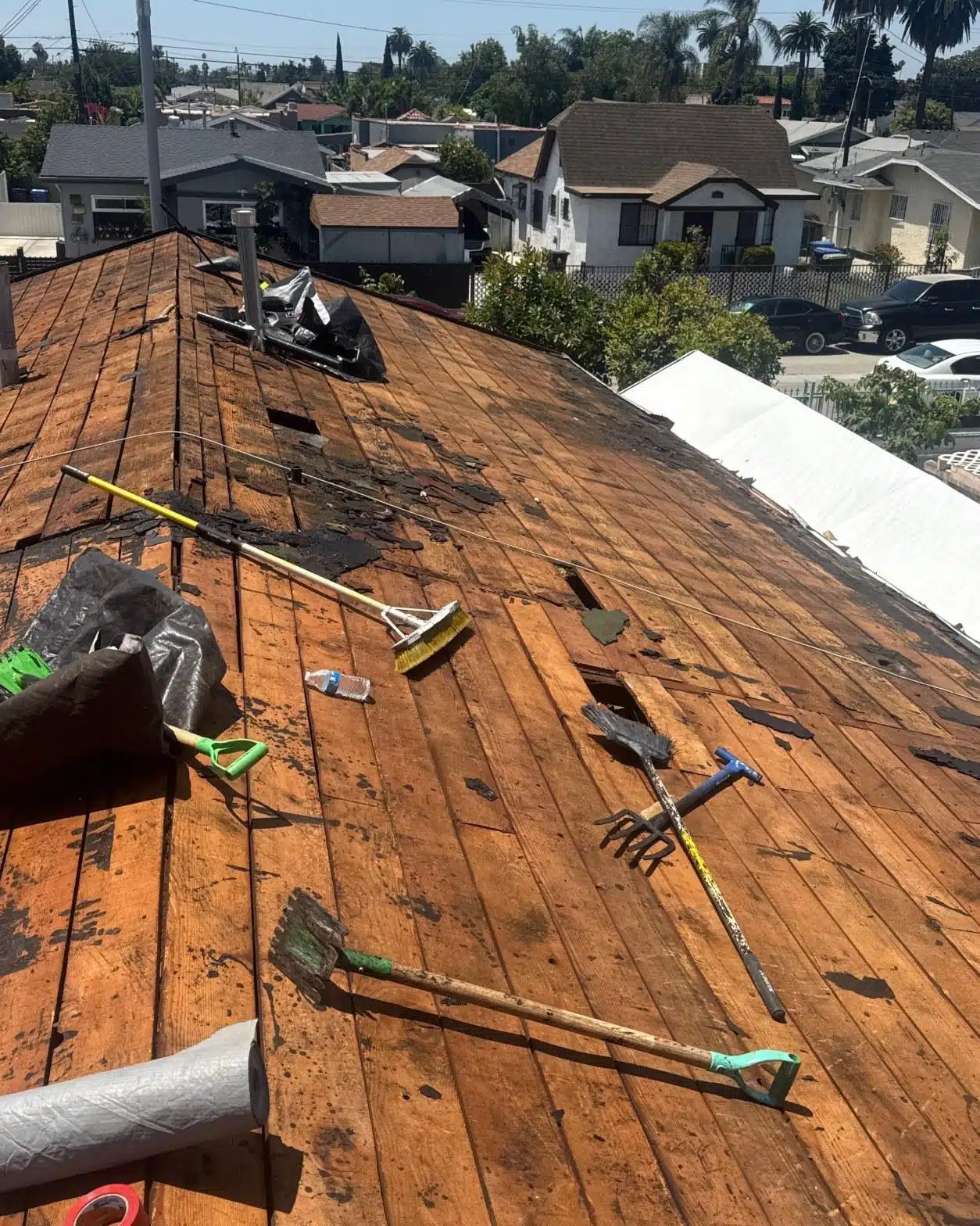
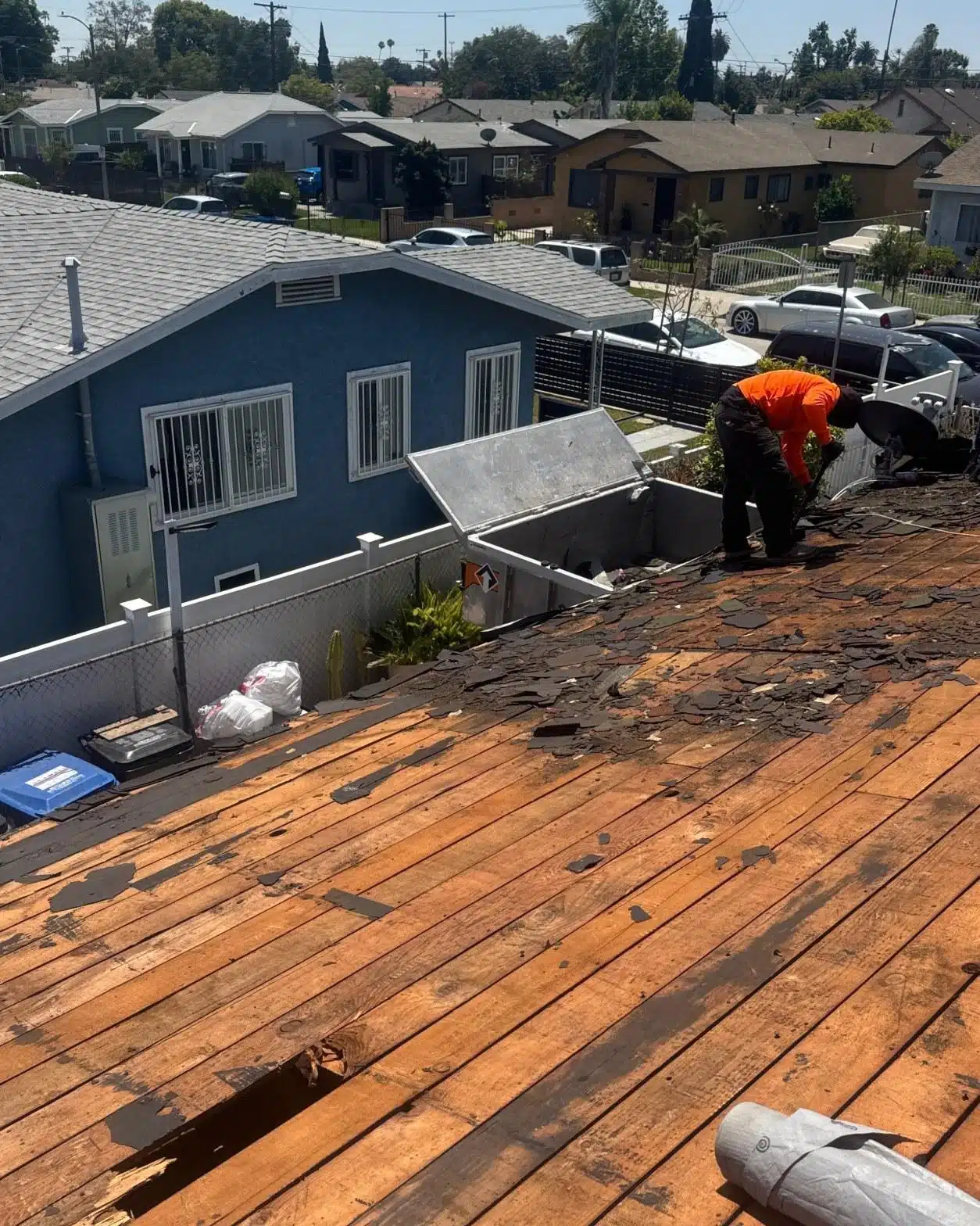
Once the old shingles came off, the bare decking told a clear story. Several board sections showed the dark staining and soft spots that come from years of moisture working its way through degraded felt. On older Los Angeles County homes, original plank sheathing like this can last 40 to 50 years before moisture intrusion makes replacement unavoidable; by the time shingles visibly fail at the surface, the decking beneath is often already compromised.
Our crew documented every damaged section before cutting out and replacing boards. Replacing only the bad sections and leaving surrounding plywood of different thicknesses creates low spots that cause water to pool, so we matched panel thickness across the whole deck to keep the finished plane flat and consistent. That step adds time, but it prevents callbacks.
The California Contractors State License Board (CSLB) requires that licensed contractors perform this kind of structural remediation to code; you can review those requirements at cslb.ca.gov. Roof Repair & Construction Inc. holds its CSLB license and carries the required insurance on every project.
How Was the New Deck and Underlayment System Built?
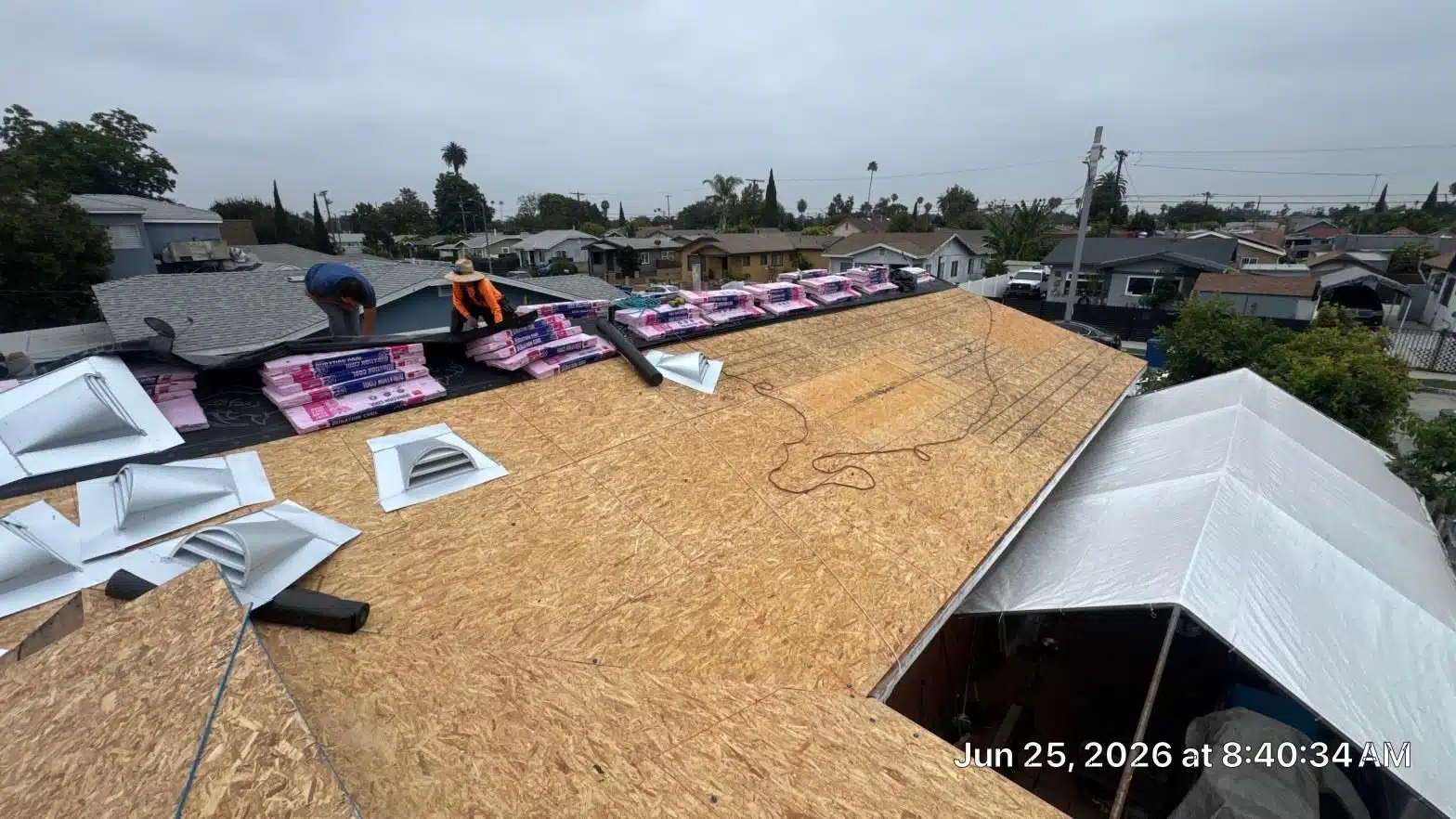
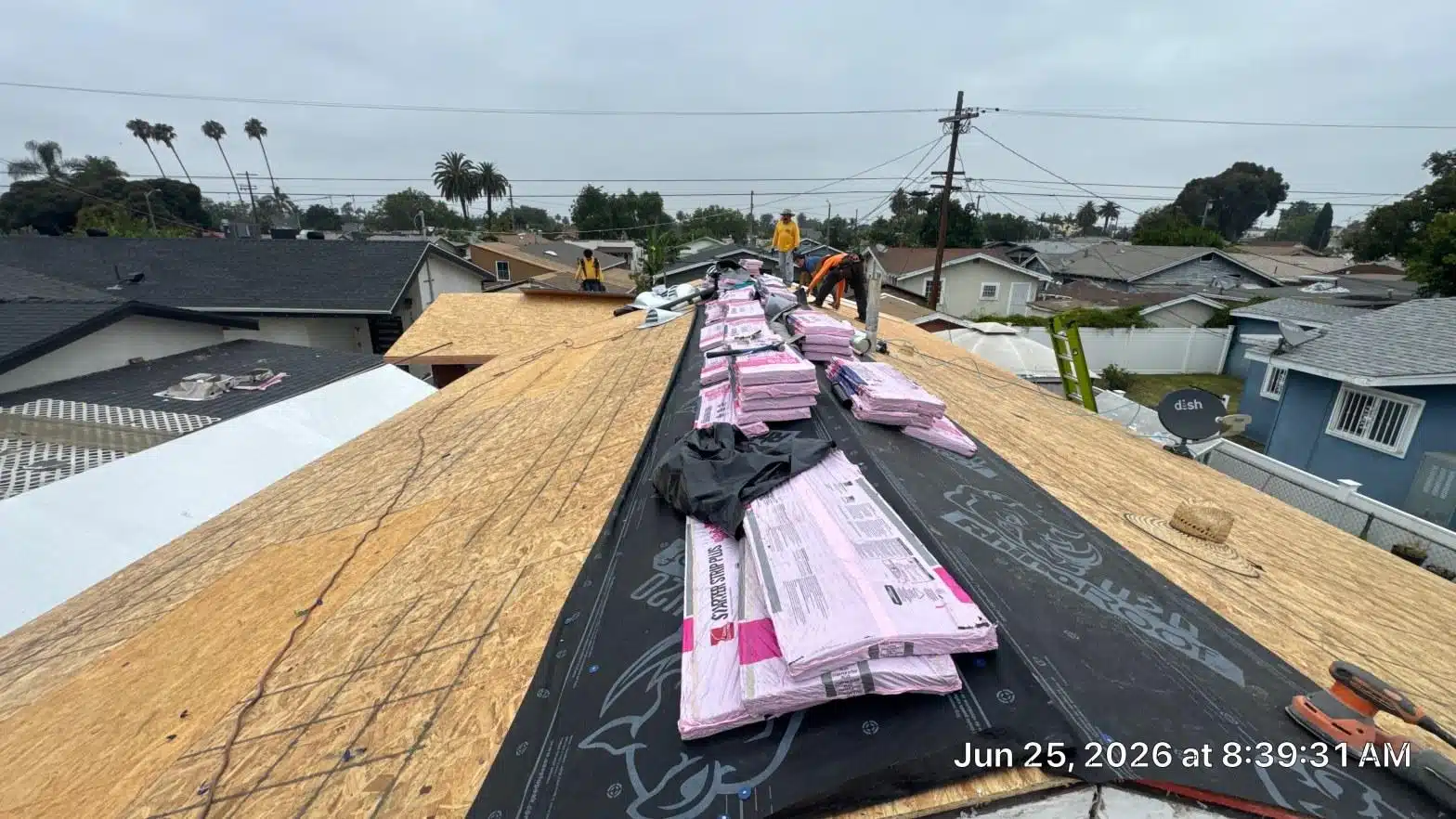
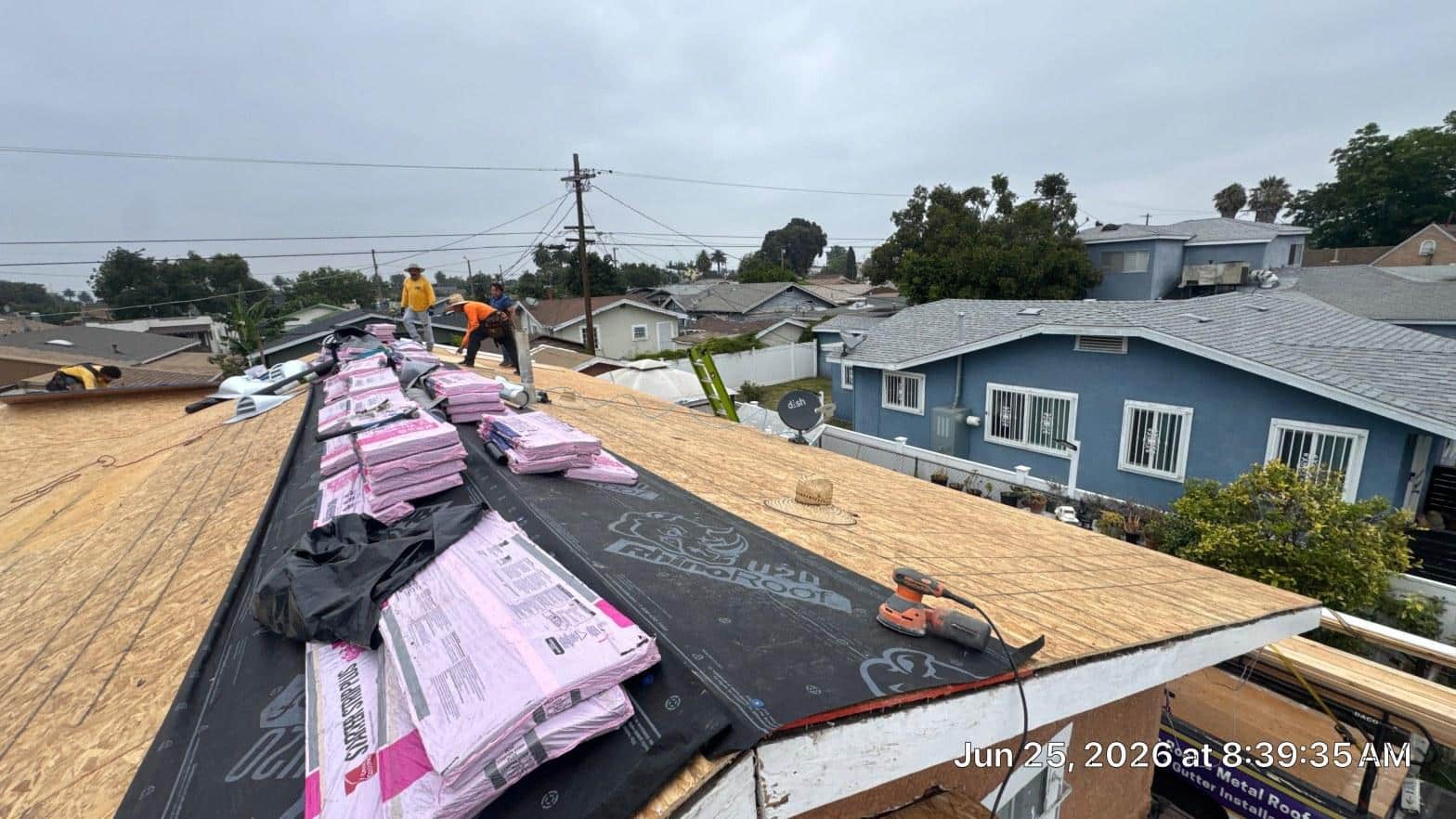
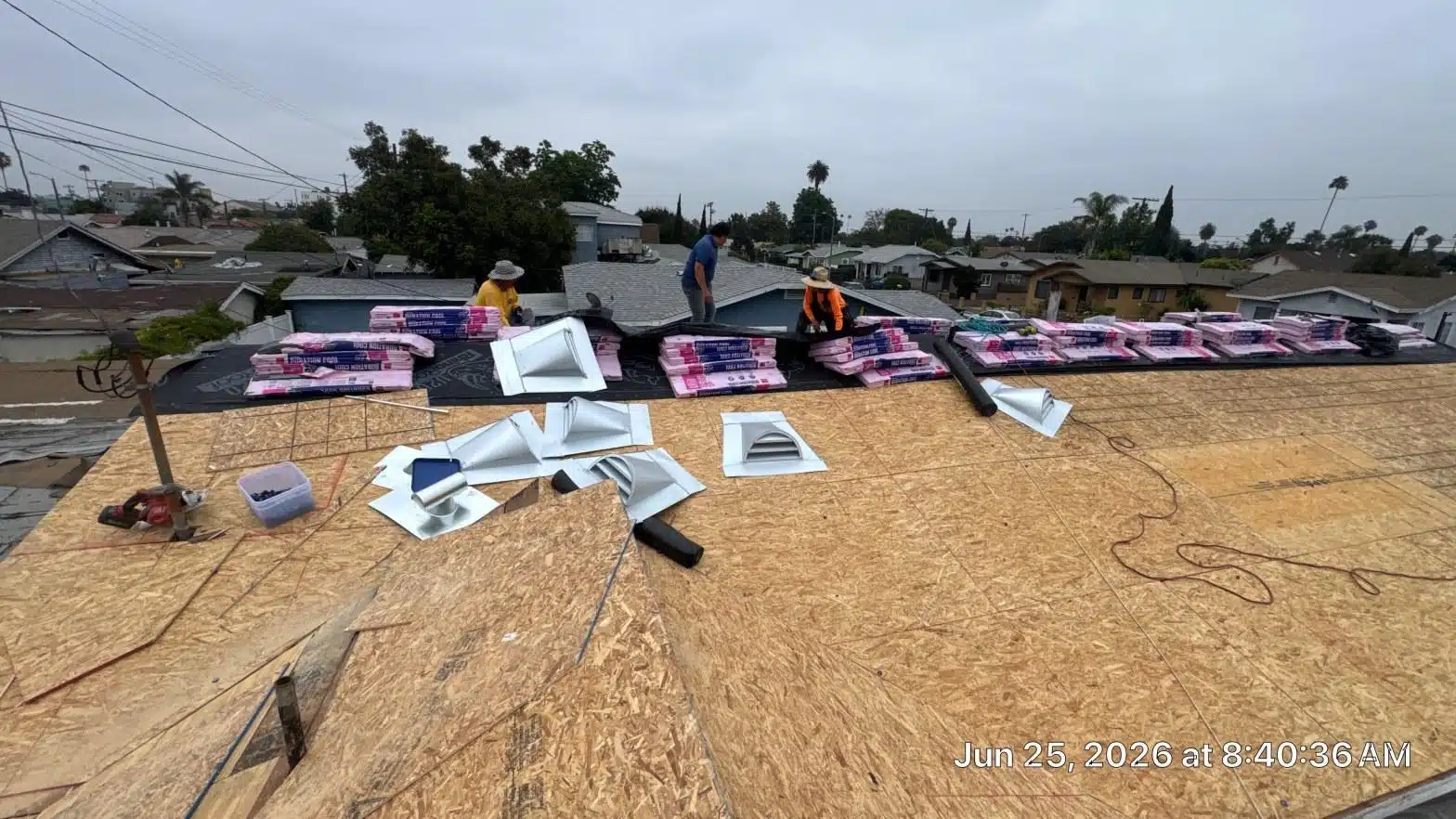
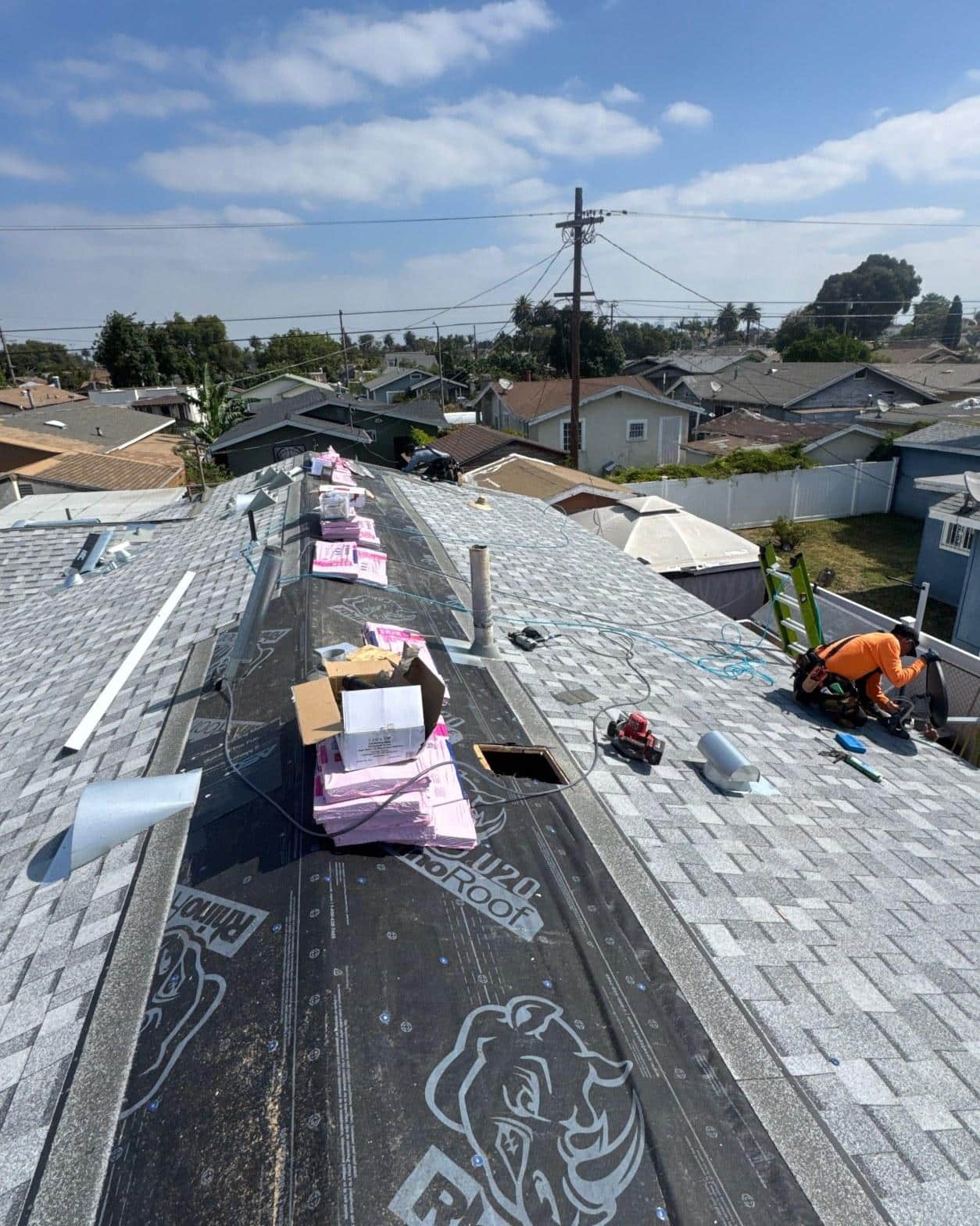
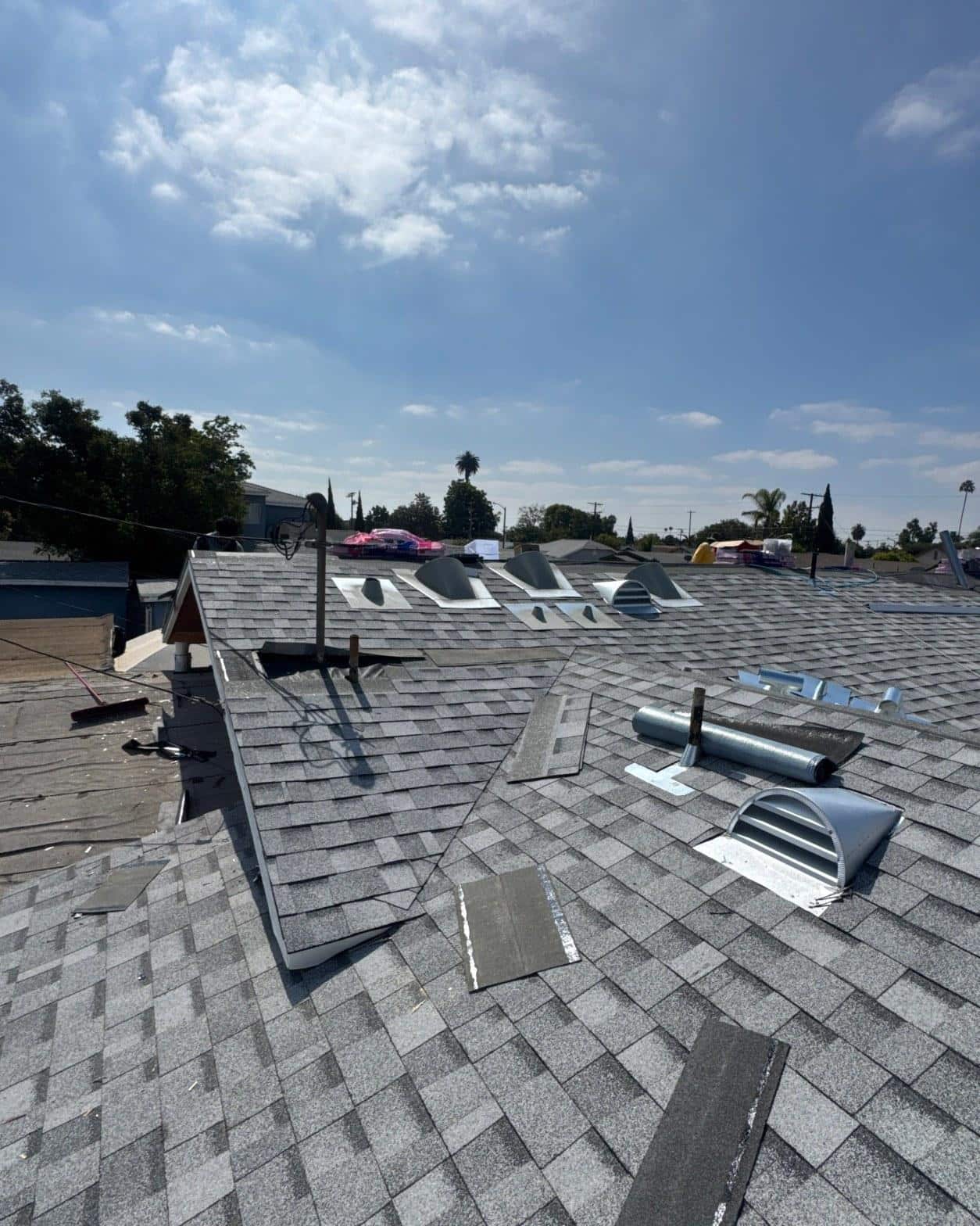
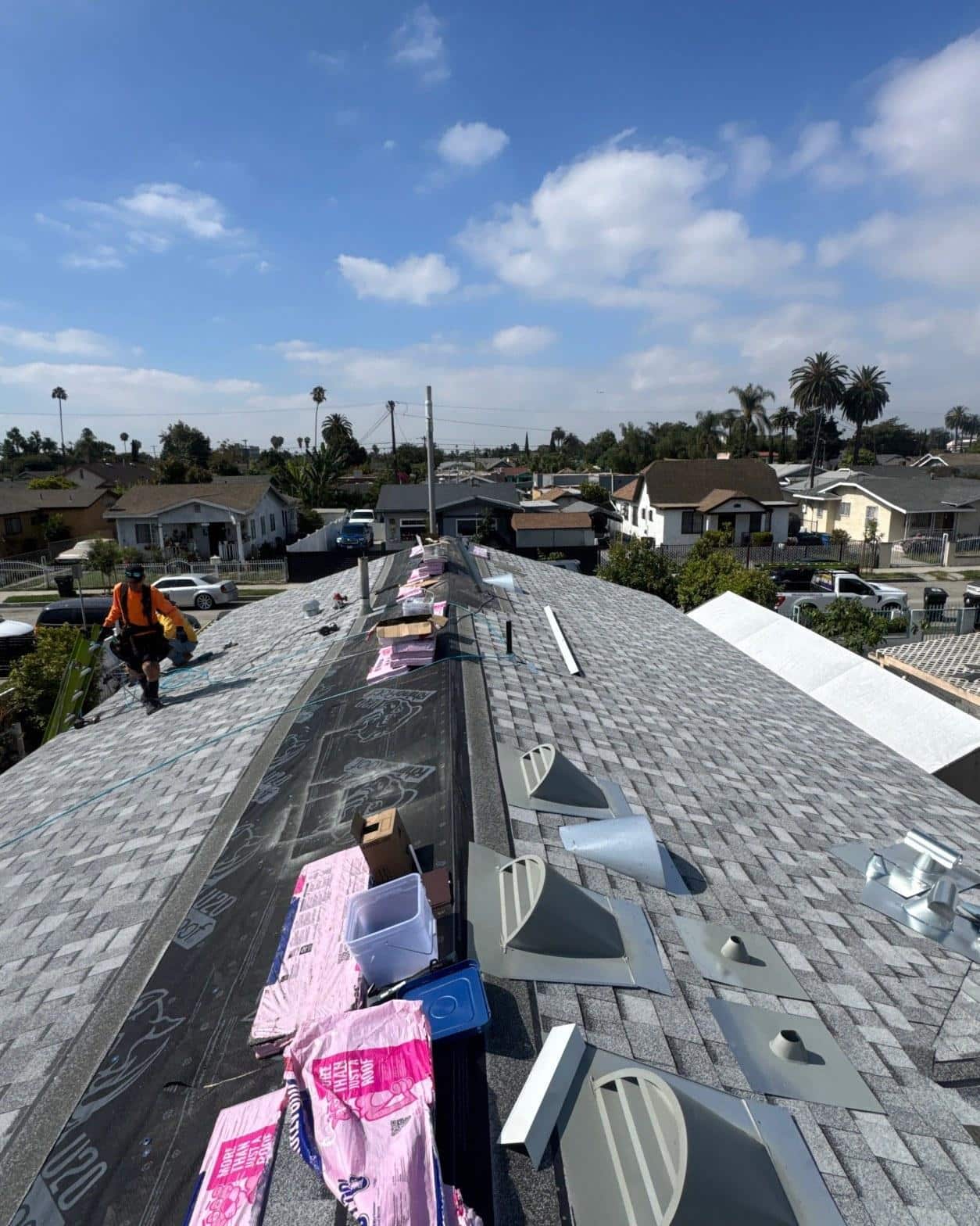
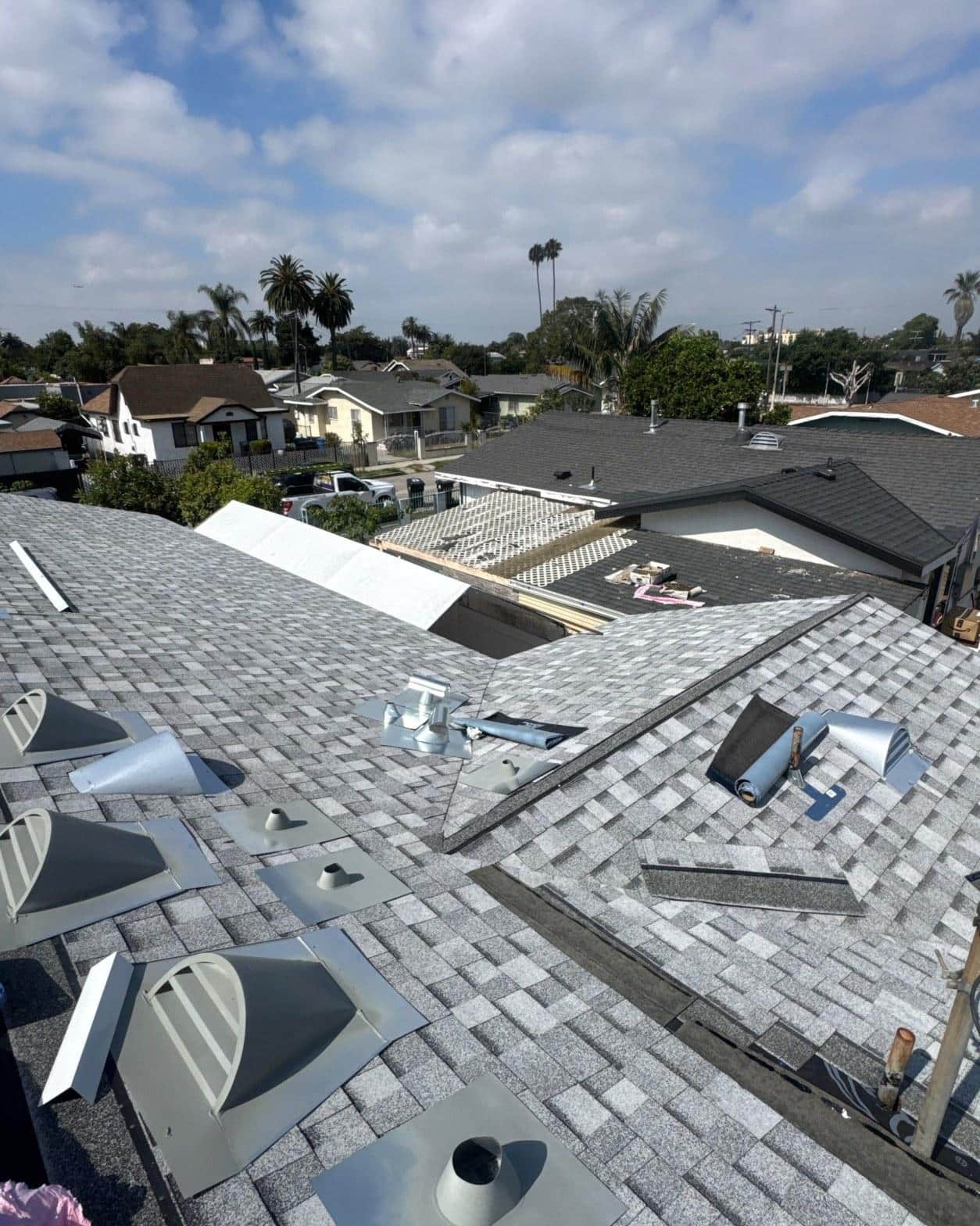
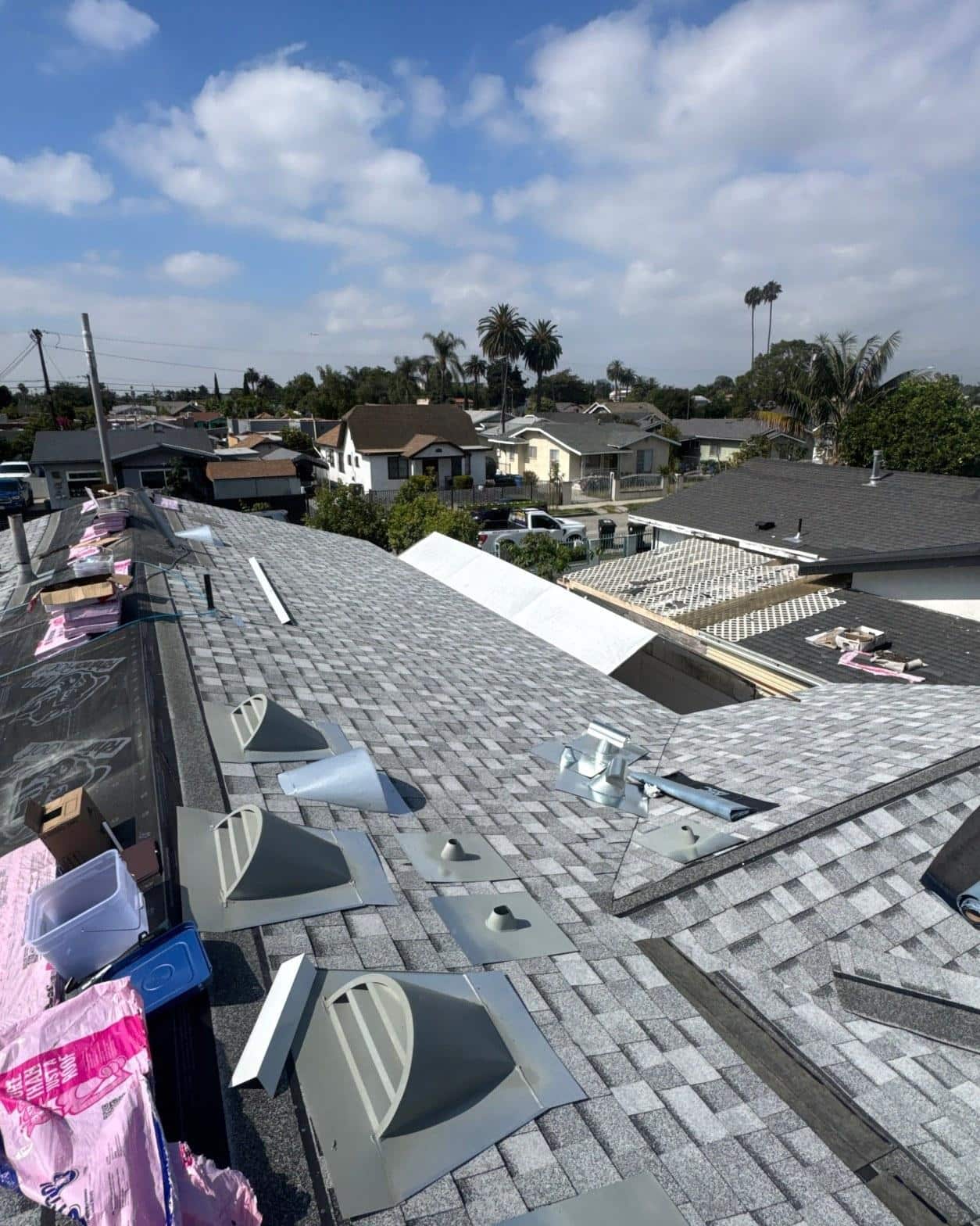
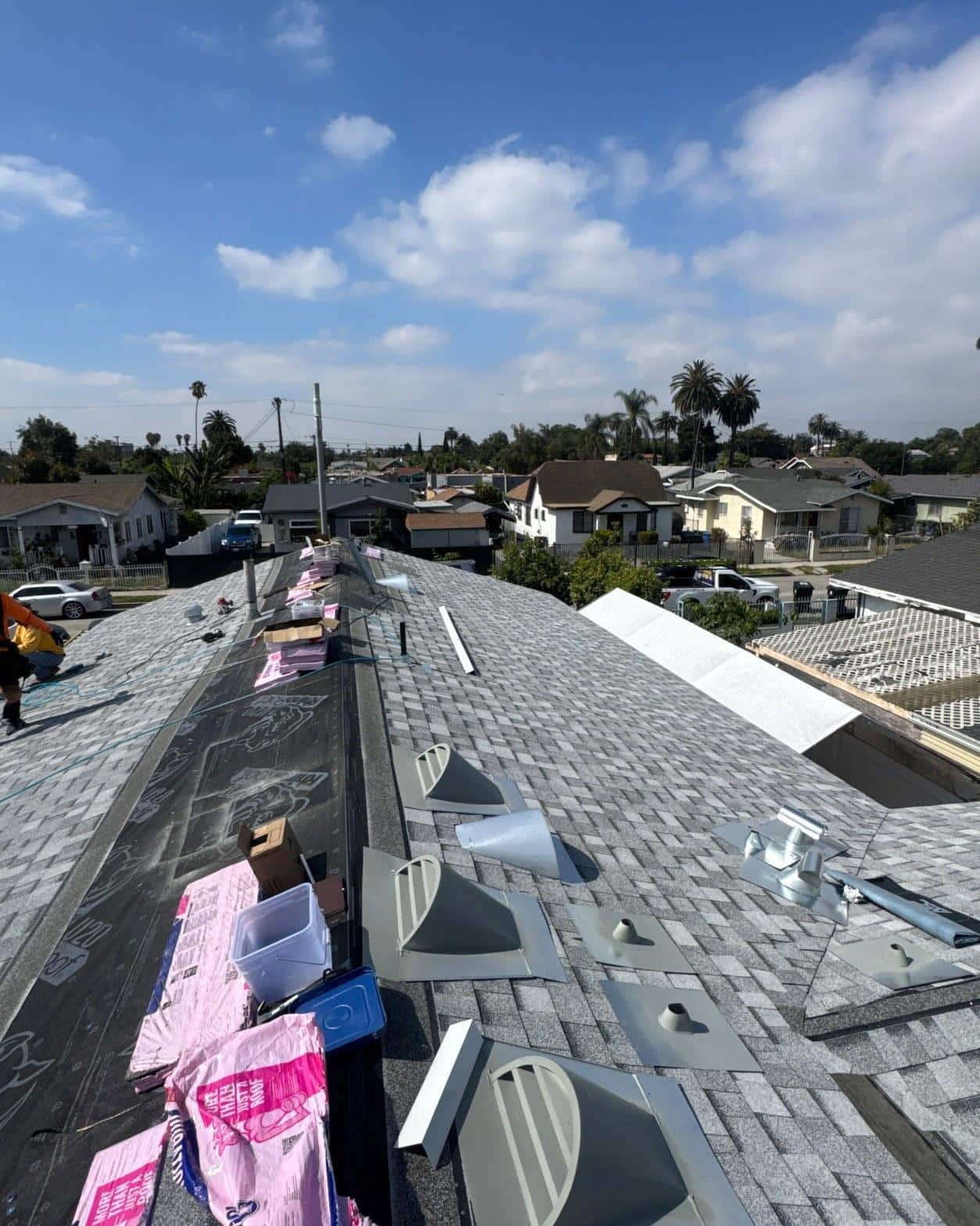
New OSB panels went down first, screwed and nailed to the rafters at spacing required by the 2022 California Residential Code. Once the deck was solid and flat, the crew rolled out a synthetic felt underlayment, visible in the photos as the heavy black membrane laid along the ridge before shingle bundles arrived.
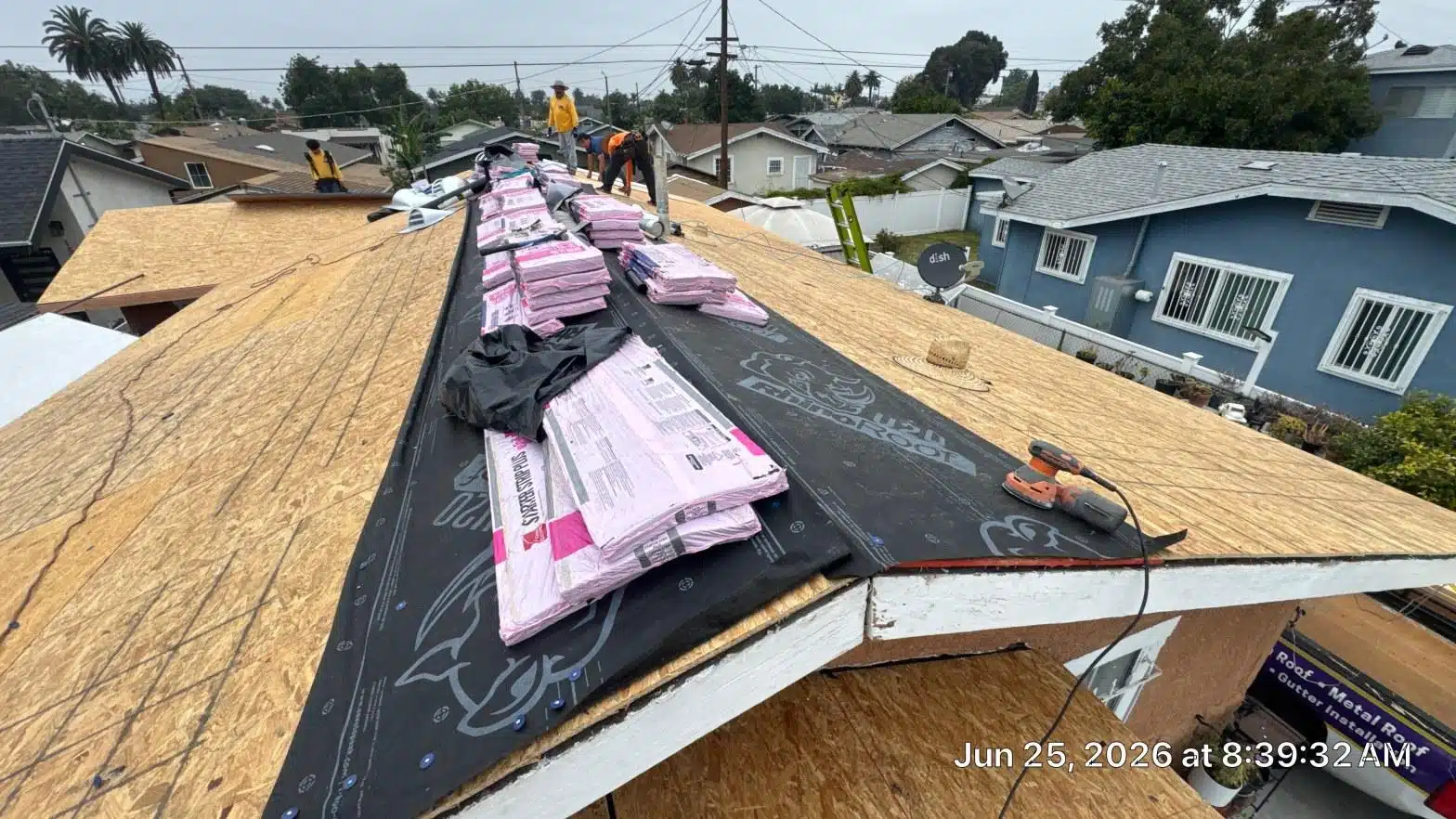
Synthetic underlayment outperforms traditional 30-pound felt in two measurable ways: it resists tearing in wind before shingles are installed, and it holds up to the heat common on LA County rooftops during summer, where surface temperatures can exceed 150°F on sun-exposed slopes according to NOAA urban heat data. The product used here was a non-slip, multi-ply sheet rated for the project’s exposure period.
Insulation batts were also staged on the deck during this phase. Per California’s Title 24 building energy standards, residential reroofs in Los Angeles County that involve decking replacement trigger a requirement to meet current insulation minimums for the climate zone. The pink batts visible in the photos represent that compliance step, not an optional upgrade.
Our crew staged roughly 30 to 35 bundles of shingles along the ridge line so every section of the roof had material within reach before nailing began. That staging approach keeps a 4-person crew moving without waiting for materials to be passed up.
How Long Did the Full Reroof Take to Complete?
The tear-off, decking replacement, underlayment, insulation, and full shingle installation across this multi-section roof was completed in 2 days. Day one covered demolition and new decking. Day two handled underlayment, staging, shingle installation from eave to ridge, and final ridge cap.
For a Los Angeles County home of this size and complexity, a hip-and-gable roof with multiple intersecting planes, a 2-day schedule is achievable only when materials are pre-ordered and on site before the crew arrives. Delays in shingle delivery are the single most common reason residential reroofs stretch to 3 or 4 days. On this project, all 30-plus bundles and the full underlayment order were on the driveway before day one started.
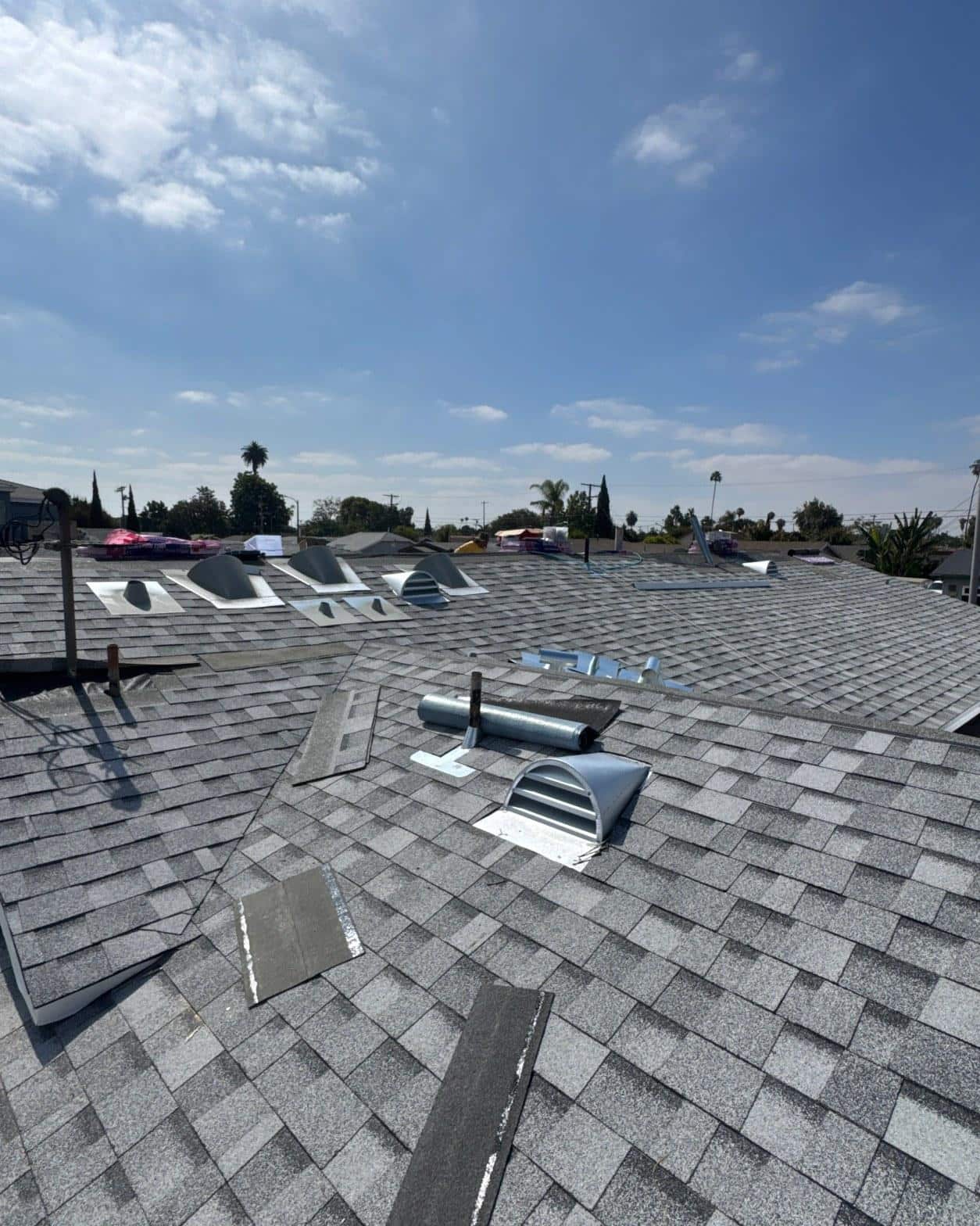
The finished ridge line shows tight, uniform gray architectural shingles running the full length of the peak, with ridge cap pressed firmly at every course. No exposed nails, no lifted tabs, no gaps at the hip returns.
Get a Quote for Your Reroof
If your home’s shingles are approaching 20 years old, or if you’ve noticed granule loss, soft spots underfoot, or recurring leaks after heavy rain, a full tear-off assessment will tell you whether repair or full replacement is the right call. Call Roof Repair & Construction Inc. to schedule a roof inspection and written scope estimate before any work begins.
Gallery
Explore our full range of Roof Repair services across Southern California.
Frequently Asked Questions
How long does a full shingle reroof take on a typical house?
A full tear-off and shingle reroof on a single-family home typically takes 2 to 3 days. A straightforward hip or gable roof with materials staged on site before day one can finish in 2 days, as this Los Angeles County project did. Larger roofs or those with multiple skylights, chimneys, or complex valleys can add a day.
Do I need to replace my roof decking when I get new shingles?
Not always, but you should expect it if your original decking has been under failing shingles for several years. Once moisture gets through degraded felt, it softens the wood beneath and creates soft spots and staining. Decking that shows dark discoloration or gives underfoot should be replaced rather than shingled over, because the new shingles will mirror any unevenness in the surface below.
Does a reroof in Los Angeles County require insulation to be upgraded?
Yes, in many cases. California's Title 24 building energy standards require that residential reroofs involving decking replacement meet current insulation minimums for the local climate zone. In Los Angeles County, that requirement is triggered whenever structural sheathing is removed or replaced, making insulation an integrated part of the job rather than a separate upgrade.
What kind of underlayment is used under asphalt shingles today?
Most professional reroofs now use a synthetic felt underlayment rather than traditional 30-pound asphalt felt. Synthetic underlayment resists tearing during installation, holds up to the high surface temperatures common on Southern California rooftops, and provides better temporary weather protection if shingle installation is interrupted. It is visible as the heavy black membrane in the photos from this project.
How do I know if my roof needs a full replacement versus a repair?
A repair makes sense when damage is isolated to a small area, flashing has failed at a single penetration, or only a handful of shingles have lifted. Full replacement is the better call when shingles are 20 or more years old, when granule loss is widespread, or when an inspection reveals soft decking or failed underlayment beneath the surface. A written scope inspection will give you a clear answer specific to your roof.
What is the difference between architectural shingles and standard three-tab shingles?
Architectural shingles, also called dimensional or laminate shingles, are thicker and heavier than three-tab shingles because they use two layers of material bonded together. That extra thickness gives them a textured, slate-like appearance and a rated lifespan of 30 years or more under normal conditions, compared to roughly 20 years for standard three-tab products. Most residential reroofs in Los Angeles County today specify architectural shingles as the baseline product.