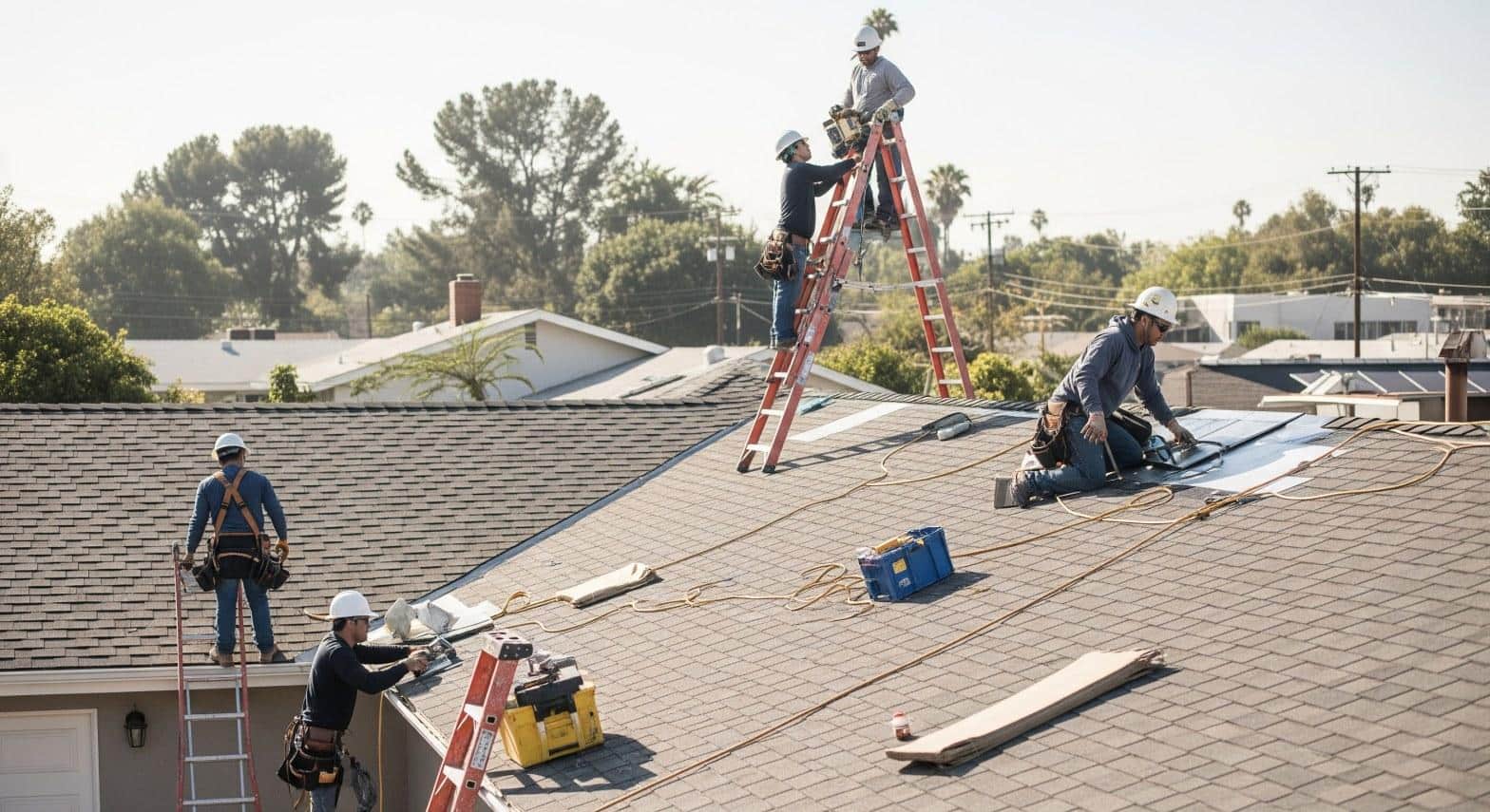
Why Roof Flashing Matters So Much in Los Angeles, CA
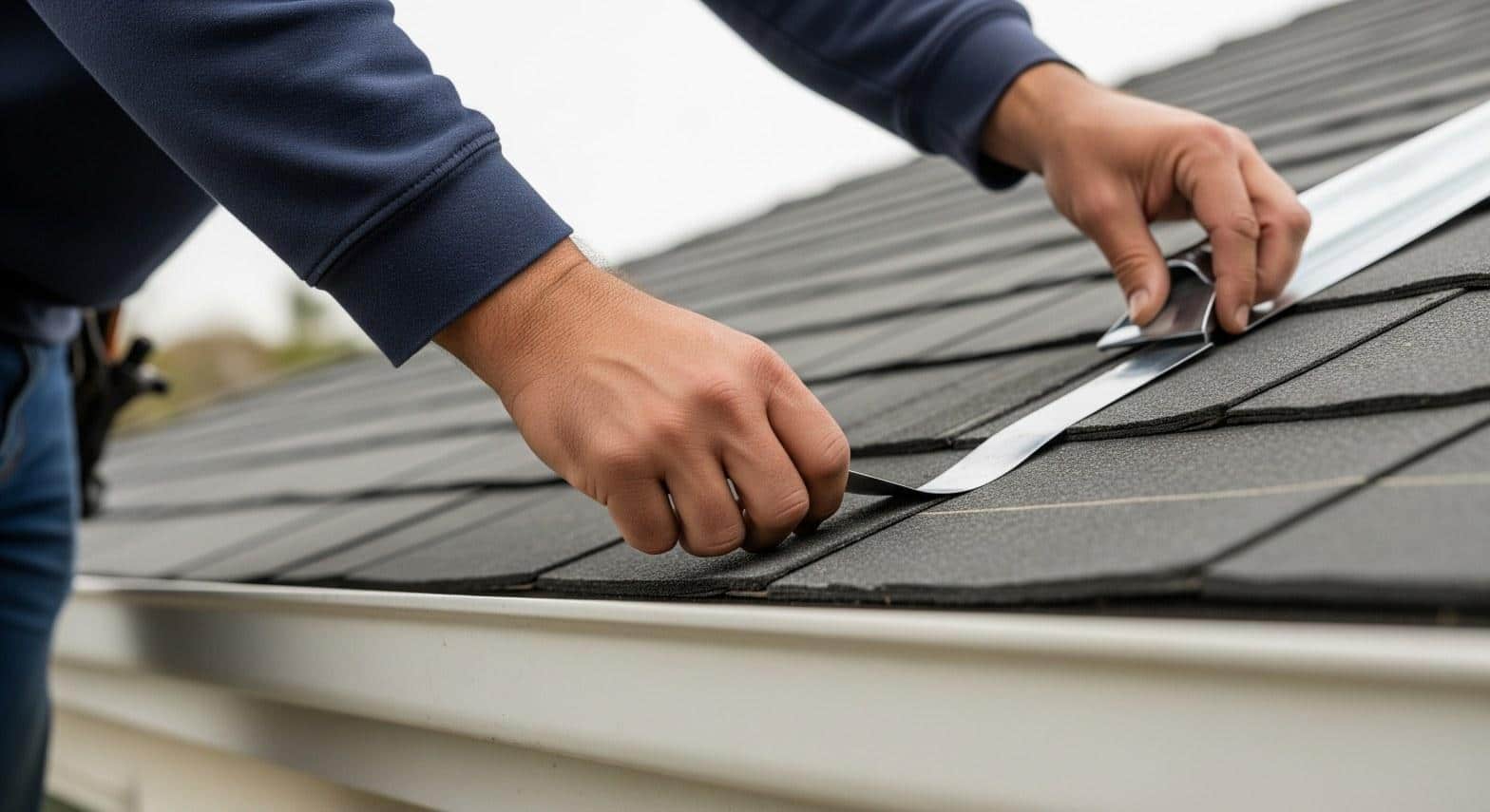
Roof flashing is the thin metal barrier — usually galvanized steel, aluminum, or copper — that seals the joints where your roof meets a wall, chimney, skylight, or vent. When flashing fails, water finds a direct path into your home’s structure. In Los Angeles, CA, that risk is real year-round, not just in the rainy season.
Southern California’s Mediterranean climate creates a specific stress cycle for roofing materials. Summers bring intense UV radiation and heat that can reach 100°F or higher in the San Fernando Valley. Fall brings Santa Ana winds that drive dust and debris into every gap. Winter rains then push water through any crack that has opened up over the dry months.
Coastal neighborhoods like Venice, Playa del Rey, and areas in the 90291 and 90293 ZIP codes also deal with marine-layer moisture almost every morning from May through August. That salt-laden fog accelerates corrosion on metal flashing, sometimes cutting a flashing’s useful life from 20 years down to 12 or fewer. When you’re shopping for roofing services in California, understanding this local stress cycle helps you ask the right questions.
California’s Office of the State Fire Marshal also designates much of the Los Angeles hillside and foothill areas as High or Very High Fire Hazard Severity Zones. Roofing materials — including the metal flashing used around vents and eaves — must meet Class A fire-resistance ratings in those zones. A contractor who doesn’t mention fire ratings during a bid may not be current on local requirements.
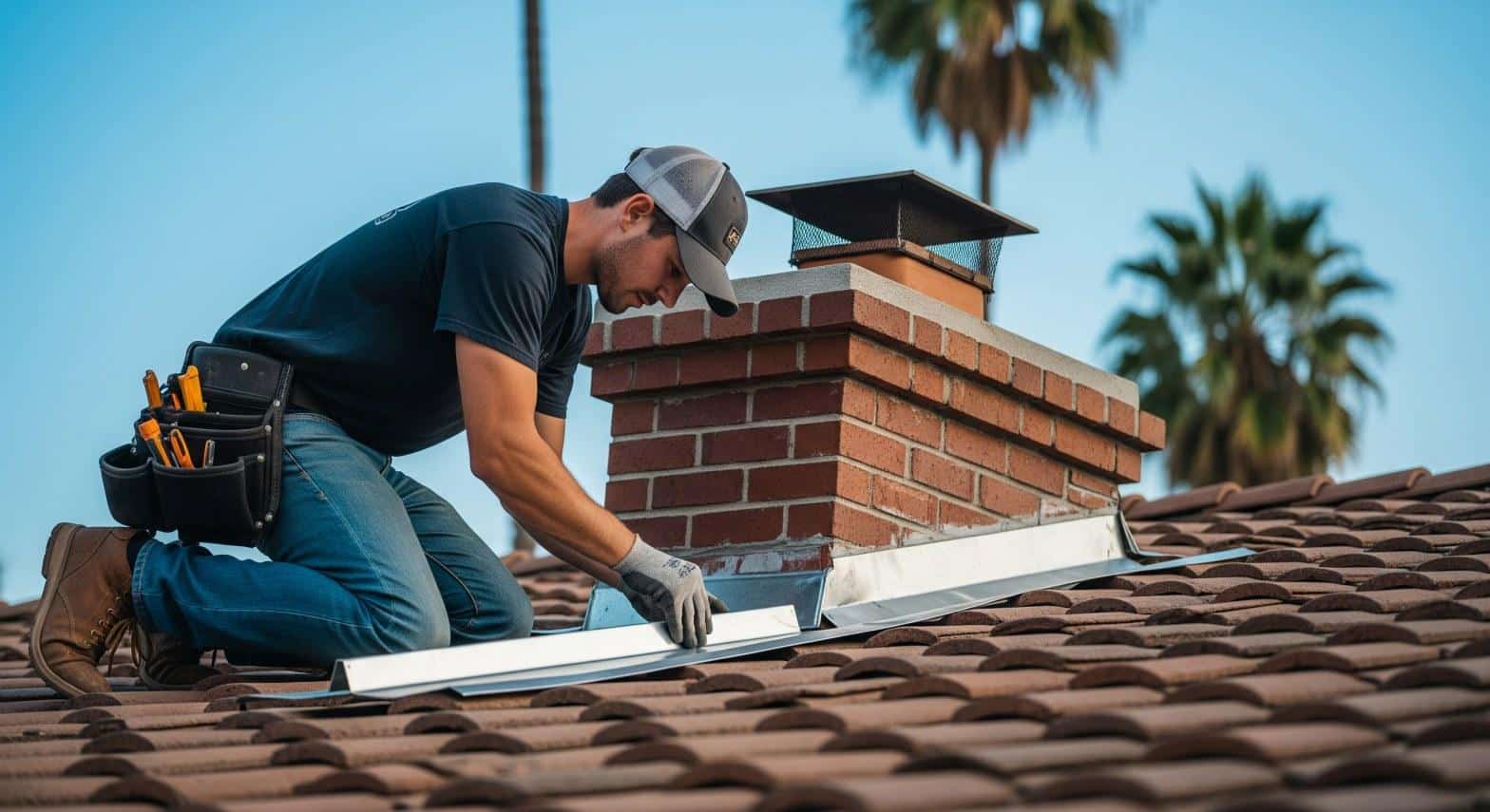
What Are the Warning Signs You Can Spot from the Ground?
You don’t need to walk your roof to catch early flashing problems. Most visible warning signs can be spotted safely from the ground with binoculars or from an upper-floor window. Catching them early saves thousands of dollars in structural repair.
Look for these red flags:
- Lifted or buckled metal strips: Flashing around chimneys, skylights, or dormers that appears to be pulling away from the surface is a clear sign the seal has failed.
- Rust staining on the roof surface: Orange or brown streaks running down from a metal joint mean the flashing is corroding and water is already moving through.
- Missing step flashing: Along a roof-to-wall junction, the overlapping metal pieces (called step flashing) should form a tight staircase pattern. Gaps or missing pieces are visible from the ground.
- Cracked or dried caulk at joints: Sealant around vent pipes and roof penetrations should look smooth and continuous. Cracking or shrinkage means the seal is gone.
- Water stains on interior ceilings or walls: A brown ring on your ceiling, especially near a chimney or skylight, often traces back to flashing rather than the field of the roof itself.
- Granule buildup in gutters: Heavy granule loss from asphalt shingles near flashing points signals that water is pooling and accelerating wear in that area.
Our team responds to roughly 3 times more emergency leak calls in January and February than any other two-month period — and in the majority of those cases, the source is failed flashing at a chimney or parapet wall, not a hole in the field of the roof.
What Roofing Services in California Should Actually Include
A full-service roofing contractor in California should offer inspection, repair, and replacement across all common roof types, and should always pull the required permits from your local building department. If a contractor offers to skip the permit to save you money, walk away.
Los Angeles homes carry a wide range of roofing materials, each with its own flashing requirements:
| Roof Material | Common in LA | Flashing Consideration |
|---|---|---|
| Asphalt shingle | Very common in residential neighborhoods | Step and counter flashing needed at all wall junctions; lifespan 20-30 years |
| Concrete or clay tile | Widespread across Spanish-style homes | Flashing must be custom-cut to fit tile profile; improper fit is the #1 leak source |
| Metal standing-seam | Growing in hillside and modern builds | Requires expansion-joint flashing to handle thermal movement in LA heat |
| TPO / flat membrane | Common on low-slope and commercial roofs | Edge flashing and coping caps critical; UV degradation accelerated in Southern California sun |
| Slate | Less common; found on older estate homes | Copper flashing preferred; lasts 50+ years when properly installed |
Roofing services in California are also subject to California’s Title 24 building energy standards, which affect re-roofing projects on residential buildings. As of the 2022 Title 24 update, cool-roof requirements apply to most low-slope re-roofing jobs and to steep-slope replacements in certain climate zones. A licensed contractor will know which requirements apply to your specific address.
For insurance claims, California’s standard homeowner policies typically require you to file within 12 months of the date of loss. If Santa Ana wind damage is the cause, document the damage with dated photos before any temporary repairs are made. A licensed contractor can provide a written scope of damage to support your claim.
How Much Does Roof Flashing Repair or Replacement Cost in Los Angeles?
Flashing repair in the Los Angeles market typically ranges from a few hundred dollars for a single penetration to several thousand dollars for a full re-flash of a tile roof with multiple chimneys and skylights. The scope, roof type, and access difficulty are the three biggest cost drivers.
Here is a general breakdown of factors that move the price in this market:
- Roof pitch: Steeper roofs (above a 6:12 pitch) require additional safety equipment and take longer, adding to labor cost.
- Material type: Copper flashing costs significantly more than galvanized steel but lasts 40 to 50 years. Aluminum sits in the middle range and is the most common choice in coastal areas.
- Number of penetrations: Each chimney, skylight, vent pipe, or roof-to-wall junction is a separate flashing point. A home with 4 skylights and 2 chimneys is a larger scope than one with a single vent stack.
- Tile removal and reset: On clay or concrete tile roofs, tiles must be carefully removed, stored, and reset around flashing work. Broken tiles during this process add replacement cost.
- Permit fees: Los Angeles building permit fees vary by project value. Budget for them — they are not optional for work that involves structural or weatherproofing elements.
For a full roof replacement in this market, projects typically range from mid-four figures for a modest asphalt-shingle home to well into five figures for a large tile or metal roof, depending on scope and complexity. Always request a written, itemized quote before any work begins. Contact Roof Repairs and Construction Inc. for a custom quote specific to your home.
What Does a Licensed Roofer Do on a Flashing Project?
A licensed contractor starts with a full inspection of every flashing point on the roof, not just the area that is visibly leaking. A leak at one point often means other flashing is close to failure as well.
Here is what a proper flashing project looks like, step by step:
- Full roof inspection, including all penetrations, valleys, eaves, and parapet walls.
- Written scope of work provided to the homeowner before any material is ordered.
- Permit pulled from the Los Angeles Department of Building and Safety (LADBS) where required.
- Old flashing removed and the substrate inspected for rot, mold, or structural damage.
- New flashing installed using the correct material for the roof type — step flashing, counter flashing, valley flashing, or drip edge as needed.
- All joints sealed with compatible roofing sealant rated for UV exposure.
- Final inspection, either by the contractor or by the city inspector depending on permit requirements.
- Cleanup and documentation provided to the homeowner for warranty and insurance records.
Contractors licensed by the California Contractors State License Board (CSLB) are required to carry workers’ compensation insurance and general liability coverage. You can verify any contractor’s license status and check for complaints at cslb.ca.gov in under two minutes. Never hire a roofer who cannot provide a current CSLB license number.
Across our service calls in Los Angeles, we find that roughly 6 out of 10 homes with active leaks have had previous flashing work done by an unlicensed contractor — patched with caulk alone rather than properly installed metal flashings. That temporary fix typically lasts one to two rainy seasons before failing again.
Roughly 6 out of 10 homes with active leaks have had previous flashing work done by an unlicensed contractor — patched with caulk alone rather than properly installed metal flashings.
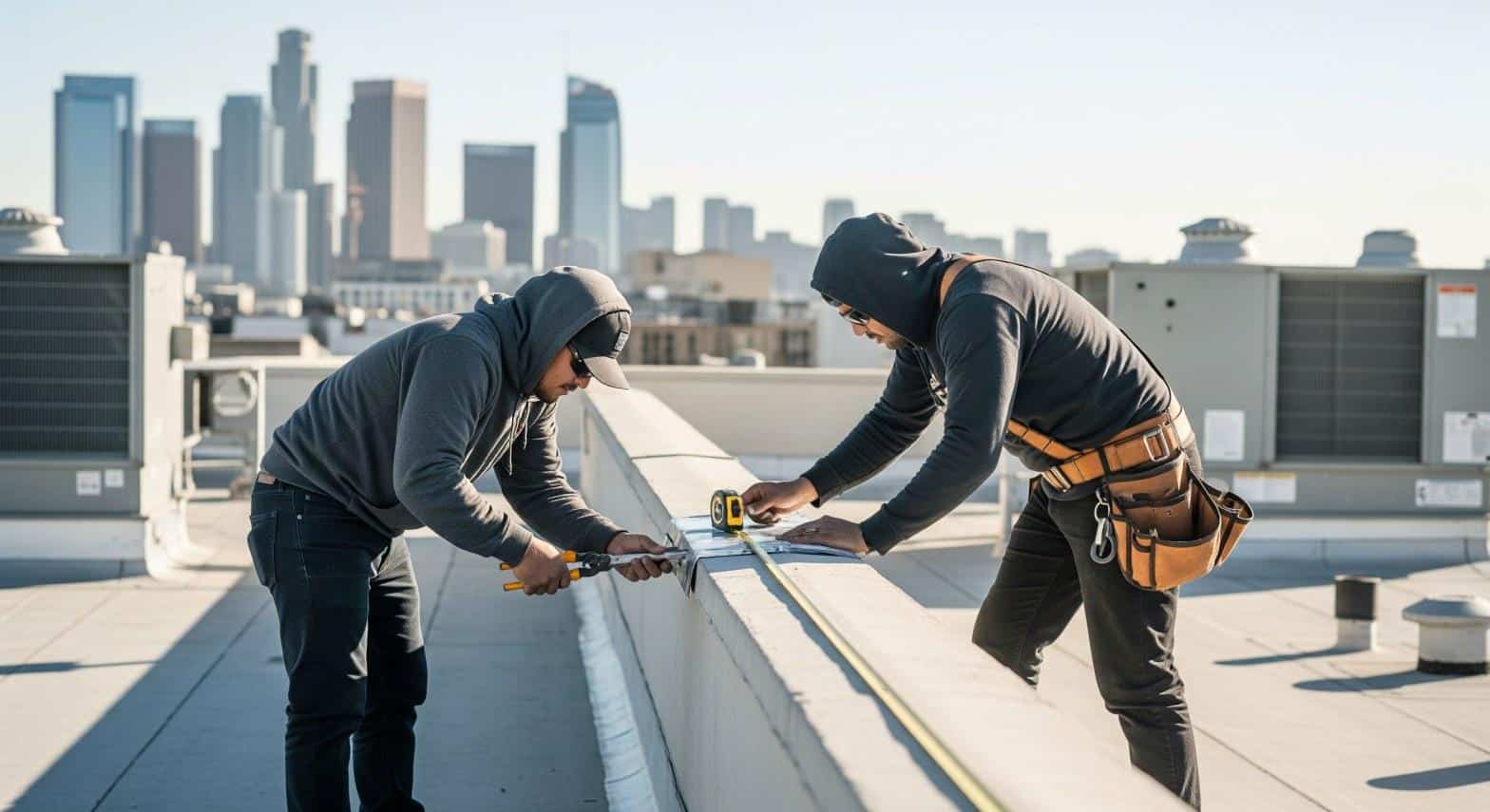
Get Roofing Help in Los Angeles, CA
Schedule a roof inspection before the next rain season arrives. Whether you have a clay tile home in the hills, a flat-roof bungalow near the coast, or an asphalt-shingle house in the Valley, Roof Repairs and Construction Inc. provides written estimates and pulls all required permits for work in Los Angeles, CA.
Call (323) 474-1088 to book your inspection or request a custom quote. Roof Repairs and Construction Inc. serves homeowners across Los Angeles, CA and the surrounding communities.
Related Articles
Frequently Asked Questions
How do I know if my roof flashing needs to be replaced in Los Angeles?
Look for rust stains running down from joints, lifted or buckled metal at chimney bases or skylights, and water stains on your interior ceilings near those same points. In Los Angeles, the combination of dry summer heat and winter rain cycles causes flashing sealant to crack faster than in cooler climates, so even relatively new flashing can fail within 5 to 7 years if low-quality materials were used. A licensed roofer can do a full inspection and tell you whether repair or full replacement makes more sense.
How do you put flashing on a roof correctly?
Proper roof flashing installation involves removing the old flashing, inspecting the underlying wood or substrate for rot, and then installing new metal pieces in overlapping layers that direct water away from joints and toward the roof surface. Step flashing is woven between shingles or tiles course by course, while counter flashing is embedded into mortar or wall material above it. In Los Angeles, all flashing work that is part of a re-roofing project typically requires a permit from the Los Angeles Department of Building and Safety.
What is the difference between step flashing and counter flashing?
Step flashing consists of small L-shaped metal pieces installed one per shingle course along a roof-to-wall junction, creating a staircase of overlapping layers. Counter flashing is a second layer installed above the step flashing, embedded into the wall or chimney mortar, that covers the top edge of the step flashing and prevents water from getting behind it. Both are needed together for a watertight seal, especially on the clay tile and stucco-wall combinations common across Los Angeles homes.
How long does roof flashing last on a Los Angeles home?
Galvanized steel flashing typically lasts 15 to 25 years in the Los Angeles area, though coastal locations with marine-layer salt exposure can shorten that to 10 to 15 years. Aluminum flashing performs similarly. Copper flashing is the most durable option, often lasting 40 to 50 years, and is a good investment on tile roofs where flashing access requires significant labor. UV intensity in Southern California is among the highest in the continental U.S., which also degrades the sealants used alongside the metal faster than in northern climates.
Do I need a permit for roof flashing repair in Los Angeles?
Minor spot repairs to a single flashing point generally do not require a permit in Los Angeles, but any work that is part of a broader re-roofing project or involves structural changes does require one from the Los Angeles Department of Building and Safety. A contractor licensed by the California Contractors State License Board (CSLB) will know the threshold and pull the permit when required. Skipping a permit can create problems when you sell your home or file an insurance claim, so it is not worth the risk.