Serving Valley Village

Flashing Repairs for Valley Village's Mid-Century Roofs

Roof flashing in Valley Village is one of the most common reasons homeowners in this established Los Angeles neighborhood call for a roofing inspection. Valley Village sits between the NoHo Arts District and Studio City, and its residential blocks are lined with postwar bungalows and ranch-style homes — many built in the 1950s and 1960s — whose original galvanized or aluminum flashing has had decades to corrode, separate, and let water in. The neighborhood is part of the City of Los Angeles, so permits and inspections run through the city's building department rather than a separate municipality. Flat-roofed additions and low-slope garage roofs are common here alongside the pitched shingle roofs, meaning flashing details appear at parapets and roof-to-wall transitions as well as at chimneys and skylights. Roof Repair & Construction Inc. works throughout Valley Village and the surrounding communities — including Studio City, hollywood/” style=”color:#111111;text-decoration:underline;text-underline-offset:2px;text-decoration-thickness:1px;”>North Hollywood, and Toluca Lake — addressing flashing failures on both pitched and flat roof systems.
Where Valley Village Roofs Leak at the Flashing — Valley Village — Roof Repair & Construction Inc.

The short answer

Roof Repair & Construction Inc. handles roof flashing in Valley Village — a City of Los Angeles neighborhood in zip codes 91607 and 91601 — where mid-century homes near the NoHo Arts District and Studio City commonly develop leaks at chimney bases, skylights, and low-slope parapet walls. Call (323) 474-1088.

Flashing Materials Suited to Valley Village Homes — Valley Village — Roof Repair & Construction Inc.
Valley Village Flashing Failures

Where Valley Village Roofs Leak at the Flashing

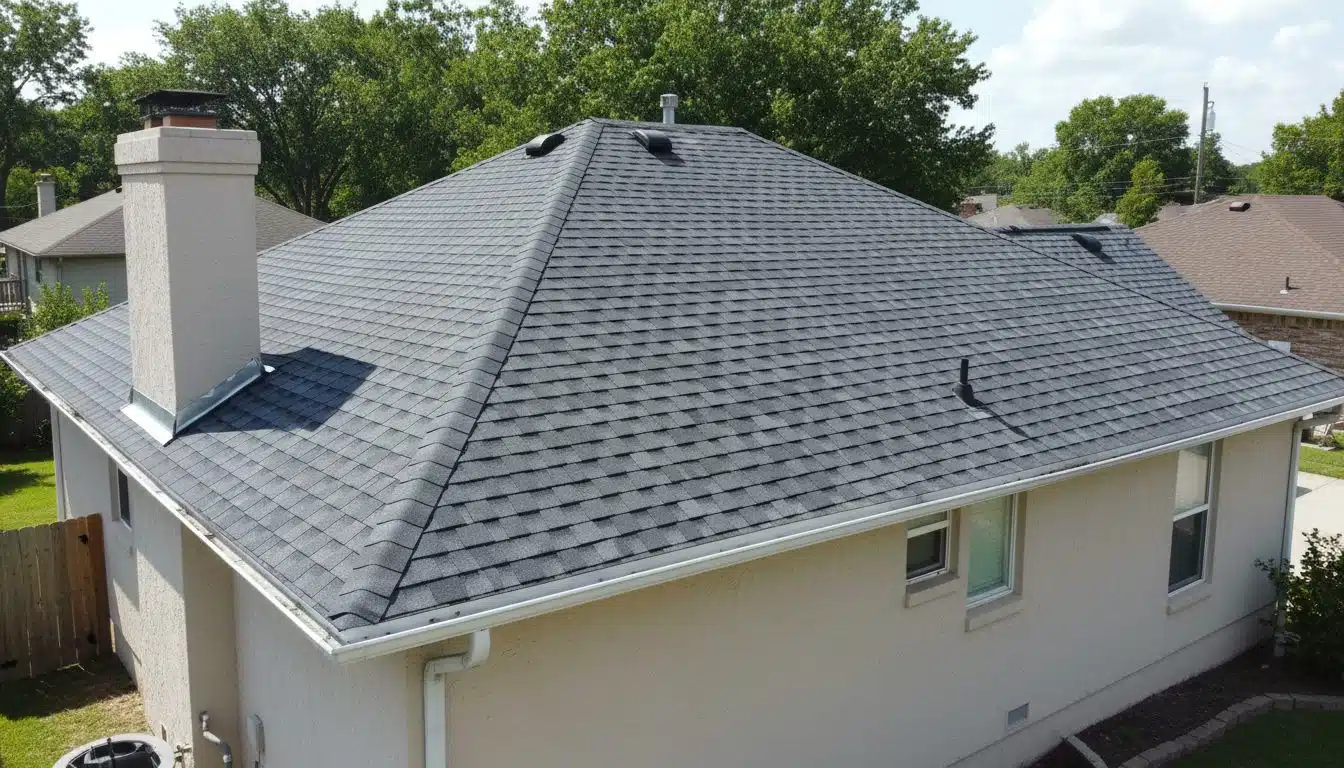
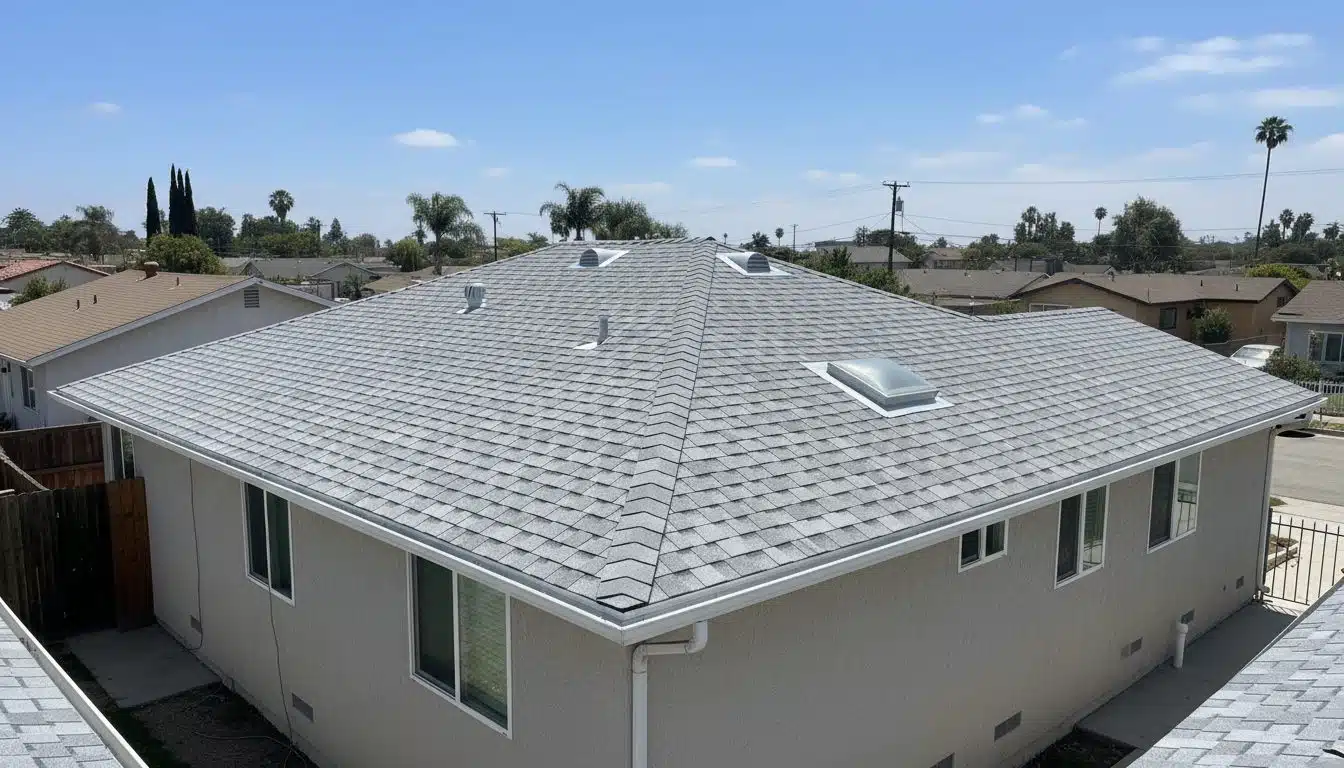
On the mid-century homes that define Valley Village's residential streets, flashing failures tend to cluster at a handful of predictable spots: the base and step flashing around brick chimneys, the curb and counter-flashing around skylights, and the roof-to-wall transitions where a flat-roofed addition meets the main pitched section. Decades of Los Angeles sun and the occasional heavy winter rain cycle cause metal to expand, contract, and eventually pull away from the surfaces it was meant to seal. When you see water staining on interior ceilings near a chimney or along an exterior wall, deteriorated flashing is often the first place to check. Call (323) 474-1088 to schedule an inspection.

  • Chimney base and step flashing on brick and stucco chimneys
  • Skylight curb and counter-flashing on pitched shingle roofs
  • Roof-to-wall transition flashing at flat-roof additions
  • Parapet cap and coping flashing on low-slope garage roofs
  • Valley flashing where two roof planes meet
  • Drip edge and eave flashing on older wood-framed homes
Instant Estimate · No Phone Call

What Will Your Roof Cost?

Answer a few quick questions and get a ballpark price for your Valley Village roof in about a minute — right here, no obligation.

Calculate My Roof Cost ›

Flashing Materials & Options

Flashing Materials Suited to Valley Village Homes

The right flashing material depends on the roof system and the specific detail being addressed. On the composition shingle roofs common throughout Valley Village, galvanized steel and aluminum step and counter-flashing are standard; lead flashing is sometimes used around chimney penetrations where a tighter conforming seal is needed. On the flat and low-slope sections — torch-down modified bitumen and TPO systems appear frequently on additions and garage roofs in this neighborhood — flashing is typically integrated into the membrane itself, with metal termination bars and coping at parapet walls. Call (323) 474-1088 to discuss which approach fits your roof.

Flashing Materials Suited to Valley
Galvanized steel step and counter-flashing for shingle roofs
Aluminum flashing for lighter-duty repairs and transitions
Lead flashing at chimney penetrations where conformability matters
Membrane-integrated flashing details on torch-down and TPO systems
Metal termination bars at parapet walls on flat roofs
Drip edge replacement in aluminum or galvanized steel
City of LA Permits

Flashing Permits for Valley Village Roofing Work

Valley Village is part of the City of Los Angeles, so any roofing work that requires a permit — typically a full re-roof or significant structural repair — goes through the city's building department rather than a separate local authority. Isolated flashing repairs are often maintenance-level work, but the permit requirement depends on the scope of the project; the city's building department is the authority on what applies to a specific property. Roof Repair & Construction Inc. coordinates permit applications and inspections when they are required, so homeowners in the 91607 and 91601 zip codes don't have to navigate that process alone. Call (323) 474-1088 with questions about your specific project.

Flashing Permits
Permits through the City of Los Angeles building department
Applies to properties in zip codes 91607 and 91601
Permit scope depends on project size — city department determines requirements
Inspection coordination handled for permitted work
Title 24 cool-roof requirements apply to qualifying re-roofs
No separate municipal authority — Valley Village is City of LA jurisdiction
Why Choose Us

Why Homeowners Choose
Roof Repair & Construction Inc.

From tile and shingle to flat and low-slope roofs, we handle every roof type in Valley Village — one licensed team for replacement, repair, coating, cool roofs, and tear-offs.

Flashing repairs on Valley Village's postwar pitched and flat roofs
Chimney, skylight, parapet, and wall-transition flashing covered
City of LA permits and inspections coordinated
Torch-down and TPO flat-roof flashing details handled
Licensed contractor — CA License #1144009
Flat & Low-Slope Flashing

Flashing on Valley Village Flat-Roof Additions and Garages

Many homes near the Bubbie Ettie Memorial Walkway corridor and throughout Valley Village's interior blocks have flat or low-slope sections — a rear addition, a detached garage, or a covered patio — that sit alongside the main pitched roof. These transitions are among the most leak-prone details on any house, because water pools at the junction and any gap in the flashing or membrane termination lets it in. Roof Repair & Construction Inc. addresses these details on torch-down modified bitumen and TPO systems, integrating the flashing properly into the membrane rather than relying on caulk alone. Call (323) 474-1088 to have a flat-roof flashing detail assessed.

Flashing on Valley Village Flat-Roof
Roof-to-wall flashing at flat-to-pitched transitions
Parapet wall cap and coping on low-slope additions
Membrane termination and metal bar installation on TPO
Torch-down modified bitumen flashing at curbs and penetrations
Scupper and drain flashing on flat garage roofs
Coating and sealant integration at flashing terminations
Serving Valley Village

Flashing Work Across Valley Village and Adjacent Neighborhoods

Roof Repair & Construction Inc. works throughout Valley Village and the communities that border it — Studio City to the south, North Hollywood and the NoHo Arts District to the east, Sherman Oaks to the west, and Toluca Lake and Burbank to the northeast. Whether the job is a chimney re-flash on a 1950s ranch home on a quiet Valley Village block or a parapet repair on a small multi-unit building, the approach is the same: assess the actual failure point, use the right material for the roof system, and do the work without cutting corners on the details. Call (323) 474-1088 to schedule a flashing inspection in Valley Village or a nearby community.

Ready to get started in Valley Village?

Call for a free, no-pressure estimate.

Service Area

Valley Village Service Area

Roof Repair & Construction Inc. provides Roof Flashing throughout Valley Village. Service areas include Valley Village (itself a neighborhood of Los Angeles), NoHo Arts District (adjacent) and Studio City (adjacent). We also serve nearby Studio City Ca, North Hollywood Ca, Sherman Oaks Ca, Toluca Lake Ca and Burbank Ca. The map below outlines the Valley Village area we cover.
Questions

Frequently Asked Questions

How much does roof flashing cost in Valley Village?
Flashing repair costs in Valley Village vary depending on the type of flashing involved, the number of penetrations or transitions being addressed, and whether any underlying decking or underlayment needs attention once the old flashing is removed. A simple step-flashing repair at a chimney is a different scope than re-flashing a full parapet wall on a flat-roof addition. Because the range is wide, an on-site assessment is the most reliable way to get an accurate number for your specific roof. Call (323) 474-1088 to schedule an inspection.
What does a roof flashing repair in Valley Village typically include?
A typical flashing repair starts with identifying the exact failure point — whether that's separated step flashing, cracked counter-flashing, a failed skylight curb seal, or a deteriorated parapet cap. The old flashing is removed, the underlying surface is inspected for any water damage, and new flashing is installed and integrated with the existing roofing material. On flat-roof sections, membrane termination details are addressed at the same time. Call (323) 474-1088 to discuss what your Valley Village roof specifically needs.
How long does a flashing repair take on a Valley Village home?
Most isolated flashing repairs — a chimney re-flash or a skylight curb replacement — can be completed in a single day on the mid-century homes typical of Valley Village. More involved work, such as re-flashing the full perimeter of a flat-roof addition or addressing multiple penetrations across a larger roof, may take longer depending on what is found once the old material is removed. The scope becomes clearer after an on-site look. Call (323) 474-1088 to get a realistic timeline for your project.
Can flashing on a Valley Village home be repaired without replacing the whole roof?
Yes — flashing is a distinct component, and in many cases it can be repaired or replaced independently of the field roofing material. If the shingles or flat-roof membrane are otherwise in serviceable condition, addressing only the failed flashing detail is a reasonable approach. The assessment will flag whether the surrounding material is sound enough to make a standalone flashing repair worthwhile, or whether broader work would be more practical. Call (323) 474-1088 to have your Valley Village roof evaluated.
What flashing approach is used where a pitched shingle roof meets a flat addition on a Valley Village home?
This roof-to-wall transition is one of the more technically demanding details on the postwar homes common in Valley Village, where a flat-roofed rear addition or garage often abuts the main pitched section. The standard approach integrates step or apron flashing into the shingle courses on the pitched side while properly terminating the flat-roof membrane — torch-down or TPO — against the wall with a metal termination bar and, where needed, a counter-flashing reglet. Getting both sides of the transition right is what prevents the chronic leaking these junctions are known for. Call (323) 474-1088 to have this detail assessed.
How do I know if the flashing on my Valley Village home has failed?
The most common signs are water staining on interior ceilings or walls near a chimney, skylight, or exterior wall — particularly after winter rain. Outside, look for visible gaps between the flashing metal and the roof or wall surface, rust streaking on metal components, or caulk that has cracked and pulled away. On flat-roof sections, blistering or standing water near a parapet wall can point to a flashing termination failure. If you notice any of these on your Valley Village home, call (323) 474-1088 for an inspection.
Does the age of a Valley Village home affect what kind of flashing work is needed?
It often does. The 1950s and 1960s homes that make up much of Valley Village's housing stock were frequently built with galvanized steel flashing that has had decades to rust and separate, or with older caulk-based details that were never intended to last this long. When old flashing is removed, it is not uncommon to find deteriorated wood sheathing or felt underlayment underneath that also needs attention before new flashing goes in. An honest assessment of what is actually there — rather than just patching over it — is the starting point for any flashing job on an older Valley Village home. Call (323) 474-1088 to schedule that assessment.
Does roof flashing work in Valley Village require a City of Los Angeles permit?
Valley Village is part of the City of Los Angeles, so permit requirements are determined by the city's building department. Routine maintenance-level flashing repairs typically do not require a permit, but work that is part of a larger re-roof or that involves structural elements may. The city's building department is the authority on what applies to a specific property and scope of work. Roof Repair & Construction Inc. coordinates permit applications when they are required — call (323) 474-1088 to discuss your project.