
Flat Roof Problems in Southern California: Issues & Fixes
A property manager woke up one morning to discover water pooling across her entire flat roof after a rare heavy downpour. What she thought would be a simple drain cleaning turned into a complete membrane replacement, a costly mistake that could have been prevented with regular inspections and basic maintenance. Her experience reflects a harsh reality: flat roofs demand attention, and Southern California’s intense sun, thermal cycles, and occasional storms create conditions that accelerate deterioration if left unchecked. This guide walks you through every common flat roof problem, how to spot it early, and when to call a professional roofing contractor in Southern California.
📋 In This Guide
Understand Your Flat Roof System First
Before diagnosing problems, you need to know what you’re dealing with. Southern California and commercial buildings use several flat roofing materials, each with distinct vulnerabilities. TPO (thermoplastic polyolefin) membranes are popular in newer construction because they’re energy-efficient and reflect heat, critical in this valley’s summer temperatures. EPDM rubber roofing is durable and affordable, making it common on older residential properties throughout Southern California. Modified bitumen systems combine asphalt with polymer for flexibility, while built-up roofing (tar and gravel) remains on many older buildings despite requiring more maintenance. Each material expands and contracts differently under Southern California’s temperature swings, highs near 95°F in summer and drops to 45°F in winter create stress that younger roofing materials handle better than aged ones. Understanding your roof type helps you recognize which problems are most likely.
The Flat Roof Problems Checklist
Ponding Water and Drainage Failures
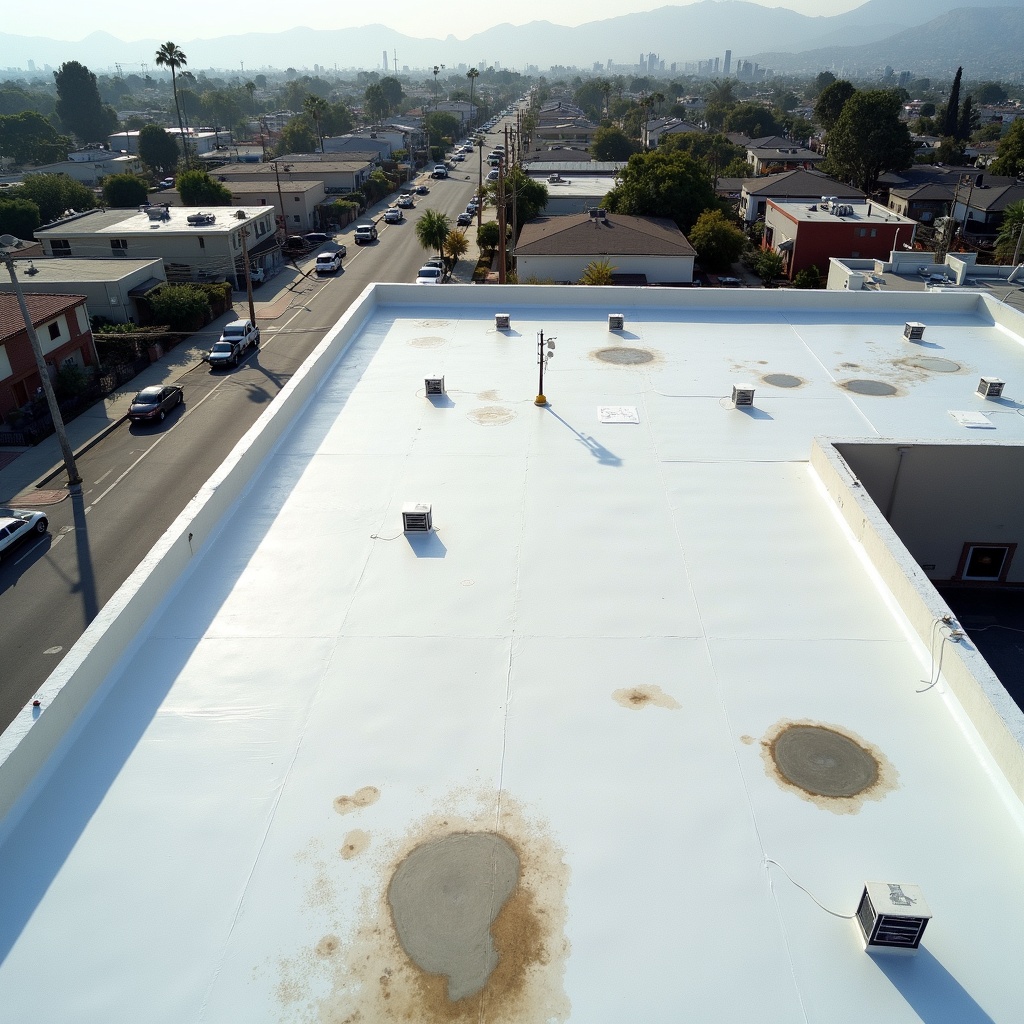
Ponding is the most visible flat roof problem on flat roofs in the region. Water pools in low spots instead of draining, and even small amounts get worse as weight increases. This happens because: • Roof decking settles or sags over decades • Interior or perimeter drains clog with leaves, dust, or debris • Slope was never adequate (flat roofs need at least 1:40 slope for drainage) • Gutters are undersized or blocked Water sitting longer than 48 hours begins penetrating seams and membrane defects. In Southern California’s dry climate, people often miss early pooling because it evaporates quickly, until heavy rains expose the real problem. Check your roof 24 hours after any rainfall. If water still sits in areas, drainage repair is urgent.
Membrane Blistering and Surface Deterioration
Flat roof membranes don’t just leak; they bubble, crack, and separate. Blistering occurs when moisture gets trapped between the membrane and the substrate. Southern California’s intense UV exposure accelerates degradation of TPO and EPDM over 15-20 years. You’ll see: • Raised, bubble-like sections on the surface • Cracks radiating from blisters • Areas where the membrane pulls away from seams • Chalky or dull appearance (loss of protective coating) Early blistering doesn’t require immediate replacement, but it signals your roof is aging. Document the size and location. A professional roof assessment in Southern California can determine if repair patches will extend life or if full membrane replacement is imminent.
Flashing and Seam Failures
Flat roofs have numerous seams where the membrane meets walls, pipes, HVAC units, and vents. These joints are the most common failure points. Roof flashing in Southern California deteriorates when: • Sealant dries out and cracks (especially in summer heat) • Metal flashing rusts or corrodes • Fasteners loosen from thermal expansion and contraction • Penetrations shift, tearing the membrane Inspect all flashing quarterly. If you see daylight between flashing and the membrane, or if caulk is separated and gray, water is likely entering. Roof penetrations are like open doors; they’re where 80% of leaks start.
Thermal Splits and Alligatoring
Southern California experiences significant daily temperature swings, especially in spring and fall. Older membranes lose elasticity and split when they expand and contract. You’ll see patterns that look like alligator skin, a web of small cracks across the surface. This is particularly common on 20+ year old built-up roofs and aged EPDM. Thermal cracks are not immediately dangerous, but they’re expansion cracks, and they grow. Once a membrane starts alligatoring, full replacement within 3-5 years is typical. This is a good time to call a roofing contractor to assess remaining life and plan your budget.
Membrane Punctures and Foot Traffic Damage
HVAC technicians, solar installers, and maintenance staff walk flat roofs in Southern California regularly. TPO and EPDM are soft, a dropped tool, a misplaced nail, or repeated foot traffic on the same spot can puncture the membrane. You might not notice until rain reveals the leak. Inspect roofs after contractors have visited. Look for footprints in dirt, torn corners, or new marks. Small punctures can be patched, but patterns of damage suggest the membrane is too soft and replacement may be necessary soon.
Gutter and Downspout Problems
Gutters overflow when leaves, pollen, or debris accumulates, especially common where mature trees drop material. Water spills behind gutters, running down walls and seeping into foundations. Additionally, undersized gutters can’t handle heavy rain, allowing water to back up onto the roof itself. Check gutters monthly, especially spring and fall. Clear debris, test water flow with a hose, and ensure downspouts direct water at least 4 feet away from the structure. For flat roofs, proper gutter maintenance is as critical as the membrane itself.
Climate-Specific Risks in Southern California
Southern California’s location in the San Fernando Valley creates specific stresses on flat roofs. Summer temperatures consistently exceed 90°F, and the low humidity means membranes lose flexibility faster than in coastal cities. The reverse happens in winter, cooler nights drop to near freezing, creating expansion/contraction cycles that stress seams. Additionally, Southern California sits downwind of wildfire smoke during fire season. Ash and soot accumulate on flat roofs, trap moisture, and accelerate deterioration. Dark surfaces also absorb more heat, reaching temperatures 40-50°F hotter than the ambient air. For TPO roofs near the Van Nuys Airport area, jet fuel residue and pollution exposure compounds UV damage. These conditions mean flat roofs in Southern California need more frequent inspections than national averages. Annual check-ups in spring and fall are not optional; they’re necessary to catch problems before they become expensive.
Preventive Maintenance Schedule for Flat Roofs in the Region
| Maintenance Task | Frequency | What to Check |
|---|---|---|
| Visual roof walk | Spring & Fall | Blisters, cracks, pooling water, membrane separation |
| Gutter & drain cleaning | Monthly (or after storms) | Debris, blockages, water flow |
| Seam & flashing inspection | Quarterly | Sealant cracks, separation, rust, fastener tightness |
| Roof penetration check | After contractor work | New tears, punctures, shifted pipes or vents |
| Professional inspection | Every 2-3 years | Membrane thickness, drainage efficiency, structural integrity |
| Post-storm assessment | As needed | Debris damage, membrane punctures, backed-up water |
Regular maintenance costs far less than emergency repairs. A professional roof leak detection in Southern California catches problems while they’re small, and routine sealant re-application can add years to membrane life.
When to Repair vs. When to Replace
Repairs Make Sense If
Your roof is under 15 years old, blistering is isolated (less than 10% of surface), seam failures affect fewer than three areas, and there’s no structural sagging. Repairs typically include: • Membrane patching for small punctures or blisters • Re-sealing flashing and seams with compatible sealant • Gutter and drain clearing or replacement • HVAC boot or roof penetration re-flashing These fixes buy time at a fraction of replacement cost, ideal for budget-conscious property owners in Southern California’s $700K median home value market.
Replacement Is Necessary If
Your roof is 20+ years old, alligatoring affects more than 25% of the surface, pooling is widespread due to structural settling, or repairs have been frequent in the past two years. A complete roof repair assessment in Southern California should clarify which path makes financial sense. Replacement gives you a fresh 20-25 year warranty, newer energy-efficient materials, and peace of mind, something older roofs can’t offer.
Getting Professional Help
If you’ve identified problems on your flat roof, don’t wait for the next heavy rain. A licensed roof repair Southern California contractor can provide a detailed inspection, document damage with photos and measurements, and recommend the most cost-effective solution. Roof Repair & Construction Inc. serves Southern California and surrounding areas with emergency repairs, preventive maintenance plans, and full replacements for both residential and commercial properties. Whether you own a single-family home, manage a rental property, or operate a commercial building, flat roof problems are serious. Call (323) 474-1088 for a free inspection and honest assessment. Early intervention prevents small problems from becoming expensive disasters.
Explore our full range of roofing services across Southern California.
Frequently Asked Questions
How often should I have my flat roof inspected in Southern California?
You should inspect your flat roof visually every spring and fall, and have a professional assessment every 2-3 years. Southern California’s intense summer heat and thermal cycling make quarterly gutter and seam checks essential to catch problems early before they become costly.
What causes ponding water on flat roofs in Southern California?
Ponding typically results from roof deck settling, clogged drains, undersized gutters, or inadequate slope. Dust and pollen accumulation across the region also blocks drainage systems quickly. Water pooling longer than 48 hours increases leak risk significantly.
Can I patch a flat roof myself, or should I call Roof Repair & Construction Inc.?
Small punctures under 2 inches can be patched temporarily with roofing cement, but professional repair is strongly recommended. Improper patches fail within months, and identifying underlying problems, like membrane deterioration or structural settling, requires expertise. Call (323) 474-1088 for professional assessment.
How long do flat roofs typically last in Southern California?
TPO and EPDM membranes last 15-20 years in Southern California’s climate, while built-up roofs may last 10-15 years. Southern California’s UV exposure and temperature extremes shorten lifespan compared to cooler regions. Regular maintenance can extend life by 3-5 years.