
Understanding Cool Roof Technology: Making Your Replacement Count
When facing a complete roof replacement, homeowners across Southern California stand at a critical crossroads. The intense regional heat transforms conventional roofs into massive heat collectors, driving air conditioning costs upward and creating unbearable indoor temperatures during summer months. Cool roof technology offers a different path, one where your new roof actively reflects solar energy rather than absorbing it. This decision framework will help you navigate the material options, understand the science behind reflective roofing, and calculate whether the investment aligns with your home’s needs and your budget.
📋 In This Guide
The journey from recognizing your aging roof’s inefficiency to installing a high-performance cool roof system involves understanding solar reflectance ratings, navigating California’s Title 24 Energy Code requirements, comparing manufacturer technologies, and identifying available utility rebates. For Southern California homeowners managing higher-value and historic properties, this isn’t just about replacing worn shingles; it’s about making a strategic investment that reduces operating costs, enhances comfort, and increases property value. Working with an experienced roofing services in Southern California provider ensures your replacement project meets both energy efficiency goals and aesthetic expectations.
The Science Behind Cool Roofs: Why Reflectivity Matters
Cool roof technology relies on two measurable properties: solar reflectance and thermal emittance. Solar reflectance measures how much sunlight bounces off your roof rather than being absorbed as heat, rated on a scale from 0 to 1 (with 1 reflecting 100% of solar energy). Thermal emittance measures how efficiently your roof releases absorbed heat back into the atmosphere. In Southern California’s climate, where summer temperatures routinely exceed 95°F and the sun beats down on roofs for 10-12 hours daily, these properties directly impact your indoor comfort and cooling costs.
Traditional dark asphalt shingles might have a solar reflectance of 0.05-0.15, meaning they absorb 85-95% of the sun’s energy. This absorbed energy heats your attic space to temperatures exceeding 150°F, forcing your air conditioning system to work continuously against this thermal load. Cool roof materials achieve solar reflectance ratings of 0.25-0.65 or higher, dramatically reducing heat transfer into your living spaces. The Cool Roof Rating Council (CRRC) independently tests and certifies these ratings, providing homeowners with verified performance data rather than manufacturer marketing claims.
For properties throughout the region, including hillside areas with maximum sun exposure, this thermal physics translates into measurable energy savings. Studies conducted in Southern California demonstrate that cool roofs can reduce cooling energy consumption by 15-40% depending on home insulation levels, HVAC efficiency, and roof design. Beyond energy bills, cool roofs extend HVAC equipment life by reducing runtime hours and decrease peak cooling demand during heat waves when electricity rates hit their highest tiers.
California Title 24 Requirements: What Southern California Homeowners Must Know
California’s Title 24 Energy Code mandates minimum cool roof standards for both new construction and roof replacements on steep-slope residential buildings. As of the current code cycle, roofs in Climate Zone 10 must meet specific solar reflectance and thermal emittance thresholds. For steep-slope roofs (pitch greater than 2:12), the minimum aged solar reflectance is 0.20 and aged thermal emittance is 0.75, or an alternative Solar Reflectance Index (SRI) value that combines both factors.
These aren’t optional guidelines; they’re enforceable building code requirements verified during permit inspection. When you contract for a roof replacement, your roofing contractor in Southern California must specify compliant materials and provide CRRC documentation showing that your chosen products meet Title 24 standards. This regulatory framework actually benefits homeowners by ensuring that even entry-level replacement materials deliver baseline energy performance improvements over old roofing systems.
Understanding these requirements helps you evaluate contractor proposals intelligently. A legitimate quote should reference Title 24 compliance and specify products by their CRRC rating numbers. If a contractor dismisses these standards or suggests non-compliant materials to reduce costs, that’s a red flag indicating they may cut other corners. Proper Roof Flashing in Southern California installation and code compliance go hand-in-hand with quality workmanship.
Comparing Cool Roof Material Options: Performance and Aesthetics
The cool roof marketplace offers multiple material categories, each with distinct performance characteristics, appearance options, and durability profiles. Your choice depends on architectural style, budget parameters, and how aggressively you want to pursue energy savings beyond minimum code requirements.
Cool Asphalt Shingles: Accessible Entry Point
Major manufacturers including GAF, CertainTeed, and Owens Corning now produce asphalt shingles with reflective granule coatings that achieve Title 24 compliance. These “cool” shingles look nearly identical to conventional options but incorporate specially engineered granules that reflect solar energy in the infrared spectrum while maintaining traditional color aesthetics. Available in browns, grays, and earth tones, not just white; these products allow homeowners to preserve their home’s curb appeal while gaining energy efficiency.
Cool asphalt shingles typically achieve solar reflectance values of 0.25-0.40, representing a significant improvement over conventional dark shingles without requiring homeowners to embrace bright white roofing. Durability matches standard architectural shingles (20-30 year lifespan), and installation techniques remain identical, controlling labor costs. For craftsman homes and historic properties where architectural character matters, cool shingles offer energy performance without aesthetic compromise.
Concrete and Clay Tiles: Premium Reflective Performance
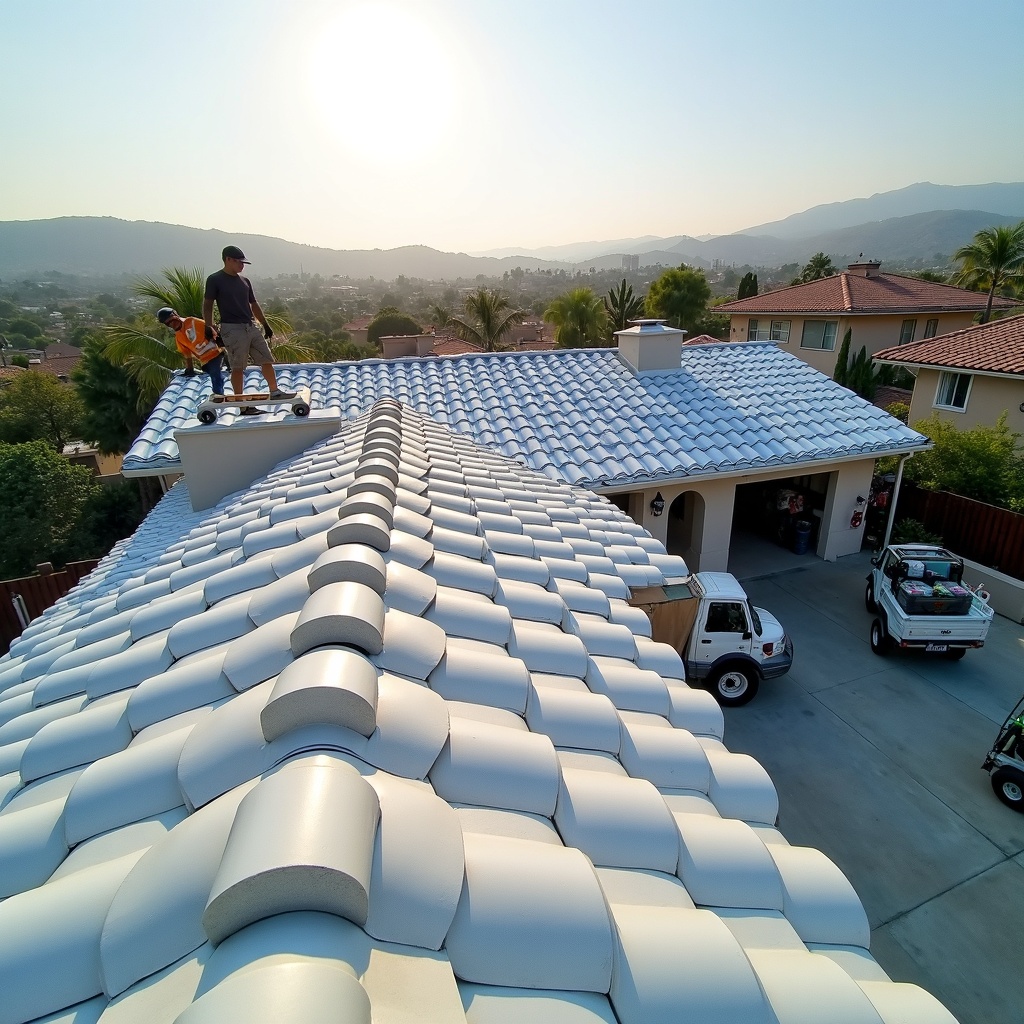
Tile roofing is common across Southern California’s Spanish Colonial, Mediterranean, and contemporary architectural styles, and tile manufacturers have embraced cool roof technology enthusiastically. Light-colored concrete and clay tiles naturally achieve high reflectance values, white and terra cotta tiles easily exceed 0.60 solar reflectance. Modern cool tile coatings enhance these properties further while offering expanded color palettes including browns, grays, and specialty blends.
Tile’s thermal mass also creates natural cooling benefits. The air gap between tiles and roof deck allows convective cooling, while the material’s density moderates temperature fluctuations. This combination of high reflectance and thermal performance makes tile an exceptional choice for homes with second-story living spaces or vaulted ceilings where attic heat directly impacts comfort. The 50+ year lifespan and minimal maintenance requirements justify the premium installation cost for homeowners planning long-term ownership.
Metal Roofing: Maximum Reflectivity and Longevity
Metal roofing with factory-applied reflective coatings represents the cool roof performance ceiling, with products achieving 0.60-0.70 solar reflectance and thermal emittance approaching 0.85. Standing seam metal, corrugated panels, and metal shingle profiles all benefit from advanced coating technologies using ceramic pigments that reflect infrared energy while displaying rich colors.
Beyond reflectivity, metal’s durability (40-70 year lifespan), fire resistance, and recyclability appeal to environmentally conscious homeowners throughout the region. The material’s light weight reduces structural loading compared to tile, potentially eliminating the need for roof deck reinforcement. For hillside properties where wildfire risk influences insurance premiums, metal roofing’s Class A fire rating combined with cool roof energy savings creates compelling value. Modern metal roofing aesthetics have evolved far beyond industrial appearances, with profiles mimicking traditional shingles or Spanish tiles.
| Material Type | Solar Reflectance Range | Typical Lifespan | Best For |
|---|---|---|---|
| Cool Asphalt Shingles | 0.25-0.40 | 20-30 years | Budget-conscious homeowners, traditional aesthetics |
| Cool Concrete/Clay Tile | 0.40-0.70 | 50+ years | Mediterranean/Spanish architecture, long-term ownership |
| Reflective Metal Roofing | 0.60-0.70 | 40-70 years | Maximum energy savings, modern aesthetics, fire zones |
| White TPO/Single-Ply | 0.70-0.85 | 20-30 years | Flat/low-slope roofs, commercial-style homes |
Energy Savings Calculations: What to Expect in Southern California’s Climate
Quantifying energy savings requires understanding your home’s specific characteristics: roof area, insulation levels, HVAC efficiency, and baseline cooling costs. A typical 2,000-square-foot Southern California home with moderate insulation might spend $1,500-2,500 annually on air conditioning during the extended cooling season running from May through October. Upgrading from conventional dark shingles to cool roof materials can reduce this by 15-25% for asphalt shingles, 25-35% for reflective tile, or 30-40% for high-performance metal roofing.
These percentages translate into annual savings of $225-1,000 depending on material choice and home efficiency. Over a 20-year period, cool asphalt shingles might save $4,500-8,000 in cooling costs, while premium metal roofing could deliver $12,000-20,000 in cumulative savings. When factoring in reduced HVAC maintenance costs and extended equipment life, the return on investment timeline shortens considerably. For properties in the warmest Southern California microclimates, hillside homes with western exposure or areas with limited shade, savings potential increases substantially.
Beyond direct utility savings, cool roofs contribute to property value through enhanced energy efficiency certifications and appeal to environmentally conscious buyers. California’s real estate market increasingly values sustainable features, and documented energy performance through utility bill history can strengthen resale positioning. If you need immediate roof repair Southern California services while planning your eventual replacement, addressing leaks and structural issues now prevents further efficiency losses and positions you for a well-planned cool roof installation when the time is right.
CRRC Ratings and Product Verification: Ensuring Performance
The Cool Roof Rating Council maintains an online database of tested products at coolroofs.org, where homeowners can verify manufacturer claims before signing contracts. Each rated product receives a unique CRRC number and publishes initial and aged reflectance values (three-year weathering). This aged data matters more than pristine new-roof numbers, as all reflective surfaces gradually accumulate dirt and lose some performance over time.
When reviewing contractor proposals, request CRRC product numbers for all specified roofing materials. Cross-reference these numbers in the CRRC database to confirm ratings meet Title 24 requirements and align with your energy savings expectations. Reputable manufacturers proudly publish this data; reluctance to provide CRRC documentation suggests inferior products or contractor unfamiliarity with cool roof standards.
Pay attention to product-specific installation requirements as well. Some cool roof coatings require specific underlayment materials or ventilation configurations to achieve rated performance. A qualified contractor will address these specifications in their proposal and installation plan, ensuring your finished roof delivers the promised thermal performance. Companies offering comprehensive Roof Repair & Construction Inc., Homepage services understand these technical requirements and specify compliant installation methods.
Utility Rebates and Incentives: Reducing Upfront Costs
Los Angeles Department of Water and Power (LADWP) and Southern California Gas Company periodically offer rebates for cool roof installations as part of their energy efficiency programs. While specific rebate amounts and eligibility criteria change based on program funding, qualified residential cool roof projects have historically received rebates ranging from $0.20-0.50 per square foot of roof area, potentially offsetting $400-1,200 of installation costs for an average home.
Check current program availability at ladwp.com and socalgas.com before finalizing your replacement project timeline. Some rebate programs require pre-approval or specific contractor participation, so research early in your planning process. Your roofing contractor should be familiar with these programs and able to guide you through application requirements, though ultimately securing rebates remains the homeowner’s responsibility.
Federal tax credits for energy-efficient home improvements occasionally include roofing components, particularly when combined with insulation upgrades or integrated solar installations. While cool roofs alone may not qualify for federal incentives, a comprehensive energy retrofit including roof replacement, attic insulation enhancement, and radiant barrier installation might access multiple incentive streams. Consult a tax professional to understand current federal incentives and documentation requirements.
Aesthetic Considerations: Beyond Basic White
The persistent misconception that cool roofs must be blinding white prevents many homeowners from considering these technologies. Modern cool roof science has advanced far beyond simple white coatings. Specially formulated pigments reflect infrared wavelengths (which carry heat energy) while absorbing visible wavelengths (which create color perception), allowing manufacturers to produce cool roof products in virtually any color.
Dark browns, charcoal grays, deep reds, and forest greens are all available in cool roof formulations that significantly outperform conventional versions of the same colors. While a cool black shingle won’t match white tile’s reflective performance, it will dramatically outperform standard black shingles while maintaining your preferred aesthetic. This technology empowers homeowners in historic districts or neighborhoods with HOA color restrictions to pursue energy efficiency without compromising architectural character.
Color retention represents another aesthetic consideration. Premium cool roof coatings include UV inhibitors and fade-resistant pigments that maintain appearance longer than conventional roofing materials. For homeowners investing in high-value tile or metal roofing, these appearance warranties protect both curb appeal and property value over decades of sun exposure. When evaluating material options, review manufacturer color fade warranties alongside performance specifications.
Making Your Cool Roof Decision: Next Steps
Armed with this knowledge framework, you’re prepared to evaluate cool roof options strategically. Begin by assessing your home’s current energy performance, review recent summer utility bills and identify patterns. If cooling costs spike dramatically during heat waves or your upstairs rooms become uncomfortably warm, aggressive cool roof technology makes sense. For well-insulated homes with efficient HVAC systems, code-compliant cool asphalt shingles might provide sufficient improvement without premium material costs.
Schedule consultations with experienced contractors who can evaluate your roof deck condition, discuss material options matching your architecture and budget, and provide detailed proposals with CRRC-rated products. A thorough roof inspection reveals whether additional improvements like enhanced ventilation or radiant barriers would complement your cool roof investment.
The decision timeline should align with your current roof’s condition. If you’re experiencing active leaks or approaching the end of your existing roof’s serviceable life, prioritize replacement planning now. If your roof remains structurally sound but inefficient, you have time to research options, gather multiple quotes, and schedule installation during optimal weather windows. Either way, understanding cool roof technology transforms replacement from a reactive emergency into a strategic home improvement that pays dividends for decades.
For professional guidance on cool roof replacement options tailored to your Southern California property, contact Roof Repair & Construction Inc. at (323) 474-1088. Our team evaluates your home’s specific needs, explains material options with transparent performance data, and delivers installations that meet Title 24 requirements while exceeding your energy efficiency expectations. We serve homeowners across Southern California with the technical expertise and experience needed to navigate cool roof technology successfully.
Explore our full range of roofing services across Southern California.
Frequently Asked Questions
How much can a cool roof reduce my air conditioning costs in Southern California?
Cool roofs typically reduce cooling energy consumption by 15-40% depending on the material chosen and your home's insulation level. For an average home spending $2,000 annually on AC, this translates to $300-800 in yearly savings, with high-performance metal roofing delivering the greatest reductions during the region’s intense summer heat.
Do cool roofs only come in white, or are other colors available?
Modern cool roof technology offers a full spectrum of colors including browns, grays, reds, and greens using specially formulated infrared-reflective pigments. While lighter colors achieve higher reflectance ratings, cool versions of darker colors still dramatically outperform conventional roofing in the same shade, allowing you to maintain your home's aesthetic while gaining energy efficiency.
What is the Cool Roof Rating Council and why does it matter?
The CRRC independently tests and certifies roofing products' solar reflectance and thermal emittance values, providing verified performance data rather than manufacturer claims. Checking CRRC ratings ensures your chosen materials actually meet California Title 24 requirements and will deliver promised energy savings, Roof Repair & Construction Inc. specifies CRRC-rated products and can verify compliance for Southern California homeowners at (323) 474-1088.
Are there rebates available for cool roof installation in Southern California?
LADWP and Southern California Gas Company periodically offer rebates for cool roof installations, historically providing $0.20-0.50 per square foot which can offset $400-1,200 of installation costs. Rebate availability and amounts vary based on program funding, so check ladwp.com and socalgas.com for current offerings before scheduling your replacement project.